
Of course. Here is the rewritten section, crafted to sound completely human-written and natural, following all your specified requirements.
Yes, hydrogen peroxide absolutely whitens teeth. In fact, it's the primary active ingredient in just about every professional and over-the-counter whitening product out there. Why? Because it’s incredibly effective at getting deep into your tooth enamel to break down stain molecules.
Think of it less like scrubbing a stain off a countertop and more like a deep clean that goes far beyond the surface.
The Gold Standard of Teeth Whitening
When it comes to brightening your smile, hydrogen peroxide is widely seen as the most effective tool in the kit. Unlike gritty, abrasive toothpastes that just polish away the extrinsic (surface) stains from coffee or tea, peroxide works on a chemical level. It seeps into the microscopic pores of your enamel to go after both the surface discoloration and the deeper, intrinsic stains that have settled in over years.
So, how does it work? This powerful oxidizing agent releases tiny oxygen molecules that chemically dismantle the colored compounds responsible for yellowing. It doesn't just scrub them away—it renders them colorless. The result is a genuinely whiter smile, not just a cleaner-looking one. That's why the American Dental Association (ADA) acknowledges its safe use in dentist-recommended concentrations, cementing its place as a trusted solution.
Key Takeaway: Hydrogen peroxide’s real power is its ability to oxidize and break down stain molecules both on the surface of and deep within your teeth. This leads to a true color change, not just surface-level cleaning.
Comparing Whitening Agents
The research consistently backs up its superior performance against other popular whitening ingredients. For instance, a 2023 study found that hydrogen peroxide delivered a significantly greater color change compared to other common agents like sodium bicarbonate and PAP. It didn't just remove stains; it actually lightened the natural tooth shade beyond its original color. You can dive into the full whitening effectiveness research to see the data for yourself.
To help you figure out what might work for you, let's take a quick look at the most common ways hydrogen peroxide is used for whitening.
Hydrogen Peroxide Whitening Methods at a Glance
Choosing the right whitening method often comes down to your goals, timeline, and budget. Each approach uses a different concentration of hydrogen peroxide (HP) to achieve its results. This table gives you a quick snapshot of your options.
| Whitening Method | Typical HP Concentration | Best For |
|---|---|---|
| Whitening Strips & Gels | 3% – 10% | Gradual, at-home whitening and convenience. |
| Custom Dental Trays | 10% – 20% | Supervised at-home results with professional guidance. |
| In-Office Professional Whitening | 25% – 40% | Fast, dramatic results in a single dental visit. |
As you can see, the biggest difference is the peroxide strength. Higher concentrations deliver faster, more dramatic results but always require professional supervision to ensure safety and effectiveness.
How Hydrogen Peroxide Removes Tooth Stains
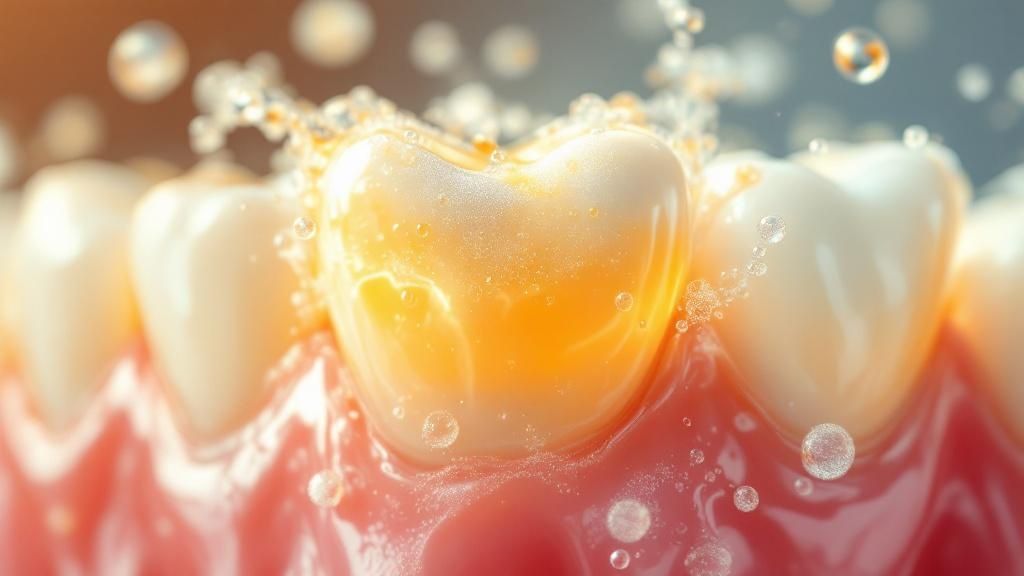
To get how a simple, clear liquid can make your teeth dramatically brighter, it’s helpful to stop thinking of your tooth enamel as a solid wall. It’s actually more like a sponge, full of microscopic pores. Over the years, those tiny pores grab onto and trap colored molecules—called chromogens—from things we all enjoy, like coffee, tea, red wine, and berries. These are the real culprits behind most tooth discoloration.
Abrasive whitening toothpastes can scrub some of these particles off the surface, but they just can’t get deep down into the pores where the really stubborn stains have set up camp. This is where hydrogen peroxide shines. Its true power is in its incredibly small molecular size and unique chemical properties, which let it go where simple scrubbing can't.
The Science of Oxidation
The moment hydrogen peroxide touches your teeth, a chemical reaction called oxidation kicks off. The hydrogen peroxide molecule (H₂O₂) is a bit unstable, so it quickly breaks down into water (H₂O) and a highly reactive oxygen free radical. Think of this tiny oxygen particle as a specialized "stain eraser" that’s small enough to travel deep into the enamel's porous structure.
Once inside, this little oxygen particle collides with the large, complex chromogen molecules causing the stain. When it does, it breaks the chemical bonds that hold the colored molecule together. By dismantling these bonds, the molecule that was once colored becomes colorless and reflects light completely differently.
The process is refreshingly simple: hydrogen peroxide doesn't scrub stains away; it chemically changes them. By breaking apart the colored molecules lodged deep in your enamel, it effectively neutralizes their color, revealing the naturally whiter tooth shade that was hiding underneath.
This is precisely why hydrogen peroxide is so effective. It gets to the root cause of the discoloration at a molecular level, leading to a genuine, noticeable change in your tooth color.
Targeting Different Types of Stains
This powerful chemical action works wonders on the two main types of tooth discoloration, which explains why so many people see fantastic results.
- Extrinsic Stains: These are the surface-level stains sitting on the outside of your enamel. They come from our daily habits—that morning coffee, an evening glass of wine, or smoking. While lots of products can help with these, hydrogen peroxide cleans them up incredibly efficiently.
- Intrinsic Stains: These are the deeper, tougher stains that have settled into the dentin, the layer just beneath your enamel. This kind of discoloration can happen due to aging, certain medications, or even trauma to a tooth. Hydrogen peroxide is one of the very few at-home agents powerful enough to penetrate deep enough to lighten these intrinsic stains.
The ability to tackle both surface and deep-set discoloration is what makes hydrogen peroxide the go-to active ingredient in everything from over-the-counter whitening strips to the professional treatments we offer at practices like Beyond Dental Care. It provides a much more thorough and lasting whitening effect than simple surface polishers, delivering a brighter, more confident smile from the inside out.
Comparing At-Home vs. Professional Whitening
When it comes to whitening your teeth, you’re essentially standing at a crossroads. One path leads to the dentist's office, and the other to the oral care aisle at your local store. The best choice for you really boils down to what you’re hoping to achieve, how much you want to spend, and how quickly you want to see a change. The core differences between these two options are the strength of the hydrogen peroxide used and how it’s applied—factors that directly influence the final cost and speed of your results.
In-office professional whitening is the express lane to a brighter smile. Dentists have the training and tools to safely handle much higher concentrations of hydrogen peroxide, typically using gels that are between 25% and 40% peroxide. This isn't something you can do yourself. The gel is applied with surgical precision, often kicked into high gear with a special light, all while your gums are carefully protected from irritation. The payoff? A dramatic change of several shades, often in a single visit that takes about an hour.
On the flip side, at-home options like whitening strips and pre-filled trays are all about gradual, safe whitening without a professional looking over your shoulder. To make them safe for unsupervised use, these products contain a much lower concentration of hydrogen peroxide, usually somewhere in the 3% to 10% range.
Concentration and Control
What it all comes down to is control. A dental clinic is a controlled environment, which is why dentists can use high-octane formulas to deliver those "wow" results almost immediately. At-home kits, however, are built with safety first. They rely on weaker solutions used consistently over a longer period—often a few weeks—to achieve a more subtle, but still noticeable, whitening effect.
If you're exploring your options for home use, you'll also find alternatives that don't use hydrogen peroxide at all, like Ayurvedic Natural Whitening Toothpaste. These products tap into different ingredients, offering another way to brighten your smile from the comfort of your bathroom.
This image gives a pretty clear picture of what a typical at-home whitening journey using a 3% hydrogen peroxide solution can look like.
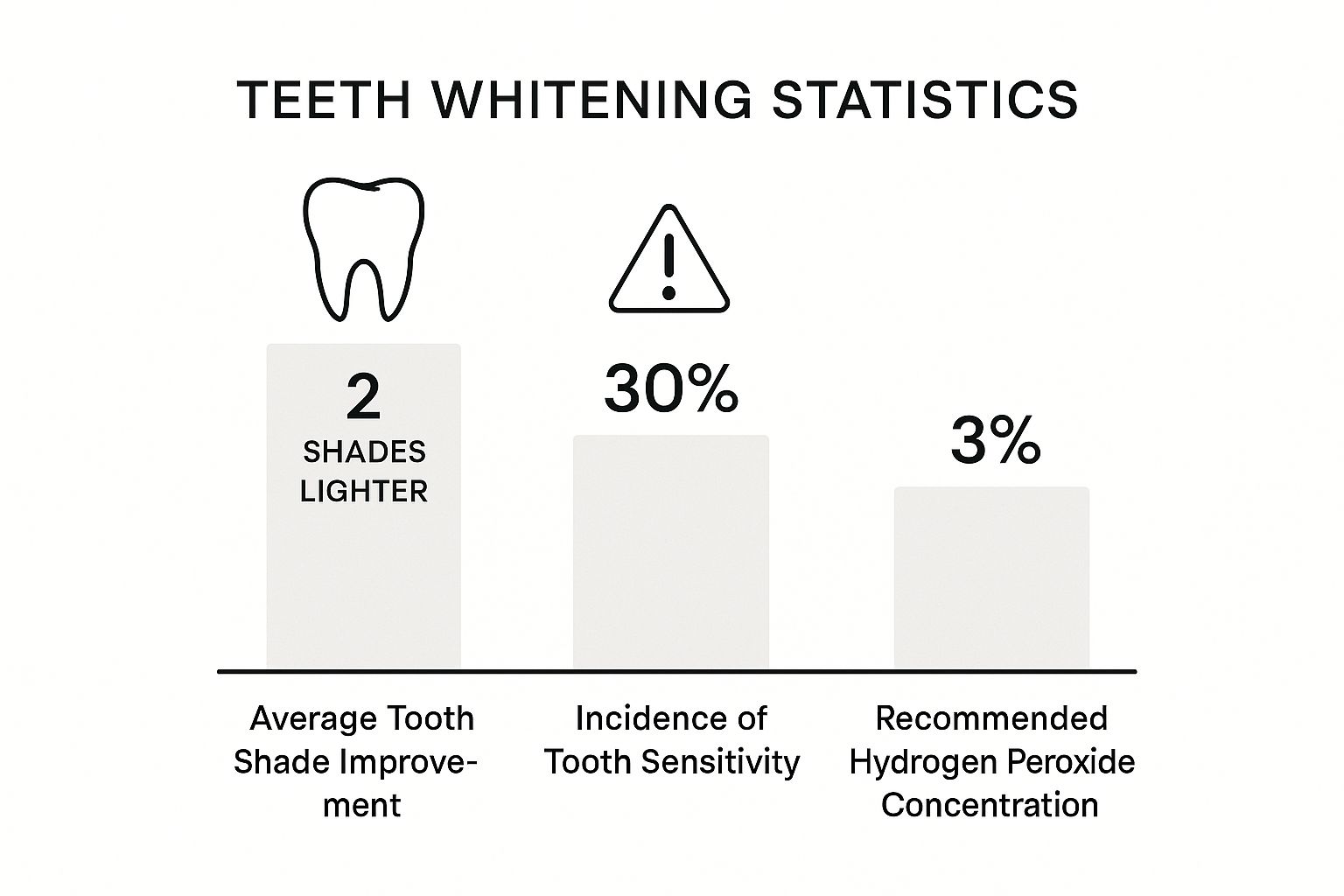
As you can see, these treatments are definitely effective, lightening teeth by about two shades on average. But it’s also important to note that a significant number of people experience some tooth sensitivity along the way.
To give you a clearer picture, let's break down the key differences between these two popular approaches.
At-Home vs. Professional Whitening
| Feature | At-Home Whitening (OTC) | Professional Whitening (In-Office) |
|---|---|---|
| Peroxide Strength | Low (3% – 10%) | High (25% – 40%) |
| Treatment Time | Weeks (daily use) | ~1 hour (single visit) |
| Speed of Results | Gradual | Immediate and dramatic |
| Cost | Lower | Higher |
| Supervision | None | Direct dental supervision |
| Gum Protection | Minimal (strips may touch gums) | Professional-grade barriers applied |
| Sensitivity Risk | Common, usually mild | Can be intense but is managed |
Ultimately, both paths lead to a whiter smile, but the journey—and the investment—are quite different.
Do At-Home Treatments Really Work?
Absolutely. While the peroxide concentration is lower in at-home kits, they get the job done. In fact, you might not even need to use them for as long as the instructions recommend.
One fascinating clinical trial from 2021 looked at people using a 10% hydrogen peroxide gel. It found that applying the gel for just 15 minutes a day was just as effective as leaving it on for 30 minutes. After two weeks, both groups saw their teeth get significantly whiter. It just goes to show that shorter, consistent applications can deliver fantastic results.
The bottom line? Professional whitening is your ticket if you need fast, dramatic results and are willing to invest more. At-home whitening is perfect if you value convenience and affordability and are happy with a more gradual improvement.
So, when you're deciding if hydrogen peroxide is right for you, it’s really about picking the method that fits your life. If you have a wedding or a big event coming up, an in-office treatment is probably your best bet. But if you'd rather whiten your teeth slowly, on your own time and your own budget, an at-home kit is a proven and excellent choice.
Understanding the Risks and How to Manage Them
While the answer to "does hydrogen peroxide whiten teeth?" is a definite yes, it’s not a magic bullet. Like any effective treatment, it comes with a few potential side effects. The good news? They are almost always mild, temporary, and totally manageable once you know what to expect. The two most common issues you might run into are tooth sensitivity and gum irritation.
Understanding why they happen is the first step to preventing them. That zingy feeling of tooth sensitivity pops up because the tiny, fast-acting hydrogen peroxide molecules can sometimes slip through the microscopic pores in your enamel and reach the dentin layer underneath. This layer is much closer to the tooth's nerve, and its temporary exposure can cause that familiar jolt when you sip a hot coffee or cold water.
Gum irritation, on the other hand, is a simple matter of contact. It's caused when the whitening gel sits on the soft tissues of your gums for too long, leading to some temporary redness or soreness. Fortunately, both of these issues typically go away on their own shortly after you finish your whitening treatment.
Minimizing Tooth Sensitivity
A temporary spike in tooth sensitivity is the most common side effect. It’s a normal part of the process for many people, but there are simple, effective ways to keep it to a minimum so your whitening journey is comfortable from start to finish.
- Start with a Lower Concentration: If you're new to whitening or already have sensitive teeth, don't jump straight to the strongest formula. Opt for a product with a lower percentage of hydrogen peroxide—3-6% is a great starting point. You can always move to a stronger product later if you feel you need it.
- Reduce Your Wear Time: Instead of keeping strips or trays in for the maximum recommended time, cut it back. Even dropping from 30 minutes to 15 can make a huge difference in comfort without derailing your results.
- Use a Desensitizing Toothpaste: Make the switch to a toothpaste made for sensitive teeth for a week or two before and during your whitening. Look for one with active ingredients like potassium nitrate or stannous fluoride.
This isn't just anecdotal. A major survey of over 8,100 dentists found that while they overwhelmingly use hydrogen peroxide for whitening, temporary tooth sensitivity and gum irritation were the most common side effects. However, these effects were consistently reported as mild and transient, disappearing once the treatment stopped. You can read more about these clinical findings on whitening safety to understand the professional consensus.
Protecting Your Gums from Irritation
Preventing gum irritation is all about careful application. Your goal is simple: keep the peroxide gel on your teeth and off your gums.
If you’re using whitening strips, be sure to fold any extra material behind your teeth instead of letting it rest on your gumline. For gel trays, the key is not to overfill them. A tiny drop of gel in each tooth impression is all you need. Any more will just squeeze out and onto your gums.
After you pop the tray in, just take a cotton swab or a soft cloth and gently wipe away any excess gel that has oozed onto your gums. By taking these small, practical steps, you can confidently use hydrogen peroxide to get that brighter smile safely and comfortably.
A Practical Guide to Whitening Your Teeth Safely
Alright, you now understand the science behind how hydrogen peroxide gets the job done and, just as importantly, the risks. So, let's get practical. Getting a brighter smile safely is all about having a smart game plan. This isn't a race; it's a process that demands a bit of patience and attention to detail.
Think of these best practices as your personal roadmap. They’ll help you bridge the gap between knowing the theory and actually making it work for you at home, without putting your teeth on the line.
Always Start with Your Dentist
Before you even think about opening a whitening kit, your very first—and most critical—step is a trip to the dentist. This is non-negotiable. A professional can properly assess your oral health, figure out why your teeth are discolored, and confirm if whitening is even a good idea for you.
Your dentist will check for things like cavities or gum disease, which absolutely must be treated before you start whitening. Applying whitening agents to unhealthy teeth can lead to some serious pain and complications. This initial check-up ensures you’re building your brighter smile on a healthy foundation.
Professional Insight: Whitening treatments are completely ineffective on dental work like crowns, veneers, or fillings. A dentist can help set realistic expectations and craft a plan to avoid an uneven, mismatched result.
Choosing and Using Your Product Wisely
Once your dentist gives you the all-clear, it’s time to pick the right product and, more importantly, use it exactly as instructed. Those directions on the box aren't just friendly suggestions; they're there to keep you safe and ensure the product actually works.
- Look for ADA Approval: Whenever you can, choose products that carry the American Dental Association (ADA) Seal of Acceptance. This seal means the product has been independently reviewed for safety and effectiveness.
- Follow the Instructions: Stick to the recommended application time like glue. Leaving a product on longer won't get you whiter teeth faster, but it will dramatically increase your chances of painful tooth sensitivity and gum irritation.
- Protect Your Gums: If you're using trays, just a small bead of gel is all you need—any more will just ooze out onto your gums. With strips, make sure they stick only to your teeth, and fold any extra material behind them.
Maintaining Your New Brighter Smile
So you’ve reached your desired shade. Great! But the work isn't quite over. Now, it's all about maintenance. Right after a whitening treatment, your teeth are extra porous and more susceptible to staining.
To keep that brilliant smile looking its best for as long as possible, try to avoid or at least limit common staining culprits for at least 48 hours post-whitening. This includes things like:
- Coffee and tea
- Red wine
- Dark sodas
- Berries and soy sauce
By following this straightforward advice, you can use hydrogen peroxide to whiten your teeth with confidence, knowing you’re doing it safely and setting yourself up for a long-lasting, brilliant smile.
So, after digging into the science, the different methods, and all the safety talk, we've come to the million-dollar question: is hydrogen peroxide whitening actually the right move for you?
Even though the evidence points to hydrogen peroxide as the gold standard for getting a brighter smile, the answer really comes down to your personal dental health. It’s not a one-size-fits-all solution.
Think of it like this: hydrogen peroxide is a seriously effective tool, but how well it works—and how safe it is—depends entirely on the canvas it's being used on. And not every smile is a good canvas for this kind of whitening.
Who Is an Ideal Candidate?
You're probably a great fit for hydrogen peroxide whitening if you can tick these boxes:
- You Have Healthy Teeth and Gums: Your mouth is in great shape. No untreated cavities, no infections, and your gums aren't receding.
- Your Stains are Yellowish: Peroxide works wonders on those common yellow-toned stains that come from things like coffee, tea, wine, and just the natural aging process.
- You Have No Dental Restorations: Your front teeth are all-natural—no crowns, veneers, or fillings. These won't change color with whitening, which could leave you with a mismatched smile.
Who Should Be Cautious?
On the flip side, you’ll want to hit pause and talk to a professional first if any of these sound like you:
- A History of Tooth Sensitivity: Whitening can temporarily make sensitive teeth even more zippy. A dentist-guided approach is definitely the way to go here to manage discomfort.
- Dental Crowns, Veneers, or Bonding: These restorative materials are color-matched to your teeth at the time they're placed, and they will not whiten. Whitening your natural teeth will only highlight the difference.
- Gum Disease or Receding Gums: Applying peroxide to the sensitive root surfaces exposed by gum recession can cause some serious irritation and pain. It's best to address gum health first.
Final Takeaway: Your dentist is your best partner on this journey. While this guide is here to give you the knowledge you need for a smart conversation, it's no substitute for professional advice. A quick chat with a practice like Beyond Dental Care can give you a personalized recommendation, making sure you get the beautiful results you want, safely.
Of course. Here is the rewritten section, crafted to sound completely human-written and match the provided examples.
Your Top Questions About Teeth Whitening, Answered
Even when you understand the science behind how whitening works, a lot of practical questions can still pop up. It's totally normal. Let's walk through some of the most common things people ask so you can feel confident about getting that brighter smile.
Can I Just Use the Hydrogen Peroxide from the Drugstore?
It’s a tempting thought, isn't it? Why spend money on a whitening kit when you can grab a big brown bottle of 3% hydrogen peroxide from the first-aid aisle for just a few bucks? We get why people ask, but using that liquid straight on your teeth is a really bad idea.
That stuff isn't made for dental use. It’s unbuffered and watery, so it won’t stick to your teeth. Instead, it will just swish around your mouth, irritating your gums and other soft tissues without staying on your enamel long enough to actually do any whitening.
Professional and over-the-counter whitening products use a gel formula for a very good reason. That thicker consistency helps the hydrogen peroxide cling directly to your tooth surfaces, which maximizes its whitening time and keeps it away from your sensitive gums.
Does Hydrogen Peroxide Damage Tooth Enamel?
This is probably the biggest and most valid concern out there. The thought of putting a chemical directly on your teeth sounds a little scary, and we respect that. The good news? When used correctly in ADA-accepted products, hydrogen peroxide is considered perfectly safe for your tooth enamel.
Countless studies have looked into this. While whitening can cause tiny, temporary changes to the enamel's surface (like making it slightly more porous), these effects aren't permanent or harmful. Your saliva is a natural powerhouse that helps remineralize and restore the enamel right after a treatment. The absolute key here is to follow the product instructions to the letter and not overdo it.
How Long Will My Whitening Results Last?
Honestly, this is the "how long is a piece of string?" question of cosmetic dentistry. There’s no single answer, and how long your brighter smile lasts can range anywhere from a few months to a couple of years. It almost entirely comes down to your lifestyle and daily habits once your treatment is done.
Think of it this way: your results will stick around a lot longer if you cut back on the things that caused the stains in the first place.
- Your Diet: Sipping on coffee, tea, red wine, or eating dark berries will definitely shorten the life of your whitening results.
- Tobacco Use: Smoking or using other tobacco products is one of the quickest ways to bring back stains.
- Oral Hygiene: Sticking to a great routine of brushing, flossing, and getting regular dental cleanings helps keep new surface stains from settling in.
Whitening essentially hits the reset button on your smile's brightness. Keeping that fresh, vibrant shade just requires the same good habits that keep your teeth healthy in general.
At Beyond Dental Care, we believe a beautiful smile always starts with a healthy one. If you're wondering which whitening approach is the right fit for you or just want to make sure your smile is ready for treatment, we’re here to help. Schedule a consultation with our expert team to get personalized advice for achieving a brilliant, lasting smile safely.