
When it comes to cosmetic dentistry, the choice between dental bonding and veneers often comes down to a simple trade-off: bonding offers a fast, affordable fix for minor flaws, while veneers provide a durable, total smile transformation. Your decision really depends on whether you're looking for immediate, reversible results or a permanent, stain-resistant overhaul of your smile.
Your Quick Comparison of Dental Bonding and Veneers
Choosing the right cosmetic procedure can feel like a huge decision, but when you understand the core differences between dental bonding and porcelain veneers, it gets a lot easier.
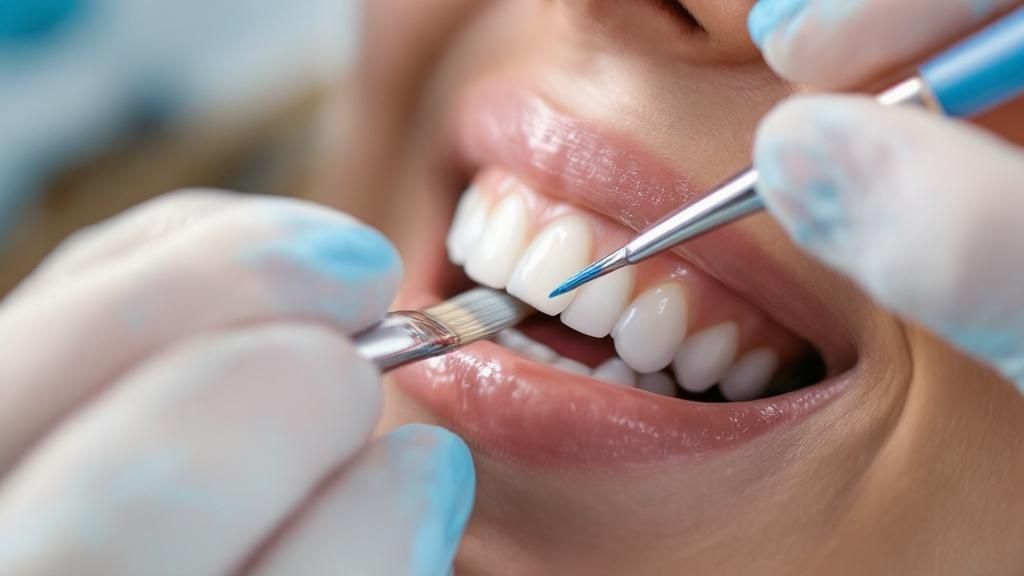
Think of dental bonding as an artistic, direct-to-tooth solution. Your dentist uses a tooth-colored composite resin, skillfully applying and sculpting it right onto your tooth to fix small chips, close minor gaps, or cover up a bit of discoloration. The best part? It's all done in a single visit. It’s a conservative, fast, and budget-friendly way to make targeted improvements.
Porcelain veneers, on the other hand, are a more significant investment in achieving that flawless, uniform smile you see in magazines. These are ultra-thin shells of high-grade ceramic, custom-made in a lab to fit perfectly over the front surface of your teeth. The process is more involved—usually requiring two or more appointments—and is designed to correct more substantial issues like severe stains, crookedness, or multiple imperfections all at once.
Understanding the Key Trade-Offs
This choice isn't just about the material used; it’s about matching the treatment to your specific goals, budget, and timeline. Bonding is absolutely ideal for someone who needs a quick fix for a minor issue and doesn't want a long-term, irreversible commitment.
Veneers are the top-tier option for anyone wanting a complete and lasting smile makeover with truly superior aesthetic results. The porcelain used for veneers has an unmatched realism and stain resistance, mimicking the way light reflects off natural enamel far better than composite resin ever could.
The decision often comes down to this: Are you looking to repair a single tooth's minor flaw quickly and affordably, or are you investing in a complete, long-lasting enhancement of your entire smile's appearance?
To make your decision even clearer, let's put the most critical factors side-by-side. This direct comparison cuts through the noise and highlights the practical differences you really need to consider.
Bonding vs Veneers At a Glance
To help you see the differences at a glance, here’s a simple table breaking down the key features of each option.
| Feature | Dental Bonding | Porcelain Veneers |
|---|---|---|
| Best For | Minor chips, small gaps, slight discoloration | Major smile makeovers, severe stains, crooked teeth |
| Material | Composite Resin (a type of durable plastic) | Medical-Grade Porcelain (ceramic) |
| Treatment Time | One visit (30-60 minutes per tooth) | Two or more visits over several weeks |
| Average Lifespan | 3 to 10 years, requires maintenance | 10 to 20+ years with proper care |
| Stain Resistance | Porous and can stain over time | Highly resistant to stains from coffee, tea, and wine |
| Procedure | Minimally invasive; enamel is not removed | Irreversible; a thin layer of enamel is removed |
| Average Cost | $300 – $600 per tooth | $925 – $2,500 per tooth |
Ultimately, this table shows that while bonding is a fantastic and accessible entry point into cosmetic dentistry, veneers offer a more permanent and transformative solution for those ready to make a bigger investment in their smile.
So, What Exactly Are Porcelain Veneers?
When you hear "veneers," it's easy to picture those ultra-bright, one-size-fits-all Hollywood smiles. But that’s not the whole story. Real porcelain veneers are meticulously crafted, wafer-thin shells of medical-grade ceramic, designed to become a natural and permanent part of your teeth. These aren't just simple coverings; they are a premier cosmetic solution for significant aesthetic challenges.
Each veneer is custom-made in a dental lab by a skilled ceramist. We use biocompatible porcelain because it’s renowned for its incredible ability to mimic natural tooth enamel. Its unique translucency lets light pass through and reflect off the tooth underneath, creating a depth and vitality that other materials just can't replicate.
Engineered for a Complete Smile Overhaul
Unlike dental bonding, which is perfect for smaller fixes, porcelain veneers are engineered to tackle more substantial and widespread cosmetic issues. Think of them as a commitment to a complete smile redesign—a powerful solution for problems that go far beyond a simple chip or gap.
Veneers are the definitive answer when you're looking to correct:
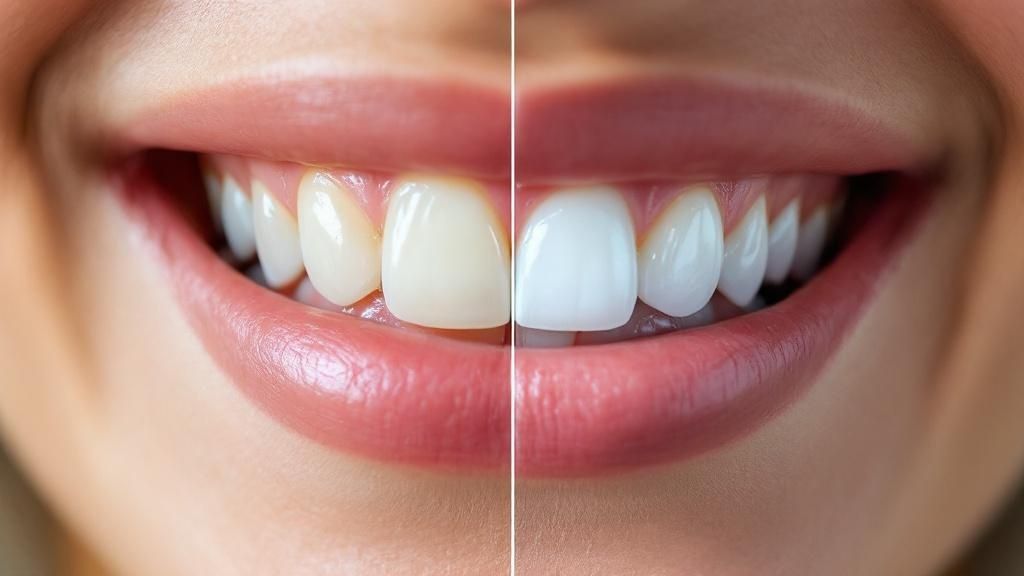
- Deep, Intrinsic Stains: For discoloration from medication, genetics, or old dental work that professional whitening can't touch.
- Multiple Crooked or Misaligned Teeth: Veneers can create the illusion of a perfectly straight smile, often without years of orthodontics.
- Noticeable Gaps and Spacing: They close the spaces between teeth for a more uniform and harmonious look.
- Irregularly Shaped or Sized Teeth: Whether your teeth are naturally too small, worn down, or just misshapen, veneers can sculpt them into ideal proportions.
The demand for these kinds of transformative results is booming. The global dental veneers market was valued at around USD 2.1 billion in 2021 and is expected to more than double by 2030. This growth is driven by a stronger focus on personal appearance and the confidence that comes with a great smile.
A crucial point in the dental bonding vs veneers discussion is permanence. Getting veneers involves removing a very thin layer of enamel, which makes the procedure irreversible. This is a true investment in a specific, long-term aesthetic outcome.
The Veneer Process: A Meticulous Journey
Achieving this kind of perfection isn't a one-and-done appointment. The veneer process is a multi-visit journey that demands incredible precision every step of the way. It all starts with an in-depth consultation where your dentist designs your new smile, carefully considering your facial features, skin tone, and what you hope to achieve.
Next, your teeth are carefully prepared, and we take precise impressions. These impressions act as the blueprint for the dental lab to craft your custom veneers. You’ll wear a set of temporary veneers while your permanent ones are being made, so you never have to feel self-conscious.
Finally, at your last appointment, your custom-made porcelain veneers are securely bonded to your teeth, unveiling a durable, stunning, and completely transformed smile. Because this process is so detailed, it's vital to choose a provider with deep experience. You can learn more about the complete process for dental veneers in Glendale, AZ to fully understand what to expect from a high-quality practice.
A Closer Look at the Dental Bonding Process
While porcelain veneers are a complete smile makeover, dental bonding takes a more focused, conservative approach. Think of it as an artistic, "additive" cosmetic treatment. Your dentist skillfully adds material to perfect a tooth rather than covering its entire front surface. This key difference makes bonding the go-to solution for specific, smaller-scale aesthetic fixes.
The procedure relies on a durable, tooth-colored plastic called composite resin. This putty-like material can be precisely matched to your natural enamel. Your dentist applies the resin directly to your tooth, sculpts it into the ideal shape, and then hardens it instantly with a special curing light. A final polish ensures it blends seamlessly with your surrounding teeth.
Because it's all done by hand, dental bonding is a true showcase of your dentist's artistic skill. It's a fast and effective treatment, often completed in a single visit, making it an incredibly convenient option for a quick smile enhancement.
What Problems Does Bonding Solve Best?
In the dental bonding vs veneers debate, bonding really shines when you need to correct minor imperfections. It’s the perfect choice if you're generally happy with your smile but have a few specific flaws you'd like to address.
Bonding is especially effective for:
- Fixing Minor Chips: A small chip on the edge of a front tooth can be flawlessly restored in under an hour.
- Closing Small Gaps: It easily fills minor diastemas (gaps between teeth) without the need for orthodontics.
- Hiding Localized Stains: For a single dark spot that whitening can't fix, bonding provides an instant cover-up.
- Lengthening Short Teeth: Bonding can add length to a tooth that looks shorter than its neighbors, creating a more balanced smile line.
The biggest win for dental bonding is its preservation of your natural tooth. Unlike veneers, the process typically requires zero removal of healthy enamel, which makes it a minimally invasive and completely reversible procedure.
The Material and Its Limits
The composite resin used for bonding is both strong and beautiful, but it’s important to know how it compares to porcelain. As a plastic-based material, composite resin is porous. This means it can absorb pigments over time from things like coffee, red wine, tea, or smoking.
While the results are immediate and impressive, you have to consider the material's susceptibility to staining and wear for long-term beauty. The lifespan of dental bonding typically falls between 3 to 10 years, and this depends heavily on your oral hygiene habits and where the bonded tooth is located. For example, bonding on a front tooth used for biting will wear down faster than on a less active surface.
This makes great maintenance a priority. Regular dental check-ups, professional cleanings, and diligent at-home care are non-negotiable for keeping your bonded teeth looking their best. If you're weighing your options, learning more about dental bonding services in Glendale, AZ can give you a clearer picture of the process and aftercare. Ultimately, bonding offers an affordable, artful solution for targeted fixes and serves as an excellent entry point into cosmetic dentistry.
Comparing The Treatment Journey Step-By-Step
When you're deciding between dental bonding and veneers, it's easy to focus on just the cost or how long they'll last. But understanding the actual treatment process—what you'll experience in the dental chair—is just as crucial. The journey for each is fundamentally different. One is a quick, single-visit solution, while the other is a more involved, multi-stage commitment to crafting that perfect result.
This infographic gives you a great visual breakdown of the two paths, highlighting the key differences in time, cost, and lifespan.
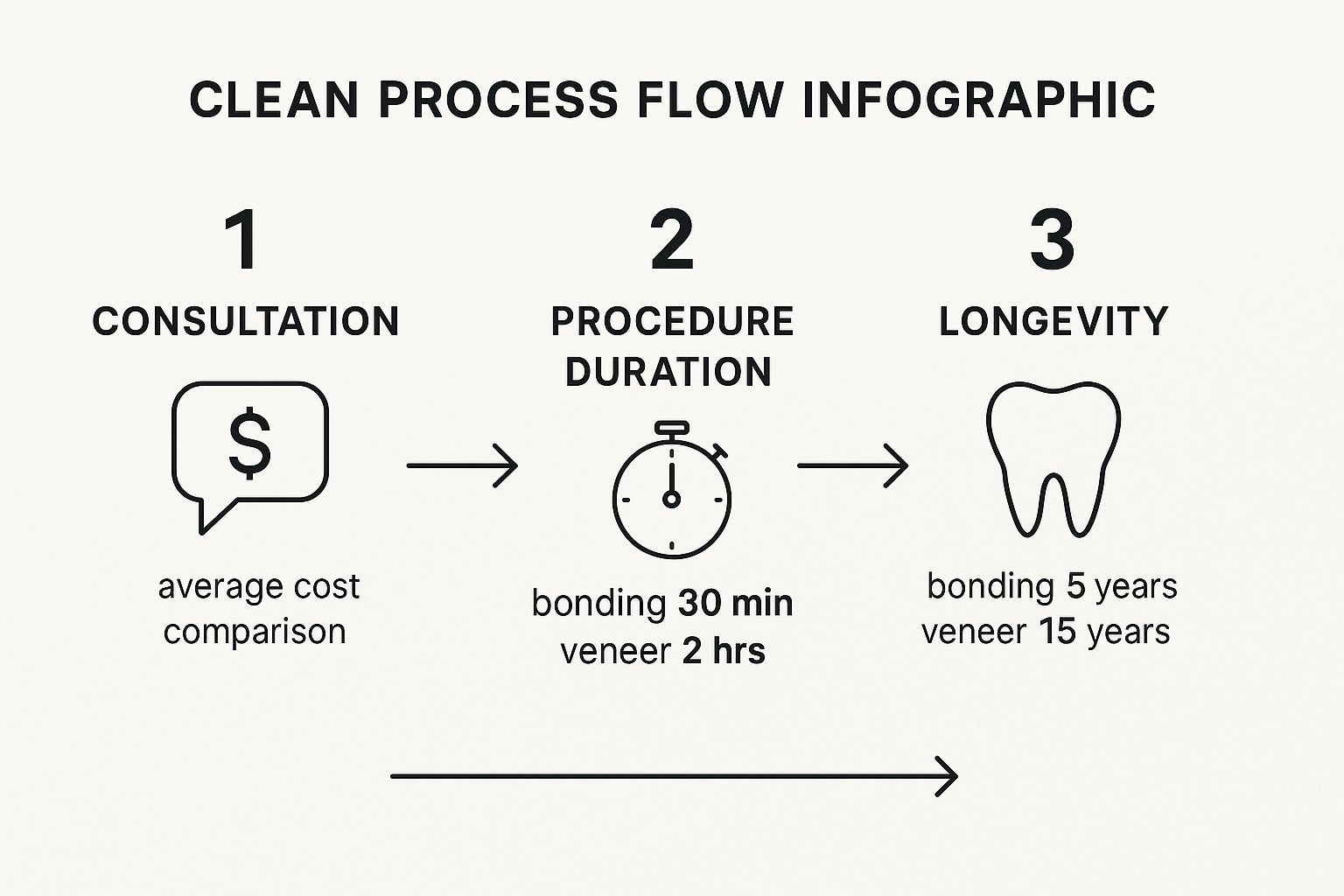
As you can see, bonding gets you a fast, affordable fix. On the other hand, veneers are a true long-term investment in durability and aesthetics, but they require a bigger commitment upfront.
The Single-Visit Artistry of Dental Bonding
The dental bonding process is remarkably efficient. It’s a same-day fix, usually wrapped up in a single appointment that takes about 30 to 60 minutes per tooth. Think of it as a direct, hands-on procedure where your dentist is both a clinician and a sculptor, working right on your tooth.
Here’s a look at what happens during that one visit:
- Shade Matching: First, your dentist pulls out a shade guide to find the perfect color of composite resin. The goal is to get a flawless match to your natural teeth so the repair is completely invisible.
- Tooth Preparation: The tooth surface gets a gentle "etching" with a mild conditioning liquid. This creates microscopic texture on the enamel, giving the bonding material something to grip onto. It’s a minimally invasive step and totally painless.
- Applying and Sculpting the Resin: Now for the artistic part. A putty-like, tooth-colored resin is applied directly to the tooth. Your dentist then skillfully shapes and molds the material to fill a chip, close a gap, or build up the tooth’s shape.
- Curing and Final Polishing: Once the resin is sculpted perfectly, a special high-intensity light hardens it in just a few seconds. To finish, your dentist will trim, shape, and polish the material until it has a natural shine that blends seamlessly with the rest of your smile.
And that’s it. You walk out of the office with a restored tooth—no lab work, no temporaries, and no need for a follow-up visit.
The Multi-Stage Precision of Porcelain Veneers
In sharp contrast, getting porcelain veneers is a meticulous, multi-stage journey. This process typically unfolds over two to three appointments across several weeks, and it’s all about precision and customization to create a durable, flawless smile makeover.
The main difference is that veneers are made indirectly in a dental lab, not directly on your teeth like bonding.
A critical distinction in the dental bonding vs veneers comparison is permanence. The veneer process requires the removal of a thin layer of enamel, making it an irreversible procedure. This commitment ensures the veneers fit perfectly without looking bulky, but it’s a decision that can't be undone.
The veneer journey is broken down into a few distinct phases:
- The Smile Design Consultation: Your first visit is a deep dive into your aesthetic goals. You and your dentist will discuss the ideal shape, size, and color for your new smile. This is where the blueprint for your transformation is mapped out.
- Tooth Preparation and Impressions: At the next appointment, a very thin layer of enamel—usually less than a millimeter—is carefully removed from the front of the teeth. This slight reshaping is essential to make sure your final veneers sit flush with your gum line and look natural. After that, precise impressions of your prepared teeth are taken and sent off to the dental lab.
- Wearing Temporary Veneers: You won’t leave the office with exposed, prepared teeth. Your dentist will place a set of temporary veneers to protect your teeth. This also gives you a "test drive" of your new smile while your permanent ones are being custom-made by the lab.
- The Final Bonding Appointment: After 2-3 weeks, your custom porcelain veneers will arrive from the lab. You'll come in for your final visit, where the temporaries are removed. Your dentist will carefully check the fit and color of the permanent veneers before bonding them to your teeth with a powerful dental cement. The result is your stunning, brand-new smile.
Comparing Aesthetics, Durability, and Longevity
When you're weighing dental bonding vs. veneers, the conversation always comes back to two make-or-break factors: how they look and how long they last. Both options can give you a fantastic smile, but they get there with very different materials. Understanding what that means for aesthetics and durability is the key to making a choice you'll be happy with for years to come.
Porcelain veneers are, for good reason, considered the pinnacle of cosmetic dentistry. Their secret lies in the material itself—a high-grade ceramic that perfectly mimics the translucent quality of natural tooth enamel. This is a huge deal. Veneers don’t just sit on top of a tooth; they reflect light with the same depth and life as a real, healthy tooth, making the final result practically invisible to the naked eye.
Dental bonding, on the other hand, is done with a composite resin. Modern resins are incredible and can be polished to a great finish, but the material is naturally more opaque than porcelain. It provides a beautiful, instant fix, but it can sometimes lack that subtle, lifelike shine that makes veneers look so exceptionally real.
The Critical Factor of Stain Resistance
One of the biggest real-world differences you’ll notice is how each one handles your morning coffee. Porcelain is a non-porous ceramic, almost like glass. This makes it incredibly resistant to stains from things like coffee, tea, red wine, or tobacco.
A key takeaway here is that porcelain veneers will keep their custom-matched color for their entire lifespan. The shade you and your dentist pick on day one is the same shade you'll have a decade from now. It’s predictable, lasting beauty you don’t have to worry about.
Composite resin, being a type of high-grade plastic, is porous. Over time, those tiny pores can soak up pigments from what you eat and drink, leading to gradual staining. If you're a big coffee or tea drinker, you might find your bonded teeth start to yellow a bit faster than your natural teeth, meaning you'll need more frequent polishing or touch-ups to keep them looking their best.
Lifespan and Durability: A Head-to-Head Look
Looks are important, but durability is what determines the real value of your investment. This is where the science behind porcelain and composite resin creates a clear difference in how long they'll last.
Porcelain veneers are incredibly strong and built for the long haul. With proper care, they have an average lifespan of 10 to 20 years, and it’s not uncommon to see them last even longer. The ceramic material is tough, resilient, and stands up to normal biting and chewing forces without chipping easily.
Dental bonding is simply not as durable in comparison. The composite resin is strong, but it's not as tough as porcelain. It's more likely to chip or show wear, especially if it’s on the biting edges of your front teeth. The typical lifespan for dental bonding is somewhere between 3 to 10 years. How long it lasts really depends on your habits, your bite, and which tooth has the bonding.
To put it all together, here’s a straightforward comparison.
| Feature | Dental Bonding (Composite Resin) | Porcelain Veneers (Ceramic) |
|---|---|---|
| Aesthetic Quality | Good, opaque finish that blends well | Superior, translucent, and lifelike |
| Stain Resistance | Porous; can stain over time | Highly resistant to stains |
| Durability | Prone to chipping and wear | Very strong and chip-resistant |
| Average Lifespan | 3-10 years | 10-20+ years |
| Long-Term Cost | Lower upfront, may need replacement/repairs | Higher upfront, a more permanent solution |
While veneers are a bigger investment upfront, their durability often makes them the more cost-effective choice over a lifetime since they don’t need to be replaced as often. Of course, for those looking at a permanent fix for missing teeth—a totally different restorative path—it's useful to know how other treatments, like dental implants, offer lifetime durability. Ultimately, the choice between bonding and veneers comes down to what you value most: immediate affordability or long-term perfection and strength.
How To Choose The Right Option For You
Making the final call in the dental bonding vs veneers debate isn't about picking the "best" treatment—it's about choosing the right treatment for you. The ideal option is the one that perfectly fits your immediate needs, long-term smile goals, and personal situation.
Let's move beyond the technical specs and look at some real-world situations. Seeing how each treatment plays out in specific scenarios can help you figure out which path makes the most sense for your smile.
When Dental Bonding Is The Smart Choice
Dental bonding is a fantastic solution when your cosmetic goals are targeted and specific. It’s often the perfect entry point into cosmetic dentistry because it’s affordable, fast, and minimally invasive.
Consider dental bonding if you see yourself in one of these profiles:
- You Have a Minor, Isolated Flaw: Think about a teenager who gets a small chip on a front tooth during a soccer game. Bonding can restore the tooth’s shape and look in a single, quick visit without having to permanently alter the tooth.
- Your Budget Is a Primary Concern: Maybe you want to close a small gap between your two front teeth but aren't quite ready for the financial commitment of veneers. Bonding delivers an effective and budget-friendly fix.
- You Want a Reversible Option: If you're hesitant about permanently changing your natural teeth, bonding is the perfect choice. Since it typically requires no enamel removal, the procedure can be reversed or redone later if you decide veneers are your next step.
Bonding is the ultimate "quick fix" for smaller cosmetic issues. It's a conservative, efficient, and affordable way to achieve a noticeable improvement without a major commitment of time or money.
When You Should Invest In Veneers
Porcelain veneers are a more significant investment, designed for those seeking a dramatic and long-lasting smile transformation. This is the premier option when your goal is a comprehensive smile makeover that delivers superior aesthetic results.
It's time to seriously consider veneers if this sounds like you:
- You Want a Complete Smile Transformation: Your goal isn't just to fix one tooth—it's to create a brighter, straighter, and more uniform smile. Veneers can correct issues across multiple teeth at once, including deep stains, crookedness, and inconsistent sizing.
- Durability and Stain Resistance Are Priorities: If you're a daily coffee or red wine drinker, you'll want a solution that won’t discolor over time. The non-porous surface of porcelain ensures your smile stays brilliant for 10 to 20+ years with proper care.
- You're Looking for a Long-Term, Permanent Solution: You see this as a one-time investment in your confidence and appearance. Because veneers are a permanent commitment, they are perfect for someone who has a clear vision for their smile and wants the most durable, beautiful outcome possible.
By weighing these practical scenarios against your own goals, the choice becomes much clearer. Are you looking for an immediate repair or a long-term transformation? Your answer will point you in the right direction. Both are excellent steps toward a more confident smile, and you can explore a full range of possibilities with modern cosmetic dentistry.
Frequently Asked Questions About Bonding and Veneers
Even after laying out all the details, you probably still have a few questions floating around. It’s completely normal. We hear these all the time from patients trying to decide what’s best for their smile, so let's get right to them.
Can Bonding or Veneers Be Whitened Later?
This is a huge question we get, and the answer is a straightforward no. Once your bonding or veneers are in place, their color is set for good. Neither the composite resin used for bonding nor the porcelain for veneers will respond to whitening gels like your natural tooth enamel does. They simply aren't porous.
This is exactly why we take such care to match the shade of your restoration to your surrounding teeth from the very start. If you’re thinking about whitening your smile, you absolutely must do it before you get any cosmetic work done. That way, we can match your new bonding or veneers to your brighter, whiter teeth.
Which Option Is Better for Front Teeth?
Both are fantastic options for front teeth, but they shine in different situations. When it comes to the great dental bonding vs veneers debate for the teeth that everyone sees, it really boils down to the scope of the fix you need.
- Bonding is your go-to for smaller, targeted repairs. Think of it as a perfect solution for a single chipped corner, a tiny crack, or closing a small gap between two teeth. It’s precise and effective for minor touch-ups.
- Veneers, on the other hand, are the undisputed champion for a complete smile makeover. If you're looking to transform multiple front teeth, correct severe discoloration, or fix alignment issues that bonding can’t handle, veneers are the way to go.
Here's the bottom line: for a small, isolated fix, bonding is brilliant. For a dramatic, uniform change to the entire look of your smile, veneers are the definitive choice.
How Do I Care for My Bonded Teeth vs My Veneers?
Taking care of both is pretty similar to your regular routine, but there are a few key differences to keep in mind. For both, you’ll need to stick with diligent brushing (using a soft-bristled toothbrush!), daily flossing, and, of course, regular dental check-ups.
With bonding, you have to be a bit more careful. The resin can stain more easily and is more prone to chipping, so you'll want to avoid biting down on hard things like ice, pen caps, or your fingernails with that tooth. For veneers, the porcelain is incredibly durable and stain-resistant, so your main job is keeping the gums around them healthy.
Great at-home habits are non-negotiable for protecting your investment in either case. You can learn more about building a strong foundation with great preventive dental care to keep your cosmetic work looking its best for years.
At Beyond Dental Care, we believe the best choice is always the one that aligns with your health, goals, and confidence. Schedule a consultation today to discuss whether dental bonding or veneers are the right path for your perfect smile. https://beyonddentalcare.com