
So, you're wondering how long the dental implant process takes. The short answer? A typical case usually lands somewhere between 3 to 9 months. But if you need some prep work done first, like a bone graft to build up your jaw, the journey could stretch out to a year or even a bit longer.
The Dental Implant Timeline at a Glance
To give you a clearer picture, here's a table breaking down the major steps and how much time each one typically takes.
| Stage | Typical Duration | What Happens During This Stage |
|---|---|---|
| Initial Consultation & Planning | 1-2 Appointments | X-rays, scans, and creating your personalized treatment plan. |
| Bone Grafting (If Needed) | 3-6 Months Healing | Placing bone material to ensure a strong foundation for the implant. |
| Implant Placement Surgery | 1-2 Hours | The titanium implant post is surgically placed into your jawbone. |
| Osseointegration (Healing) | 3-6 Months | Your jawbone naturally fuses with the implant, creating a permanent bond. |
| Abutment Placement | 1-2 Weeks Healing | A connector piece (the abutment) is attached to the implant post. |
| Final Crown Placement | 1-2 Appointments | Your custom-made crown is attached to the abutment, completing your smile. |
This timeline helps visualize why implants aren't a quick fix, but rather a carefully phased process designed for lasting success.
The Dental Implant Journey from Start to Finish
It helps to think of getting a dental implant like building a custom home. You can't just put up the walls on day one; you need a solid foundation, careful construction, and all the finishing touches. This isn't a single-visit procedure but a phased journey, and understanding the roadmap from the get-go helps set realistic expectations for the commitment involved.
This overview breaks down the main stages you'll go through, from your first chat with us to getting your final, permanent tooth.
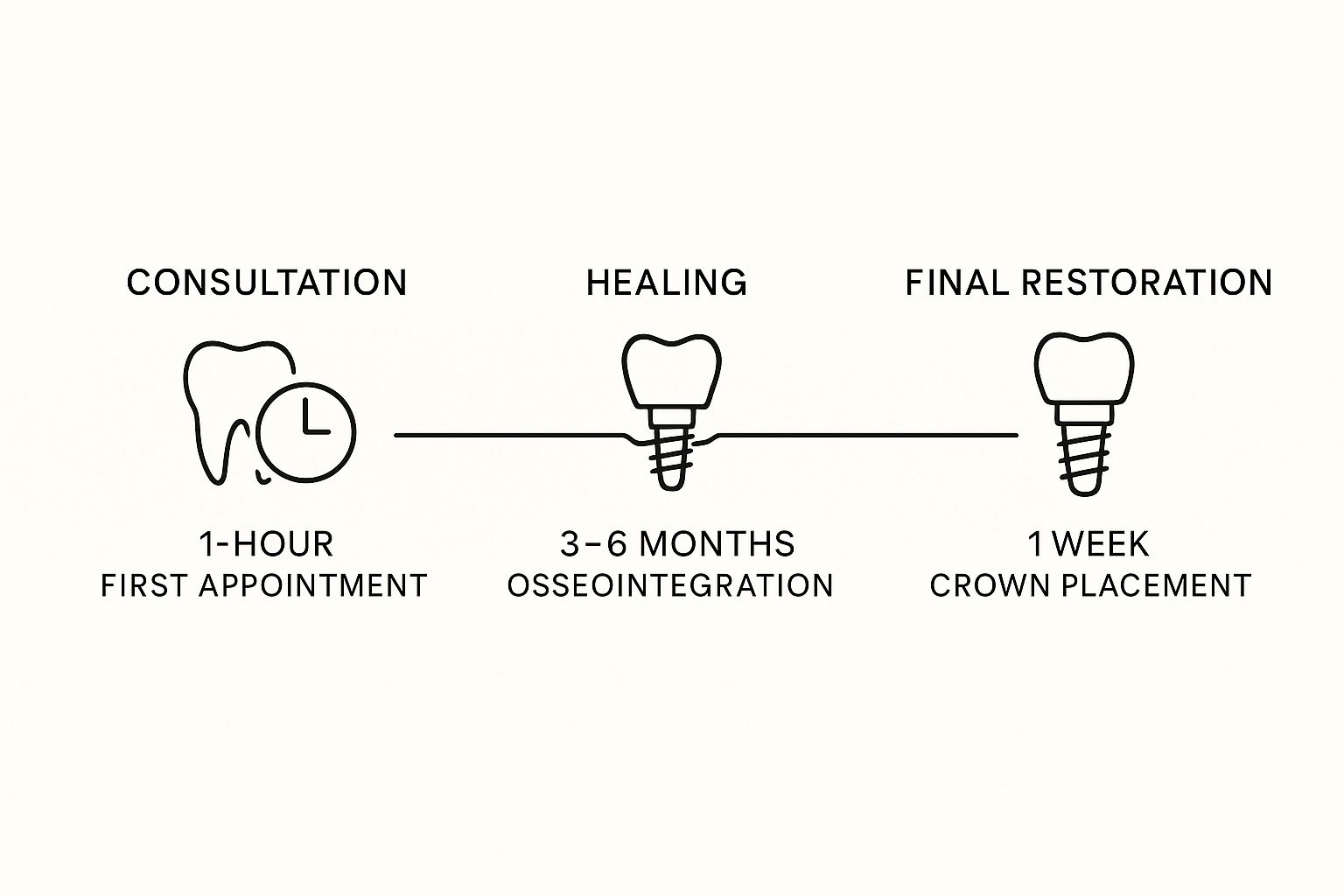
As you can see, a big chunk of that time is for healing. And honestly? That's the most critical part for making sure your implant lasts a lifetime.
Key Milestones on Your Timeline
The entire process is broken down into distinct phases, each with its own purpose and timeframe. Before we dive deeper, it’s good to have a clear idea of what a dental implant is—it’s essentially a small, medical-grade titanium post that acts as a new root for your tooth.
For most people, the whole process from start to finish will take about six to nine months, assuming you don't need any major prep work. The reason it takes this long comes down to the body's natural healing process, which we simply can't rush.
The real star of the show is a biological process called osseointegration. This is where your jawbone literally grows around and fuses with the titanium implant, making it a permanent part of you. This step alone takes 3-6 months, and it's absolutely essential for the implant's stability.
This investment of time is exactly what gives you the rock-solid security and durability that implants are famous for. To really appreciate why it's worth the wait, you can explore the 5 benefits of dental implants and see how they can genuinely improve your quality of life. Every stage, from the initial consult to the final crown, is a deliberate step toward giving you back a smile that looks, feels, and functions just like new.
Crafting Your Personalized Treatment Blueprint

Your journey toward a new smile kicks off with a comprehensive consultation that’s far more than a simple check-up. Think of this as the architectural design phase. Your dental team becomes the architect, meticulously drawing up the blueprint for your new smile to ensure the entire process is set up for success from day one.
This initial phase is all about gathering intel. We’ll take a deep dive into your health history and use advanced diagnostics to create a complete picture of your oral health. This isn't just a formality—it's the critical first step in mapping out a successful treatment.
Your Health and Jawbone Assessment
A key part of this stage is looking closely at the health and density of your jawbone. You can think of your jawbone as the rich soil where a new tree will be planted. For the implant (the tree) to grow strong and stable, the soil needs to be healthy and deep enough to support it.
To figure this out, we rely on sophisticated imaging tools. These often include:
- Digital X-rays: These give us a clear, foundational view of your teeth and the underlying bone structure.
- 3D Cone Beam CT Scans: This is where we get the real details. These scans provide a complete, three-dimensional map of your jaw, showing its exact height, width, and density. It also lets us see the precise location of important structures like nerves and sinuses.
This detailed evaluation tells us if your jawbone is ready to go or if we might need a preparatory step, like a bone graft, to build things up first. This initial consultation usually wraps up in one or two appointments and is absolutely essential for creating a plan that’s tailored just for you.
Ultimately, this blueprint ensures every decision is made with your long-term success in mind. It lays the groundwork for every step that follows in your restorative dentistry and dental implants journey, confirming you’re an ideal candidate for a predictable and lasting result.
Placing the Foundation with Implant Surgery
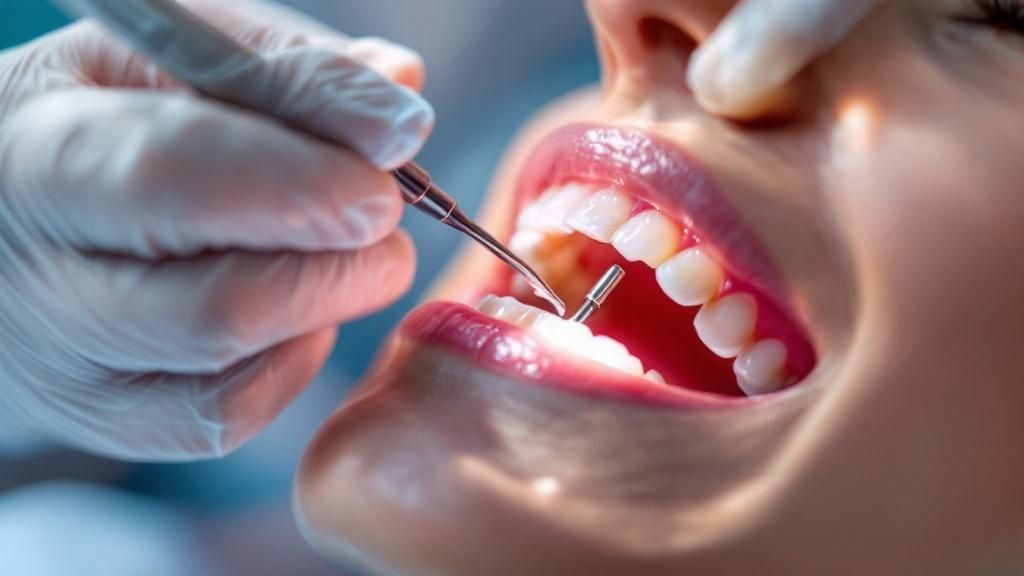
This is the big day—the milestone where we actually place the implant. I know the word "surgery" can make anyone feel a little anxious, but knowing exactly what’s going to happen can make the whole experience feel much more manageable. The goal here is to set a strong, permanent foundation for your new tooth, and you might be surprised at how efficient the procedure is.
For a single implant, the surgery itself usually takes only about one to two hours. We start by making a tiny incision in your gum tissue, which gives us access to the jawbone right underneath. Then, using very precise instruments, we create a small, exact space in the bone and gently guide the titanium implant post into place.
I know that might sound a bit intense, but it's an incredibly controlled and delicate procedure. Think of it like a master carpenter setting a heavy-duty anchor into a wall before hanging something valuable—precision is everything.
Ensuring Your Complete Comfort
Your comfort during the procedure isn't just an afterthought; it’s our top priority. We want you to feel relaxed from start to finish, and we have several ways to make sure that happens.
You are always in control of your comfort. We discuss all options beforehand, from local anesthetics that numb the area completely to light sedation that helps you feel deeply relaxed and at ease throughout the appointment.
This allows our team to work efficiently while you remain comfortable and completely stress-free. Our main goal is to make this experience as smooth and painless as possible, taking away any fear of the unknown.
By breaking down the surgery day into these clear, simple steps, you can walk into your appointment feeling confident and prepared. It’s a significant but very straightforward part of the how long is the dental implant process timeline, and it gets you one major step closer to your final, beautiful smile.
Understanding the Crucial Osseointegration Period
After your implant is placed, the most important waiting game begins. This period is called osseointegration, and it's the single biggest factor in the long-term success of your new tooth. It's also the main reason the dental implant process is measured in months, not weeks.
Think of it like a new tree putting down deep, strong roots into the earth. That’s exactly what the titanium implant is doing inside your jawbone. On a microscopic level, your own bone cells are growing onto and meshing with the implant’s surface, creating a powerful, natural bond.
The Science of a Stable Foundation
This fusion creates an incredibly stable and permanent foundation, turning the implant into a true part of your body. You might feel totally recovered from the surgery in just a couple of weeks, but this quiet, powerful process is still hard at work behind the scenes. It's what transforms a simple titanium post into a rock-solid anchor for your new tooth.
Being patient here is the best investment you can make for a lifetime of stability. Rushing this step would be like building a house on a wet concrete foundation—it’s just not worth the risk.
Osseointegration is where the real magic happens. It’s a quiet but powerful process that ensures your new tooth will have the strength to function just like a natural one, allowing you to chew, speak, and smile with total confidence.
This remarkable biological bond is why dental implants boast a success rate of over 95%. Titanium is biocompatible, which means your body readily accepts it and allows the bone to fuse with it without any issue. For most people, this critical healing and fusion takes anywhere from three to six months.
While the exact timeline depends on your individual health, understanding this phase is key. If you're curious about the day-to-day healing, check out our guide on how long it takes to recover from dental implants.
This bonding process, where the jawbone grows around and bonds with the implant, is essential for its success and generally takes between three to nine months to complete. You can learn more about this timeline and what to expect from this detailed overview from Lake Area Dentistry.
Completing Your Smile With The Abutment And Crown
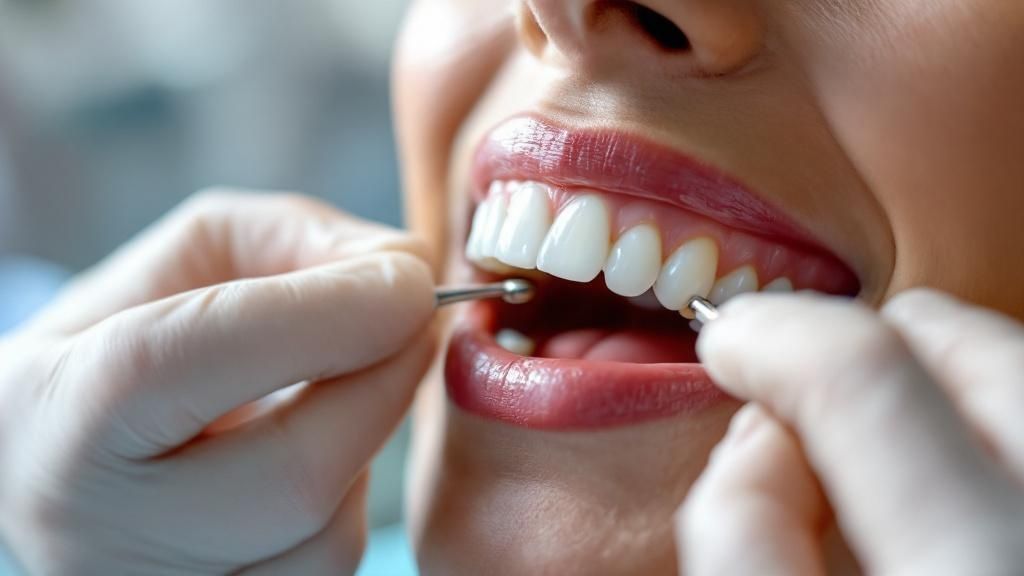
Once the critical osseointegration period is complete, you're officially on the home stretch. This is the exciting final phase where we bring your new tooth to life, turning that hidden foundation into a beautiful, functional part of your smile. It all starts with placing the abutment.
The abutment is a small but vital connector that attaches to the top of your fully integrated implant. Think of it as the sturdy neck that will support the head—your final crown. Placing it is a minor procedure to expose the implant, and your gums will need about one to two weeks to heal around it, forming a neat, natural-looking collar.
Crafting Your Custom Crown
With your gums fully healed, it’s time for the real artistry: creating your permanent tooth. This isn't about picking a generic cap off a shelf. We take incredibly precise impressions of your mouth, which act as the blueprint for our skilled dental lab technicians.
They meticulously craft your crown to be a perfect match in every way:
- Shade: Ensuring it blends seamlessly with your neighboring teeth.
- Shape: Recreating the natural contours and cusps for a comfortable bite.
- Size: Fitting perfectly into the gap without crowding its neighbors.
This careful, custom work is what makes your new tooth look and feel completely natural. You can learn more about this final, crucial piece in Your Guide to Crowns for Dental Implants.
The final crown placement is the moment it all comes together. It’s the rewarding culmination of your patience and the entire journey—a fully restored tooth that lets you chew, speak, and smile with total confidence again.
The last appointment, where we permanently secure the crown, is usually quick and straightforward. With this final step, the entire how long is the dental implant process timeline comes to a successful close.
Why Your Dental Implant Timeline Might Be Longer
While there’s a general timeline for dental implants, not everyone’s journey looks the same. Sometimes, your body needs a little extra prep work to ensure the best results, and that can extend the process. Understanding these possibilities from the get-go helps you set clear and realistic expectations.
The most common reason for a longer timeline is the need for a bone graft. Think of it this way: your jawbone is the foundation for your new implant. If that foundation isn't strong or dense enough, the implant won't have the secure anchor it needs to last. A bone graft is a straightforward procedure where we add bone material to build up the area, creating a solid base for success.
The procedure itself is simple, but the real time investment is in the healing that follows.
Healing from Preparatory Procedures
After a bone graft, your body needs time to integrate the new material and build strong, new bone. This healing process typically adds an extra three to six months to your timeline before we can even think about placing the implant post. This step is absolutely critical for the long-term health and stability of your new tooth.
Another common factor is a recent tooth extraction. If a tooth needs to be pulled from the future implant site, we have to let the socket heal completely first. This can take anywhere from a few weeks to a few months before the area is ready to receive an implant.
It's helpful to view these preparatory steps not as setbacks, but as strategic moves to guarantee your implant has the best possible chance to last a lifetime. A little patience during this phase pays off massively in the long run.
To give you a clearer picture, here’s how these extra steps can adjust the overall schedule.
Standard vs. Extended Implant Timeline Comparison
The table below illustrates how a preparatory procedure like a bone graft can impact the total duration of your dental implant treatment.
| Stage | Standard Timeline | Timeline with Bone Graft |
|---|---|---|
| Preparatory Work | Not required | 3-6 months for healing |
| Implant Placement | Occurs after initial consult | Occurs after prep healing |
| Osseointegration | 3-6 months | 3-6 months |
| Total Estimated Time | 5-9 months | 9-15+ months |
As you can see, building a proper foundation is a key part of the process and accounts for the biggest difference in timelines.
Finally, your overall health and lifestyle habits play a role. Conditions like uncontrolled diabetes or smoking can slow down your body's natural healing abilities, potentially adding more time to each stage. This is why our initial, thorough consultation is so important—it helps us understand your unique situation and decide on the best path forward, whether that’s an implant or another solution. Considering all these factors is a key part of the discussion when comparing dental implants vs dentures.
Your Top Questions About Dental Implants
When you're thinking about dental implants, it's completely normal to have a few questions pop up. Getting clear, straightforward answers can make all the difference in feeling confident about your decision to restore your smile.
Is the Dental Implant Process Painful?
The big question on everyone's mind! The short answer is no, not during the surgery itself. We use a local anesthetic or offer sedation to ensure you're completely comfortable and don't feel any pain during the procedure.
Afterward, it's normal to feel some discomfort, but most of our patients say it’s less intense than having a tooth pulled. This is typically managed easily with over-the-counter pain relievers, and you can expect to be back to your usual routine within just a few days.
Can the Entire Process Be Done in One Day?
You've probably heard about "teeth-in-a-day," and while it's an exciting concept, it's not the full story for most people. This approach usually means we can place a temporary crown on the same day as your implant surgery, giving you an immediate aesthetic fix.
However, the most critical part of the process, osseointegration, can't be rushed. This is where your jawbone naturally fuses with the implant, creating a rock-solid foundation. This vital healing stage takes several months before we can attach your beautiful, permanent crown.
What Factors Influence the Final Cost?
The total investment for your new smile can vary quite a bit, as every patient's needs are unique. The final cost really depends on a few key things:
- How many implants you need to achieve your goals.
- If you need any prep work, like a bone graft to strengthen your jaw.
- The material you choose for your final, permanent crown.
- Your specific treatment plan and even your geographic location.
The best way to get a clear, accurate number is to come in for a detailed consultation where we can look at your specific situation.
At Beyond Dental Care, we're all about creating personalized treatment plans that put your long-term health and comfort first. Book your consultation with us today to get the clear answers you deserve and start your journey toward a fully restored smile.