
For many people, the thought of a dental visit is enough to cause anxiety. But a big change is happening in dentistry. Modern dental practices are prioritizing patient comfort more than ever before. This shift comes from a simple idea: when patients feel good, they have better health and become more loyal.
The New Standard of Comfort-First Dental Care
Fear and anxiety are still two of the biggest reasons people delay dental care, especially among adults and seniors. In response, the dental world is moving away from the cold, clinical style of the past. It is now embracing a personalized, comfort-first approach.
Patients now expect more than just clinical expertise. They want to feel heard, relaxed, and cared for. This change in patient expectations is reshaping how dentists design their offices and connect with people.
This has led to an industry-wide emphasis on pain-free techniques, sedation options, and amenities that reduce stress. Examples include calming environments, noise-canceling headphones, and flexible scheduling. Practices that ease these emotional barriers are seeing stronger loyalty and higher retention.
A Human-Centered Approach to Dentistry
The comfort-focused model believes that a relaxed patient is a healthier patient. This idea affects every part of the dental visit, from the waiting room to how a dentist explains a procedure. To improve the patient experience, many modern practices use new technologies to make appointments smoother and reduce wait times, which is a key part of understanding queue management systems.
This trend isn’t just about comfort—it’s also about control. Patients want transparency, education, and involvement in their care decisions. Providers who guide patients through treatment options with clarity, empathy, and personalization stand out in a crowded marketplace.
This infographic shows the change in patient care, from a traditional, procedure-focused model to a modern, comfort-centered one.
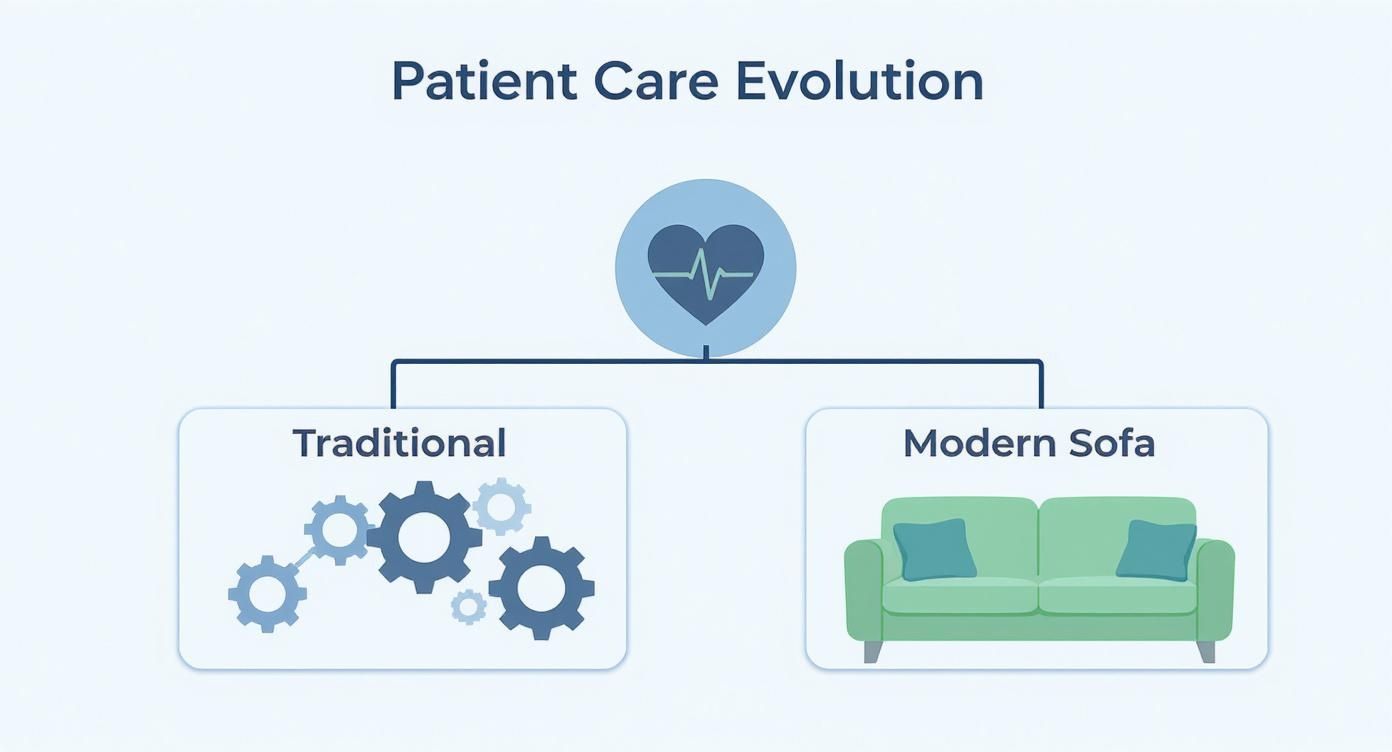
As you can see, the focus has shifted from just treating teeth to caring for the whole person. This recognizes that emotional needs are a big part of overall health.
This table shows the key differences between the old way of doing things and the new, comfort-focused approach in modern dentistry.
Old vs New Approaches in Dentistry
| Aspect | Traditional Dental Practice | Modern Comfort-Focused Practice |
|---|---|---|
| Primary Focus | Clinical efficiency and procedures | The patient's overall experience and emotional well-being |
| Environment | Often sterile, clinical, and intimidating | Warm, welcoming, and designed to reduce stress |
| Communication | Technical, one-way instructions | Empathetic, collaborative, and educational |
| Technology | Used mainly for clinical tasks | Used to enhance comfort, communication, and efficiency |
| Patient Role | Passive recipient of treatment | Active partner in decision-making |
The difference is clear. The modern model is a complete rethinking of what a dental visit should feel like.
Practices like Beyond Dental Care are designed around this comfort-focused model. They offer personalized treatment plans, compassionate communication, and a welcoming environment that helps nervous patients feel at ease.
If you're in North Glendale, Stetson Valley, or the Upper West Side of Phoenix and have been putting off a dental visit due to fear or uncertainty, discover the difference at Beyond Dental Care—where your comfort is our highest priority.
Why Dental Anxiety Is So Common
If the thought of a dental chair makes you nervous, you are not alone. Dental anxiety is a common problem that stops millions of people from getting the care they need. The reasons for this fear often come from past experiences. Understanding these reasons is the first step to moving from anxiety to ease.
For many adults and seniors, the fear comes from a single bad experience years ago. In the past, dental technology was not as focused on comfort. One painful or scary visit could leave a lasting emotional mark. These memories can keep someone away from the dentist for years, even if they know they need to go.
This fear isn't just about pain. It's also about feeling a loss of control. When you're in the dental chair, you can't see what is happening, and it's easy to feel helpless. The sounds and smells of a dental office—like a drill or antiseptic—can also trigger old feelings of fear.
Understanding the Triggers
The causes of dental anxiety are personal, but they often fall into a few common types that modern dentists are trained to handle.
- Fear of Pain: This is the biggest one. The worry that a procedure will hurt is a huge barrier, even though today's methods are designed to be nearly painless.
- Past Traumatic Experiences: A single bad appointment, especially in childhood, can create a lifelong fear of dental care.
- Embarrassment: Many people feel ashamed about the condition of their teeth, especially if they have not seen a dentist in a long time.
- Loss of Control: Feeling helpless or stuck in the dental chair is a major source of stress for many people.
How Modern Dentistry Is Responding
Modern comfort-first dentistry understands these fears. Practices like Beyond Dental Care specialize in caring for adults and seniors, many of whom have dental anxiety or past negative experiences. The goal is to build a new, positive relationship with dental care based on trust, gentleness, and empathy. For more help with these feelings, check out our guide on how to overcome dental anxiety.
Dental anxiety has long been a major barrier to care. Studies show that up to 75% of adults in the United States feel some level of dental fear, with about 20% avoiding visits altogether. In response, sedation techniques have become a game-changer. A 2023 survey found that 68% of dental practices now offer sedation, with tailored protocols that have been shown to reduce reported anxiety levels by 40%.
Creating a Truly Calming Dental Environment
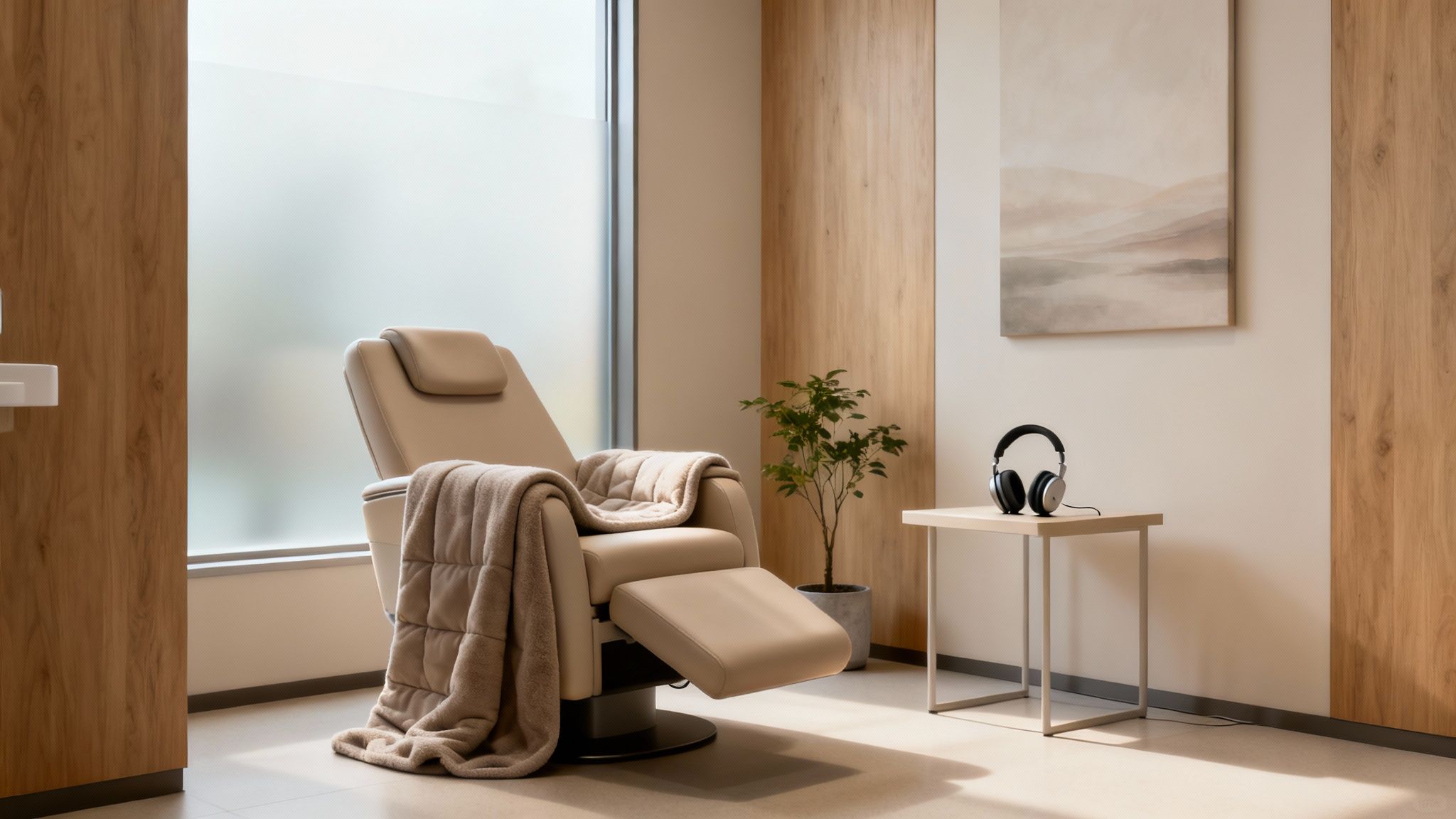
Imagine walking into a dental office that feels more like a spa than a clinic. This is the new reality in modern dentistry. The office is designed to help you relax from the moment you arrive. The journey from anxiety to ease often starts in the waiting room.
Gone are the days of sterile white walls and harsh lights. Today, comfort-focused practices use calming colors, soft lighting, and comfortable furniture to create a peaceful atmosphere. Soothing music often plays to help lower stress right away.
Amenities Designed to Melt Away Stress
This focus on comfort continues in the treatment room with amenities chosen to fight common dental fears. These thoughtful touches give you a sense of control and make the experience more pleasant.
- Noise-Canceling Headphones: One of the biggest triggers for dental anxiety is the sound of the drill. Noise-canceling headphones let you block out those sounds and listen to music, a podcast, or watch a movie.
- Entertainment Options: Many modern practices offer personal screens where you can stream your favorite shows. This is a powerful distraction that helps you focus on something enjoyable.
- Comfort Items: Simple things like weighted blankets can provide a secure feeling that calms the nervous system. Warm neck pillows and scented towels add another layer of relaxation.
These are not just perks; they are important tools that change the patient experience. For anyone struggling with dental fear, learning about these options is a great first step. For more tips, our guide on how to relax at the dentist can help.
The main idea is to engage your senses in a positive way. By replacing clinical smells and sounds with pleasant ones, a dental office can change how you feel about your visit. It can turn fear into a feeling of being cared for.
At Beyond Dental Care, creating this type of calming environment is a top priority. We know that for many patients—especially adults and seniors with past bad experiences—feeling comfortable is just as important as the dental care they receive.
How Modern Technology Reduces Pain and Fear
Technology in the dental office is not just about new gadgets. It is about making your visit gentler, quicker, and more clear. Modern tools are designed to deal with the main causes of dental anxiety—the fear of pain and the feeling of not being in control.
Pain-reducing tools and better anesthetics have made many old fears go away. For example, laser dentistry can often treat gum issues or prepare teeth for fillings with less noise and vibration than a traditional drill. This helps reduce a major source of stress for many patients.
Most importantly, today’s technology lets you be a partner in your own treatment. Instead of being told what you need, you can see it for yourself. This change from being a passive patient to an active partner is a powerful way to turn fear into confidence.
Technology That Puts You in Control
Feeling informed and involved is one of the best ways to reduce dental anxiety. When you understand the "why" behind a treatment, the fear of the unknown disappears, and you feel more in control.
Modern dental practices use specific tools to make this happen:
- Intraoral Cameras: These are tiny cameras that let you see exactly what your dentist sees on a screen. This visual proof helps you understand your oral health and why a treatment is needed.
- Digital Imaging and Smile Previews: Advanced imaging technology lets you see your future smile before any work begins. Seeing the final result can turn fear into excitement.
This focus on clarity is a big reason why high-tech dentistry is becoming the new standard for adults and seniors in Phoenix, as it builds trust and removes the mystery from the process.
Immersive Technology for Ultimate Relaxation
Some dental offices are now using technologies like virtual reality (VR) to create calming experiences in the dental chair. The use of VR has been a game-changer for managing patient anxiety.
A 2024 report found that over 45% of pediatric dental clinics in the U.S. now use VR systems, which have been shown to lower patient anxiety scores by an average of 35%. AR tools also help by creating simulations of treatment outcomes, leading to a 50% increase in patient understanding. You can discover more insights about these dental trends on softsmile.com.
When patients are given the tools to see, understand, and participate in their care, the dynamic shifts. Anxiety is replaced with empowerment, transforming the dental visit into a collaborative and positive experience.
The Power of Compassionate Communication
Besides calming environments and high-tech tools, the real key to comfort-first dentistry is the human connection. What truly turns a stressful visit into a good one is compassionate communication—feeling heard, understood, and respected by your dental team.
Modern dental practices understand that fear often comes from feeling uncertain. That’s why they are moving away from one-sided talks and toward real conversations. Dentists and their teams now take the time to listen, explain things in simple terms, and build trust before treatment begins.
This caring approach is very important for adults and seniors who may have had bad dental experiences in the past. It’s all about creating a safe space where patients feel comfortable sharing their fears without being judged.

Putting Patients in the Driver's Seat
This communication-first model is about putting you in control. When you are an active part of your own care, anxiety naturally decreases. This partnership is built on a few key ideas:
- Total Transparency: Your dentist explains every treatment option clearly, including the pros, cons, and costs, so you can make choices that feel right for you.
- Personalized Education: You get information that is specific to your own oral health. This helps you understand the "why" behind every recommendation.
- Collaborative Planning: Your treatment plan is created with you, not just for you. It's a team effort to make sure it fits your comfort level, budget, and health goals.
This patient-first mindset has become a key part of modern dentistry. In fact, a 2025 survey found that 82% of patients prefer clinics that offer digital-first experiences, which support this open communication with things like online scheduling and personalized follow-ups. It’s no surprise that clinics using these tools report a 30% increase in patient retention. Discover more insights on the patient care revolution from 3shape.com.
Comfort is becoming a competitive differentiator, not just a nice-to-have. According to the Q4 2025 report, practices highlighting comfort and personalized care in their messaging see better engagement—especially with seniors, who often prioritize trust, gentleness, and long-term relationships over pricing.
At Beyond Dental Care, compassionate communication is our highest priority. We specialize in caring for adults and seniors in North Glendale, Stetson Valley, and the Upper West Side of Phoenix, creating a welcoming environment where your voice is always heard.
Finding a Dentist Who Prioritizes Your Comfort
The world of modern dentistry is changing because of one simple, powerful idea: patient comfort is a key part of good care. There’s a growing trend toward personalized, comfort-first dental care—driven by patient demand for less clinical, more human-centered experiences. Fear and anxiety remain two of the biggest reasons people delay dental care, especially among adults and seniors.
Practices that understand this are the ones succeeding today. They know that patients now expect more than just clinical expertise—they want to feel heard, relaxed, and cared for. This has led to an industry-wide emphasis on pain-free techniques, sedation options, and amenities that reduce stress.
The New Competitive Edge Is Compassion
This comfort-focused model is also about empowering you. When a dental team is open, provides education, and lets you be a partner in your treatment decisions, it builds a lot of trust. This trend isn’t just about comfort—it’s also about control. Providers who guide patients through treatment options with clarity, empathy, and personalization stand out in a crowded marketplace. When you're looking for a dentist, online reviews can be a great way to see if they are committed to a positive experience. You can read about how to get customer reviews that build trust.
According to the Q4 2025 report, practices highlighting comfort and personalized care in their messaging see better engagement—especially with seniors, who often prioritize trust, gentleness, and long-term relationships over pricing. Comfort is becoming a competitive differentiator, not just a nice-to-have.
Beyond Dental Care is designed around this comfort-focused model. We specialize in caring for adults and seniors, many of whom have dental anxiety or past negative experiences. Our compassionate communication and personalized treatment plans are designed to help you feel completely at ease from start to finish. Learning how to choose a dentist who shares these values is the first step toward a much better experience.
If you're in North Glendale, Stetson Valley, or the Upper West Side of Phoenix and have been putting off a dental visit due to fear or uncertainty, discover the difference at Beyond Dental Care—where your comfort is our highest priority.
Your Questions About Dental Comfort, Answered
It is normal to have questions about a new approach to dentistry, especially one that focuses on easing anxiety. Here are answers to a few common questions to help you feel confident and informed.
What Does Sedation Dentistry Actually Feel Like?
The goal of sedation dentistry is not to put you to sleep. It is to create a deep sense of calm. Think of it like being wrapped in a warm, heavy blanket.
With options like nitrous oxide (laughing gas), you will feel relaxed and maybe a little lightheaded, but you will stay awake and be able to talk to us. If you choose oral sedation, you will feel a deeper level of relaxation. Many patients feel so peaceful they don't remember much about the procedure afterward. The goal is always to make your visit stress-free.
Does a Comfort-Focused Dentist Cost More?
Not always. While some amenities may seem like luxuries, they are often part of a practice's main philosophy. It is their way of providing better care to attract and keep happy patients.
Also, many of the modern techniques we use, like digital imaging, are more efficient. This can save both time and money. The best thing to do is always ask for a clear breakdown of costs before you agree to any treatment.
How Can I Tell if a Dentist Genuinely Cares About Comfort?
You can tell by how they communicate and what they offer. The best way to find out is to look at their website and then ask direct questions when you speak with them.
On their website, look for words that mention patient anxiety, comfort amenities, or a gentle approach. Then, during a consultation, ask them about their process for nervous patients.
You could ask questions like:
- What specific options do you have to help anxious patients relax?
- Can you walk me through a procedure step-by-step before we start?
- Do you offer simple comforts like headphones or warm blankets?
A practice that truly cares about your well-being will welcome these questions and give you detailed, reassuring answers. Their response will tell you everything you need to know.
If you're in North Glendale, Stetson Valley, or the Upper West Side of Phoenix, discover a dental practice where your peace of mind is the top priority. Contact Beyond Dental Care to schedule your visit and experience a new standard of gentle, compassionate care.
Schedule your comfort-focused appointment at Beyond Dental Care