
Overcoming dental anxiety isn’t about pretending your fear doesn’t exist. It’s about understanding where it comes from and finding real, practical strategies to get you through the door and into the chair, comfortably. The first step is simply realizing your feelings are completely valid and shared by millions. This shifts the problem from a personal failing to a common, and most importantly, solvable challenge.
Why Is Dental Anxiety So Common?
If the mere thought of a dental appointment makes your heart pound and your palms sweat, you’re in very good company. This feeling, whether you call it dental anxiety or a full-blown phobia, is a deeply ingrained and surprisingly widespread issue. It’s not a sign of weakness. It’s a complex emotional and psychological response, often tied to very specific and understandable triggers.
By digging into these common causes, you can start to normalize your experience and, more importantly, see a clear path toward comfortable care.

And this isn’t just a hunch; the numbers back it up. A major review of studies found that nearly 14% of adults across the globe deal with some level of dental fear and anxiety (DFA), with over 11% facing high levels of fear. This research, which covered more than 72,000 adults, proves just how universal this is. You can read more about the global prevalence of dental anxiety on medrxiv.org.
Unpacking the Triggers of Dental Fear
So, where does all this anxiety come from? It’s rarely out of the blue. Most dental fears can be traced back to a handful of key sources that often build on each other, creating a powerful aversion to getting the care you need.
Common triggers include:
- Negative Past Experiences: A painful or traumatic dental visit, especially in childhood, can leave a lasting psychological mark that’s hard to shake.
- Fear of Pain: The anticipation of pain is often much worse than the reality. This fear can be fueled by horror stories from friends or family, or even how dentists are portrayed in movies.
- Loss of Control: Lying back in a dental chair while someone works in your mouth is an inherently vulnerable position. For many, that feeling of helplessness is a major source of anxiety.
- Sensory Overload: The unique sounds of a dental office, like the high-pitched whine of a drill, and the clinical smells can be enough to trigger a fight-or-flight response all on their own.
Acknowledging the source of your fear is the first step toward dismantling it. When you can name what scares you—whether it’s the sound of the drill or a memory from the past—you can begin to work with your dental team to address it directly.
The Impact of Embarrassment
Another powerful—and often unspoken—part of dental anxiety is the fear of being judged. You might worry about what the dentist will think about your teeth, especially if it’s been a while since your last appointment.
This sense of embarrassment can feel paralyzing. But here’s the truth from our side of the chair: a compassionate dental team understands that fear, not neglect, is the real barrier. Our goal is to help you move forward, completely free of judgment.
At Beyond Dental Care, we’ve designed a safe space where your comfort and trust are our top priorities. This allows you to set aside the shame and focus on what really matters: finding solutions for a healthier smile.
Actionable Steps Before Your Appointment
Feeling in control is one of the most powerful ways to quiet that nagging, anticipatory stress, and it starts long before you even sit in the dental chair. You can actually build a solid foundation of calm in the days leading up to your visit. It all begins with one crucial choice: picking the right partner for your oral health.
Finding a dental practice that goes out of its way to prioritize patient comfort isn’t just a nice-to-have—it’s non-negotiable. Look for clues on their website that show they understand and welcome anxious patients. A practice like Beyond Dental Care, which was intentionally designed with a calm atmosphere, sends a clear signal that they’re committed to a soothing experience from the moment you walk through the door.
Open Communication Is Your Best Tool
Once you’ve found a practice that feels right, the next move is to open up about your fears. This isn’t a sign of weakness; it’s you taking charge of the situation. A compassionate dental team truly wants to know about your anxiety so they can help you through it.
Be upfront right from the first phone call. You could say something like, “Hi, I’d like to book a new patient visit, and I want to be honest—I have significant dental anxiety. Can you tell me how your team helps patients like me?” Their response will tell you everything you need to know.
Key Takeaway: The goal here is to turn the dental team from strangers into your trusted allies. When they understand what triggers your fear, they can change their approach, explain things differently, and give you the specific reassurance you need to feel safe.
This initial call is basically your chance to interview them. Don’t be shy about asking direct questions that get to the heart of your worries.
- “Do you have comfort items available, like blankets or headphones?”
- “Will the dentist explain what they’re doing before they do it?”
- “If my anxiety gets really high, what are my options for sedation?”
- “Can we set up a simple ‘stop’ signal I can use if I need a break?”
Getting answers to these questions demystifies the entire experience. It swaps out that awful feeling of uncertainty for a clear, predictable plan that’s built around your comfort, putting you firmly back in the driver’s seat.
Schedule Your Visit Strategically
Believe it or not, when you book your appointment can make a huge difference in your stress levels. Instead of just grabbing the first slot they offer, think about what time of day works best for you. For many people who struggle with dental fears, an early morning appointment is the way to go.
Booking that first appointment of the day gives anxiety less time to build up. You wake up, you go, and you get it over with. It completely avoids that all-day dread. An added bonus? The office is usually running right on time, so you’ll spend less time waiting in the reception area—a common spot for anxiety to skyrocket. This simple scheduling trick can be a game-changer in how you overcome dental anxiety.
Breaking the Cycle of Fear and Avoidance
Dental anxiety often traps people in a vicious, self-fulfilling cycle. The fear makes you cancel or put off appointments, which gives small, easy-to-fix oral health issues the time they need to become much more serious. This, of course, only fuels even greater anxiety about what the dentist will find next time.
It’s a pattern we see all the time, known as the fear avoidance cycle, and learning how to break it is one of the most important things you can do for your well-being.

This isn’t an uncommon problem. In fact, one US-based study found that 19% of patients struggle with moderate to high dental anxiety, often stemming from fears about the procedure itself, the cost, or just receiving bad news. Interrupting this cycle is critical, as it almost always leads to worsening oral health and the need for more invasive treatments down the road.
The Long-Term Impact of Avoidance
Let’s play out a real-world scenario we’ve seen countless times. You notice a little twinge of sensitivity in a back molar. It’s easy to ignore. But because of anxiety, you put off making an appointment.
Over the next few months, what was likely a tiny cavity gets deeper, eventually reaching the tooth’s nerve. Now, instead of a quick and simple filling, you’re looking at a potential root canal and a crown—a more involved and costly procedure.
This is the very real outcome of avoidance. Proactive, routine care is your single greatest defense against the complex treatments that so many anxious patients dread. Regular check-ups and cleanings give our team the chance to spot problems when they are small, manageable, and simple to resolve.
The most powerful step you can take to overcome dental anxiety is to shift your mindset from reactive to proactive. Regular visits aren’t just about fixing problems; they’re about preventing them from ever starting.
Reclaiming Control Through Proactive Care
Taking a proactive stance is how you reclaim control over both your oral health and your anxiety. It completely reframes the dental visit, transforming it from a source of fear into a positive, empowering action you take for yourself. This process involves a few key mental shifts and practical steps.
For extra support, you might also want to explore various natural stress relief techniques that can help calm your mind and body far beyond the dental chair.
Here are a few ways to start thinking differently:
- View Dental Visits as Health Maintenance: Think of your check-ups like an oil change for your car. It’s just essential maintenance that prevents major breakdowns. This reframes the appointment as a responsible, healthy choice.
- Focus on the Positive Outcome: Instead of dwelling on the “what ifs” of the procedure, visualize the end result: a healthy mouth, a confident smile, and the immense relief of knowing you’re taking care of yourself.
- Build a Trusting Partnership: When you find a supportive team like ours at Beyond Dental Care, you’re no longer facing your fears alone. You gain expert allies who are genuinely dedicated to making your experience comfortable and stress-free.
This partnership is truly the cornerstone of breaking the cycle. With a compassionate team guiding you, you can take small, manageable steps toward consistent care. Each successful visit builds confidence, becoming proof that you can do this and effectively rewriting your personal narrative from one of fear to one of empowerment.
In-Office Techniques to Stay Calm
So, you’ve done all your prep work, but now you’re settled in the dental chair, and that familiar wave of anxiety starts to creep in. First, know this is completely normal. The key isn’t to never feel anxious, but to have a toolkit of in-the-moment strategies to manage those feelings and stay in control.
These techniques are simple, surprisingly effective, and designed to put you right back in the driver’s seat.
The Power of Purposeful Distraction
One of the best tools we’ve seen work for patients is purposeful distraction. Your mind can only truly focus on one thing at a time, so why not give it something pleasant to concentrate on? This actively diverts your attention away from the dental work itself.
Bring your headphones and queue up a favorite podcast, a gripping audiobook, or a playlist that makes you feel good. It does more than just block out the sounds of the office; it mentally transports you somewhere else. Focusing on a story or music you love helps time fly by and keeps those anxious thoughts from taking over.
Regain Control with a Simple Signal
A huge source of dental anxiety comes from feeling vulnerable or like you’ve lost control. We can fix that instantly by establishing a simple, non-verbal “stop” signal with your dentist and our team before any work begins.
It can be as straightforward as raising your left hand. Agreeing on this signal does two critical things:
- It gives you an immediate, guaranteed way to pause everything if you feel overwhelmed, need a moment, or just want to ask a question.
- Just knowing you have this power is often enough. Many patients tell us they never even use the signal, but having that psychological safety net dramatically lowers their anxiety from the start.
An agreed-upon stop signal is a cornerstone of patient-centered care. It transforms the appointment from something that is happening to you into a collaborative process you actively participate in. This simple agreement builds immense trust.
The flow of a modern, comfort-focused dental visit is built around communication and checking in at every stage.
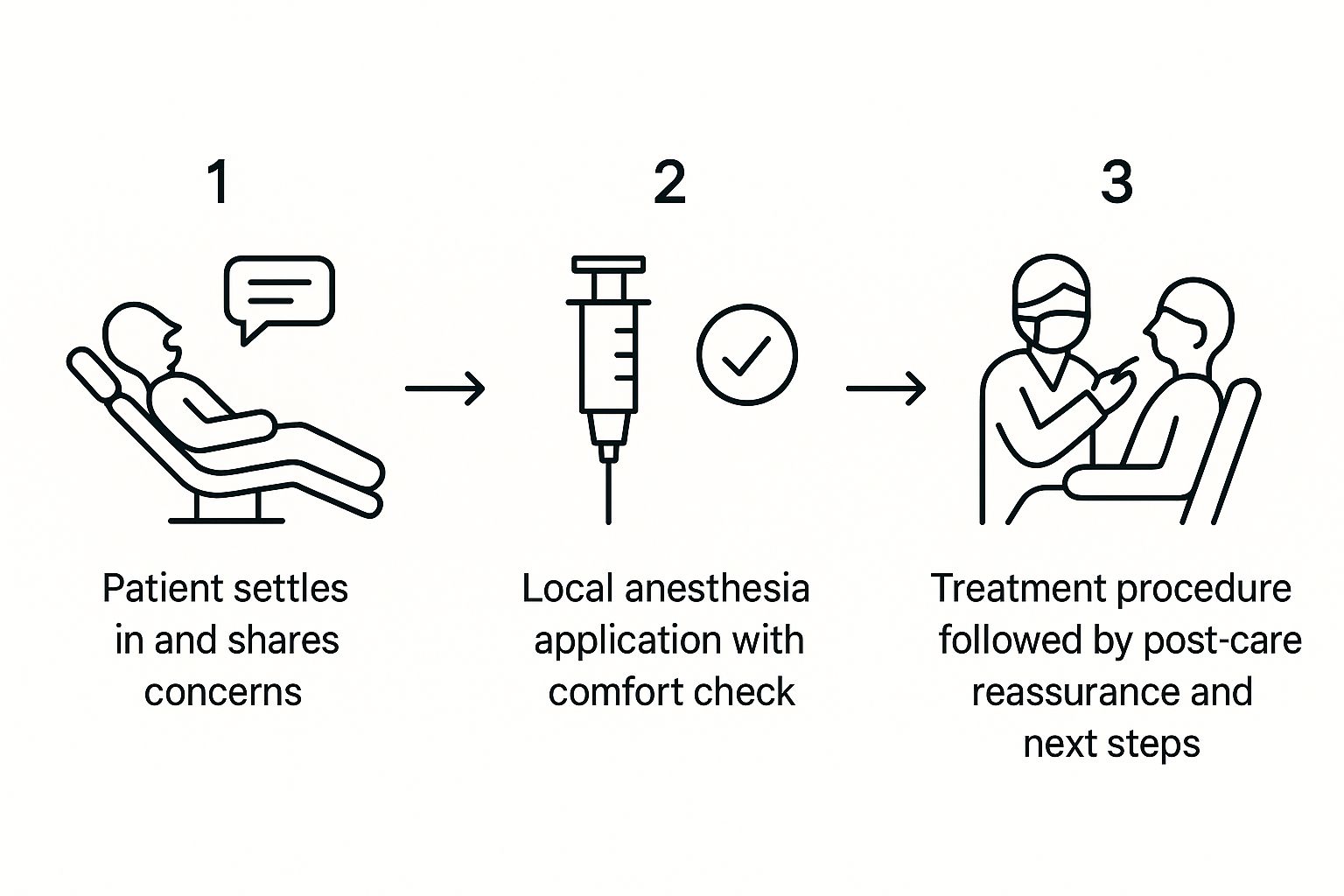
This process ensures you feel heard, respected, and in control from beginning to end.
Understanding Your Sedation Dentistry Options
For some patients, distraction techniques alone might not be enough to quiet more significant anxiety. That’s perfectly okay. This is where sedation dentistry can be a true game-changer, allowing you to get the care you need in a state of deep relaxation. It’s a safe and routine part of how we help patients overcome dental anxiety.
Let’s look at a few common options.
Anxiety Management Techniques Comparison
This table breaks down some of the most effective methods we use to help patients feel at ease. Each one offers a different level of support, tailored to individual needs and comfort levels.
| Technique | How It Works | Best For | Key Benefit |
|---|---|---|---|
| Distraction | Engaging the mind with music, podcasts, or audiobooks to divert focus from the procedure. | Mild to moderate anxiety, routine check-ups, and cleanings. | Patient-led, non-invasive, and empowers you to create your own comfort zone. |
| Stop Signal | A pre-arranged non-verbal cue (like raising a hand) to pause the procedure at any time. | All levels of anxiety, especially for those who fear a loss of control. | Instantly restores a sense of control and builds trust with the dental team. |
| Nitrous Oxide | Inhaling a mild sedative gas (“laughing gas”) to induce a state of calm and well-being. | Moderate anxiety or longer procedures; patients who want to drive themselves home. | Fast-acting, easily adjustable, and the effects wear off within minutes. |
| Oral Sedation | Taking a prescribed anti-anxiety pill before the appointment for deep relaxation. | Significant to severe anxiety, complex procedures, or a strong gag reflex. | Creates a profound sense of calm, with little to no memory of the procedure. |
Understanding these choices can help you have a more informed conversation with your dentist about what will work best for you.
Here’s a closer look at the sedation options:
- Nitrous Oxide: Often called “laughing gas,” this is a very mild sedative you breathe in through a small, comfortable mask over your nose. It creates a feeling of calm and well-being, but you’re always fully conscious and able to communicate. The best part? Its effects wear off just minutes after we remove the mask, so you can safely drive yourself home.
- Oral Sedation: This involves taking a prescribed anti-anxiety pill a little while before your appointment. By the time you’re in the chair, you’ll feel drowsy and deeply relaxed. You’ll remain conscious, but in a much calmer state, and you may have little to no memory of the procedure afterward. Because the effects are longer-lasting, you will need a trusted friend or family member to drive you to and from your visit.
Choosing the right path depends on your personal anxiety level and the treatment you need. A compassionate dental team will always take the time to discuss these with you, ensuring we find the perfect solution for a genuinely stress-free experience.
Finding a Dentist Who Understands Anxiety
Let’s be honest: the single most important decision you’ll make in overcoming dental anxiety is choosing the right dental team. A truly great dentist, hygienist, and front office staff can completely transform your experience. It shifts from something you dread to a genuine partnership built on trust and comfort. Your mission is to find a practice that doesn’t just treat teeth, but treats people—especially those of us who feel a knot in our stomach just thinking about an appointment.

If you feel this way, please know you are far from alone. That feeling of unease is incredibly common. Studies consistently show that a huge chunk of adults, somewhere between 10-20% in developed countries, struggle with high levels of dental anxiety. In fact, one major UK study of over 11,000 adults found that 11.6% had high dental anxiety, often stemming from a bad experience in the past. You can read more about these dental anxiety findings on jdh.adha.org. Finding a team that not only knows this but actively works to counter it is your first, most powerful step forward.
What a Comfort-Focused Practice Looks Like
A modern, patient-first practice understands that clinical skill is only part of the equation. It’s about creating an entire environment designed to put you at ease. When you’re looking for a new dentist, keep your eyes peeled for clues that they prioritize patient comfort from the second you walk through the door. At Beyond Dental Care, we’ve intentionally designed our office with a calm atmosphere for this very reason.
This isn’t about being fancy; it’s about offering real, tangible comforts that make a difference.
- Comfort Amenities: Does the office offer little things that show they care? Think warm blankets, supportive neck pillows, or noise-canceling headphones to block out the sounds. Many practices, including ours, have TVs in the treatment rooms so you can get lost in a show.
- Advanced Technology: Modern dental tech is a game-changer for anxious patients. It’s often much quieter, faster, and far less invasive than the tools you might remember. Things like digital X-rays, intraoral cameras, and laser dentistry can dramatically cut down on chair time and physical discomfort.
- A Welcoming Team: Your first impression matters. How does the staff greet you on the phone? Are they warm and patient, or rushed? That initial interaction is often a strong signal of the entire practice’s culture.
The environment should signal relaxation, not clinical fear. A practice that invests in patient comfort is a practice that understands and respects patient anxiety. It shows they are committed to creating a positive, low-stress visit.
The Importance of Communication and Partnership
Finding a calming space is half the battle. Finding the right people is what truly seals the deal. You need a dentist and hygienist who will actually listen, who explain what they’re doing without a lot of confusing jargon, and who check in with you frequently during your treatment.
This kind of open, two-way communication is everything. It changes the dynamic completely—you’re no longer just a passive patient bracing for the worst, but an active partner in your own care. You should feel totally empowered to ask questions or voice a concern at any point, without ever feeling like you’re being a bother.
When your dental team respects your feelings and works with you to manage them, you’re not just enduring a visit anymore. You’re collaborating on your health. That feeling of partnership is the key to finally building the confidence you need to stay on top of your oral health for good.
Common Questions About Dental Anxiety
Even after learning new strategies, it’s completely normal to have a few questions pop up. We find that addressing these specific concerns head-on gives patients that last bit of reassurance they need to feel confident about their next visit.
Think of it as the final piece of the puzzle—getting clear, straightforward answers to the worries so many people share.
Is Sedation Dentistry Safe for High Anxiety?
Absolutely. When sedation is handled by a trained and experienced dental professional, it’s a remarkably safe and effective tool. Patient safety is always the #1 priority.
Modern options range from mild nitrous oxide (you probably know it as “laughing gas”) to oral conscious sedation, which is as simple as taking a prescribed pill before your appointment. Before we recommend anything, we’ll do a thorough review of your medical history to make sure it’s the right choice for you. The entire process is carefully monitored, so you can get the dental care you need without that overwhelming feeling of stress.
What if I Am Embarrassed About My Teeth?
This is easily one of the most common fears we hear, and we understand how powerful it can be. Please, hear us on this: a compassionate dental team is here to help you, not to judge you.
We know that avoiding the dentist often stems from anxiety, not a lack of caring about your health. Our entire focus is on your future oral health, not on critiquing the past.
The bravest thing you can do is just show up. A caring team will see that courage and celebrate it with you. From there, the conversation immediately shifts to creating a positive, forward-looking plan to get your health and confidence back.
How Can I Manage the Cost of Dental Work?
Worrying about the financial side of things can add a huge layer of stress to an already anxious situation. It’s a very practical concern, and it’s one that our office is well-prepared to help you navigate.
The key is to talk about it upfront with our financial coordinator. We can often help by:
- Developing a prioritized treatment plan that tackles the most urgent issues first.
- Phasing other treatments over time to make payments more manageable.
- Discussing in-house payment plans or third-party financing options.
The goal is always to find a solution that fits your budget before any work begins, taking that financial uncertainty completely off your plate.
Can I Truly Overcome Dental Anxiety Forever?
For many people, the answer is a resounding yes. Overcoming dental anxiety is really about retraining your brain’s response to what it perceives as a threat.
With each positive, low-stress appointment where you feel safe and in control, you’re building new, better memories. These successful visits build your confidence and slowly chip away at the power that fear has over you. While a little bit of nervousness might stick around, it becomes completely manageable—no more of that suffocating dread.
Every successful visit isn’t just an appointment; it’s a major victory.
At Beyond Dental Care, our entire practice is designed around your comfort and peace of mind. If you’re ready to experience a different kind of dentistry, where your concerns are heard and your anxiety is managed with compassionate expertise, we invite you to take the next step. Visit us at beyonddentalcare.com to learn more about our approach and book your first, stress-free appointment.