
The world of dental sedation offers a spectrum of options, from the gentle relaxation of laughing gas all the way to a deep, restful sleep with general anesthesia. This range ensures that every single patient can have a comfortable and positive experience, no matter their level of anxiety. These methods are specifically designed to manage everything from mild jitters to significant dental phobia, making sure everyone can get the essential care they need.
Your Guide to Comfortable Dental Visits
For many people, just the thought of sitting in a dental chair can feel completely overwhelming, turning a simple check-up into a major source of stress. This is precisely where sedation dentistry steps in as a compassionate, effective solution. It’s not just for complex surgeries; it's a vital tool that unlocks comfortable, anxiety-free care for anyone who needs it, fundamentally changing the patient experience for the better.
Feeling anxious about a dental visit is incredibly common, but there are many ways to make it a better experience. Some strategies even focus on creating a relaxing dental clinic environment for anxious patients. Simply understanding your sedation options is the first and most powerful step toward a more positive dental journey.
Understanding Your Sedation Options
Think of dental sedation like a volume dial for your anxiety—it can be turned down low for a little bit of calm or turned up higher for deep relaxation, depending on what you need for your procedure. There are several different levels available, and each one is administered differently and creates a unique experience for the patient.
This infographic gives a great visual breakdown of the main types of sedation you'll find, from minimal to deep.
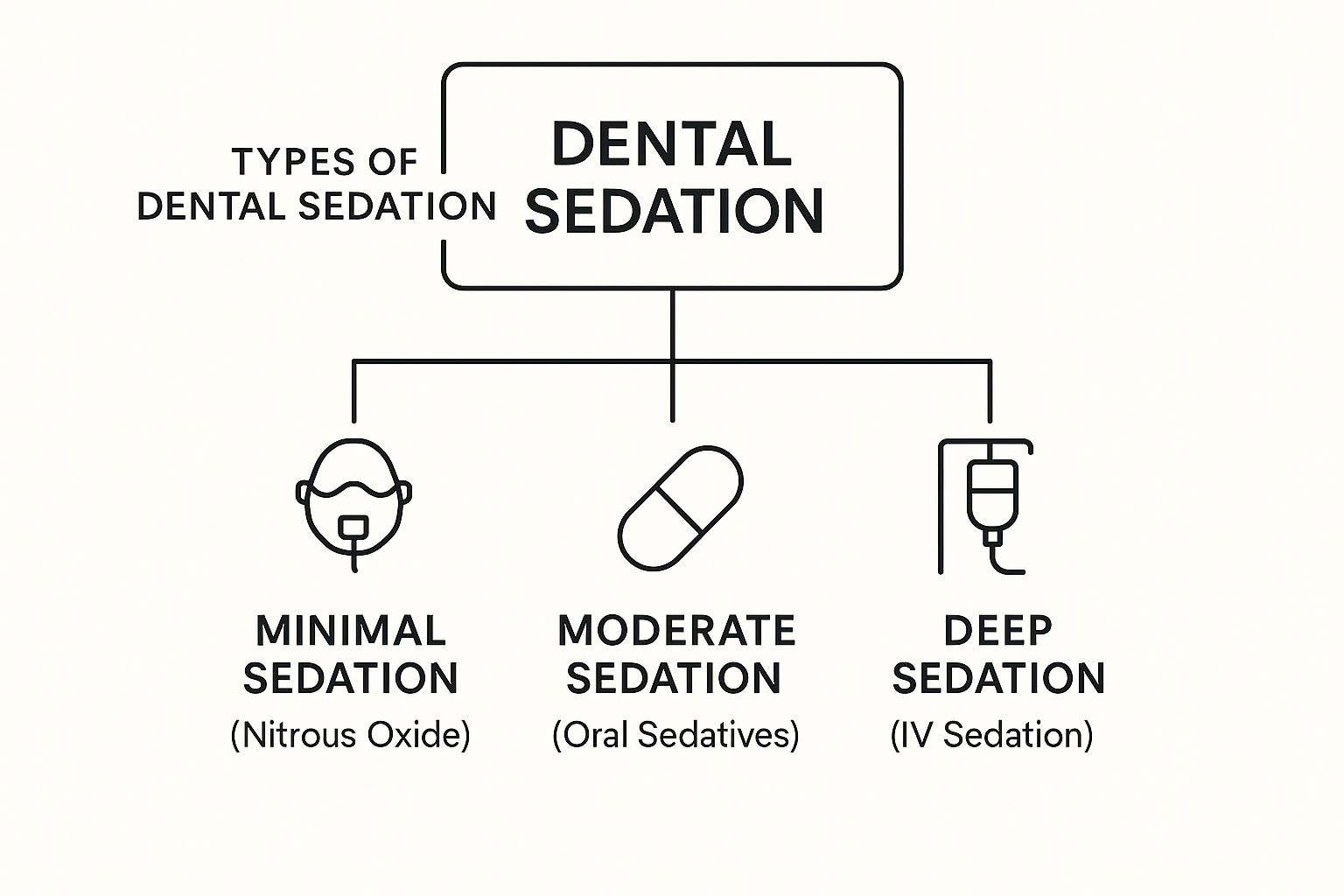
As you can see, the options scale up in intensity. This allows for a completely customized approach that’s tailored to your specific anxiety level and the complexity of your dental work.
To give you a clearer picture, here's a quick comparison of the most common options available.
Dental Sedation Options at a Glance
| Sedation Type | Level of Sedation | How It's Administered | Best For |
|---|---|---|---|
| Nitrous Oxide | Minimal | Inhaled through a mask | Mild anxiety, short procedures, quick recovery |
| Oral Sedation | Moderate | A pill taken before the appointment | Moderate anxiety, longer procedures, amnesia effect |
| IV Sedation | Deep | Administered via an IV line | High anxiety, complex procedures, "twilight sleep" |
This table makes it easy to see how each method works and which situations it's best suited for. Your dentist will help you navigate these choices to find the perfect fit.
The main types of sedation we use include:
- Minimal Sedation (Nitrous Oxide): You probably know this one as "laughing gas." It's a sweet-smelling gas you breathe in through a small mask over your nose. It doesn’t put you to sleep; it just melts away your anxiety, leaving you relaxed but fully awake and able to talk with us. The best part? It wears off in minutes.
- Moderate Sedation (Oral Sedatives): This option usually involves taking a prescribed pill, like Halcion or Valium, about an hour before your appointment. You’ll feel very drowsy and deeply relaxed, and while you can still respond to us, you might not remember much about the procedure afterward.
- Deep Sedation (IV Sedation): Administered directly into a vein, this method works quickly to put you in a state of "twilight sleep." You’re on the very edge of consciousness—able to be awakened if needed—but you will have little to no memory of the treatment. This is a great choice for patients with significant anxiety or those undergoing longer, more complex procedures.
Finding the right path always begins with a conversation. When you talk openly with your dentist about your fears, concerns, and health history, you can work together to choose the sedation method that makes you feel the most comfortable, secure, and at ease in the chair.
Exploring Minimal Sedation Options

When patients start looking into the different types of dental sedation, most begin with the minimal options. These are the most common and accessible ways to manage mild to moderate anxiety, turning what could be a stressful appointment into a surprisingly calm and easy experience. These gentler methods are perfect for shorter, less involved procedures.
Conscious sedation techniques are, by a long shot, the most popular methods used around the world. Nitrous oxide, for instance, is used in about 40-60% of all dental sedation cases, especially for nervous adults and children. Oral sedatives aren't far behind, making up roughly 15-20% of cases. These numbers show just how vital these tools are for making patients comfortable and helping procedures go smoothly. You can dig into these trends and their evolution over the last 50 years by checking out dental anesthesia market insights.
Nitrous Oxide: The Comforting Blanket
You probably know it as "laughing gas," and nitrous oxide is easily the most famous form of dental sedation. The best way to describe it is like having a warm, comforting blanket draped over your shoulders on a cool day. It doesn't knock you out; it just melts away your worries and creates a deep sense of relaxation and well-being.
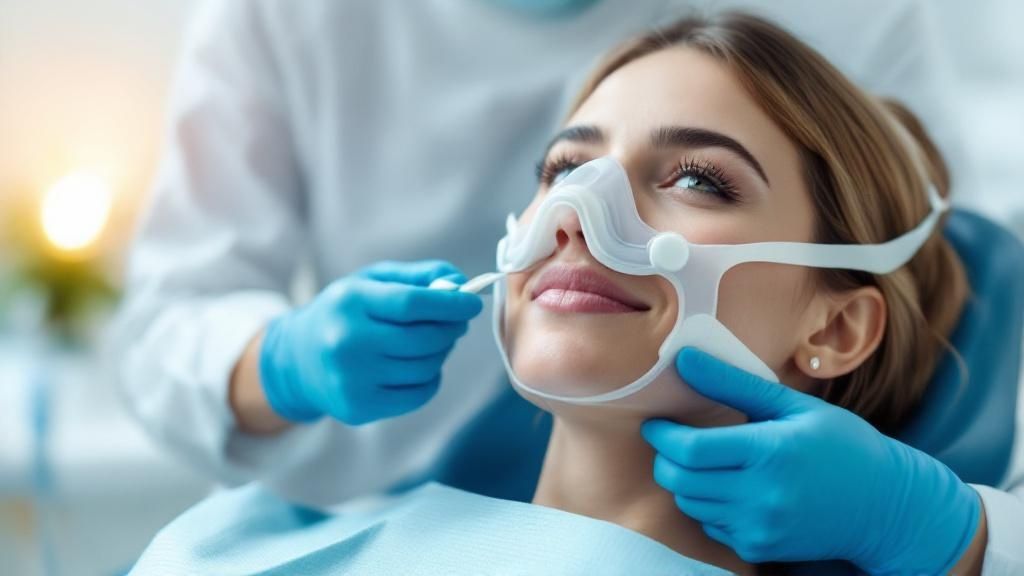
The process itself is incredibly simple and completely controlled by your dentist. You’ll breathe a mix of nitrous oxide and oxygen through a small, soft mask that rests over your nose. Within just a few minutes, you'll start to feel the effects—a light, almost floaty sensation and a major drop in your anxiety levels. The whole time, you're awake and can talk with your dental team.
One of the biggest perks of nitrous oxide is how fast it works and, more importantly, how fast it wears off. As soon as the mask is removed, the calming effects fade away almost instantly. This means you can safely drive yourself home and get right back to your day with no lingering grogginess.
Oral Sedation: A Deeper State of Calm
For patients who need a little more help relaxing than laughing gas can offer, oral sedation provides a deeper level of tranquility. With this method, you'll take a prescribed pill, usually a benzodiazepine like diazepam, about an hour before your appointment. It's a straightforward and needle-free path to significant relaxation.
This kind of sedation is ideal for people with moderate dental anxiety or those who are in for longer treatments, like a root canal or getting a crown. While you're still technically conscious, you will feel extremely drowsy and at ease. In fact, many patients remember little to nothing about the procedure afterward, which is a huge plus for anyone with a real dental phobia.
Key considerations for oral sedation include:
- Transportation: You cannot drive after taking an oral sedative. It is absolutely essential that you have a trusted friend or family member drive you to your appointment and take you home.
- Timeline: Because you take the medication at home before you leave, you’ll arrive at the office already in a calm state, ready for your procedure to begin.
- Recovery: The effects can stick around for several hours, so you’ll need to clear your schedule and plan on resting for the rest of the day.
Both nitrous oxide and oral sedation are fantastic types of dental sedation for anyone looking for a more comfortable dental visit without the intensity of deeper sedation methods.
How IV Sedation Creates Deeper Relaxation
Sometimes, patients need a level of calm that goes far beyond what oral sedatives can offer. For those with significant dental anxiety or facing longer, more complex treatments, intravenous (IV) sedation is a powerful and incredibly precise solution. It's one of the more advanced types of dental sedation we use to make dental care possible for even the most fearful individuals.
A common myth is that IV sedation means being completely "knocked out," but that’s not quite right. Instead, it guides you into a state often called "twilight sleep." While you remain conscious and can respond to your dentist's voice, you'll be so deeply relaxed that you likely won’t remember much, if anything, about the procedure afterward. For many anxious patients, this amnesic effect is one of its greatest benefits.
Modern advancements have made these deeper levels of sedation safer and more predictable than ever. In major dental markets, IV sedation now accounts for about 20% of all sedation practices. Its steady rise since the 1980s is a direct result of better delivery systems and strict safety protocols, cementing it as a trusted choice for dentists and patients. You can learn more about the growing adoption of these methods in the global dental anesthesia market analysis.
The IV Sedation Process
Unlike a pill you take before your appointment, IV sedation is delivered directly into a vein, usually in your arm or the back of your hand. This direct method is what gives the dental team such exceptional control over your comfort.
Think of it like a dimmer switch for your anxiety. The medication enters your bloodstream almost instantly, allowing your dentist to fine-tune the level of sedation in real-time. If needed, they can adjust the dosage throughout the procedure, ensuring you remain perfectly relaxed from start to finish.
The cornerstone of safe IV sedation is constant, vigilant monitoring. A dedicated member of our team will closely watch your vital signs—your heart rate, blood pressure, and oxygen levels—throughout the entire appointment to ensure you are completely safe and stable.
Who Is the Ideal Candidate for IV Sedation?
While it’s not for every patient or every procedure, IV sedation is the perfect fit for specific situations. It provides a unique level of comfort that can make otherwise overwhelming treatments feel manageable and entirely stress-free.
IV sedation is often the best choice for:
- Patients with Severe Dental Anxiety or Phobia: For anyone whose fear has kept them from getting necessary dental work, IV sedation can be a genuine game-changer.
- Complex or Lengthy Procedures: Treatments like wisdom tooth extractions, full mouth reconstructions, or placing dental implants are much easier to tolerate when you're in a state of deep relaxation.
- A Strong Gag Reflex: An overactive gag reflex can make dental work tough for both the patient and the dentist. IV sedation relaxes this reflex, allowing for a much smoother procedure.
- Combining Multiple Treatments: If you need to get several treatments done, IV sedation makes it possible to consolidate them into a single, comfortable appointment.
Because this is an advanced form of sedation, only dentists who have completed specialized, post-graduate training and certification are qualified to administer it. This ensures the highest standards of safety and gives you the peace of mind that you are in truly expert hands.
When Deep Sedation and General Anesthesia Are Used

While minimal and moderate sedation work beautifully for most dental anxiety, some situations just call for a deeper level of care. This is where deep sedation and general anesthesia come in. These are the most profound types of dental sedation we have, reserved for specific, complex scenarios where a patient’s safety and comfort depend on being at or near full unconsciousness.
It's crucial to understand the line between them. With deep sedation, you're right on the edge of consciousness. You won't be able to respond to questions, but you'll continue to breathe on your own. General anesthesia, on the other hand, renders you completely unconscious, and your breathing will need support. These aren't your go-to options for a simple filling; they are specialized tools for unique circumstances.
Who Needs This Level of Sedation?
These advanced techniques are brought in when other methods just won't cut it. They create a controlled environment where we can perform extensive dental work safely, without causing a bit of distress to the patient.
Deep sedation or general anesthesia becomes the best choice in situations like these:
- Major Oral Surgeries: Think complex wisdom tooth extractions, full mouth reconstructions, or placing numerous dental implants. These procedures often require a deeper state of sedation to manage time and comfort effectively.
- Profound Dental Phobia: For some people, the fear is so extreme that any level of cooperation is impossible. These methods allow them to get critical care without the trauma.
- Special Healthcare Needs: Patients with certain physical, cognitive, or medical conditions might not be able to sit still or cooperate. These sedation options are essential for providing them with a safe and successful procedure.
The decision to use deep sedation or general anesthesia is never made lightly. It's a collaborative choice between you, your dentist, and often a specialized medical professional to ensure the absolute highest standard of care.
The Commitment to Safety and Monitoring
Any procedure using these levels of sedation happens in a highly controlled setting. This work is handled by a dental anesthesiologist or a dentist who has completed specialized, advanced certification. It’s not just about administering medication—it’s about creating a safe, closely monitored medical environment right here in the dental office.
From the moment we begin to the moment you're ready to go home, the entire process is governed by strict safety protocols. A dedicated professional will continuously monitor your vital signs, including your heart rate, blood pressure, and blood oxygen levels. This constant vigilance is our promise to you, ensuring your well-being throughout the entire treatment.
Recovery is also managed with extreme care. You'll rest in a recovery area until the dental team is completely confident that you are stable. You will absolutely need a responsible adult to drive you home and stay with you for the next 24 hours, as the powerful effects take time to wear off. This meticulous approach provides total peace of mind for these less common, but incredibly critical, types of dental sedation.
How to Prepare for Your Sedation Appointment
Knowing what to do before your appointment is just as important as understanding the different types of dental sedation. Proper prep work is what makes the entire process safe, smooth, and as comfortable as it can possibly be.
Think of it as a pre-flight checklist for a stress-free dental experience.
A successful sedation appointment always begins with a detailed pre-procedure consultation. This is your chance to get all your questions answered and feel confident about the plan. You’ll need to be completely open about your medical history, including any allergies and every single medication you’re currently taking. Full transparency is key—it helps your dentist choose the safest and most effective sedation method for you.
If you’re taking multiple medications, it’s a smart move to get a comprehensive pharmacy medication review before your dental work. This helps flag any potential drug interactions with the sedatives, adding an extra layer of safety.
Your Pre-Appointment Checklist
The exact steps you need to follow will depend on which type of sedation you're getting. As you'd expect, the instructions get more strict for deeper levels of sedation.
Fasting is Crucial
For IV sedation, deep sedation, or general anesthesia, you will be required to stop eating and drinking for a specific period, usually 6-8 hours, before your appointment. This is a non-negotiable safety rule to prevent serious complications while you're sedated. Nitrous oxide, on the other hand, typically doesn't require any fasting.
Dress for Comfort and Monitoring
Show up to your appointment in loose, comfortable clothing. It’s also a good idea to wear short sleeves. This gives the dental team easy access to your arm for placing an IV line or taking your blood pressure.
Arrange for an Escort
This is an absolute must for oral and IV sedation. You must have a responsible adult drive you to your appointment and take you home afterward. The lingering effects of the sedative make it completely unsafe for you to drive, take a taxi, or travel alone.
Post-Procedure Care and Recovery
Your recovery journey will look a little different depending on the sedation you received. The effects of nitrous oxide, for example, wear off within minutes, so you can pretty much get back to your normal day right away. For oral and IV sedation, however, the path to recovery is a bit longer.
Expect to feel drowsy, a bit out of it, and maybe even a little clumsy for several hours after oral or IV sedation. Plan to go straight home and take it easy for the rest of the day. You should not drive, operate any machinery, or make important decisions for at least 24 hours.
Your dental team will give you specific aftercare instructions, but here are a few general guidelines to follow:
- Diet: Start with soft foods and clear liquids. Hold off on any hot drinks until the local anesthetic has worn off completely so you don't burn your mouth.
- Activity: Rest is your number one job. Light activity is okay, but avoid anything strenuous for the first full day.
- Support: It's a great idea to have your escort stick around with you for a few hours after you get home. They can make sure you're safe, comfortable, and have everything you need.
Common Questions About Dental Sedation
After learning about the different types of dental sedation, it’s completely normal to have some lingering questions. We get it. Understanding the specifics of safety, cost, and what to expect can help ease any remaining nerves and empower you to make the best decision for your health and comfort.
Let's tackle some of the most common questions our patients ask us every day.
Is Dental Sedation Safe?
Absolutely. When administered by a trained and certified dental professional, all forms of dental sedation are remarkably safe. Dentists who offer these services must complete extensive, specialized training to ensure they meet the highest standards of patient care. It's a responsibility we take very seriously.
Throughout your entire procedure, your vital signs—like your heart rate, blood pressure, and oxygen levels—are continuously and carefully monitored. This constant vigilance ensures your complete safety from start to finish. Before even recommending sedation, we'll perform a thorough review of your medical history to choose the safest and most effective option for you.
The risks associated with modern dental sedation are very low, comparable to those of other routine medical procedures. Safety is always the number one priority.
Will I Be Asleep During Sedation?
This is a great question, and the answer really depends on the type of sedation you receive. For minimal sedation like nitrous oxide (laughing gas) and most moderate oral or IV sedation, you will remain conscious. You’ll be awake enough to respond to your dentist but in a state of deep relaxation—feeling drowsy and completely at ease.
Now, many patients who choose IV sedation often say they have little to no memory of their appointment afterward. This is a normal and often welcome side effect called amnesia. The only time you are truly "asleep" and completely unconscious is with general anesthesia, which is typically reserved for major oral surgeries or specific medical situations.
How Much Does Sedation Dentistry Cost?
The cost of dental sedation can vary quite a bit based on a few key factors:
- Type of Sedation Used: Nitrous oxide is generally the most affordable option. IV sedation and general anesthesia are more involved and thus more costly, as they require specialized equipment, medications, and personnel.
- Procedure Duration: Naturally, longer and more complex treatments will have a higher sedation cost.
- Location and Provider: Costs can differ depending on your city and the specific dental practice.
Insurance coverage also plays a big role. Some dental plans might cover a portion of the cost if sedation is deemed medically necessary for a complex procedure, but coverage for anxiety alone is less common. The best approach is always to have a clear, upfront conversation with both our office and your insurance provider to get a precise cost estimate and avoid any surprises.
How Will I Feel After Sedation?
Your post-procedure experience will directly mirror the type of sedation you had. If you had nitrous oxide, the effects wear off within minutes of the mask being removed. You’ll feel like yourself again almost immediately and can typically drive home and get back to your day.
For oral and IV sedation, it's a different story. You will feel drowsy and groggy for several hours afterward. It is absolutely essential that you arrange for a responsible adult to drive you home and stay with you for a while. You should plan to take it easy and rest for the remainder of the day.
Your dental team will give you specific, detailed post-care instructions, but a good rule of thumb is to avoid driving, operating any kind of machinery, or making any important decisions for at least 24 hours.
At Beyond Dental Care, we believe that understanding your options is the first step toward a comfortable, stress-free dental experience. If you have more questions about the different types of dental sedation or want to discuss which approach is right for you, we invite you to schedule a consultation. Let us show you how we can help you achieve your oral health goals in a calm and supportive environment.