
When we talk about aging well, we often think of things like a healthy heart or strong bones. But one of the most important parts of your total health is something we often overlook: your mouth.
Good oral health after 60 isn't just about having a nice smile. It is a key part of living a strong, independent life.
Your Smile Is More Than Just Teeth
Many people think that losing teeth or dealing with gum problems is just a normal part of getting older. That's a myth. Today’s dentistry offers great ways to keep your smile healthy and working well, which makes a huge difference in your daily life.
The Mouth as Your Body's Front Door
Think of your mouth as the front door to your body. If that door is broken, problems can spread to other areas. Ignoring your teeth and gums can affect everything from your heart to your ability to enjoy a meal with family.
For example, the bacteria from gum disease can get into your bloodstream. This can raise your risk for serious health issues like heart disease. It shows that a dental check-up is just as important as your yearly physical.
This infographic paints a clear picture of just how connected your oral health is to your overall wellbeing.
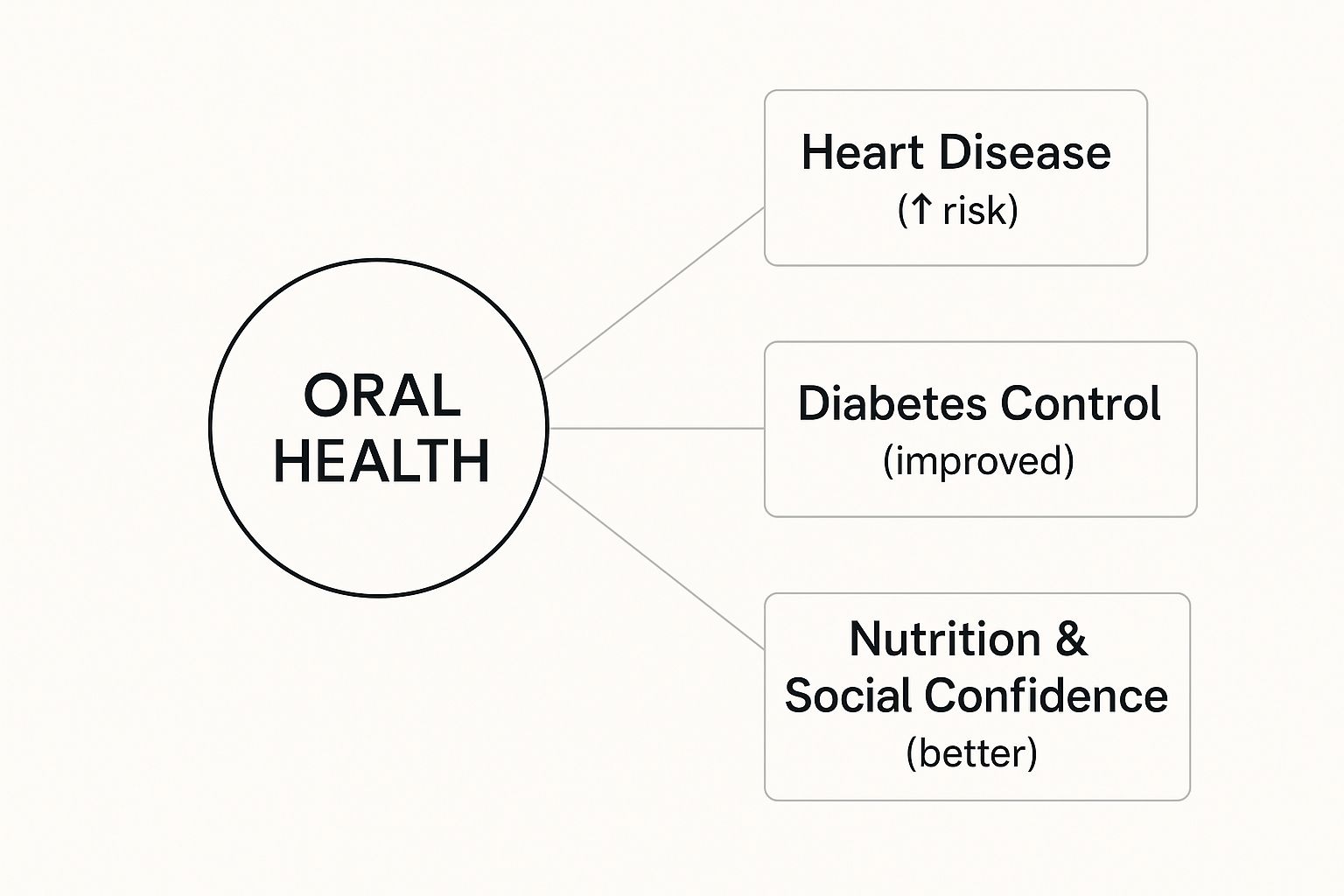
As you can see, taking care of your smile is a smart way to manage your health and feel more confident.
Taking a Proactive Approach to Wellness
Seniors today are more focused on aging well than ever before. This means dental care is not just for fixing problems. It's an important part of a total wellness plan.
It’s about protecting your ability to eat healthy food, speak clearly, and laugh without worry. This is where proactive health is key, which can include things like at-home health testing for longevity to see the full picture of your health.
A healthy mouth is absolutely essential for good nutrition. When you can chew properly, you can enjoy a wider variety of foods that support your immune system, boost your energy, and help manage chronic diseases.
To help you get started, here's a quick look at the connections we're talking about.
The Mouth-Body Connection After 60 at a Glance
| Oral Health Challenge | Potential Impact on Your Wellbeing |
|---|---|
| Gum Disease (Periodontitis) | Increased risk for heart disease, stroke, and diabetes complications. |
| Tooth Loss | Can lead to poor nutrition, social withdrawal, and jawbone deterioration. |
| Dry Mouth (Xerostomia) | Heightens the risk of cavities, gum disease, and mouth sores. |
| Oral Infections/Abscesses | Can spread bacteria to other parts of the body, causing systemic issues. |
This table is a simple reminder of why we take a comprehensive approach to dental care for our senior patients.
Fueling your body starts with what you eat, and you can learn more about which foods are good for gums in our detailed guide. If you or a loved one in Arrowhead Ranch, North Glendale, or Stetson Hills are looking for a partner in lifelong health, schedule a consultation with Beyond Dental Care. Gentle, senior-focused care is our top priority.
The Hidden Dangers of Neglecting Senior Oral Health
For many of us, a dental issue might seem small—like sensitive gums or a minor toothache. But after 60, these small signs can point to bigger problems.
Your mouth is like a window to your overall health. Problems that start there often spread. Oral health after 60 is deeply connected to your total wellbeing. A small issue in your mouth can create a ripple effect, making other health conditions worse and affecting your daily life.
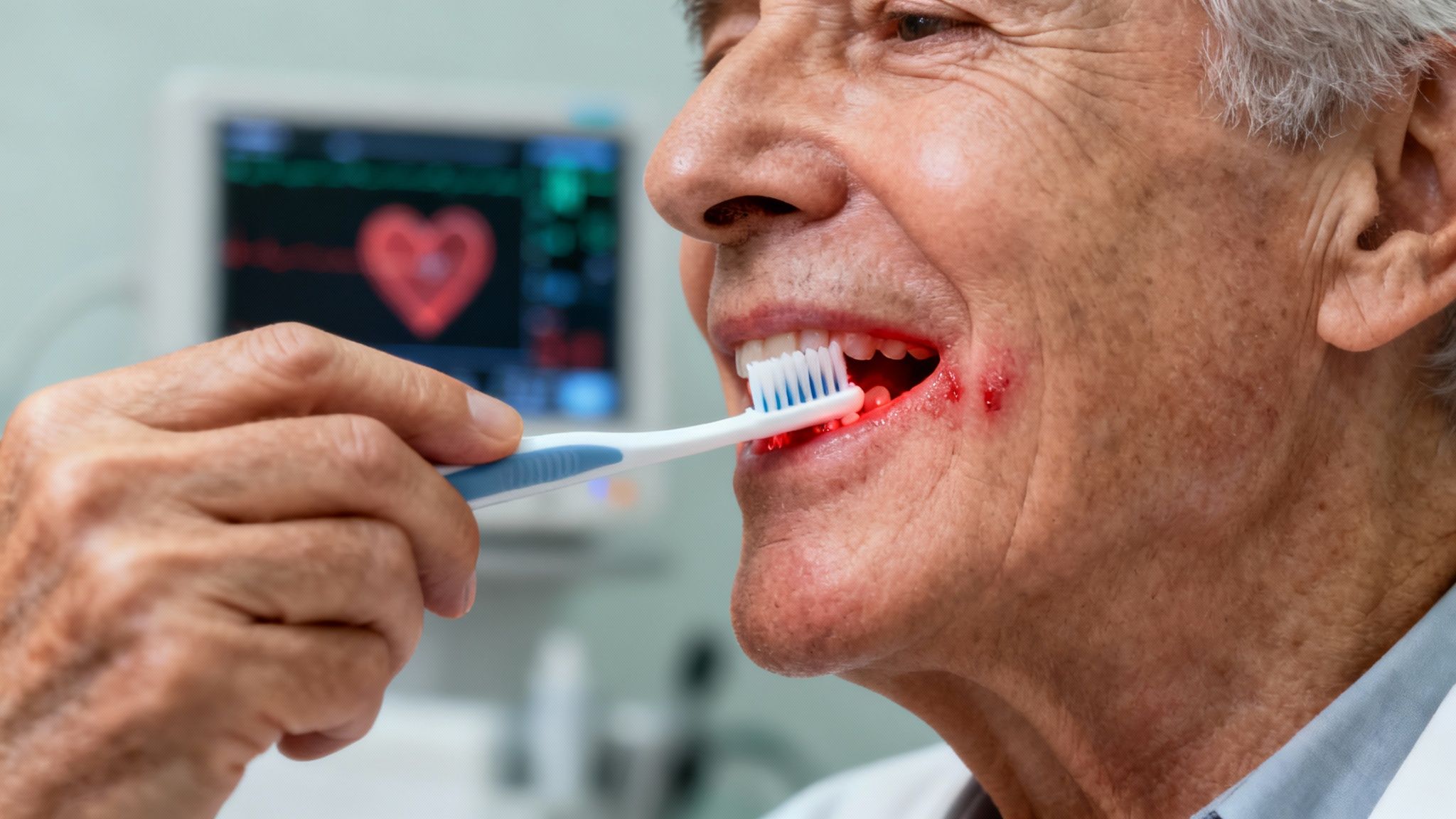
As seniors focus more on aging well, oral health is a crucial but often overlooked part of the equation. Gum disease, tooth loss, and dry mouth aren’t just dental concerns—they're linked to heart disease, diabetes, and nutritional challenges. That's why your dental visit is every bit as important as any other medical checkup.
The Inflammation Superhighway from Your Mouth to Your Body
One of the biggest culprits is periodontitis, a severe form of gum disease. This is more than just bleeding gums. It's a long-term infection that keeps your body in a state of inflammation.
The bacteria causing this infection don't just stay in your mouth. They can get into your bloodstream and travel through your whole body.
Once in your blood, this inflammation can lead to serious health problems. The same thing that makes your gums swell can also affect your arteries, which is a major factor in heart disease and stroke.
How Oral Bacteria Affect Your Lungs
The connection doesn't stop with your heart. Your mouth and lungs are neighbors. It’s easy for bacteria from an unhealthy mouth to be breathed into the lungs, especially in older adults with weaker immune systems.
This can lead to serious lung infections, like pneumonia. For seniors, pneumonia can be very dangerous. Keeping your mouth clean is a simple but powerful way to lower this risk.
Your mouth is the gateway to your body. By keeping it healthy, you are actively building a stronger defense against systemic inflammation and infection, supporting everything from your heart to your lungs.
The Domino Effect on Nutrition and Immunity
When you have tooth pain, missing teeth, or dentures that don't fit well, eating becomes a chore. This often causes people to avoid hard-to-chew foods, like fresh vegetables, fruits, and lean meats.
This is a serious problem. Missing out on these healthy foods can lead to poor nutrition. This, in turn, can weaken your immune system, slow down healing, and make you feel tired.
A healthy smile helps you eat a balanced diet, which is key for staying strong and managing health conditions. It’s also important to watch for any changes in your mouth and know the warning signs of oral cancer, as early detection is key.
Letting your oral health decline can affect your independence. The good news is that proactive care can stop these problems before they start, ensuring your smile supports a healthy life for years to come.
Navigating Common Dental Challenges After 60
Aging well means being proactive, and that includes staying on top of dental challenges that can appear after 60. Many older adults assume that problems like dry mouth are just part of aging. But modern dentistry offers solutions that preserve function, appearance, and quality of life.
Taking control of these issues protects not just your teeth, but your overall health. Let's look at some common dental concerns for seniors and talk about real solutions. The goal is to help you face these issues, not just accept them.
The Persistent Problem of Dry Mouth
One of the most common complaints from older adults is xerostomia, or dry mouth. This is more than just an annoyance; it’s a threat to your oral health. Saliva is your mouth’s natural defense. It washes away food, fights acids, and prevents infections.
What causes it? Often, dry mouth is a side effect of medications for things like high blood pressure or arthritis. Since many seniors take multiple medications, their risk is higher.
A dry mouth creates the perfect breeding ground for harmful bacteria. This dramatically increases the risk of cavities, especially on the more vulnerable roots of your teeth.
Luckily, you can manage dry mouth with simple, daily habits.
- Stay Hydrated: Sip water throughout the day to keep your mouth moist.
- Find the Right Products: Use over-the-counter rinses, sprays, or gels made for dry mouth.
- Avoid Irritants: Caffeine, alcohol, and tobacco can make dryness worse.
- Chew Sugar-Free Gum: Chewing helps your mouth make more saliva.
By managing dry mouth, you take a big step in protecting your teeth for years to come.
Protecting Gums and Exposed Roots
Over time, it's common for gums to recede, or pull away from the teeth. This leaves the softer root surfaces exposed. The root is not covered by hard enamel, so it is more likely to get cavities.
This is why gentle brushing is so important. Brushing too hard can make gums recede even more. Use a soft-bristled toothbrush and hold it at a 45-degree angle to your gumline. This helps you clean well without causing damage.
Your dental team can show you the best way to brush and floss. They might also suggest a high-fluoride toothpaste to help protect these exposed root areas.
When Old Dental Work Needs a Fresh Look
Many seniors have fillings, crowns, or bridges that are decades old. But even the best dental work doesn't last forever. Over time, it can wear down, chip, or get tiny cracks.
These small flaws can trap bacteria, which can cause new decay under the old filling or crown. It’s important to know the warning signs that your dental work needs attention.
Keep an eye out for these common signs of wear and tear:
- New Sensitivity: A tooth with an old filling suddenly hurts with hot or cold.
- Rough Edges: You feel a sharp or rough spot on a filling with your tongue.
- Visible Cracks or Discoloration: Dark lines around a filling can be a sign of leaks.
- A Change in Your Bite: Your bite suddenly feels "off" or different.
Regular dental check-ups are the best way to monitor old dental work. Your dentist can spot problems you might not notice and fix them before they become big issues. For those with missing teeth, our guide on the best dentures for seniors in Glendale AZ offers great insights.
How Modern Dentistry Restores Your Smile and Confidence
It's easy to think dental problems are just a normal part of getting older. For years, many seniors accepted things like missing teeth or uncomfortable dentures.
But that view is outdated. Today’s dentistry has amazing solutions to improve how your teeth work and look. From implants to dry mouth treatments, today’s options are more effective and comfortable than ever.
Modern dental care creates personal solutions that look and feel natural. They give you back the confidence to eat, speak, and laugh freely. The goal is to improve your health and boost your self-esteem.
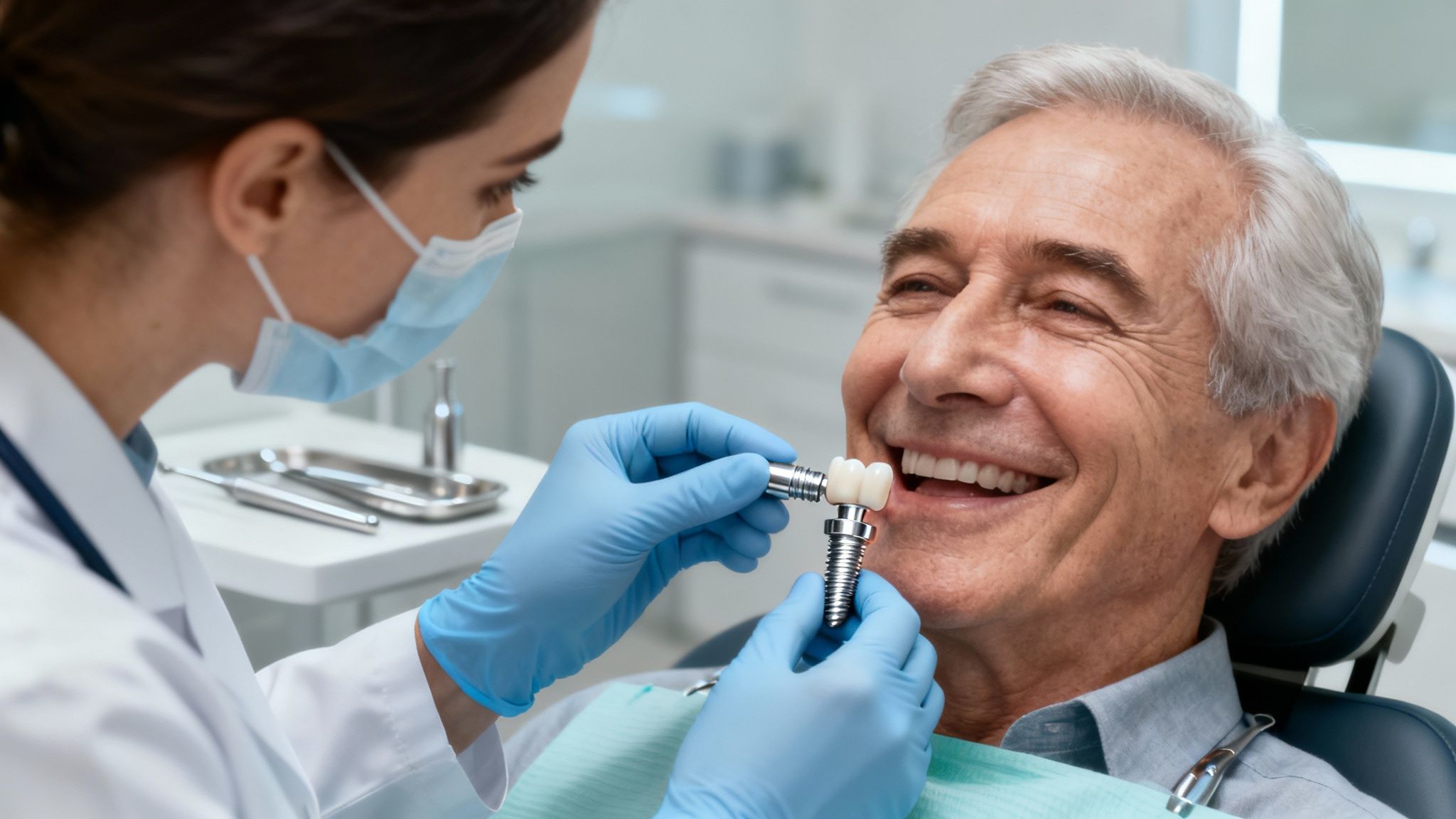
Dental Implants: A True Game-Changer
If there's one thing that has changed oral health after 60, it's the dental implant. An implant is a small titanium post that acts as a new tooth root. It is placed in the jawbone, and a custom crown is attached. This creates a replacement tooth that is very strong and stable.
Unlike dentures, dental implants become a permanent part of your jaw. This offers powerful benefits:
- Restored Chewing Power: Implants work like natural teeth, so you can enjoy your favorite foods again.
- Preventing Bone Loss: When you lose a tooth, your jawbone shrinks. Implants stimulate the bone and keep it strong.
- A Natural Look and Feel: Implants look and feel so much like your own teeth that you might forget they are there.
Dental implants are so much more than a cosmetic fix; they are a long-term investment in your total health. They help maintain your facial structure, improve your ability to get proper nutrition, and restore a level of confidence that is simply priceless.
This solution has been life-changing for many seniors. We explain more about how dental implants can benefit the elderly in our detailed article.
Dentures That Actually Fit Comfortably
The word "dentures" might make you think of old, clunky ones that slip and cause problems. The good news is, those days are over.
Modern dentures are made with great care. Using advanced technology and materials, we can create a fit that is secure and comfortable. Today’s dentures match the shape of your mouth, which prevents sore spots. This better fit also makes it easier to talk and eat a wider variety of foods.
Gentle Therapies and Cosmetic Enhancements
Restorative dentistry is also about saving the teeth you have. Modern treatments for gum disease are much gentler and more effective. They help stop inflammation and protect the foundation of your smile.
Simple cosmetic options can also boost your confidence. Professional teeth whitening can remove stains, while porcelain veneers can fix chips or gaps. These solutions help you look your best while supporting your long-term oral health.
Why Senior-Focused Dental Care Makes a Difference
Not all dental offices are the same, especially when it comes to the needs of older adults. As we age, we need a dentist who understands more than just fillings and crowns.
Senior-focused care is about creating a calm, supportive place where your full health history is respected. It recognizes that your oral health after 60 is tied to your overall wellbeing. The dental team understands how medications can cause dry mouth, the need for gentle cleanings, and the importance of clear communication. It’s a partnership built on trust.
At its core, senior-focused care is about making you feel seen, safe, and supported. It puts your comfort and long-term health first.
A Personalized and Compassionate Approach
Great care for older adults is personal. At Beyond Dental Care, we offer advanced, compassionate care tailored to the needs of older adults—including restorative treatments, gentle cleanings, and personalized attention. We create preventive plans that consider everything from chronic conditions like diabetes to mobility issues.
With digital imaging, senior-focused preventive plans, and a calming office environment, our team helps patients feel comfortable and confident in their care. This personal approach turns a dental visit into a positive experience.
Leveraging Technology for Comfort and Precision
Modern technology makes dental care more comfortable and effective for seniors. Advanced digital imaging gives us detailed pictures of your teeth and jaw with much less radiation than old X-rays. This means better diagnoses and less time in the dental chair.
These tools help us plan treatments like dental implants with great precision. By using the best technology, a dental team can make sure treatments are both effective and gentle—a huge plus for older patients.
A senior-focused practice invests in technology that enhances patient comfort and delivers superior outcomes. It’s about using the best tools available to make your care as gentle and efficient as possible.
Building a Partnership for Lifelong Health
The right dentist is part of your total healthcare team. They talk with your other doctors and help you manage oral health at home. Knowing the best tips to maintain healthy gums is a great first step.
If you or a loved one live in Arrowhead Ranch, North Glendale, or Stetson Hills and want a partner in lifelong oral health, schedule a consultation with Beyond Dental Care. Here, gentle, senior-focused care is a priority, ensuring your smile supports your wellbeing for years to come.
Finding the Right Dental Partner for Your Health Journey
Think of your oral health as an investment in your future. After seeing how connected your mouth and body are, it's clear that taking care of your teeth is one of the best things you can do for healthy aging. It's about taking control of your wellness to ensure your smile supports a vibrant life for years to come.
Too many older adults think dental problems are just a part of aging. But this can prevent them from getting the care they need for better health. The truth is, many seniors aren't getting regular dental check-ups.
The Power of Being Proactive
A recent report highlights a big gap in senior dental care. According to the Q4 2025 Insight Report, only about 52% of seniors had a dental visit last year. This is happening even as the demand for wellness services is rising in the Phoenix metro area.
This gap is a major opportunity to educate and empower seniors who want to maintain independence and health through proactive dental care. It’s your chance to get ahead of issues before they become serious problems.
Taking charge of your oral health isn't just about preventing cavities. It's about protecting your ability to eat well, stay connected with friends and family, and manage chronic conditions more effectively. It’s a true cornerstone of aging with strength and dignity.
Choosing the right dental partner is the most critical step. You need a team that has the skills and also understands the specific health needs of older adults.
Your Partner for a Healthy Future
For anyone living in Arrowhead Ranch, North Glendale, or Stetson Hills, finding a gentle, expert dental team is absolutely essential. You deserve a practice that listens to your concerns and works with you to create a care plan that fits your life.
At Beyond Dental Care, we believe in building real, lasting relationships with our patients. Our goal is to be your partner in lifelong oral health. We provide senior-focused care that is both compassionate and effective. We specialize in gentle cleanings, advanced treatments, and creating a calm environment where you feel heard.
If you or a loved one are ready to make oral health a priority, we invite you to start a conversation with us. Let’s work together to ensure your smile continues to support a healthy, confident, and independent life. Schedule your consultation with Beyond Dental Care today—where your wellbeing is always our focus.
Answering Your Questions About Senior Oral Health
It’s normal to have questions as you get older and your health needs change. Here are answers to some common concerns we hear from seniors about dental care. Our goal is to give you clear information so you can feel confident about your health decisions.
Education is key: seniors (and their caregivers) need trusted information about how oral health affects digestion, immunity, and chronic disease management. A resource like this helps guide patients toward better decisions and long-term wellness outcomes.
How Often Should a Senior Go to the Dentist?
The "twice a year" rule is a good start, but it’s not for everyone. Your health might mean you need a different schedule. For example, seniors with gum disease, dentures, or a health condition like diabetes may need more frequent visits.
Your dentist will work with you to create a visit schedule that is right for you. This helps us catch small problems before they become big ones.
Are Dental Implants a Good Idea for People Over 60?
For many seniors, dental implants are a great way to restore their smile and ability to eat. However, whether they are right for you depends on your overall health and jawbone strength.
The only way to know for sure is to have a full evaluation with your dentist. Thanks to modern technology, implants are a successful option for more people than ever before.
What Are the Best Daily Habits for Oral Health After 60?
When it comes to your oral health after 60, consistency is key. You don't need a complex routine—just a simple one you can stick with.
- Brush gently twice a day. Use a soft-bristled toothbrush to avoid hurting your gums.
- Clean between your teeth daily. Use floss, small brushes, or a water flosser.
- Stay hydrated. Sip water all day to help with dry mouth.
- Clean your dentures thoroughly every day. If you wear them, keeping them clean is key to preventing problems.
How Can I Help a Parent with Dementia Take Care of Their Teeth?
Helping a loved one with dementia with their oral care takes patience. It's best to create a simple, consistent routine in a familiar place. This can help reduce stress.
Use simple, one-step instructions. Tools like an electric toothbrush can also make cleaning easier for both of you. Most importantly, stay in touch with their dentist, who can offer special advice and support.
If you or a loved one live in Arrowhead Ranch, North Glendale, or Stetson Hills and want a partner in lifelong oral health, schedule a consultation with Beyond Dental Care—where gentle, senior-focused care is a priority. Learn more at https://beyonddentalcare.com.