
If you're wondering whether dental implants for elderly loved ones are a good idea, the short answer is a definite yes. Age itself is almost never the deciding factor. What really matters is a person's overall health. For so many seniors, dental implants are a truly life-changing, permanent fix that restores not just a smile, but also the confidence and quality of life that may have been lost.
A Lasting Smile Is Possible at Any Age

It’s a persistent myth that once you hit a certain age, you're "too old" for advanced dental work. The truth is, your general health—not the number on your birthday cake—is what counts. For countless older adults, getting dental implants means a fresh start for their oral health, finally resolving the functional and emotional struggles that come with missing teeth.
More Than Just a Tooth Replacement
Think of a dental implant like a brand-new, sturdy root for a tooth. While dentures and bridges just sit on top of the gums, an implant is a small titanium post that is surgically placed directly into the jawbone. This post fuses with the bone, creating an incredibly secure anchor for a new, custom-made crown.
This isn't just about looks. It provides a level of stability that traditional dentures simply can't offer. With implants, you can get back to enjoying the simple things that missing teeth might have taken away.
For many of our older patients, the biggest victory isn't just cosmetic. It's being able to bite into a crisp apple, speak clearly without a lisp, or laugh out loud without a second thought about a slipping denture. It's a true return to normalcy.
Why Implants Are a Game-Changer for Seniors
The benefits of dental implants for older adults go far beyond the mouth, having a direct and positive impact on their overall well-being. This solution can help:
- Improve Nutrition: You can comfortably chew a much wider variety of healthy foods, from nuts and seeds to crunchy vegetables, which can significantly improve your diet.
- Restore Clear Speech: Say goodbye to the mumbling or slurring that sometimes happens with loose-fitting dentures.
- Preserve Facial Structure: Implants stimulate the jawbone just like natural teeth do. This helps prevent the bone loss that often leads to a "sunken" or collapsed facial appearance.
- Boost Self-Esteem: You can smile, talk, and laugh with total confidence, knowing your teeth are secure and look completely natural.
This isn't just a passing trend; it's a response to a global shift. As people live longer, the demand for effective tooth replacement has soared. A demographic analysis of 'super-aged societies' shows that as populations age, the need for implant dentistry grows right along with it, driven by seniors who want better function from their teeth.
Ultimately, choosing dental implants for elderly family members is an empowering decision. It’s an investment in their long-term health, comfort, and the freedom to live life to the absolute fullest, no matter their age.
Is It Safe to Get Implants in Your Senior Years?
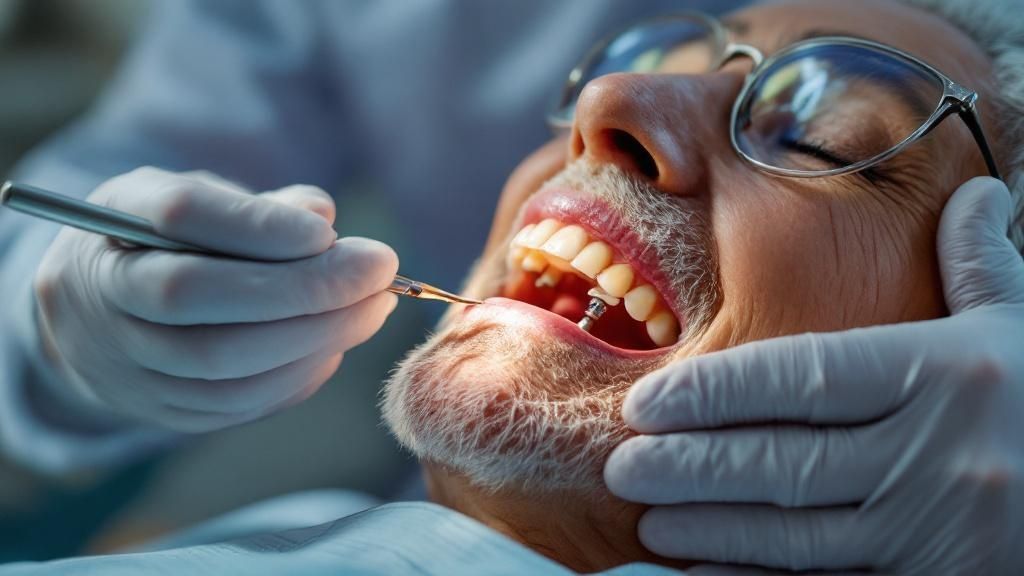
It’s one of the most common questions we hear from older adults: are dental implants for elderly patients really a safe option? The answer is a resounding yes, but with an important distinction. It’s not about your age; it’s about your overall health. Think of it less as an age limit and more as a health-based green light.
A successful implant is a team effort between your body and our dental technology. For the implant to thrive, it needs a healthy, stable foundation to bond with. That’s why our evaluation process is so thorough—we need to make sure the conditions are just right for a lasting, successful result.
The Foundation of Success: Bone Density
Imagine trying to plant a tree in thin, sandy soil. It would be tough for the roots to get a firm grip, and the tree wouldn't be very stable. Dental implants follow the same principle. The jawbone is the "soil" for the implant post, and it needs to be dense and healthy enough to provide a rock-solid anchor.
When a tooth has been missing for a while, the jawbone in that spot can start to shrink and weaken. This is why a critical part of your consultation involves checking your bone density, usually with advanced 3D imaging.
This scan helps us assess two main things:
- Bone Height: Is there enough bone vertically to place the implant without getting too close to nerves or sinuses?
- Bone Width: Is the jawbone wide enough to completely envelop and support the implant post?
If we find the bone is a bit lacking, it doesn’t mean you’re out of the running. Modern dentistry has fantastic solutions like bone grafting, a procedure where we add bone material to the area to build it up, creating the strong foundation your future implant needs.
Managing Health Conditions for a Safe Procedure
Many of our senior patients are managing chronic health conditions, and it’s completely natural to wonder how that might impact a dental procedure. The key here is controlled management. Our dental team will work hand-in-hand with your primary care physician to create a coordinated and safe treatment plan.
Conditions like well-managed diabetes or stable heart disease are not usually roadblocks to getting dental implants. In fact, studies show that with the proper medical clearance and collaboration, the success rates for implants in patients with controlled chronic conditions are incredibly high.
The focus is on your complete health picture. By coordinating with your doctor, we can adjust medication schedules, monitor you closely, and manage any potential risks ahead of time. This makes the procedure just as safe as any other minor surgery.
For example, if you have diabetes, we’ll make sure your blood sugar levels are stable before and after surgery to promote proper healing. If you’re on blood thinners, your dentist and doctor will coordinate to temporarily adjust your dosage to prevent any excess bleeding. This team approach is what makes dental implants for elderly patients so safe and effective.
Patient comfort is also a huge priority. If you feel anxious about the procedure, we have several options to ensure you have a calm, pain-free experience. You can learn more about these different methods in our guide to understanding types of dental sedation. This helps even the most nervous patients get the treatment they need, comfortably.
Ultimately, modern techniques like 3D-guided surgery for pinpoint accuracy and minimally invasive approaches have made implants safer and more accessible than ever. Our evaluation is thorough not to find reasons to say no, but to find the safest, most direct path to giving you a new, healthy smile.
The Senior-Friendly Implant Procedure Step by Step
When considering dental implants for elderly patients, one of the first questions that comes to mind is about the procedure itself. Many people picture a long, complicated, and uncomfortable ordeal. The good news? The reality is far more manageable and reassuring. The entire journey to a brand-new smile is a series of carefully planned steps, with your comfort and safety steering the ship from start to finish.
Let's walk through the whole process together, breaking it down into clear, easy-to-understand phases. Knowing exactly what to expect can take the fear out of the equation and help you feel confident and ready for this life-changing step.
Phase 1: The Initial Health Assessment and Planning
This first step is, without a doubt, the most critical. This is where your dental team really gets to know you—your health history, your lifestyle, and what you hope to achieve with your new smile. It’s much more than a quick peek inside your mouth; it's a deep dive to ensure the entire procedure is perfectly tailored to you.
During this phase, here’s what you can expect:
- A Detailed Health Review: We’ll sit down and discuss your overall health, any chronic conditions you might be managing, and a complete list of your medications. This allows us to work hand-in-hand with your primary care physician to guarantee a safe and successful procedure.
- Advanced 3D Imaging: You’ll likely have a cone-beam computed tomography (CBCT) scan. This amazing technology gives us a crystal-clear, three-dimensional picture of your jawbone, nerves, and sinuses, which is essential for meticulous and precise planning.
- A Custom Treatment Plan: Using all this information, we'll create your personalized roadmap. This plan will map out the exact placement for each implant and establish a clear timeline for the entire process.
This planning phase is all about setting you up for success. We leave no stone unturned to make sure the rest of the journey is smooth, predictable, and completely safe.
Phase 2: The Implant Placement
This is the "surgical" part of the process, but it's important to put that in perspective. This is a minor and well-managed procedure. The goal here is simple: to place the small titanium post—your new tooth root—into your jawbone. Thanks to modern techniques and effective anesthetics, this experience is much more comfortable than most people imagine.
Your comfort is our top priority. The area will be completely numbed with a local anesthetic, so you won’t feel any pain during the placement. For seniors who may feel a bit anxious, sedation options are always available to help you feel calm and totally relaxed. In many cases, placing a single implant is finished in about an hour.
Phase 3: Healing and Osseointegration
Once the implant post is in place, the most incredible part of the process kicks off: osseointegration. This is the natural biological process where your own jawbone grows around and fuses directly with the titanium implant. This creates an unbelievably strong and stable foundation—think of it like a tree growing deep, strong roots into the soil.
This healing period is when biology does its magic. The implant becomes a permanent part of your anatomy, which is why dental implants are such a durable, long-term solution for missing teeth.
This phase usually takes a few months. But don't worry, you won't be left with a gap in your smile. We can often place a temporary, cosmetic tooth so you can eat and smile with confidence while the real magic happens beneath the gums. For those who want a deeper dive, you can learn more about how long the full dental implant process can take in our detailed guide.
Phase 4: Attaching Your New Tooth
Once the implant has fully bonded with your jawbone, you’re on the home stretch! You'll come back to our office for a quick and simple appointment to attach the abutment, which is a small connector piece that sits right on top of the implant.
Finally, your new, custom-made crown is securely attached to the abutment. This crown is painstakingly designed to match the color, shape, and size of your natural teeth, ensuring it blends in perfectly with your smile. The result is a tooth that looks, feels, and works just like the real thing.
This infographic simplifies the key aftercare steps to ensure your new implant thrives.
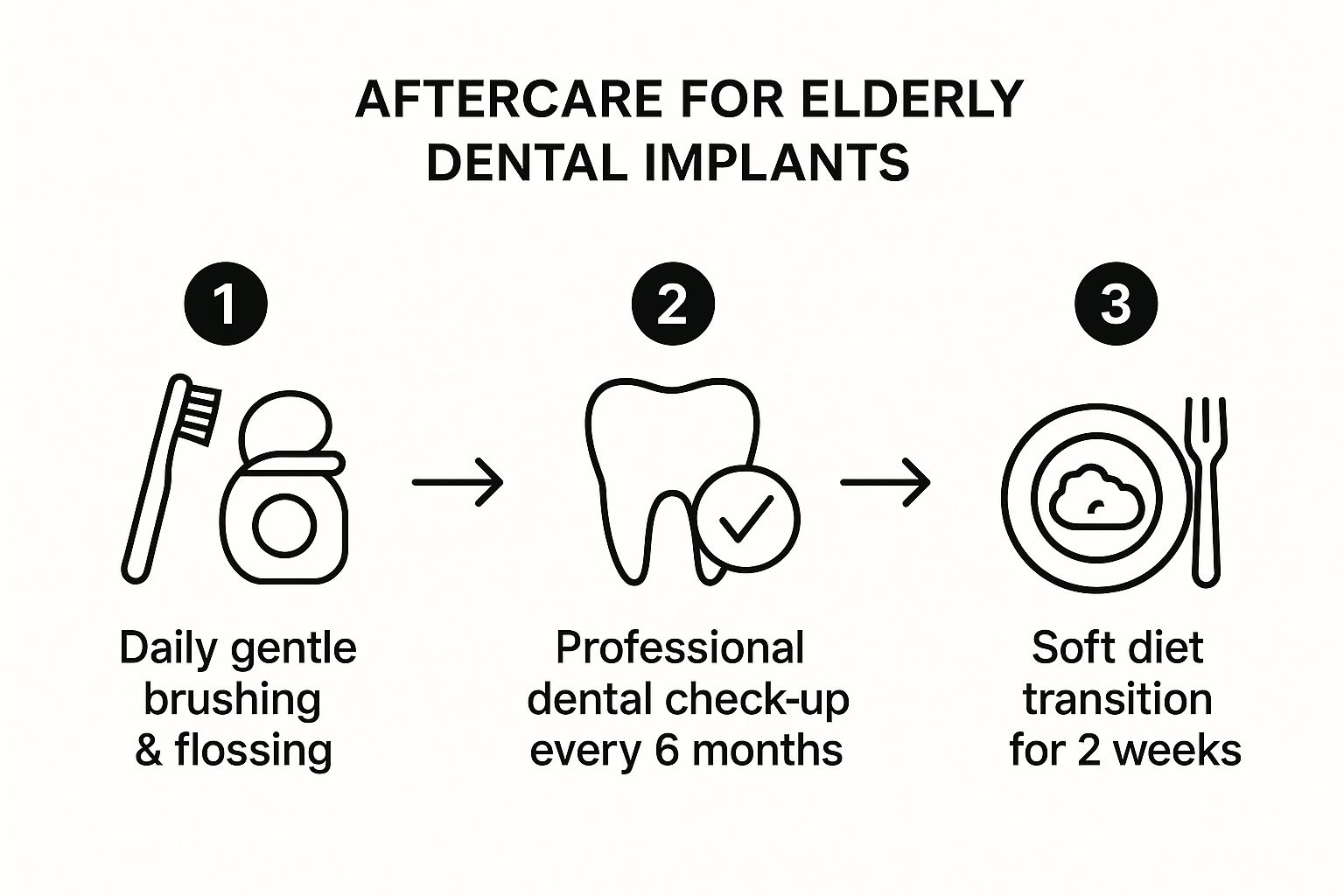
The visualization highlights that long-term success is a partnership between professional care and simple daily habits, from proper brushing to making smart dietary choices.
Choosing Your Best Tooth Replacement Option

Losing a tooth can feel overwhelming, and with several replacement options on the table, it’s tough to know which path to take. You have to think about how each choice will affect your daily life, your comfort, and your long-term health. For many seniors, the decision boils down to weighing the incredible permanence of dental implants against more traditional solutions like dentures and bridges.
Let’s start with what makes dental implants for elderly patients so life-changing. Unlike any other option, implants are the only solution that actively protects your jawbone. When a tooth is gone, the bone that once supported it starts to shrink away, which can eventually lead to that sunken facial look. Implants stop that process cold, preserving your natural facial structure.
That rock-solid stability translates directly to a level of comfort and confidence you just can't get otherwise. You can eat the foods you love, speak without hesitation, and laugh freely without a single thought about something slipping or feeling loose. The implant and its crown look and function so much like a natural tooth that you—and everyone else—will probably forget it’s even there.
Implants vs Traditional Alternatives
While dental implants are truly a premier solution, it’s important to compare them fairly with traditional dentures and fixed bridges. The best choice is always the one that fits your unique health needs, lifestyle, and budget. Each option comes with its own list of pros and cons, especially for older adults.
Dentures have been a go-to for decades. They don't require surgery and are often more affordable at the outset. But they come with daily hassles—messy adhesives, the potential to slip when you eat or talk, and the need for frequent adjustments as your jawbone continues to change shape beneath them.
Dental bridges do exactly what their name suggests: they "bridge" the gap from a missing tooth by anchoring to the teeth on either side. They are fixed in place and effective, but this comes at a cost. To place a bridge, we have to grind down healthy neighboring teeth, which can make them more susceptible to problems down the road.
A Side-by-Side Comparison
To help make things clearer, let’s break down how these three options really stack up against each other. Seeing them side-by-side helps visualize the trade-offs you’re making with each choice.
Comparing Implants vs Dentures vs Bridges for Seniors
This table offers a detailed comparison of the most common tooth replacement options for seniors, focusing on the factors that matter most when making your decision.
| Feature | Dental Implants | Traditional Dentures | Dental Bridges |
|---|---|---|---|
| Stability & Comfort | Excellent. Fused directly to the jawbone, so it feels and works like a natural tooth. No slipping. | Fair. Can slip, rub, or cause sore spots. Often requires adhesives for security. | Good. Fixed in place, but lacks the natural feel of an implant. |
| Jawbone Preservation | Yes. The implant post stimulates the bone, preventing loss and maintaining your facial structure. | No. Bone loss continues under the denture, requiring relines and adjustments. | No. The gap beneath the bridge is still prone to bone resorption. |
| Long-Term Durability | Excellent. Built to last a lifetime with proper care. | Fair to Poor. Usually needs replacement every 5-10 years due to wear and changes in your jaw. | Good. Can last 10-15 years before needing to be replaced. |
| Maintenance | Simple. Just brush and floss like you would with your natural teeth. | High. Requires daily removal, soaking, and cleaning with special products. | Moderate. Needs special floss threaders to clean underneath the bridge. |
| Impact on Other Teeth | None. It's a standalone fix that doesn’t rely on or harm adjacent teeth. | None. It simply rests on the gums without affecting neighboring teeth. | Significant. Requires grinding down healthy adjacent teeth to act as supports. |
This comparison highlights why dental implants are often considered the gold standard.
The most significant long-term benefit of an implant is that it is a self-sufficient solution. It stands on its own without relying on or compromising the health of the teeth next to it, making it a truly conservative and durable investment in your oral health.
The trend toward more permanent solutions is undeniable. Statistics show that seniors are increasingly opting for implants, with about 12.9% of all implant procedures being for individuals between 65 and 74. This shift shows a growing appreciation for the superior stability and long-term value that implants offer.
Ultimately, the right choice is a personal one made after a detailed conversation with your dentist. For an even deeper analysis of how implants stack up against dentures, we encourage you to read our complete guide on dental implants vs dentures. It’s packed with the comprehensive details you need to make a truly confident decision for your smile.
Understanding the Cost of Dental Implants for Seniors
Let's talk about the financial side of things. It's completely natural to have questions about the cost of dental implants for elderly family members. Thinking about the price tag can feel intimidating, but understanding exactly what goes into the final cost can make this incredible investment in health feel much more manageable.
The price isn't just one single number. Instead, it’s a reflection of a completely personalized treatment plan designed for one thing: long-term success.
What Factors Into the Price
The final cost of dental implants is highly customized for each person. A good way to think about it is like building a custom home—the final price depends on the foundation, the materials you choose, and how many rooms you need. It’s the same with implant treatment.
The cost will vary based on:
- Number of Implants: A single implant to replace one missing tooth will naturally cost less than a full-arch restoration that requires multiple implant posts.
- Materials Used: The implants themselves and the crowns that go on top are made from high-grade materials like titanium and zirconia. The specific material we decide on can influence the total cost.
- Preparatory Procedures: Sometimes, a patient has experienced bone loss in their jaw. If that’s the case, a bone graft may be needed first to build up a strong, stable foundation for the implant. This is a critical step for success and will add to the overall investment.
This detailed, patient-first approach is what ensures the best possible outcome. To see just how life-changing the results can be, you can explore the many benefits of dental implants in our related article.
Making Implants an Affordable Reality
While the upfront investment for dental implants is higher than for traditional dentures or bridges, their long-term value is simply unmatched. The good news is there are several pathways to explore that can make this treatment an affordable reality for seniors.
The demand for effective, permanent tooth replacement is growing worldwide. In fact, the dental implant market is projected to hit roughly $8.944 billion by 2025, largely because the aging population is seeking a better quality of life.
Figuring out the payment and insurance side of things is the key to moving forward with confidence. Here are the most common ways seniors can manage the cost:
- Private Dental Insurance: Many dental insurance plans now offer at least partial coverage for dental implants. It's really important to look closely at your specific policy to understand your annual maximums and what percentage they'll cover.
- Medicare Advantage (Part C): Original Medicare generally doesn't cover routine dental care, but some Medicare Advantage plans do. These plans sometimes include dental benefits that can help bring down the cost of implants. You'll want to check your plan's "Evidence of Coverage" to see what's included.
- Dental Savings Programs: These aren't technically insurance. They are membership-based plans where you pay a fee to get access to a network of dentists who offer services at a discounted rate.
- Third-Party Financing: Companies like CareCredit focus specifically on healthcare financing. They often have promotions with low-interest or even interest-free periods, which allows you to break down the total cost into smaller, more manageable monthly payments.
Dental implants are a significant investment, so understanding all your financial support options is crucial. It can be helpful to explore the best insurance for seniors options to get a wider view of the financial tools available. By looking into these different avenues, you can create a clear financial plan that makes a new, permanent smile a comfortable reality.
Caring For Your New Implants For Lifelong Success
Your new dental implants are so much more than just replacement teeth—they're a major investment in your health, your confidence, and how you experience daily life. Think of it like a new car; it needs the right maintenance to run smoothly for years to come. Your implants are the same. With a simple, consistent routine, you can protect that investment and keep your smile brilliant for decades.
The best part? Taking care of dental implants is remarkably straightforward and feels a lot like caring for natural teeth. While implants can't get cavities, the real key is keeping the gum and bone tissue around them healthy. This is what provides that strong, stable foundation, and it makes daily hygiene an absolute must.
Your Simple Daily Care Routine
A successful, long-lasting implant is a partnership between you and your dental team, but the most important work happens at home. Your daily routine should focus on one main goal: keeping the area around each implant post clean and completely free of plaque.
- Gentle Brushing: Brush at least twice a day with a soft-bristled toothbrush. Make sure to pay extra attention to where the implant crown meets your gum line, as this is a prime spot for plaque to build up.
- Effective Cleaning Between Teeth: You absolutely must clean between your implants every single day. Traditional floss can sometimes be tricky, but there are fantastic, easy-to-use alternatives available.
- Regular Dental Visits: Professional cleanings and check-ups every six months are non-negotiable. Your dental team has the tools and expertise to spot potential issues, like minor gum irritation, long before they could ever become serious problems.
Tools To Help With Dexterity Challenges
We get it. Conditions like arthritis or other issues with dexterity can make handling a thin piece of floss feel like an impossible task. Fortunately, modern dental tools have made it easy for everyone to maintain excellent oral hygiene without the frustration.
For older adults who find string floss a challenge, a water flosser (sometimes called an oral irrigator) is an outstanding solution. These devices use a gentle, pulsating stream of water to flush out food particles and plaque from between teeth and around the implant. They are incredibly effective and so much easier to handle.
An electric toothbrush with a large, easy-to-grip handle can also be a total game-changer. It does most of the hard work for you, delivering a thorough cleaning with minimal physical effort.
The goal is to make your daily care routine as simple and effective as possible. The right tools can remove any barriers to success, ensuring you can easily maintain the health of your dental implants for elderly loved ones or yourself.
Following a proper aftercare plan right after your procedure is crucial for a smooth and easy healing process. For a detailed look at what to expect, our guide explains how long to recover from dental implants and is packed with tips for a comfortable experience. With the right care and the right tools, your dental implants are truly a permanent solution, designed to give you a strong, healthy, and confident smile for the rest of your life.
Of course. Here is the rewritten section, crafted to sound completely human-written and natural, following the style of your provided examples.
Common Questions About Senior Dental Implants
Even after learning about the process and benefits, it’s completely normal to have a few more questions. When you’re considering a significant health decision like dental implants for elderly loved ones, clarity is everything. Feeling fully informed and confident is the most important step before moving forward.
Let's walk through some of the most frequent questions we hear from seniors and their families. Our goal is to give you direct, straightforward answers to clear up any lingering uncertainties.
Is There An Age Limit For Dental Implant Surgery?
Absolutely not. There is no upper age limit for getting dental implants. We regularly see patients in their 80s and even 90s achieve fantastic, long-lasting results.
Success isn't about the date on your birth certificate—it's determined by your overall health and jawbone density. A thorough health screening is always our first step to confirm you’re a good candidate for the procedure.
Will The Implant Procedure Be Painful?
Patient comfort is our highest priority, plain and simple. The surgery itself is performed using a local anesthetic, which completely numbs the area so you won't feel any pain during the implant placement.
Many dentists also offer sedation options to help ease any anxiety you might have, ensuring a calm and relaxed experience. Any discomfort afterward is usually mild and easily managed with common over-the-counter pain relievers, much like what you'd take after a simple tooth extraction.
The most common feedback we hear from our senior patients is that they were pleasantly surprised by how comfortable the whole process was. Modern techniques and a focus on gentle care make it a very manageable experience.
How Do I Clean My Implants If I Have Arthritis?
This is a very common and important question. We know that dexterity can be a real challenge for many people, and thankfully, there are excellent tools designed specifically to help.
- Electric Toothbrushes: These are a fantastic option. They often have larger, easy-to-grip handles and do most of the brushing work for you.
- Water Flossers: Devices like a Waterpik use a gentle stream of water to clean between teeth and around the implant. They are highly effective and much easier to handle than trying to maneuver traditional string floss.
Your dental team can work with you to find the best adaptive tools to make your daily hygiene routine simple and effective.
Does Medicare Cover Dental Implants For Seniors?
This is a frequent point of confusion, and it’s a big one. Original Medicare (Part A and Part B) typically does not cover routine dental procedures, and that includes the placement of dental implants.
However, some Medicare Advantage (Part C) plans do offer dental benefits that may provide coverage for a portion of the costs. It's essential to review the details of your specific plan or call your insurance provider directly to understand what is covered. Exploring all your options is the best way to make this investment manageable.
At Beyond Dental Care, we believe everyone deserves a smile they can be proud of, at every age. Our team specializes in gentle, patient-centered care for seniors, ensuring you feel comfortable and confident from your first consultation to your final result.
If you have more questions or are ready to explore if dental implants are right for you, schedule your personalized consultation with us today.