
When people ask, "are veneers permanent?" my answer has two parts. The simple answer is yes, the process of getting them is permanent. But the veneers themselves? They will need to be replaced later on. Choosing to get veneers means you are choosing to keep your teeth covered for life.
Let's break that down.
Understanding the Difference: The Process vs. the Veneer
Think of it like getting a custom paint job on a car. Before the new, shiny paint goes on, the old layer has to be sanded down. This makes a smooth surface for the new paint to stick to. A cosmetic dentist does something similar to your teeth.
The dentist carefully removes a very thin layer of your natural tooth enamel. This step is needed for a smooth fit, but it cannot be undone. Once enamel is gone, it doesn't grow back.
After this step, your tooth will always need a protective cover. The veneer is like that new coat of paint. It looks great, feels strong, and protects the tooth underneath. But just like a paint job, it won't last forever.
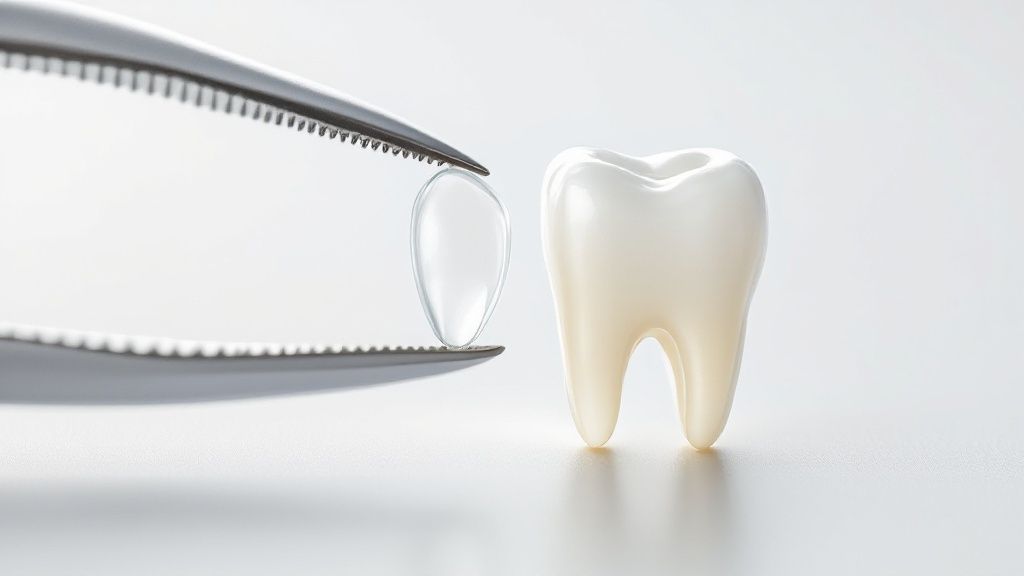
This is the key difference you need to understand. While the veneers are not forever, the choice to get them is.
Key Takeaway: Preparing your teeth for veneers is a permanent change. The veneers are beautiful, long-lasting covers, but they are made to be replaced over time.
To help explain this important idea, here’s a quick summary:
Veneers At a Glance: Permanent Process vs. Lifespan
| Part | Explanation |
|---|---|
| The Process | Permanent. A thin layer of natural tooth enamel is removed so the veneer fits well and looks natural. This enamel does not grow back. |
| The Choice | For Life. Once your teeth are prepared, they will always need to be covered by veneers or another dental fix. |
| The Veneers | Long-Lasting, But Not Forever. The veneers themselves are strong but will eventually wear out, chip, or need to be replaced. |
| How Long They Last | 10-20 years on average. With great care and regular dental check-ups, they can often last even longer. |
This table shows that while the veneers have an end date, the choice to change your natural teeth is a one-way street.
Porcelain veneers are a very strong and dependable option. In fact, studies show they last an average of 10 to 20 years. One study even found that 99% of veneers that were bonded only to enamel were still in great shape. This shows how reliable they can be with good care. Of course, the dentist's skill is very important, which is why you need to know how to choose the right dentist for your needs.
Why the Veneer Process Is a Lifelong Choice
To really understand why the answer to "are veneers permanent?" is a little tricky, we have to look at how they are put on. The process itself is what makes it a lifelong choice for your smile. It's not as simple as sticking a new cover on your tooth. It's about carefully preparing the tooth for a perfect fit.
Think of it like putting new tiles on a wall. You can't just put new tiles over the old ones and hope they look good. First, you have to sand the wall to make a smooth, even base. A dentist does something very similar to your tooth.
The Step That Can't Be Undone: Enamel Removal
For a new veneer to sit flat with your gumline and not look big or fake, a dentist has to remove a paper-thin layer of your tooth's natural enamel. This layer is only about 0.5 millimeters thick—about the same thickness as a fingernail. While that sounds tiny, this step is a big deal for one simple reason.
Enamel does not grow back. Ever.
Once that small amount of enamel is gone, the tooth is changed forever. It will always need some kind of protective cover to shield the more sensitive layer underneath, called dentin.
This is the main point: because preparing the tooth cannot be undone, you will always need to have a veneer or another cover, like a crown, on that tooth for the rest of your life.
This means you’re not just choosing veneers for today; you're choosing to take care of them forever. The veneers themselves will wear out and need to be replaced, but your natural tooth will always stay in its prepared shape. This makes having great oral hygiene habits even more important to protect the tooth and gums, keeping your smile healthy for years to come.
Comparing How Long Different Veneer Types Last
When you're thinking about whether veneers are permanent, the material you pick is the biggest factor in how long they'll last. Not all veneers are the same. In cosmetic dentistry, the two main types are porcelain and composite resin, and they last for very different amounts of time.
Think of porcelain veneers as the top-quality, custom-made option. They’re made from a very strong, beautiful material that is great at resisting stains and chips. Because they are so tough, they are often seen as the best choice.
Composite resin veneers are more like a high-quality, tooth-colored material that the dentist shapes. Your dentist puts them right on your teeth, usually in one visit. They cost less, but the material isn't as tough as porcelain, so it's more likely to stain or wear down over time.
Porcelain Veneers: A Strong Choice
If you want something that lasts a long time, porcelain is the clear winner. Its smooth surface acts like a shield against stains from coffee, tea, or red wine, which means your smile stays bright for years. With the right care, these veneers are built to last.
This graphic helps show how long each veneer type lasts and reminds us that the treatment cannot be undone.
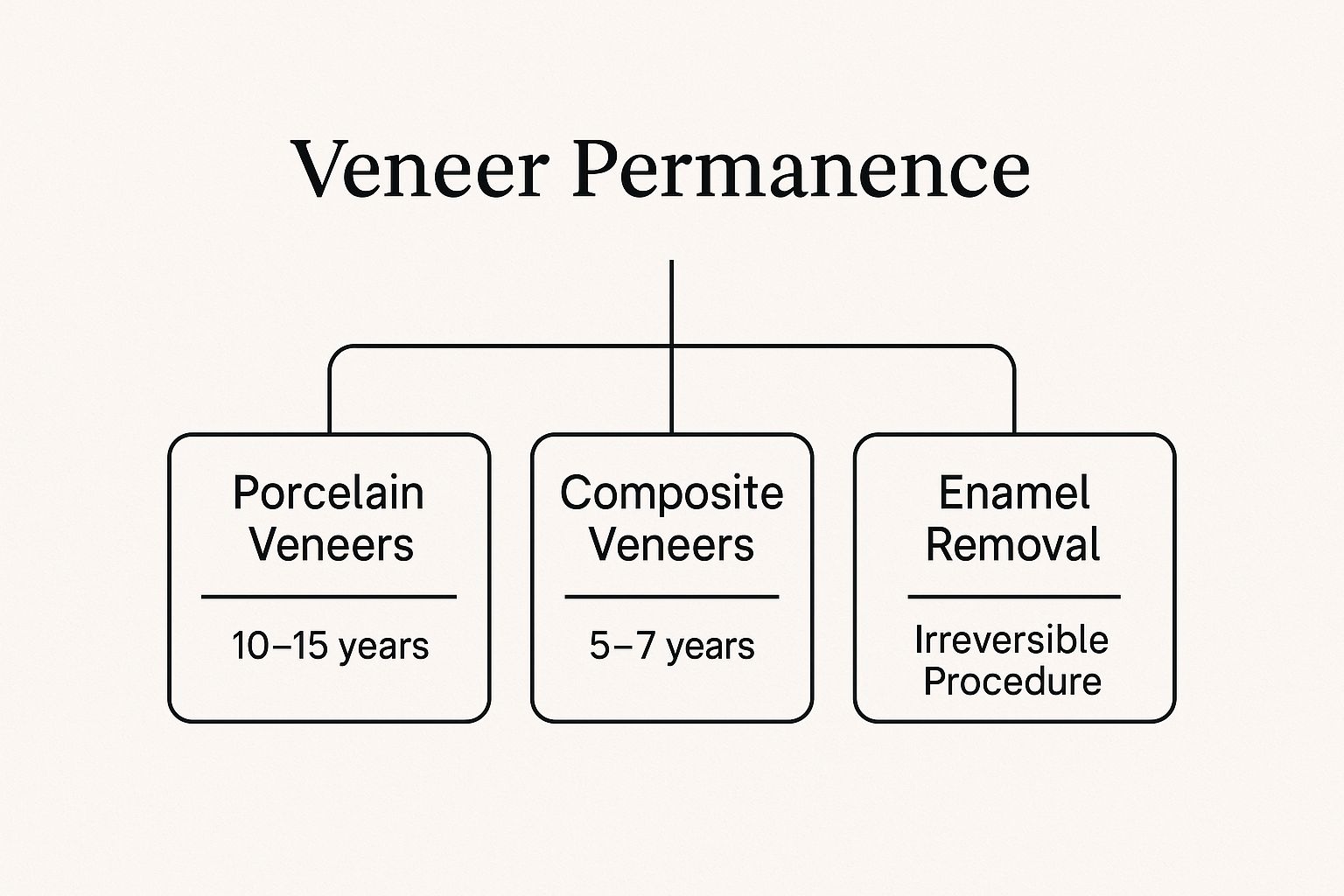
As you can see, porcelain lasts about twice as long as composite veneers. That really shows its value as a long-term investment in your smile.
Composite Veneers: A Shorter-Term Option
Composite veneers offer a faster and cheaper way to a better smile. Since they are put on and shaped in one appointment, they are a very easy option for many people. The downside? They don't last as long, which is something you need to think about.
Key Insight: How permanent veneers are really depends on the material. Porcelain veneers usually last 10 to 15 years, and sometimes up to 20 with great care. Composite resin veneers have a much shorter life, generally lasting only 5 to 7 years before they need to be replaced.
Choosing between them often means balancing how much you can spend now with your goals for the future. If you're looking for a quick fix for a small chip or gap, composite can be a great choice. For those comparing it to other single-visit treatments, our guide on dental bonding vs veneers gives a very helpful comparison.
How Your Habits Affect Your Veneers
How long your veneers last isn’t just about the material or your dentist’s skill. It’s also about what you do every day. Think of your veneers like a fancy car. They are built to work well, but they still need the right care to stay in good shape. Simple, regular habits are what protect your investment for years.
It all starts with cleaning your teeth. Daily brushing and flossing are a must. This stops cavities from forming around the edges of the veneers and keeps your gums healthy. Gum health is very important, because if your gums pull back, they can show the top edge of a veneer, which ruins its look.
Protecting Your Veneers from Damage
Besides basic cleaning, you have to protect your veneers from physical stress. Certain habits can put your new smile at risk for chips, cracks, or even popping off. The good news is that these are often easy to avoid with a little care.
A few key actions can make a huge difference:
- Avoid Using Teeth as Tools: Don't be tempted to open packages, tear tape, or bite your nails. These actions put a lot of force on the thin edges of your veneers and can easily chip them.
- Be Careful with Hard Foods: Chewing on ice, hard candy, or very crunchy nuts can create enough pressure to crack the porcelain. Be as careful with your veneers as you would be with your natural teeth.
- Wear a Nightguard if You Grind: If you clench or grind your teeth at night (called bruxism), a custom-fit nightguard is a must. The constant pressure from grinding can seriously damage or loosen your veneers over time.
Just as important as what you do is how you do it. Brushing too hard can harm both your veneers and your gums. Using gentle pressure with a soft-bristled brush is key for long-term health. For a closer look, our guide explains the risks of brushing too hard on your gums and how to do it right.
Knowing When It’s Time for a Replacement
Think of your veneers like the tires on your car. They’re built to be tough and last a long time, but daily use means they won’t last forever. The key is knowing what to look for so you and your dentist can fix any problems early and keep your smile looking great.
There are a few clear signs that it’s time to think about a replacement. You might see small cracks or chips, which often appear first along the biting edges. Another big clue is when stains start to show up around the edges where the veneer meets your natural tooth.
Common Signs of Veneer Wear
You’ll also want to pay attention to how your veneers feel. If one feels a little loose when you touch it with your tongue, or if you notice your gums have started to pull back and show the top edge of the veneer, it’s time for a check-up. This not only looks less natural but could also mean the glue holding it in place is starting to fail.
Here are the main things to watch for:
- Visible Damage: Look for any chips, fractures, or cracks in the porcelain.
- Staining or Color Change: Are there any yellow or dark lines forming around the edges?
- Loose Feeling: Does a veneer move even a little when you touch it?
- Gum Recession: Have your gums pulled back, making the top of the veneer easy to see?
With veneers becoming more popular, a lot of people are now at the stage of needing replacements. In the U.S. alone, the number of veneer procedures has gone up by about 250% in recent years, with about 600,000 Americans getting them each year. You can check out more veneer statistics on impressionsdental.com. Seeing these signs early makes the replacement process smooth and simple.
Common Questions About Veneer Permanence and Care
Even after learning all the details, you might still have a few questions about what getting veneers really means. That’s totally normal. Let's go over some of the most common ones to give you clear answers and help you feel sure about your choice.
Can I Go Back to My Natural Teeth After Veneers?
This is one of the biggest questions people have, and the short answer is no. The veneer process requires removing a very thin layer of enamel to make sure the porcelain shell fits perfectly and looks natural. Since enamel doesn't grow back, your teeth will always need some kind of protective cover, whether it's a new set of veneers or another fix.
Do Veneers Ruin Your Real Teeth?
When done by a skilled cosmetic dentist, veneers do not ruin your teeth. In fact, they act as a protective shield for the tooth surface underneath. The tooth stays healthy and strong. Problems usually only happen from bad placement or if you don't keep up with good oral hygiene.
What Happens If a Veneer Falls Off?
First, don't worry. It's rare, but it can happen. If a veneer comes loose, carefully find it and put it in a hard, safe container so it doesn't break. Call your dentist right away to let them know.
Never try to glue it back on yourself with regular glue—this can damage both the veneer and your tooth. In many cases, your dentist can simply clean and professionally re-attach the original veneer if it isn't damaged.
One of the most important things to know is how to care for them. It’s simple: treat them exactly like you would your natural teeth. You can still get cavities on the parts of your tooth that the veneer doesn't cover, so brushing and flossing well are a must.
Thinking about the financial side is also a key part of the decision. To get a better handle on the cost, take a look at our guide on how expensive veneers can be for a complete breakdown.
Ready to see how veneers could change your smile? The team at Beyond Dental Care is here to give you expert advice and personal care. Schedule your consultation today