
So, you're asking, "are veneers expensive?" The short answer is yes—they are a big investment in your smile. But the final cost isn't a single number. It can change a lot depending on a few things. Think of it like fixing up a house: the final price depends on the materials you pick and how big the project is.
Your Guide to Understanding Veneer Costs

Veneers are thin, custom-made shells that cover the front of your teeth to make them look better. They are a very popular way to hide things like stains, chips, or gaps. The cost might seem high at first, but understanding what goes into the price helps you see their real value.
The total cost for your smile makeover is shaped by a few key things. Just like different materials have different prices in building, the type of veneer you choose plays a big part in the final cost.
Key Factors That Change the Price
Two main types of materials are used for veneers, and each has its own benefits and price. Your choice between them is often the biggest factor in your final bill.
- Porcelain Veneers: These are known for being very strong and looking natural. Porcelain veneers are the top choice. They don't stain easily and can last for 10 to 15 years or more with good care. But they do cost more at the start.
- Composite Veneers: Made from a tooth-colored plastic, composite veneers are a cheaper choice. They can often be put on in just one visit. But they usually last for 5 to 7 years and can stain more easily over time.
But the material isn't the only thing. Your dentist’s skill, the city you live in, and the number of teeth you get done all add to the final price.
This guide will help explain these costs so you know where your money is going. By breaking down the price, you can make a good choice that fits your smile goals and your budget. For a more detailed look at what to expect, check out our guide on how much veneers cost.
Here's a quick look at what you can generally expect to pay for each type of veneer.
Veneer Cost at a Glance Per Tooth
| Veneer Type | Average Cost Per Tooth (USA) | Best For |
|---|---|---|
| Porcelain | $925 – $2,500 | Strength, stain resistance, and a natural look. |
| Composite | $250 – $1,500 | A cheaper option for small fixes, often done in one visit. |
This table gives you a general idea, but these are just averages. The best way to get an exact price is to have a personal meeting with a dentist.
If you want to see how these costs compare to other beauty treatments, you can check out a guide on understanding the costs of dermal fillers, which also talks about different types and what affects the price.
Porcelain vs. Composite: What Your Money Buys
When you wonder why veneers can be so expensive, the biggest reason is the material they are made of. The choice between porcelain and composite veneers is the most important factor that will shape your final bill.
Think of it like choosing between a custom-made suit and a nice one you buy at a store. Both look great, but the work, the materials, and the final price are very different.
Porcelain veneers are the best option. They are carefully made by hand in a dental lab from a strong ceramic material that looks just like natural teeth. This material is not only very strong, but it also resists stains from coffee, red wine, or tea. That level of quality and custom work costs more.
On the other hand, composite veneers are the more affordable choice. These are made from a tooth-colored plastic that your dentist puts directly on your teeth and shapes, often in just one visit. This makes them a much faster and cheaper way to get a new smile.
Durability and Lifespan
So, where does the real difference in cost come from? A lot of it is about how long they last.
Porcelain veneers can last a good 10 to 15 years—sometimes even longer if you take great care of them. They are made to handle daily chewing while keeping their color and shine for years.
Composite veneers have a shorter lifespan, usually lasting around 5 to 7 years. Because the plastic material isn't as tough as porcelain, it's more likely to chip and stain over time. This means you might need more touch-ups or even replacements, which can add up in the long run.
The price difference shows the quality and how long they last. Porcelain is an investment in a strong, long-lasting smile, while composite offers a quicker and cheaper improvement.
Look and Process
The final look is also different between the two. Porcelain looks better and more natural because it catches light just like real teeth. The lab process allows for perfect custom color and shape, making sure they match your other teeth.
Composite veneers can still look great, but they don't reflect light the same way as porcelain. This can sometimes make them look less natural up close. While they are a great option, especially when you compare them to other cosmetic choices, it's important to know the differences. You can get a better idea by looking at dental bonding vs veneers to see how they compare.
The price difference between these materials is big. Porcelain veneers usually cost three to four times as much as composite ones. For example, in the United States, a single porcelain veneer might cost around $1,600 per tooth, while a composite veneer can be anywhere from $250 to $1,250.
This shows how your choice of material directly answers the question, "are veneers expensive?" Understanding what your money buys is the key to matching your budget with your smile goals.
What Factors Drive Up Veneer Prices
While the material is a big part of the price, other things add to the final bill for your veneers. Knowing these factors helps explain why you might see a wide range of prices when you start looking.
It’s not just about what goes on your teeth, but who’s doing the work and what needs to be done first. These things are a major reason why answering "are veneers expensive?" isn't a simple yes or no.
The Dentist's Skill and Location
The skill and experience of your cosmetic dentist play a huge role in the final cost. Think of it like hiring a famous chef instead of a regular cook. A dentist with years of special training in cosmetic work will charge more for their skills, but they often give better, more natural-looking results that are worth it.
Location matters, too. A dentist's office in a big city with higher rent will have different prices than an office in a small town.
The Size and Difficulty of Your Case
This one is simple: the number of veneers you need changes the price. One veneer to fix a single chipped tooth will cost much less than a full set of 8 to 10 veneers for a complete smile makeover.
Also, how difficult your case is is a huge factor. If your teeth are healthy and straight, the process is much simpler. But many people need some work done first.
The health of your gums and teeth is the base for any good cosmetic work. If problems aren't fixed first, your investment in veneers could be at risk.
For example, you might need treatment for cavities or gum disease before veneers can be put on. Fixing these issues adds to the total cost and time of your smile change. You can get a better idea of this by learning more about the gum disease treatment cost.
The Quality of the Dental Lab
Finally, where your veneers are made is a key part of the price. We work with high-end dental labs that use the best materials and have expert artists.
These top labs charge more for their work, but the result is a veneer that fits perfectly, matches your natural teeth, and is built to last. A cheaper lab might cut corners, leading to a bad fit or a fake look. You should always ask your dentist about the lab they use—it gives you a good idea of the quality you can expect.
How Your Location Impacts the Final Cost
It’s a surprising fact, but where you get your veneers can make a big difference in the final price. Just like coffee or rent costs more in one city than another, so does dental care. The answer to "are veneers expensive?" can really depend on your zip code.
This isn't random. The price difference is tied to the local economy. A dentist in a fancy part of New York City has much higher costs—from office rent to paying staff—than a dentist in a smaller town. Those costs are naturally part of their prices.
Why Are Veneers Cheaper in Some Countries?
This is where dental tourism comes in. You’ve probably heard of people traveling to places like Turkey, Mexico, or Thailand for major dental work. There’s a simple reason why: it’s much cheaper. The lower prices are because their costs of running a business are lower.
Everything from lab fees to paying staff is more affordable in these countries. Those savings are passed on to you, the patient. For many, this makes a full smile makeover—something that might feel too expensive at home—suddenly possible. After all, a full set of veneers in the U.S. can sometimes cost as much as a new car.
This picture gives you a clear idea of where your money goes. It shows why the dentist’s skill and the lab fees are such a big part of the price.
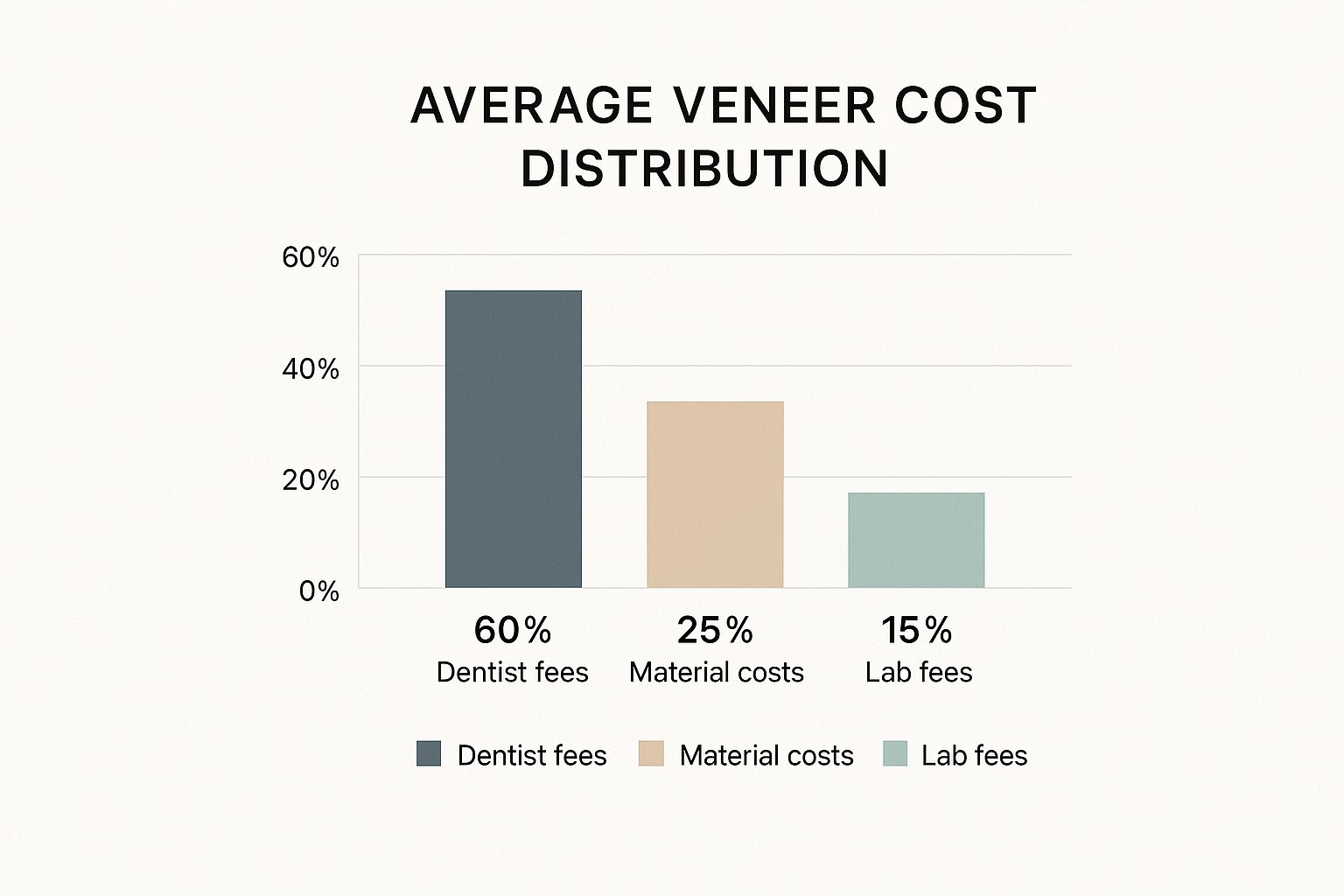
As you can see, the dentist's and lab's fees are the biggest costs. This is exactly why location plays such a big role in what you end up paying.
A Global Price Comparison
You might be shocked when you compare veneer prices around the world. The differences are not small—they are huge. It all comes down to local economies and material costs.
Take a look at how big these differences can be for a full smile makeover, which usually means getting 16-20 veneers.
| Cost of a Full Set of Porcelain Veneers Around the World | ||
|---|---|---|
| Country | Average Price Range (USD) | Potential Savings vs. USA |
| USA | $32,000 – $80,000 | – |
| UK | $16,000 – $35,000 | 50% – 56% |
| Mexico | $8,000 – $20,000 | 75% – 75% |
| Turkey | $4,800 – $15,000 | 85% – 81% |
| Thailand | $6,400 – $18,000 | 80% – 77% |
The numbers are clear. The chance to save tens of thousands of dollars is why so many people are willing to travel for their dental work. In many cases, the savings can easily cover the entire cost of the trip, with plenty left over.
While traveling is a great option for some, we also know it's important to find expert care you can trust close to home. For anyone in Arizona looking for top-quality local treatment, you can learn more about dental veneers in Glendale, AZ. In the end, understanding how location affects the price lets you make the best financial choice for your new smile.
Should You Travel Abroad for Veneers
The idea of getting a new smile in another country—and saving thousands of dollars—sounds amazing. For many, it's a real and tempting choice. This is called dental tourism, and it’s a big industry for one simple reason: veneers are expensive in places like the United States.
The huge price difference gets people’s attention. A full set of veneers in the U.S. can easily cost from $7,200 to over $20,000. If you go to a popular place like Turkey, that same set might only cost $4,000 to $5,000. That kind of savings is why over 780,000 Americans travel for dental care every year. Many find they can pay for the dental work, the flights, and the hotel, and still have money left over.
But while the savings are great, getting on a plane for major dental work isn't like booking a quick vacation. You have to weigh the savings against the real risks.
Weighing the Pros and Cons
The biggest "pro" is obvious: the cost. Saving a lot of money can make the smile you've always wanted seem possible.
But what are you possibly giving up for that lower price? This is where you need to be careful.
- Quality and Standards: Dental rules are not the same everywhere. The quality of care, cleaning, and materials can be very different from one country to another.
- Communication: A language barrier might not seem like a big deal, but when you're talking about the exact shape and color of your new smile, mistakes can lead to disappointment.
- Follow-Up Care: This is a big one. What happens if a veneer chips or you have a problem when you're back home? You can't just go back to the clinic easily. Extra trips add surprise costs and are a big hassle.
The most important question to ask is if the lower cost is worth the possible risk. A bad dental job can lead to much higher costs and more serious problems later.
A Smart Traveler's Checklist
If you are seriously thinking about dental tourism, you must do your homework. This is not the time to look for a bargain without a plan. Rushing into a choice based only on price can lead to regret.
Before you even think about booking a flight, use this checklist to help with your research and protect your health.
- Check Dentist's Training: Don't just trust what they say. Look for proof of training from well-known dental groups. Ask about their training and experience with veneers.
- Read Patient Reviews and See Photos: Look for reviews from other international patients, not just locals. Look closely at their before-and-after photos—do the results look natural and high-quality?
- Ask About Materials: Find out exactly what brand and type of materials the clinic uses (for example, do they use high-quality E-max porcelain?). Make sure they are approved internationally and known for being strong.
- Understand the Full Plan: Get everything in writing. You need a detailed treatment plan that lists every single step, the full cost, and a clear timeline from start to finish.
In the end, dental tourism is a personal choice about risk versus reward. Before you make any big decisions, it’s also a good idea to step back and think about if cosmetic dentistry is worth it for you in the first place.
Your Top Questions About Veneer Costs Answered
Even after breaking down the numbers, you might still have a few questions. That's totally normal. Understanding if veneers are "expensive" is about more than the price tag. It’s also about what insurance covers, how long they last, and what other options you have for a smile you love.
Let's clear up those final questions with some straight answers to what we hear most often.
Does Dental Insurance Cover Veneers?
In most cases, the answer is a simple no. Dental insurance companies almost always see veneers as a cosmetic procedure. This means it is something you choose to do to make your smile look better, not something you need for your health. Insurance usually covers work to fix problems, like fillings for cavities or crowns for broken teeth.
Because veneers are about looks, you should plan to pay for them yourself. There are very rare cases where insurance might help. For example, if a veneer is used to fix a tooth after an accident, your insurance might pay a small amount.
The best thing you can do is call your insurance company. They are the only ones who can give you a definite yes or no based on your plan. This simple step can save you from any surprises later.
For the Price, How Long Do Veneers Last?
This is a great question because it's about their value. While porcelain veneers cost more at the start, they are very strong. With good care, they can easily last 10 to 15 years, and sometimes even longer. Also, they are great at resisting stains.
Composite veneers are a cheaper option to start with, but they have a shorter lifespan, usually around 5 to 7 years. The plastic material is not as tough as porcelain, so it can stain more easily and may need to be fixed or replaced sooner.
When you do the math over 10 years or more, the more expensive porcelain veneers often end up being the smarter money choice in the long run.
Are There Cheaper Ways to Improve My Smile?
Yes, absolutely! If veneers don't seem to fit your budget right now, you have several other great options to make your smile better. Each one fixes different problems at a different price.
Here are a few popular choices to think about:
- Professional Teeth Whitening: If your main goal is to get rid of stains and make your teeth brighter, professional whitening can make a big difference for much less money than veneers.
- Dental Bonding: If you have a small chip or gap you'd like to fix, dental bonding is a quick, cheap solution. Your dentist uses a tooth-colored plastic to fix the tooth, often in just one visit.
- Orthodontics (Braces or Aligners): If you really want to fix crooked teeth, treatments like Invisalign or traditional braces are probably a better choice for the long term. While they can cost a lot, they fix the actual problem instead of just covering it up.
Each of these options offers a different way to feel more confident, showing that a smile you love is possible at almost any budget.
At Beyond Dental Care, we believe in helping you find the perfect solution that fits your smile and your budget. If you're ready to explore your options with a team that puts your comfort and goals first, we invite you to schedule a consultation with us today. We're here to help you make the best choice for you.