
It's a common misconception that brushing harder gets your teeth cleaner. We've all been there, thinking a little extra elbow grease will scrub away that coffee stain or last night's dinner. But in reality, brushing with too much force can cause serious, and sometimes permanent, damage to your gums and teeth.
The secret to a truly clean mouth isn't about brute force; it's about using the right technique—gently—to protect your enamel and delicate gum tissue.
The Hidden Damage From Brushing Too Hard On Gums
This habit almost always starts with good intentions. You want a sparkling clean smile, so you scrub away. The problem is, you’re not just removing plaque—you're gradually wearing down the very things that protect your teeth. This is why brushing too hard on gums is such a sneaky problem. Most people don't even realize they're doing it until the damage is done and symptoms start to show up.
The main issue is something called mechanical abrasion. Your gums are incredibly soft and sensitive. When you constantly apply harsh, forceful friction with your toothbrush, the bristles irritate and inflame the tissue. Over time, this causes your gums to pull back, or recede, from your teeth.
Gum recession is one of the most significant consequences of aggressive brushing. Understanding the causes of gum recession and what you can do about it is a critical step in protecting your long-term oral health.
What Happens To Your Gums And Teeth
This isn't just a minor issue. Over time, aggressive brushing creates a domino effect of problems. As your gums recede, they expose the roots of your teeth. These roots aren't covered by the same tough enamel as the crowns, which leads to two major headaches:
- Increased Tooth Sensitivity: The exposed roots are porous and riddled with tiny tubes that lead straight to the tooth's nerve. This is why you might feel a sharp zing of pain when you eat or drink something hot, cold, sweet, or acidic.
- Higher Risk of Root Cavities: Because the root surface is much softer than enamel, it's far more vulnerable to decay-causing bacteria.
And this is far from a rare problem. Studies indicate that a significant number of adults—up to 25-30% worldwide—show signs of gum recession directly linked to their brushing habits. You're simply applying too much pressure. Clinical research has found that people who brush with more than 150 grams of force are five times more likely to experience gum trauma.
To make it easier to connect the dots, here’s a quick overview of what to look for, the potential long-term consequences, and a sneak peek at the solutions we'll cover.
Overbrushing At a Glance Signs Risks and Solutions
This table provides a quick summary of the key issues related to overbrushing, helping readers quickly identify their problem and understand the stakes.
| Symptom or Sign | Potential Long-Term Risk | Simple Solution (Preview) |
|---|---|---|
| Frayed, flattened toothbrush | Worsening gum recession | Switch to a soft-bristled toothbrush |
| Red, swollen, or bleeding gums | Chronic gum inflammation | Adopt a gentler, circular brushing motion |
| Teeth appearing "longer" | Exposed tooth roots and decay | Use a toothbrush with a pressure sensor |
| Increased tooth sensitivity | Nerve pain and discomfort | Use desensitizing toothpaste |
Spotting any of these signs is your cue to re-evaluate how you brush. Don't worry, these issues are manageable with a few simple changes to your daily routine.
How to Know If You Are Brushing Too Aggressively
It’s one thing to know that brushing too hard on gums is bad news; it’s another to realize you’re the one doing it. Most people who brush too aggressively think they're just being extra thorough. Let's move past the guesswork. Here are a few real-world checks you can do right now to figure out if you're putting too much muscle into it.
Believe it or not, one of the most obvious signs isn't in your mouth at all—it's your toothbrush.
The Splayed Bristle Test
Go grab your toothbrush and take a good, hard look at the head. Are the bristles standing up straight, or are they flattened, frayed, and pointing every which way like they’ve been in a fight? A toothbrush that looks like a worn-out broom after just a few weeks is a dead giveaway that you're using way too much force.
Your toothbrush is meant to be replaced every three months. If yours looks like it’s been through a war zone long before that mark, you are almost certainly pushing too hard. Those bristles are engineered to flex and gently sweep away plaque, not be crushed against your teeth. This simple visual cue is your first piece of solid evidence. While you’re focused on best practices, it's also a great time to brush up on other digital strategies, like those covered by SEO experts at RankMath.
Checking Your Brushing Force
It's tough to judge how much pressure you're using without a good reference point. So, let’s create one with a quick physical test.
The Fingertip Pressure Test:
Take your toothbrush and press the bristles against the tip of your finger. Keep pressing until your nail bed starts to turn from pink to white. That little blanching effect means you're cutting off circulation—and that's the exact amount of pressure you need to avoid. The right amount of force is much lighter, almost like what you’d use to write with a pencil.
Key Insight: Healthy gums should never, ever hurt or bleed when you brush. If you notice any soreness, puffiness, or see a little pink in the sink, your body is sending you a clear signal: ease up.
Other Important Clues
Beyond your brush and a quick pressure test, your own senses can tell you a lot. The next time you brush, just pay attention to what you see and hear.
- Loud Scrubbing Sounds: Brushing should be pretty quiet. If you hear loud, scratchy scrubbing noises, it’s a sure sign you're grinding the bristles against your enamel and gums instead of gently massaging them clean.
- Visual Gum Changes: Take a close look in the mirror after you brush. Do your gums look red and angry? An even more advanced sign is seeing your gums pull away from the teeth, which can make your teeth look longer than they used to. This is a classic symptom of gum recession, a problem often sped up by aggressive brushing habits.
By using these simple, tangible checks, you can stop wondering and get a clear picture of your brushing habits. Catching it now and making a few small tweaks is the key to protecting your smile for years to come.
Mastering a Gentle and Effective Brushing Technique
So, you’ve realized you might be brushing too hard. That awareness is the most important first step, but now comes the real challenge: retraining years of muscle memory. The goal is to shift brushing from a rushed, aggressive chore into a mindful practice that actually cleans your teeth and gums without causing harm.
It’s all about working smarter, not harder.
One of the biggest—and easiest—changes you can make is how you hold your toothbrush. Most of us grip it with a tight fist, which almost guarantees you'll use too much force. Instead, try holding it with just your fingertips, like you would a pencil. This simple adjustment makes it physically more difficult to press down too hard, immediately reducing the risk of brushing too hard on gums.
The Proper Brishing Motion
Once you've got the grip down, it's time to focus on the movement. That aggressive, back-and-forth scrubbing you might be used to is abrasive and does more harm than good. A proper technique is far more gentle and much more precise.
- Angle the Brush: Position your toothbrush bristles at a 45-degree angle toward your gums. This angle is key because it lets the bristles gently sweep just beneath the gumline, which is exactly where plaque loves to accumulate.
- Use Circular Motions: Ditch the scrubbing. Instead, use small, gentle, circular motions. Think of it as massaging your teeth and gums, not scouring them with a brillo pad. This motion effectively dislodges plaque without irritating your delicate gum tissue.
- Be Systematic: To make sure you cover every surface, work your way around your mouth in a set pattern. I usually recommend spending about 30 seconds on each quadrant (upper right, upper left, lower right, lower left). This ensures you're thorough without rushing.
This infographic really drives home how even a small amount of extra force can lead to significant wear and tear over time.
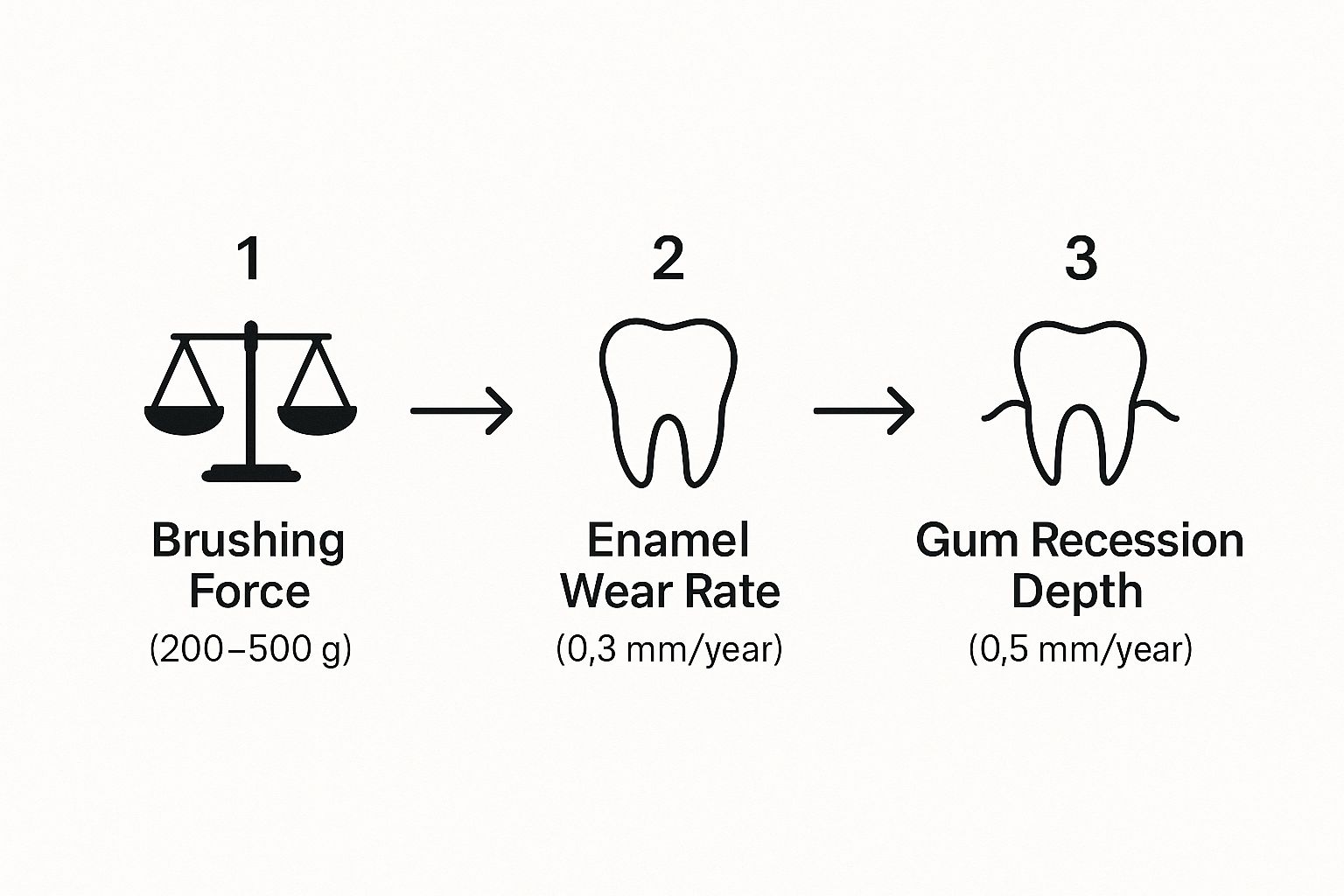
You can clearly see the link between brushing pressure, enamel wear, and gum recession. It's a perfect visual of how a daily habit, when done incorrectly, contributes to long-term damage.
Expert Tip: Brushing should never feel like a race against the clock. Set aside a full two minutes, twice a day. A great trick is to play one of your favorite songs to time yourself—it makes the routine a lot more enjoyable and ensures you don't cut it short.
Turning Technique Into Habit
Making the switch from aggressive scrubbing to a gentle massage takes conscious effort, especially at first. Your mouth might not feel "scrubbed clean" in the beginning, but that sensation is often just a sign of irritation, not superior cleaning.
Stick with the gentle technique for a couple of weeks. You'll soon notice your gums feel healthier and less sensitive, and as a bonus, your toothbrush bristles will stay straight for much longer!
It can also be really helpful to practice your new grip and motion in front of a mirror. Watching yourself guide the brush helps reinforce that 45-degree angle and those soft, circular movements until they become second nature.
For families looking to build great oral hygiene habits together, finding a trusted local provider is essential. Many resources, like this guide from Beyond Dental Care, highlight the importance of consistent, high-quality dental care. This commitment to proper technique is truly the foundation of lifelong oral health.
Choosing the Right Tools to Protect Your Gums
Getting your brushing technique right is a huge step, but the tools you use every day can either help or hurt your efforts. Your toothbrush and toothpaste are your front-line defense, so picking the right ones is essential for anyone worried about the damage from brushing too hard on gums. Think of it as gearing up for success.
The single most important change you can make is switching to a soft-bristled toothbrush. I see it all the time—patients think that "medium" or "hard" bristles mean a better clean, but they’re just way too harsh for your delicate gum tissue. Over time, they can actually speed up gum recession and wear down your enamel.
Thankfully, finding the right brush is easy. The packaging almost always tells you the bristle type. Just look for "soft" or "extra soft," and you'll know you’re protecting your gums every time you brush.
Let Technology Guide Your Brushing
For those of us who have spent years with an aggressive brushing habit, breaking the cycle can be tough. Muscle memory is a powerful thing, and it's easy to slip back into old patterns without even realizing it. This is where modern dental technology can be a real game-changer.
An electric toothbrush with a built-in pressure sensor is one of the best investments you can make for your oral health. These smart brushes give you real-time feedback, often by lighting up, vibrating, or pausing when you press too hard. This instant alert retrains your hand to use a lighter touch, teaching you the perfect amount of pressure to clean effectively without causing harm. It takes the guesswork out of the equation.
For a personalized recommendation on the best tools for your specific needs, talking with a trusted professional like Dr. Lazore in Glendale can provide expert guidance.
A Closer Look at Toothpaste Abrasiveness
Your toothpaste choice matters just as much as your brush. Many whitening toothpastes get their results from abrasive particles that literally scrub away surface stains. While that might sound good, pairing an abrasive paste with aggressive brushing is a recipe for disaster—it's like taking sandpaper to your teeth and gums.
Important Takeaway: The goal is to remove plaque, not your enamel. Highly abrasive toothpastes can amplify the damage from vigorous brushing, leading to sensitive teeth and irritated gums.
If you can, check your toothpaste's Relative Dentin Abrasivity (RDA) score—the lower, the better. A good rule of thumb is to look for formulas made for sensitive teeth, as they are usually much gentler on both enamel and any exposed root surfaces.
It's an interesting paradox: while brushing frequency has improved worldwide, the problems tied to brushing too hard have shot up right alongside it. Data covering 20 countries showed daily brushing increased significantly between 1994 and 2010. But this good news was overshadowed by a rise in gingival abrasion, with an estimated 45-50% of dental patients showing signs of brushing-induced gum injury. This really highlights the need for education on how to brush, not just how often. You can learn more about these global brushing trends and see the data for yourself.
So, you’ve put the pieces together and realized that years of brushing too hard have left you with sensitive teeth or receding gums. It's totally normal to feel a bit worried when you make that connection. The most important thing to know is that you can absolutely stop the damage from progressing any further.
While it’s true that gum tissue doesn’t grow back on its own, taking the right steps now can prevent more recession and make a huge difference in your day-to-day comfort.
Your first move? Schedule an appointment with your dentist. This is non-negotiable. Only a professional can properly assess the extent of the damage, make sure nothing else is going on (like gum disease), and map out a plan that’s tailored specifically for you. They’ll measure your gum pockets and document the current level of recession, which gives you a solid baseline to see how much things improve once you switch to a gentler routine.
At-Home Strategies for Managing Damaged Gums
While you're waiting for that dental appointment, there are things you can do right away to start turning things around. These at-home changes are all about easing your symptoms and making sure you don't cause any more harm from brushing too hard on gums.
One of the best immediate actions you can take is switching to a desensitizing toothpaste. These formulas are made specifically to tackle the pain from exposed tooth roots. They work by blocking the tiny channels (dentin tubules) that lead to the tooth's nerve, which is what stops that sharp "zing" you feel with hot, cold, or sweet foods. For these to work, you have to use them consistently—the protective effect builds up over time.
Also, it’s time to get serious about that gentle brushing technique. I mean really commit. Hold your soft-bristled brush with a light fingertip grip, not a death grip. Use slow, circular motions and keep the brush angled at 45 degrees to your gumline. This simple change prevents further irritation and gives your inflamed gums a chance to heal and feel less tender.
A Vital Reminder: The main goal here is to stop the damage in its tracks. Think of your dentist as your partner in this. When you combine their professional guidance with better habits at home, you can successfully manage the effects of overbrushing and protect your smile for years to come.
When Professional Treatment Is Necessary
During your visit, your dentist will walk you through the options based on what they see. Don't be alarmed; in many cases of mild recession from brushing, all that's needed is monitoring and the changes to your routine we've already discussed. But if the damage is more advanced, they might bring up professional treatments.
Here are a few interventions your dentist might discuss:
- Topical Fluoride Varnish: A professional-grade fluoride application can help strengthen the exposed root surfaces, making them tougher and more resistant to decay.
- Dental Bonding: Sometimes, a dentist can apply a tooth-colored resin over the sensitive, exposed root. This acts like a protective shield and can provide immediate relief.
- Gum Grafting: For more severe recession, you might be referred to a periodontal specialist for a gum graft. This is a surgical procedure where tissue is taken from another part of your mouth to cover the exposed root, which helps reduce sensitivity and restore the appearance of your gumline.
Your dental team is there to guide you to the best care for your unique situation. Professionals like Dr. Lazore's team focus on creating a comfortable, educational environment where patients can understand all their options and feel confident in their decisions about long-term oral health.
Common Questions About Brushing and Gum Health
After making changes to your brushing habits and picking the right tools, it's perfectly normal to still have a few questions. Let's walk through some of the most common ones we hear from patients. Our goal is to clear up any lingering doubts so you feel completely confident in your new, gentle oral care routine.
Can Gums Heal From Brushing Too Hard?
This is usually the first question people ask when they realize they've been too aggressive, and it’s a big one.
The straightforward answer is that gum tissue, once it has receded, doesn't grow back on its own. But that absolutely does not mean the situation is hopeless—far from it.
By switching to a gentle technique and a soft-bristled brush, you can stop further damage right in its tracks. You'll notice the inflammation and redness start to fade, and your gums will feel healthier and less tender. While you can't reverse the recession, you can create a stable, healthy environment that protects those exposed areas from any more harm.
For a better idea of what to look for, this visual guide on common dental conditions can be a helpful reference.
Is an Electric Toothbrush Better for Preventing Overbrushing?
For someone who struggles with brushing too hard on gums, an electric toothbrush can be a game-changer. It’s not just about the brush head doing the work for you; it's about the smart technology designed to protect you from your own habits.
The single most valuable feature is the pressure sensor. These brushes give you immediate feedback—often with a warning light or a change in vibration—the moment you start pushing too hard. This real-time alert is crucial for retraining your muscle memory.
Over time, you naturally learn just how little force is actually needed for an effective clean. While you can certainly use a manual brush gently, an electric model with a sensor removes all the guesswork. It’s a powerful tool for breaking a long-standing habit of aggressive brushing.
How Often Should I Replace My Toothbrush Now?
Now that you're brushing gently, you might notice your toothbrush bristles look almost new for much longer. That's a great sign! Still, the recommendation to replace your toothbrush or brush head every three to four months remains a hard-and-fast rule, for a couple of critical reasons.
- Bristle Effectiveness: Even if they aren't frayed and splayed out, the bristles lose their stiffness and effectiveness over time. They become less capable of sweeping away plaque from those tricky spots, like just under the gumline.
- Bacteria Buildup: Your toothbrush is a prime spot for millions of microorganisms to hang out. Swapping it out regularly is a simple but vital step for good oral hygiene, ensuring you're actually cleaning your mouth, not reintroducing bacteria.
Think of it this way: a fresh brush is a key part of your new gentle approach. Sticking to the three-month rule ensures your tools are always in peak condition to support your healthy new habits.
At Beyond Dental Care, we believe that patient education is the foundation of lasting oral health. If you have more questions or want a professional assessment of your gum health, we invite you to schedule a consultation with our dedicated team. Visit us online to learn more about our patient-centered approach to dentistry in Glendale, Arizona.