
You hear a lot about preventive dentistry, but what does it really mean? Simply put, it’s all about taking care of your teeth to keep them healthy before problems start. It's like being on a team with your dentist to help you avoid cavities, gum disease, and other dental issues.
Understanding the Basics of Preventive Dentistry
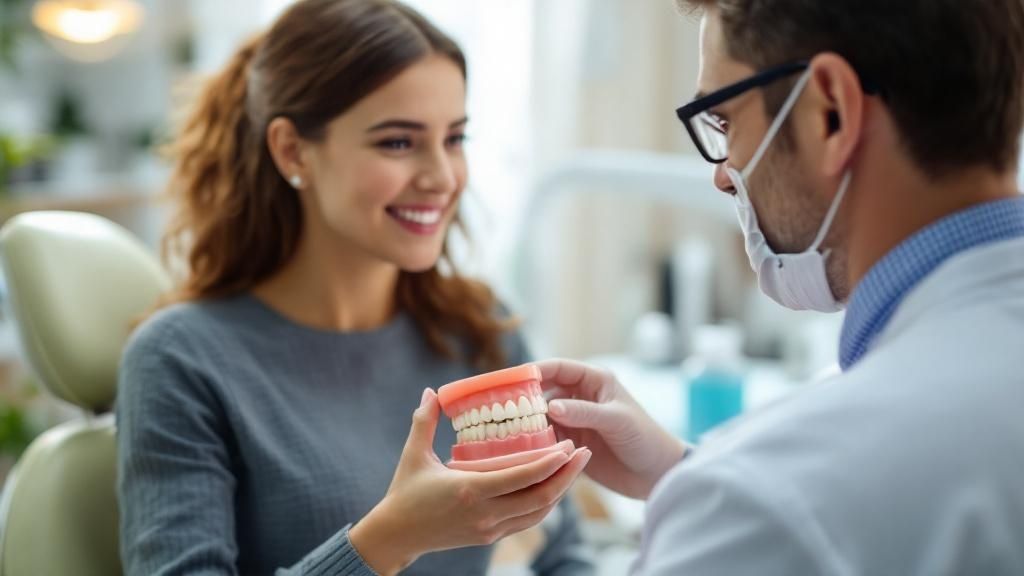
Think of it like getting a regular oil change for your car. You don’t wait for the engine to break down. You do routine work to keep it running smoothly. Preventive dentistry uses that same idea for your smile. It focuses on regular care to help you avoid painful and expensive treatments later.
This plan isn't just about what happens at the dentist's office. It’s a mix of professional care and your daily habits at home. The goal is simple: keep your mouth healthy and your natural smile for life.
The Need for Proactive Care
Let's face it, dental problems are very common. More than 3.5 billion people around the world have oral diseases. In the United States, nearly 46% of adults over 30 have some form of gum disease. These numbers show that waiting for a problem to appear is a risky game. You can learn more about these important dental care statistics to see why prevention is so important.
The main idea of preventive dentistry is to stop fixing problems after they happen and start preventing them instead. It’s about building a strong defense for your teeth and gums.
This means we don't just wait to treat cavities. We work to stop them from ever forming. It’s a team effort. Our team at Beyond Dental Care gives you expert help, and you stick to healthy habits at home. This partnership is the key to long-lasting oral health.
Preventive Care vs Reactive Treatment
It's helpful to compare the two approaches to see the real difference. One is about staying ahead of problems, and the other is about playing catch-up.
| Aspect | Preventive Dentistry (Proactive) | Reactive Treatment |
|---|---|---|
| Focus | Keeping your mouth healthy and preventing issues | Fixing problems after they happen |
| Cost | Lower costs over time (regular checkups) | Higher costs (crowns, root canals) |
| Experience | Usually comfortable and pain-free | Often involves pain and discomfort |
| Time | Less time needed (regular, short visits) | Can require many long appointments |
| Outcomes | Keeps your natural teeth for a lifetime | Higher risk of losing teeth |
| Mindset | "How can I stay healthy?" | "How can I fix this pain?" |
In the end, a preventive approach saves you time, money, and pain. It puts you in control of your oral health, instead of letting dental problems run your life.
The Building Blocks of Preventive Dental Care
Preventive dentistry is all about having a solid plan for your mouth. Think of it like a car's maintenance schedule. Each step is important to keep everything working right. The goal is to catch small issues before they turn into big, painful, and expensive problems.
These key parts are at the center of every preventive dental visit. From a careful check-up to a professional cleaning, every step is meant to keep your teeth and gums in great shape.
Your Regular Dental Exam and Cleaning
The most important part of any visit is the dental exam. This is where your dentist looks closely at your teeth, gums, and entire mouth for any signs of trouble. We look for early signs of cavities, gum swelling, and other problems that might be hiding.
Next is the professional cleaning. Even if you brush and floss perfectly at home, plaque can harden into something called tartar. Only a dentist's tools can remove it. This cleaning gets rid of that tartar, polishes your teeth, and leaves your mouth feeling fresh and healthy.
Using the right tools at home is your best friend between visits, as this graphic shows.
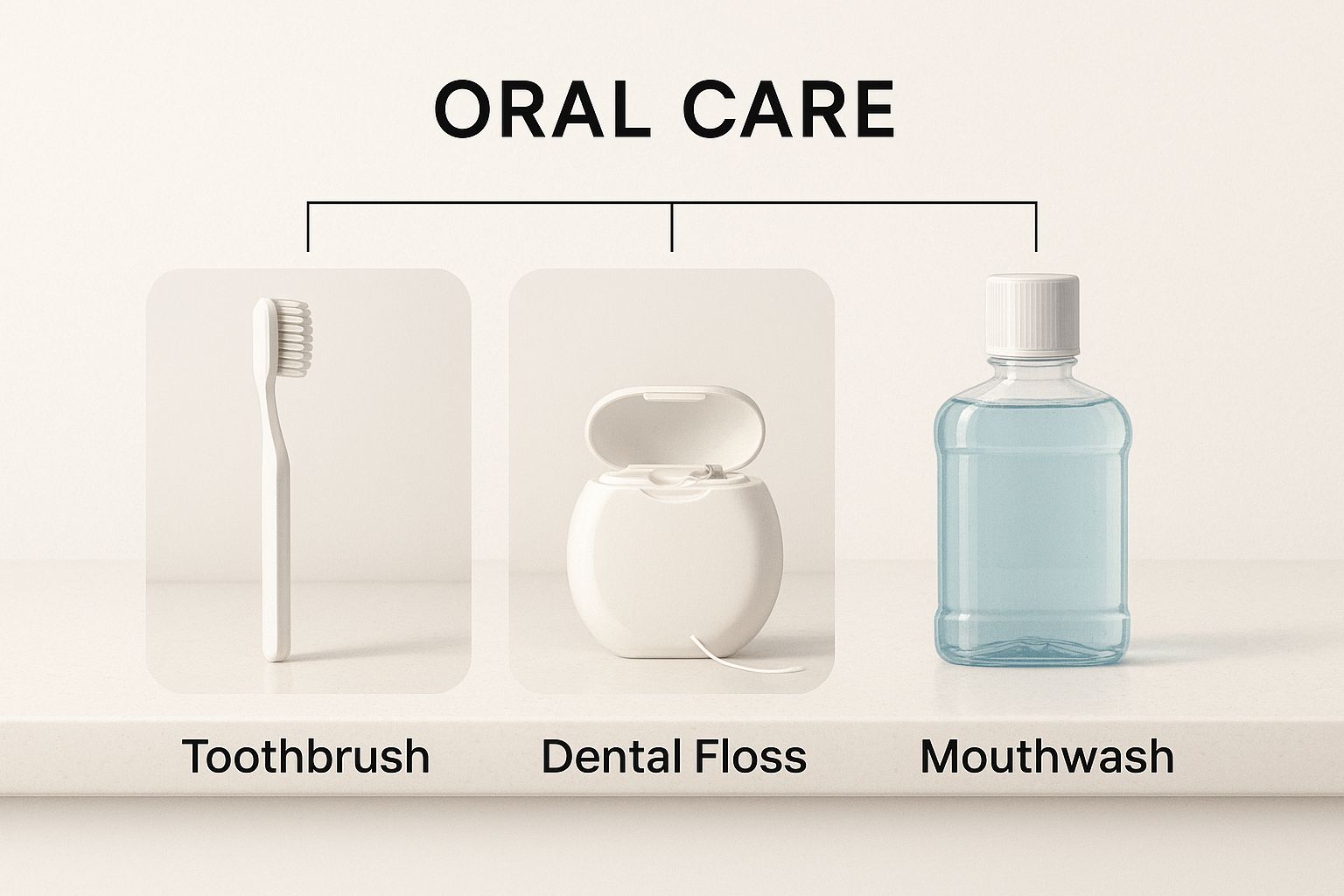
As you can see, professional care and your daily habits are two sides of the same coin. You need both for a complete preventive plan.
Seeing Beneath The Surface
Sometimes, the biggest problems are the ones you can't see. That’s where dental X-rays come in. They let your dentist see exactly what's happening below your gums and inside your teeth.
X-rays are very important for finding:
- Cavities that are just starting between teeth
- Problems with tooth roots or your jawbone
- Teeth that are stuck and haven't come in right
The last, and maybe most important, building block is patient education. We don’t just treat you; we teach you. Your dental team gives you personal advice on everything from how to brush to smart food choices. This gives you the knowledge to take care of your oral health between visits.
Of course, a big part of prevention is knowing what to avoid. For example, understanding the impact of smoking on dental health shows how much your lifestyle choices matter. By mixing professional care with smart daily habits, you can learn how to prevent tooth decay and build a strong defense for your teeth.
Powerful Tools That Strengthen Your Defenses

While brushing and flossing every day is your main defense, your dentist has some special tools to help. We use professional treatments to give your smile an extra layer of protection. This goes way beyond what you can do at home. These tools are all about stopping cavities before they even start.
Two of the best tools we use are dental sealants and professional fluoride treatments. They work in different ways to build a powerful shield for your teeth.
Dental Sealants: A Protective Shield
Think of a dental sealant as a thin, clear raincoat for your back teeth. Your molars have tiny grooves where food and bacteria can hide. A sealant is a liquid that we paint onto these chewing surfaces.
It flows into every small space and then hardens. This creates a smooth barrier that blocks out germs and acid that cause cavities. It's a quick, painless treatment that can lower the risk of decay in back teeth by nearly 80%.
Fluoride Treatments: A Vitamin for Your Teeth
If a sealant is a raincoat, then a professional fluoride treatment is like a vitamin that makes your tooth enamel stronger. Fluoride is a natural mineral that helps your teeth fight off the acid attacks that cause cavities.
During a treatment, we apply a special fluoride gel, foam, or varnish to your teeth. This helps rebuild weak spots in your enamel, giving your teeth the power to repair themselves.
Of course, strengthening your smile also means being careful about what you use every day. It's smart to know about toxic ingredients in common toothpastes and choose products you trust. People are clearly focused on these protective steps, as the global market for dental supplies was valued at USD 5.9 billion and is still growing.
By understanding these powerful preventive dental care strategies, you can work with your dentist to give your teeth the best defense against decay.
Why Everyone Needs Preventive Care
Preventive dentistry isn't a single plan that works for everyone. It's more like a journey that changes as you get older. Just like you wouldn't do the same workout at 16 as you do at 60, your dental needs change over time. But the goal is always the same: stop problems before they start.
For kids, it’s all about building a strong foundation. We focus on protecting their new adult teeth with treatments like dental sealants and fluoride. This is also the best time to build good brushing and flossing habits that will last a lifetime.
Adapting Care for Adults and Seniors
As you become an adult, the focus of preventive care starts to change. The goal becomes keeping your teeth and gums healthy. This is when we often see issues like teeth grinding or the first signs of gum disease.
That’s why your regular checkups are so important. They give your dentist a chance to find small problems early, before they get serious. You can learn more about what causes gum disease in our guide to understand the risks better.
For our senior patients, preventive care is designed for a new set of challenges. We help manage things like dry mouth, which can raise the risk of cavities. We also provide special care for dental work like crowns, bridges, or dentures.
The main idea is simple: being proactive helps everyone, at every age, deal with their unique dental risks. This keeps their smiles strong and healthy for years to come.
This proactive mindset is a key part of a complete approach to senior health and wellness. It makes sure your oral health supports, not hurts, your overall well-being. By tailoring preventive care to each stage of life, we can protect your smile for the long run.
The Real Benefits of a Preventive Approach
Choosing a preventive approach for your dental care is one of the best things you can do for yourself. The benefits go beyond just having a nice smile. They affect your overall health, your wallet, and your daily life. Simply put, thinking ahead stops small issues from becoming big problems.
Protecting Your Overall Health
It might sound surprising, but the health of your mouth can show what's going on in the rest of your body. A lot of research shows a strong link between gum disease and other serious health problems, like heart disease and diabetes.
By preventing infections in your mouth, you're also helping protect your whole body from harmful inflammation that can cause trouble elsewhere.
Saving Money in the Long Run
Preventive dentistry is also great for your budget. Right now, the U.S. spends about $124 billion each year on dental care. A huge part of that money goes to fixing problems that could have been avoided. By focusing on prevention, you can avoid many of those costs. You can learn more about how preventive measures influence dental market trends on Precedence Research.
Think about it this way: a routine dental cleaning is always cheaper than an emergency root canal or a dental crown. Being proactive helps you avoid the need for these difficult and expensive treatments.
Improving Your Quality of Life
At the end of the day, a healthy mouth just lets you live a better, fuller life. You can enjoy your favorite foods without pain, speak clearly, and smile with real confidence.
Avoiding dental emergencies means less stress and fewer surprise trips to the dentist. Regular checkups are the key. When you go for regular visits, you are taking an active part in your own health. You can explore the many advantages of routine dental cleanings in our other guide to see how much these simple appointments can do.
Common Questions About Preventive Dentistry
Even after learning about preventive dentistry, it's normal to have a few questions. We understand. Getting clear answers helps you feel good about taking the next step toward a healthier smile for you and your family.
Let’s answer some of the most common questions we hear from our patients.
How Often Should I See My Dentist for Preventive Care?
For most people, visiting the dentist for a check-up and cleaning every six months is the perfect schedule. This routine allows our team to spot small problems—like an early cavity or minor gum swelling—before they become big, expensive issues. Think of it as a regular tune-up for your smile.
Of course, this isn't a rule for everyone. If you have a higher risk for dental problems, like a history of gum disease, we might suggest coming in more often. A visit every three or four months can give you the extra help needed to keep everything healthy.
Is Preventive Dentistry Covered by My Insurance?
Yes, good news! Most dental insurance plans offer great coverage for preventive care. In fact, many plans cover routine exams, cleanings, and necessary X-rays at 100%.
Insurance companies know that it’s much cheaper to prevent a problem than to fix one later. It's always a good idea to check your specific plan, but you can usually count on strong support for these important visits.
What Can I Do at Home for Better Preventive Care?
What you do every day is just as important as your visits to our office. Good at-home care is the foundation of a healthy mouth. It comes down to a few simple, powerful habits:
- Brush Twice a Day: Always use a fluoride toothpaste and brush for a full two minutes.
- Floss Once a Day: Flossing is a must. It's the only way to clean the tight spaces between your teeth where a toothbrush can't reach.
- Eat a Balanced Diet: Eating fewer sugary snacks and drinks helps starve the harmful bacteria that cause cavities.
When Should My Child First See a Dentist?
To help your child have healthy teeth for life, it's best to start early. The American Academy of Pediatric Dentistry suggests a child's first dental visit should happen right after their first tooth comes in, or by their first birthday at the latest.
These early visits are very gentle and are mostly about getting your child comfortable at the dentist. It also gives us a chance to make sure their teeth are growing correctly and to share helpful tips with you.
Ready to put these preventive strategies into practice for your family? The team at Beyond Dental Care provides expert, patient-focused care in a comfortable and welcoming environment. Schedule your appointment today by visiting us at https://beyonddentalcare.com.