
The real gum disease treatment cost can go from a few hundred dollars for early care to thousands for serious surgery. The final price tag depends on one big thing: how early you catch the problem.
What Should You Expect to Pay for Gum Disease Treatment?
Think of treating gum disease like taking care of your car. A regular oil change is a small, easy expense. But if you ignore it for too long and the engine breaks down, you’re suddenly facing a huge repair bill. It’s the same idea with your dental health.
Catching gum disease early is the best way to protect both your health and your wallet. When the problem is small, treatment is simpler, faster, and much cheaper. Waiting just lets the infection get worse, leading to bigger procedures and, you guessed it, higher costs.
A Financial Map of Treatment Costs
To give you a clearer idea of the numbers, it helps to see how costs go up as the disease gets worse. This chart shows how common gum disease is and the big price jump between simple treatments and surgery.
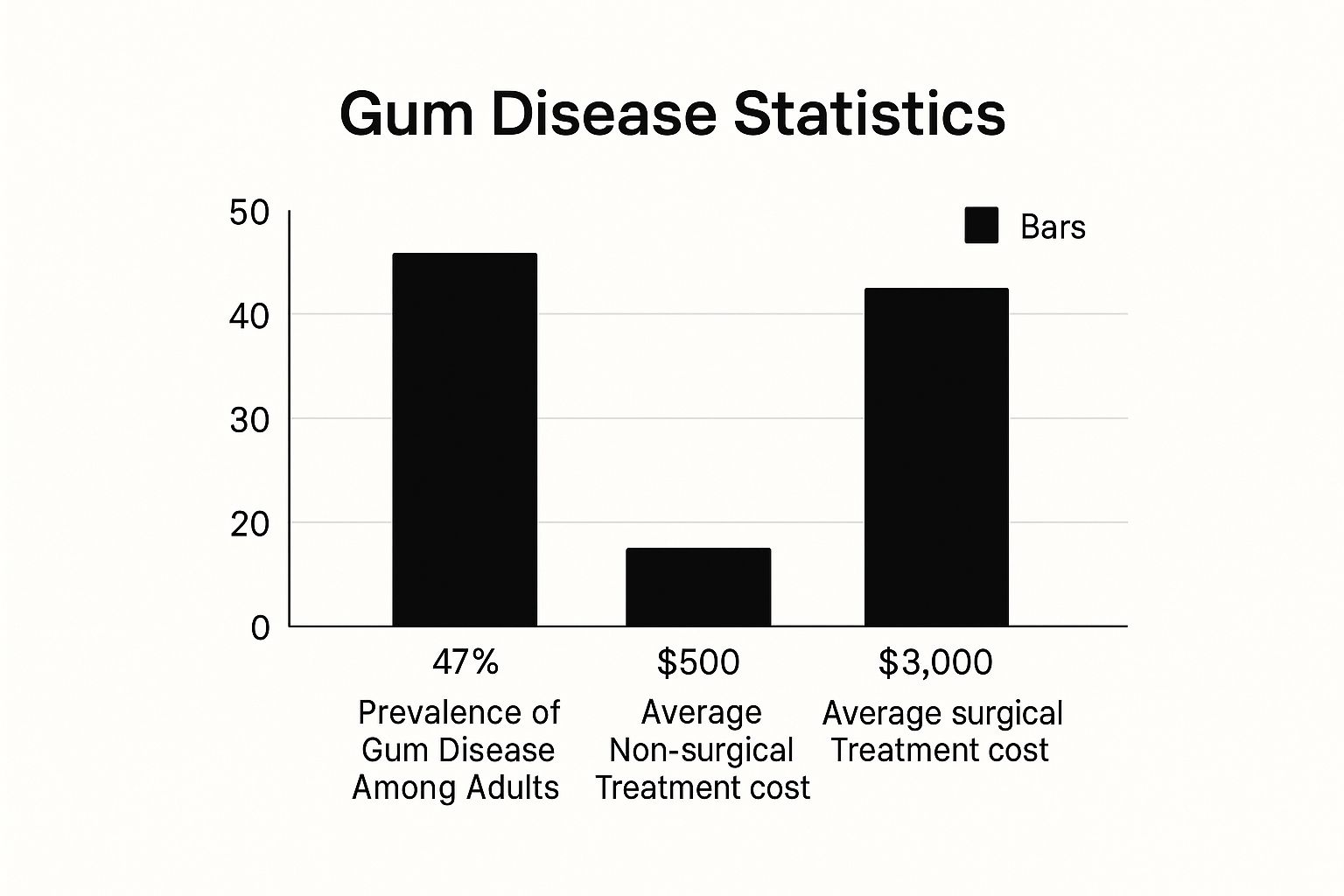
The numbers make it clear: surgery costs a lot more. This shows why it’s a good idea to catch and treat problems early. This isn't just a personal health issue, either. Around the world, dental problems cost about $710 billion in 2019 alone. That number includes treatment costs and lost work time.
The cheapest treatment is always prevention. By understanding what causes gum disease, you can take steps to avoid needing expensive treatments later on.
To help you get ready, here’s a quick look at the typical cost ranges you might see for gum disease treatment.
Estimated Gum Disease Treatment Costs by Stage
Here's a quick look at common gum disease stages, their treatments, and the average costs in the US without insurance.
| Stage of Gum Disease | Common Treatment | Estimated Cost Range |
|---|---|---|
| Early (Gingivitis) | Professional Cleaning & Home Care | $100 – $400 |
| Moderate (Periodontitis) | Scaling and Root Planing | $200 – $400 per quadrant |
| Advanced (Periodontitis) | Flap Surgery or Grafting | $1,000 – $3,000+ per quadrant |
As you can see, the difference between catching it early and waiting can be thousands of dollars.
Treating Early Gum Disease: The Cost of Gingivitis
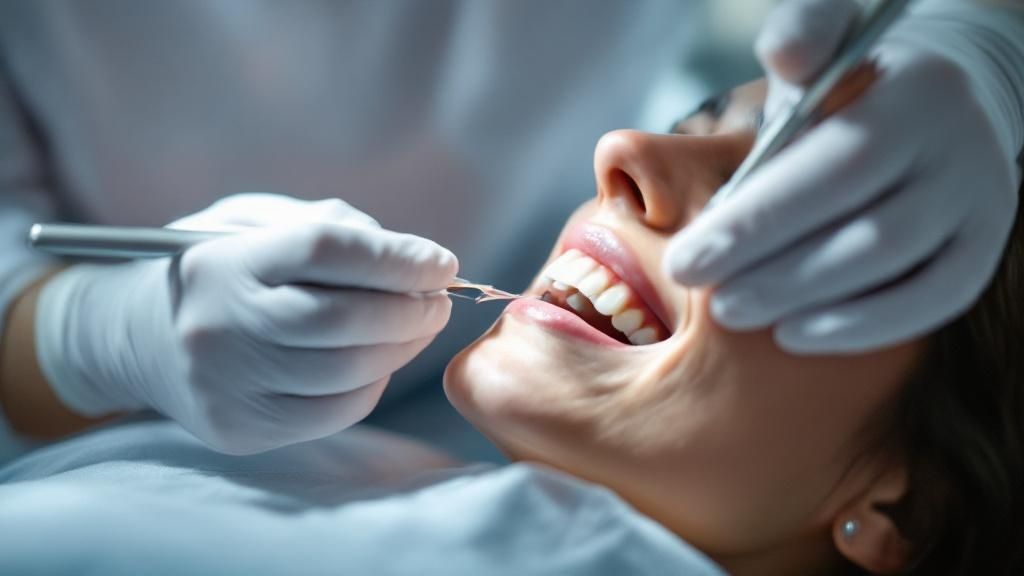
When it comes to the cost of gum disease treatment, the smartest thing you can do is act early. The first stage, gingivitis, is the most common and the cheapest to fix. Think of it like a small fire you can easily put out before it spreads and causes real damage.
Gingivitis shows up as red, swollen, or bleeding gums. At this point, the infection is only in the gums and hasn't started to hurt the bone that holds your teeth. This is good news because it means the problem can be completely fixed with simple care. The treatment is gentle and focuses on the cause of the problem—plaque and tartar buildup.
What Does Early Treatment Involve?
Fixing gingivitis is usually a simple two-step process. These two steps work together to get your mouth healthy again and stop the disease before it gets worse.
- Professional Dental Cleaning: This is more than a regular polish. Your hygienist will carefully remove all the plaque and tartar from your teeth, especially along the gum line where bacteria hide. This one step removes what is causing the swelling.
- Improved At-Home Care: Our team will also show you how to brush and floss better to stop plaque from coming back. This is the key to keeping your gums healthy for a long time.
The cost of early treatment is tiny compared to the alternative. Ignoring gingivitis lets it turn into something much more serious and expensive—needing treatments that could have been avoided.
The money problems from poor dental health are huge. For example, treating problems like gingivitis and tooth loss makes up 4.9% of all money spent on healthcare in the world. That adds up to about $357 billion every single year.
Budgeting for Gingivitis Treatment
For most people without insurance, a professional cleaning to fix gingivitis costs between $100 and $400. This price usually covers the check-up, the cleaning, and advice for your home care routine. When you think that later gum treatments can cost thousands, this early expense is a smart choice for your future health.
Besides professional care, you can take steps at home to help you get better. Check out our guide for helpful tips on how you can reverse gingivitis at home.
The Cost of Scaling and Root Planing for Moderate Gum Disease

When you ignore gingivitis, it doesn't just go away. It can get worse and turn into moderate gum disease, called periodontitis. At this stage, the infection has moved below the gum line and started to damage the bone that holds your teeth. The usual defense against this is a non-surgical treatment called scaling and root planing.
Think of it this way: your daily brushing is like a quick rinse for your car. But when mud is caked on, you need a pressure washer to really get it clean. Scaling and root planing is that powerful deep clean for your teeth and gums.
This treatment is more serious than a regular cleaning. It's meant to remove the plaque and hardened tartar that have built up in deep pockets between your gums and teeth. These are areas that your toothbrush and floss can't reach.
How Dentists Figure Out the Cost
Unlike a regular cleaning with a set price, the gum disease treatment cost for scaling and root planing isn't one flat fee. Dentists almost always price this treatment per quadrant.
Your mouth is divided into four sections, or quadrants:
- Upper Right
- Upper Left
- Lower Right
- Lower Left
The final cost depends on how many of these sections need the deep cleaning. If the infection is only in one part of your mouth, you'll only pay for one quadrant. But if the problem is all over, you might need all four treated, which makes the cost higher. This way, your treatment is based on exactly what you need.
This per-quadrant pricing is the standard way to charge for scaling and root planing. It allows for a special plan that fits how bad your gum disease is without charging you for healthy areas.
A Detailed Cost Breakdown
So, what should you really expect to pay? On average, the cost for scaling and root planing is between $200 and $400 per quadrant. This means if you need your whole mouth treated, you could be looking at a total cost of $800 to $1,600 before any dental insurance helps out.
Several things can make your final cost higher or lower. The biggest factors are how bad the tartar buildup is and how deep the gum pockets are. Deeper pockets and more buildup take more time and skill to clean out, which raises the price. Where you live also matters, as dental costs are often higher in big cities.
The good news? Because this is a needed medical treatment for periodontitis, many dental insurance plans cover it pretty well. It's always smart to check with your insurance company first to see what you will have to pay. By fixing the infection now, you can often avoid much more difficult and expensive surgery later on.
Understanding Surgical Costs for Advanced Gum Disease
Sometimes, gum disease gets so bad that simple treatments like scaling and root planing are not enough. When the infection has caused serious damage to the bone and gums holding your teeth, surgery may be the only way to stop tooth loss and get your mouth healthy again.
This is the most expensive part of the gum disease treatment cost range, but it’s a needed step to keep your mouth healthy for a long time.
These surgeries are more complex because they are meant to fix the damage that has already been done. The goal is to get rid of deep bacteria, rebuild lost bone and tissue, and save your natural teeth from being lost forever.
Common Surgical Procedures and Their Costs
When you meet with your periodontist (gum specialist), they'll suggest a specific surgery based on the damage you have. Each surgery has a different purpose and a different price.
Here’s a look at some of the most common surgeries for advanced gum disease:
- Flap Surgery (Pocket Reduction): In this surgery, the doctor gently lifts the gums to clean tartar from deep pockets. Then, they stitch the gums back tightly against the teeth. This makes the pockets smaller, giving bacteria fewer places to hide. The cost for flap surgery is usually between $1,000 to $3,000 per quadrant of your mouth.
- Bone Grafts: If the disease has destroyed the bone that supports your teeth, a bone graft is needed to rebuild it. This graft helps new bone grow. Bone grafts can cost anywhere from $500 to $3,000 per spot, depending on the material used.
- Soft Tissue Grafts: When your gums have pulled back and exposed the tooth roots, a tissue graft is used to cover them. This protects the roots from cavities and makes them less sensitive. This surgery usually costs $600 to $1,200 per graft.
Why Surgical Treatments Are a Major Investment
The higher price for these surgeries makes sense when you think about how complex the work is, the special skill of the surgeon, and the cost of materials. These aren't just cleanings; they are surgeries to rebuild the foundation of your smile.
Surgical treatments are for advanced damage. While the cost is higher up front, the long-term value is in saving your natural teeth. This helps you avoid even more expensive options like dental implants or dentures later on.
The money problems from gum disease are huge and go beyond just one person's treatment cost. In 2018, the cost from lost work time due to serious gum disease and tooth loss was about $150.57 billion in the U.S. and €156.12 billion in Europe.
Understanding why a surgery is needed helps make the cost easier to accept. To get a better idea of what these treatments are like, you can read about the truth behind periodontal therapy in our detailed guide. These surgeries are key to stopping the disease and making your mouth healthy for years to come.
Why Your Gum Disease Treatment Cost Varies
If you've ever asked for a set price on gum disease treatment and got a "well, it depends" answer, there's a good reason. There’s no single price because your mouth is unique, just like you. Think of the final gum disease treatment cost like a custom-made suit—it’s built to fit your exact needs.
No two treatment plans are the same. A few key things decide your final bill. Understanding them will help you make sense of any price you are given.
The Severity of Your Condition
This is the big one. The most important thing that affects the cost is how bad your gum disease is. Treating early gingivitis with a good cleaning is very different from doing surgery to fix major bone loss from advanced periodontitis.
The more damage the infection has caused, the more work is needed to fix it. This makes the treatment more expensive.
It’s like fixing a leak in your house. A small drip under the sink is a quick, cheap fix. But if that leak isn't found for months and causes serious water damage to your floors and walls, the repair becomes a huge, expensive project.
Your Geographic Location
Where you live also plays a big role in dental prices. Just like the cost of living is different from city to city, so are the costs for dental work. A dentist in a big city with high rent will have to charge more than a dentist in a small, rural town.
It’s simple economics, but it can make a real difference in treatment prices depending on your zip code.
The Dentist’s Experience and Technology
The skill of your dental team is another key part of the price. A general dentist can handle many stages of gum disease. But for very bad cases, you might need a periodontist. This is a specialist who has extra years of training just on treating gums and the bone underneath.
Their special skills often come with higher fees, but that knowledge is very valuable for difficult cases.
Also, the technology a dental office uses can change the price. Offices that use modern tools like dental lasers may have higher fees. But these tools often lead to better and more comfortable treatments. To get a better idea of the different ways to treat gum disease, check out our overview of what periodontal therapy involves.
It’s helpful to see how these things can raise or lower your final cost.
What Shapes Your Treatment Cost
| Cost Factor | How It Affects Your Price |
|---|---|
| Severity | Higher: Advanced disease with bone loss needs surgery. Lower: Early gum disease only needs a deep cleaning. |
| Location | Higher: Big cities with a high cost of living. Lower: Smaller towns or country areas. |
| Provider | Higher: A special gum doctor (periodontist). Lower: A general dentist for regular care. |
| Technology | Higher: Offices using new lasers and 3D imaging. Lower: Offices with standard, older equipment. |
In the end, all these things come together to create a treatment plan that's made just for you.
The right treatment isn’t about finding the cheapest choice. It’s about getting the best care for your situation. A special plan from a skilled dentist gives you the best long-term value for your health.
How to Manage and Reduce Your Treatment Costs
Seeing a big number on a dental treatment plan can be scary. But before you worry, know this: there are many ways to make the cost of gum disease treatment fit into your budget. You have more options than you might think.
The first place most people look is dental insurance. The good news is that most plans cover at least some of the cost for gum treatments, especially when they’re needed for your health. The key is to understand the details—like your deductible (what you pay before insurance helps) and your annual maximum (the most your plan will pay in a year).
Exploring Your Payment Options
Besides insurance, there are other ways to handle the cost of your treatment. Don't be afraid to talk with your dental office's financial helper. They do this every day and often have ways to help patients.
Here are a few common ways to pay:
- Payment Plans: Many dental offices offer their own payment plans. These let you break up a large bill into smaller monthly payments, often without any interest.
- Healthcare Financing: Companies like CareCredit or LendingClub offer special loans for dental work. They can give you more time to pay, and some even have deals where you pay no interest if you pay it off in time.
- Dental School Clinics: If you live near a university with a dental school, this can be a great choice. You can get excellent care from dental students—who are always watched by experienced dentists—at a much lower cost.
The cheapest plan will always be taking care of your teeth. Getting regular cleanings is the best way to stop small issues from turning into expensive problems.
Think of regular check-ups as a smart money choice. You can learn more about the 6 advantages of routine dental cleanings and see how they protect both your health and your wallet.
Making a Plan That Works for You
In the end, handling your treatment costs is about talking openly and doing some research. The best first step is to talk with your dentist and your insurance company. This will give you a clear idea of what you'll have to pay. Once you have that number, you can decide which payment plan is right for you.
To learn more about making healthcare costs easier to handle, including understanding different plans, you might want to learn about finding affordable health insurance options that work. Taking these steps helps you get the care you need without adding extra money stress to your life.
Common Questions About Gum Disease Treatment Costs
Talking about the money side of dental care can be confusing. It's normal to have a lot of questions. Understanding what makes up the costs helps you make smart choices about your health. Here are simple answers to the questions we hear most often about paying for gum disease treatment.
Why Do Prices Vary So Much Between Dentists?
It’s true—you might get two different prices from offices on the same street. Why is that? A few things cause this price difference. A dentist's level of experience is a big part, especially if they are a specialist like a periodontist who has years of extra training.
The office’s location matters, too. An office in a big city with higher rent will have higher prices. Lastly, the technology an office uses can change the price. Offices that have new tools, like treatment lasers, often include that cost in their fees.
Is The Most Expensive Treatment Always The Best?
Not at all. The "best" treatment isn't the one with the highest price—it's the one that’s right for your specific needs. For early-stage gum disease, a simple and cheap deep cleaning is often the perfect fix. More expensive surgery is only needed for serious cases where there's a lot of damage to fix.
The real goal is to focus on the value of the care you get. The right treatment is the one that stops the disease and keeps you healthy for a long time. That makes it the most valuable choice, no matter the cost.
Are There Hidden Costs I Should Know About?
No one likes money surprises. To avoid them, it's always a good idea to ask for a full list of costs for your treatment plan before you agree to it. A clear price list should show more than just the main treatment. It should give you a full picture of the total gum disease treatment cost.
Make sure to ask your dental office about these possible costs:
- Follow-up Visits: Are check-ups after your treatment included in the first price?
- Prescriptions: Will you need medicines like antibiotics or special mouth rinses, and what do they cost?
- X-rays or Imaging: Are tests like x-rays billed as a separate cost from the treatment?
Asking these questions before you start makes sure you understand all the costs involved.
At Beyond Dental Care, we believe clear communication is just as important as excellent dental care. We want you to feel confident in every step of your treatment. To schedule a meeting and get a clear, detailed plan for your dental health, visit us at https://beyonddentalcare.com.