
The short answer is a resounding yes—you can absolutely reverse gingivitis at home. As the earliest and most treatable stage of gum disease, gingivitis is entirely reversible with the right daily habits. You have the power to stop it in its tracks before it escalates into something more serious.
Your First Line of Defense Against Gum Disease
It’s a common myth that once your gums start bleeding, your only hope is a trip to the dentist's chair. While professional care is always important for your overall health, the real healing happens day-to-day, right in your own bathroom. The first step is simply understanding what you're up against.
Gingivitis is, in a word, inflammation. It’s your body's natural response to the buildup of a sticky, bacteria-filled film called plaque along your gumline. If that plaque isn't cleared away regularly, it irritates the sensitive gum tissue, triggering the classic warning signs.
Identifying the Early Warning Signs
Spotting gingivitis early is all about noticing subtle changes, not waiting for major pain. You need to become a detective of your own mouth. Pay close attention if you see:
- Redness or Puffiness: Healthy gums are firm and have a light, coral-pink color. Inflamed gums, on the other hand, will look reddish, purplish, and swollen.
- Bleeding Gums: A little pink on your toothbrush or floss is one of the most common red flags. Your gums should never bleed from gentle, routine cleaning.
- Tenderness or Soreness: Your gums might feel sensitive or sore to the touch, especially when you're brushing or flossing.
The great news is that these symptoms are a call to action, not a life sentence for your teeth. The evidence is clear: a dedicated home care routine is incredibly powerful. In fact, research shows that consistent plaque removal can slash gum inflammation by as much as 50% in just two to three weeks. You can learn more by exploring the latest studies on gingival inflammation.
At this early stage, the bone and connective tissue that hold your teeth firmly in place are still unharmed. This is precisely why you can reverse gingivitis at home—you’re stepping in to stop the inflammation before it can cause permanent damage.
Gingivitis Symptoms vs Healthy Gums
Sometimes it helps to see a direct comparison. Use this simple chart as a quick reference guide when you're looking in the mirror to check on your gum health.
| Symptom | Healthy Gums | Gingivitis Indicator |
|---|---|---|
| Color | Firm and pale pink | Red, dark red, or purplish |
| Texture | Snug against teeth | Puffy, swollen, or soft |
| Bleeding | Does not bleed with brushing/flossing | Bleeds easily during routine care |
| Sensation | No discomfort | Tender or sore to the touch |
Knowing what to look for is half the battle. When you can confidently tell the difference between healthy and inflamed gums, you're already on the path to taking back control of your oral health.
Mastering Your Daily Oral Hygiene Routine

To really start healing your gums, we need to move beyond just basic habits. A truly effective daily routine isn't about simply going through the motions—it’s about adopting specific techniques and tools designed to dismantle the plaque causing your gingivitis. This is how you transform simple daily care into a powerful, gum-healing regimen.
The cornerstone of this whole process is intentional, gentle brushing. So many people I see brush way too hard, which only irritates already inflamed gums. Remember, the goal is to disrupt plaque, not scrub your enamel into oblivion.
Refine Your Brushing Technique
To make a real dent in gingivitis from home, how you brush matters immensely. The Modified Bass technique is what most dental professionals, including myself, recommend because it's specifically designed to clean the gumline—the exact place where plaque loves to hide and cause trouble.
Here’s how you do it:
- Angle the Brush: Hold your toothbrush at a 45-degree angle to your gums. You want the bristles pointed right toward the gumline.
- Gentle Vibrations: Use very short, gentle back-and-forth or tiny circular motions. This lets the bristles wiggle just underneath the gum margin to kick out hidden plaque.
- Sweep Away: After those little vibrations, sweep or roll the brush head away from the gumline to clear away all the gunk you just loosened.
- Be Thorough: Patiently work your way around your entire mouth. Make sure you hit the outer, inner, and chewing surfaces of every single tooth. A full two minutes is the gold standard here.
Always, always use a soft-bristled toothbrush. Medium or hard bristles are far too abrasive and can lead to gum recession and sensitivity, which completely counteracts what you're trying to achieve. Plan on replacing your brush or brush head every three to four months—or sooner if the bristles look worn out and frayed.
A quick tip from my experience: upgrading to a quality electric toothbrush can be a game-changer. The consistent power and built-in timers take the guesswork out of it, ensuring you brush correctly and for the right amount of time, every single time.
And it’s not just anecdotal. A major review confirmed that electric toothbrushes can slash plaque by up to 21% more than a manual brush. Patients often see real improvements in gum health within just a few weeks.
Master the Art of Flossing
Flossing is absolutely non-negotiable for gum health. It’s the only way to clean the 40% of your tooth surfaces that a toothbrush simply can't reach. The real trick is getting below the gumline, where the most dangerous plaque lives.
Don't just snap the floss between your teeth. Instead, guide it gently. Curve the floss into a "C" shape against the side of one tooth, then carefully slide it beneath the gumline until you feel a little resistance. Scrape the side of the tooth with a few up-and-down motions before moving to the next tooth.
This targeted approach is what removes the bacterial colonies that trigger all that inflammation. A solid understanding of preventing bacterial infections in general can really complement your oral routine and help keep your gums healthy long-term.
Level Up with Specialized Tools
For an even deeper clean, think about adding a few specialized tools to your arsenal. These instruments are built to tackle the unique challenges that come with inflamed gums and hard-to-reach spaces.
Helpful Tools for Gum Health
| Tool | Best For | How It Helps |
|---|---|---|
| Water Flosser | General gum massage and debris removal | It uses a pulsating stream of water to flush out plaque and food bits from between teeth and below the gumline. It’s also fantastic for gently massaging and stimulating irritated gums. |
| Interdental Brushes | Cleaning larger gaps between teeth | These tiny bristled brushes work much better than floss for cleaning around bridges, braces, or in areas where gums have receded a bit, creating bigger spaces. |
| Tongue Scraper | Reducing overall oral bacteria | A huge amount of bacteria hangs out on your tongue. Scraping it daily lowers the total bacterial load in your mouth, which helps with fresh breath and creates a cleaner environment for healing. |
You don't have to incorporate all of these at once. Just start by adding one thing to your routine, like using a water flosser at night before you brush. Small, consistent upgrades are what lead to significant, lasting results in your fight against gingivitis.
How Your Diet Can Heal Your Gums

While mastering your oral hygiene routine is your number one weapon, what you eat is the essential backup your body needs to fight inflammation and repair damaged tissue. Think of it this way: your diet is the fuel for your immune system. Giving it the right nutrients can supercharge your efforts to reverse gingivitis at home.
The connection is actually pretty straightforward. The harmful bacteria that create plaque absolutely thrive on sugar and simple starches. So every time you crack open a sugary soda, snack on some candy, or finish a bag of chips, you’re essentially serving a feast to the very bacteria causing your gums to get inflamed and sore.
This creates a frustrating cycle. Your excellent brushing and flossing are constantly playing defense against a new wave of bacterial growth that's fueled by your food choices. To finally break this cycle and give your gums a real shot at healing, you need to arm your body from the inside out.
Foods That Fight Gum Inflammation
Some foods are just packed with the nutrients that directly support gum health, tamp down inflammation, and help your body rebuild. Shifting your diet to include more of these "gum-friendly" foods can make a really noticeable difference in how quickly you see your gums recover.
A great place to start is with foods rich in Vitamin C. This powerhouse vitamin is absolutely crucial for producing collagen, which is the protein that literally forms the foundation of your gum tissue. Stronger collagen means firmer, more resilient gums that are far less susceptible to bacterial attacks.
You can find it in:
- Citrus Fruits: Oranges, grapefruits, and lemons are the classic go-tos.
- Berries: Strawberries and blueberries are loaded not just with Vitamin C, but antioxidants too.
- Bell Peppers: Believe it or not, a single red bell pepper has more Vitamin C than an orange.
- Broccoli and Kale: These leafy greens are true nutritional heroes.
Remember, the goal isn't just to stop the damage—it's to actively help your gums heal. A diet rich in these nutrients provides the building blocks your body needs to repair itself and strengthen its defenses against future plaque attacks.
Embrace Anti-Inflammatory Powerhouses
Beyond specific vitamins, simply focusing on foods that are naturally anti-inflammatory can help calm your body's overactive response to plaque. When you think about how diet impacts gum health, incorporating foods known for their soothing properties, like those found in olive oil, can be a game-changer. You can learn more about olive oil's anti-inflammatory benefits from dedicated resources that dive deep into the science.
On that note, crunchy vegetables do double duty. Chewing on raw carrots, celery, and cucumbers helps physically scrub your teeth clean while also stimulating blood flow to your gums—a vital part of the healing process.
Foods to Limit for Healthier Gums
Knowing what to add is only half the battle; knowing what to limit is just as important. You don't have to banish your favorite treats forever, but being mindful of how often you consume them can dramatically cut down the fuel available for those plaque bacteria.
Try to cut back on these culprits:
- Sugary Drinks: This is a big one. It includes sodas, sports drinks, and sweetened iced teas.
- Sticky and Hard Candies: These foods basically paint your teeth with sugar for long periods.
- Starchy, Processed Foods: Things like white bread, crackers, and chips break down into simple sugars almost instantly in your mouth.
- Dried Fruits: While they seem healthy, they are concentrated sources of sugar and are notoriously sticky.
Making smarter swaps is an easy way to get started. Instead of reaching for a bag of pretzels, grab a handful of almonds. Instead of a sugary soda, try infusing a pitcher of water with some mint and cucumber slices. These small, consistent changes reduce the bacterial load in your mouth and create an environment where your gums can finally start to heal.
This dietary strategy, when combined with a diligent oral care routine, is a powerful one-two punch to reverse gingivitis at home.
Natural Remedies to Support Gum Health
While your toothbrush and floss are the undisputed champions in the fight against gingivitis, certain natural remedies can be powerful allies. Think of them as a support crew for your core routine, helping to soothe inflammation and knock back the bad bacteria.
It's absolutely critical to remember that these are additions, not replacements, for proper brushing and flossing. When used correctly, though, they can give your gums the extra boost they need to heal.
The Soothing Power of a Saltwater Rinse
Sometimes the simplest solutions are the most effective, and a warm saltwater rinse is a perfect example. It’s a classic for a good reason. Salt is a natural antiseptic and has anti-inflammatory properties that can feel incredibly relieving on sore, swollen gum tissue.
If you're dealing with bleeding or tenderness, a gentle saltwater swish can bring almost immediate comfort. In fact, some studies have shown its effects on gum healing are right up there with certain medicated mouthwashes.
Here’s how to do it right:
- Mix half a teaspoon of salt into a cup (about 8 ounces) of warm water.
- Stir well until all the salt dissolves.
- Gently swish the solution around your mouth for 30 seconds, making sure to get it around the inflamed areas.
- Spit it all out. Never swallow it.
Doing this two to three times a day, especially after you eat, helps reduce discomfort and keeps your mouth cleaner, giving your gums a better chance to recover.
Harnessing Oils for a Deeper Clean
Beyond a simple rinse, some oils have unique properties that can seriously aid your gum health journey. These methods aren't new—they've been used for centuries and are now backed by modern research showing their power against plaque.
Oil Pulling with Coconut Oil
This ancient Ayurvedic practice involves swishing oil in your mouth to literally "pull" out bacteria and loosen plaque. Coconut oil is a fantastic choice because it’s packed with lauric acid, which has well-known antibacterial effects.
To give it a shot, just swish one tablespoon of melted coconut oil in your mouth for 5-10 minutes. When you're done, spit it into the trash—not the sink, as it can solidify and clog your pipes. It's a surprisingly easy habit to add to your morning routine.
Tea Tree Oil Mouthwash (Use with Extreme Caution)
Tea tree oil is a potent essential oil with powerful antimicrobial properties. It can be very effective at killing the bacteria behind gingivitis, but you must dilute it heavily and never, ever swallow it.
For safe use, add just two to three drops of tea tree oil to a full cup of warm water. Swish for 30 seconds and spit it out completely. Because it's so strong, it’s wise to start with this just once a day to see how your gums react.
Key Takeaway: These natural remedies are all about making your mouth an unfriendly place for harmful bacteria. By reducing plaque and calming inflammation, you give your body’s natural healing processes a much-needed head start.
While these topical remedies are great, some people find that supporting their body from the inside out also helps. If you're curious about how overall wellness contributes to healing, you can learn more by researching reputable gut health supplements.
To give you a clearer idea of what's possible at home, I've put together a quick reference table for these common remedies.
Natural Home Remedy Guide
Here’s a simple breakdown of these popular natural remedies, including what they do and—most importantly—how to use them safely at home.
| Remedy | How It Helps | How to Use Safely |
|---|---|---|
| Saltwater Rinse | Natural antiseptic; reduces inflammation and soothes sore gums. | Mix 1/2 tsp salt in 8 oz warm water. Swish for 30 seconds, then spit. Do not swallow. |
| Coconut Oil Pulling | "Pulls" bacteria from the mouth; lauric acid has antibacterial properties. | Swish 1 tbsp of oil for 5-10 minutes. Spit into the trash, not the sink. |
| Tea Tree Oil Rinse | Potent antimicrobial that kills gingivitis-causing bacteria. | Highly dilute! Add only 2-3 drops to a full cup of water. Swish 30 seconds, spit, and never swallow. |
Always start slowly with any new remedy and pay close attention to how your body responds. The goal is to support healing, not cause more irritation.
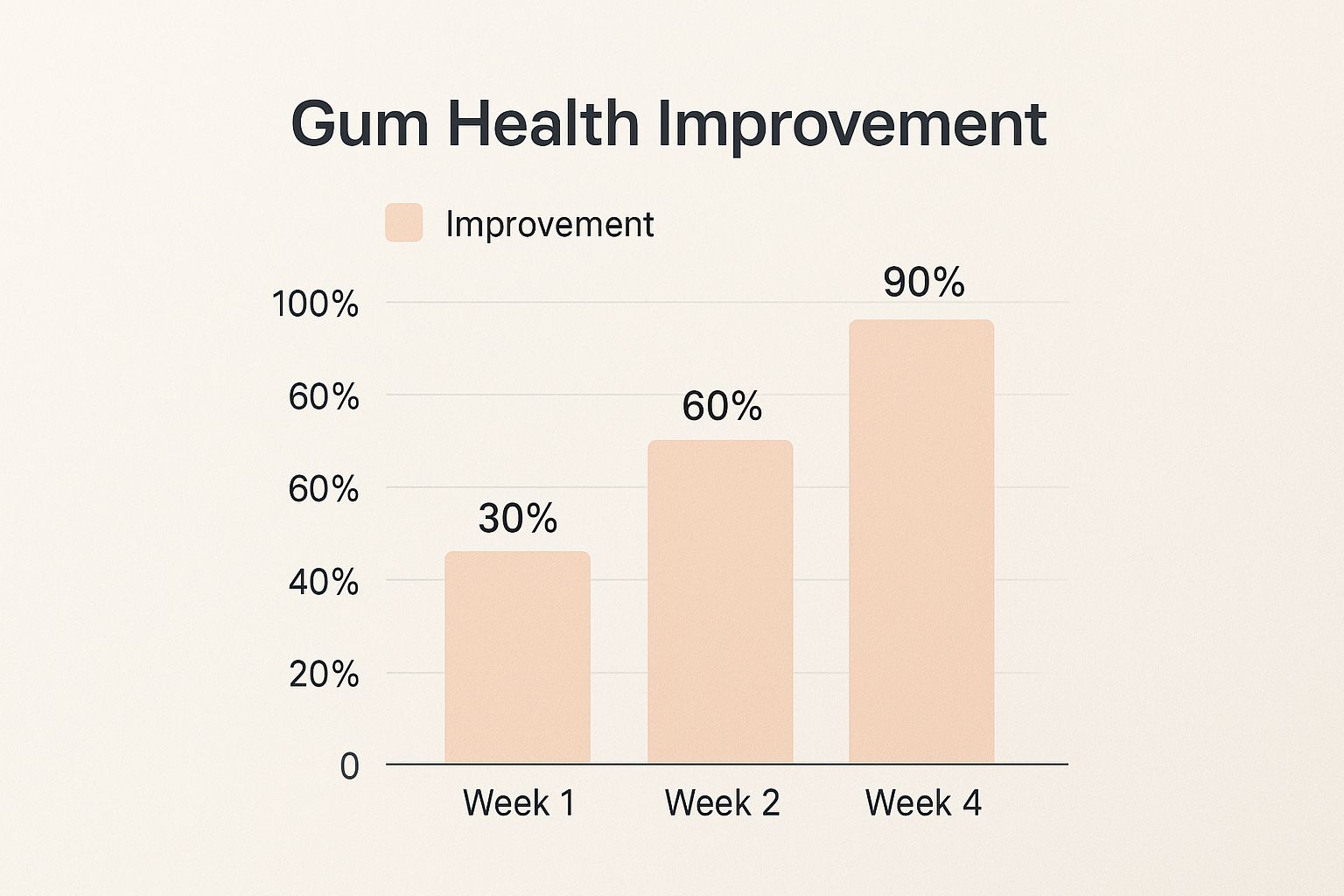
This chart really drives home the point: consistency is everything. The data shows that sticking with a dedicated home care routine pays off, with the biggest improvements often seen after just the first two weeks.
Of course. Here is the rewritten section, crafted to sound completely human-written and natural, following all your specified requirements.
When You Need to See a Dentist
Knowing the limits of at-home care is just as crucial as the routine itself. A dedicated home protocol is incredibly powerful for reversing the early stages of gingivitis, but you have to be honest with yourself and recognize when the problem has moved beyond what you can manage alone. Making an appointment with your dentist isn’t a sign of failure—it’s a smart, proactive move to protect your long-term health.
The line in the sand is the one between gingivitis and its much more serious successor, periodontitis. Gingivitis is simply inflammation of the gums. But when that inflammation is left unchecked, it can progress to periodontitis, which actively destroys the underlying bone and tissues holding your teeth in place. This damage, once it occurs, is permanent.
Warning Signs That Demand Professional Attention
If you notice any of the following symptoms, it's time to pick up the phone and schedule a professional evaluation. These are clear signals that the infection may be advancing to places your toothbrush and floss just can't reach.
- Receding Gums: Do your teeth suddenly look longer? That’s a classic sign that your gums are pulling away and exposing the sensitive roots.
- Persistent Bad Breath: I’m not talking about a little morning breath. This is a constant, unpleasant odor (halitosis) that lingers even after brushing, often pointing to a deeper infection.
- Formation of Pockets: As gums detach from the teeth, they create small pockets. These are perfect breeding grounds for plaque and bacteria, creating a vicious cycle that's tough to break on your own.
- Loose Teeth or Changes in Your Bite: This is a major red flag. Any movement in your teeth means the supporting bone structure is likely compromised and needs immediate attention.
- Pus Between Your Teeth and Gums: Pus is a definitive sign of an active infection that absolutely requires professional treatment.
Your daily home care is what puts you back in control, managing inflammation and stopping things from getting worse. But only a dental professional has the right tools and expertise to clean below the gumline and address problems that have already taken root.
The Power of a Professional Cleaning
Even with the most diligent home routine, some things are impossible to remove. Plaque that isn't cleaned away hardens into a substance called tartar (or calculus). Once tartar forms, it’s like cement on your teeth—no amount of brushing or flossing at home is going to get it off.
This is where a professional cleaning, also known as prophylaxis, is a game-changer. A dental hygienist uses specialized instruments to gently and carefully scrape away this hardened tartar from above and just below the gumline. Getting rid of it is critical because it eliminates the rough surfaces where new plaque loves to stick, finally giving your gums a truly clean slate to heal.
With consistent home care following a professional cleaning, bleeding and inflammation can drop by over 60% in just four weeks. This dramatically lowers the risk of gingivitis progressing to periodontitis. Given that treatments for advanced gum disease can be expensive and difficult to access for many, it really highlights why acting on these warning signs early is so important. You can discover more about the global impact of gum disease to understand why early intervention is key.
Think of your dentist and hygienist as your partners. Your job is the daily maintenance that keeps plaque under control. Their job is the periodic "deep clean" that hits the reset button and removes the stubborn tartar you can't. Working together is the most effective strategy not just for reversing gingivitis, but for keeping your mouth healthy for life.
Got Questions About Beating Gingivitis? We’ve Got Answers.
As you start this new routine to get your gums healthy again, it’s only natural for questions to come up. Feeling sure about your plan is a huge part of sticking with it, so let's clear up some of the most common uncertainties. Getting straightforward, practical answers can be the difference between feeling overwhelmed and feeling totally in control.
Think of this section as your quick-reference guide. We'll cover everything from how long it really takes to see changes to which products can give you an edge on your journey back to gum health.
How Long Until I See Real Improvements?
This is, hands down, the question we hear most often. The answer is incredibly motivating: you can see a difference much faster than you’d think. With a consistent and proper routine, most people notice less bleeding and inflammation within the first one to two weeks. The puffiness starts to go down, and your gums won't feel nearly as tender when you brush.
But for a full reversal—where your gums are firm, pink, and healthy again—you should be thinking more in terms of a few weeks to a month, sometimes a bit longer. The exact timeline really depends on a few things:
- Your Starting Point: If your gums were just a little red and only bled now and then, you'll bounce back faster than someone with significant swelling and constant bleeding.
- Your Consistency: Sticking to a strict routine twice a day, every single day, will deliver results far more quickly than a hit-or-miss approach. It's all about dedication.
- Your Overall Health: Things like your diet, stress levels, and whether or not you smoke play a big role in how fast your body's immune system can calm down the inflammation and start the repair process.
The bottom line is that you should feel a tangible improvement within a couple of weeks. If you’ve been doing everything right for over a month and see no change—or if things are getting worse—that’s a clear signal to book an appointment with your dentist.
Is One Toothpaste Really Better Than Another for Gingivitis?
Walking down the dental care aisle feels like a pop quiz, doesn't it? Dozens of toothpastes all claim to be the best for your gums. While your brushing technique is always more important than the specific brand, some formulas definitely offer an advantage when you're fighting back against gingivitis.
Keep an eye out for toothpastes containing stannous fluoride or those specifically marketed with terms like "anti-gingivitis" or "gum health." Stannous fluoride is a powerhouse because it doesn't just fight cavities; it also has antibacterial properties that help reduce the plaque bacteria causing all that inflammation in the first place.
A Quick Look at Toothpaste Features
| Feature | How It Helps Your Gums | Best For… |
|---|---|---|
| Stannous Fluoride | Directly fights plaque bacteria with its antibacterial properties. | Anyone actively trying to reduce gum inflammation. |
| Anti-Plaque Agents | Contains ingredients like triclosan or zinc citrate to slow down plaque growth. | People who tend to build up a lot of plaque between cleanings. |
| Sensitivity Relief | Includes ingredients like potassium nitrate to calm sensitive teeth. | Those whose inflamed gums have also made their teeth sensitive. |
Ultimately, the best toothpaste is one you'll actually use consistently. But choosing one with proven anti-gingivitis ingredients is like giving yourself an extra tool in the daily fight against plaque.
What if My Gums Bleed More When I Start Flossing?
This happens all the time, and it’s one of the main reasons people give up on flossing right when they need it most. It feels backward, right? You start flossing to stop the bleeding, but at first, it seems to make it worse. Don't panic. This is a normal, and even expected, part of the healing process.
Think of it this way: your gums are inflamed because of all the plaque and bacteria trapped between your teeth. When you finally introduce floss into that irritated area, you’re disturbing those bacterial colonies and touching tissue that is swollen and fragile. Of course it's going to bleed.
This initial bleeding is actually a good sign—it means you're finally cleaning the spots that have been neglected. As you keep flossing every day, you'll remove more and more of the plaque causing the problem.
- Within a few days to a week, the bleeding should start to decrease noticeably.
- After about two weeks of consistent, gentle flossing, it should stop completely.
If you’re still seeing a lot of bleeding after two weeks of dedicated flossing, it might point to a more advanced issue, or maybe your technique is a bit too aggressive. In that case, a visit with your dental hygienist for a check-up and some personalized tips is a fantastic idea. The goal is to be persistent but always gentle.
At Beyond Dental Care, we believe that patient education is the foundation of lifelong oral health. If you have persistent concerns or want to partner with a team dedicated to your well-being, we invite you to experience our patient-centered approach. Dr. Dariene Lazore and our entire team are here to provide expert, gentle care in our calming Glendale, AZ office. Learn more about our practice and schedule your visit today at https://beyonddentalcare.com.