
So, you're wondering how long a dental implant really lasts. The simple answer? It can be a lifetime solution. With the right care, many people keep their dental implants for 20 years, 30 years, or even longer. Think of it as a permanent replacement for a lost tooth root—it’s designed to be there for good.
The Real Lifespan of a Dental Implant
When you’re looking at options for replacing a tooth, how long it will last is a big deal. Unlike bridges or dentures that often need replacing every 5 to 15 years, a dental implant is made to be a durable, long-term part of your smile. But what does "proper care" really mean to make it last?
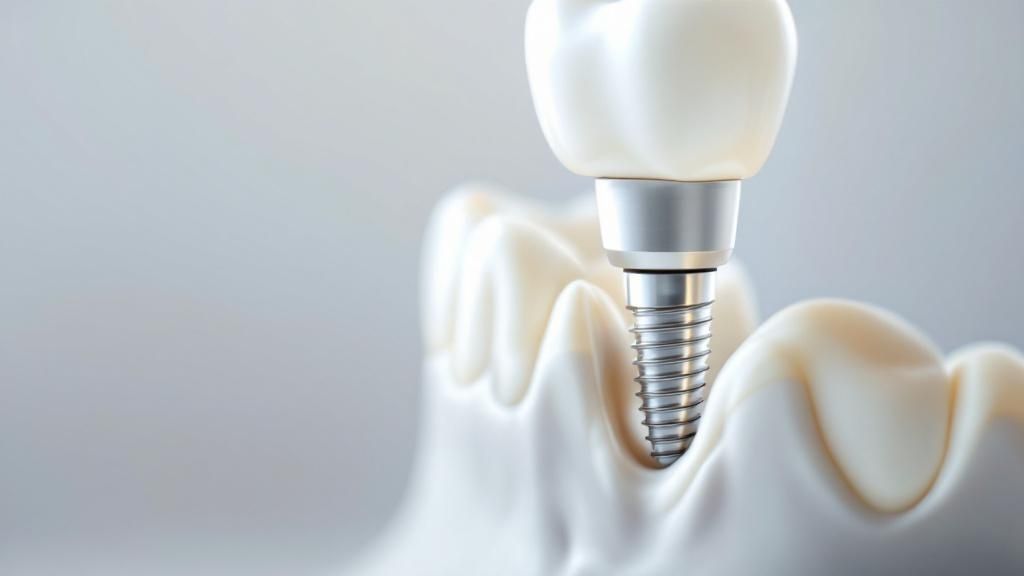
It helps to think of it like owning a nice car. The car is built with great parts by an expert. But how long it runs well depends on you taking care of it with regular maintenance—oil changes, tire rotations, and so on. Your dental implant is no different.
Let's look at the typical lifespan and success rates you can expect. This table gives you a quick summary.
Dental Implant Lifespan at a Glance
| Timeframe | Typical Success Rate | Key Takeaway |
|---|---|---|
| 10 Years | 95-98% | Most implants are successful for more than a decade. |
| 15-20 Years | ~90-95% | Long-term studies show they are very durable with good care. |
| Lifetime | Very High | With great hygiene and health, an implant can last for the rest of your life. |
As you can see, the numbers are very positive. Dental implants are not just a temporary fix; they are a reliable, long-term investment in your health and confidence.
What Makes an Implant Successful?
The success of your implant is a partnership between you, your body, and your dentist. A few key things have to come together to make sure it lasts for decades:
- Your Overall Health: A strong immune system and good bone in your jaw create the best setting for the implant to join with your jawbone.
- Daily Oral Hygiene: This is a must. Brushing and flossing every day are key to preventing gum disease, which can harm an implant just like a real tooth.
- The Dentist’s Skill: The skill of the dentist putting in the implant is very important. Placing it correctly ensures it is stable from day one and helps it succeed for a long time.
- Lifestyle Habits: Choices like smoking can seriously slow down healing and weaken the bond between the implant and your jawbone over time.
Understanding these things helps you know what to expect. It’s not just about the surgery, but also about the important healing period that comes after. Taking care of yourself after the procedure is just as important as the dentist's skill. You can learn more about this by reading our guide on what to expect during recovery from dental implants.
A major long-term study that followed 12,500 implants found that an amazing 93% were still successful after 17 years. This really shows how durable and reliable modern dental implants are.
This high success rate shows how well titanium implants bond with the human body. While a very small number might fail in the first year, studies show that most last for many, many years after that. Some studies have even found success rates close to 100% for implants tracked for up to 30 years. It’s clear that when done right and cared for, a dental implant is truly built to last.
Breaking Down Your Dental Implant: The Three Key Parts
When people talk about a "dental implant," it's easy to think of it as one piece. But it’s really a system with three parts, and each part has a special job to make the implant last a lifetime. Knowing how these parts work together helps you understand why implants are such a strong and lasting fix for missing teeth.
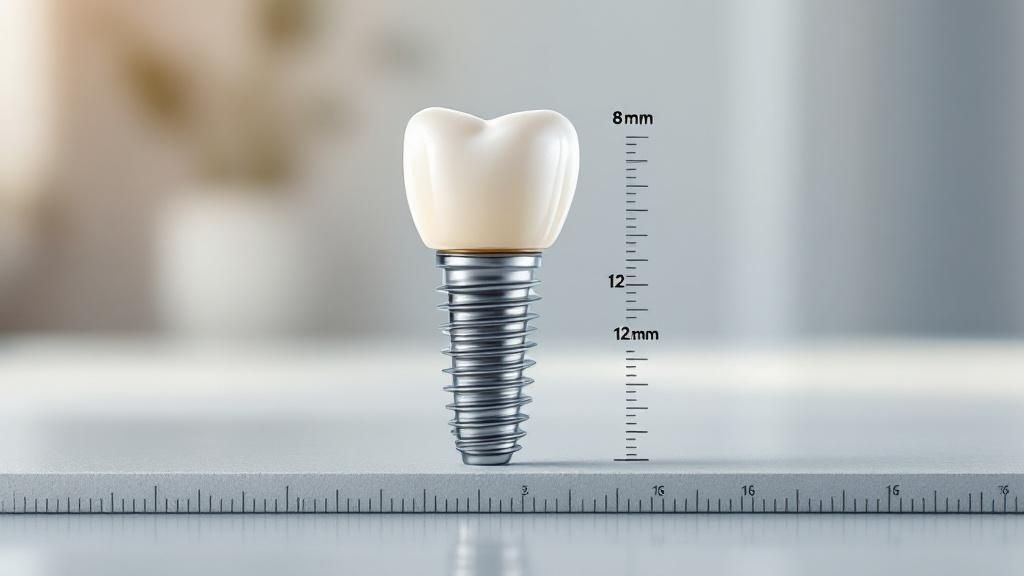
A good way to think about it is like building a lamp. You need a heavy, solid base to keep it from falling over, a post that connects the base to the light, and the lampshade on top to finish the look. A dental implant is designed with the same idea, creating amazing stability from the jawbone up.
The Foundation: The Implant Post
First is the most important piece: the implant post. This is a small screw, usually made from a body-safe metal called titanium, that is placed right into your jawbone during surgery. Its only job is to act as a new, artificial tooth root. It’s the solid foundation for everything else.
Over the next few months, something amazing happens in your jaw called osseointegration. This is the natural process where your bone grows around and joins with the titanium post, locking it in for good. This bond is what gives a dental implant its special strength and stability—so much that it feels just like a real tooth.
This bone-to-implant bond is the secret to an implant's lifelong potential. It creates a connection so strong that it can handle the daily pressure of chewing and biting for decades.
The Connector: The Abutment
Once the implant post is fully secure in your jawbone, it's time for part two. This is the abutment, a small connector piece that attaches to the post and sits right at your gum line. Its job is simple but very important: it connects the hidden post to the visible tooth that everyone will see.
Think of the abutment as the bridge between the hidden foundation and the final, visible part of your new tooth. Without it, there would be no way to attach the crown.
The Finishing Touch: The Crown
Finally, the crown is attached to the abutment, completing your new tooth. This is the part of the implant that looks, feels, and works just like a natural tooth. It's specially made to perfectly match the color, shape, and size of your other teeth, so it blends right into your smile.
But the crown isn’t just for looks; it’s built to work. It’s made from tough materials like ceramic or porcelain that are strong enough to handle all the chewing you do every day. To see how all these pieces come together in real life, you can learn more about our approach to restorative dentistry with dental implants.
Together, these three parts form a complete, fully working tooth replacement that is truly built to last.
Why Implant Size and Shape Are So Important
When you hear someone ask "how long is a dental implant," you might think they're only talking about its lifespan. But the actual size of the implant—its length and width—is just as important for its long-term success. Dental implants are not a one-size-fits-all solution.
Think about it this way: you wouldn't use a tiny tack to hang a heavy mirror on your wall. It just wouldn't be strong enough to hold the weight. The same idea applies to your smile.
A dentist has to carefully choose an implant that fits your body perfectly. This choice depends on the health of your jawbone, how much bone is available to use, and where the missing tooth is. The right implant spreads the strong forces from chewing evenly across the bone. This prevents stress that could cause it to fail later.
Matching the Implant to Your Jaw
So, how does a dentist find that perfect fit? Your dentist will use advanced tools, like 3D scans, to get a very clear picture of your jaw. These detailed images let them measure the height and width of your jawbone with great accuracy. This isn't just about making sure the post will fit—it's about making sure it has a strong, stable foundation to hold it for decades.
This infographic shows the key factors that help a dentist choose the right implant length.
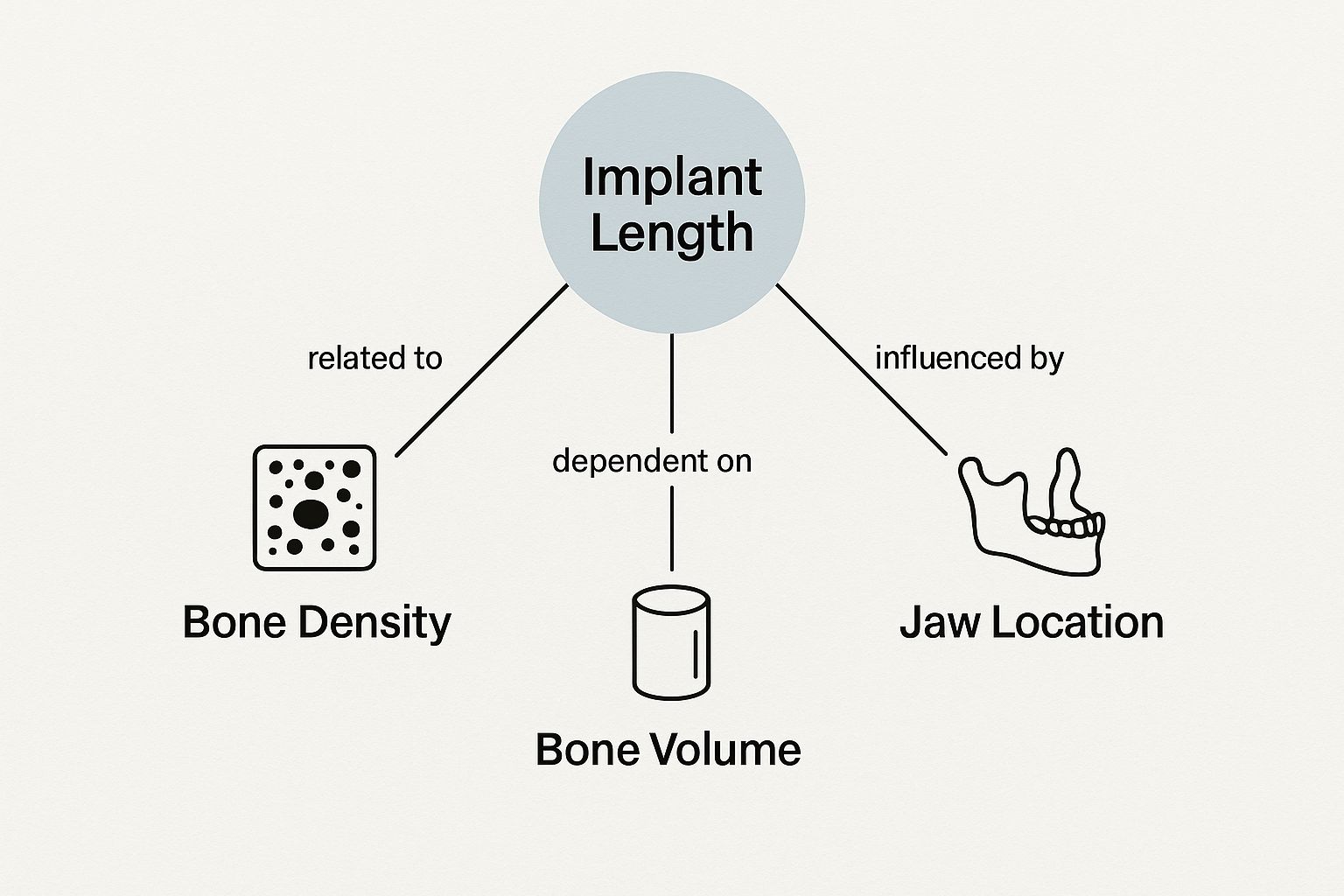
As you can see, things like bone health, where the implant goes in the jaw, and the total amount of bone all help determine the best size for a secure, lasting result.
The main goal is to get the most surface area where the implant joins directly with your bone. This natural process is called osseointegration, and it's what makes implants so strong. A wider or longer implant usually offers more surface for this important bond to form, creating a very strong anchor for your new tooth. But that doesn't mean "longer" is always better.
The real magic happens at the very top of the implant. Those first few millimeters right below the gum line take most of the chewing force. This makes the implant’s width just as important as its length for long-term stability.
In fact, while most dental implants are between 8 mm to 18 mm long, studies have shown that the top part does most of the hard work. The deeper section adds extra support, but it's the first 5-6 mm near the top of the bone that handles most of the stress from daily chewing. You can learn more about how implant size affects stability by reading this detailed article on implant dimensions. This careful balancing act makes sure the implant can stand up to daily use without putting too much strain on your jawbone.
How Implant Length Creates Stability
When we talk about what makes a dental implant so incredibly stable, it really comes down to its physical size. A longer and wider implant simply gives your jawbone more surface area to hold onto. This creates a powerful, lasting bond—a joining process called osseointegration—that gives the implant the strength to last a lifetime.
Think about a tall oak tree with deep, wide roots. That tree isn’t going anywhere, even in a strong storm. Now, picture a small, young tree with shallow roots; it's much easier to knock over. A dental implant works the same way. The right length and width let it anchor itself firmly, ready to handle the daily forces of biting and chewing without any problems.

This isn’t just an idea; it's backed by science. Detailed models, often made from CT scans, show us exactly how different implant sizes handle chewing forces. Studies looking at implants between 10 mm to 16 mm long often find that a wider implant is especially good at reducing stress on the nearby bone. It’s interesting to see how small design choices make a huge difference, which you can read more about here.
The "Just Right" Rule for Implants
When deciding how long a dental implant should be, it’s not a "bigger is better" situation. Instead, your dentist takes a "just right" approach, choosing an implant that fits your body perfectly. The goal is always to get the most stability without getting too close to sensitive areas like nerves or your sinus.
Here are a few of the key factors your dentist considers:
- Bone Height: The implant needs to be long enough to lock securely into the jaw but short enough to avoid important body parts.
- Bone Width: A wider implant gives more surface for that all-important osseointegration, which is key for spreading out stress on the bone over many years.
- Location in the Mouth: Your back molars handle a lot of chewing force, so they often need a wider implant than a smaller front tooth would.
This careful selection process is what ensures your new tooth is built on a foundation that can truly last for decades.
Finding the perfect balance between implant length, width, and placement is what turns a good implant into a great one. This careful work is the key to creating a solid foundation that feels completely natural.
In the end, getting the size right creates a perfect team where the implant and your jawbone work together smoothly. It’s this harmony that lets you eat, speak, and smile with total confidence. For anyone in Arizona wanting this level of careful work, learning more about dental implants in Glendale can offer some helpful local information. Reaching this kind of solid stability is the first step toward an implant that truly lasts a lifetime.
The Biggest Factors That Impact Implant Durability
So, what’s the difference between a dental implant that lasts 15 years and one that lasts a lifetime? While the implant itself is built to be tough, how long it lasts isn’t just about the parts. Think of it as a team effort between your body, your daily habits, and your dentist's skill.
When you understand these key areas, you can take control and protect your investment to make sure your new tooth is with you for many years.
Your Jawbone and Oral Health
The success of any implant starts with a solid foundation. Your jawbone needs to be healthy and thick enough to securely hold the titanium post and join with it properly—a process called osseointegration. Without enough good bone, the implant won't have the stable anchor it needs to handle the daily forces of chewing.
After it's placed, your daily oral hygiene is absolutely required. While an implant can't get a cavity, it can still be harmed by gum disease, just like a real tooth. A bacterial infection around the implant, known as peri-implantitis, can damage the gums and the bone underneath, and it’s a leading reason why implants fail.
Think of your daily brushing and flossing as an insurance policy for your implant. It's the best way to prevent the buildup of harmful bacteria that threaten both your natural teeth and your implant.
Keeping your mouth healthy is very important. Understanding the importance of comprehensive oral health tests and managing bacterial infections can make a huge difference in your long-term success.
Lifestyle Choices and Overall Health
You might be surprised to learn how much your general health and lifestyle choices affect your implant's lifespan. Certain habits and health conditions can get in the way of healing and weaken the implant's stability over the years.
Here are a few of the most important factors:
- Smoking or Vaping: This is one of the biggest risks. Nicotine makes blood vessels smaller, which reduces blood flow to your gums and bone. This can seriously slow down healing and greatly increase the risk of infection and implant failure.
- Uncontrolled Diabetes: High blood sugar makes it harder for the body to heal itself and fight off infections. This makes it much harder for the implant to successfully join with the jawbone.
- Bruxism (Teeth Grinding): Constantly grinding or clenching your teeth puts a huge amount of force on the implant and the crown. Over time, this can lead to wear, damage, or loosening.
The Skill of Your Dentist
Last but not least, the experience and care of the dentist placing your implant are extremely important. A skilled implant dentist will do a full check-up, use advanced imaging to plan the exact placement, and position the implant for the best stability and function from day one.
Proper placement means avoiding sensitive areas like nerves and sinuses while getting the most contact with healthy bone. This careful work at the start truly sets the stage for a lifetime of success. Choosing a dentist with a deep understanding of implant dentistry is one of the most important decisions you can make. The many benefits of dental implants are best enjoyed when the procedure is done by an expert who focuses on careful planning and execution.
Common Questions About Dental Implants
Now that we’ve covered what helps a dental implant last, you probably still have a few questions. That’s perfectly normal. Getting into the practical side of things is the next step.
We've gathered some of the most common questions people ask us. Our goal is to give you the final pieces of the puzzle so you feel completely confident about your decision. Let’s dive into what you can really expect, from the procedure itself to daily life with your new tooth.
Will the Dental Implant Procedure Hurt?
This is usually the first thing people ask, and the answer is good news. While placing an implant is surgery, it’s always done with local anesthesia to completely numb the area. You might feel some pressure, but you should not feel any pain during the process.
After the numbness wears off, it’s common to have some discomfort, swelling, and maybe minor bruising for a few days. Most people find this is easy to handle with over-the-counter pain medicine like ibuprofen. Your dentist will also give you clear instructions for aftercare to make sure you stay comfortable while you heal.
How Much Do Dental Implants Cost?
The cost of a dental implant can change quite a bit. It really depends on where you live, your dentist’s experience, and how complex your case is. For example, if you need a bone graft to build up your jawbone first, that will add to the total cost.
The upfront cost is definitely higher than other options like bridges or dentures. But it’s important to think of it as a long-term solution.
A single dental implant can last a lifetime with proper care, while other options often need to be replaced every 5 to 15 years. This makes implants a smarter choice financially for many people in the long run.
Are Implants Better Than Dentures or Bridges?
Implants, dentures, and bridges are all good ways to replace missing teeth, but they work in very different ways. Dental implants are the only solution that actually replaces the tooth root. This is a huge deal because it helps protect your jawbone and prevents that sunken-in look that can happen over time when you lose teeth. They are fixed in place and feel and work just like natural teeth.
Dentures are removable and can sometimes slip. Bridges are held in place by healthy teeth next to the gap, which have to be filed down to act as anchors. For a much more detailed comparison, our guide on dental implants vs dentures breaks it all down to help you figure out what’s best for you.
What Is the Recovery Time After Implant Surgery?
Recovery happens in a few stages, but the first part of healing is surprisingly quick for most people.
- First 24-48 Hours: This is your time to rest. You’ll want to take it easy and avoid any hard activity.
- First Week: Most of the swelling and discomfort should go away within 3 to 7 days. Many people are back to work and their usual light activities after just a couple of days.
- Full Healing (Osseointegration): The most important healing is the part you can’t see. It takes several months for the implant post to fully join with your jawbone. This is what creates that super-strong foundation for your new tooth.
Following your dentist’s aftercare instructions perfectly is key for a smooth recovery. This usually means sticking to soft foods for a little while and keeping up with great oral hygiene.
At Beyond Dental Care, we believe that a well-informed patient is a confident one. If you have more questions about whether dental implants are the right choice for your smile, our team in Glendale, AZ, is here to provide personalized, expert guidance.