
Taking care of your dental implants is simple, but very important. You should brush every day with a soft-bristled brush, clean between the implants with tools like water flossers, and use a toothpaste that isn't gritty. This easy routine helps stop plaque from building up. Plaque can cause gum disease and even make an implant fail. Think of it as protecting your investment for many years.
Why Proper Implant Cleaning Is So Important
Getting dental implants is a big step toward getting your smile and confidence back. It’s a major investment in your oral health, but the real work starts after the implants are put in. Many people think that because implants are fake, they don't need the same care as real teeth. This is not true at all.
Your implants are attached right to your jawbone. The gums around them are just as sensitive as the gums around your natural teeth. If you don't clean them well every day, plaque and bad bacteria can build up and cause serious problems. For anyone thinking about this treatment, understanding the whole process is the first step to making sure your implants last a lifetime.
The Risks of Not Cleaning Well
When plaque builds up around an implant, it can cause problems. The first stage is called peri-implant mucositis. This is just a fancy name for swollen gums around the implant. You might see that your gums are red, swollen, or even bleed a little when you brush. The good news is that you can fix this by cleaning better.
But if you ignore it, things can get much worse. The problem can turn into peri-implantitis. This is a bad infection that starts to destroy the bone that holds your implant. This can make the implant feel loose and, in the worst case, it could fail completely.
Dental implants have a very high success rate of over 95% when you take good care of them. But how long they last depends completely on your daily cleaning routine. Studies show that about 43% of people with implants get swollen gums, and a worrying 22% get the more serious infection that damages the bone, just from not cleaning well.
A few minutes of care each day is a small price to pay to protect your smile. A good routine keeps your implants stable, your gums healthy, and your smile looking great for years.
Your Daily Implant Care Checklist
To make things easy, here is a quick list of the tools you'll need to clean your implants every day and what each one does.
| Tool | What It Does | How Often to Use |
|---|---|---|
| Soft-Bristled Toothbrush | Gently removes plaque from the implant and gums without scratching the crown. | Twice daily |
| Water Flosser | Sprays water to clean hard-to-reach spots around and between implants where bacteria hide. | Once daily |
| Interdental Brushes | Cleans the sides of the implant posts and under any fixed bridgework. | Once daily |
| Non-Abrasive Toothpaste | Cleans well without damaging the surface of your implant crown. | Twice daily |
Having the right tools is half the battle. Making them a part of your daily routine is what will make your implants last a lifetime.
Choosing the Right Tools for Implant Care
Keeping your dental implants clean starts with having the right tools at home. It might sound hard, but the best tools are actually simple and easy to find. Think of this as your shopping list to make sure your new smile lasts forever.
Using the wrong tools can scratch your implant crowns or bother your gums. The good news is that the best tools are simple and easy to find.
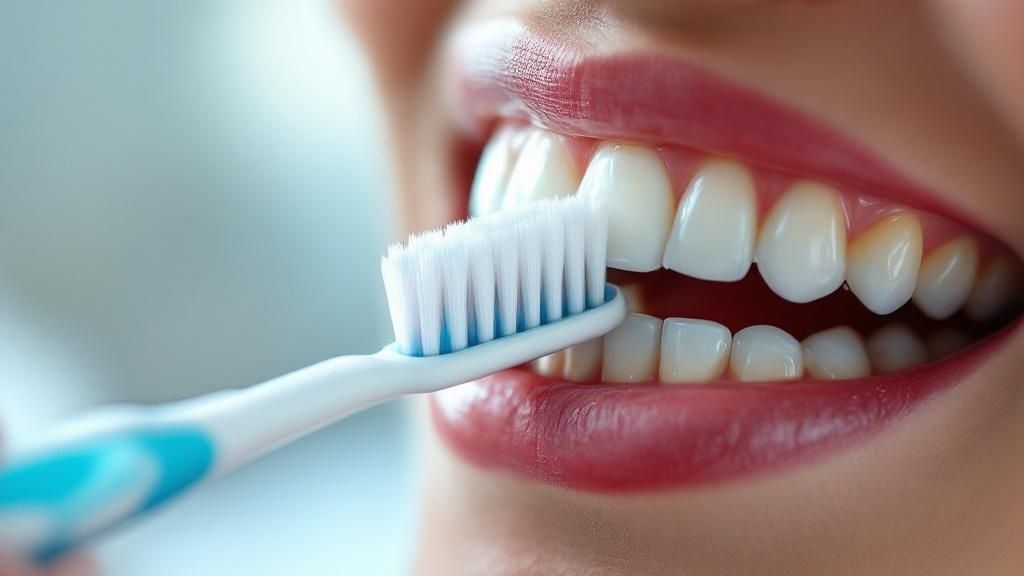
The most important tool in your routine is a soft-bristled toothbrush. Anything harder—like medium or firm bristles—can be too rough. Over time, they can make tiny scratches on your implant crown. These scratches become perfect hiding spots for bacteria. You should also use a toothpaste that is not gritty and helps control tartar. This will keep your implant looking great without dulling it.
Special Tools for a Deeper Clean
Your toothbrush does a great job every day, but it can't get into every small space. That's where a few special tools can help. Adding these to your routine is the secret to getting rid of hidden plaque and stopping gum swelling that can put an implant at risk.
Choosing implant-safe tools isn't just being careful—it's about protecting your investment. A gentle approach stops damage that could make your beautiful restorative dentistry and dental implants not last as long.
For cleaning between your implants and along the gumline, you have a few great options:
- A Water Flosser: You might know this as a water pick. It uses a gentle stream of water to wash out food and plaque from tight spots. It’s a huge help, especially for anyone with a full bridge or All-on-4 implants where normal flossing is hard.
- Interproximal Brushes: These are tiny, cone-shaped brushes (also called "proxy brushes") made to slide into the small spaces between your implants. They’re perfect for cleaning the sides of the implant posts where plaque likes to hide.
- Implant-Specific Floss: This isn't your normal string floss. It often has a stiff end that makes it easy to thread under a bridge. It also has a spongy middle part that cleans the implant surface and the gums better.
Using a mix of these tools makes sure every part of your implant gets clean. This simple habit stops bad bacteria from building up, helping your implants stay healthy and secure for years.
Your Daily Implant Cleaning Routine
Once you have the right tools, the next important step is to create a simple and good daily routine. Think of this as your guide for keeping your dental implants healthy for a long time. Being consistent, both morning and night, is what will protect your investment and stop plaque from building up.
The most important area to clean is right where the implant meets your gum line. This tiny space is a magnet for plaque, so good cleaning starts here. Use your soft-bristled toothbrush and make small, gentle, circular motions to clean the implant crown and the gums around it.
This infographic shows the main steps for your daily care.
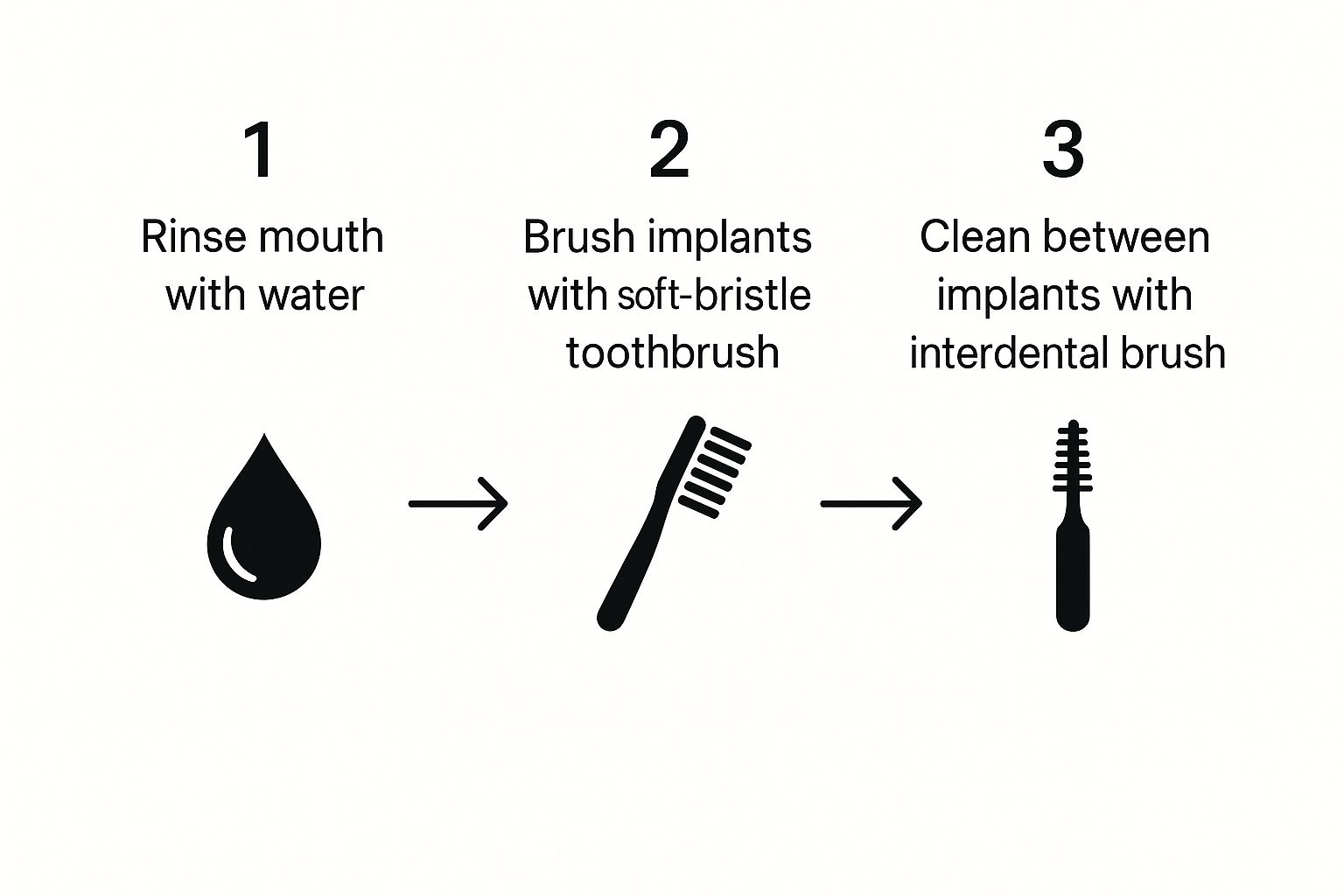
This visual guide breaks down the process into a simple, three-part plan that anyone can follow for long-term implant health.
Cleaning Between Implants
Here’s the problem: a regular toothbrush can't fit into the tight spaces between your implants or get under a bridge. This is where those special tools we talked about are so important. Using a water flosser or an interproximal brush at least once a day is key for washing out trapped food and sticky plaque.
For example, cleaning an implant in the back of your mouth needs a different angle than a front tooth. With an interproximal brush, you'll want to gently push it in and out from both the cheek side and the tongue side. This makes sure you’re cleaning the whole post, not just the parts you can see.
The goal isn't just to make the crown look shiny; it's to break up the film of bacteria that loves to grow just under the gum line. A consistent daily routine is the single best way to prevent gum swelling and the more serious bone loss that comes with peri-implantitis.
Think of your implant like a polished post—every side needs to be cleaned. The custom crowns for dental implants are made to look and work just like your real teeth, and they need that same kind of detailed care. Taking these few extra moments each day will make a big difference in how long your smile lasts.
Finally, remember to be gentle but thorough. You don't need to scrub hard. A soft-bristled brush for the surfaces, plus a water flosser or interdental brush for the gaps, gives you a complete clean. It's an easy plan that will protect your implants and keep your gums healthy for years to come.
What To Expect During a Professional Implant Cleaning
While your daily cleaning routine is the foundation of good implant health, it can't replace a professional cleaning. Visiting a dental hygienist is the only way to make sure that any tough plaque and tartar you've missed are removed safely. Knowing what happens during this appointment can make your visits easier and more helpful.
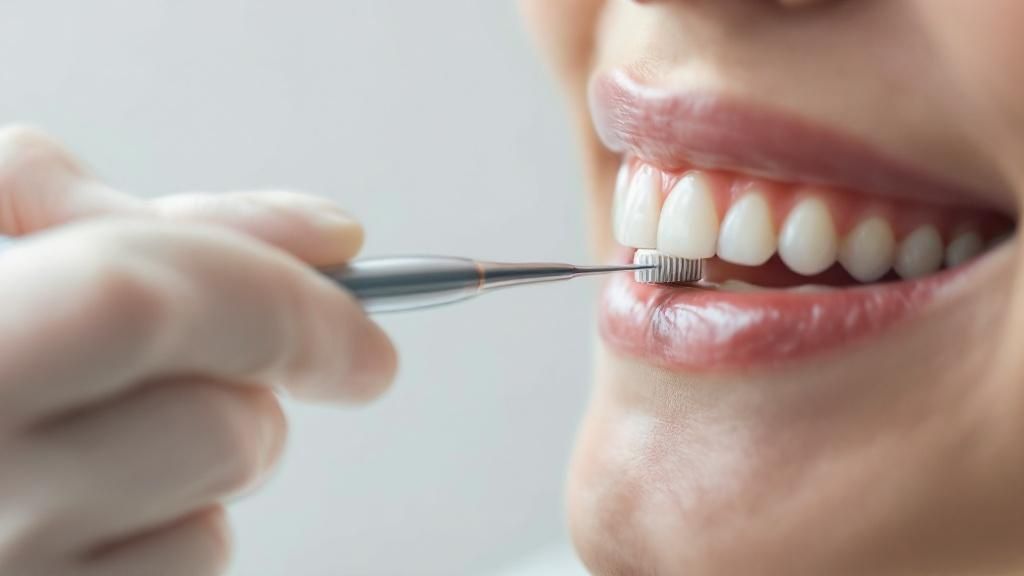
A professional implant cleaning is not the same as a regular teeth cleaning. The surfaces of your implants are more delicate than your natural tooth enamel. So, your hygienist will use special tools made just for implant care.
Gentle Yet Effective Tools
To avoid scratching your implants, hygienists use tools made from materials that are much gentler than metal. These tools are still strong enough to remove buildup but soft enough to protect the implant's surface from damage.
You can expect them to use things like:
- Plastic or Carbon Fiber Scalers: These tools let the hygienist carefully remove tartar without making tiny scratches that could attract more bacteria.
- Air Polishers: This is a modern method that uses a fine, gentle powder mixed with water and air to spray away stains and plaque.
A key part of the process is seeing a hygienist who has experience with implant care. This makes sure they use the right tools and methods to protect your investment and help it succeed long-term.
Why Special Training Matters
Finding a hygienist with special training in implant care is very important. In a recent survey, 57.4% of hygienists said they had formal training on implant care. While that's a big increase from just 11% in a 2012 study, it also means many still lack that training. This shows why you need to find a professional with the right education. You can learn more about the findings from this dental hygienist survey and what it means for patients.
These regular visits do more than just clean. They also give your dental team a chance to check the health of your gums and make sure the implant is stable. This ongoing professional care is a key part of your long-term success. It's just as important as understanding how long to recover from dental implants in the beginning.
Common Implant Cleaning Mistakes to Avoid
Knowing what not to do when taking care of your dental implants is just as important as knowing the right way to do it. Some common habits and everyday tools can cause serious harm without you realizing it. This can turn a good routine into a big problem. Protecting your investment is really about avoiding a few key mistakes.
One of the most common mistakes is using a toothbrush with hard or even medium bristles. These can make tiny scratches on the polished surface of your implant crown. While you can't see them, these little grooves are the perfect hiding spots for bacteria. This greatly increases your risk of gum swelling.
Damaging Products and Tools
Besides your toothbrush, other common dental products can also cause problems. Gritty toothpastes, especially those that claim to be for heavy-duty whitening, often have harsh particles that can dull or damage your implant's surface. Think of it like using sandpaper on a nice piece of furniture—it’s just too rough.
Also, you should never use metal tools like store-bought picks or scrapers to clean around your implants at home. Even a small slip can make a deep scratch that harms the implant’s protective layer and causes trouble.
The cleaning tools you choose have a big impact on how well you take care of your implants. Research shows that the right tools, like sonic plastic tips and air polishing, give the best clean with the least damage. This shows why picking the right tools is so important. You can learn more about these findings on implant maintenance instruments.
Another common mistake is using mouthwashes with a lot of alcohol. These can dry out your mouth and reduce saliva. Saliva is your mouth’s natural defense against bacteria. Keeping your mouth healthy is key to enjoying the long-term dental implants benefits.
To keep it simple, here's what to stay away from:
- Avoid: Hard-bristled toothbrushes
- Avoid: Whitening or gritty toothpastes
- Avoid: Metal cleaning tools
- Avoid: High-alcohol mouthwashes
By avoiding these simple but damaging mistakes, you’re helping your dental implants stay healthy, stable, and beautiful for years. When it comes to implants, a gentle approach is always the best approach.
Answering Your Top Implant Care Questions
Even with a great at-home routine, it's normal to have questions about the best ways to care for your dental implants. Getting clear answers is the best way to feel sure you're doing everything right to protect your investment. Let's go through some of the most common questions we hear from our patients.
Can I Use an Electric Toothbrush on My Implants?
Yes, you can. In fact, most electric toothbrushes are not only safe but often better for cleaning around dental implants. The gentle vibrations they make are great at removing plaque from the implant crown and, more importantly, from the gum line where bacteria likes to gather.
The key is to use a soft-bristled brush head and let the brush do the work—don't press too hard. Use it with a gentle, non-gritty toothpaste, and you have a great way to keep your implants clean without scratching the surface. If you're not sure, just ask us. We can suggest a model that works well for your implant.
How Often Do Implants Need a Professional Cleaning?
For most people, a professional cleaning and check-up every six months is perfect, just like with natural teeth. But don't be surprised if your dentist suggests you come in more often. If you are someone who builds up plaque quickly, we might suggest coming in every three or four months instead.
These appointments are necessary for long-term implant health. A hygienist has tools to remove hardened tartar that you can't get off at home. It also gives our team an important chance to check the health of the implant and the gums around it.
What Are the Warning Signs of an Implant Problem?
Knowing what to look for is your best defense. The first signs of trouble almost always show up in the gums around your implant, so pay close attention to how they look and feel every day.
Keep an eye out for these key warning signs:
- Gums around the implant that look red, puffy, or feel sore.
- Any bleeding when you brush or use a water flosser.
- A strange, lasting bad taste or bad breath that won't go away.
- Any feeling that the implant crown feels loose or wobbly.
If you notice even one of these signs, call your dentist right away. Finding problems early is very important and makes a big difference in fixing an issue before it can harm your implant.
At Beyond Dental Care, our goal is to help you keep your dental implants healthy for a lifetime of confident smiles. If you have more questions or you're ready to schedule a professional cleaning, we invite you to experience our patient-first approach. You can learn more about us or book an appointment directly at https://beyonddentalcare.com.