
Getting a new tooth with a dental implant isn't a quick fix. It's a process we do together. The whole journey, from your first visit to getting your final tooth, usually takes several months. The surgery itself is pretty fast. The most important part is the healing that happens under your gums.
Your Dental Implant Timeline Explained
Thinking about how long the tooth implant procedure takes can seem like a lot. It helps to think of it like building a house. You need a strong foundation before you put up the walls. A dental implant needs time to bond with your jawbone. This step is key to making sure your new tooth lasts for many years.
Let's break down each step so you know what to expect. Knowing the timeline helps you plan and feel more sure about getting your smile back.
This picture shows the three main stages of getting an implant.
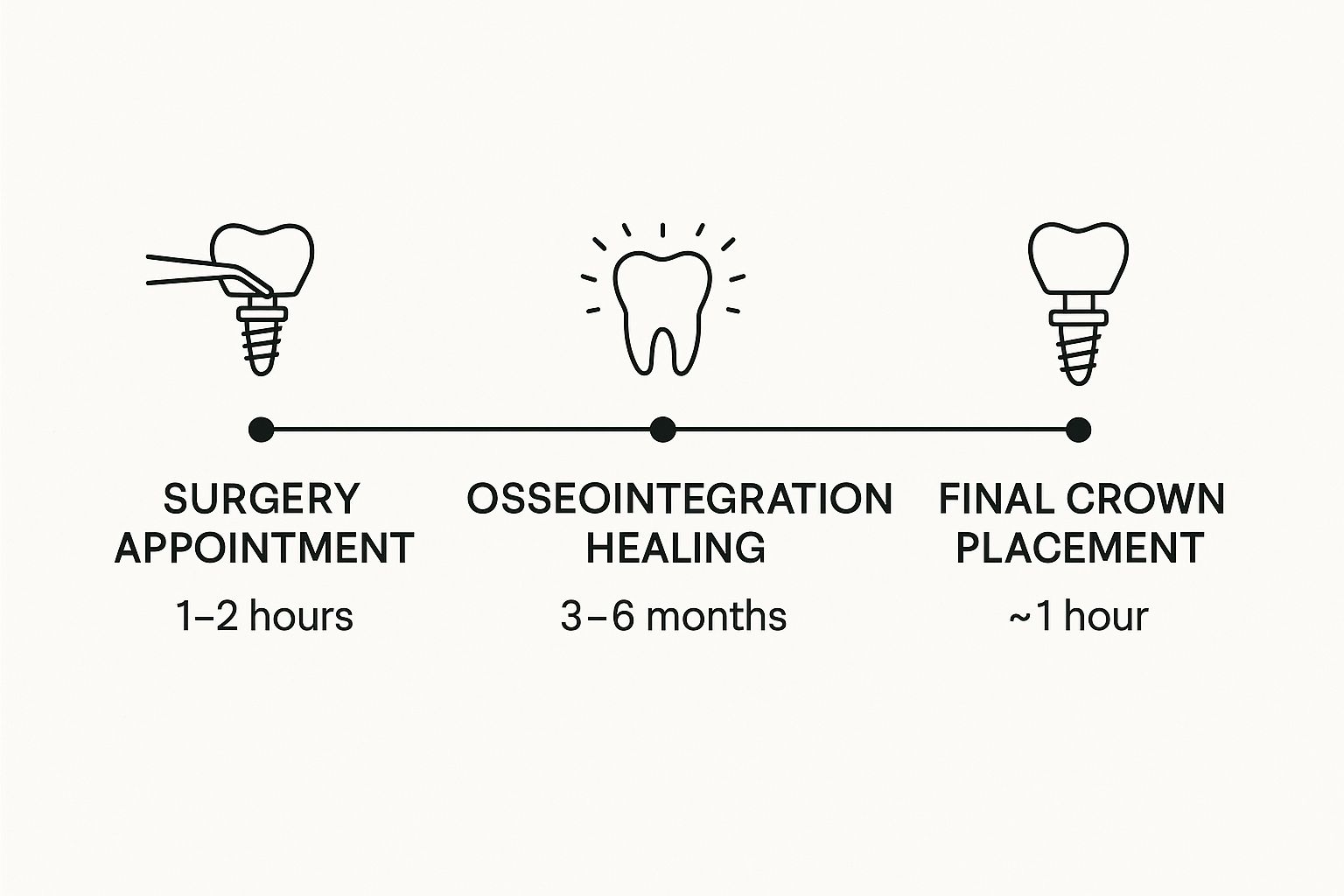
As you can see, the time you spend in the dental chair for surgery is short. The healing time that comes after is much longer but very important.
Here is a quick look at the timeline you can expect.
Dental Implant Timeline At a Glance
| Procedure Step | How Long It Takes |
|---|---|
| First Visit & Planning | 1-2 appointments over a few weeks |
| Implant Surgery | One visit, about 1-2 hours long |
| Healing (Osseointegration) | 3-6 months |
| Getting Your New Tooth | 1-2 appointments over 2-3 weeks |
This table shows that while each visit is short, the total time depends on how your body heals.
What Can Affect Your Timeline
Of course, a few things can change how long your implant procedure will take. The surgery time can be different based on what you need. Placing one implant might take about 1 to 2 hours. But if you're replacing many teeth, it could take a few hours. To learn more about your own journey, you can read about the dental implant process from start to finish.
The longest part of the timeline isn't the surgery. It's the healing. This natural process is called osseointegration. It's when your jawbone grows onto the implant. This creates a strong root for your new tooth.
Other things that can change your timeline include:
- Your Mouth's Health: The health of your gums and jawbone is very important.
- Extra Steps: Some people need a bone graft before getting an implant. This can add several months of healing time before you start.
- How Many Implants: Replacing a full set of teeth takes longer than just one tooth.
Your dentist will give you a plan made just for you. That way, you'll know exactly what to expect.
The First Step: Your Visit and Plan
Your journey to a new smile starts with a key planning meeting. This first visit is more than just a quick check-up. It's where we create the plan for your treatment. This meeting will last about an hour. We use this time to make a personal plan for your new tooth.

During this visit, we'll check your mouth's health. A big part of this is taking special 3D scans. These scans give us a clear picture of your jawbone’s health and shape. This great technology helps our team see exactly where the implant should go for the best, longest-lasting result.
This first check-up sets up the rest of your tooth implant procedure. Around the world, the first exam and 3D scan for planning takes about 45 to 60 minutes. This shows it's a normal and very important part of the process.
What to Expect During Planning
The goal is simple: get all the info needed to make a plan just for you. We’ll look at your health history and talk about what you want for your smile. Working together like this means there are no surprises later on.
Your personal treatment plan will show:
- The exact spot where the implant will go.
- A clear timeline for each step of your treatment.
- Any extra work that might be needed, like a bone graft.
- The final cost and any payment plans.
Knowing these details helps you feel sure about your decision. For more tips on getting ready, check out our guide on how to prepare for oral surgery.
This planning step is the most important part of getting a successful, long-lasting dental implant. Careful planning at the start helps avoid problems later and makes sure the new tooth looks and feels natural.
By the time you leave this visit, you should have a clear idea of what's next. This is a great time to ask any questions you have. We want you to feel comfortable and know everything before we start fixing your smile.
Building a Strong Foundation for Your Implant
Sometimes, before we can place a dental implant, we need to make sure your jaw is strong enough. Think of it like building a house on a weak foundation—it just wouldn't be safe. The same is true for your smile.
You wouldn't plant a big, beautiful tree in loose sand and hope it grows strong. It needs solid ground for its roots to hold on.
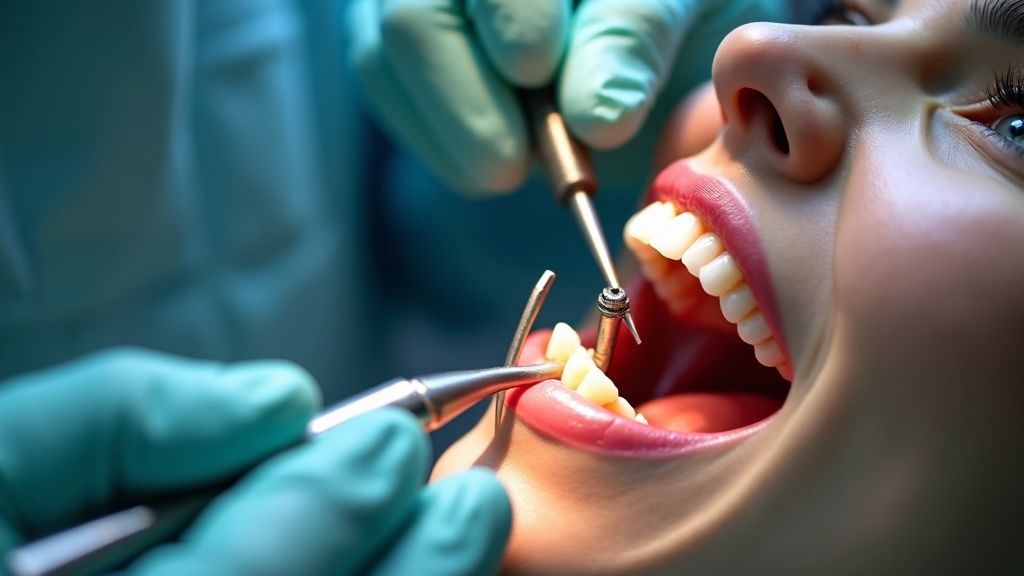
It’s the same idea with a dental implant. The small titanium post acts like the root of your new tooth. It needs a healthy jawbone to join with. If the bone in that area isn't thick or strong enough, we may suggest a procedure to build it up first.
Why Your Jawbone Might Need Help
When you lose a tooth, the jawbone in that spot can get weaker over time. This is because the tooth root is gone, so it's not keeping the bone strong. It's like how muscles get weak if you don't use them. Several things can cause bone loss.
Here are a few common reasons you might need extra work:
- Missing a Tooth for a Long Time: The longer a tooth is gone, the more the jawbone can shrink.
- Gum Disease: Infections can damage the bone that used to hold the teeth.
- Injury: An accident that hurt your jaw or tooth could have caused bone loss.
When we see this, the most common fix is a bone graft. This procedure adds new bone material to the spot where the implant will go.
How a Bone Graft Changes Your Timeline
A bone graft is a common and simple procedure. But it does add extra healing time to your total timeline. It's a needed pause. After the new bone is placed, your body needs time to grow a new, solid base of bone. This is a natural process that can’t be rushed.
This healing step usually adds three to six months to the start of your implant journey. While this makes the whole process longer, it's a very important step. It helps make sure your implant will be successful for a long time. Trying to put an implant in a weak jawbone is a top reason why implants fail.
Think of it as a smart investment in your smile's future. Taking time to build a strong foundation makes sure your implant will be steady, secure, and can last a lifetime.
Knowing this helps you have the right expectations for the process. It also helps explain why one person's implant journey might be longer than another's. To learn more, you can check out this helpful patient’s guide to getting dental implants. Your dentist will let you know if you need this step during your first visit.
What Happens on Implant Surgery Day
After all the planning, surgery day is here. The word "surgery" might sound scary, but placing a single dental implant is a very common procedure. For many patients, the surgery is surprisingly fast, often done in less than an hour.
The goal for the day is simple. We want to safely place the small titanium post that will act as the new root for your tooth. My team and I will make sure you’re comfortable and know what’s happening the whole time.
The Implant Placement Procedure, Step by Step
The process of placing an implant is very simple and done with great care. Your comfort is our main focus during the whole visit.
Here’s a simple breakdown of what to expect:
- Numbing the Area: First, we'll use a local anesthetic to numb the area completely. You'll be awake, but you won’t feel any pain.
- Making a Space: Once you’re numb, I’ll make a small opening in your gum to get to the jawbone.
- Placing the Implant: Using special tools, a small space is made in the bone. Then, the titanium implant post is gently put into place. We are very careful to put it in the perfect spot so it will be stable and look natural.
- Closing the Area: After the implant is in, the gum is closed over it. Sometimes, a small healing cap is placed on top. You might be able to see it just above your gums.
The whole thing is designed to be as comfortable and pain-free as possible. The numbing medicine works very well. Most patients say they only feel a little pressure, not pain, during the procedure.
Your First 24 Hours of Recovery
After the surgery is done, we focus on making your recovery easy. The first day or two are important for healing well. We’ll send you home with clear instructions, but here’s what you can generally expect.
It’s normal to have some swelling, bruising, or discomfort after the numbing medicine wears off. This is usually easy to handle with over-the-counter pain medicine. You'll want to take it easy for the rest of the day and avoid hard activities.
For at least the first 10 to 14 days, it's very important to eat soft foods. This helps you avoid putting pressure on the new implant while it heals. Think of things like:
- Smooth soups
- Yogurt and smoothies
- Mashed potatoes
- Scrambled eggs
Following these simple rules helps protect the area and gives your body the best chance to start healing without any issues.
Healing and Bonding: The Most Important Waiting Period
Once the titanium implant is in your jaw, the most important part of the process begins. This is where your body does something amazing called osseointegration. It sounds complicated, but it just means your jawbone is growing around and joining with the implant.

Think of it like a tree putting down deep roots. Over time, those roots become part of the soil, and the tree can't be moved. This is what happens with your implant. The bonding process turns the small post into a permanent, solid base for your new tooth.
This step is the longest part of the journey. It usually lasts between three and six months. I know that sounds like a long time. But rushing this step is the biggest mistake you can make. It can cause the implant to fail. Giving your body the time it needs to heal is the secret to a result that can last a lifetime.
What to Expect During Healing
During this waiting time, you won't feel the bone joining with the implant, but it's happening. Your job is to create the best environment for this healing to happen. For the first few weeks, you'll need to follow care instructions to protect the area.
This healing time is a big part of the total timeline, but the reward is huge. The wait is worth it when you think that dental implants have a 95% success rate over 10 years. Many last 20 years or more with good care. You can discover more insights about implant longevity to see just how well they work.
Being patient during this healing time is not just a suggestion. It's the best thing you can do for the long-term health of your new tooth. A strong, fully joined implant is the key to a smile that looks, feels, and works just like your natural teeth.
Following your dentist’s advice is key for a smooth and successful healing time.
Keys to a Successful Healing Period
Your habits during these few months can help or hurt the healing process. To get the best result, it’s important to follow a few simple rules. These rules protect the implant as it joins with your jawbone.
Here are a few tips we give all our patients:
- Eat Soft Foods: For the first few weeks, avoid hard, crunchy, or chewy foods. Anything that could put pressure on the new implant should be avoided.
- Keep Your Mouth Clean: Keeping the area clean is key to preventing infection. Your dentist will show you the right, gentle way to brush and care for the spot.
- Avoid Smoking: Smoking slows down healing and is a big risk for implant failure. It’s best to quit or at least stop during this important time.
- Go to Follow-Up Visits: We’ll need to check on your progress to make sure everything is healing right. Don't skip these appointments.
Understanding the recovery timeline helps you feel more sure about the process. You can learn more by reading our guide on how long it takes to recover from dental implants. Remember, this waiting time is the foundation of your future smile.
Attaching Your New Tooth: The Final Step
You’ve made it through the most important waiting period. Now you’re at the finish line! After your jaw has fully healed and joined with the implant, it’s finally time to get the part of your new tooth that you can see. This last stage is often the most exciting for patients. They get to see their new, complete smile.
This last part involves a couple of quick and easy visits. First, we’ll attach a small connector piece called an abutment to the implant post. Think of it as the base that connects the implant screw (under your gums) to your final crown (the part you see). This step is usually very simple. It is followed by a short healing time of about two weeks for your gums to get used to it.
Creating Your Custom Crown
Once your gums have healed around the abutment, it's time to make your new tooth. We’ll take a copy of your mouth using a mold or a quick digital scan. This copy is sent to a special dental lab.
At the lab, a skilled person makes your custom crown. This is the part designed to look and feel just like a natural tooth. They are very careful and pay close attention to every detail to make sure it’s a perfect match for your smile.
This means matching the exact:
- Color: To match your other teeth.
- Size: To fit perfectly in the space and with your bite.
- Shape: To look completely natural next to your other teeth.
This careful work is what makes the final tooth look just like a real one.
The very last step is the final fitting. We’ll place the custom crown on the abutment, check the fit and your bite, and then permanently attach it. With this final step, your tooth implant procedure is done. You’ll leave our office with a new, working, and beautiful smile.
Now that you have your new tooth, learning how to care for dental crowns will keep it looking great for years.
Common Questions About the Implant Timeline
Even with a clear plan, it’s normal to have questions about how long a tooth implant procedure really takes. Every patient’s journey is a little different. But getting answers to common questions can help you feel more prepared.
We’ve put together some of the questions we hear most often to give you simple, direct answers. This should help you know what to expect.
Does the Dental Implant Procedure Hurt?
This is usually the first question people ask. The answer is almost always a relief. During the implant surgery, we use local anesthesia to numb the area. You won't feel any pain at all.
It's normal to have some mild discomfort and swelling for a few days after. But this is easy to handle with over-the-counter pain medicine and by following our care instructions.
Can the Whole Implant Process Happen in One Day?
You’ve probably seen ads for "teeth-in-a-day." While those are real, they aren't the right choice for most people. There's a reason the normal, multi-month process is the best choice. It allows for proper healing and has the best long-term success.
The success of your implant depends on osseointegration. This is the natural process of your jawbone joining with the implant. Rushing this important healing step can harm the strength and life of your new tooth.
Why Does My Timeline Seem Longer Than Someone Else's?
No two patients are exactly alike, so no two treatment plans are either. Your personal timeline is made just for your body and your health needs. For example, your journey might be longer if you need a bone graft to build up your jawbone first.
Other things that can make the timeline longer include:
- Replacing several teeth instead of just one.
- Your body’s own healing speed.
- Where the implant is being placed in your mouth.
Your dentist creates a personal schedule to give you the safest and most successful result for your smile. This careful, custom plan is what gives your implant the best chance to last a lifetime.
Ready to start your journey to a permanent, beautiful smile? The expert team at Beyond Dental Care is here to create a personalized treatment plan just for you. Schedule your consultation with us today!