
Losing a tooth can feel like a big deal. It can change how you chew and how you feel about your smile. Luckily, dental implants offer a strong, permanent fix that brings back the look and feel of your real teeth. The process involves a dentist placing a titanium post into your jawbone. This post acts as a new root for a brand-new tooth. Think of it as a long-term investment in your health and your confidence.
What Are Dental Implants Anyway?

If you're trying to understand how a dental implant works, it's easiest to picture a normal, healthy tooth. Your own teeth have two main parts: the root, which is hidden under your gums, and the crown, which is the part you see. A dental implant is designed to copy this same structure. This gives you a replacement that feels and works just like a real tooth.
Unlike dentures or bridges that just sit on your gums, an implant becomes a permanent part of your jaw. This special design gives it great stability and strength. It lets you eat, talk, and smile without worry. It's truly the closest thing to growing a new tooth.
The Three Parts of a Dental Implant
A full dental implant is not just one piece. It's a system with three parts that work together. Knowing what each part does makes the whole process easier to understand.
Here's a simple breakdown of a dental implant's parts:
| Component | What It Is | Its Function |
|---|---|---|
| The Implant Post | A small, screw-like post made from titanium, a body-safe metal. | Acts as the new tooth root and is placed in the jawbone to create a strong base. |
| The Abutment | A small connector that screws onto the implant post. | Sits just above the gumline and holds the new crown in place. |
| The Crown | The visible, tooth-shaped cap. | Custom-made to match your other teeth and is attached to the abutment to complete your smile. |
Together, these three parts create a strong new tooth that looks and feels natural.
The strength of this system is a big reason why it's so popular. In fact, the global market for dental implants was valued at USD 6.7 billion and is expected to reach USD 10.48 billion by 2030. This growth shows how well this solution works for people.
A common misunderstanding is that the "implant" is the whole fake tooth. The implant is actually just the titanium root that is in your jawbone. The visible tooth, or crown, is the final piece placed on top.
Why This Structure Matters So Much
The real magic of this design is how the titanium post joins with your jawbone. This natural process, called osseointegration, creates a very strong base for your new tooth.
This joining is very important. It not only makes the implant feel like a part of you, but it also stops the bone loss that happens when a tooth is missing. The whole treatment can take a few months to allow for this healing. But the final result is a stable, long-lasting fix that protects your oral health for years. If you want to know more about the timeline, you can read about how long the dental implant process takes. This careful, step-by-step method helps make sure the outcome is successful and lasts a long time.
Finding Out If Implants Are Right For You
Deciding to get a dental implant is a big step. It’s about more than just filling a gap in your smile. The key to a successful implant is what’s under the surface—your jawbone and your overall health. Your dentist will check carefully to make sure your mouth is the right place for a new tooth.
The most important thing is having enough strong, healthy bone in your jaw. It’s like planting a tree. You wouldn't put a young tree in thin soil and expect it to stand tall for years. An implant needs a deep, solid base of bone to lock into and be secure.
When a tooth has been missing for a while, the jawbone in that spot starts to shrink. This is a normal process, but it can mean there isn't enough bone left to support an implant right away.
Key Factors for Getting an Implant
Besides your jawbone, your dentist will look at a few other important things. Your general health plays a big role in whether an implant will work.
Here are the main things your dentist will check:
- Jawbone Amount: Using X-rays or 3D scans, they'll measure how much bone you have. This is a very important requirement.
- Gum Health: Your gums need to be healthy and free of gum disease. An infection can stop an implant from healing the right way.
- Overall Health: Problems like uncontrolled diabetes or certain immune diseases can slow down your body's healing. Healing is a must for the implant to join with your bone.
- Lifestyle Habits: Things like smoking or heavy drinking can get in the way of healing and increase the risk of implant failure.
The rise of gum disease is one reason why more people look into implants. In the U.S., about 47% of adults over 30 and 70% of adults over 65 have some form of gum disease, which often leads to tooth loss.
What If You’re Not a Perfect Candidate?
Hearing that you might not be a perfect candidate right away can be disappointing. But it’s almost never the end of the story. Modern dentistry has great ways to prepare your jaw for a successful implant.
The goal isn't just to place an implant. It's to place an implant that will last a lifetime. Taking extra steps now leads to a better result later.
If your jawbone isn't thick enough, your dentist will likely suggest a bone graft. This is a common and simple procedure where new bone material is added to build up your jaw. Over a few months, your body accepts this new material, creating the strong base the implant needs.
Also, if you have any signs of gum disease, your dentist will treat that first. Getting your gums healthy is a must before any implant surgery can be done. For older adults, these prep steps are very important for long-term success. You can learn more in our guide on dental implants for elderly patients.
It all starts with an honest talk with your dentist. They can check your situation, discuss any problems, and make a clear plan to get you the healthy, permanent smile you want.
Your Dental Implant Journey Step by Step
The idea of getting a dental implant might seem like a lot, but it’s really a process with clear, simple stages. Every step is planned to make sure your new tooth is strong, secure, and a perfect match for your smile. Let’s walk through the timeline so you know what to expect.
I like to compare it to building a house. First, you need a plan. Next, you build a solid foundation and let it set. Only then do you build the beautiful, visible part of the house. Each step is important for a result that’s built to last.
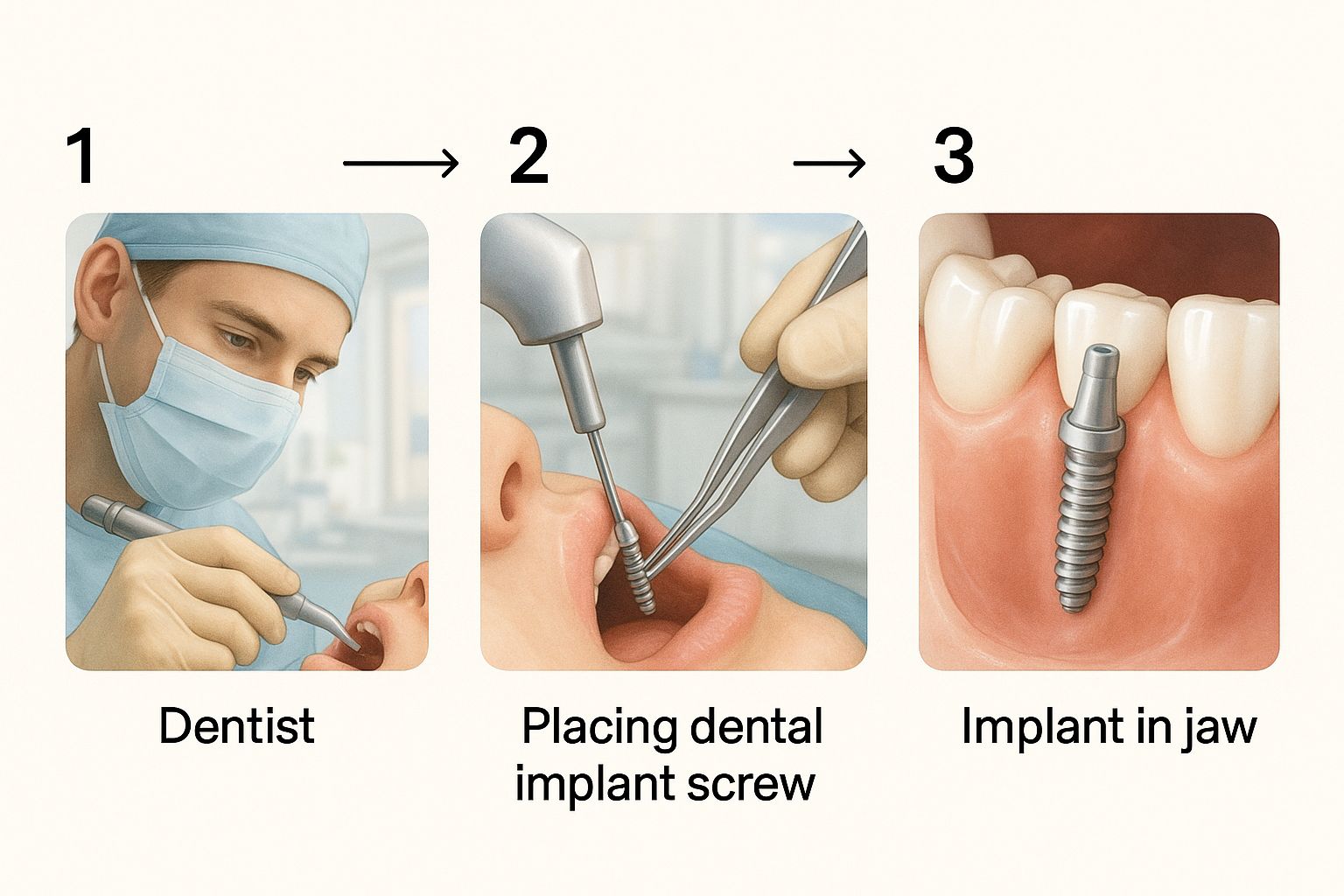
This image shows that key moment—placing the implant screw, which is the foundation for your new tooth. As you can see, modern dentistry is all about being exact.
Step 1: The First Meeting and Plan
Your journey starts with a full consultation. This first visit is for gathering facts and creating a treatment plan just for you. We'll take detailed X-rays or even 3D scans of your mouth. This gives us a clear picture of your jawbone's health and shape.
During this appointment, we'll review your health history, answer all of your questions, and map out the whole process. This is the "blueprint" stage, where we plan everything before any work begins.
Step 2: Placing the Dental Implant
Once we have a solid plan, the next step is placing the implant. This is a simple surgery that is not as scary as it sounds. Your dentist will make a small cut in your gum to reach the jawbone and then gently place the titanium implant post.
Don't worry about pain—the area will be completely numb with local anesthetic. After the implant is in place, the gum is closed over it, and healing begins.
Step 3: The Healing and Fusing Time
This next stage is maybe the most important part of the journey. It's called osseointegration. This is the amazing natural process where your jawbone grows around and joins with the titanium implant. This bond is what makes dental implants so strong and permanent.
This healing time usually takes three to six months. It takes patience, but this is when your body is building that strong foundation for your new tooth.
While you're healing, we can give you a temporary tooth, like a removable partial. This way, you won’t have a gap in your smile. It lets you eat and speak with comfort while the real work is happening under your gums.
Step 4: Placing the Abutment
After your jawbone has fully joined with the implant, you’ll come back for a quick, small procedure to place the abutment. The abutment is a small connector piece. It attaches to the implant post and sits just above your gumline.
To place it, your dentist makes another small cut to uncover the implant. The abutment is then screwed into place. Your gums will need a couple of weeks to heal around this new piece.
Step 5: Creating and Attaching Your New Crown
With the foundation set, it’s finally time for the star of the show—your new tooth. We’ll take exact impressions of your mouth, which are sent to a lab. A skilled technician will carefully make a custom crown that perfectly matches the color, shape, and size of your natural teeth.
Once your crown is ready, you'll have one last appointment. Your dentist will attach it to the abutment, check your bite, and make any final small changes. You'll walk out of the office that day with a complete, beautiful, and working new tooth.
Recovery from each stage is usually not too hard, but it helps to know what to expect. For more details, you can find information about how long it takes to recover from dental implants and what happens after each procedure.
Breaking Down the Cost of Dental Implants
Money is a big part of any health decision, so let's talk about the cost of dental implants. The final price is not just one flat number. It's a total that comes from several different things. Understanding what goes into this investment can help you feel sure as you plan and budget.
It helps to think of it like redoing a kitchen. The total cost depends on the size of the room, the quality of cabinets, if you need new plumbing, and which contractor you hire. Dental implants are similar—the final price is made up of key parts that are different for each person.
What Shapes the Final Price Tag
Your implant journey is special to you, which means the total cost will be, too. No two patients are the same, and neither are their treatment plans or the final price.
Here are the main things that affect the overall cost:
- Number of Implants: The biggest factor is how many teeth you need to replace. A single implant will cost less than replacing several teeth or getting a full set of implants.
- Materials Used: The kind of materials chosen for the implant post, the abutment (connector), and the crown can change the price. Titanium is the standard for implant posts, loved for its strength and ability to join with bone.
- Need for Extra Procedures: Sometimes, your jaw needs some prep work. If you need a bone graft to build up your jawbone or a sinus lift to create space, these steps will be added to your total cost.
- Your Dentist’s Experience: The skill of the dental surgeon placing your implant also plays a part. A specialist with years of experience might have different fees than a general dentist.
It's helpful to stop seeing dental implants as a "cost" and start seeing them as a long-term investment in your health. Unlike other options, they can last a lifetime and prevent future dental problems, which saves you money in the long run.
This way of thinking is a big reason why implants are so popular. Global market reports show that patients everywhere are choosing strong, long-lasting solutions. You can find more data about this in a report on the global dental implant market.
Comparing Tooth Replacement Options
To understand the investment, it's helpful to see how implants compare to other common ways to replace teeth. Here’s a quick look at the costs, how long they last, and the care involved with each.
| Feature | Dental Implant | Dental Bridge | Partial Denture |
|---|---|---|---|
| Upfront Cost | Higher | Moderate | Lower |
| Longevity | 25+ years (can last a lifetime) | 5-15 years | 5-10 years |
| Maintenance | Normal brushing & flossing | Needs special cleaning tools | Daily removal and cleaning |
| Jawbone Health | Protects bone | No bone support | Can lead to bone loss |
While the first cost for an implant is higher, it often ends up being the most cost-effective choice over time because it lasts so long. It is also the best option for your overall oral health.
Making Your New Smile More Affordable
While the upfront cost can feel big, there are several ways to make this treatment more affordable. Most dental offices know this is a big financial decision and offer options to help you fit it into your budget.
Your first step should be to check your dental insurance plan. Coverage for implants is getting more common, but it varies by plan. Some plans might cover a part of the cost, while others might cover the crown but not the surgery part.
Besides insurance, many offices offer flexible ways to pay.
- Payment Plans: A lot of dental offices have their own payment plans that let you spread the cost over several months, often with no interest.
- Third-Party Financing: Companies like CareCredit specialize in healthcare financing. They offer plans with low or no interest for medical and dental treatments.
- Health Savings Accounts (HSA) or Flexible Spending Accounts (FSA): If you have an HSA or FSA through your job, you can use these pre-tax dollars to pay for your dental implants.
The true value of an implant is more than just filling a gap—it’s about getting your bite back and protecting your health for years. When you think about how long they last and all the health benefits, the investment starts to make a lot of sense. To learn more, you might want to read about the 5 benefits of dental implants that make them such a popular choice.
The best thing to do is have an open talk with your dentist's office about all these options. Together, you can create a financial plan that works for you.
Caring For Your New Dental Implants

Getting dental implants is a big win for your smile, but the work isn't over when you leave our office. Think of your new implant as a big investment. Its long-term success depends on how well you take care of it from day one. Good aftercare helps your implant heal right and last for many years.
The first 24 to 48 hours after your surgery are the most important. Your main job is to handle any discomfort and let the area heal without being bothered. It's normal to have some swelling or minor soreness. This can be managed with a cold pack and over-the-counter pain medicine.
Your Post-Surgery Care Plan
Right after your surgery, you need to be gentle with the area. You should take a break from any hard workouts and just give your body time to rest. Sticking to soft foods that don't need much chewing is also important. This protects the implant and helps you heal faster.
Here’s a quick list of what to eat (and what not to eat):
- Do Eat: Stick with soft, cool foods like yogurt, smoothies, applesauce, mashed potatoes, and warm soups. They're easy on your mouth and give you the nutrients you need.
- Don’t Eat: Stay away from anything hot, spicy, crunchy, or hard. Foods like popcorn, nuts, and chips can bother the surgery site, so it's best to avoid them for the first week.
Following these simple food rules helps your gums heal and lets the implant start joining with your jawbone. Taking care at the beginning really helps lead to success.
The biggest myth about dental implants is that they don't need care. The implant itself can't get a cavity, but the gum and bone around it can still get disease, just like with your natural teeth.
Building a Long-Term Care Routine
Once you are past the first healing stage, you need to think about long-term care. The good news? Taking care of a dental implant is a lot like taking care of your natural teeth. The main goal is to keep the gums around it healthy and free of plaque. Gum disease is the number one enemy of a stable implant. With the right care, the success rate for dental implants is great, often over 95%.
A regular, good daily cleaning routine is all it takes. It's a small daily task that protects your investment and keeps your smile looking its best for life.
Here are the key habits to develop:
- Brush Twice Daily: Use a soft-bristled toothbrush and a gentle toothpaste. Be sure to brush gently around the implant crown and along your gumline.
- Floss Every Day: Flossing around an implant is a must. You might find special tools like a water flosser or implant-specific floss make it easier to clean well around the abutment and under the crown.
- Attend Regular Dental Check-ups: Your routine cleanings and check-ups are very important. These visits let our team check on your implant, check your gum health, and professionally clean spots you might miss at home.
By treating your new implant with the same care as your natural teeth, you are protecting your whole mouth's health. This simple, daily routine is the secret to making sure your new smile truly lasts a lifetime.
The Pros and Cons of Getting Dental Implants
Deciding on a big dental procedure like implants means looking at the whole picture—the great benefits and the real-world facts. It’s a big decision, and you should feel sure about it.
Let's look at the pros and cons together. This will help you see if implants are the right choice for your health, budget, and lifestyle. The benefits are huge, which is why implants are often called the "gold standard" for replacing teeth. But the process also takes time and money, and it's important to be honest about that side, too.
The Clear Advantages of Implants
The biggest benefit of a dental implant is how much it feels and works just like a real tooth. Because the titanium post is fixed right into your jawbone, it gives you a level of stability that other options can't match.
This means you can eat your favorite steak, speak clearly, and smile knowing nothing will slip or feel loose.
Here’s a breakdown of the key pros:
- Built to Last a Lifetime: With good care, the implant post itself can last forever. The success rate is very high, often over 95%. This makes it a strong, long-term solution you can trust.
- Protects Your Jawbone: When you lose a tooth, the jawbone under it starts to shrink. An implant acts like a natural tooth root, which keeps the bone strong and helps maintain your facial structure.
- Feels and Looks Completely Natural: Implants are custom-made to match the color, size, and shape of your other teeth. Most people forget they even have one because it just feels like a part of them.
- A Major Confidence Boost: A secure, permanent smile can do wonders for your self-esteem. You can laugh and talk with others without feeling worried about a gap in your smile.
Understanding the Challenges
While the benefits are great, it’s just as important to look at the other side. Knowing the possible downsides helps you prepare and decide if you're ready. Think of it as a journey, not a quick fix.
Looking at both sides is the key to making a good decision. While implants offer great long-term value, the first cost and timeline are important things to think about.
These are the main points to keep in mind:
- Higher Upfront Cost: Implants have a higher initial cost compared to options like bridges or dentures. But remember, because they last so long, they are often the more cost-effective choice over many years.
- It’s a Surgical Procedure: Placing an implant is a type of oral surgery. It's a very common and safe procedure done in our office, but it still has a healing period and the normal risks of any surgery.
- The Process Takes Time: Getting an implant is not a one-day appointment. The whole process takes several months from start to finish. This timeline is needed to let the implant join securely with your jawbone.
When you're comparing your options, it's helpful to see everything side-by-side. Our guide on dental implants vs dentures does just that, giving a detailed breakdown of each solution. In the end, knowing both sides of the story helps you make the best choice for your smile.
Got Questions About Dental Implants? We Have Answers.
It's normal to have a few questions when you're thinking about dental implants. Even after you've learned about the process, some details might still be unclear. This section is here to answer the most common questions we hear from patients every day.
Think of this as your final checklist. We want you to feel 100% sure and informed, so let's answer those remaining questions.
Is the Dental Implant Surgery Painful?
This is usually the first thing people ask. The good news is that the surgery itself is not painful at all. Your dentist will use local anesthesia to make sure the area is completely numb, just like for a regular filling. You won't feel anything while the implant is being placed.
After the numbness wears off, you can expect some mild soreness and maybe a little swelling. But for most of our patients, this is easily handled with over-the-counter pain relievers like ibuprofen. Really, worrying about it is almost always worse than the actual experience.
One of the most common things we hear from patients is, "I can't believe how easy that was!" The time leading up to the procedure is often more stressful than the procedure itself.
How Long Do Dental Implants Last?
Dental implants are built to last a long time—they are designed to be a permanent solution for missing teeth. The titanium post that goes into your jawbone is meant to last a lifetime. It joins with your bone and becomes a true part of you.
The crown, which is the part that looks like a tooth, is also very strong. Just like any crown, it will get normal wear and tear. You might need to replace it after about 10 to 15 years. But with good oral hygiene and regular check-ups, the implant itself is a forever solution.
Will My Dental Insurance Cover Implants?
This is where things can be a bit tricky, as coverage changes from one plan to another. The good news is that more insurance companies are starting to see the long-term health benefits of implants and are covering at least part of the cost. Still, some plans see them as a cosmetic procedure and won't cover them.
A common situation is that insurance might help pay for the crown but not the surgery to place the implant post. The best way to get a clear answer is to call your insurance company. Or, even better, let our office team check your benefits for you. That way, you'll know exactly what to expect with the costs.
Ready to explore a permanent solution for your smile? The expert team at Beyond Dental Care is here to provide the gentle, patient-focused care you deserve. Schedule your consultation today to find out if dental implants are the right choice for you at https://beyonddentalcare.com.