
Recovering from oral surgery is a process, not just a single event. It starts with rest and managing pain, then moves to eating soft foods, and includes gentle cleaning to make sure you heal well. The first 24 hours are the most important for a smooth recovery with no problems.
Your First 24 Hours After Oral Surgery
Your recovery starts as soon as you leave the surgeon's office. It can feel like a lot to remember, but having a plan for these first few hours helps a lot. Your main goals are simple: stop any bleeding, manage swelling before it gets bad, and let a blood clot form over the surgery spot.
When you get home, the first thing to do is rest. Don't try to run errands or do chores. Your body needs to use all its energy to heal.
Prioritizing Rest and Elevation
Resting is more than just not being active. It's also about how you position your body. As soon as you can, lie down and prop your head up with two or three pillows. Keeping your head higher than your heart is a simple but very good trick to reduce swelling, which is often what causes the most discomfort.
Think of it like using gravity to help fluid drain away from your face. This one small thing can make your cheeks less puffy and help you heal faster.
The first 24 hours are the base for your whole recovery. What you do during this time affects your pain, how much you swell, and your risk of problems like a dry socket. Your main focus should be on rest and gentle care.
Managing Bleeding and Protecting the Clot
It's normal to see some bleeding, so don't worry. Your surgeon put a gauze pad over the area before you left. Your job is to bite down on it with firm, steady pressure for about 30-60 minutes. This helps stop the bleeding.
If it's still oozing after an hour, you can use a new piece of folded gauze and do it again. The most important thing right now is to avoid anything that could move the blood clot that's forming. This clot is like a natural bandage for the wound, and you need to protect it.
Here are the things you must avoid in the first 24 hours:
- Spitting: The force can easily pull the clot out. Let spit drain from your mouth instead.
- Using a straw: The sucking motion can pull the clot out of place.
- Rinsing hard: You can rinse gently after 24 hours, but not yet.
- Smoking: The chemicals are bad for healing, and the sucking motion is a big risk for dry socket.
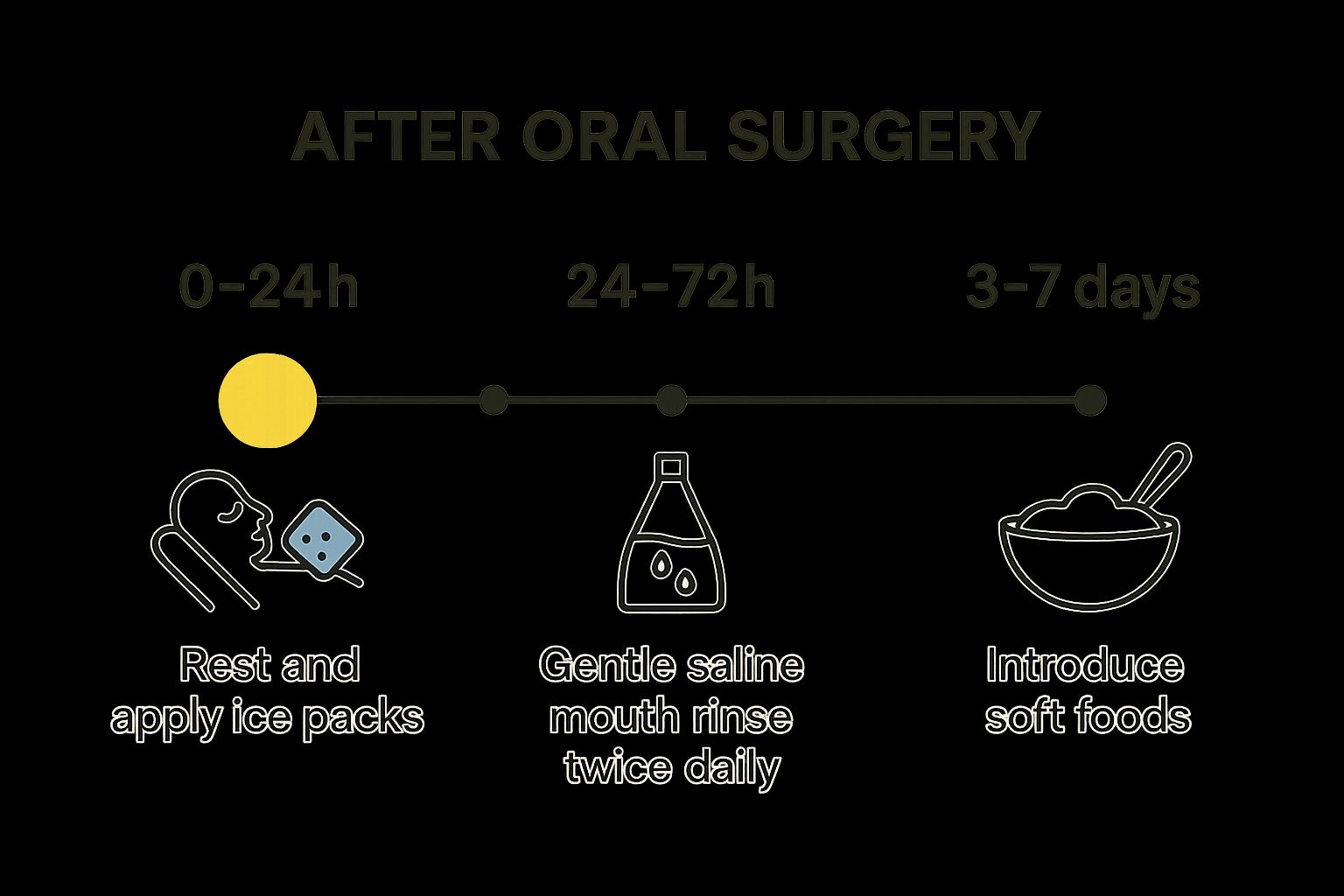
This timeline shows what to expect, especially how important rest and ice are in the first few hours. You can see how the focus changes from immediate care to eating soft foods by the end of the week.
First Week Oral Surgery Recovery Timeline
To give you a clearer idea, here is a day-by-day look at what to expect for pain, swelling, and what you can eat during the first seven days.
| Day | Pain and Discomfort Level | Swelling | Diet Focus |
|---|---|---|---|
| Day 1 | Medium to high; helped with medicine. | A little, but starting to grow. | Clear liquids, broth, Jell-O. No solid food. |
| Day 2 | Still painful; can be the worst for some. | Often worst on days 2-3. Use ice packs. | Smoothies, yogurt, applesauce. |
| Day 3 | Starts to slowly get better. | Swelling is at its worst. Cheeks may look puffy. | Mashed potatoes, pudding, creamy soups. |
| Day 4 | You'll feel a clear improvement. Less need for pain medicine. | Swelling starts to go down. | Scrambled eggs, oatmeal, soft pasta. |
| Day 5 | Much better; may feel more like soreness. | Swelling keeps going down. | Soft-cooked fish, bananas, well-cooked veggies. |
| Day 6 | Very little pain; may not need medicine. | Most of the swelling you can see is gone. | Soft breads, cheese, ground meat. |
| Day 7 | Very low pain; discomfort is mostly gone. | Swelling should be almost gone. | Returning to a more normal (but still careful) diet. |
Remember, this is just a guide. Everyone heals differently. Listen to your body and follow what your surgeon tells you to do.
Studies show that healing happens in stages we can predict. For example, bleeding usually stops within eight hours, and pain starts to get much better in the first week. Swelling is often worst around days four to five. The surgery spot itself takes about 14 to 21 days for the surface to fully heal. Knowing this can help you feel more in control of your recovery. You can read more about what to expect during each stage of healing to get a better picture.
How to Manage Pain and Swelling
Feeling sore and swollen after oral surgery is completely normal. It's a sign that your body is starting to heal. While some discomfort is part of it, the good news is you can do a lot to manage it and stay comfortable.

For the first 48 hours, an ice pack will be your best friend. Putting cold on the outside of your jaw helps shrink the blood vessels. This is a great way to reduce swelling and gently numb the area.
A good way to do this is the 20-20 rule. It's simple.
- Put the ice pack on the sore side of your face for 20 minutes.
- Take it off for 20 minutes to give your skin a break.
Keep repeating this as often as you can while you're awake for the first two days. This small routine can make a big difference in how much you swell.
Staying Ahead of the Pain
Here is the most important advice about medicine: stay ahead of the pain. Don't wait until the pain is very bad before taking your medicine. It’s much easier to keep pain at a low level than to fight it when it's at its worst.
Your surgeon will give you clear instructions. This might include a prescription or over-the-counter (OTC) medicine.
- Prescription Medications: These are usually for the first few days when the pain is strongest. It is very important to take these exactly as your surgeon tells you.
- Over-the-Counter Options: Medicines like ibuprofen are great because they do two things—they help with pain and reduce swelling.
Many people find that switching between ibuprofen and acetaminophen works well, but always follow the specific plan your surgeon gives you.
Key Takeaway: The goal is to be proactive. By taking your pain medicine on a strict schedule—like every 6 hours as told—you keep a steady level of relief in your system. This stops the pain from ever getting too strong.
Why Your Medication Schedule Matters
Think of it like this: trying to stop severe pain after it has already started is like trying to put out a big fire with a small hose. It's a losing battle.
But when you stick to a schedule, you keep the "fire" small and easy to control. This doesn't just make you more comfortable. It also helps your body relax, which is important for healing. When you aren't in pain, you can rest better, drink enough water, and give your body the energy it needs. Managing pain well is also a big part of preventing problems. You can learn more about how to prevent dry socket in our other guide.
What to Eat and Drink While You Heal
Eating after oral surgery can feel like a big challenge, but it's one of the most important parts of your recovery. Your body is working hard to repair itself. Giving it the right fuel, full of vitamins, can help you heal much faster.

For the first couple of days, your rule should be "liquids and soft foods only." This isn't just for comfort. It's to protect the surgery area and the important blood clot that’s forming. The goal is to get nutrition without having to chew.
Your Go-To Foods for the First Few Days
Before your surgery, it’s a great idea to stock your kitchen with gentle food options that won't bother your mouth. Think soft, smooth, and easy.
Here are some foods that will be your best friends:
- Yogurt and Pudding: These are cool, smooth, and a great source of protein.
- Applesauce and Bananas: Both are soft, easy to swallow, and give you natural energy.
- Mashed Potatoes: A classic comfort food for a reason! They're filling and easy to eat.
- Smoothies: A perfect way to get nutrients. Just remember the main rule: use a spoon, not a straw. The sucking from a straw can move the blood clot.
- Creamy Soups: Stick to soups like tomato or butternut squash. Always let them cool to a warm temperature before eating.
If you need more ideas, check out our guide on soft foods to eat after tooth extraction for a full list of safe and tasty meals.
Your diet in the first 72 hours isn't about eating big meals. It's about getting steady, gentle nutrition. Focus on drinking enough water and getting enough calories to help your body heal. It's easy to want to skip eating, but that can slow down your recovery.
Foods You Must Avoid
Knowing what not to eat is just as important as knowing what to eat. The wrong foods can mess with your healing, cause pain, or even lead to problems like an infection or a dry socket.
Here’s a simple chart to help you know what helps and what hurts during this time.
Safe Foods vs Foods to Avoid After Surgery
| Foods to Eat (Safe) | Foods to Avoid (Risky) |
|---|---|
| Yogurt & Pudding | Chips, Popcorn, Nuts |
| Smoothies (with a spoon) | Spicy Foods (curry, hot sauce) |
| Mashed Potatoes | Acidic Foods (citrus, tomatoes) |
| Lukewarm Soups | Crunchy Breads & Cereals |
| Applesauce & Bananas | Tough or Chewy Meats |
| Scrambled Eggs | Extremely Hot or Cold Items |
| Oatmeal & Cream of Wheat | Sticky Candies |
Basically, you want to stay away from anything that could get stuck in the surgery spot or bother the sore tissue.
This means avoiding foods that are:
- Hard or Crunchy: Think chips, nuts, seeds, and popcorn. These can get stuck in the extraction site and cause problems.
- Spicy or Acidic: Foods with a kick, like chili, or acidic things like tomato sauce and citrus fruits will sting the wound.
- Extremely Hot: Very hot liquids or foods can dissolve the protective blood clot. Let everything cool down first.
- Tough or Chewy: Things like steak, crusty bread, or chewy candies make your jaw work too hard, which can cause pain.
By following this simple food plan, you help your body heal quickly and well. After a few days, as you feel better, you can start to add more semi-soft foods, like scrambled eggs, pasta, and oatmeal.
Keeping Your Mouth Clean and Safe
After oral surgery, the idea of brushing near the surgery spot can feel scary. But keeping your mouth clean is one of the most important things you can do to avoid infection and help your body heal quickly. The key is to be very gentle and follow a specific timeline.
For the first 24 hours, you need to avoid rinsing your mouth at all. This gives the important blood clot time to form and get stable—don't bother it! After that first day, you can start using a gentle saltwater rinse. This is a great, natural way to clean the area and control bacteria.
How to Rinse and Brush Carefully
Making a saltwater rinse is simple: just mix half a teaspoon of salt into a glass of warm water. But don't swish it hard like you would with mouthwash. Instead, gently tilt your head from side to side. Let the warm saltwater flow over the surgery spot.
When it comes to brushing, you can and should keep brushing your other teeth as you normally would. Just be very careful as you get closer to the wound. Good oral hygiene is key to preventing infection. You might find it helpful to use oral hygiene products suitable for sensitive mouths to make this easier.
The goal of cleaning your mouth after surgery isn't to scrub the area clean. It's about gently removing food bits and reducing bacteria without disturbing the healing tissues or any stitches you have. Slow and careful is the way to go.
Protecting Your Stitches and the Wound
If you have stitches, they are there to help the tissues heal together. You’ll want to be extra careful not to poke or pull at them with your toothbrush or tongue. Most of the time, these stitches dissolve and will fall out on their own in a week or two.
Here are a few tips for keeping the surgery site safe:
- Avoid the Area: For the first few days, just stay away from the surgery spot when you brush.
- Soft Bristles Only: Always use a toothbrush with very soft bristles. This reduces the chance of bothering the area if you accidentally get too close.
- No Water Pik: Do not use a water flosser or any strong rinsing tool near the spot until your surgeon says it’s okay.
Understanding your stitches can also help you worry less. To learn more, you can read about sutures in dentistry and what to expect as they dissolve. Your surgeon will give you instructions for your specific case, but following these general rules will help you feel more sure about your cleaning routine and lead to a good recovery.
Balancing Rest and Activity for Better Recovery
After oral surgery, your body works hard to heal. This healing process takes a lot of energy, which is why getting plenty of rest is so important. Think of it this way: your body has a certain amount of energy, and right now, you want all of it to go toward healing the surgery spot.
One of the most common mistakes people make is pushing themselves too soon. Doing too much can slow your recovery. For at least the first week, you’ll need to stop your usual routine. Anything that makes your heart beat faster is not allowed for now.
What Activities to Avoid
Hard activity increases blood flow. That might sound like a good thing for healing, but it can actually move the important blood clot forming over your surgery site. This can lead to bleeding and problems like a dry socket.
Here are the key things you need to stay away from:
- Heavy Lifting: Don’t even think about it. This includes groceries, kids, or weights at the gym.
- Intense Exercise: Running, cycling, and hard workouts all have to wait.
- Bending Over: It sounds small, but even bending down to tie your shoes can raise the pressure in your head and disrupt the healing area.
Taking it easy isn't just a suggestion; it’s a medical need. The first few days are all about letting your body do its job without being disturbed. Rushing back to your normal routine is one of the fastest ways to end up back at the dentist with a problem.
And this isn't a rare thing. Oral surgeries happen all the time. One study in Western Australia found an 81% increase in hospital stays for removing impacted teeth over ten years, with 88,286 patients needing care. It shows how common these procedures are—and why following recovery rules is so important. You can discover more insights about global surgery trends on nature.com.
Gradually Returning to Your Routine
So, when can you get back to normal? The honest answer is that it depends on your surgery and how your body is healing. Still, there's a general timeline that works for most people. If you have a desk job or do light schoolwork, you can often go back to that after a few days of good rest.
But if your job involves physical work or you want to get back to the gym, you’ll need a longer break—usually at least a week, sometimes more. The most important thing is to listen to your body and get the okay from your surgeon before you start any hard activity.
As you start to feel better, you can slowly add light activities, like a gentle walk. If you had a procedure like implants, we have a more detailed guide where you can learn more about the recovery timeline for dental implants.
When You Should Call Your Surgeon
Most people recover from oral surgery without any problems. But it’s still smart to know what’s normal and what’s not. Think of this as your safety checklist. Knowing what to look for can give you peace of mind and help you act fast if something feels wrong.
Your surgeon is your partner in this, and they expect you to call if you have any serious worries. It's always better to get professional advice than to sit at home and worry.
Key Warning Signs to Watch For
Some signs are a clear signal that something is wrong with your healing. If you have any of the following, it’s time to call your oral surgeon's office right away. Don't just wait for your next appointment.
These signs can point to a problem that needs attention right away:
- Severe Pain: If your pain suddenly gets much worse after the first few days or isn't helped by your medicine, that's a red flag.
- Uncontrolled Bleeding: A little oozing in the first 24 hours is normal. Bleeding that continues, fills your mouth, or won’t stop when you apply firm pressure with gauze is not.
- High Fever: A temperature of 101°F (38.3°C) or higher could be a sign your body is fighting an infection.
- Pus or Foul Discharge: Any yellow or white fluid coming from the surgery site, especially with a bad taste or smell, points to an infection.
Your body is good at telling you when something is wrong during recovery. A sudden change for the worse—like more pain when you were starting to feel better—is a clear signal that something has changed and needs to be checked by your surgeon.
While infections after surgery are a concern, they are not as common as you might think. A 2021 study of over 1,800 tooth extractions found that only 1.4% of cases got an infection. This shows that with good care, your risk is pretty low. You can discover more insights about post-surgery infection rates from the full study.
Understanding Dry Socket Symptoms
One of the most talked-about problems is the dry socket. This painful condition happens when the blood clot over the surgery site gets moved or dissolves too soon. This leaves the bone and nerves underneath exposed.
The pain from a dry socket is very different from normal soreness. It usually starts 3-5 days after surgery. It is often a deep, throbbing ache that can spread from the socket up toward your ear. You might also notice a bad taste or bad breath. If these signs sound familiar, your surgeon can treat it to relieve the pain and help the area heal right. For a better idea of what is a real dental emergency, our guide on when to seek emergency dental care can help.
Your Top Questions About Oral Surgery Recovery, Answered
Having oral surgery is one thing, but recovering from it? That’s when most questions come up. Knowing what to expect can make the healing process less stressful. So, let's go over some of the most common worries we hear from patients.
How Long Will the Swelling Last?
Swelling is your body's normal reaction to surgery, so don't be surprised when you see it. It usually is at its worst around 48 to 72 hours after your surgery—that's when your face will be the most puffy.
After day three, you should start to see it slowly go down. For most people, the swelling you can really see is gone within about a week.
When Can I Drink Coffee Again?
This is a big question for coffee lovers. We suggest waiting to have any hot drinks, including coffee, for at least the first 24 to 48 hours.
Why? Hot liquids can dissolve or move the important blood clot that is forming. That little clot is your body's natural bandage, and protecting it is key to healing well. When you do start drinking coffee again, make sure it is warm, not hot.
One of the biggest mistakes we see is people rushing back to their normal habits. Something as simple as sipping hot coffee or using a straw can seriously mess with the healing site and slow your recovery. Just be patient with your body—it’s worth it.
What If I Sneeze or Cough?
It’s a common fear—will a sudden sneeze or cough mess everything up? The good news is that it is very unlikely to cause any real damage.
These actions do create a quick burst of pressure in your mouth. If you feel a sneeze or cough coming, try to let it out with your mouth open. This helps release some of that pressure instead of holding it in.
At Beyond Dental Care, our goal is to make sure your whole experience—from the surgery to your recovery at home—is as smooth and comfortable as possible. If you have more questions or need expert dental care in the Glendale area, we invite you to learn more about our patient-centered approach.