
Taking care of a dental crown is a lot like taking care of your natural teeth. But you do need to focus on gentle, regular cleaning. This means brushing twice a day with the right tools and flossing every day. If you get these basics right, you'll protect the crown and the tooth underneath it for many years.
Your Everyday Guide to Dental Crown Care
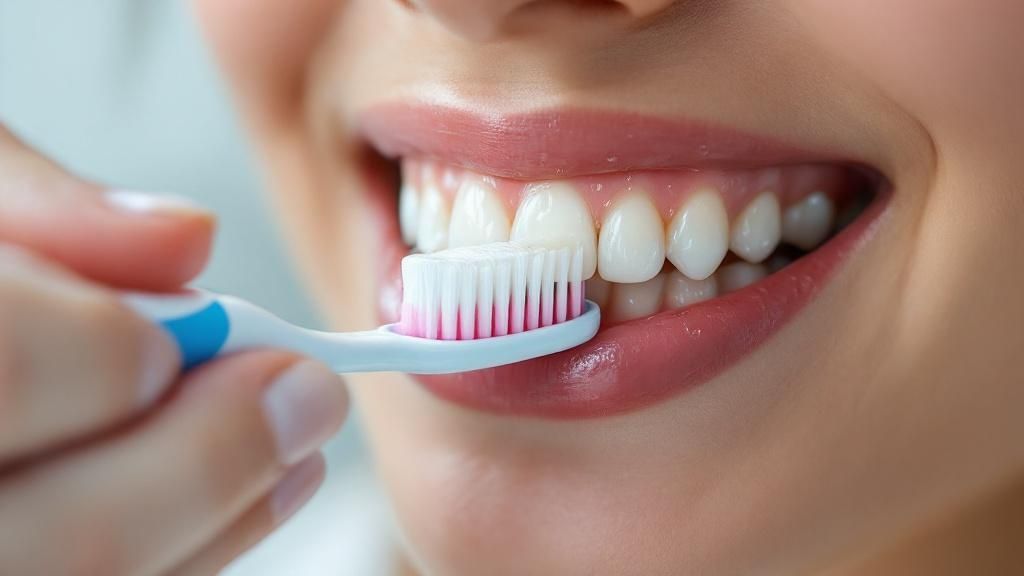
A dental crown is a big investment in your smile’s health and appearance. New crowns are very strong, but how long they last—usually between 5 to 15 years—depends on your daily habits. You don't need to learn a whole new routine. You just need to improve the good habits you already have.
The main goal is to stop plaque from building up, especially around the margin. That's the tiny line where the crown meets your tooth. This spot can easily get decay or gum problems if it is not cleaned well.
Mastering Your Brushing Technique
It all starts with your tools. You must use a soft-bristled toothbrush. Brushing too hard with stiff bristles can scratch a porcelain crown and bother the gums around it.
When you brush, hold the brush at a 45-degree angle toward your gum line. Use gentle, circular motions to clean the crown and the teeth next to it. Pay close attention to the margin area to sweep away plaque before it turns into hard tartar.
Choosing the right toothpaste is also very important. Avoid toothpastes with harsh grit, like some whitening toothpastes. Over time, these can make a porcelain crown dull and more likely to stain.
The Right Way to Floss Around a Crown
You must floss every single day. Plaque hides in the tight spaces between teeth where a toothbrush can’t reach. This can cause new cavities on the tooth under the crown.
When you floss, guide the floss between your teeth carefully. Don't snap it down. Instead, curve the floss into a "C" shape against the side of the crown and gently slide it up and down. To get the floss out, gently pull it out from the side instead of snapping it back up. This simple trick helps you avoid catching the edge of the crown and loosening it over time.
Completing Your Routine with Mouthwash
Using an antiseptic mouthwash is a great final step for extra protection. A daily rinse helps kill the bacteria that cause plaque and gum disease. It reaches all the small spots your brush and floss might have missed.
This is very helpful for keeping the gums around your crown healthy. Healthy gums form a tight seal around the crown, which is what you want.
What to Eat and What to Avoid With a Dental Crown
Your new crown is very strong, but it's not unbreakable. A big part of making it last is being careful about what you eat, especially at first. Changing your diet a little can help you avoid chips, cracks, or even pulling the crown off.
You don't have to give up all the foods you love. Just think before you bite. The goal is to avoid anything that could pull the crown off, crack it, or let bacteria cause decay around its edges.
Foods That Can Harm Your Crown
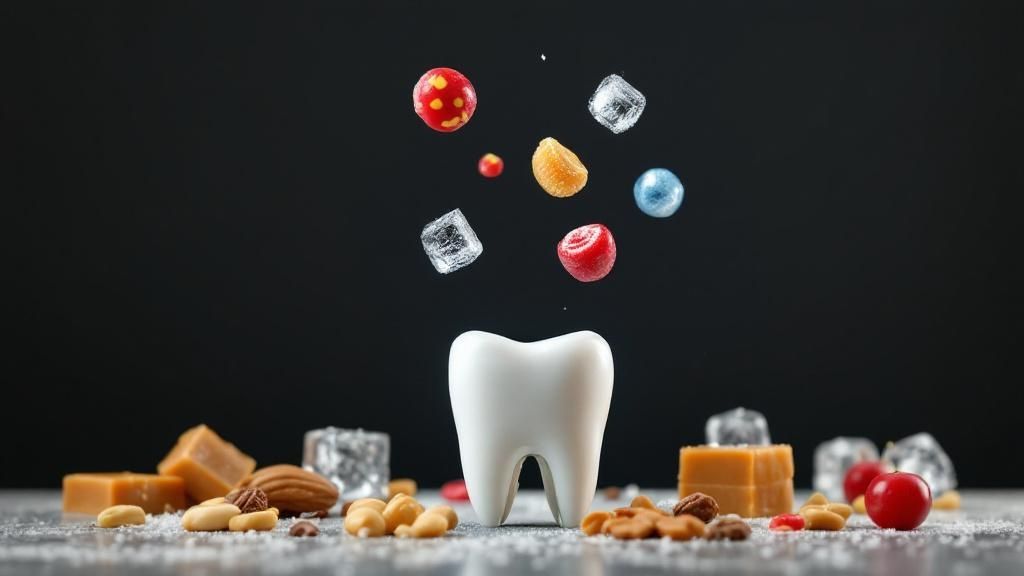
Let's talk about the usual problem foods. Some foods are known to cause trouble for dental work, including crowns. Sticky, chewy candies are a big problem—like caramels or taffy. They can grab onto a crown and pull it loose.
You should also be careful with:
- Hard Foods: Biting on ice cubes, hard nuts, or popcorn kernels can easily chip or crack a porcelain crown.
- Sticky Foods: Besides candy, things like dried fruit can stick to your crown and stress it over time.
- Tough Meats: Chewing on tough steak can put a lot of pressure on your crown, which could cause small cracks.
Cleaning well is just as important as your diet. If bits of sugary or sticky foods get stuck, they can cause serious problems.
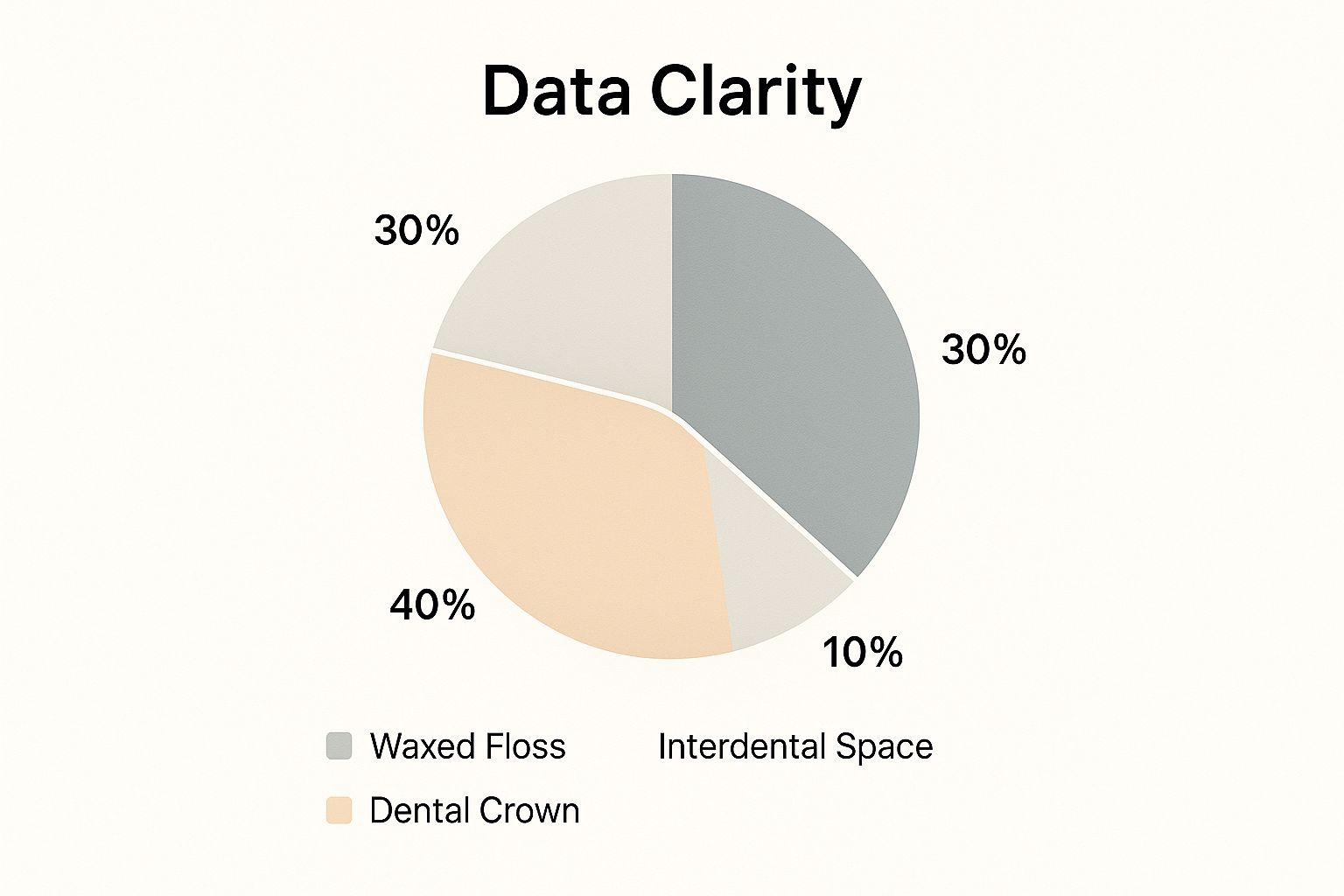
This picture shows the best way to floss around a crown. Using waxed floss helps you gently clean the important spot where the crown meets your gumline. This stops plaque without harming your dental work.
Making Smart Food Choices
You don't need a strict diet, just a smart one. For the first few days after getting your crown, it's best to stick to softer foods. Think about yogurt, soups, smoothies, and mashed potatoes. This gives the cement time to set and lets your gums heal.
Here is a quick guide to help you choose what to eat long-term.
Foods to Enjoy and Foods to Limit with a Dental Crown
| Safe Foods for Your Crown | Foods to Eat with Caution |
|---|---|
| Cooked vegetables, soft fruits, and smoothies | Raw, crunchy vegetables like carrots (cut into small pieces) |
| Soups, stews, and broths | Hard fruits like apples (slice them first) |
| Yogurt, cottage cheese, and scrambled eggs | Chewy breads like bagels or tough pizza crusts |
| Pasta, rice, and soft grains | Tough cuts of meat |
| Fish and tender-cooked meats | Popcorn and hard nuts |
| Mashed potatoes and avocados | Extremely sticky or hard candies |
This table is not about strict rules, but about being careful. You can still enjoy an apple, just slice it up instead of biting right into it!
The biggest long-term danger isn't just a sudden chip. It's the slow damage from decay. Sugary snacks and acidic drinks can help bacteria attack the margin—that tiny seam where your crown meets your tooth. This is the weakest spot.
Protecting that margin is very important. To learn more about keeping your teeth healthy, you can read about how to prevent tooth decay in our guide. Smart food choices protect your crown and the healthy tooth under it.
Why Dental Crowns Fail and How to Prevent It
Even the best-made dental crown is not perfect. Knowing why they sometimes fail is the first step to making sure yours lasts a long time. Crowns are very strong, but they handle a lot of daily pressure that can cause problems later on.
One of the most common reasons a crown fails has nothing to do with the crown itself. It's the health of the tooth underneath. The crown covers the tooth, but the small margin where it meets your gum line is a weak spot. If plaque builds up there, decay can start. This weakens the foundation that your crown sits on.
Also, some crowns handle stress better than others. Your molars, the big teeth in the back of your mouth, do all the hard work when you chew. A crown there is under more pressure than one on a front tooth. This constant force can sometimes lead to small cracks or wear over time.
Protecting Your Crown from Hidden Dangers
Certain habits can make a crown's life much shorter. A major one is bruxism, which is the term for grinding or clenching your teeth. Many people do this in their sleep and don't know it. This puts a huge amount of force on both natural teeth and crowns.
If you wake up with a sore jaw, or if your dentist sees signs of wear at your check-up, a night guard can be a big help. A night guard is like a protective cushion. It soaks up the grinding force that could otherwise chip, crack, or loosen your crown.
Your regular dental check-ups are the best way to protect your crown. We can spot tiny problems—like a small chip or early signs of decay—long before you feel them. Finding these problems early often means a simple, quick fix instead of a big problem later.
Studies show how important long-term care is. One study looked at over a thousand crowns. It found that almost 90% lasted more than five years, but only about 70% lasted 15 years. The main reasons for failure were cracks and problems with the tooth underneath. You can find more details about dental crown survival rates here.
By taking good care of your mouth, you can greatly improve those numbers. For more helpful advice, you can also read our tips to maximize dental crown longevity.
Caring for Different Types of Crowns
Not all dental crowns are the same. The material your crown is made from can change how you care for it. It could be porcelain, ceramic, metal, or zirconia. While daily brushing and flossing are always important, knowing about your crown type helps.
For example, a shiny, natural-looking porcelain crown on a front tooth looks great. But it can chip more easily than a super-strong zirconia crown on a back molar. This means you should be more careful when biting into hard foods, like an apple or crusty bread, with that front crown.
Where your crown is located is just as important as what it's made of. A crown on a back tooth handles much more chewing force than one on a front tooth. This can affect how long it lasts and what care it needs.
Tailoring Care to Your Crown Type
Zirconia and metal crowns are the strongest types of crowns. Their strength makes them great for back teeth, where they can handle heavy chewing with a lower risk of breaking. If you have a metal crown, keeping your gums healthy is important. This helps prevent the dark line that can sometimes show up at the gumline over time.
Porcelain-fused-to-metal (PFM) crowns try to give you both strength and good looks. They have a metal core for strength and a porcelain outside for looks. But the porcelain layer can sometimes wear down over the years, showing the metal underneath. Using a non-abrasive toothpaste is very important for these crowns to protect that outer layer.
All-ceramic crowns are popular because they look very natural. But they need to be handled with care. Studies show that crowns on back teeth have a slightly higher failure rate—9.1% compared to 6.5% for front teeth. This is because they are under more stress. You can read more about these findings on ceramic crown failure rates. This shows why avoiding very hard foods is so important for those back crowns.
No matter what kind of crown you have, knowing its needs is a key part of making it last. If you're not sure what type you have, learning more about the different dental crowns in Glendale, AZ can help.
The Role of Professional Dental Care
Your daily routine is the most important part of good crown care, but you can't do it all on your own. Your dentist is your partner in keeping your crown in great shape for years. Regular check-ups are just as important as brushing and flossing. They give us a chance to find small problems before they get bigger.
During a professional cleaning, we can remove the hard tartar that builds up around the crown's margin. This is the kind of buildup that even the best brushing can't always remove. Getting rid of it is your best defense against decay forming on the natural tooth under the crown.
What Your Dentist Checks For
When you visit us for an exam, we do more than just a quick look. We check your crown carefully to make sure it is stable and fits perfectly. We also look for tiny cracks or signs of wear that you might not be able to see or feel.
The health of the gums around the crown is also very important. Healthy gums create a tight seal that protects the tooth underneath from bacteria. We will check for any redness or swelling. This is where regular general dentistry in Glendale, AZ is key to keeping that protective seal.
A professional check-up is the best way to make sure your crown lasts a long time. We can spot possible problems like early decay or stress cracks. This allows for simple fixes instead of difficult repairs later on.
How Age and Health Impact Your Crown
As life changes, so do our dental needs. Things like your age can affect how long your crown lasts. For example, one study found that patients aged 60-69 had their crowns fail more often than younger people. This was often because of new decay or gum disease. This tells us that as we get older, regular professional care becomes even more important.
As dental care gets better, so does the way we help patients understand their treatments. Some offices are trying new technologies like AI-powered patient education tools to communicate better and make sure you have all the information you need.
In the end, the best way to care for your dental crown is to work as a team. When you combine your good habits at home with our expert care, you are setting your smile up for success.
Common Questions About Dental Crown Care
It's normal to have questions after getting a new dental crown. Getting good answers helps you feel sure about taking care of your investment. Let's go over some of the most common questions we hear from our patients.
One of the first things people ask is, "How long will my new crown last?" With good cleaning and regular check-ups, a crown can last anywhere from 5 to 15 years. For some people, they can last even longer. How long it lasts depends on daily wear and tear, the material it's made from, and if you grind your teeth.
Another common question is about sensitivity. It is normal to feel some mild gum soreness or a little sensitivity to hot and cold for a few days. Your mouth is just getting used to the new crown.
Understanding Your Crown Day to Day
A big question we get is if a crowned tooth is safe from cavities. Can a tooth still get a cavity under a crown? The answer is yes. The crown itself is artificial and can't decay, but your natural tooth underneath is still at risk.
The weakest spot is the margin—that’s the tiny line where the crown meets your tooth. If plaque builds up there, bacteria can get underneath and start a cavity. This is why brushing and flossing carefully around the entire crown is so important for its long-term health.
If your bite feels a little "off" with the new crown, or if the sensitivity doesn't go away after a week or two, call your dentist. It's often a simple fix, like a small bite adjustment, that can make a big difference.
So, what happens if your crown feels loose or even comes off? First, don't worry. Call your dentist right away. Please do not try to glue it back on yourself with superglue or anything else from home. This can damage both the crown and your tooth. If it falls off, clean it gently, put it in a safe container, and bring it with you to your appointment. In many cases, your dentist can cement it back on securely.
For more information on the whole process, our guide on dental crowns has plenty of helpful details.
At Beyond Dental Care, we're committed to making sure you have all the information you need for a healthy, beautiful smile. To learn more or to set up a consultation, visit us at https://beyonddentalcare.com.