
Here’s the truth most dental providers won’t tell you about preventive dentistry: it’s often incomplete. Most dental websites list services like cleanings, exams, and sealants. But they don't explain how these services prevent bigger issues or what you should be doing between visits.
True prevention isn't just a checklist of services. It’s a personalized plan for your health. While regular cleanings are important, they are often a passive approach instead of a proactive strategy designed for your specific health needs, age, and lifestyle.
What Standard Preventive Dentistry Is Missing
Many people think of preventive dentistry like a car wash—a routine cleaning that makes things look good on the surface. While that’s part of it, this view misses what’s happening "under the hood." It often fails to connect your oral health to your overall well-being. This can leave you open to problems that could have been found much earlier.
This standard method is about treating symptoms, not fixing the root causes. It’s a reactive cycle: wait for a problem, then fix it.
A better approach is like a full diagnostic service for your car. It involves checking the engine, running tests, and creating a long-term maintenance plan to prevent breakdowns before they happen. This is what saves you from the pain, cost, and hassle of major repairs down the road.
The Gap Between Advice and Action
Here’s a fact that shows the disconnect. Our research shows that most providers don't explain the "why now" of prevention. They don't tie it to rising health concerns, the link between your mouth and body, or the financial value of early care. They also often fail to personalize advice for adults versus seniors, who have different risk factors.
The image below shows the difference between standard care and the comprehensive approach needed for true prevention.
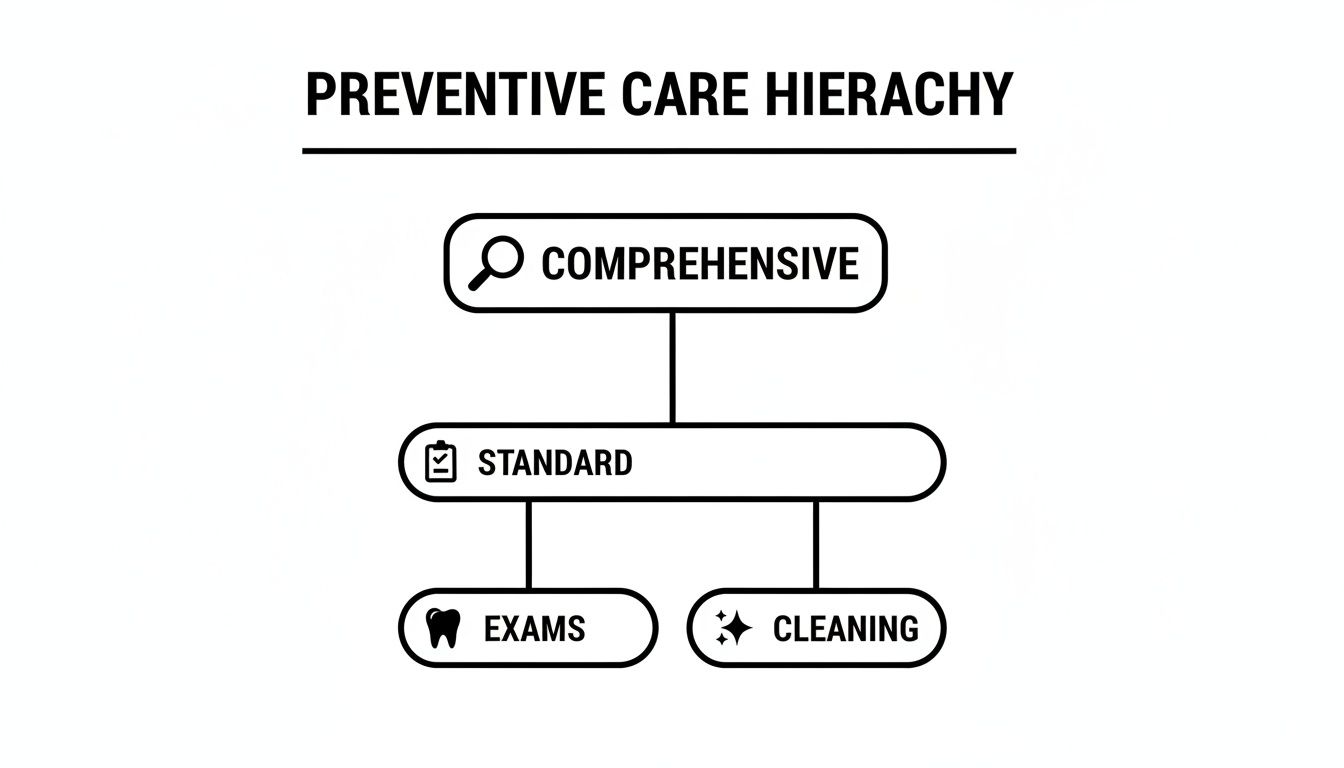 preventive dental care levels: Comprehensive, Standard, Exams, and Cleaning.” />
As you can see, a standard "exam and cleaning" is just the starting point. Real prevention goes much deeper, using a full health strategy to protect your future.
Take a look at this table to see a side-by-side comparison.
Standard Prevention vs Comprehensive Prevention
This table shows the difference between a limited, checklist-based approach and a modern, personalized one that considers long-term health.
| Feature | Standard Preventive Care (What Most Offer) | Comprehensive Preventive Care (The Beyond Dental Care Approach) |
|---|---|---|
| Philosophy | Reactive: Fix problems as they appear. | Proactive: Identify risks and prevent future problems. |
| Focus | Treats individual teeth and isolated symptoms. | Considers the entire oral system and its link to overall health. |
| Patient Role | Passive recipient of routine services. | Active partner in co-creating a personalized health plan. |
| Technology | Basic X-rays and visual exams. | Advanced diagnostics like digital imaging, oral cancer screenings, and airway analysis. |
| Financial Outcome | Leads to a cycle of costly, unexpected repairs. | Minimizes long-term costs by preventing major issues. |
| Long-Term Goal | Maintain the status quo; "no cavities today." | Achieve predictable, lifelong oral and systemic health. |
The differences are clear. One approach keeps you in a reactive loop, while the other empowers you to take control of your long-term health.
Many standard plans also miss a key part of oral health: strengthening your tooth enamel. To build a strong defense, learning about proven ways to strengthen tooth enamel can be a game-changer. You can also learn more about what happens at a dental cleaning to understand the foundation of great preventive care.
The Real Financial Cost of Incomplete Prevention
It’s easy to think that skipping a dental appointment saves money. But the truth is that this mindset often leads to much bigger bills later. Reactive dental care—waiting until something hurts to get it fixed—is always more expensive than proactive prevention.
Think of it this way: a small investment in a thorough exam today is like getting an oil change for your car. It may seem like a minor expense, but it prevents a major engine failure that costs thousands. In the same way, a good check-up can stop a tiny cavity from becoming a painful, expensive root canal.

The Numbers Don't Lie
The financial case for real prevention is powerful. For every dollar spent on preventive dental care, patients can save between $8 and $50 in restorative and emergency treatments. This isn’t just about avoiding dental bills; it’s about protecting your overall financial well-being.
This financial drain goes beyond the dental chair. The CDC estimates that nearly $46 billion is lost each year in work productivity due to employees needing time off for untreated oral disease. A toothache or an emergency visit can easily disrupt work, adding another cost to "saving money" by skipping check-ups.
The True Price of Waiting
When you delay care, the costs add up quickly. A simple filling might cost a few hundred dollars. But if that decay spreads, the treatments become much more complex and expensive.
Here’s how small problems can turn into big expenses:
- A small cavity: Requires a simple filling.
- An ignored cavity: Can deepen, leading to a root canal, which can cost thousands.
- A tooth after a root canal: Almost always needs a protective dental crown, adding another large cost.
- A severely damaged tooth: May need to be pulled, requiring a dental implant, the most expensive solution.
The most expensive dentistry is the dentistry you have to do over again—or the dentistry you delayed. True prevention isn't an expense; it's one of the best financial investments you can make.
Understanding the real financial impact is key. To get a better sense of how these costs can add up, you might be interested in our guide on dental restoration costs. It provides a clearer picture of what you can avoid with a proper preventive strategy.
Why Your Preventive Needs Change With Age
Generic dental advice often doesn't work because it misses one key factor: you. The truth is, a preventive plan for a 17-year-old should be very different from one for a 77-year-old. Your age, lifestyle, and health history create unique needs that require a personalized strategy.
For a young adult, the focus is on building a strong foundation. This is the time to be proactive about wisdom teeth, discuss custom sports mouthguards, and build lifelong habits that will pay off for decades. Prevention at this stage is about looking ahead to stop problems before they start.

Preventive Care For Adults
As we get older, life’s pressures can affect our mouths. The conversation shifts to managing issues like teeth grinding from stress (bruxism), which can wear down enamel. This is also a critical time to catch the early, silent signs of gum disease before it gets worse.
A personalized plan for an adult might include:
- Stress Management: Checking for wear patterns to see if a custom nightguard could protect teeth from grinding.
- Gum Health Monitoring: Measuring gum pocket depths to track gum health and catch inflammation early.
- Cosmetic Maintenance: Discussing professional whitening or bonding to keep your smile bright and confident.
This tailored approach ensures your oral health keeps up with your busy life.
Senior Oral Health Challenges
For seniors, preventive care changes again. The risks are different, so the strategy must be too. Many older adults face unique challenges that require a dentist who understands aging and overall health.
Your oral health needs evolve throughout your life. True prevention adapts with you, offering the right protection at the right time, whether you're dealing with wisdom teeth at 17 or medication-induced dry mouth at 77.
Common concerns we focus on for our senior patients include:
- Dry Mouth (Xerostomia): Often a side effect of medications, dry mouth greatly increases the risk of cavities. A preventive plan must address this with specific advice for relief and protection.
- Root Decay: As gums recede with age, the softer root surfaces of the teeth are exposed and are more vulnerable to decay.
- Care for Restorations: Maintaining dentures, bridges, or dental implants requires special cleaning and regular check-ups to make sure they work properly and last for years.
Recognizing these different life stages is what separates generic advice from real care. To learn more, read our guide to oral health after 60. At Beyond Dental Care, we create plans that grow with you.
Connecting The Dots Between Your Mouth And Body
One of the most important truths in preventive dentistry is that your mouth is a window into the health of your entire body. We often see dental care as separate from other healthcare, but that's a big mistake. What happens in your mouth rarely stays in your mouth.
Think of your mouth as a gateway to the rest of your body. Your gums, especially, give clues about your overall well-being. If harmful bacteria build up, they don't just cause cavities and gum disease. They can get into your bloodstream, travel to other organs, and cause inflammation. This is the oral-systemic connection.
More Than Just Teeth And Gums
The links between oral health and overall health are well-proven. An infection in your gums doesn't just stay there. It can contribute to serious medical conditions, turning a simple dental issue into a whole-body problem.
This is why a comprehensive preventive exam is about much more than spotting cavities. It's about looking for early warning signs of bigger issues to protect your long-term health. We look for risks related to:
- Heart Disease: The bacteria that cause gum disease can travel through your bloodstream and contribute to inflammation in your arteries, raising the risk of heart attack and stroke.
- Diabetes: This is a two-way street. Gum disease makes it harder to control your blood sugar, and high blood sugar helps oral infections grow.
- Respiratory Infections: It's surprisingly easy for bacteria from your mouth to be inhaled into your lungs. This can lead to serious conditions like pneumonia.
This powerful connection is why your dentist should be a key partner on your total healthcare team—not just someone you call when a tooth hurts.
A truly preventive approach recognizes that protecting your mouth is a fundamental part of protecting your body. It shifts the focus from merely treating dental symptoms to proactively managing your overall wellness.
Our oral health is closely tied to our overall well-being. For example, understanding how eating too much added sugar can cause inflammation throughout your body—including your gums—is a vital piece of the puzzle. Even bad breath can be a sign of other issues, which you can read about in our guide on the causes of bad breath.
How Modern Technology Powers True Prevention
Effective prevention today is more than a simple cleaning. Real preventive dentistry uses modern technology to help us spot trouble when it’s still tiny, painless, and cheap to fix. This isn't about fancy gadgets; it's about using precise tools to see what the naked eye can't.
This data-driven approach gives you and your dentist a much clearer picture of your oral health. It turns a routine check-up into a full diagnostic screening, making sure nothing is missed.

Seeing Problems Before They Start
The old way of finding problems was waiting for a cavity to appear or for a patient to feel pain. Today’s tools let us be proactive. At Beyond Dental Care, we integrate advanced diagnostics with long-term prevention planning.
- Low-Radiation Digital X-Rays: These give clear images of your teeth and jaw with much less radiation than old film X-rays. They let us spot tiny areas of decay between teeth or below the gum line long before they become serious.
- Intraoral Cameras: Ever wonder what your dentist sees? An intraoral camera is a small, pen-sized tool that shows a live video of your teeth on a screen. This lets you see exactly what we see, making you a partner in your care.
- Advanced Oral Cancer Screenings: A visual check is not enough. We use special lights and technology to detect abnormal tissues that might be early signs of oral cancer. Early detection is key for successful treatment.
True prevention isn't about guesswork. It's about using precise, advanced tools to replace uncertainty with data. This gives you the peace of mind that comes from knowing your health is being protected with the best technology available.
The Power of A Clearer Picture
These tools do more than find problems; they empower you with knowledge. When you can see a tiny fracture on a screen or understand what a digital X-ray shows, your dental care becomes a team effort. It's the difference between being told you have a problem and truly understanding why a treatment is needed.
This commitment to early detection is a core part of modern preventive care. You can learn more about how we use these tools in our guide to digital dental imaging. This approach ensures we are not just cleaning your teeth but protecting your long-term health.
What a Truly Personalized Prevention Plan Looks Like
So, what does a better preventive experience feel like? It’s far from the usual “floss more” lecture. A personalized plan starts with a real conversation about you—your health history, your lifestyle, and your future health goals. The result is a custom-built strategy, not a one-size-fits-all service.
This modern approach is important because standard prevention is still falling short. While 83% of adults sought preventive care in 2023, 22% still had a dental emergency in 2024. That gap shows that just showing up isn't enough. The quality and personalization of that care make all the difference.
The goal of real prevention is predictability. It’s about creating a plan that helps you sidestep emergencies, minimize costly procedures, and enjoy lasting oral health with confidence and peace of mind.
Beyond the Checklist: Your Custom Plan
At Beyond Dental Care, our private-practice model means we take the time to walk through your full health picture, not just polish your teeth. We build a strategy that reflects your unique life and health, whether you’re 17 or 77. This approach includes personalized plans, tech-driven early detection, and lifestyle-based adjustments.
It all starts by asking the right questions:
- What are your long-term health goals?
- Do you have any other health conditions we should know about?
- What is your lifestyle like (e.g., diet, stress levels)?
- What are your goals for your smile?
This information allows us to see the full picture. We then combine that with advanced diagnostics like digital X-rays and oral cancer screenings. This means we aren’t just cleaning your teeth; we're creating a practical plan to help you avoid pain and achieve predictable, long-term oral health. This approach leads to fewer costly procedures and more peace of mind.
A Higher Standard of Care in North Glendale
For patients in North Glendale and surrounding areas like Vistancia or Arrowhead Ranch, your preventive care should be more than just routine. It should be a smart, proactive partnership. We believe this data-backed, personalized approach is the key to preventing problems before they start.
Experience a smarter, more personalized kind of prevention. Schedule your personalized consultation with Beyond Dental Care to see how a strategy built just for you can make all the difference.
Answering Your Questions About Proactive Dental Care
Switching from standard checkups to a more proactive, personalized approach is a big step, and it’s normal to have questions. Here are some of the most common concerns we hear.
Will My Insurance Cover Comprehensive Preventive Care?
Most dental insurance plans cover basics like standard cleanings and exams. While more advanced diagnostics may have different coverage, our team is great at helping you get the most from your benefits.
But here’s the real truth: a small investment in better diagnostics now often saves you a huge amount of money later. It helps you avoid major, complex work that insurance only partly covers, protecting both your health and your wallet.
How Often Should I Really Be Coming In For A Check-Up?
That "twice a year" rule is more of a general guideline. A better plan is one that's built around your unique risk factors.
For example, patients with a history of gum disease, certain medical conditions, or a higher risk for cavities will benefit from more frequent visits. We’ll work with you to find the ideal schedule that actually keeps you healthy, not just checks a box.
One of the biggest myths in dentistry is that "no pain means no problem." Serious issues like early-stage gum disease, hidden cavities, and even oral cancer often show no symptoms at all until they've become advanced and require extensive treatment.
My Teeth Feel Totally Fine, So Why Do I Need To Worry?
This is the most common—and most dangerous—misconception. Many serious dental problems are completely silent in their early stages. You won't feel a thing.
True preventive care isn't about waiting for a problem to appear. It's about using advanced diagnostics to find those issues when they are still small and invisible to you. This allows us to treat them simply and effectively, long before they can cause pain or require costly, complicated procedures.
At Beyond Dental Care, we believe in building a personalized strategy that truly protects your long-term health and gives you complete peace of mind. Experience a smarter kind of prevention by scheduling your consultation today.