
A professional dental cleaning is much more than just a polish. It’s a methodical, multi-step process designed to remove stubborn plaque and tartar, brighten your teeth, and give your hygienist a chance to spot any potential oral health issues. This is a crucial preventive appointment where we use specialized tools to achieve a deep clean you simply can’t get at home, setting the stage for long-term health.
Demystifying Your Dental Cleaning Appointment
If you’ve ever felt a bit nervous about what really happens during a dental cleaning, you’re not alone. Many people are fuzzy on the details beyond a quick polish. In reality, this routine visit is one of the most powerful tools you have for maintaining your oral health and preventing future problems down the road.
It’s a foundational part of preventive healthcare, and for good reason. Oral diseases affect a staggering 45% of the global population—that’s about 3.5 billion people. If you’re interested in the worldwide impact of oral health, Alpinewhite.com offers some great insights.
Think of a professional cleaning as a complete reset for your mouth. It goes far beyond what your daily brushing and flossing can accomplish, targeting hard-to-reach areas and removing hardened deposits (tartar) that your toothbrush can’t budge.
The Core Stages of a Cleaning
Every cleaning appointment follows a logical flow, ensuring every part of your mouth gets the attention it deserves. The process is systematic and designed for both maximum effectiveness and your comfort. This visual gives a great breakdown of the three essential phases you’ll experience.
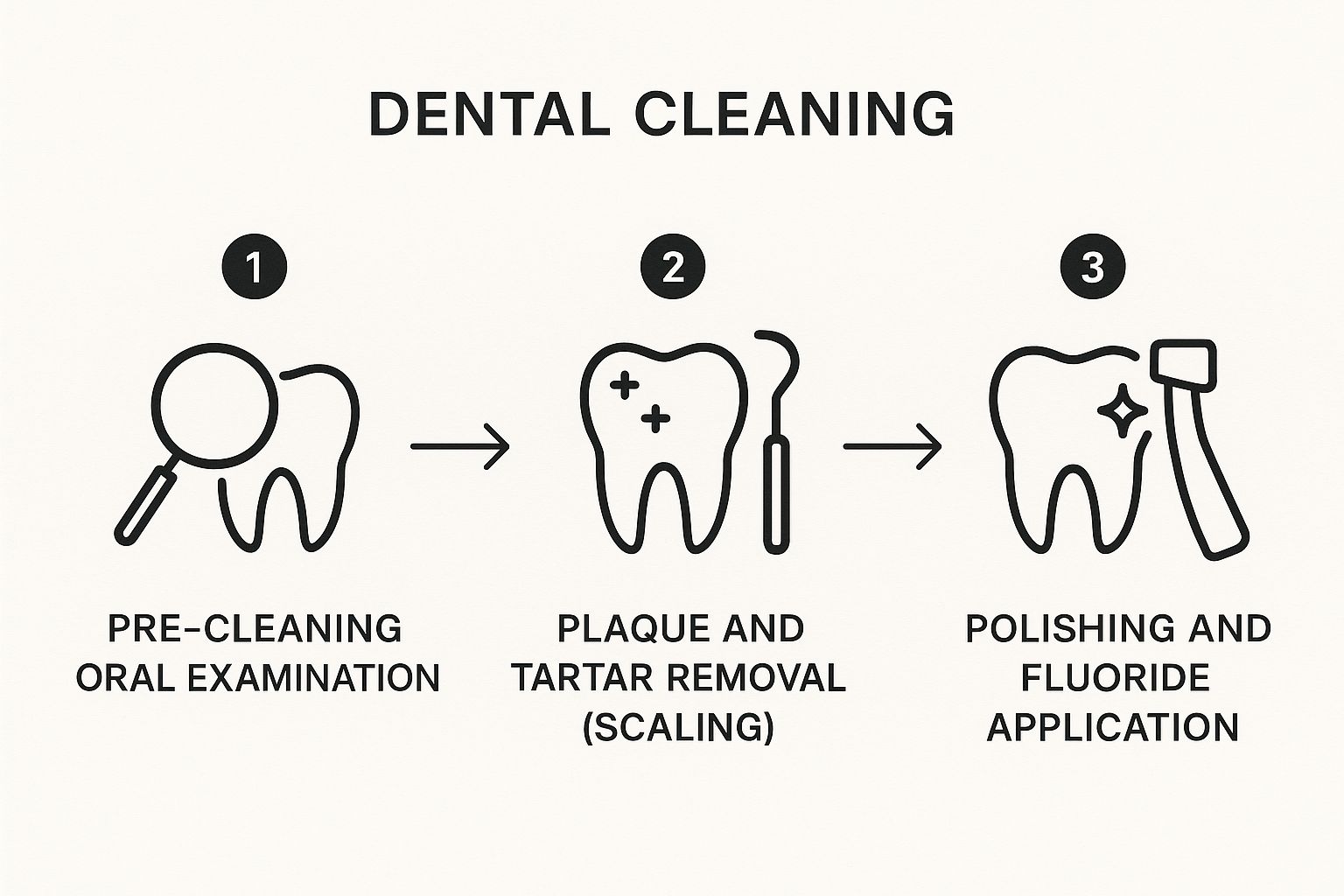
As the image shows, the cleaning progresses from a careful assessment to a deep cleaning and finally to polishing and protection. This ensures you leave with a thoroughly healthy and clean smile.
To make it even clearer, here’s a quick table summarizing what you can expect during your appointment.
Stages of a Typical Dental Cleaning
| Stage | What Happens | Primary Goal |
|---|---|---|
| 1. Oral Exam & Assessment | The hygienist visually inspects your teeth and gums for any signs of trouble like inflammation, cavities, or other concerns. | To get a baseline of your current oral health and identify any areas that need special attention. |
| 2. Scaling (The Deep Clean) | Using special hand tools or an ultrasonic scaler, the hygienist meticulously removes plaque and hardened tartar from around your gum line and between your teeth. | To eliminate the harmful bacteria buildup that causes cavities and gum disease. |
| 3. Polishing & Flossing | A gritty paste and a high-powered brush are used to polish away surface stains, leaving your teeth smooth and shiny. This is followed by a professional flossing session. | To remove any remaining plaque, buff away minor stains, and make your teeth feel incredibly smooth. |
| 4. Fluoride Treatment (Optional) | A fluoride gel or varnish is applied to your teeth. | To help strengthen your tooth enamel and make it more resistant to acid attacks from plaque and sugars. |
Each step builds on the last, ensuring a comprehensive cleaning that leaves your mouth feeling refreshed and healthy.
Key Takeaway: A dental cleaning isn’t just about making your teeth feel smooth. It’s a critical health procedure that removes harmful buildup, screens for disease, and helps protect your teeth until your next visit.
Ultimately, the main goals are straightforward and incredibly beneficial for you:
- Remove plaque and tartar: This eliminates the primary cause of cavities and gum disease.
- Polish away surface stains: This leaves your teeth looking brighter and feeling smoother.
- Provide a professional assessment: Your hygienist can spot early warning signs and offer personalized advice to improve your at-home care routine.
The Initial Oral Health Examination
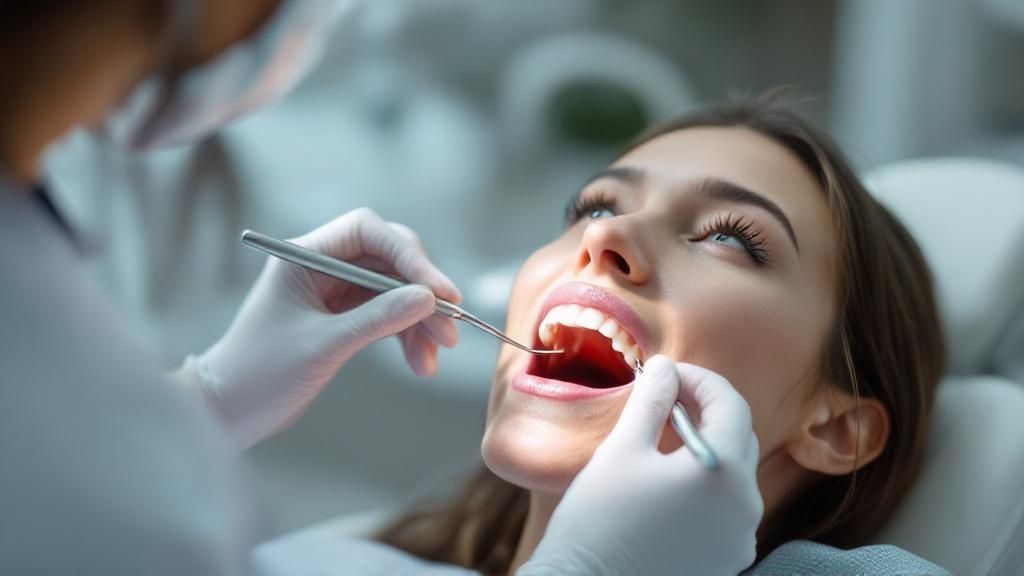
Before a single cleaning tool touches your teeth, your appointment kicks off with a crucial health check. You can think of this as a quick “state of the union” for your mouth. Your dental hygienist or dentist will start by carefully looking over your teeth, gums, and everything else to spot any early signs of trouble.
This isn’t just a formality—it’s what customizes the entire cleaning to your specific needs. It’s all about proactive, preventive care, which is always far simpler (and more comfortable) than treating a problem that’s already settled in.
What Your Hygienist Is Looking For
During this visual inspection, your hygienist uses a small, angled mirror to get a clear view of every nook and cranny. This little tool is essential for seeing the backs of your teeth and those other hard-to-reach spots. Their trained eyes are searching for very specific clues about your oral health.
Key areas of focus include:
- Signs of Gingivitis: They’re checking for any redness, puffiness, or swelling in your gums, which are the classic early signs of gum inflammation.
- Potential Cavities: Any obvious decay or weak spots in your tooth enamel are noted so they can be addressed.
- Tartar Buildup: They’ll scope out the amount and location of hardened plaque (tartar) to figure out which areas will need the most attention during the cleaning.
- Overall Tissue Health: It’s not just about teeth and gums. The health of your tongue, cheeks, and the roof of your mouth are also checked for any abnormalities.
This detailed once-over ensures the cleaning is focused exactly where you need it most. If one area looks more inflamed than another, your hygienist knows to be extra gentle yet thorough there.
By taking a few minutes for a thorough exam first, your dental team creates a personalized game plan for your cleaning. This tailored approach is the key to getting the most effective and comfortable care possible.
Ultimately, this first step sets the foundation for a successful cleaning. It transforms the appointment from a generic procedure into a personalized treatment designed for your unique smile. This initial assessment guarantees that every minute of your cleaning is spent productively, addressing your mouth’s specific condition and getting you back to optimal health.
Scaling Away Plaque and Tartar Buildup
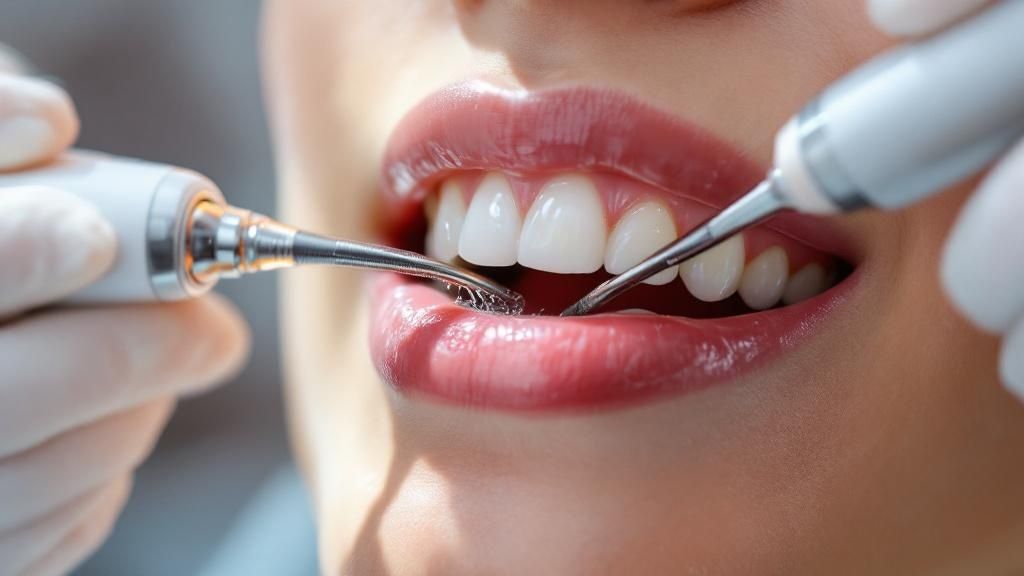
Once the initial exam is complete, your dental hygienist gets to the heart of the dental cleaning: the scaling process. This is where the magic really happens, as they meticulously remove the stubborn buildup that your toothbrush and floss at home just can’t touch. The two main culprits here are plaque and tartar.
Plaque is that soft, sticky film of bacteria that’s always trying to set up camp on your teeth. When it’s not cleared away daily, it hardens into tartar, which is also known as calculus. Think of tartar like barnacles on the hull of a ship—it’s a tough, calcified deposit that latches onto your tooth surfaces, especially right along the gum line.
Here’s the thing about tartar: you can’t brush or floss it away. Its removal demands the specialized tools and expert touch of a dental professional. Getting rid of it is non-negotiable for good oral health, as tartar buildup is a direct line to gum disease and cavities.
The Tools for the Job
To break down these stubborn deposits, hygienists use a smart, two-pronged approach. This combination ensures they can tackle both large-scale buildup and perform the detailed, fine-tuning work needed for a truly comprehensive clean.
First up is usually the ultrasonic scaler. This modern tool uses high-frequency vibrations to gently break apart bigger tartar deposits. You’ll notice a gentle spray of water, which does two important things: it washes away the debris as it comes loose and keeps your tooth cool and comfortable.
You might hear a soft humming or whistling sound and feel a light vibration, but it’s a completely controlled and safe process designed to make the cleaning faster and more efficient.
The Art of Manual Scaling
After the ultrasonic tool has cleared away the major buildup, your hygienist will switch to manual scalers. These are the fine-tipped, handheld instruments that allow for incredible precision and a delicate touch. Each tool has a unique shape, designed to access different tooth surfaces and even the areas just below the gum line.
With these instruments, the hygienist will carefully scrape away any smaller, lingering tartar deposits, making sure every tooth surface is perfectly smooth. Don’t be alarmed by the scraping sounds you might hear; that’s just the tool working against the hard tartar, not your tooth enamel. It’s a sign that the cleaning is working!
Why This Step Is So Important: The bacteria that live inside tartar irritate your gums, leading to inflammation (gingivitis). If left unchecked, this can escalate into more serious periodontal disease. A professional scaling is the only way to eliminate this threat and give your oral health a fresh start.
This powerful combination of ultrasonic and manual scaling is what makes a professional cleaning so effective. It gets rid of buildup at every level, from the bulky deposits you might see to the tiny specks hidden between your teeth.
This part of your dental cleaning might take the longest, but it’s without a doubt the most crucial step for preventing long-term oral health problems. Your hygienist is expertly trained to perform this process gently and effectively, keeping you comfortable while systematically clearing the path to a healthier, brighter smile.
Polishing for a Smooth and Bright Smile
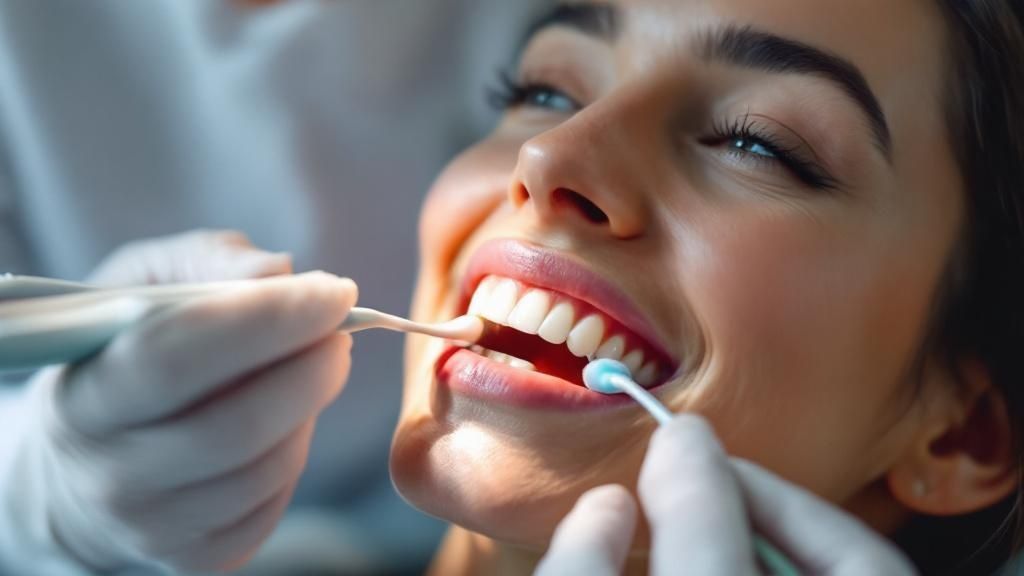
Now that the heavy lifting of scaling is done, we get to the grand finale of your cleaning appointment—the polish. This is the part everyone loves. It’s what creates that incredibly slick, fresh-from-the-dentist feeling you can’t help but test with your tongue. It’s a comfortable and satisfying way to wrap things up.
Think of it like buffing a car to a high gloss after a deep clean. Scaling removed all the tough, stuck-on grime (the tartar), and now polishing buffs away any lingering surface stains and fine plaque. The result is a sleek, gleaming finish that not only looks great but also gives your oral health a serious boost.
To get that shine, your hygienist will use a special slow-speed handpiece. It has a soft, flexible rubber cup on the end that spins gently. This little cup gets dipped into a gritty, professional-grade polishing paste, which we call prophy paste.
More Than Just a Pretty Shine
As the hygienist guides the spinning cup from tooth to tooth, the prophy paste gently scrubs away minor surface stains from things like coffee, tea, and red wine. This is what gives your smile that instant boost in brightness. But the real magic of polishing goes much deeper than just appearances. The two main goals are:
- Stain Removal: To gently lift away the surface stains on your enamel, revealing a brighter, cleaner smile.
- Plaque Prevention: To make your tooth surfaces so smooth that it’s much harder for new plaque to get a foothold.
A polished tooth surface is slippery and much less welcoming to bacteria. Since plaque needs a slightly rough texture to cling to, polishing essentially creates a clean slate, making it harder for buildup to start again. This simple step helps keep your teeth cleaner for longer in the weeks after your appointment.
Key Insight: Polishing isn’t just a cosmetic touch-up. It’s a preventive measure that makes your at-home brushing and flossing more effective by creating a tooth surface that actively resists new plaque buildup.
This final, gentle step is the perfect, refreshing conclusion to your hygiene appointment. It ensures you leave not just with a healthier mouth, but with a smile that’s visibly brighter and feels noticeably smoother.
Finishing with Fluoride and Expert Home Care Advice
As your dental cleaning appointment wraps up, the last couple of steps are all about locking in that clean feeling and protecting your smile for the months ahead. After the detailed scaling and polishing, your hygienist will likely offer an optional fluoride treatment. It’s a quick, powerful way to give your teeth an invisible shield.
Think of your tooth enamel as a fortress wall. Every single day, acids from bacteria and the foods you eat are trying to break it down. Fluoride is like sending in reinforcements to rebuild and strengthen that wall, making it much tougher for cavities to get a foothold.
The application itself is fast and totally painless. It usually comes in one of two forms:
- A concentrated varnish that gets painted right onto your teeth.
- A foam or gel that’s applied using a soft tray you bite into for about a minute.
It’s a simple but incredibly effective way to remineralize your enamel and add an extra layer of defense that lasts until your next visit.
Your Personalized Home Care Game Plan
Honestly, one of the most valuable parts of any dental cleaning is the chat you have right before you walk out the door. This isn’t just a generic “don’t forget to floss” reminder. It’s a personalized game plan based on exactly what your hygienist saw in your mouth just moments before.
This is your chance to turn their professional insights into a smarter, more effective at-home routine.
Your hygienist might point out a specific spot, like a back molar that’s gathering extra plaque, or mention gum areas that look a little irritated. They can show you the perfect brushing angle for a tricky tooth or a better flossing technique for your unique smile.
Expert Insight: This conversation is a two-way street. Don’t be shy! Ask if an electric toothbrush or a water flosser might be good for you. Inquire about managing sensitivity. This is your moment to co-create a plan that keeps your mouth healthy.
This professional guidance is what bridges the gap between cleanings. While consistent professional care is the foundation of good oral health, life happens, and habits can shift. For instance, data shows that dental visits for adults aged 18-64 in the U.S. dipped slightly from 65.5% in 2019 to 62.7% in 2020, with women typically being more consistent with their appointments. You can see more details in the findings on dental care utilization from the CDC.
Ultimately, your appointment at Beyond Dental Care is about empowerment. You leave not just with a sparkling clean smile, but with the know-how to keep it that way. By putting your hygienist’s personalized tips into practice, you make every brush and floss at home count, setting yourself up for an even easier and more successful cleaning next time.
Answering Your Top Questions About Dental Cleanings
Even after walking through the process step-by-step, it’s totally normal to have a few more questions pop up. Getting clear on the details can go a long way in easing any last-minute jitters and helping you feel completely prepared for your appointment. We hear these questions all the time from patients, so let’s dive into the answers.
Our goal is to give you straightforward, honest information to put your mind at ease.
How Often Should I Really Get My Teeth Cleaned?
For most people, coming in for a professional cleaning every six months is the gold standard. There’s a good reason this has been the go-to recommendation for so long—it’s incredibly effective for keeping typical plaque and tartar buildup in check. It also gives your dental team the perfect opportunity to spot potential issues, like small cavities or gum inflammation, while they’re still simple and easy to fix.
But here’s the thing: dentistry is never one-size-fits-all. We’ll always create a schedule that’s personalized to your specific oral health needs.
- Higher Risk Factors: If you have a history of gum disease (periodontitis), tend to build up tartar quickly, or have certain medical conditions, we might suggest more frequent visits. A cleaning every three or four months might be exactly what you need to keep your gums healthy and stop any disease from progressing.
- Exceptional Oral Health: On the flip side, if your gums and teeth are consistently in fantastic shape with very little plaque, we might decide that an annual cleaning is enough to keep things that way.
The bottom line? Always follow the specific advice from your dental team. Our recommendation is carefully tailored to you, ensuring you get the right care at the right time.
Is a Professional Teeth Cleaning Going to Hurt?
This is easily one of the most common questions we get, and the answer is almost always a reassuring “no.” For the vast majority of patients, a standard dental cleaning is completely painless. You’ll feel some new sensations—like light pressure, gentle scraping sounds, and the vibration of the ultrasonic scaler—but you shouldn’t feel actual pain.
Discomfort usually only shows up under a few specific circumstances:
- Inflamed Gums: If you have gingivitis, your gums might be a bit swollen and sensitive, making them tender during the cleaning.
- Significant Tartar: A lot of hardened tartar, especially below the gumline, can require a bit more work from the hygienist, which might cause some temporary sensitivity.
- Tooth Sensitivity: If your teeth are already sensitive to cold, you might notice the tools and the cool water spray a little more.
Your Comfort Is Our Priority: Communication is everything. If you feel any sharp pain or serious discomfort, please let your hygienist know right away. They can apply a topical numbing gel, change their technique, or simply take a break to make sure you’re comfortable from start to finish.
And remember, keeping up with regular cleanings is the best way to prevent the very conditions that cause sensitivity in the first place!
What Should I Do After My Dental Cleaning?
To get the most out of your professional cleaning and hold onto that incredibly smooth, fresh feeling, there are just a few simple things to do. Your teeth are in pristine condition right after your appointment, so a little extra care makes a huge difference.
For the first few hours, try to steer clear of dark-colored foods and drinks. Think coffee, red wine, dark teas, or berries. The polishing step can make your teeth a bit more porous and prone to staining right afterward, so giving them a break helps keep them looking bright.
If you had a fluoride varnish applied, your hygienist will give you specific instructions. This usually means waiting 30-60 minutes before eating or drinking anything at all. You might also be told to avoid hot drinks or very crunchy foods for the rest of the day so the varnish can fully absorb and do its job.
Most importantly, the best thing you can do is stick to your great home care routine. Keep brushing twice a day with fluoride toothpaste and flossing daily. This is your #1 strategy for controlling plaque and making your next cleaning even easier.
Is a Cleaning the Same Thing as Teeth Whitening?
This is a really common point of confusion, but a dental cleaning and teeth whitening are two completely different procedures with very different goals.
A dental cleaning is all about your health. It’s a preventive treatment designed to remove harmful plaque and tartar from your teeth and gums to stop cavities, gingivitis, and periodontal disease before they start. A fantastic side effect is that the final polish buffs away surface stains, which almost always makes your teeth look brighter.
Teeth whitening, on the other hand, is a purely cosmetic procedure. It uses a professional bleaching agent (like carbamide peroxide or hydrogen peroxide) to change the natural, internal shade of your teeth, making them visibly whiter.
Think of it like this: a cleaning scrubs your teeth back to their natural, healthy state. Whitening chemically lightens the color of the enamel itself.
Ready to experience the gentle, patient-focused approach that sets Beyond Dental Care apart? Our team is dedicated to providing a comfortable environment where your oral health is our top priority. Schedule your next cleaning with us and discover a new standard of dental care. Visit us online at https://beyonddentalcare.com to book your appointment today.