
When you hear about dental restoration cost, the numbers can seem all over the place. You might see prices from a few hundred dollars for a simple fix to over $25,000 for a full smile makeover. The final price tag really depends on what you need, the materials your dentist uses, and how healthy your teeth are right now.
What Does a Dental Restoration Actually Cost?
"Dental restoration" is a broad term for any treatment that fixes damaged or missing teeth. It brings back your smile's function and natural look. Since everyone's mouth is different, the cost can change a lot from person to person.
Think of it like fixing a car. Repairing a small paint scratch is a quick, cheap job, but replacing the whole engine is a big expense. In the same way, a small filling will cost much less than a full dental implant, which replaces a missing tooth from the root up.
To get a better idea, it helps to look at the usual price ranges for the most common treatments. This will give you a good starting point before we look at the specific things that can make these numbers go up or down.
A Quick Look at Common Restoration Prices
Understanding the general cost of different treatments is the first step in planning your budget. Some treatments are perfect for small problems, while others are made for more serious tooth loss—and each one has its own price.
Here’s a quick list of what you might expect to pay for popular dental restorations. Just remember, these are guesses. The only way to get an exact price for your situation is to have a visit with your dentist.
Estimated Cost of Common Dental Restorations
This table gives you a quick look at the average cost ranges for different types of dental restorations in the United States. Prices can change based on your location, the materials used, and how complex the job is.
| Restoration Type | Average Cost Range (Per Tooth) |
|---|---|
| Dental Filling | $100 – $400 |
| Dental Crown | $800 – $2,500 |
| Dental Bridge | $1,500 – $5,000 (for one missing tooth) |
| Dental Implant | $3,000 – $6,000 |
| Root Canal | $700 – $2,000 (not including crown) |
These numbers give you a helpful idea of the dental restoration cost you might be looking at. Now, let's learn more about what each of these treatments is and why their prices can be so different.
Your Guide to Common Dental Restorations
Trying to understand dental work can feel like learning a new language. To help make things clearer, let's break down the most common restorations with some simple comparisons. This will also help you see why the dental restoration cost can change so much from one treatment to the next.

Here's an easy way to think about it: a dental filling is like patching a small hole in a wall. It’s a simple, quick fix for minor damage caused by a cavity.
A dental crown, on the other hand, is more like a custom-fit helmet. It’s made to protect a tooth that's weak, cracked, or has just had a root canal. By covering the whole tooth, it gives it back its strength and natural look.
Solutions for Missing Teeth
When a tooth is completely gone, the solutions are a bit more complex. A dental bridge does exactly what its name sounds like—it "bridges" the gap. It uses the healthy teeth on each side of the empty space as supports to hold a fake tooth in the middle. This fixes your bite and your smile.
Finally, there’s the dental implant, which is a more permanent, separate solution. Imagine giving a tooth a brand-new, solid base. This means placing a small titanium post into the jawbone to act like a new root. A crown is then attached to this post, creating a replacement tooth that looks, feels, and works just like a natural one.
These different methods are at the center of restorative dentistry. If you want to learn more about the goals of these treatments, our guide on what is restorative dentistry is a great place to start.
It's good to know that more and more people are getting these treatments. The global market for restorative dentistry was about $22.4 billion in 2024 and is expected to reach $34.8 billion by 2030. This growth is mostly because of an aging population and a growing need to fix common problems like tooth decay and tooth loss.
The materials used for each restoration also play a big part in how they work and what they cost. For example:
- Fillings: These are often made from composite resin (which is matched to your tooth color) or amalgam (a strong, silver-colored metal).
- Crowns: They can be made from porcelain for a natural look, metal like gold for great strength, or a mix of both (porcelain-fused-to-metal).
- Bridges: These usually use porcelain fused to metal or all-ceramic materials to blend in with your smile.
- Implants: The post is almost always made of titanium, which is safe for your body. The visible crown can be made from the same materials as a regular crown.
Each of these options is made to solve a specific problem, from fixing a small cavity to replacing a tooth that is completely gone. Understanding the purpose and materials behind each one is the first step to making a smart choice about your oral health and the dental restoration cost.
Key Factors That Influence Your Final Bill
Have you ever looked at a dental estimate and wondered why the same treatment can have such different prices? The final dental restoration cost isn't a random number. Think of it like building a custom home—the final bill depends on the materials you choose, how complex the design is, and the skill of the workers.
Understanding what goes into the total cost helps you see exactly where your money is going. Let’s break down the main things that affect what you'll pay.
This image shows a few of the high-quality materials, like custom crowns and strong implants, that your dentist might pick for your treatment plan.
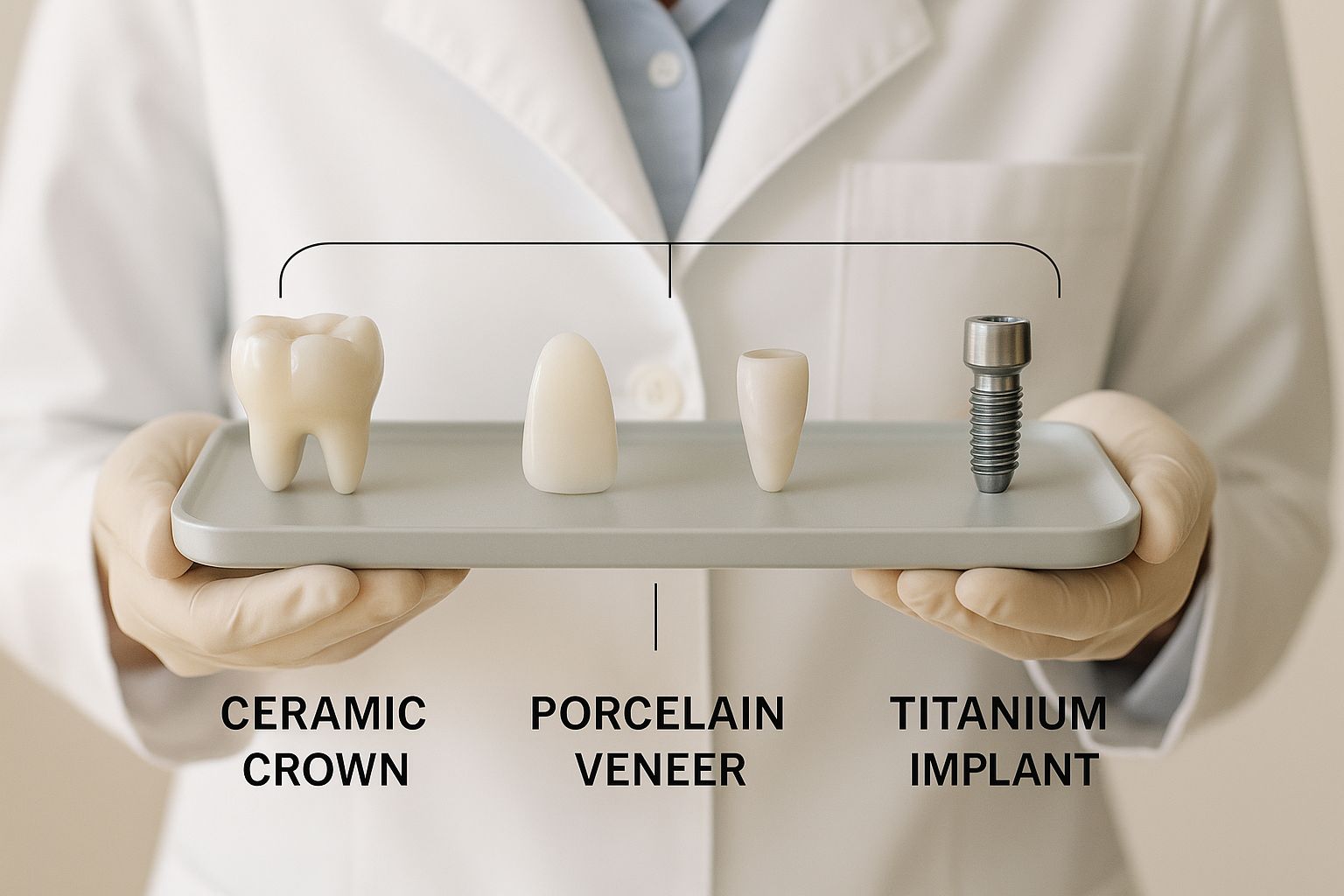
The choice between something like a nice-looking ceramic crown or a super-strong titanium implant will affect both the final look and the cost of your restoration.
Comparing Dental Restoration Materials
The type of material chosen for your restoration is a big factor in the final cost. It's a lot like choosing materials for a kitchen remodel—laminate countertops are cheaper, while granite or quartz costs more. The same is true for your teeth, where each material offers a different mix of cost, strength, and looks.
Here's a quick comparison of the most common options you might see:
| Material Type | Typical Use | Cost Level | Durability | Appearance |
|---|---|---|---|---|
| Amalgam (Silver) | Fillings, especially on back teeth | Low | Very High | Metallic, not tooth-colored |
| Composite Resin | Fillings, bonding, veneers | Moderate | Good | Excellent, matches tooth color |
| Porcelain/Ceramic | Crowns, veneers, inlays, onlays | High | Very Good | Excellent, looks like a real tooth |
| Gold Alloy | Crowns, bridges, inlays | Very High | Excellent | Metallic gold color |
| Zirconia | Crowns, bridges, implants | High | Excellent | Good, can be matched to teeth |
| Titanium | Dental implants | High | Excellent | Not visible once restored |
In the end, your dentist will suggest the best material based on where the tooth is, how you bite, and your budget. But knowing the options helps you have a better conversation with them.
The Materials Used in Your Restoration
As you can see from the table, the material itself is one of the biggest cost factors. A classic metal filling is almost always cheaper than a tooth-colored one. For something bigger like a crown, you have options from strong metal to natural-looking porcelain or zirconia, and each has its own price.
The dental materials market in North America was worth a huge USD 6.49 billion in 2024. This shows just how much money goes into finding and making these high-tech parts. You can see more about this growing market on fortunebusinessinsights.com.
Your Dentist's Location and Expertise
It’s no secret that location matters. A dental office in a big city with high rent will naturally have different prices than a clinic in a small town. These extra costs are part of the business and are included in the fees for service.
Also, a dentist's experience and special training play a big role. A dentist with years of extra training in complex restorations will charge more than a general dentist. You aren't just paying for the treatment; you're paying for their advanced skills to make sure the job is done right.
The Complexity of Your Case
No two mouths are the same, and neither are their dental problems. A simple filling for a tiny, easy-to-reach cavity is a quick, simple job. But what if that same tooth is badly broken? It might need a root canal first, then a post to build it up, and finally, a custom-made crown.
When the job is harder, the cost goes up. The more work, time, and skill your tooth needs, the more your dental team has to put in.
Key Takeaway: Your final bill is a direct result of your own dental needs. A complex treatment with many steps will always cost more than a simple, single-visit fix.
Extra Procedures and Treatments
Sometimes, fixing a tooth isn't just one step. Before the main work can even happen, your dentist might need to do some prep work to make sure the fix is successful and lasts a long time.
For example, a dental implant needs a solid base of jawbone to lock into. If you've lost bone, you might need a bone graft first—a separate treatment that adds to the total cost. In the same way, if your gums are unhealthy, you'll need to treat the gum disease before a new crown or bridge can be placed. These first steps are important for the restoration's success and are added to the overall dental restoration cost.
If you're worried about your gum health, you might find our guide to gum disease treatment cost helpful.
How Dental Insurance Helps Manage Costs
Trying to understand your dental insurance plan can feel confusing. But once you get the hang of it, it's one of the best tools you have for managing your dental restoration cost. Most plans are set up to encourage regular check-ups while still helping with the bigger, more expensive treatments.
A great way to see how this works is to think of the 100-80-50 rule. While every plan is different, this common setup gives you a good idea of what to expect when the bill comes.
The 100-80-50 Coverage Guideline
This isn't a strict rule, but it’s a simple way to see how most insurance companies handle different kinds of dental work. Think of it as a starting point for understanding where your benefits will help the most.
-
100% Coverage for Preventive Care: Insurance companies love prevention. That’s why things like your regular checkups, cleanings, and yearly X-rays are usually fully covered. They know that catching problems early is the cheapest and best way to keep costs down for everyone. Our guide to preventive dental care strategies explains more about why these visits are so important.
-
80% Coverage for Basic Procedures: This group is for common, simple restorative work. We're talking about things like getting a cavity filled or having a simple tooth pulled. These are necessary fixes, and your insurance is there to cover most of the cost.
-
50% Coverage for Major Procedures: This is where the more complex and costly restorations go. Treatments like dental crowns, bridges, implants, and dentures fall into this group. Because they need more advanced materials, lab work, and time, insurance plans usually cover a smaller part of the total fee.
Understanding this structure helps you guess how much your plan will pay. But there are a few other key words in your policy that will really decide what you pay out of your own pocket.
Key Insurance Terms You Should Know
To get a clear picture of your final cost, you need to know three terms that are part of almost every dental plan.
Your deductible is the amount you have to pay yourself before your insurance company starts to help. If your plan has a $50 deductible, for example, you'll cover the first $50 of your treatment costs for the year. After that, your insurance benefits start.
Next is your copay or coinsurance. This is the percentage of the bill that you have to pay after you've met your deductible. So, if your plan covers 80% of a filling, your coinsurance is the other 20%.
Finally, there's the annual maximum. This is the highest amount of money your insurance plan will pay for your dental care in one year. If you have a $1,500 annual max, once your insurance has paid that amount, you have to pay for any other costs until the plan resets. This number is very important to know when you're planning for major work, as it directly affects your total dental restoration cost.
Affordable Options When You Don't Have Dental Insurance
Facing a big dental restoration cost without insurance can feel scary. But not having coverage doesn't have to mean you ignore your oral health. You have more options than you might think, and many paths can lead to affordable, quality care if you know where to look.
One of the best ways to lower your costs is to check out a local dental school clinic. Here, dental students in their final years of training do treatments while being watched by experienced, licensed dentists. Because they are learning centers, the prices for treatments like crowns or fillings are often much lower than what you'd pay at a private office.
Exploring Payment and Financing Solutions
Even if you stay with your trusted private dental office, most have ways to make costs easier to handle. It’s always worth asking about in-house payment plans. This is a common option that lets you spread the total cost over several months without using an outside lender. This should be one of the first questions you ask during your visit.
Another popular choice is third-party financing. Companies like CareCredit or LendingPoint work like medical credit cards. They offer payment plans that can make even big treatments fit into your monthly budget. Many of these services even have special deals, like 0% interest if you pay off the bill within a certain time.
Of course, thinking about healthcare costs can be stressful. It's important to remember that there is help available, including strategies for financial anxiety relief.
A Note on Dental Tourism: Traveling to another country for dental work is another option that is becoming more popular. The rise in dental tourism, especially to countries like Mexico or Thailand, is driven by the promise of big savings on major treatments.
This trend is a growing part of the global dental market, with lower prices being a direct result of different business costs. While it's an interesting idea, it's important to weigh the savings against possible risks, like different standards of care and the difficulty of follow-up visits from thousands of miles away.
Finding the Right Plan for You
In the end, the best path for you depends on your specific needs and what you're comfortable with. Whether you choose a dental school, an in-house plan, or third-party financing, the key is having an open and honest talk with your dentist.
For more complex treatments, you can also look at options like those we cover in our guide on dental implants in Glendale. Don't ever be afraid to ask questions about payment options—a good dental team wants to help you find a solution that works for both your health and your wallet.
Making a Smart Investment in Your Oral Health
It’s easy to be shocked by the dental restoration cost, but I tell my patients to look at it differently. Think of this treatment not as a bill, but as a key investment in your long-term health, confidence, and comfort. Fixing your smile isn't just about looks; it's about improving your ability to eat, speak, and feel good about yourself for years to come.

From my experience, waiting to get needed care almost always leads to bigger, more expensive problems later on. That small cavity you're worried about today can easily turn into a root canal and crown tomorrow. Trust me, dealing with problems early is the best way to protect both your health and your wallet.
Your Path to a Healthier Smile
The best way to move forward is to get a clear, personal plan. Don't let being unsure about the process or the price stop you from getting the healthy smile you deserve.
The most important step is understanding your own situation. A professional visit takes away the guesswork and gives you a clear plan made just for you.
Taking that first step is simple. It all starts with a conversation. Schedule a visit with your dentist to talk about what you need, look at your options, and get an exact cost estimate. This first visit gives you the power to make a smart decision and confidently start your journey to lasting oral health.
A Few Final Questions About Dental Restoration Costs
Even with all the details, you probably still have a couple of questions. That’s perfectly normal. Let's go over some of the most common ones we hear from our patients to make sure you have everything you need to move forward with confidence.
Why Are Dental Implants So Expensive?
It’s true, dental implants often have a higher price at first, and there’s a good reason for it. They are a complete, long-term solution made to last a lifetime. The cost isn't just for the tooth you see; it covers several important parts of a very careful process.
This includes the strong titanium post that acts as a new tooth root, the custom-made crown that looks and feels like a natural tooth, and the surgery itself, which requires special training and great skill.
Think of it like building a new foundation for a house instead of just patching a crack in the wall. While the cost up front is higher, implants are built to last for decades. This durability often makes them a better deal over time compared to other options that might need to be repaired or replaced down the road. You can learn more about the process in our guide on how long it takes to recover from dental implants.
Is It Cheaper To Pull a Tooth Than Restore It?
In the short term? Yes, a simple tooth removal is almost always cheaper than a restoration like a root canal and crown. But looking at it this way doesn't account for your long-term health and money.
Leaving a gap in your smile isn't just about looks. It can cause the other teeth to shift, leading to bite problems, jaw pain, and even more tooth loss. In the long run, replacing that missing tooth with a bridge or an implant will cost much more than it would have to save the original tooth in the first place.
How Can I Get an Accurate Price Quote?
The only way to get a truly accurate price for your specific needs is to come in for a visit. There’s simply no one-size-fits-all answer.
During this visit, we'll do a full exam, which might include X-rays or 3D scans. Then we'll sit down with you to talk about your oral health and what you want to achieve. With that complete picture, we can create a personal treatment plan that clearly lists the recommended work and gives you a detailed breakdown of the exact dental restoration cost.
At Beyond Dental Care, we believe in creating clear, personalized care plans that put your long-term health first. Schedule your consultation today to get the precise answers you need and take the first step toward a healthier, more confident smile. Learn more at https://beyonddentalcare.com.