
Welcome to the ultimate guide for taking care of your partial dentures. If you're new to partials or just want to improve your routine, you've come to the right place. Partial dentures are a great way to get your smile and confidence back, but they need special care to stay comfortable and look good. This guide is about more than just cleaning. It’s about a complete care plan that protects your dentures, your other teeth, and your overall mouth health.
This list gives you pro tips: how to care for your partial dentures like a pro, with advice from the clinical team at Beyond Dental Care. We will cover everything from daily routines to long-term care. This includes gentle solutions perfect for seniors with sensitive gums and mouth tissues. You'll learn the best ways to handle, clean, and store your dentures to make them last for years. We'll also look at modern partial denture options that are designed for comfort and fit your lifestyle.
Get ready to learn the secrets to managing your partial dentures like an expert. By following these tips, you can keep your smile bright, your mouth healthy, and your partials in great shape.
1. Master the Daily Cleaning and Soaking Ritual
The most important part of caring for your partial dentures is a daily cleaning and soaking routine. This two-part process is your best defense against plaque, stains, and bad breath. Think of it as daily hygiene for your dentures, just like brushing your natural teeth. A good daily routine keeps your partials fresh, comfortable, and working well for years.
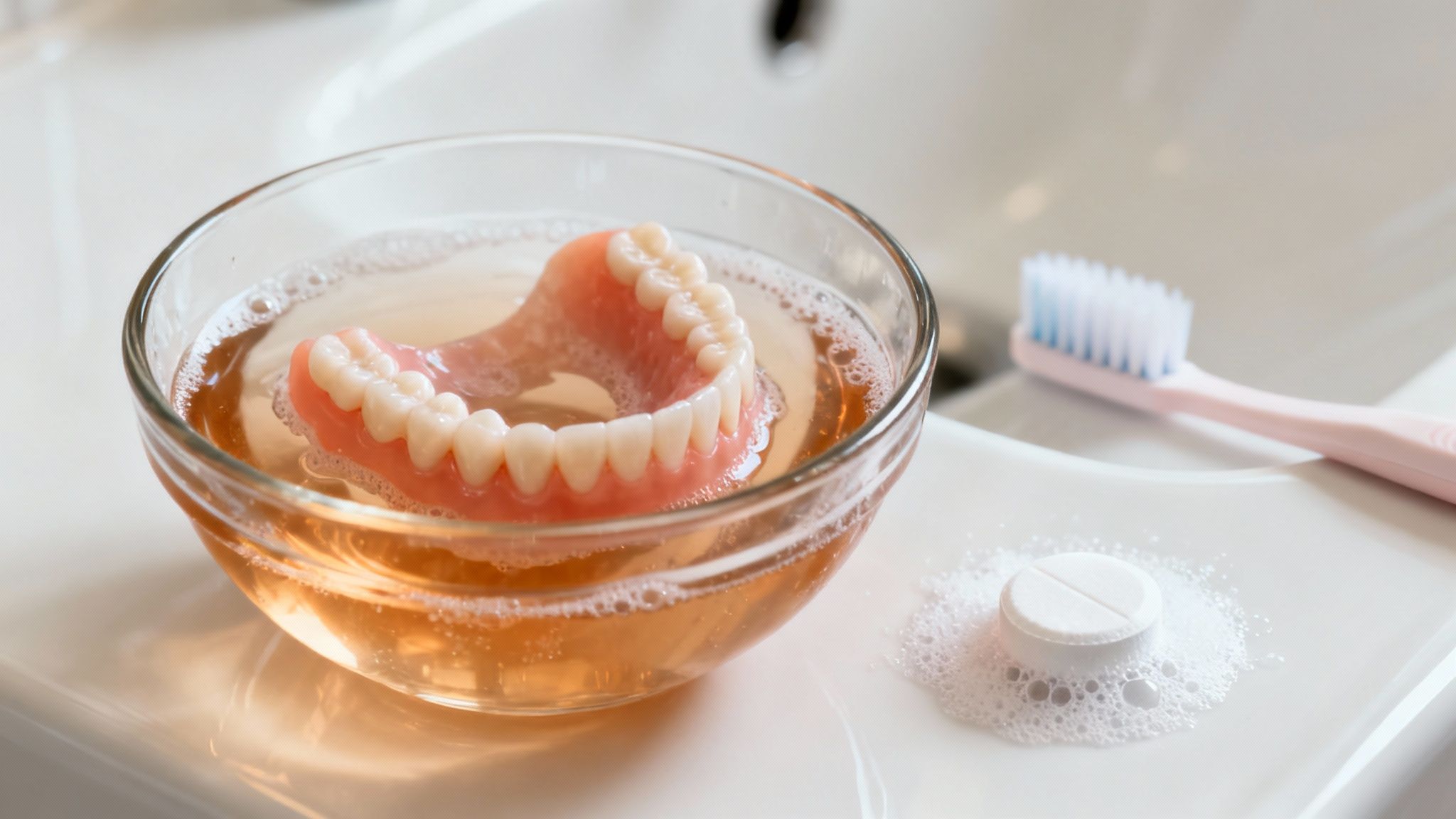
The clinical team at Beyond Dental Care says this simple routine is the best way to prevent common issues like bad breath, stains, and even mouth infections. A clean partial denture not only looks better but also protects your gums and your other natural teeth.
The Two-Step Daily Process
This routine has two simple but important steps: gentle brushing to remove food, followed by a soak to kill germs.
- Gentle Brushing: After every meal, or at least once a day, take out your partial denture and rinse it with lukewarm water to wash off loose food. Then, use a soft-bristled denture brush and a non-abrasive denture cleaner. Do not use regular toothpaste because it's too harsh. Gently brush all surfaces of the denture, especially the clasps that hook onto your natural teeth.
- Sanitizing Soak: After brushing, soak your partial. This step kills tiny germs that brushing might miss and stops the denture material from drying out and getting brittle. Use a special denture soaking solution and follow the directions. Most solutions need a soak of 4-8 hours, so it's perfect to do overnight.
Pro Tips for a Flawless Routine
To make your daily care even better, try these pro tips:
- Protect Against Drops: Always clean your partials over a sink filled with water or over a folded towel. This creates a soft landing and can prevent a break if you drop the denture.
- Use Lukewarm Water Only: Never use hot or boiling water to clean or soak your partials. High heat can permanently warp the denture, causing a bad fit and discomfort.
- Choose the Right Tools: A special denture brush has bristles designed to clean the denture’s unique shape without scratching it.
- Rinse Thoroughly: After soaking, always rinse your partial denture well with cool water before putting it back in your mouth to wash off any leftover cleaning solution.
By mastering this daily routine, you keep your partial denture looking good and lasting longer. You also help your overall oral health by reducing the risk of gum irritation.
For more details on the best products and methods, you can find helpful guides on cleaning dentures at home. A great place to start is this overview on cleaning dentures at home on beyonddentalcare.com.
2. Proper Storage and Maintenance
How you store your partial dentures when they're not in your mouth is just as important as cleaning them. Proper storage protects your dentures from damage, keeps them from warping, and makes sure they stay clean. If you forget this step, your dentures can become dry and brittle, which leads to a poor fit and can even let bacteria grow.
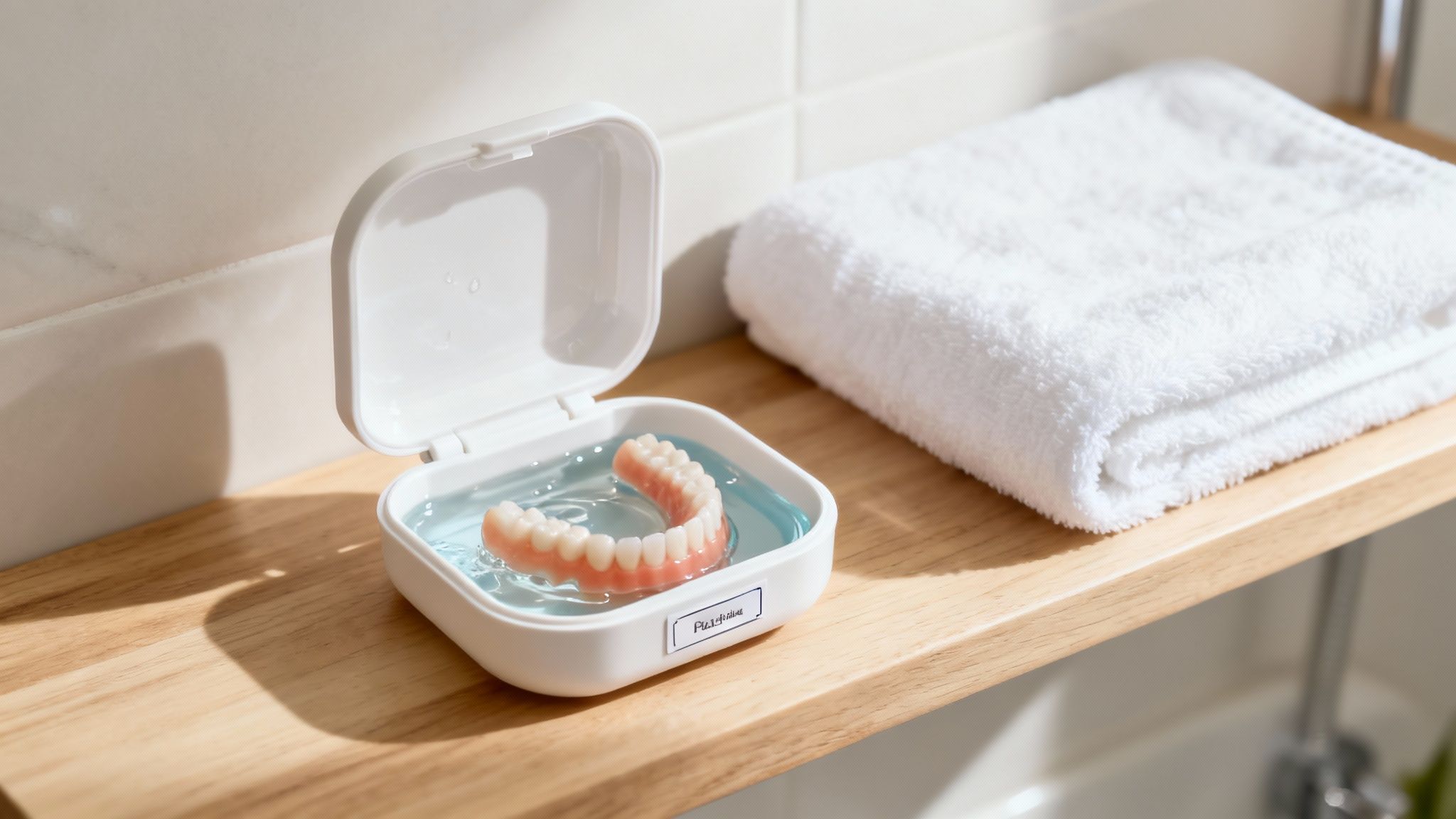
The experts at Beyond Dental Care explain that the material used for partials needs to stay moist. If it dries out, it can change shape, leading to a bad fit that causes sore spots. This is especially important for seniors who may have more sensitive gums. Proper storage keeps the denture stable, comfortable, and ready to wear.
The Essential Steps for Safe Storage
This process is easy and has two main goals: keeping the denture moist and protecting it from damage.
- Always Use a Denture Case: After cleaning and soaking your partial at night, store it in a clean denture case. This protects it from getting knocked over, stepped on, or dirty from germs in the air.
- Keep It Moist: The denture must be kept in liquid to stop it from drying out. You can use plain, cool water or a fresh denture soaking solution. This constant moisture is what stops the material from warping and cracking.
Pro Tips for Flawless Storage
To care for your partial dentures like a pro, add these simple habits to your routine:
- Never Use Tissue: Don't wrap your partial in a paper towel or tissue. This is a common way dentures get thrown away or damaged by accident.
- Use Cool, Distilled Water: If you store your partial in water, using distilled water is a good idea. Tap water can have minerals that build up on the denture over time.
- Find a Safe Spot: Keep the denture case in a safe place where children or pets can't reach it, like a bedside table or a bathroom cabinet shelf.
- Change the Liquid Daily: Always use fresh water or solution each time you store your dentures. Reusing the liquid can let bacteria grow.
- Label Your Case: If you live with others or are traveling, labeling your denture case is a smart way to avoid mix-ups.
By storing your dentures correctly, you prevent common causes of damage and discomfort. This simple habit keeps your partial fitting well and makes it last longer.
For those thinking about new, more comfortable dentures, it's important to understand how to take care of them. You can explore modern options like flexible partials by talking with the team at Beyond Dental Care about their denture services.
3. Regular Professional Check-ups and Adjustments
While daily home care is very important, it's only half of the story. Scheduling regular professional check-ups is a key pro tip for taking care of your partial dentures. These visits, usually every six to twelve months, are needed to make sure your denture fits right, works well, and supports your overall mouth health. Your dentist is your partner in care, giving you an expert check-up you can't do on your own.
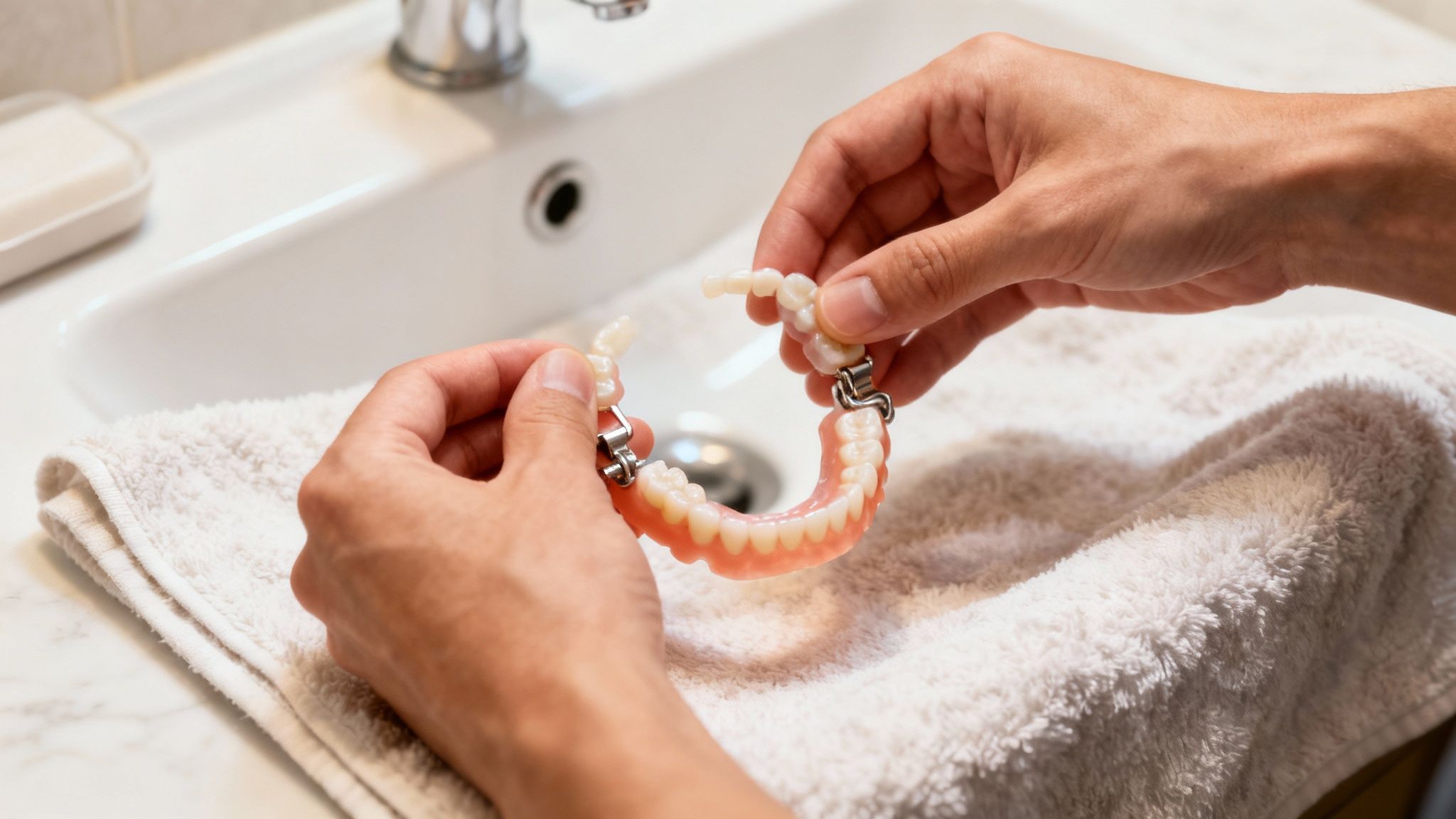
The clinical team at Beyond Dental Care points out that these appointments are a great way to prevent problems. Your mouth changes over time—your gums and jawbone can shift, which affects how your partial denture fits. Regular check-ups let your dentist find and fix small issues before they become big ones.
Why Professional Oversight is Critical
During these visits, your dentist does several key things that you can't do at home.
- Fit and Function Assessment: Your dentist will check if your denture is loose or has any pressure points. A poor fit can cause painful sore spots and make it hard to chew. This is a big concern for seniors with sensitive mouth tissues.
- Health of Natural Teeth and Gums: The dentist will look at the natural teeth that hold your partial in place, making sure they are healthy and that the clasps aren't causing damage. They'll also check your gums for any irritation.
- Professional Cleaning and Maintenance: A professional cleaning can remove hardened plaque (tartar) and tough stains that you can't get off at home. Your dentist can also polish the denture to make it look new again.
Pro Tips for Your Dental Visits
To get the most out of your appointments, follow these tips:
- Schedule in Advance: Book your next check-up before you leave the office. Keeping a regular schedule of every 6-12 months is important.
- Speak Up Immediately: If your partial feels loose, clicks when you talk, or causes pain, don't wait for your next appointment. Call your dentist right away for an adjustment.
- Ask About Relining: Over time, your gums can shrink, making a once-snug denture feel loose. Ask your dentist if a reline, which adds a new surface to the part of the denture that touches your gums, could make it fit better.
- Keep Your Records: Keep a file with your denture information. This can be helpful if you need to see a different dentist.
By going to regular professional check-ups, you are taking an active step to keep your partial denture comfortable and working well for a long time. This is a key part of how to care for your partial dentures like a pro.
Knowing what to expect can also help with any anxiety about your visits. You can learn more about what happens during a routine dental cleaning and check-up on beyonddentalcare.com.
4. Maintain Excellent Oral Hygiene of Remaining Natural Teeth
While your partial denture is important, the health of your other natural teeth is the foundation for its success. Partial dentures use these teeth and your gums for support. If you don't take care of them, you can get cavities, gum disease, and even lose the teeth that hold your partial in place. This could cause your partial to fail. Caring for your partial dentures like a pro means paying just as much attention to your natural teeth.
The clinical team at Beyond Dental Care stresses that a healthy mouth works as a team. The gums that support your partial and the teeth that hold its clasps must be in great shape to prevent pain, bad breath, and expensive repairs. Taking care of your whole mouth protects both your natural smile and your denture.
A Unified Approach to Oral Health
A good daily routine is key to keeping your natural teeth and gums strong enough to support your denture. This means more than just a quick brush.
- Diligent Brushing: Brush your natural teeth at least twice a day with a soft-bristled toothbrush and fluoride toothpaste. When your partial is out, pay extra attention to the teeth that the clasps touch, as plaque can build up there.
- Dedicated Flossing: Daily flossing is a must. Carefully floss between all your natural teeth, and be sure to curve the floss around the base of each tooth that supports your partial. This removes plaque where a brush can't reach.
- Regular Professional Cleanings: Schedule dental check-ups and cleanings every six months. Professional cleanings remove tartar that you can't get off at home and let your dentist check the health of your anchor teeth.
Pro Tips for Peak Oral Hygiene
To improve your oral care routine, use these expert tips:
- Consider a Water Flosser: For hard-to-reach spots, especially around the clasps of your partial, a water flosser is a great tool for washing away food and bacteria.
- Use a Recommended Rinse: If your gums get inflamed easily, your dentist might suggest an antimicrobial or fluoride rinse for extra protection.
- Watch Your Diet: Be careful with sticky, sugary foods that can get stuck around your natural teeth and the partial's clasps. These foods can speed up tooth decay.
- Never Sleep With Your Partial In: Unless your dentist tells you to, always take your partial out at night. This gives your gums and tissues a chance to rest and recover.
By focusing on the health of your remaining teeth, you are helping your partial denture stay stable and comfortable for the long run. This complete approach is a key part of how to care for your partial dentures like a pro.
For a full guide on building a great daily routine, you can find more information in these oral hygiene tips on beyonddentalcare.com.
5. Handle Dentures with Care and Use Proper Removal Techniques
Partial dentures are carefully made, and while they are strong, they can break. Learning how to handle and remove them gently is a key part of caring for your partial dentures like a pro. Using too much force or dropping them are common reasons for breaks, chips, and bent clasps. This can lead to expensive repairs and a bad fit. Treating your partials with care protects them and keeps them working well.
The team at Beyond Dental Care says that gentle handling is very important, especially for seniors whose hand strength may change. Having a safe and careful routine for putting in and taking out your dentures prevents damage to the denture and protects your delicate gums and other teeth. The right technique avoids putting stress on the clasps and the base of the denture.
The Safe Removal Process
Follow these steps to take out your partial denture safely.
- Prepare a Safe Area: Always stand over a sink filled with water or over a folded towel. This creates a soft landing, which greatly reduces the risk of a break if you drop the denture.
- Use Both Hands: Never try to take out your partial with one hand. Place the fingers of both hands on either side of the denture at the same time.
- Loosen the Clasps: For partials with metal clasps, use your fingernails to gently unhook the clasps from your teeth. Apply even, gentle pressure to loosen them on both sides.
- Lift Evenly: Once the clasps are loose, lift the denture up and away from your gums. Don't wiggle or twist it, as this can bend the clasps. It should come out easily.
Pro Tips for Gentle Handling
Add these professional habits to your daily routine for gentle denture care:
- Never Use Force: If your partial denture feels stuck, do not force it out. This can damage the clasps or your natural teeth. Talk to your dentist if it's often hard to remove.
- Avoid Biting Down: Never use your teeth to "bite" a partial denture into place. This can put too much pressure on the clasps and the fake teeth, leading to cracks. Always use your fingers to press it into place.
- Store It Safely: When your partial is not in your mouth, it should be in a protective denture case. Leaving it out on a counter is a common way for it to get lost or broken.
- No Foreign Objects: Never use tools or tweezers to pry your denture out. Only use your fingers.
Learning a gentle removal method is a skill every partial denture wearer needs. It helps your denture last longer and protects your supporting teeth and gums from strain.
For those looking at modern dentures like flexible partials or needing help with their current one, professional advice is key. You can find more information on denture solutions in Glendale, AZ at beyonddentalcare.com.
6. Avoid Damaging Substances and Habits
A big part of caring for your partial dentures like a pro is protecting them from harmful things. Certain foods, chemicals, and habits can cause permanent damage, leading to warping, stains, or breaks. Avoiding these things is the best way to protect your denture, keep it comfortable, and make it last longer.
The dental experts at Beyond Dental Care say that prevention is always better and cheaper than repair. Knowing what can harm your partial denture helps you make better choices every day. These habits are especially important for seniors, whose mouths may be more sensitive to irritation from a damaged denture.
Key Substances and Habits to Avoid
This protection plan is about avoiding specific things that can hurt your partials.
- Harsh Cleaning Agents: Never use household cleaners, bleach, or regular toothpaste on your partial dentures. These products are too rough and can scratch the surface, weaken the material, and damage metal clasps. Only use non-abrasive denture pastes and special soaking solutions.
- Damaging Foods and Drinks: Very hard foods like nuts or hard candy can put too much pressure on your denture and might break it. Very sticky foods like taffy can pull on the clasps and loosen the fit over time.
- Extreme Temperatures: Putting your partials in hot or boiling water is a common mistake that can permanently warp the material. This ruins the fit, making the denture uncomfortable. Always use lukewarm or cool water for cleaning.
Pro Tips for Long-Term Protection
To improve your protective care, use these pro tips in your daily life:
- Limit Staining Agents: Drinks like coffee, red wine, tea, and dark sodas can stain your denture. You don't have to give them up, but drinking them in moderation and rinsing your mouth and denture afterward can help.
- Avoid Tobacco and Alcohol: Smoking or using tobacco will quickly stain your partials yellow or brown. It can also cause dry mouth, which increases your risk for gum problems. Too much alcohol can also dry out and damage the denture material.
- Don't Use Whitening Products: Whitening toothpastes are made for natural teeth and are too harsh for dentures. They can cause scratches and will not change the color of the denture teeth.
- Be Mindful While Chewing: Try to chew food on both sides of your mouth at the same time. This spreads the biting pressure evenly and prevents too much stress on one side of the partial.
By avoiding these damaging things, you take control of how long your denture lasts. This smart approach is a key part of how to care for your partial dentures like a pro, keeping them comfortable and looking good for years.
7. Ensure Proper Fit and Comfort Through Adjustment and Relines
A key part of caring for your partial dentures like a pro is knowing that your mouth changes over time. The bone and gums that support your partial denture naturally shrink. This means a perfect-fitting partial today might feel loose a year from now. Regular adjustments and occasional relines are the professional way to keep a secure and comfortable fit for the long term.
The clinical team at Beyond Dental Care says that managing the fit of your denture is important for preventing problems like sore spots, trouble chewing, and damage to your other teeth. A loose partial can create pressure points, leading to gum irritation. Staying ahead of these changes with professional help ensures your denture works with your mouth, not against it.
The Two-Step Fit Management Process
Managing your partial's fit involves two types of professional service: small adjustments for quick fixes and bigger relines for long-term changes.
- Minor Adjustments: If you feel a specific sore spot, your dentist can often make small, quick adjustments in the office. This involves carefully shaping the denture to relieve pressure and improve comfort.
- Periodic Relining: A reline adds new material to the side of your denture that touches your gums to match their new shape. This is needed when the whole partial feels loose. A "hard reline" uses strong material for a long-lasting, exact fit and is the most common type of maintenance.
Pro Tips for a Flawless Fit
To keep your partial denture comfortable and working well, use these tips:
- Schedule a Reline Check: Plan to have your first reline check-up about 6-12 months after getting your new partial. Your dentist can then suggest a schedule based on how your mouth is changing.
- Report Issues Immediately: Don’t wait for your check-up if your denture feels loose, moves when you talk, or causes new sore spots. These are signs that you need an adjustment.
- Never Adjust It Yourself: Never try to bend clasps, file the plastic, or use store-bought reline kits. You can easily cause serious damage to the denture or hurt your gums and teeth.
- Plan Ahead for the Process: A lab reline gives the best fit but means you will be without your partial for a day or two. Talk to your dentist about the timeline to make plans.
By actively managing the fit of your partial denture, you improve your daily comfort and also protect the health of your whole mouth. A well-fitting denture spreads chewing forces evenly, protecting your gums and other teeth.
Proper fit is not a one-time thing but an ongoing partnership with your dentist. To learn more about the process, check out this guide on the denture hard reline process on beyonddentalcare.com.
Partial Denture Care: 7-Point Comparison
| Care Practice | 🔄 Implementation complexity | ⚡ Resources & speed | ⭐ Expected effectiveness/quality | 💡 Ideal use cases | 📊 Key advantages |
|---|---|---|---|---|---|
| Daily Cleaning and Soaking | Low — simple daily routine | Low resources (soft brush, cleaner, soak); ~10–15 min/day + overnight | High ⭐ — prevents plaque, odor, staining | All partial denture wearers for routine maintenance | Prevents buildup and odor; extends denture lifespan |
| Proper Storage and Maintenance | Low — straightforward habit | Low (denture case, water/solution); quick daily action | Moderate–High ⭐ — prevents warping/damage when stored correctly | Overnight storage, travel, times when not wearing dentures | Protects shape; prevents accidental damage and loss |
| Regular Professional Check-ups and Adjustments | Medium — scheduled clinic visits | Higher (appointment time + cost); every 6–12 months | Very High ⭐ — ensures fit, detects issues early | Loose dentures, routine preventive care, after discomfort | Early problem detection; relines/repairs; prolonged function |
| Maintain Excellent Oral Hygiene of Remaining Natural Teeth | Medium — comprehensive daily care | Moderate (toothpaste, floss, water flosser, cleanings) | Very High ⭐ — preserves anchor teeth and gum health | Patients with natural teeth supporting the partial denture | Prevents decay/periodontal disease; maintains denture stability |
| Handle Dentures with Care & Proper Removal Techniques | Low — learn and practice correct technique | Low (time to practice; remove over sink/towel) | High ⭐ — reduces breakage risk | Every removal/handling event, new denture users learning technique | Minimizes fractures/repairs; protects natural teeth and tissues |
| Avoid Damaging Substances and Habits | Medium — requires behavior change | Low ongoing cost; discipline required | High ⭐ — preserves appearance and material integrity | Smokers, frequent coffee/wine drinkers, exposure to heat/chemicals | Reduces staining, material degradation, and repair needs |
| Ensure Proper Fit & Comfort Through Adjustments/Relines | Medium–High — professional procedures | Higher (procedures, possible temporary prosthesis, repeated appointments) | Very High ⭐ — restores fit, function, and comfort | After bone changes, persistent looseness, periodic maintenance | Restores retention and chewing function; more cost-effective than replacement |
Partnering with a Pro for Lifelong Oral Health
Learning how to care for your partial dentures like a pro is about creating a set of small, regular habits. Together, these habits make a big difference for your mouth health and your life. By using these expert tips in your daily routine, you turn your partial denture into a successful, long-term health investment.
This is a partnership where your daily care works together with professional advice. You now have the knowledge you need to take care of your denture and protect your smile for years.
Your Daily Commitment to a Healthy Smile
Think of your partial denture care in three parts: clean, protect, and maintain. The most important tips from our guide fit into these groups, giving you a simple plan for success.
- Meticulous Cleaning: Brushing your denture daily, soaking it in the right solution, and never using harsh products is your first defense against plaque, stains, and bacteria. This protects both your denture and your other teeth.
- Proactive Protection: Handling your partial with care, using a soft towel in the sink, and storing it correctly at night prevents accidental damage. Avoiding hard, sticky foods protects the clasps and frame from too much stress.
- Consistent Maintenance: This is where working with your dental team is so important. Cleaning your natural teeth and gums is just as key as caring for the denture. Regular professional check-ups make sure your denture fits right and let your dentist find problems early.
These pro tips for how to care for your partial dentures like a pro are meant to be simple and easy to do. They help you, especially seniors who may have sensitive mouths, stay comfortable without a complicated routine. The goal is to make your partial feel like a natural part of you.
Looking Ahead: Your Path to Lasting Comfort
In the end, learning how to care for your partial denture gives you freedom and confidence. It means enjoying food, speaking clearly, and smiling without worry. It also means protecting your investment and preventing future dental problems. For seniors, planning for overall healthcare costs is also important. For example, understanding senior care financing options can be a key part of staying healthy.
Your job is to manage your oral health every day, and your dentist's job is to be your expert partner. Don't be afraid to call them if you feel any pain, notice a change in fit, or have questions. A well-cared-for partial denture shows your commitment to your health. By following these tips, you are setting yourself up for a future of confident, healthy smiles.
Ready to partner with a team that specializes in gentle, patient-focused denture care? At Beyond Dental Care, Dr. Dariene Lazore and her team in Glendale, Arizona, provide the expert adjustments, professional cleanings, and compassionate guidance you need to wear your partial dentures with confidence. Schedule your consultation today and experience the difference professional partnership makes.