
Keeping your dentures clean at home isn't just about looking good—it's a vital part of your daily routine that directly impacts your overall health. When you let cleaning slide, you open the door to painful gum inflammation, persistent bad breath, and tough stains that can really diminish your confidence and well-being.
The Importance of a Daily Denture Care Routine
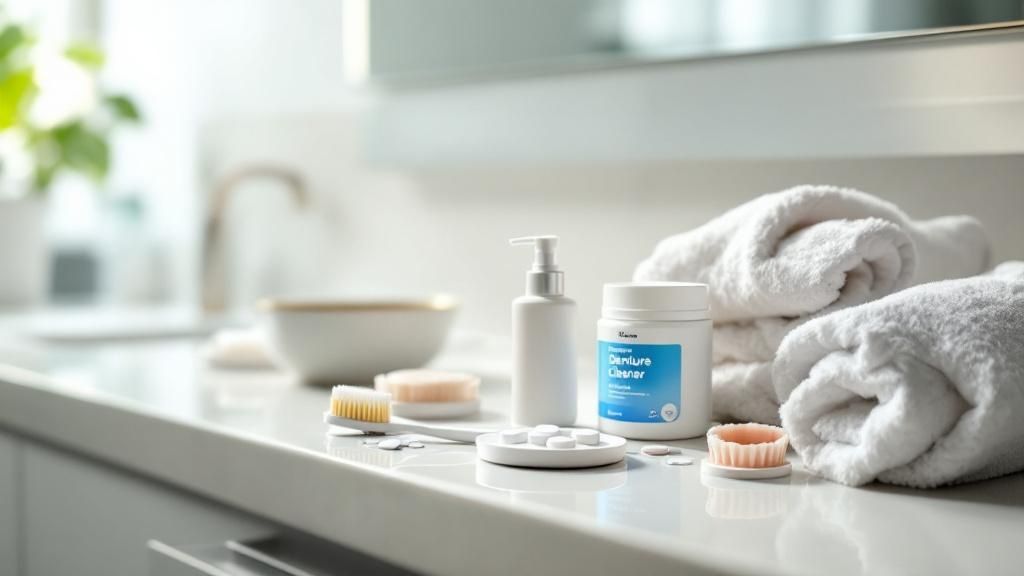
It helps to think of your dentures just like you would natural teeth. They're constantly in contact with everything you eat and drink, plus all the bacteria that live in your mouth. A consistent cleaning schedule is really your best defense against the common oral health problems that pop up from improper care.
If you skip daily cleaning, a sticky film of bacteria known as plaque quickly builds up on the denture surface. This can lead to some nasty conditions, like denture stomatitis, which is a type of yeast infection that makes the mouth red, swollen, and sore.
Protecting Your Health and Your Investment
Good cleaning habits do more than just keep infections at bay. They also protect the investment you made in your dentures by keeping them looking great and helping them last longer. A well-maintained set of dentures can serve you well for years, but neglect often leads to discoloration and damage that can mean expensive repairs or even a premature replacement.
We're seeing a growing awareness around this, which is even reflected in market trends. The global denture cleaning solution market is expected to hit about $2.5 billion by 2025. This surge is largely driven by an aging population and a much better public understanding of oral health. It’s a clear sign that people are finally recognizing denture care as a key piece of personal wellness.
A daily care routine isn't just about keeping your dentures looking new. It's about actively managing the health of your entire mouth to ensure comfort, prevent irritation, and maintain confidence in your smile.
Beyond the Dentures Themselves
A truly complete care routine also involves cleaning your mouth after you take your dentures out. You'll want to gently brush your gums, tongue, and the roof of your mouth with a soft-bristled toothbrush. This simple step stimulates circulation and sweeps away any leftover plaque. It's a small habit that goes a long way in keeping the underlying tissues healthy, which in turn ensures a much better and more comfortable fit when you put your dentures back in.
It can be helpful to see denture hygiene as part of a larger picture of daily health maintenance, not just another chore. Understanding the broader context of personal care, which you can learn more about through general caregiving resources, can help integrate these steps into a natural and manageable daily rhythm.
Your Practical Daily Denture Cleaning Method
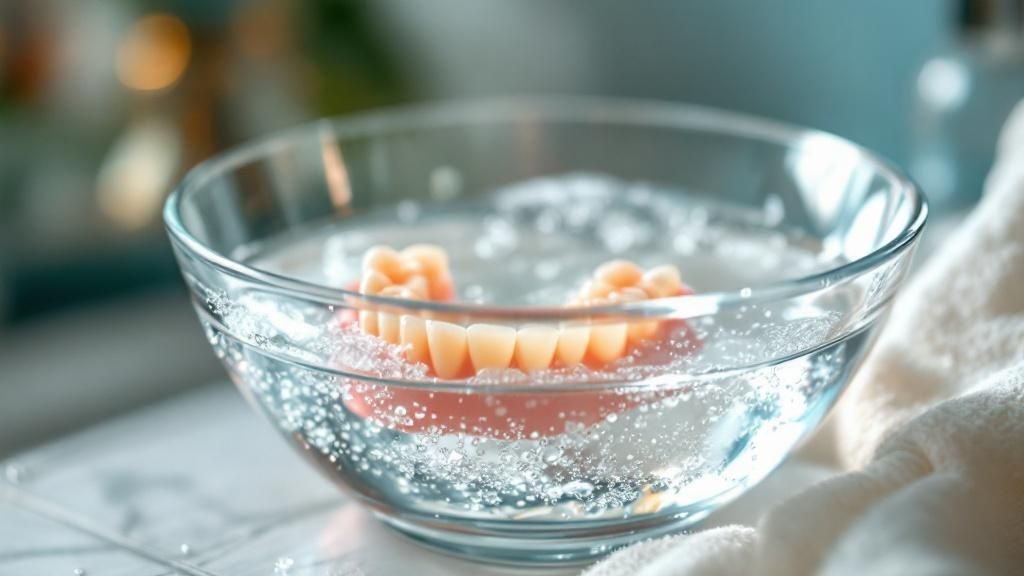
Let's be honest—the key to keeping your dentures in great shape isn't some complicated, time-consuming ritual. It’s all about building a simple, consistent daily routine. When you get into the habit, cleaning dentures at home feels less like a chore and more like a natural part of your day, just like brushing your teeth used to be.
A great habit to start immediately is rinsing your dentures after every single meal. Just pop them out and run them under cool water. This simple step dislodges any loose food bits before they can get trapped under the denture, which is a common cause of serious gum irritation and discomfort.
It's a small action with a big impact, especially since most denture care happens right at home. The growing demand for effective, easy-to-use denture cleaning products is huge, driven by a global aging population. You can see just how widespread this need is in recent industry reports tracking the market.
The Core Cleaning Process
For your main daily cleaning—which most people do before bed—you only need two things: a soft-bristled denture brush and a non-abrasive denture cleaner. One of the biggest mistakes I see people make is using regular toothpaste. It seems logical, but toothpaste is designed for tough tooth enamel and is far too abrasive for the softer acrylic of dentures.
Using toothpaste will create microscopic scratches all over the surface. Over time, these tiny grooves become a breeding ground for bacteria and plaque, leading to stubborn stains and odors that just won't go away. Always stick to a cleaner made specifically for dentures, whether it’s a paste, gel, or cream.
Here's a practical tip that has saved countless dentures from a tragic end: always clean them over a folded towel or a sink filled with water. It’s a simple safety net that provides a soft landing if they slip from your hands, preventing a costly chip or crack.
Pro Tip: When brushing, hold the denture securely in the palm of your hand. Use gentle, circular motions to cover every surface, paying extra attention to the nooks and crannies where plaque loves to hide.
Don't Forget Your Mouth
Once your dentures are sparkling clean for the night, you're not quite finished. Taking care of your mouth is just as important for your overall comfort and health. After taking your dentures out, grab a very soft toothbrush and gently brush your gums, tongue, and the roof of your mouth.
This does two critical things:
- It removes plaque. Just like on teeth, plaque builds up on your oral tissues during the day.
- It stimulates circulation. The gentle brushing motion gets the blood flowing in your gums, helping to keep the tissue healthy and firm.
Healthy gums create a much better foundation for your dentures, which means a more secure and comfortable fit. This final step ties everything together, ensuring your entire mouth stays healthy and making your experience as a denture wearer far more pleasant.
Choosing the Right Denture Cleaning Products
Walking down the denture care aisle at the pharmacy can feel a bit overwhelming. You've got tablets, creams, soaks, and pastes all vying for your attention. It's easy to get confused, but picking the right products is a critical part of cleaning dentures at home. The right choice keeps them sanitary, comfortable, and stain-free for years to come.
First things first: never use products made for natural teeth on your dentures. Regular toothpaste is the biggest offender. It's far too abrasive and will etch microscopic scratches into the denture's surface. Those tiny scratches are a perfect hiding place for bacteria and can lead to stubborn stains and discoloration over time. Stick to products made specifically for denture materials.
Denture Cleanser Soaks vs. Creams
Your main choice will be between a soaking cleanser and a cleaning cream or paste. Each one has its place in a solid cleaning routine, and the best option often depends on your lifestyle and personal preference.
Soaking cleansers, which usually come as effervescent tablets or concentrated liquids, are all about convenience. You just drop your dentures into the solution, and it does the hard work for you, breaking down plaque and disinfecting the surface with almost no effort. They are fantastic for killing germs and lifting the light, daily stains.
On the other hand, non-abrasive creams and pastes give you a more hands-on clean. You use them with a soft-bristled denture brush to manually scrub away any stubborn plaque and stuck-on food particles. This method gives you total control, letting you focus on tricky spots like the grooves in the teeth or around the metal clasps of a partial denture.
Key Takeaway: Honestly, the best results I've seen in my patients come from using both. A daily scrub with a cream removes the physical debris, and a follow-up soak zaps any lingering bacteria. It's a powerful one-two punch for denture hygiene.
Essential Tools for the Job
Beyond the cleansers themselves, having the right tools makes a huge difference. A dedicated denture brush is non-negotiable. These aren't like regular toothbrushes; they are specially designed with two heads. The larger, flat-bristled head is for cleaning the broad, smooth surfaces, while the smaller, tapered head is perfect for getting into the tight inner crevices and around clasps.
This image highlights the best way to brush for a safe and effective clean.
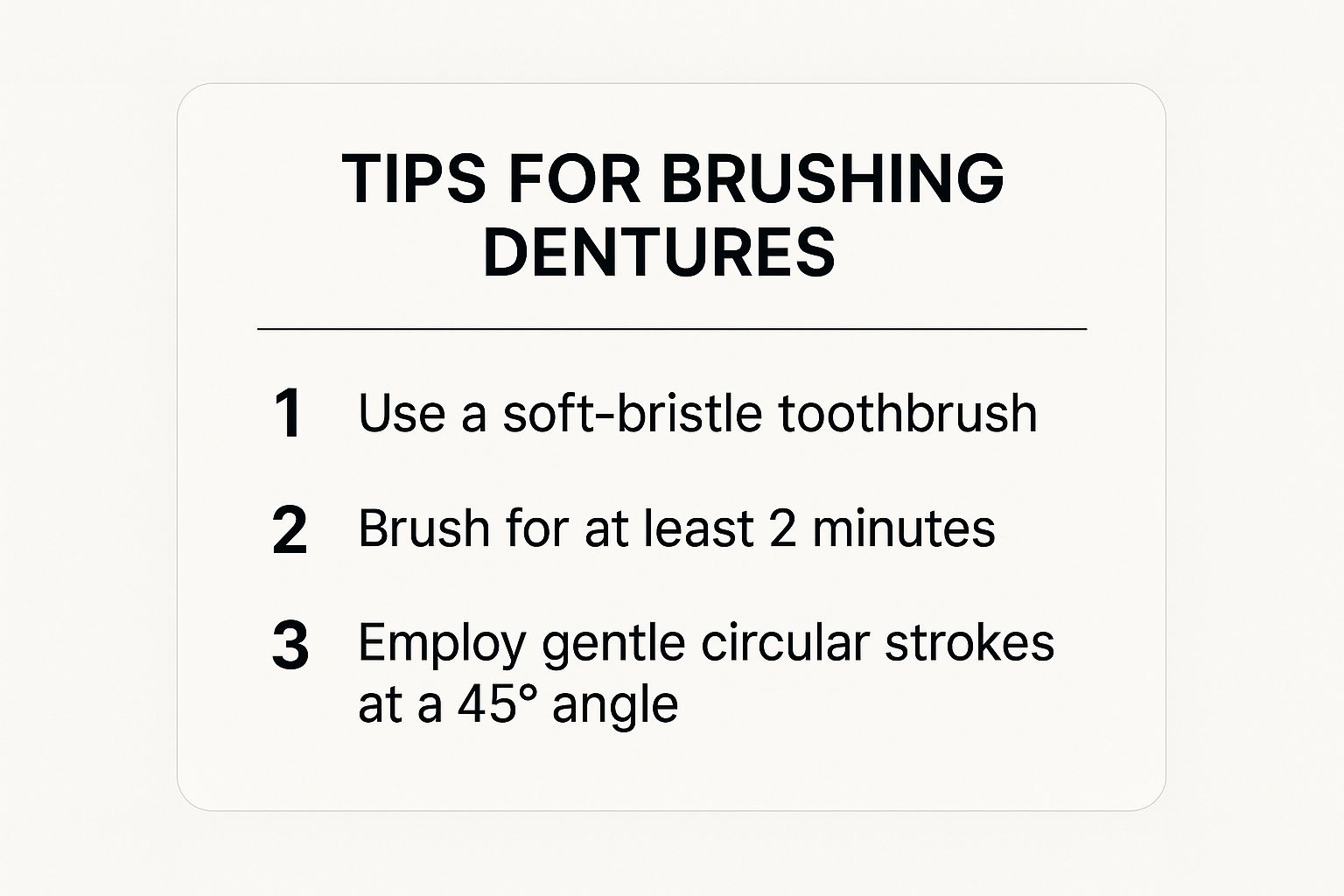
As you can see, the technique is just as important as the product. Always use a soft brush with gentle, circular motions to avoid damaging the denture.
Another tool I always recommend is a denture bath or soaking case. It gives you a clean, secure spot to soak your dentures overnight, making sure they stay fully submerged and safe from getting accidentally knocked off the bathroom counter. A closed case also keeps them away from airborne dust and germs while they soak.
Comparing Denture Cleaning Products
To help simplify your decision, this table breaks down the most common types of denture cleaning products. It compares their primary uses, pros, and cons to help you figure out which one (or combination) is the best fit for your daily routine.
| Product Type | Best For | Pros | Cons |
|---|---|---|---|
| Effervescent Tablets | Daily disinfection, convenience | Easy to use, kills germs effectively | May not remove heavy, set-in stains |
| Soaking Solutions | Overnight cleaning, stain removal | Provides deep cleaning, can whiten | Can be messy, some aren't safe for metal |
| Creams & Pastes | Manual cleaning, plaque removal | Allows targeted scrubbing, removes debris | Requires manual effort, must be non-abrasive |
Ultimately, whether you wear full or partial dentures, the best products are the ones you'll actually use every single day. Consistency is what protects your oral health and keeps your smile looking its best.
If you're ever unsure about which products are right for you, our team at Beyond Dental Care is always here to give you personalized recommendations during your next visit.
Time for a Deeper Clean: Advanced Denture Care and Stain Removal
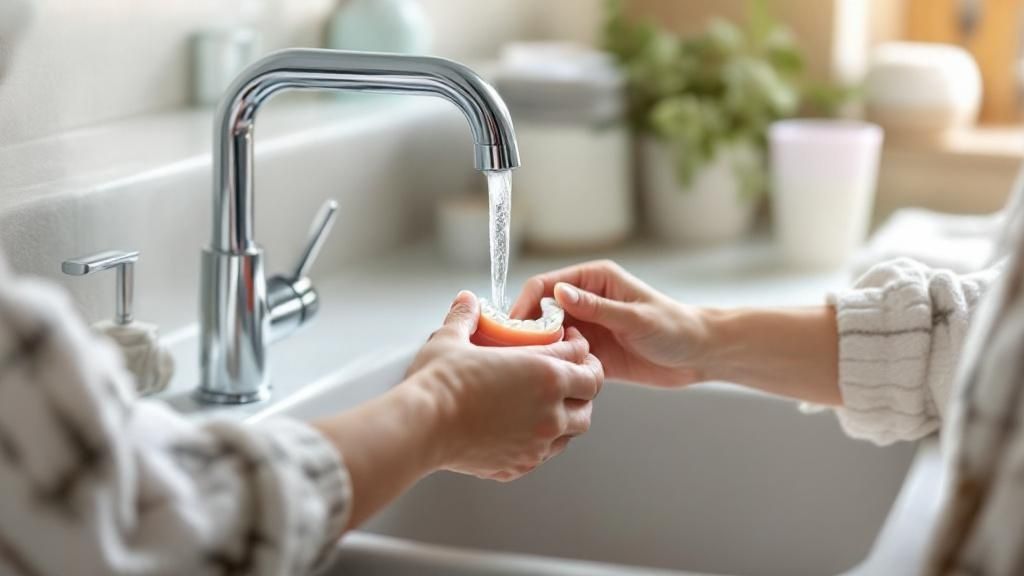
Even if you follow a perfect daily cleaning routine, some days your dentures just need a little extra TLC. Stubborn stains from coffee, tea, or that occasional glass of red wine can settle in over time. You might also notice mineral deposits from your saliva hardening into what we call calculus.
When this happens, it's time to step up your game. These deeper cleaning techniques are perfect to add to your routine once a week or so. They go beyond a simple brushing to dissolve tough buildup and lift discoloration that a regular scrub just can't seem to budge. Let’s walk through a few safe and effective methods you can easily do at home.
Let an Overnight Soak Do the Hard Work
One of the most powerful deep-cleaning methods is also one of the easiest: an overnight soak. Using effervescent denture tablets or a specialized soaking solution is a game-changer. These products are designed to create a fizzing, bubbling action in the water that works its way into every tiny crevice, dislodging particles and penetrating the porous acrylic.
They are incredibly effective because they:
- Lift Stains: The active ingredients get to work breaking down the molecules that cause discoloration, gently lifting them right off the denture surface.
- Kill Germs: Most soaks contain powerful antibacterial agents, killing the microorganisms responsible for bad breath and gum irritation.
- Dissolve Plaque: An extended soak softens and dissolves hardened plaque, which makes it incredibly easy to brush away any residue the next morning.
For the best results, make it an overnight affair. Just drop your dentures into a denture bath with the solution before you go to bed. This gives the product plenty of time to work its magic without any extra effort from you.
Using Diluted Vinegar for Mineral Buildup
Ever notice a chalky, white film on your dentures that no amount of brushing will remove? That's likely calculus—a combination of hardened plaque and mineral deposits. Before you get frustrated, there’s a simple and safe home remedy that works wonders: a diluted vinegar solution.
The mild acidity in white vinegar is fantastic for dissolving these stubborn mineral deposits without harming the denture's acrylic. Just be sure you never use full-strength vinegar, as it can be too harsh on the material.
To get this right, mix a solution of one part white vinegar to one part cool water. Let your dentures soak in this mixture for about 20-30 minutes. Afterward, take them out and gently brush away the loosened calculus with your denture brush. It should come off much more easily. Don't forget to rinse them thoroughly with plain water to get rid of any lingering vinegar taste and smell.
Taking care of dentures is a major focus in public health, especially since issues like periodontal disease—which affects about 19% of adults worldwide—are a leading cause of tooth loss. This drives the demand for easy-to-use home hygiene products, from fast-dissolving tablets to ultrasonic cleaners. You can discover more about the denture cleaners market on StraitsResearch.com to see how the industry is evolving.
Common Denture Cleaning Mistakes to Avoid
Knowing the right way to clean your dentures is one half of the battle. The other half? Knowing what not to do. It’s just as important for protecting your investment.
Some of the most common habits might seem harmless, but they can cause irreversible damage to your dentures. This can lead to a poor fit, serious discomfort, and even costly repairs down the road. Sidestepping these mistakes is a huge part of successfully cleaning dentures at home.
Ditch the Abrasives: Why Toothpaste and Hard Brushes Are Out
One of the biggest mistakes I see people make is reaching for their regular toothpaste. It feels logical, right? But your everyday toothpaste is made for tough tooth enamel, not the much softer acrylic that dentures are made from. Its abrasive particles will create thousands of microscopic scratches over time.
These scratches dull the finish and, worse, become magnets for bacteria and stubborn stains. You absolutely must use a non-abrasive cleaner specifically designed for dentures.
The same logic applies to your brush. A hard-bristled toothbrush will cause the same scratching damage as gritty toothpaste. Instead, stick to a brush with very soft bristles or, even better, grab one made specifically for dentures. They often have dual heads designed to clean every nook and cranny gently and effectively.
Damaging Products and Practices to Steer Clear Of
Beyond your brush and paste, certain household items can spell disaster for your dentures. It’s absolutely critical to keep your appliance away from harsh chemicals and extreme temperatures, which can permanently warp or weaken it.
Here are a few specific things to avoid at all costs:
- Household Bleach: While you might think of it as the ultimate disinfectant, bleach can seriously weaken the denture’s acrylic, making it brittle. It’s also notorious for discoloring the pink, gum-colored portions, leaving them with an unnatural, blotchy appearance.
- Boiling or Hot Water: Never, ever use hot water to rinse or soak your dentures. The high temperature can warp the acrylic material, permanently changing its shape. Once a denture is warped, it will no longer fit your gums correctly, leading to sores, irritation, and trouble chewing.
A proper fit isn’t just about comfort—it's essential for the denture to function correctly. Once a denture has been warped by heat, it almost always needs to be professionally adjusted or completely replaced.
The Danger of Letting Your Dentures Dry Out
Another critical mistake is leaving your dentures out on the nightstand to dry. The acrylic material they're made from is designed to stay moist. When it dries out completely, it can become brittle and much more likely to crack or break under the normal pressures of chewing.
To prevent this, always store your dentures in a proper soaking solution or at least a glass of cool water when you’re not wearing them.
The best solution is a covered denture bath. It keeps them fully submerged, clean, and safe from being accidentally knocked onto the floor—a surprisingly common accident! By avoiding these common errors, you'll ensure your dentures stay comfortable, functional, and looking great for years to come.
Still Have Questions About Denture Care? We’ve Got Answers
Even after you’ve got a solid daily routine down, questions are bound to pop up. When it comes to something as important as your dentures, you want to feel confident you’re making the right choices. We've put together some of the most common questions we hear from patients to give you the clear, expert answers you need.
How Often Should I Replace My Denture Brush and Soaking Case?
Think of your denture brush just like your toothbrush—it has a limited lifespan. You should plan on replacing it every 3-4 months, or even sooner if you see the bristles getting frayed or flattened. Once those bristles are worn down, they just can't get into all the tiny nooks and crannies of your dentures to clean them effectively.
Your soaking case, or denture bath, needs a daily cleaning with simple soap and water to stop that slimy biofilm from building up. If you start to see deep scratches, cracks, or heavy staining that won't come clean, it's time to replace the whole case. Those little imperfections are the perfect hiding spots for bacteria, which completely defeats the purpose of a clean soak.
Is It Safe to Use Baking Soda to Clean My Dentures?
This is a popular question, and for a good reason. While baking soda is a go-to for many household cleaning tasks, it's a definite "no" for your dentures. It might seem like a harmless powder, but on a microscopic level, baking soda is abrasive.
Scrubbing your dentures with it every day will slowly create tiny scratches on the acrylic surface. These scratches will not only make your dentures look dull over time but, more importantly, they create new surfaces for stains and bacteria to grab onto, making them even harder to keep clean in the long run.
Always stick to cleaners specifically designed and tested for denture materials. Using the wrong product can cause gradual damage that can't be reversed.
I Have Partial Dentures with Metal Clasps. What Do I Need to Know?
An excellent and very important question! When you have partials with metal components, you have to be a little more selective about your cleaning products, especially the soaking solutions.
- Always Read the Label: Before you buy any effervescent tablet or soak, check the packaging to make sure it's safe for metal parts. Some formulas contain ingredients that can tarnish or even corrode the clasps over time.
- Brush Gently but Thoroughly: Pay close attention when brushing around the clasps. Plaque loves to build up where the metal meets your natural teeth, and that can put you at a higher risk for cavities on those teeth.
What Should I Do If I Accidentally Drop My Dentures?
First things first, don't panic. The most important thing is to give them a very careful inspection. Go to a well-lit area and look over every single surface. You’re checking for any cracks, chipped teeth, or bent clasps. Even a tiny hairline fracture can get worse and throw off the entire fit.
Whatever you do, never try to fix them yourself with super glue or another household adhesive. These glues are often toxic and can permanently ruin the denture material, making a professional repair impossible. If you see any damage at all, call your dentist right away. They have the right tools and materials to assess the problem and perform a safe, proper repair to get your dentures fitting comfortably again.
Whether you have a question about daily care or you're dealing with accidental damage, having a dental team you can trust is key. The team at Beyond Dental Care is here to provide expert, patient-focused solutions for all your dental needs. If you have any concerns or need a professional to take a look, schedule your visit with us today.