
For millions of people, the idea of a dental visit brings up feelings of anxiety. In fact, dental fear is one of the top reasons people avoid getting the care they need. A recent report, the Q4 2025 Insight Report, even found that for many adults, fear is a bigger barrier than cost. But what if your idea of dentistry is based on old experiences? Today’s dental offices are built for comfort, not fear.
Many patients, especially those who haven't been to a dentist in years, don’t realize how much has changed. There are now many ways to reduce discomfort and stress. While things like gentle relaxation techniques for anxiety can help, modern dentistry also has its own solutions. This article will show you beyond the drill: 5 ways modern dentistry makes your visit feel easier and stress-free. We'll cover technologies and gentle methods that put you in control and turn a feared appointment into a positive step for your health.
1. Nitrous Oxide (Laughing Gas) Sedation
For many patients, just sitting in a dental chair can cause anxiety. This fear is a common reason adults and seniors avoid the dentist. The good news is that modern dentistry has moved past the old "grin and bear it" way of thinking. Now, there are safe and effective options to keep you comfortable. One of the most trusted methods is nitrous oxide sedation, also known as laughing gas.
This gentle option is a colorless, odorless gas you breathe through a small, comfortable mask over your nose. It doesn’t put you to sleep. You stay awake and can talk to your dentist the whole time. Within minutes, you’ll feel a warm, relaxed feeling that reduces anxiety and pain. This makes it a great choice for patients who are nervous about their visit.
Why It Works for Anxious Patients
The best part about nitrous oxide is its simplicity and how much control you have. The effects start quickly, and Dr. Dariene Lazore at Beyond Dental Care can adjust the level at any time to keep you comfortable. Once the mask is removed, the gas wears off in about five minutes. This means you can safely drive yourself home or go back to your day without feeling groggy.
Key Insight: Nitrous oxide helps patients feel in control. Being awake and able to talk while feeling relaxed can change a stressful visit into a calm and easy one.
Practical Tips for Your Visit
A little preparation can make your experience with nitrous oxide even better.
- Eat Lightly: Have a small meal a few hours before your appointment to avoid feeling sick.
- Communicate Openly: Tell your dentist if you have any breathing problems, like asthma or a stuffy nose.
- Breathe Normally: Just breathe through your nose like you normally would.
- Speak Up: If you feel too dizzy or uncomfortable, let the dental team know. They can adjust the gas right away.
At Beyond Dental Care, we know that getting over dental fear is a big step. We offer comfort-focused options like nitrous oxide because we put our patients first. If you have been putting off a visit, it’s worth learning about the different types of dental sedation that can make your experience positive and stress-free.
2. Cone Beam Computed Tomography (CBCT) 3D Imaging
Not knowing what to expect is a big cause of dental anxiety. Patients worry about what the dentist will find or if something will go wrong. Modern imaging technology helps remove this fear by replacing guesswork with clear details. Cone Beam Computed Tomography (CBCT) gives a very detailed, 3D view of your mouth, jaw, and face. It’s much more advanced than a flat, traditional X-ray.
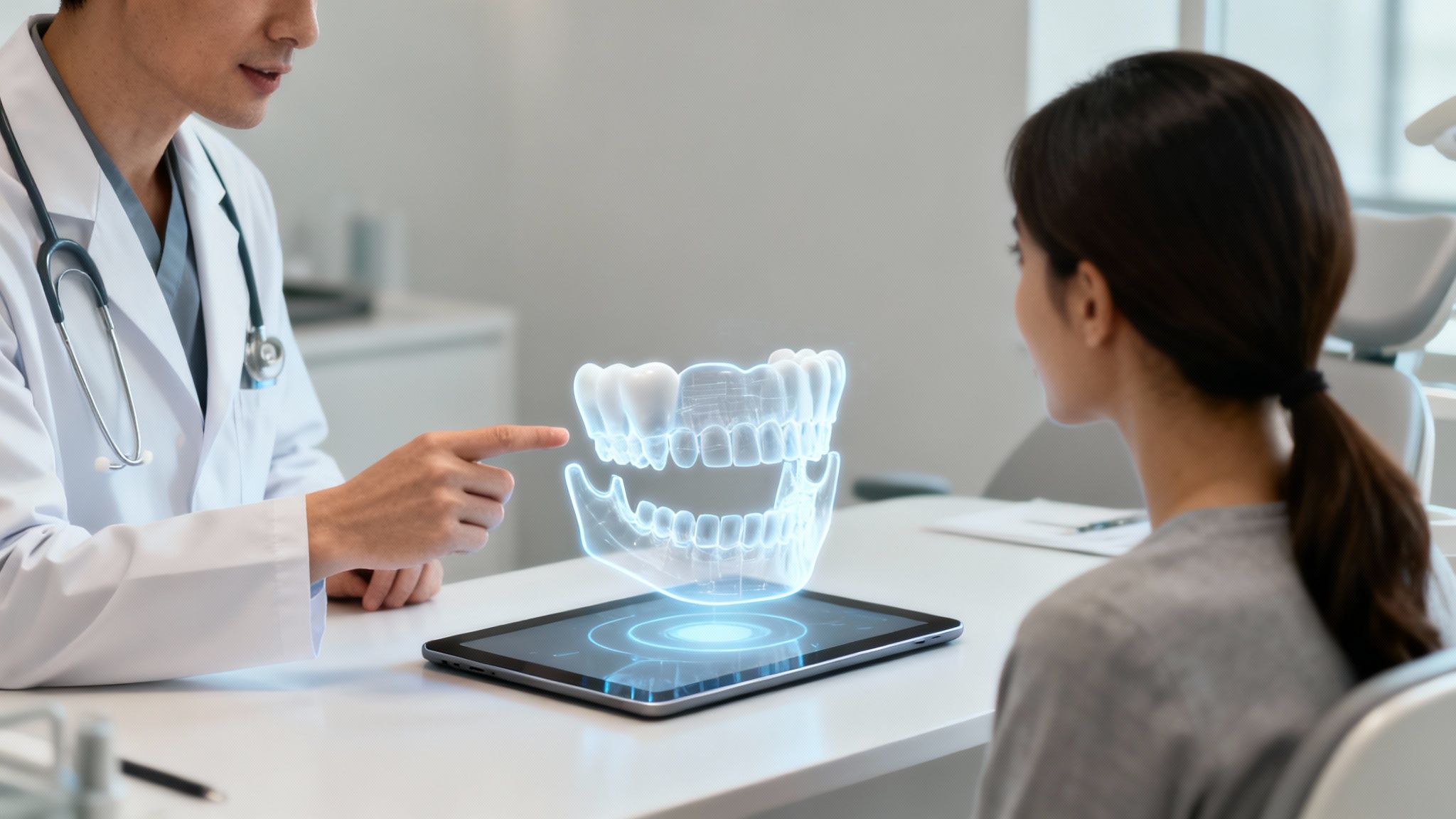
This scan creates a digital 3D model. It lets your dentist see nerves, bone thickness, and how your teeth are positioned with amazing clarity. This is very important for procedures like dental implants, wisdom tooth removal, or difficult root canals. Dr. Dariene Lazore can plan your treatment perfectly before she even starts. This leads to shorter, less invasive procedures and a more comfortable outcome for you.
Why It Works for Anxious Patients
Knowing what to expect is calming. A CBCT scan gives both you and your dentist a full picture of your oral health. There are no surprises. This detailed planning means less "exploratory" work during your procedure, which is a common fear. Dentists often use advanced imaging and may work with outside experts like teleradiology services and imaging specialists to get the best results.
Key Insight: CBCT technology changes treatment from reactive to proactive. By planning every detail ahead of time, your dentist can ensure a smoother, faster, and much less stressful experience.
Practical Tips for Your Visit
If your dentist suggests a CBCT scan, it shows they are dedicated to giving you the best care.
- Ask for a Tour: Ask your dentist to show you the 3D images on the screen. Seeing it for yourself can make the process less mysterious.
- Discuss the Plan: Ask how the scan will be used in your procedure. Understanding the "why" builds trust.
- Inquire About Radiation: CBCT uses a low dose of radiation, but you can always discuss any concerns. Modern machines are very safe.
- Request a Copy: You can ask for a digital copy of your scan for your own health records.
At Beyond Dental Care, we believe that advanced technology helps us provide gentle, patient-first care. By using tools like CBCT, we make sure our patients in Stetson Valley and Hillcrest Ranch get accurate diagnoses and comfortable treatments. You can learn more about our advanced digital dental imaging and how it makes for a stress-free visit.
3. Laser Dentistry and Minimally Invasive Techniques
For many people, the sound and vibration of a dental drill cause the most anxiety. The good news is that modern dentistry has an alternative that goes beyond the drill. Laser dentistry uses focused beams of light to do many procedures with great precision. Often, no anesthetic or stitches are needed. This method is quieter, more comfortable, and changes the entire patient experience.
The laser works by removing tiny amounts of tissue or decay. It can be used to reshape gums or treat small cavities. The light also cleans the area and seals blood vessels as it works. This means there is much less bleeding and a lower risk of infection. This gentle technique is a big deal for patients who fear needles and the numb feeling that follows a procedure.
Why It Works for Anxious Patients
Laser dentistry deals directly with the things that trigger dental fear. It replaces the drill's sound and pressure with quiet, precise light. This creates a much calmer setting. Procedures are often faster, and healing time is much shorter because the treatment is so gentle. For example, gum specialists now use lasers to treat gum disease with less pain and swelling. This focus on comfort helps patients, especially seniors, feel more relaxed.
Key Insight: Minimally invasive laser technology changes the focus from "fixing a problem" to "gently restoring health." This helps anxious patients feel safe and in control.
Practical Tips for Your Visit
If you want to know more about laser dentistry, here are a few simple steps.
- Ask Specific Questions: Ask your dentist which procedures they use a laser for, like removing cavities or treating canker sores.
- Always Wear Protective Eyewear: The dental team will give you special glasses to protect your eyes from the laser. It is very important to keep them on.
- Discuss Your Insurance: Check with your insurance company to see what they cover for laser procedures.
- Follow Healing Instructions: Healing is usually faster, but your dentist will give you specific care instructions to get the best result.
At Beyond Dental Care, using advanced tools is part of our commitment to gentle, patient-first care. We find that high-tech dentistry is becoming the new standard because it helps patients and removes old barriers to getting care.
4. Virtual Reality (VR) Distraction and Immersion Therapy
For patients with a strong fear of the dentist, the sights and sounds of the office can be overwhelming. The sound of a drill or the sight of dental tools can make it hard to relax. Modern dentistry has a new solution that takes your mind somewhere else: Virtual Reality (VR) distraction therapy.
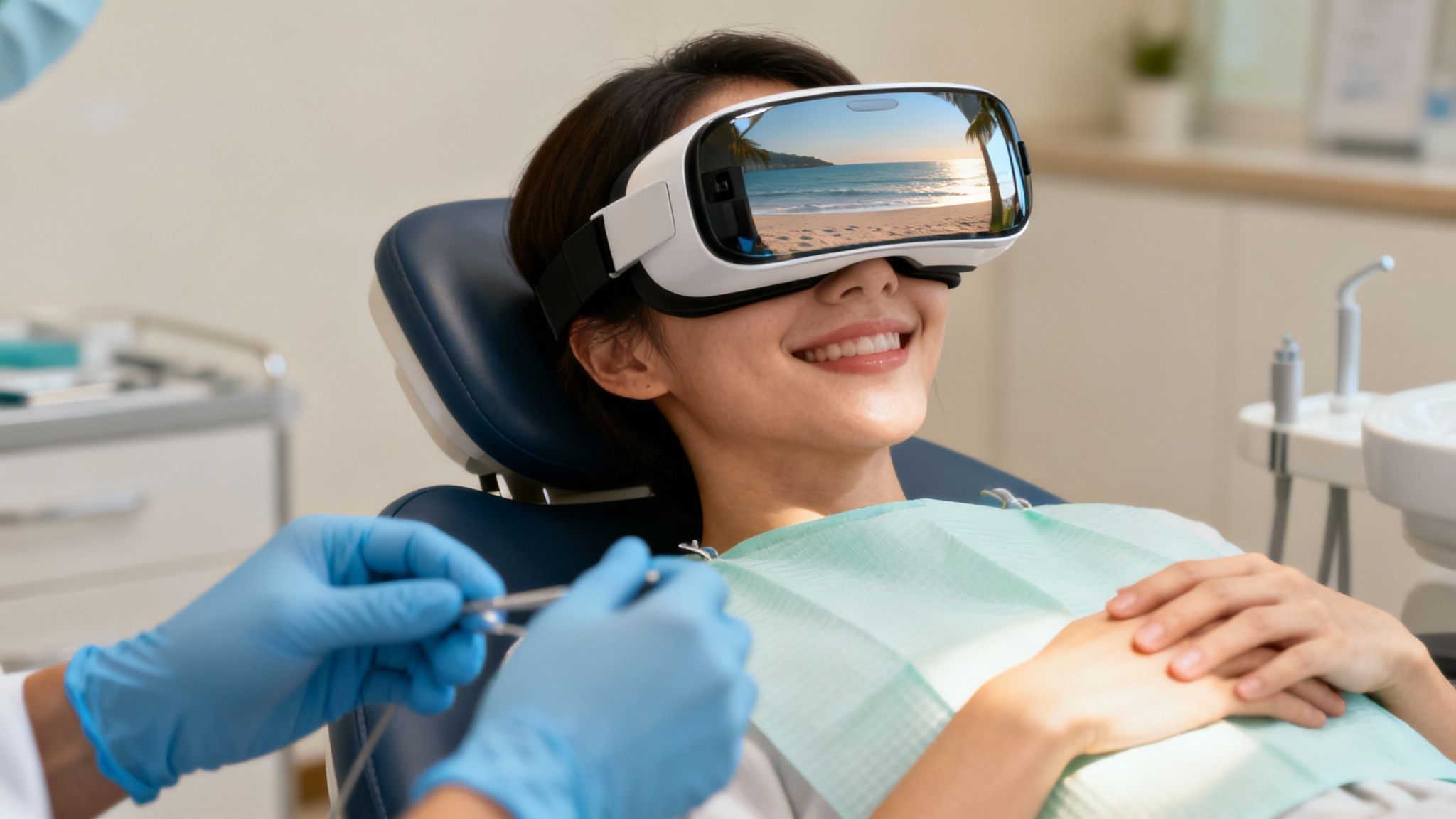
This high-tech comfort option involves wearing a light VR headset that puts you in a peaceful, digital world. Instead of focusing on the dental work, you could be on a quiet beach, floating through a forest, or watching a movie. This technique blocks out the things that cause anxiety. It lets your brain focus on something pleasant while your dental work gets done.
Why It Works for Anxious Patients
VR therapy is powerful because it deals with the mental side of dental fear. It uses your sense of sight and sound to take you to another world. This greatly reduces how much you notice what is happening in the dental chair. It works well for patients who find that music isn't enough to calm their nerves. The experience makes time feel like it's passing faster and helps you separate from the dental office environment.
Key Insight: VR gives patients an "escape" from their anxiety. It changes focus from fear to fun, turning a dental visit from something to dread into something manageable.
Practical Tips for Your Visit
To get the most from a VR-assisted appointment, a little preparation can help.
- Arrive Early: Give yourself a few minutes to get used to the headset before your appointment.
- Choose Your Scene: Ask the dental team to show you the different worlds you can choose from. Pick one that you find relaxing.
- Communicate Comfort: Let the staff know if the headset feels too tight or if you feel any motion sickness. They can adjust it for you.
- Start Small: If you're new to VR, you might want to try it for a shorter procedure, like a cleaning, to get used to it.
At Beyond Dental Care, we believe that using advanced technology helps create a true patient-first environment. By finding new ways to help you relax at the dentist, we can provide better care for our community, making sure every visit feels safe, calm, and stress-free.
5. Conscious Sedation (IV Sedation) with Anesthesia Monitoring
For patients with serious dental anxiety or those having complex procedures, a deeper level of relaxation is often needed. This is where conscious IV (intravenous) sedation offers a great solution, going beyond the drill to create a very calm experience. It's one of the biggest advances in modern dentistry for managing fear and ensuring comfort during long treatments like oral surgery.
Also called "twilight sedation," this method gives you sedative medicine directly into your bloodstream through an IV. You are not fully asleep but in a state of deep relaxation. You can still respond to the dental team. Patients usually feel no pain and often have little or no memory of the treatment afterward. This makes it a great choice for people who find it impossible to relax at the dentist.
Why It Works for Anxious Patients
IV sedation is effective because it provides a deep level of comfort that is carefully controlled. Unlike pills, which can be unpredictable, IV medicine allows the dental team to manage the sedation level in real-time. During the entire procedure, a trained professional monitors your heart rate, blood pressure, and oxygen levels to ensure you are completely safe.
Key Insight: IV sedation removes the barrier of fear by creating a memory-free and pain-free experience. For many people, it is the key to getting necessary dental care they would otherwise avoid.
Practical Tips for Your Visit
Proper preparation is very important for a safe IV sedation appointment. Following these steps will ensure you have the best experience.
- Follow Fasting Rules: You will need to avoid food and drink for at least six to eight hours before your procedure. This is a critical safety rule.
- Arrange for a Ride: You cannot drive for 24 hours after IV sedation. Make sure a responsible adult can drive you home and stay with you for a few hours.
- Dress for Comfort: Wear loose, comfortable clothing with sleeves that can be easily rolled up for the IV.
- Disclose Your Full Medical History: Be sure to tell Dr. Dariene Lazore about all medications, supplements, and health conditions you have. Honesty is key to your safety.
At Beyond Dental Care, we provide a safe, private, and judgment-free space for every patient. If dental anxiety has stopped you from getting care, learning how to prepare for oral surgery and understanding options like IV sedation can give you the confidence you need.
Comparison: 5 Stress-Reducing Dental Solutions
| Method | Implementation Complexity 🔄 | Resource Requirements ⚡ | Expected Outcomes ⭐ / 📊 | Ideal Use Cases | Key Advantages ⭐ | Practical Tips 💡 |
|---|---|---|---|---|---|---|
| Nitrous Oxide (Laughing Gas) Sedation | 🔄 Low–Moderate — gas delivery system + trained staff | ⚡ Moderate — equipment, cylinders, scavenging; cost-effective per use | ⭐ High for mild–moderate anxiety; ⏱ rapid onset (3–5 min) & quick recovery | Pediatric anxiety, routine anxious adults, short procedures | ⭐ Reversible, minimal side effects, patient remains conscious | 💡 Inform about respiratory issues; eat lightly; breathe through nose |
| Cone Beam CT (CBCT) 3D Imaging | 🔄 High — capital purchase + staff training and software | ⚡ High — expensive hardware, software, radiation safety measures | ⭐ Improves diagnostic accuracy; 📊 reduces surprises and optimizes surgical planning | Implant planning, complex orthodontics, oral surgery, unclear 2D findings | ⭐ 3D visualization & virtual planning; detects hidden pathology | 💡 Request provider explanation and digital copy; ask about dose |
| Laser Dentistry & Minimally Invasive Techniques | 🔄 Moderate–High — device-specific training and protocols | ⚡ High — costly lasers ($15k–$100k+), PPE, maintenance; variable insurance coverage | ⭐ Effective for targeted tissue work; 📊 reduces bleeding, pain, and healing time | Gum contouring, LANAP, selective cavity prep, pediatric anxiety reduction | ⭐ Precise tissue targeting, sterilization effect, less anesthesia/sutures | 💡 Ask which procedures use lasers; request protective eyewear; check coverage |
| Virtual Reality (VR) Distraction & Immersion Therapy | 🔄 Low — straightforward hardware & content setup; staff orientation | ⚡ Moderate — headsets, software licenses, updates; per-station cost ($5k–$20k) | ⭐ Very effective for anxiety/pain reduction; 📊 studies show ~60–70% anxiety reduction | Severe dental anxiety, phobic or traumatized patients, long procedures, pediatrics | ⭐ Non-pharmacologic, improves patient experience, can reduce sedation need | 💡 Arrive early to acclimate; start short sessions; report any motion sickness |
| Conscious Sedation (IV) with Anesthesia Monitoring | 🔄 Very High — requires licensed providers, continuous monitoring & protocols | ⚡ Very High — anesthesia drugs, monitoring equipment, recovery staffing; higher per-procedure cost | ⭐ Excellent for severe anxiety/complex cases; 📊 enables multiple/long procedures in one visit | Severe phobia, extensive oral surgery, implant placement, full-mouth rehab | ⭐ Deep anxiolysis with amnesia; highly controllable and efficient workflow | 💡 Schedule pre-op consult, fast 6–8 hrs, arrange ride home, disclose meds |
Your Comfort is the New Standard of Care
The old-fashioned dental office, with its scary sounds and discomfort, is a thing of the past. Modern dentistry is about more than just fixing teeth; it's about changing the patient experience. The days of just "getting through" a visit are over. Today’s advances, from gentle lasers and precise 3D imaging to calming sedation options, are all designed for one main goal: your comfort and peace of mind.
This change is important because for many people, the biggest barrier to good oral health isn't cost, but fear. Research shows that dental anxiety keeps countless adults from getting the care they need. The five innovations in this article are a powerful answer to that fear. They show that you can have complex work done without the stress you might remember. Knowing about these options helps you find a dentist who puts your well-being first.
These tools work best when used by a caring and compassionate team that listens. Understanding what’s available beyond the drill: 5 ways modern dentistry makes your visit feel easier and stress-free is your first step. The next is finding a practice that uses this technology with a judgment-free, patient-first approach. Your health is too important to put on hold because of anxiety. With today’s gentle care, it doesn’t have to be.
Ready to experience a dental visit where your comfort comes first? At Beyond Dental Care, Dr. Dariene Lazore and her team offer a boutique, private-practice experience. She combines modern technologies with personalized care to help nervous patients feel in control and relaxed. If you’re in Stetson Valley, Hillcrest Ranch, or the Upper West Side of Phoenix and have been putting off a visit due to fear, schedule a consultation at Beyond Dental Care. Discover how a gentle and modern dental experience can improve your health and confidence.