
It’s a story we hear all the time: your dentures used to fit like a glove, but now they slip and slide when you eat or talk. This isn’t because your dentures were poorly made; it’s a completely natural part of the process. A denture hard reline is the go-to, long-term fix to bring back that snug, secure fit by resurfacing the inside of your denture.
Why Your Perfect Dentures Now Feel Loose
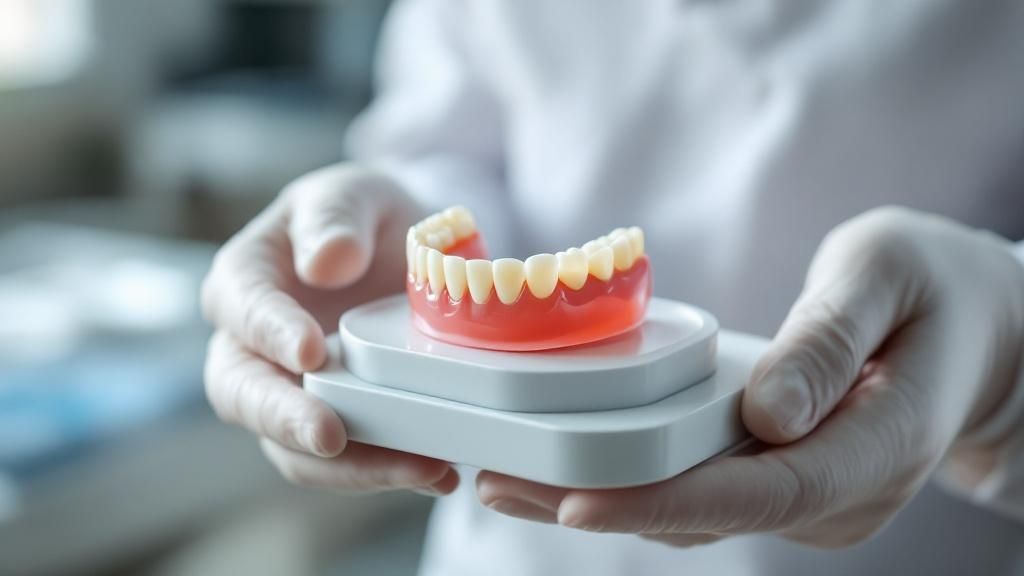
Think of your jawbone and gums like the foundation of a house. When your dentures were first crafted, they were a perfect custom fit for that foundation. But over time, the ground underneath naturally shifts and settles.
This gradual change in your mouth is a process called bone resorption. Once natural teeth are gone, the jawbone no longer receives the signals it needs to maintain its density and shape, so it slowly begins to shrink. This happens to every single person who wears dentures—it’s just a matter of time.
The Source of the Looseness
As your jaw and gums change, the denture that was made for their original shape starts to feel loose. This creates tiny, but meaningful, gaps between the inside surface of the denture and your gums.
That new space is the direct cause of all the annoying issues you might be noticing:
- Slipping and Movement: The denture has room to rock and shift when you’re trying to eat, speak, or even laugh with confidence.
- Painful Sore Spots: All that movement causes the denture to rub against your gums, creating painful irritation and sores.
- Trapped Food: Food particles can easily get stuck in those gaps, which is not only uncomfortable but can lead to bad breath and other hygiene problems.
A loose fit isn't just an annoyance—it's a clear signal that the anatomy of your mouth has evolved. A denture hard reline addresses this head-on by essentially "repaving" the inside of your denture, making it a perfect match for the current shape of your gums once again.
This is such a routine part of denture care that the global market for denture reline materials is expected to skyrocket, reaching over USD 750 million by 2033. This massive growth just underscores how vital relining is for maintaining a comfortable and functional smile.
Of course, a great fit is only half the battle. For tips on keeping your newly relined prosthesis in fantastic shape, you might be interested in our guide on cleaning dentures at home. Combining a proper reline with good daily hygiene is the secret to keeping your smile comfortable and confident for years to come.
What Is a Denture Hard Reline
A denture hard reline is a common and highly effective procedure where we add a new layer of hard, durable acrylic to the inside surface of your denture. This process is all about closing the gaps that naturally develop over time between your denture and your gums, bringing back that snug, stable fit you had at the beginning.
The best analogy I can think of is getting a custom insole for a well-loved pair of shoes. When they were new, they fit like a glove. But over many miles, the shoe's lining wears down and your foot might change a bit, leading to a loose, unsupportive feel. A custom-molded insole fills those gaps perfectly, making the shoe feel secure and comfortable again. A hard reline does the exact same thing for your denture.
The Material and Purpose
We aren't just using a temporary fix here. The material for a hard reline is a medical-grade, non-porous acrylic—very similar, if not identical, to the material your denture base was originally made from. It's built to last.
This new surface is carefully shaped to capture a fresh, exact impression of your gums as they are today, not as they were years ago. The whole point is to achieve a few key things:
- Restore Stability: Stop the frustrating rocking and slipping that comes with a loose denture.
- Improve Comfort: By creating an even, flush fit, a reline gets rid of the rubbing that causes painful sore spots.
- Enhance Function: A secure denture means you can chew your food more effectively and speak with much more confidence.
The core idea behind a denture hard reline is adaptation. It skillfully adapts your trusted, existing denture to the new shape of your mouth. This makes it a much more affordable solution than starting from scratch with a brand-new appliance.
This procedure is a crucial part of long-term oral health for anyone who wears dentures. It's a cornerstone service in the field of restorative dentistry, which is all about repairing or replacing teeth to bring back proper function and a great look. You can get a better sense of how different procedures fit together in our guide on what is restorative dentistry.
Why Not Just Use More Adhesive?
It’s tempting to reach for denture adhesive when things start to feel a little loose, and it can certainly offer a temporary fix for minor issues. However, it's not a real substitute for a proper, professional fit. In fact, relying too heavily on adhesives can mask more serious problems, like accelerated bone loss, by preventing you from getting a timely professional assessment.
A denture hard reline, on the other hand, is a durable, professional solution designed to last for several years. It addresses the root cause of the looseness—the changing shape of your jawbone—instead of just gluing the problem down for a few hours. This professional recalibration is the right way to ensure your denture remains a healthy, functional part of your life for years to come.
The Professional Denture Hard Reline Process
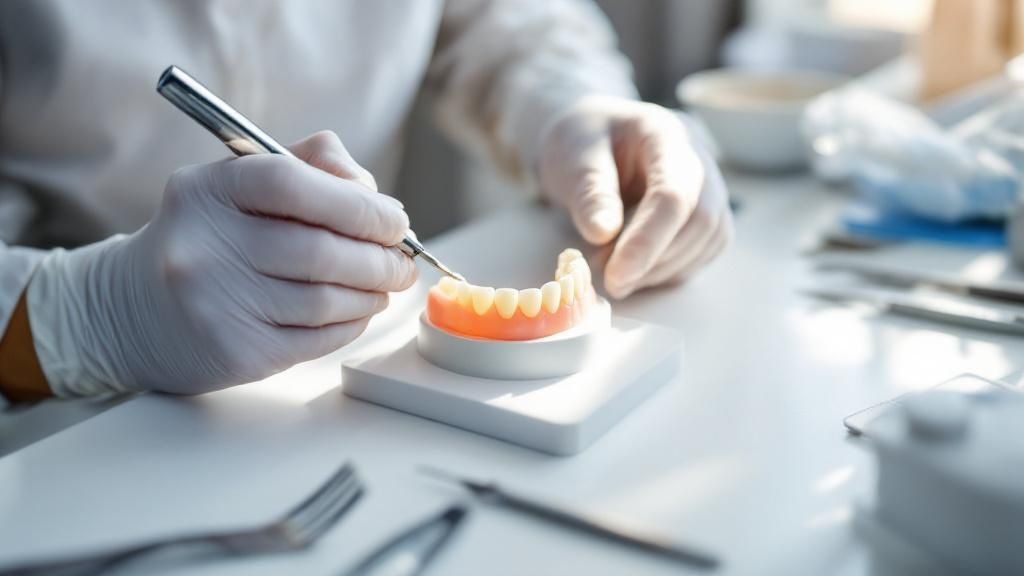
Knowing what goes on behind the scenes during a denture hard reline can make the whole experience much more comfortable and less of a mystery. The process is pretty straightforward, but it generally splits into two different paths your denturist might take: a lab reline or a chairside reline. Both are designed to give you a snugger, better fit, but they have key differences in timing, precision, and how long they last.
The most common—and frankly, the highest-quality—option is the lab reline. It all starts with your denturist giving your denture a thorough cleaning and then carefully removing a very thin layer of the old acrylic from the inside surface. This step is crucial because it creates the perfect foundation for the new material to bond with.
Next, a special, putty-like impression material is placed inside your denture. Your denturist will pop the denture back into your mouth and have you make a few specific movements, like smiling or shifting your jaw. This might feel a bit silly, but it’s how we capture a flawless, dynamic impression of your gums, which is the secret to a perfect fit.
The Lab Reline: A Gold-Standard Approach
Once that impression material sets, your part is done for the day. This is the part people sometimes grumble about: you'll have to go without your denture for a little while, usually just for the rest of the day or overnight. It’s sent off to a specialized dental laboratory, and this brief inconvenience is exactly why the lab method produces such fantastic results.
At the lab, a highly skilled technician takes over. They use your denture and the new impression as a precise mold to add the new, hard acrylic resin. The real magic happens when they cure this new material under carefully controlled heat and pressure. This controlled environment creates a new surface that is incredibly strong, dense, and non-porous.
Finally, the technician meticulously trims away any excess material and polishes the relined denture until it's perfectly smooth. This ensures there are no rough spots to irritate your gums. When you come back for your fitting, the denture will snap securely into place, feeling stable and almost brand new.
The lab reline is widely considered the gold standard. Why? Because the professional curing process creates a stronger, more durable, and less porous surface. This not only means a longer-lasting fit but also better oral hygiene, since the material is far more resistant to stains and bacteria.
The Chairside Reline: A Faster Alternative
Sometimes, you just can't wait. For situations that demand an immediate fix, a chairside reline offers a super convenient solution. Just as the name implies, the entire process is completed right there in the dental chair during a single appointment. You walk in with a loose denture and walk out with a relined one the very same day.
The initial steps are similar—your denture is cleaned and prepared for the new material. But instead of being sent to a lab, your dental professional applies a special, self-curing acrylic directly into the denture and places it back in your mouth. You'll sit for several minutes as the material hardens, molding itself to the shape of your gums.
While a chairside denture hard reline is undeniably faster, it’s a bit of a trade-off:
- Precision: Because the material and curing process aren't as controlled as in a lab, the fit might not be quite as exact.
- Durability: The acrylic used is typically more porous and not as tough as the lab-cured version. This means it might wear down faster and need to be redone sooner.
- Odor and Taste: Some patients notice a distinct chemical taste or smell from the material right after the procedure. It usually fades, but it can be a bit unpleasant at first.
In the end, your dental professional will look at your specific needs, the current condition of your denture, and your lifestyle to recommend the best approach for you.
Hard Reline vs. Soft Reline: Choosing the Right Fit
Not all denture relines are created equal, and figuring out which one is right for you is absolutely key to your comfort and how long your denture will last. The choice between a denture hard reline and a soft reline really boils down to your specific needs, the health of your gums, and your long-term dental goals.
Think of it like choosing between a custom-molded orthotic and a soft gel insole for your shoe. One is built for firm, lasting support, while the other is all about immediate cushioning and comfort. A hard reline is the permanent, durable solution, whereas a soft reline acts as a temporary, cushioned support for sensitive gums.
The Hard Reline: A Long-Term Solution
A hard reline is the definitive, long-term fix for a loose denture. It involves using a rigid, lab-cured acrylic that essentially becomes a new, permanent part of your denture's base. This is the go-to option when your gums are healthy and any underlying bone changes have stabilized.
It’s the best way to restore a precise, secure fit that’s built to last. The material is non-porous, which makes it much easier to keep clean and more resistant to stains and bacteria. This means better oral hygiene over its lifespan, which can be several years.
The Soft Reline: A Comfort-Focused Approach
A soft reline, on the other hand, uses a pliable, almost rubbery material to cushion the denture where it meets your gums. This makes it a fantastic choice if you're dealing with significant tenderness, chronic sore spots, or are still in the healing phase right after having teeth extracted.
While it provides immediate relief and a much gentler fit, there's a trade-off in durability. The softer material is more porous and tends to break down faster, usually needing to be replaced every one to two years. It's less of a structural repair and more like a therapeutic bandage for your gums.
To make this clearer, let's break down the key differences in a simple table.
Denture Hard Reline vs Soft Reline at a Glance
This table offers a direct comparison to help you see the distinct roles each type of reline plays in denture care.
| Feature | Hard Reline | Soft Reline |
|---|---|---|
| Primary Purpose | Long-term fit and stability | Immediate comfort and relief |
| Material | Rigid, durable acrylic | Pliable, soft polymer |
| Lifespan | Several years | 1-2 years |
| Best For | Healthy, stable gums | Sensitive or healing gums |
| Cleaning | Easy to clean, less porous | More porous, requires careful cleaning |
| Feel | Firm and secure | Cushioned and gentle |
Ultimately, a hard reline is an investment in stability, while a soft reline prioritizes short-term comfort and healing.
The image below gives a visual snapshot comparing the durability, cost, and comfort of both options.
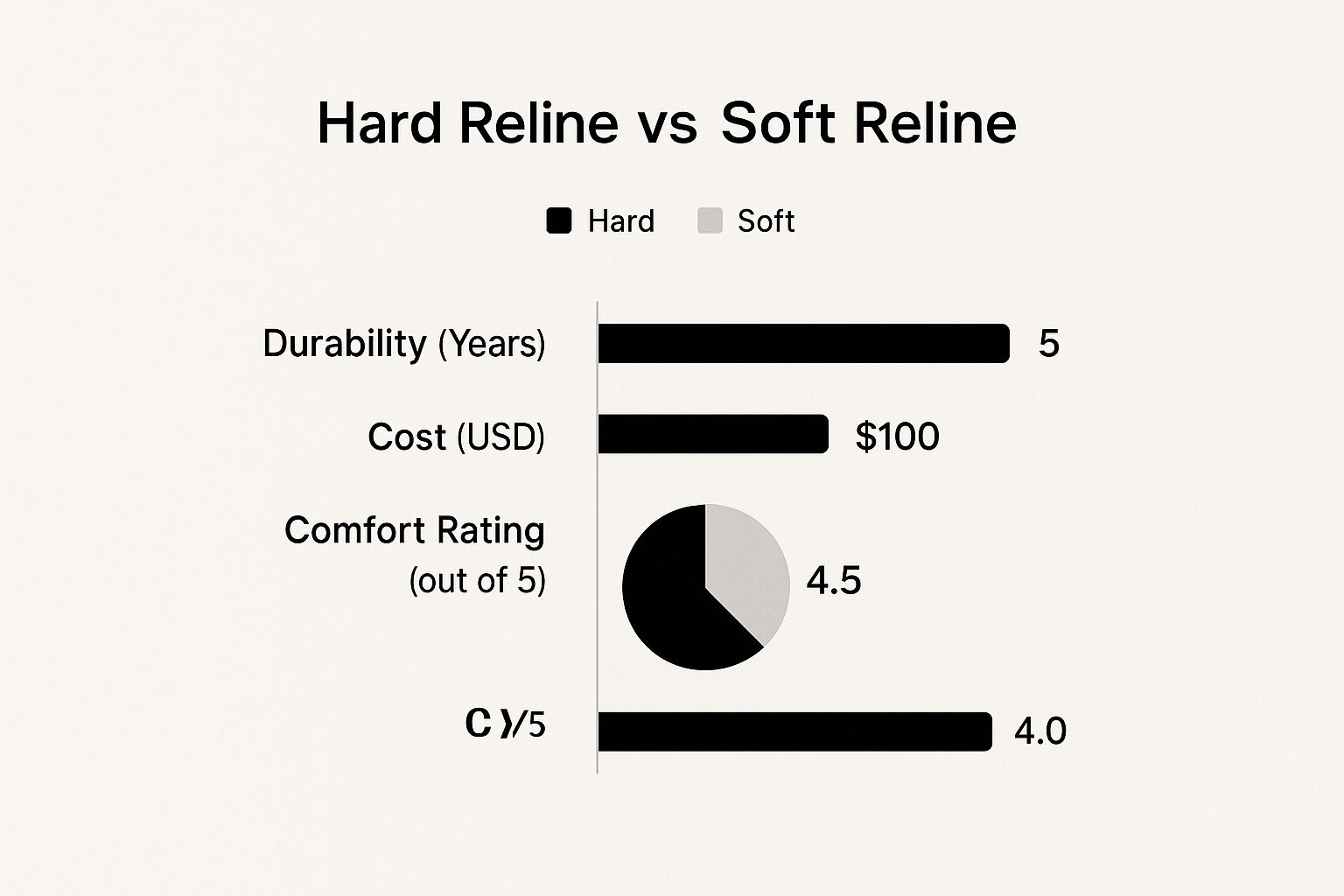
As you can see, a hard reline delivers significantly more durability for a small increase in cost, often making it a smarter long-term investment for the right candidate.
The need for these procedures is growing. The global market for denture relines was valued at an estimated USD 2.5 billion in 2024, and it's projected to climb to around USD 4.1 billion by 2033. This shows just how common and necessary these adjustments are for denture wearers worldwide.
The best way forward is always a conversation with your dental professional. They can assess your situation and help you decide what’s best. For some, the unwavering stability of a hard reline is the clear winner. For others, especially those weighing more permanent tooth replacement options, a reline serves as a vital bridge. You can learn more by exploring our guide comparing dental implants vs. dentures.
The Benefits and Costs of a Hard Reline

Getting a denture hard reline is about so much more than just tightening a loose fit. It's a direct investment in your everyday comfort, confidence, and long-term oral health. The first thing you'll notice is renewed stability. That frustrating slipping and rocking that happens when you talk or eat? That becomes a thing of the past.
This restored security creates a wonderful ripple effect. You’ll be able to chew your food much more effectively, which opens up your diet to a wider variety of foods and can genuinely improve your nutrition. A snug-fitting denture also puts an end to the constant rubbing that creates painful sore spots on your gums.
On top of that, a proper reline seals the gaps where food particles love to get trapped. This not only makes wearing your denture more pleasant but also boosts your oral hygiene by cutting down on the risk of gum irritation and bad breath.
The True Value of a Professional Reline
When you look at the price, it’s important to see a hard reline not as just another dental bill, but as a smart, cost-effective decision. It’s significantly more affordable than buying a whole new set of dentures and can extend the life of your trusted prosthetic by several more years.
A professional hard reline is a proactive move to safeguard your oral health. It gets to the root cause of looseness—the natural changes in your jaw—to give you a durable, reliable solution that denture adhesives simply can't replicate.
This procedure is a cornerstone of modern dental care, a field that's growing quickly. In fact, the global denture reline market was valued at about USD 2.5 billion in 2024 and is on track to hit approximately USD 4.3 billion by 2031. This shows just how vital relines are for giving patients affordable, effective care. For those interested in the numbers, you can read more about these market insights to see why this procedure is gaining so much attention.
Factors That Influence the Cost
So, what should you actually expect to pay? The final cost of a denture hard reline can shift based on a few key factors, ensuring the care you receive is tailored to your specific needs.
- Geographic Location: Like many services, dental costs can vary quite a bit from one city or state to the next.
- Procedure Type: A lab reline, which is known for its superior durability and precision fit, generally costs more than a quicker chairside reline done in a single visit.
- Dental Professional's Expertise: The experience and skill of the denturist or dentist performing the reline can also influence the price.
Ultimately, a hard reline delivers incredible value by bringing back full function and helping you avoid more expensive problems down the line. It's a fundamental part of maintaining a healthy dental future. For anyone weighing their choices, learning about affordable expert restorative dental care can offer a clearer picture of how this service fits into a complete oral health strategy.
Common Questions About Denture Hard Relines
Even after learning about the process, it’s completely normal to have a few lingering questions about getting a denture hard reline. We’ve gathered the most common queries we hear from our patients to give you clear, straightforward answers. Our goal is to make sure you feel confident and know exactly what to expect.
How Often Do I Need a Denture Hard Reline?
There's no one-size-fits-all answer here, but as a general rule, we recommend having your dentures checked for a potential reline every one to two years. The real tell-tale sign isn’t the calendar, though—it’s how your denture feels. Everyone's jaw changes at a different pace, and that's what truly dictates the timeline.
You should definitely book a check-up if you start noticing the classic signs of a poor fit. Keep an eye out for these red flags:
- Your denture feels loose or wobbly when you’re talking or chewing.
- You're using more and more denture adhesive just to get through the day.
- Food constantly gets stuck under the denture, which is both annoying and unhygienic.
- You’re developing sore spots on your gums that weren’t there before.
Your dental professional is the only one who can properly assess the fit and confirm if a hard reline is the right solution for you.
Is the Hard Reline Procedure Painful?
Not at all. The procedure itself is completely painless and surprisingly quick. We simply place a soft, putty-like material inside your denture and have you bite down for a moment to capture a perfect impression of your gums. There are no needles or discomfort.
Once you get your relined denture back, you might feel some minor pressure for a day or two. It’s a lot like breaking in a new pair of shoes—your gums are just getting used to the new, snug fit. If you experience any sharp or lasting pain, don't hesitate to call us. A quick, simple adjustment is usually all it takes to fix it.
Should I Use a DIY Hard Reline Kit?
It can be tempting to reach for an over-the-counter kit to save a few dollars, but dental professionals strongly advise against it. A denture hard reline is a precise medical procedure, not a DIY project. Getting the fit just right requires professional expertise and materials.
An improperly fitted DIY reline can create uneven pressure points, leading to significant pain, chronic mouth sores, and even accelerated bone loss. It can also permanently damage the denture itself, forcing you into a much more expensive replacement.
The risk of causing long-term damage and needing far costlier repairs just isn't worth the small initial savings. This is one of those times when you should always trust a professional.
How Do I Care for a Relined Denture?
The good news is that caring for a relined denture is no different from your normal routine. The key is consistency to keep the new acrylic surface clean and your gums healthy.
- Daily Cleaning: Take your denture out every day and gently clean it with a soft-bristled denture brush and a non-abrasive denture cleaner. Avoid regular toothpaste, as it’s too abrasive and can create tiny scratches.
- Overnight Soaking: Let your denture soak overnight in a proper denture solution or just plain cool water. This keeps the material hydrated and prevents it from drying out and warping.
- Rinse Thoroughly: Before putting your denture back in your mouth, always rinse it well under cool water to wash away any leftover cleaning solution.
Following these simple steps will protect the new reline surface and help you maintain great oral health. For more personalized advice, exploring professional denture solutions services in Glendale, AZ can provide you with even more in-depth guidance.