
Direct Answer: A comprehensive dental exam includes X-rays, a full tooth-by-tooth inspection, a gum health evaluation, an oral cancer screening, and a personalized treatment discussion — typically completed in one appointment.
Most people assume a dental exam is just someone poking around with a metal tool and telling them to floss more. But a comprehensive dental exam covers a lot more ground than that — and what gets caught during one can make the difference between a simple filling today and a crown or root canal next year.
For adults and seniors across North Glendale, Arrowhead Ranch, and the broader Northwest Phoenix area, understanding exactly what this appointment involves makes it easier to show up prepared — and to actually make sense of what the dentist finds.
This article breaks down what happens during a comprehensive exam, step by step, so there are no surprises when you sit down in the chair.
The First Step: Capturing a Full Picture With Digital X-Rays
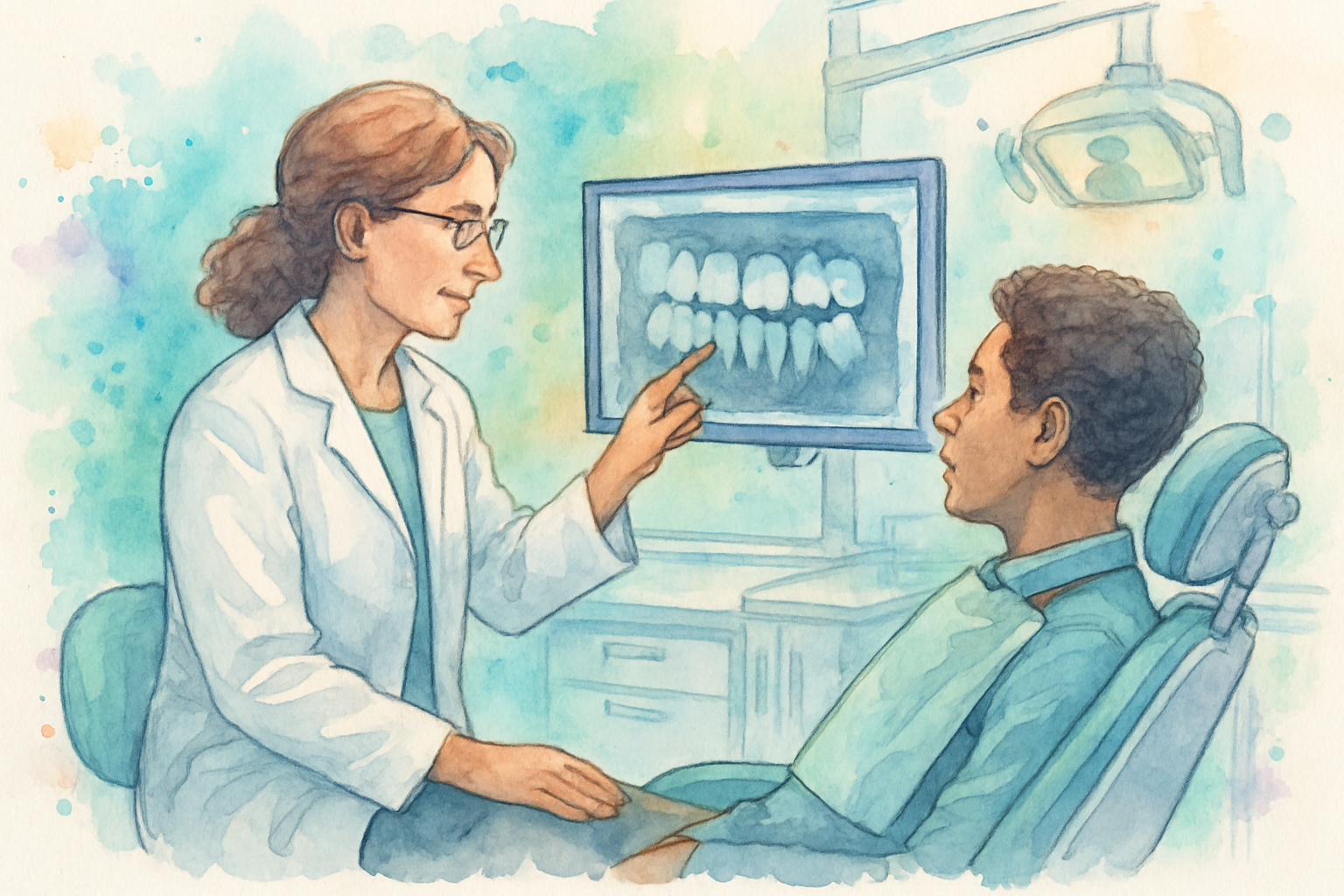
Before any visual exam begins, the clinical team will typically take a full set of digital X-rays. These images let the dentist see everything that isn’t visible to the naked eye — the roots of teeth, bone levels, decay forming between teeth, and early signs of infection below the gumline.
At a practice using advanced dental technology, these are captured digitally rather than with traditional film. Digital X-rays use up to 90% less radiation than older systems and produce images that can be viewed on a chairside monitor within seconds — which means the dentist can walk you through what they’re seeing in real time.
For a new patient, a full-mouth series (FMX) is standard. This involves multiple small sensors placed throughout the mouth to capture every tooth and surrounding bone from multiple angles. For returning patients who are already established, a set of bitewing X-rays — focused on the back teeth where decay most commonly hides — is often sufficient between comprehensive exam cycles.
The X-rays aren’t just a formality. They’re how a dentist catches problems 2–3 years before they become visible in the mouth — which is the entire point of preventive dental care.
What the Dentist Is Actually Looking For During the Clinical Exam
Once X-rays are reviewed, the hands-on exam begins. This is the part most patients associate with a dental visit, but there’s a lot happening beneath the surface of what looks like a quick look-around.
A thorough clinical exam covers several distinct areas:
- Tooth-by-tooth inspection — Each tooth is checked for decay, cracks, worn enamel, and the condition of any existing restorations like fillings or crowns
- Bite and jaw alignment — The dentist evaluates how upper and lower teeth come together, and checks for signs of grinding or clenching (bruxism)
- Existing restorations — Older fillings, crowns, and bridges are assessed to confirm they’re still intact and not leaking at the margins
- Soft tissue evaluation — The tongue, cheeks, roof of the mouth, and throat are visually examined for anything unusual
For patients who have been skipping regular dental visits, this part of the exam often surfaces problems that have been quietly developing for months or even years.
If anything suspicious is found — a crack, a failing filling, early decay — the dentist will document it and factor it into the treatment plan discussion at the end of the appointment. Nothing gets decided without the patient’s full understanding of what was found and why.
The Periodontal Evaluation: The Part Most Patients Don’t Realize Is Happening
Gum health gets less attention than teeth in most public conversations about dental care, but it’s one of the most clinically significant parts of a comprehensive exam.
During a periodontal evaluation, the hygienist or dentist uses a small instrument called a probe to measure the depth of the space between each tooth and the surrounding gum tissue. These measurements — called pocket depths — are recorded in millimeters and read aloud during the exam. Healthy tissue typically measures 1–3mm. Readings of 4mm or higher indicate some degree of gum disease, which ranges from mild inflammation (gingivitis) to more advanced bone loss (periodontitis).
For adults in communities like Vistancia or Stetson Hills who haven’t had a formal periodontal evaluation in several years, this part of the exam frequently reveals early-stage gum disease that requires a different type of cleaning than a standard prophylaxis. If that’s the case, the dentist will explain what periodontal maintenance cleaning involves and why a routine cleaning alone wouldn’t be enough.
Gum disease is the leading cause of tooth loss in adults — which is why catching it at the 4mm stage is significantly better than catching it at 6mm or beyond.
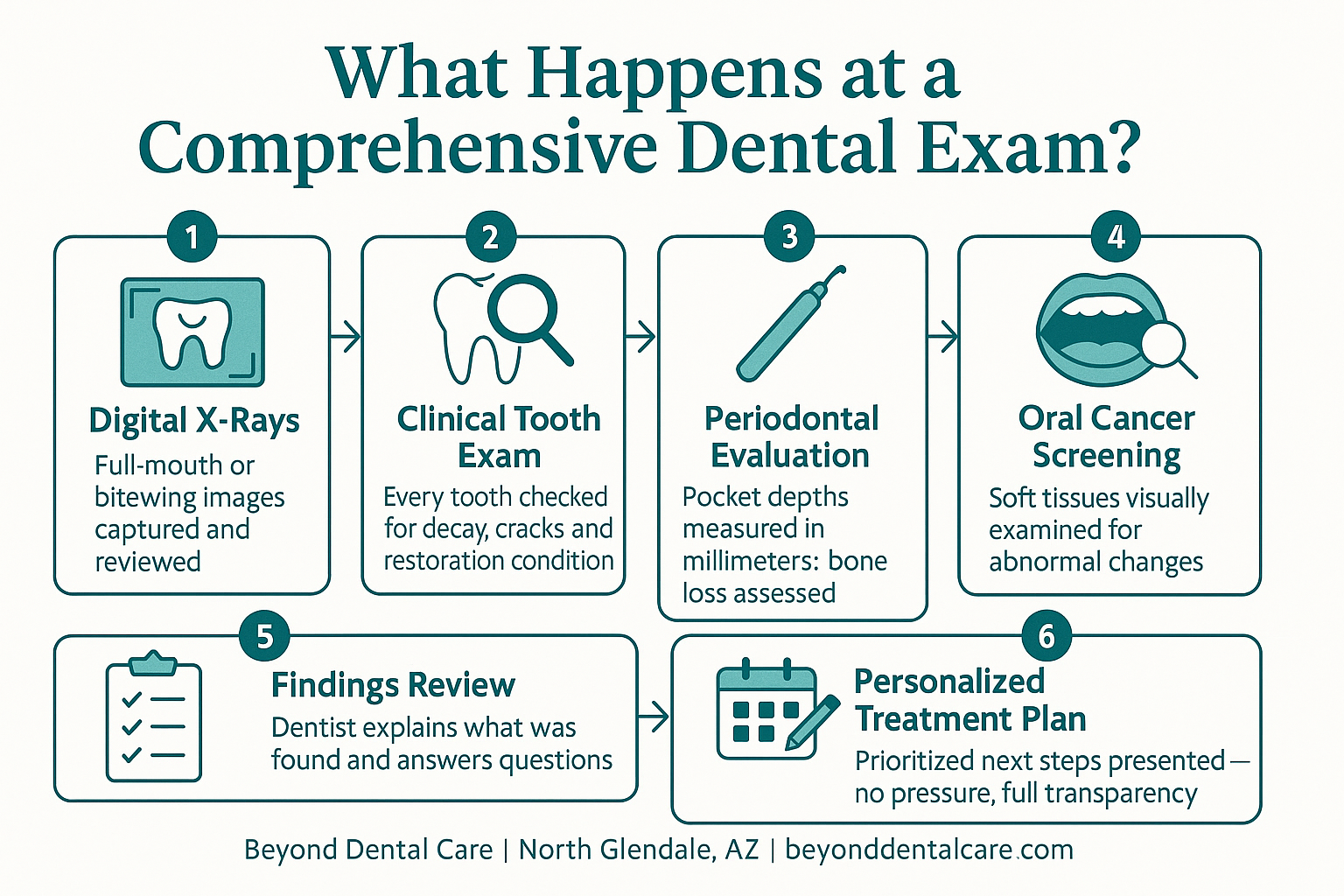
Every Step of a Comprehensive Dental Exam at a Glance
Here’s a clear look at the full sequence of what happens during a comprehensive dental exam, from start to finish.
The Oral Cancer Screening: Quick, Painless, and Worth Taking Seriously
An oral cancer screening is included in every comprehensive exam at a thorough dental practice — but many patients don’t realize it’s happening because it adds less than two minutes to the appointment.
The dentist visually examines the tongue, floor of the mouth, inner cheeks, gums, and throat for anything that looks abnormal — unusual patches, sores that haven’t healed, tissue changes in color or texture, or asymmetries in the jaw and neck. Some practices also use adjunctive screening tools like special rinses or lights that make suspicious tissue easier to identify.
Oral cancer has a 5-year survival rate of around 84% when caught at an early, localized stage — compared to roughly 39% when it’s detected after it has spread. Most patients diagnosed with oral cancer had no symptoms at the time of discovery. That’s what makes the screening during a routine exam so valuable.
For patients who use tobacco in any form, drink alcohol regularly, or have a history of HPV, the screening carries even more clinical weight. Dr. Dariene Lazore, DMD, includes this as a standard component of every comprehensive exam — not an optional add-on.
Comprehensive Exam vs. Routine Cleaning Visit: What’s Actually Different
Patients often confuse a comprehensive dental exam with a regular cleaning appointment. These two visits serve different purposes and involve different levels of clinical evaluation.
| Component | Comprehensive Exam | Routine Cleaning Visit |
|---|---|---|
| Full-mouth or bitewing X-rays | Yes — full series for new patients | Bitewings every 1–2 years as needed |
| Tooth-by-tooth clinical inspection | Yes — complete evaluation | Brief check, limited to obvious issues |
| Periodontal pocket depth measurements | Yes — full charting | Spot-checked or abbreviated |
| Oral cancer screening | Yes — always included | May or may not be included |
| Findings review and treatment plan | Yes — dedicated discussion | Generally not a primary focus |
| Professional cleaning (prophylaxis) | Often same visit, or scheduled separately | Primary purpose of the appointment |
| Recommended frequency | Once per year minimum; new patients always | Every 6 months for healthy patients |
What Happens After the Exam: The Treatment Plan Conversation
Once the clinical evaluation is complete, the dentist sits down with the patient to go through the findings. This conversation is where a lot of patients have had negative experiences with corporate dental practices — rushed explanations, confusing treatment codes, and a stack of paperwork that adds up to thousands of dollars with little context.
At a private practice that takes a personalized approach, this discussion looks different. The dentist explains what was found, shows the patient the X-rays, and walks through what each finding means in plain language. Recommendations are prioritized — what’s urgent versus what can be monitored, and what the patient should understand about the timeline.
For patients who are concerned about whether a dentist’s recommendations are genuinely necessary, this is the part of the appointment where trust either gets built or lost. A well-run exam ends with the patient feeling like they understand exactly what’s happening in their mouth — not like they just sat through a sales presentation.
If cosmetic concerns come up during the exam — staining, alignment, gaps — those are also a natural point of discussion. Whether a patient is curious about professional teeth whitening or has been thinking about clear aligners, the comprehensive exam is a natural moment to explore those options without any pressure to decide on the spot.
Frequently Asked Questions About Comprehensive Dental Exams
How long does a comprehensive dental exam take?
For a new patient, plan on 60 to 90 minutes from check-in to walking out the door. That time covers X-rays, the full clinical exam, the periodontal evaluation, the oral cancer screening, and the treatment plan conversation. If a professional cleaning is scheduled in the same appointment, it runs closer to 90 minutes. Established patients coming in for a periodic exam (not a first visit) typically need 45 to 60 minutes.
Is a comprehensive exam the same thing as a cleaning?
No — they’re separate services, though they’re often scheduled together. The exam is a clinical evaluation. The cleaning removes plaque and tartar buildup. Some practices bundle both in one appointment; others schedule them separately depending on how involved the exam findings are.
How often do adults actually need a comprehensive exam?
Most dentists recommend a full comprehensive exam once per year, with routine cleaning visits every six months in between. Patients with active gum disease, a history of frequent cavities, or complex dental histories may need more frequent evaluations. There’s a more detailed breakdown of this in the article on how often adults should really see a dentist.
What if the dentist finds something during the exam?
Finding something during an exam is actually the point. If decay, gum disease, a cracked tooth, or anything else is detected, the dentist will explain it clearly and give you options. Nothing gets done without your understanding and agreement. Most findings caught during a routine exam are straightforward to treat — it’s the problems that go undetected for years that become complicated and expensive.
Does a comprehensive exam hurt?
The exam itself is not painful. X-rays are non-invasive. The periodontal probing can feel mildly uncomfortable if gums are inflamed, but it doesn’t involve injections or drilling. Patients who feel nervous about seeing a new dentist often find the exam to be much less stressful than they anticipated.
What should I bring to my first comprehensive exam?
Bring your insurance card, a list of any medications you’re currently taking (including supplements), and a brief summary of your dental history if you have it — past procedures, any known sensitivities, or concerns you want to discuss. You don’t need to bring X-rays from a previous dentist, though the office may request them afterward if they’re relevant.
Ready to Know Exactly Where Your Oral Health Stands?
Beyond Dental Care welcomes teens, adults, and seniors from across North Glendale, Arrowhead Ranch, Norterra, Stetson Hills, and the surrounding Northwest Phoenix communities. Dr. Dariene Lazore, DMD, and her team take the time to walk every patient through their exam findings clearly — no rushed appointments, no confusing jargon. To schedule a comprehensive dental exam, call the practice at 623-267-8088 or visit beyonddentalcare.com to learn more.