
Direct Answer: With proper care, dental implants can last 20 to 30 years — and in many cases, a lifetime. The implant post itself rarely fails; the crown on top typically needs replacement after 10 to 15 years.
Most people asking about dental implants want to know one thing before anything else: is this worth the money? In the Northwest Phoenix area, a single-tooth implant typically runs between $3,500 and $5,500 from start to finish — so the question of how long it lasts is completely fair.
The short answer is that implants are designed to be permanent. But there’s an important distinction most patients don’t hear up front: the titanium post fused into your jawbone behaves very differently over time than the crown attached to the top of it. Understanding that difference changes how you plan for the investment.
This article breaks down what dental implant longevity actually looks like in practice — not the best-case scenario, but the honest version — and what factors have the most influence on whether your implant is still going strong at the 20-year mark.
The Implant Post vs. the Crown: Two Very Different Timelines
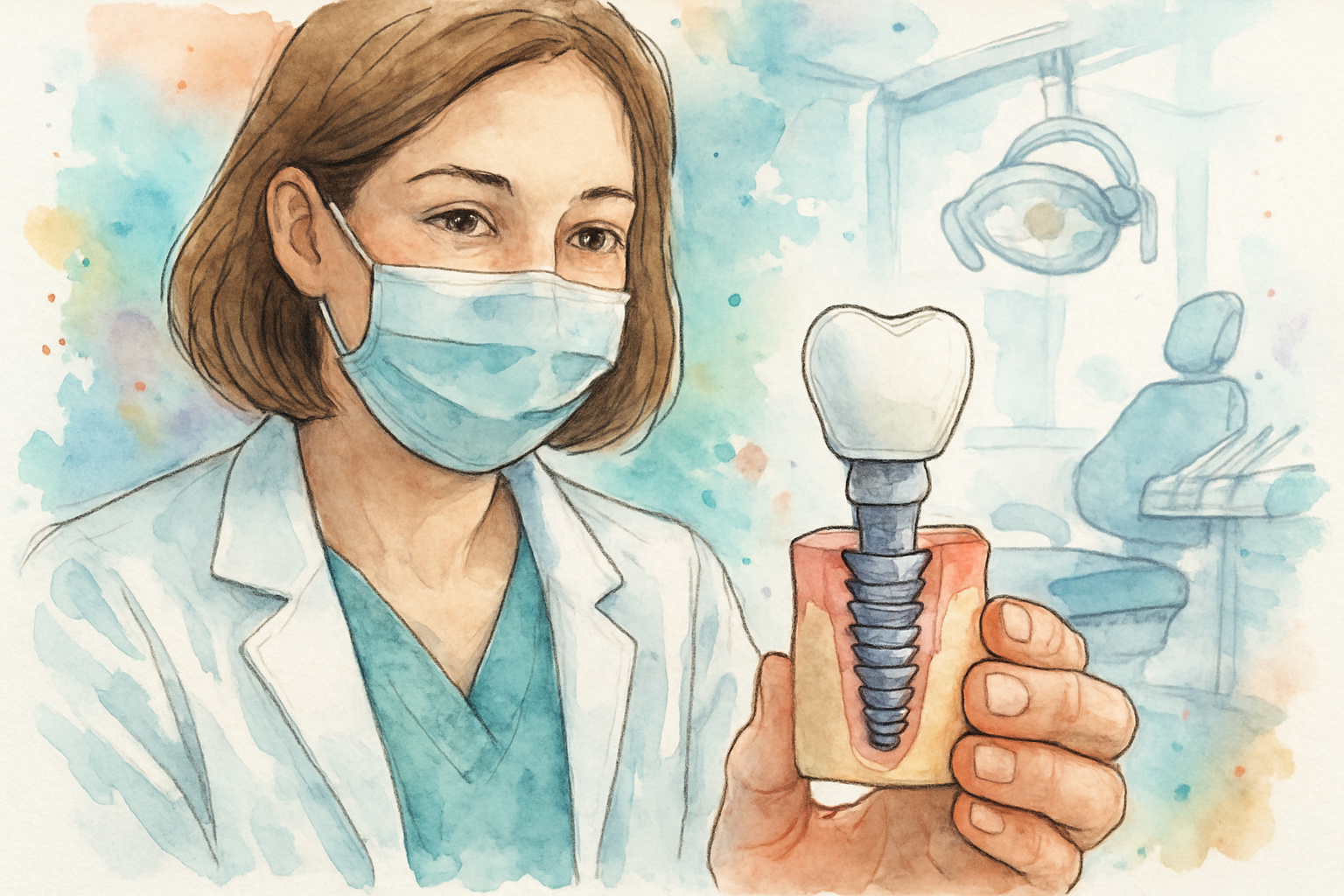
When a dentist places a dental implant, they’re really placing two separate things. The first is the titanium post — a small screw-shaped fixture surgically positioned into the jawbone. The second is the crown, a tooth-shaped cap that attaches to the post after healing.
These two components age at completely different rates, and that’s where most confusion about implant lifespan comes from.
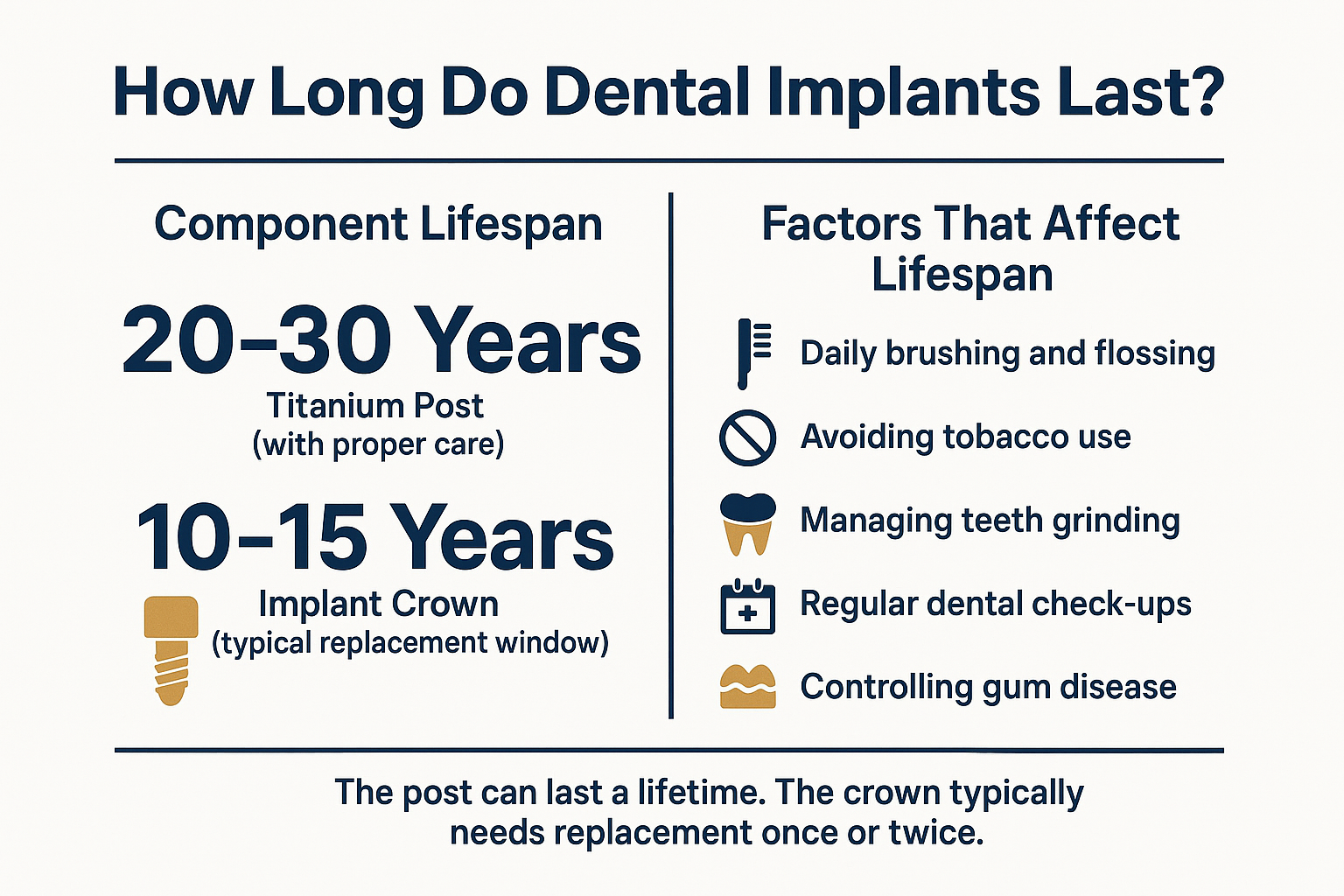
The titanium post, once it bonds with the bone through a process called osseointegration, is remarkably stable. Long-term studies consistently show post survival rates of 90 to 95 percent at 20 years when placed in healthy patients with adequate bone density. Many implant posts placed in the 1980s and 1990s are still in place today.
The crown is a different story. It takes the full force of chewing, which means it experiences more wear over time. Most implant crowns last 10 to 15 years before needing replacement. Some patients in Arrowhead Ranch and Stetson Hills with excellent oral hygiene and lighter bite forces report crowns lasting 20 years or more. Others — particularly people who grind their teeth — may need replacement sooner.
So when someone asks “how long does a dental implant last,” the honest answer is: the post can last a lifetime; the crown probably needs replacing once or twice over your life.
What Actually Causes Implants to Fail Early
Implant failure before the 10-year mark is relatively rare, but it does happen. And when it does, there are usually a few predictable reasons.
Peri-implantitis is the leading cause of long-term implant failure. It’s essentially gum disease that develops around the implant, and it can destroy the bone that holds the post in place. Patients who had a history of gum disease before getting implants carry a meaningfully higher risk — which is why periodontal health evaluations are a standard part of the implant planning process at responsible practices.
Other common contributors to early failure include:
- Bruxism (teeth grinding) — puts stress on both the crown and the post, especially at night
- Smoking — reduces blood flow to gum tissue and slows the osseointegration process significantly
- Uncontrolled diabetes — affects healing and bone integration; well-managed diabetes does not necessarily disqualify someone
- Insufficient bone density at placement — if there wasn’t enough jaw bone to begin with and no bone graft was done, the post may not integrate properly
- Poor oral hygiene post-placement — implants can’t get cavities, but the surrounding gum tissue can still become infected
The patients who tend to have the best long-term outcomes are the ones who understood these risks going in and made changes before placement — not after. If you want a deeper look at what that pre-implant conversation should include, this guide on what patients expect before starting implants covers the questions worth asking.
Dental Implant Lifespan at a Glance
This infographic breaks down the typical lifespan of each implant component and the key factors that influence how long yours will last.
How Implant Longevity Compares to Other Tooth Replacement Options
Dental implants don’t exist in a vacuum — most patients are weighing them against bridges or dentures when they’re making a decision. And longevity is one of the clearest areas where implants pull ahead.
The table below gives a realistic comparison based on what patients across Norterra, Vistancia, and North Peoria typically see over a decade or two of use. Keep in mind these are general ranges, not guarantees — individual results vary based on oral health, habits, and how well the restoration was placed to begin with.
For patients dealing with multiple missing teeth, it’s also worth reading this guide on full-set dental implants to understand how full-arch implant systems compare on longevity versus conventional full dentures.
Dental Implants vs. Bridges vs. Dentures: Longevity Comparison
Here’s how the three main tooth replacement options compare when it comes to lifespan, maintenance needs, and bone health impact over time.
| Restoration Type | Typical Lifespan | Bone Preservation | Maintenance Level |
|---|---|---|---|
| Dental Implant (post) | 20–30+ years | Yes — stimulates jaw bone | Low — clean like natural teeth |
| Implant Crown | 10–15 years | N/A | Low — replace crown when worn |
| Dental Bridge | 10–15 years | No — bone under gap deteriorates | Moderate — special flossing required |
| Full or Partial Dentures | 5–10 years per set | No — accelerates bone loss | High — daily removal and cleaning |
| Implant-Supported Dentures | 15–20+ years | Yes — posts preserve bone | Moderate — snap-in style, daily cleaning |
What You Can Do to Help Your Implant Last as Long as Possible
The biggest variable in implant longevity isn’t the brand of implant or even the skill of the surgeon — it’s what happens after you leave the office.
Patients who get 25 or 30 years out of their implants almost universally share a few habits:
- They see their dentist twice a year without fail. Implants need professional cleaning and monitoring just like natural teeth, even though they can’t decay.
- They treat grinding seriously. A custom night guard is a relatively small investment compared to replacing a crown early. In the Glendale and Peoria area, custom night guards typically run $300 to $600 — money well spent if you grind.
- They don’t smoke. If they did smoke at placement, many committed to quitting before the procedure and stayed quit.
- They clean around the implant daily. Interdental brushes and water flossers are both good options for keeping the gum tissue around an implant healthy long-term.
One thing that doesn’t get discussed enough: brushing technique matters. Aggressive brushing around implant sites can irritate the gum tissue over time, just as it can with natural teeth. If that’s something you’ve struggled with, this patient guide on brushing too hard and gum recession explains the mechanics clearly.
The patients who treat an implant like a permanent part of their body — rather than a set-it-and-forget-it fix — tend to see the best results over the long run.
Frequently Asked Questions About Dental Implant Longevity
Can a dental implant fail years after it was placed?
Yes, though it’s relatively uncommon after the first year. Late implant failure is most often linked to peri-implantitis — infection and bone loss around the post — or to changes in the patient’s overall health, like uncontrolled blood sugar or new medications that affect bone density. Regular check-ups catch the early warning signs before they become bigger problems.
Does the implant crown need to be replaced at the same time as the post?
No — and this is an important distinction. In most cases, if a crown wears out after 12 or 15 years, the post underneath is still perfectly intact. A new crown is simply attached to the existing post. That procedure is far less involved and less expensive than replacing the full implant.
Are implants a good option for seniors?
Yes, in most cases. Age alone is not a disqualifying factor. What matters more is bone density, overall health, and medication history. Many patients in their 60s, 70s, and even 80s receive implants successfully. A thorough evaluation — including 3D imaging to assess jaw bone volume — determines whether someone is a good candidate regardless of age.
How do I know if my implant is having a problem?
Warning signs include pain or discomfort around the implant site, swelling or bleeding gums near the implant, a feeling that the crown is loose, or visible bone recession around the base. Any of these warrants a call to your dentist. Caught early, most implant complications are manageable. Left alone, they can escalate to full failure.
Does insurance cover implant crown replacement?
It depends on your plan. Many dental insurance policies cover a portion of implant crowns — sometimes 50 percent up to your annual maximum — but few cover the full cost. HSA and FSA funds can typically be applied to implant procedures as well. For a clear breakdown of how health savings accounts work with dental treatment, this HSA dental guide is a good starting point.
What’s the difference between a failed implant and a loose crown?
A loose crown usually means the abutment connection has worked loose — a relatively simple fix that doesn’t involve the post at all. A failed implant means the post itself has lost its bond with the jaw bone, which is a more significant issue. Your dentist can distinguish between the two with a quick clinical exam and X-ray.
Ready to Find Out If You’re a Good Implant Candidate?
Beyond Dental Care serves patients across North Glendale, Arrowhead Ranch, Stetson Valley, Norterra, and the broader Upper West Side Phoenix area with advanced implant dentistry and personalized treatment planning. Dr. Dariene Lazore, DMD takes the time to walk through your specific bone health, medical history, and long-term goals before any treatment recommendation is made. To schedule a consultation, call 623-267-8088 or visit beyonddentalcare.com.