
Direct Answer: Before starting any cosmetic dental treatment, ask your dentist what’s driving the problem, what the treatment actually involves, how long results last, and what happens to your oral health if underlying issues go untreated first.
Most people who want cosmetic dental work have already done their research online. They’ve looked at before-and-after photos, compared treatment options, and maybe even picked the procedure they want before they ever sit down in a chair. And then a good dentist asks them three questions — and the whole plan changes.
That’s not a bad thing. It’s exactly how it should work. Cosmetic dentistry in the Northwest Phoenix area — from Arrowhead Ranch to Vistancia — has become more accessible and more advanced than ever. But accessibility doesn’t mean every treatment is right for every patient, and a confident consultation is the difference between a result you love and one you regret.
This guide walks through the questions worth asking before any cosmetic treatment begins. Not to slow the process down — but to make sure the treatment you choose is actually solving the right problem.
Why Your Oral Health Has to Come First
Cosmetic dentistry is not separate from dental health — it builds on top of it. A dentist who skips a thorough health evaluation before recommending cosmetic treatment isn’t doing you a favor.
If there’s active gum disease, untreated decay, or bone loss present, cosmetic procedures layered on top of those conditions tend to fail faster and cost more to fix. Porcelain veneers placed over compromised gum tissue won’t hold. Whitening won’t change the color of a tooth that needs a crown.
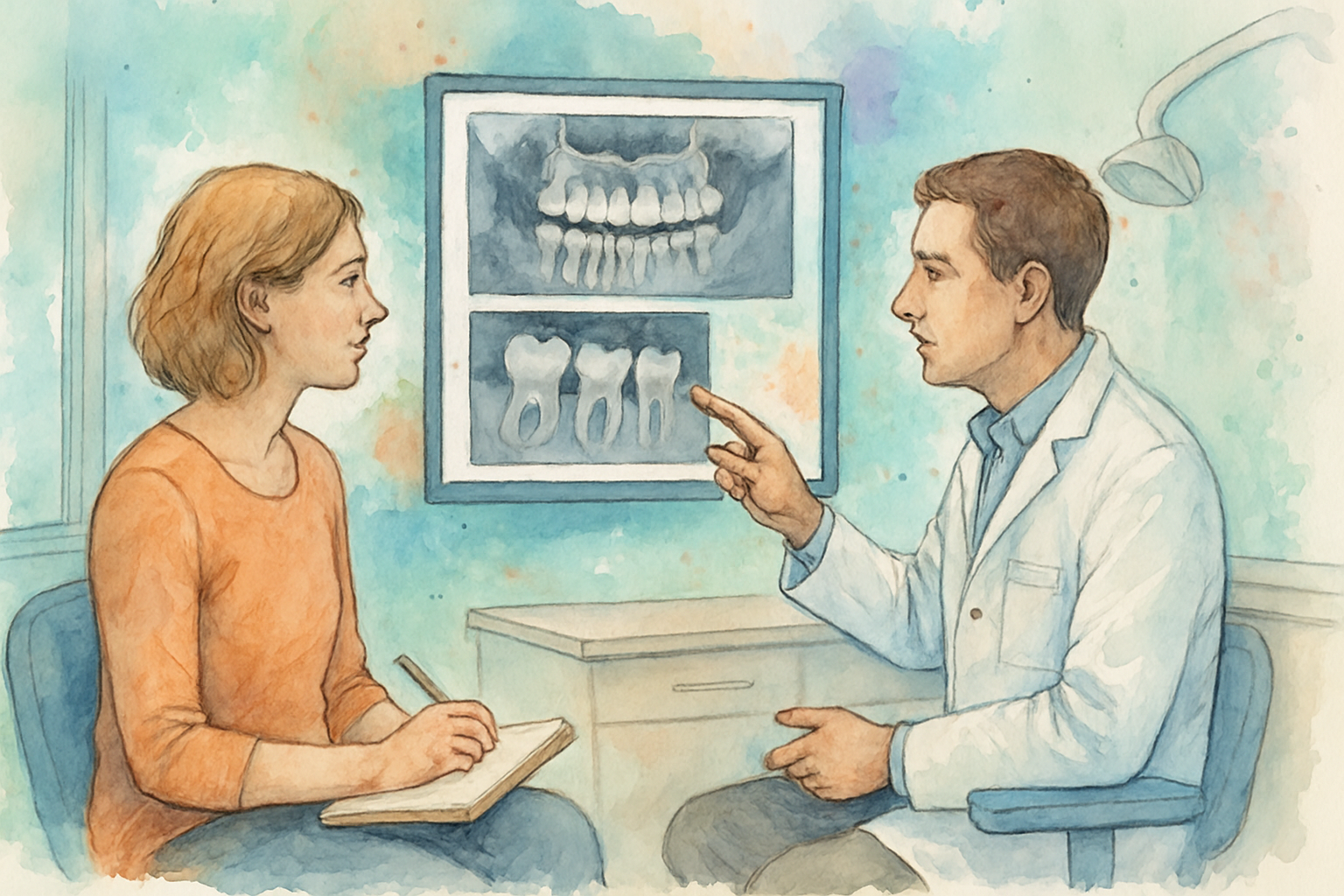
Before any cosmetic conversation starts, a thorough comprehensive dental exam should already be on record. That exam creates the health baseline that determines what cosmetic options are actually available to you. Without it, you’re skipping the foundation.
The question to ask your dentist:
– Is my mouth healthy enough to start cosmetic treatment right now?
– Are there any conditions — gum disease, decay, bite issues — that need to be addressed first?
– How long will any preparatory treatment take before cosmetic work can begin?
These aren’t obstacles. They’re the part of the process that protects your investment.
Understanding What Each Cosmetic Treatment Actually Does
One of the most common sources of patient disappointment in cosmetic dentistry comes from mismatched expectations. Someone comes in wanting whiter teeth and leaves with veneers — or comes in wanting veneers when whitening would have done the job for a fraction of the cost.
These treatments are not interchangeable. Whitening, bonding, and veneers solve completely different smile problems — and a dentist who explains that distinction upfront is one worth trusting.
Professional teeth whitening addresses surface staining and natural discoloration. It works well on healthy enamel and typically produces noticeable results in a single in-office session or through a take-home tray system prescribed by your dentist. In the North Glendale and Peoria area, in-office whitening typically runs between $300 and $600 depending on the system and number of sessions.
Dental bonding uses tooth-colored composite resin to repair chips, small gaps, or irregular shapes. It’s faster and less expensive than veneers — often $200 to $400 per tooth — but the material is more prone to staining over time.
Porcelain veneers are thin ceramic shells bonded to the front surface of teeth. They address shape, size, color, and minor alignment issues simultaneously. They’re also irreversible, since a thin layer of enamel is removed to place them. Cost in the Phoenix metro area generally ranges from $900 to $2,000 per tooth.
Before starting, ask:
– What is this treatment actually designed to fix?
– What will it not fix — and is there something better suited to my specific concern?
– Is this reversible, and what are my options if I want to change it later?
The Longevity Question Most Patients Forget to Ask
Cosmetic dental work is an investment, and like any investment, duration matters. But most patients walk out of consultations without ever asking how long the result is expected to last — or what affects that timeline.
Here’s what the general data looks like for common cosmetic treatments:
- Professional whitening results: 1 to 3 years with proper maintenance; sooner if you drink coffee, red wine, or smoke
- Composite bonding: 5 to 7 years on average before refinishing or replacement is needed
- Porcelain veneers: 10 to 20 years with good oral hygiene and no grinding habits
- Dental crowns used in smile design: 15 to 25 years depending on material and bite load
But those are averages — individual results vary based on oral hygiene, diet, nighttime grinding, and how well you follow your dentist’s maintenance guidance.
Patients in Norterra and Stetson Hills who lead busy lives tend to underestimate the maintenance side of cosmetic work. Veneers won’t stain the way natural enamel does, but they still require consistent cleaning and regular checkups to stay in good shape. If you’re not seeing a dentist at least twice a year for cleanings and evaluations, cosmetic restorations tend to degrade faster than expected.
Ask your dentist:
– How long should I realistically expect this to last?
– What habits or conditions could shorten that timeline?
– What does maintenance look like after treatment is complete?
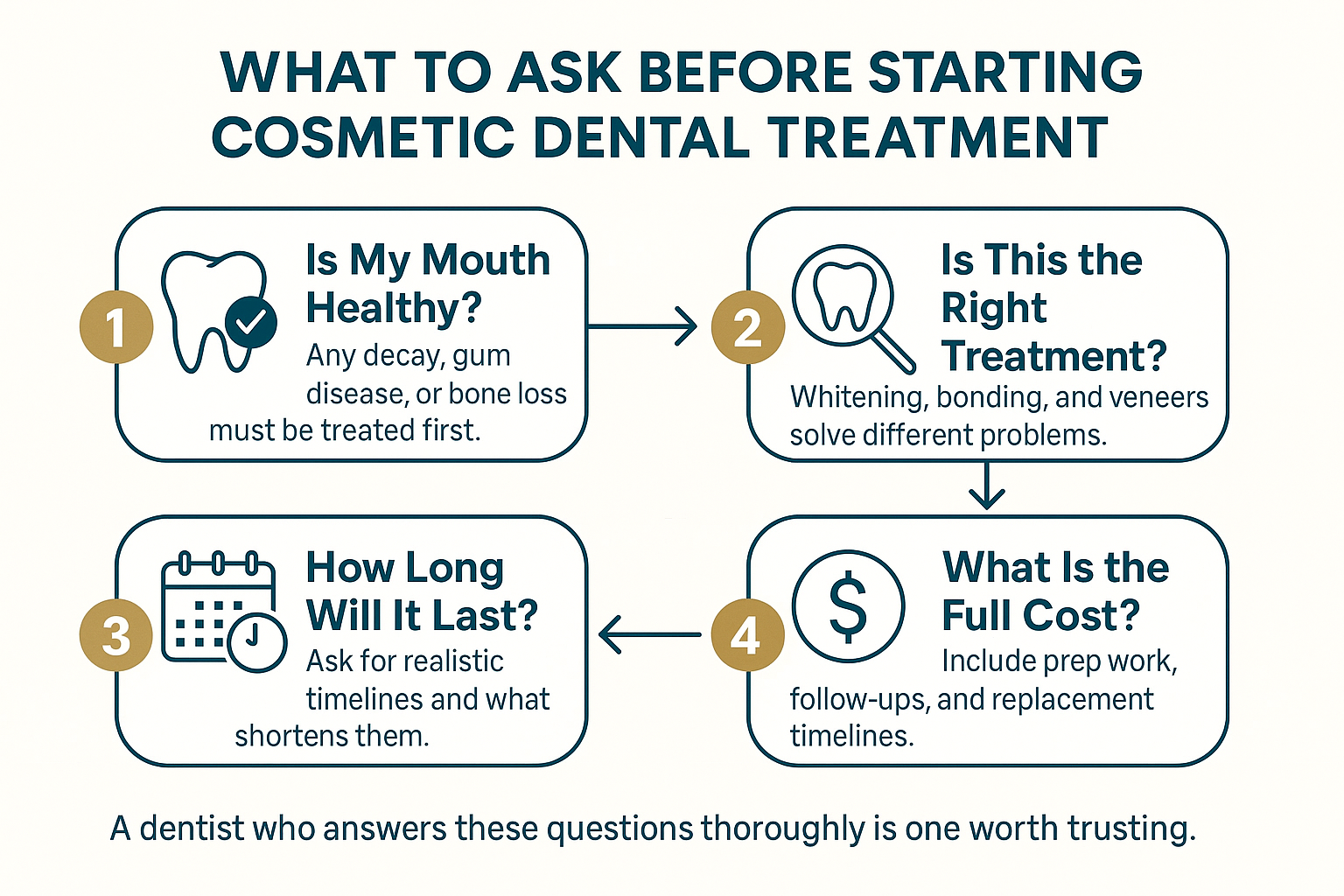
The 4 Questions to Ask Before Any Cosmetic Treatment
These four questions cover the ground most patients miss before starting cosmetic dental work — from health readiness to long-term maintenance.
Common Cosmetic Treatments at a Glance
This table compares the most common cosmetic dental treatments by what they fix, typical cost range in the Northwest Phoenix area, and how long results generally last.
| Treatment | Best For | Typical Cost (Phoenix Metro) | Average Lifespan |
|---|---|---|---|
| Professional Whitening | Surface staining, general discoloration | $300 – $600 | 1 – 3 years |
| Composite Bonding | Chips, small gaps, minor shape issues | $200 – $400 per tooth | 5 – 7 years |
| Porcelain Veneers | Shape, size, color, minor alignment | $900 – $2,000 per tooth | 10 – 20 years |
| Dental Crown (cosmetic) | Severely damaged or discolored teeth | $1,000 – $1,800 per tooth | 15 – 25 years |
| CandidPro Clear Aligners | Crowding, spacing, mild bite issues | Varies by case complexity | Permanent with retainer use |
When Cosmetic Goals and Alignment Issues Overlap
A lot of patients in the Arrowhead Lakes and Cibola Vista areas come in wanting cosmetic improvements but have underlying alignment issues that are actually driving the problem. Crowded or spaced teeth don’t just affect appearance — they affect how your bite functions and how effectively you can clean between teeth.
In those cases, starting with clear aligner therapy before cosmetic work can dramatically improve the final result. Straightening teeth first means veneers or bonding, if needed afterward, require less material and sit more naturally.
CandidPro Clear Aligners offer a distinct advantage here — they’re designed by orthodontists, include remote monitoring through the ProMonitoring app, and require fewer in-office visits than traditional orthodontic treatment. For adults and teens who want to correct alignment before investing in cosmetic restorations, it’s worth asking whether sequencing treatment that way makes sense.
The question to raise in your consultation:
– Do I have any alignment or bite issues that would affect how cosmetic treatment turns out?
– Would addressing those first produce a better long-term result?
A dentist who sequences treatment thoughtfully — rather than just booking the next available procedure — is looking out for the patient, not the schedule.
How to Evaluate the Consultation Itself
The consultation appointment tells you a great deal about how a practice operates. A dentist who listens carefully, asks questions about your concerns and goals, reviews your records before recommending anything, and explains options without pressure is showing you exactly how the rest of your care will go.
Red flags worth noticing:
– A treatment recommendation made without reviewing current X-rays or examining your gums
– A consult that focuses entirely on what you want without first assessing what your mouth needs
– No explanation of what happens if a recommended treatment fails or needs revision
– Pressure to book treatment during the same visit without time to consider
Patients in Hillcrest Ranch, Vistancia, and North Canyon Ranch who’ve experienced corporate dental chains often describe exactly these patterns — rushed visits, treatment plans that feel pre-written, and very little room for questions.
A private dental practice like Beyond Dental Care operates differently. The goal of the consultation is to understand the patient’s full oral health picture before any cosmetic path is recommended. That means a periodontal evaluation is part of the process — not an afterthought — and cosmetic options are only presented once the health baseline is confirmed.
If you want to understand what a smile makeover actually involves — including how multiple procedures are sequenced and what the process looks like from start to finish — that’s a conversation worth having during your first visit, not after treatment has already started.
Frequently Asked Questions About Cosmetic Dental Consultations
Do I need a full dental exam before getting cosmetic work done?
Yes — and any dentist worth their credential will require it. Cosmetic procedures placed over untreated decay or gum disease fail faster and can cause real harm. A comprehensive dental exam isn’t a formality; it’s the step that makes cosmetic work last.
How do I know if I need veneers or if whitening would be enough?
Whitening works on surface staining and natural discoloration. Veneers address shape, size, damage, and color issues that whitening can’t touch. A good dentist will explain the difference clearly during your consultation and recommend the option that actually matches your concern — not the one with the higher price tag.
Can I use my HSA or FSA to pay for cosmetic dental treatment?
It depends on whether the treatment is deemed medically necessary or purely cosmetic. Teeth whitening and veneers for aesthetic purposes are generally not HSA-eligible. But some restorative procedures that also improve appearance — like crowns — may qualify. This guide on using your HSA for dental care breaks down what typically qualifies and what doesn’t.
What if I want straight teeth AND whiter teeth — where do I start?
Start with alignment. Whitening after straightening produces more even results because the trays or in-office treatment reaches all surfaces uniformly. If you’re considering clear aligners, ask your dentist whether CandidPro is a fit for your case — and plan whitening as the finishing step once alignment is complete.
Is it okay to get a second opinion before committing to cosmetic treatment?
Absolutely — and a confident dentist will tell you the same thing. Any treatment plan involving irreversible procedures like veneers or crowns deserves careful consideration. A second opinion isn’t an insult to your provider; it’s a reasonable step before making a multi-thousand-dollar decision.
How do I know if a cosmetic dentist has the right experience?
Look for a DMD or DDS credential, a strong verified review profile, and a dentist who uses advanced imaging technology rather than visual-only assessments. Ask to see examples of completed cases similar to yours. And pay attention to how thoroughly they explain your options — that alone tells you a lot about how they practice.
Ready to Start the Right Conversation?
Patients across North Glendale, Arrowhead Ranch, Norterra, and the broader Upper West Side Phoenix corridor are welcome to schedule a consultation with Dr. Dariene Lazore, DMD, at Beyond Dental Care. The first step is a thorough evaluation — not a sales presentation. Call 623-267-8088 or visit beyonddentalcare.com to schedule your appointment.