
Direct Answer: A periodontal evaluation checks the health of your gums and the bone supporting your teeth. Most adults should have one at least once a year — many have never had one at all.
Most people who come in for a cleaning think their gums are fine — until someone actually measures them. A periodontal evaluation is one of the most important parts of a dental visit, and it’s also one of the most commonly skipped or rushed.
Across the Northwest Phoenix area — from Arrowhead Ranch to Vistancia to Stetson Hills — a significant share of adults have some form of gum disease and don’t know it. The condition is largely silent in its early stages, which is exactly why an evaluation matters more than how your gums feel.
This article explains what a periodontal evaluation actually involves, what signs point to a problem, and why catching it early changes the entire outcome of your long-term oral health.
What a Periodontal Evaluation Actually Measures
A periodontal evaluation is not the same as a standard cleaning. It’s a clinical assessment of the structures that hold your teeth in place — your gums, the connective tissue underneath, and the bone.
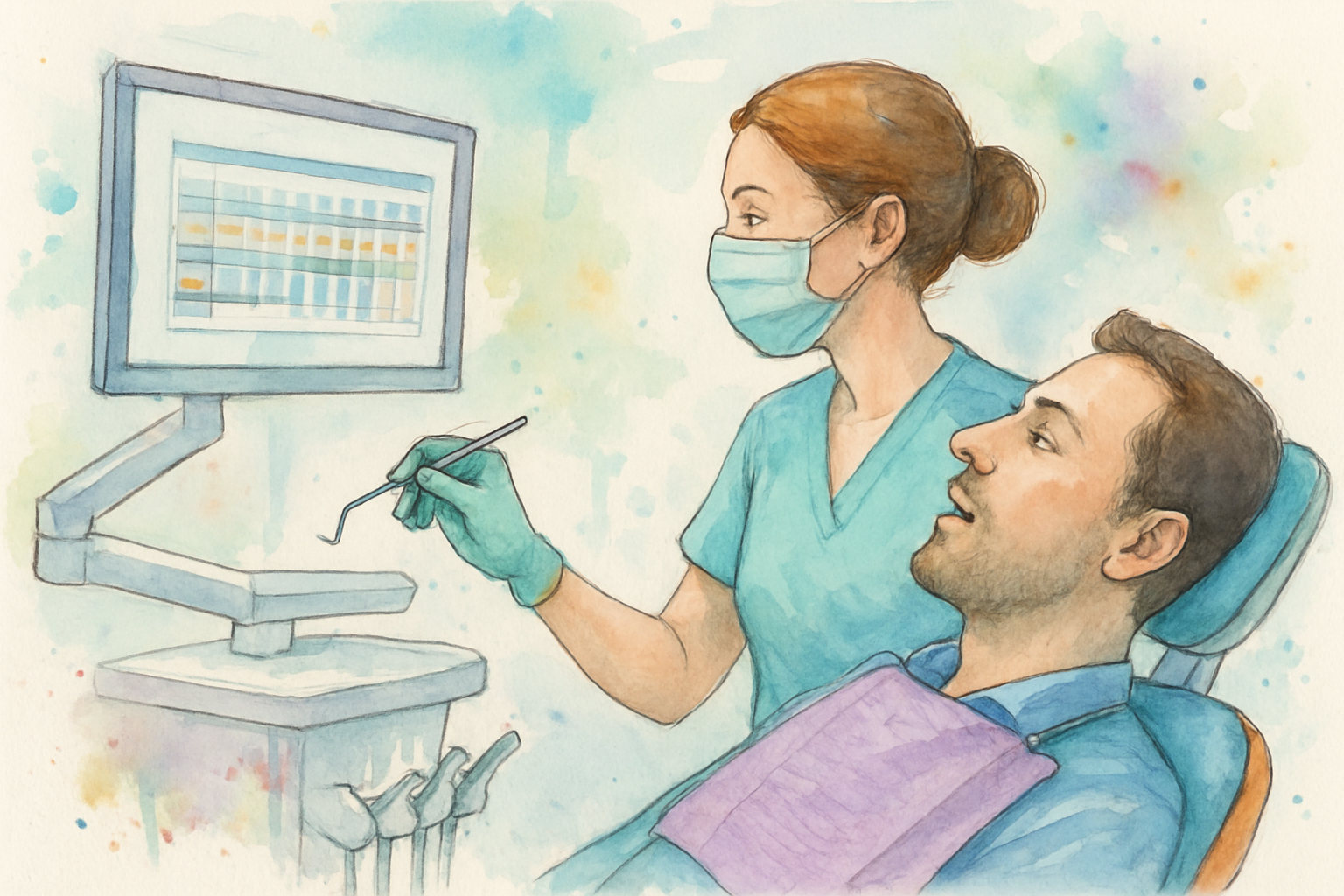
The main tool used is a periodontal probe, a thin instrument with millimeter markings. The hygienist or dentist slides it gently along the edge of your gum to measure the depth of the pocket between the tooth and gum tissue. Healthy pockets typically measure 1 to 3 millimeters. Readings of 4mm or more signal inflammation or early bone loss. Readings of 6mm or deeper indicate more advanced disease.
During a full evaluation, your provider checks:
- Pocket depths at 6 points around every tooth
- Bleeding on probing — even gentle bleeding is a clinical finding, not just irritation
- Gum recession, which exposes root surfaces and changes how pockets are measured
- Tooth mobility, which can reflect bone loss underneath
- Furcation involvement — whether disease has reached the area where a tooth’s roots divide
This full charting typically takes 10 to 15 minutes and should be part of a comprehensive dental exam. If your last few cleanings didn’t include it, that’s worth asking about.
Why Gum Disease Is So Easy to Miss Without an Evaluation
Periodontal disease doesn’t usually hurt until it’s well advanced. That’s the part most people find surprising — and the reason so many adults in North Glendale and Norterra end up needing more intensive treatment than they expected.
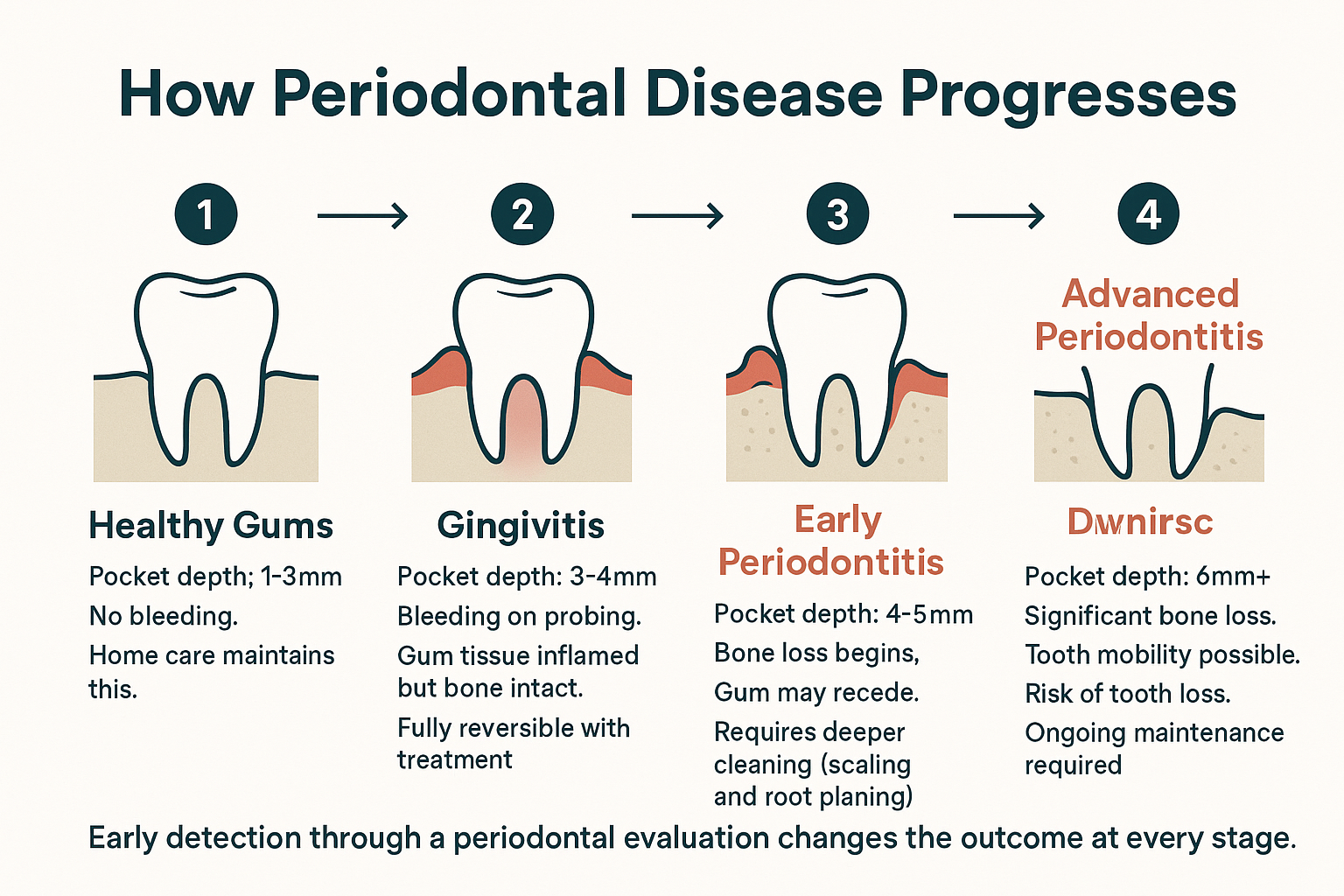
The early stage, called gingivitis, is fully reversible. It involves inflamed, bleeding gums but no permanent bone loss. Caught here, treatment is straightforward — a thorough cleaning and improved home care are often enough to resolve it within a few weeks.
The second stage, periodontitis, is not reversible in the same way. Once bone loss has occurred, that bone doesn’t fully grow back. Management becomes the goal rather than cure, which means more frequent visits, specialized cleanings, and long-term monitoring. You can read more about what that process involves in this overview of periodontal maintenance cleaning.
Several things accelerate gum disease without causing obvious symptoms:
- Smoking or tobacco use — significantly reduces bleeding on probing, masking disease severity
- Diabetes — poorly controlled blood sugar is directly linked to more aggressive gum disease
- Certain medications — blood pressure medications, antidepressants, and antihistamines can cause dry mouth, which raises bacterial load
- Hormonal shifts — pregnancy, menopause, and puberty all change how gum tissue responds to bacteria
- Aggressive brushing — a separate but related issue that can cause gum recession even without active infection
None of these feel like a dental emergency. They just quietly deepen your pockets over time.
Periodontal Disease: From Early Warning to Tooth Loss
This infographic shows how periodontal disease progresses through four stages and what clinical findings appear at each one.
How Often You Should Have a Periodontal Evaluation — and Who Needs One More Often
For most healthy adults with no history of gum disease, a full periodontal evaluation once a year is the standard. That typically means a complete probing and charting at least at your annual comprehensive exam, with visual gum assessments at every cleaning appointment.
But for many adults, once a year isn’t enough. If you’ve been diagnosed with periodontitis at any point, you’re in a different category. The American Academy of Periodontology’s guidelines support periodontal maintenance visits every 3 to 4 months for these patients — not every 6 months like a standard cleaning schedule.
If you’re unsure which schedule applies to you, that question is worth raising directly. A lot of people don’t know which type of dental visit they actually need or haven’t been clearly told.
Patients who should be evaluated more frequently include:
- Anyone with a prior periodontitis diagnosis, even if it was years ago
- Adults over 50, when bone density and gum tissue changes accelerate
- Smokers or former smokers, who carry significantly higher risk
- Patients with Type 1 or Type 2 diabetes
- Anyone who hasn’t had a full probing charting done in more than 2 years
- Patients with dental implants — the tissue around implants can develop its own form of gum disease called peri-implantitis, which needs the same kind of monitoring
For patients in the Arrowhead Lakes or Cibola Vista area who have implants, this is a particularly relevant point. Implants don’t decay, but the bone and tissue around them absolutely can be lost if gum disease goes unmonitored.
Periodontal Evaluation Frequency by Patient Profile
This table gives a general reference for how often different types of patients should expect a full periodontal evaluation. Individual recommendations will always depend on your clinical findings.
| Patient Profile | Recommended Evaluation Frequency | Notes |
|---|---|---|
| Healthy adult, no gum disease history | Once per year | Full probing at annual exam; visual check at each cleaning |
| Patient with gingivitis diagnosis | Every 6 months | Resolution should be confirmed with re-probing before returning to annual schedule |
| Patient with diagnosed periodontitis | Every 3–4 months | Periodontal maintenance replaces standard cleaning visits |
| Smoker or former smoker | Every 6 months minimum | Masking of bleeding on probing makes regular charting more important |
| Diabetic patient | Every 3–6 months | Dependent on how well blood sugar is controlled |
| Dental implant patient | Every 3–6 months | Implant sites require probing for peri-implantitis monitoring |
What Happens After a Periodontal Evaluation Finds a Problem
If your evaluation reveals elevated pocket depths or bone loss on X-rays, the next step depends on how far things have progressed.
For patients in the 4 to 5mm range with localized bleeding and mild bone loss, the first-line treatment is usually scaling and root planing — a deeper cleaning that goes below the gumline to remove bacterial deposits from the root surface. This is done with local anesthetic, typically one quadrant at a time, and most patients in the Stetson Valley and North Peoria area who’ve had it done describe it as far less uncomfortable than they expected.
After scaling and root planing, there’s a re-evaluation appointment at 6 to 8 weeks to measure how the tissue responded. Some patients return to normal maintenance from there. Others need ongoing periodontal maintenance visits every 3 to 4 months to keep the disease from advancing.
For more advanced cases — deep pockets that don’t respond to non-surgical treatment, significant bone defects, or furcation involvement — a referral to a periodontist may be appropriate. Dr. Dariene Lazore, DMD, provides a full periodontal evaluation and non-surgical treatment within the practice, and coordinates with specialists when more involved intervention is needed.
The thing to understand about periodontal disease is that catching it at gingivitis rather than periodontitis is a fundamentally different outcome — not just clinically, but financially. A course of scaling and root planing in the Phoenix metro area typically runs $150 to $300 per quadrant, and most insurance plans cover a meaningful portion of that. Advanced periodontitis that leads to tooth loss and implant placement is a much longer and more expensive road. You can get a sense of what that path looks like in this overview of how long dental implants actually last.
Frequently Asked Questions About Periodontal Evaluations
Is a periodontal evaluation painful?
For most patients with healthy gums, it’s mildly uncomfortable at most — a slight pressure sensation around the gumline. If your gums are inflamed or your pockets are deeper, there can be some sensitivity, but it’s brief. The probing itself takes only seconds per tooth.
I’ve been going to the same dentist for years and don’t think I’ve ever had one. Is that possible?
Yes, and it’s more common than most people realize. Some practices do a quick visual assessment and call it a periodontal check. A true evaluation requires a probe and documented pocket depth measurements at six points per tooth. If you’ve never seen a periodontal chart or heard numbers called out during your cleaning, you likely haven’t had a complete one.
My gums don’t bleed and they don’t hurt. Do I still need this?
Yes. Painless gums are not the same as healthy gums. As mentioned earlier, smoking and certain medications actually suppress bleeding even in the presence of active disease. Pocket depth measurements tell a more accurate story than symptoms alone.
Does insurance cover a periodontal evaluation?
Most dental insurance plans cover a periodic periodontal evaluation as part of a routine exam — it’s typically billed under a preventive or diagnostic code. If scaling and root planing is recommended afterward, coverage varies by plan, but most PPO plans cover 50% to 80% of that cost. The practice can review your benefits before any treatment is scheduled.
Can gum disease affect my overall health, not just my teeth?
Research over the last two decades has identified strong associations between periodontal disease and systemic conditions including cardiovascular disease, diabetes complications, and adverse pregnancy outcomes. The relationship is bidirectional — systemic conditions can worsen gum disease, and gum disease appears to worsen systemic inflammation. It’s one of the clearest reasons general and dental health can’t really be treated as separate things.
If I’m getting dental implants, do I need a periodontal evaluation first?
Active gum disease is one of the primary reasons implant placement gets delayed or fails. Any patient being evaluated for implants should have a current periodontal assessment — healthy bone and tissue are the foundation any implant depends on. You can read more about what patients should know before starting implants on the practice’s site.
Ready to Know Where Your Gum Health Actually Stands?
Beyond Dental Care provides full periodontal evaluations as part of comprehensive dental care for teens, adults, and seniors across North Glendale, Arrowhead Ranch, Vistancia, and the broader Northwest Phoenix area. If it’s been more than a year since your last complete probing and charting — or if you’ve never had one — it’s a good time to get a clear picture. Call the practice at 623-267-8088 or visit beyonddentalcare.com to schedule an appointment with Dr. Dariene Lazore, DMD.