
Direct Answer: Brushing removes surface plaque but can’t reverse staining that lives inside the tooth or on enamel that’s thinned over time. Most yellowing has causes brushing alone was never designed to fix.
You brush twice a day. Maybe you even floss. And yet when you look in the mirror, your teeth still have that dull, yellowish tint that no amount of whitening toothpaste seems to touch. It’s one of the most common frustrations patients across North Glendale, Arrowhead Ranch, and the Norterra corridor bring up at their dental visits.
The honest answer is that brushing was designed to remove plaque and prevent decay — not to reverse discoloration. Yellow teeth can come from several different sources, and most of them sit somewhere a toothbrush simply can’t reach.
This article breaks down the two main causes of tooth yellowing that brushing can’t fix, what’s actually happening inside your enamel, and what your real options look like.
The Difference Between Surface Stains and Stains Inside the Tooth
Not all yellow teeth are the same, and that distinction matters when you’re trying to figure out what to do about it.
Extrinsic stains live on the outer surface of the tooth. Coffee, tea, red wine, and tobacco leave pigment particles on the enamel layer. Brushing can reduce some of this buildup, but the particles bond to the enamel surface faster than a soft toothbrush can scrub them away — especially if you’re drinking coffee every morning and brushing once at night.
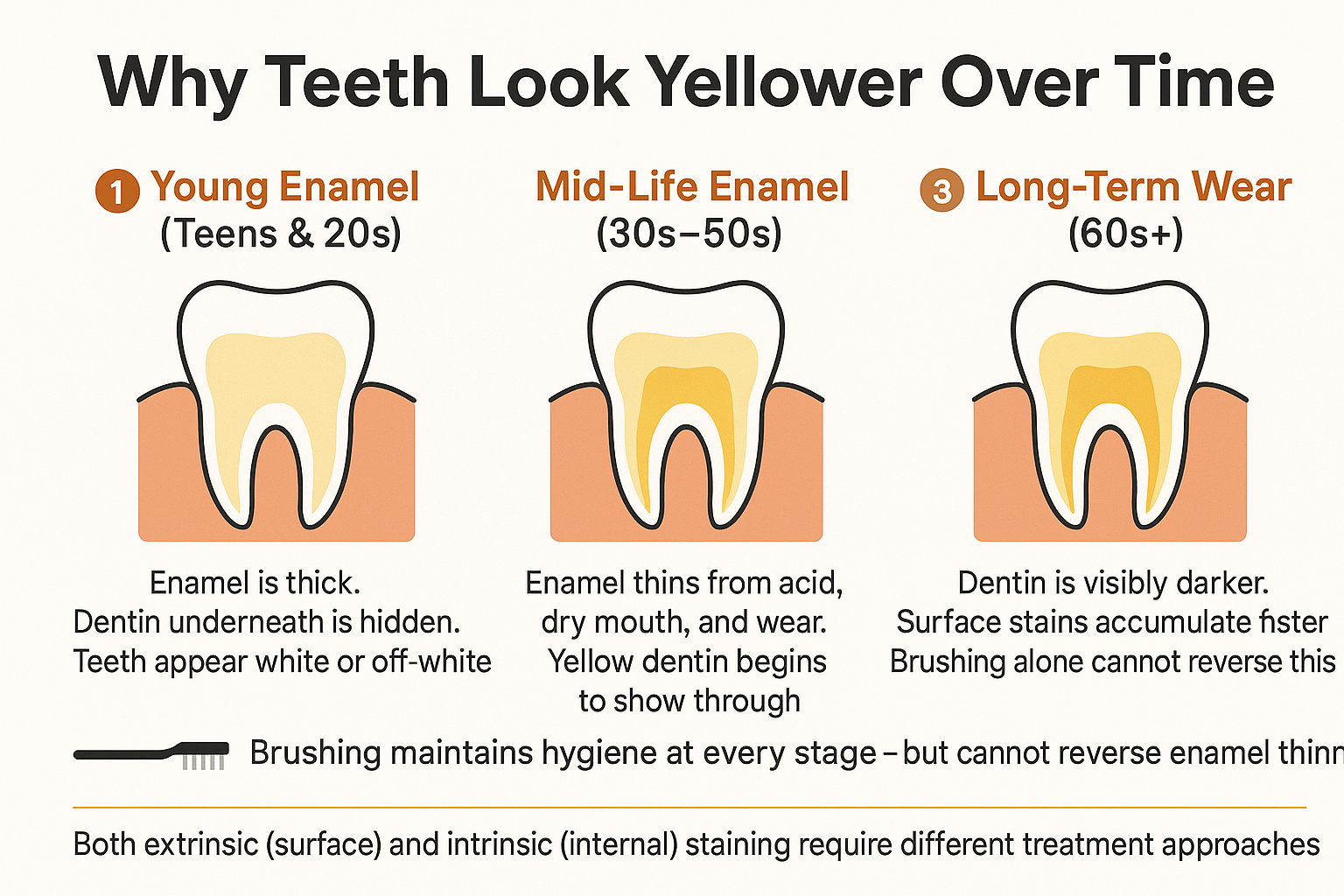
Intrinsic stains are a different problem entirely. These live inside the tooth itself, in the dentin layer beneath the enamel. Dentin is naturally yellow. And as enamel thins with age — which happens to everyone — that yellow shows through more. No toothbrush, no matter how often you use it, gets to dentin.
A few things that cause or worsen intrinsic discoloration:
- Age — enamel thins naturally starting in your 30s, making dentin more visible
- Certain medications — tetracycline antibiotics taken during tooth development can cause deep gray or yellow banding
- Fluorosis — overexposure to fluoride during childhood development can leave white spots or brown streaks
- Root damage or trauma — a tooth that took a hard hit can darken from the inside as the pulp tissue changes
Understanding which type you’re dealing with is the first step — and it’s something a dentist can identify at a comprehensive dental exam.
Why Enamel Erosion Makes Yellowing Worse Over Time
Enamel is the hardest substance in the human body — but it doesn’t grow back once it’s gone. And in the Northwest Phoenix metro, where busy schedules and high-stress workdays are the norm, the habits that wear enamel down are everywhere.
Acidic foods and drinks are the biggest culprit. Citrus juice, sparkling water, sports drinks, and vinegar-based foods all lower the pH in your mouth and soften enamel temporarily. Brushing right after drinking something acidic actually accelerates the damage — the enamel is soft and the brush strips it faster.
Chronically dry mouth is another factor. Saliva naturally neutralizes acid and remineralizes enamel throughout the day. Patients who breathe through their mouth, take antihistamines, or live in Phoenix’s dry heat often experience accelerated enamel thinning because saliva flow is reduced. By age 50, many adults have measurably thinner enamel than they did at 30, even with consistent brushing habits.
This is why patients in Stetson Valley and Vistancia who have been brushing faithfully for decades sometimes notice more yellowing in their 40s and 50s than they ever did before. The teeth haven’t changed habits — the enamel protecting them has just had more time to wear.
If you’ve noticed your gums pulling back along with increasing sensitivity, that’s worth reading about — brushing too hard and gum recession often go hand in hand with enamel wear.
Common Causes of Yellow Teeth and Whether Brushing Helps
Here’s a quick breakdown of the most common yellowing causes and what brushing actually does — or doesn’t do — for each one.
| Cause | Type | Does Brushing Help? |
|---|---|---|
| Coffee and tea staining | Extrinsic | Partially — reduces buildup but doesn’t reverse deep staining |
| Tobacco use | Extrinsic | Minimally — tar bonds strongly to enamel |
| Thinning enamel with age | Intrinsic | No — brushing cannot thicken enamel |
| Dentin darkening | Intrinsic | No — dentin is beneath the enamel layer |
| Medication-related staining | Intrinsic | No — this requires cosmetic treatment to address |
| Plaque buildup | Extrinsic | Yes — this is exactly what brushing is designed to prevent |
What Happens to Tooth Color as Enamel Thins
This infographic shows the layered structure of a tooth and how enamel thickness affects perceived color over time.
What Actually Works for Whitening Yellow Teeth
Once you know what’s causing the discoloration, the treatment options become a lot clearer.
For extrinsic staining — the surface kind from food and drinks — professional cleaning removes a significant layer of buildup that at-home brushing leaves behind. A hygienist uses instruments and polishing compounds that go well beyond what a toothbrush can do. Most patients notice a visible difference immediately after a cleaning, before any whitening treatment is even considered.
For intrinsic discoloration or enamel that has already thinned, the options shift to cosmetic treatments:
- Professional teeth whitening — bleaching agents penetrate the enamel layer and lighten the dentin beneath; significantly more effective than over-the-counter strips because the concentration of active ingredient is higher and the application is controlled
- Dental bonding — tooth-colored resin applied over discolored teeth; works well for isolated staining or minor chips alongside discoloration
- Porcelain veneers — thin shells bonded to the front surface; typically reserved for more significant cosmetic concerns or when whitening alone won’t reach the desired result
These options address different problems, and they’re not interchangeable. Whitening, bonding, and veneers solve completely different smile problems — and understanding which one fits your situation is a conversation worth having with your dentist before spending money on any of them.
If you’re weighing cosmetic options and want to ask the right questions before committing, what to ask before starting any cosmetic dental treatment is a good place to start.
One Overlooked Reason Teeth Stay Yellow: Skipping Professional Cleanings
Many patients in the Arrowhead Lakes and Hillcrest Ranch areas go longer than they should between professional cleanings — sometimes two or three years. During that time, calculus (hardened tartar) builds up on and between teeth in ways that daily brushing cannot remove.
Calculus is porous and stain-absorbing. The longer it sits, the more pigment it collects from your food and drinks. And because it bonds to enamel, it changes the color and texture of the tooth surface even after it’s professionally removed.
Getting back on a regular cleaning schedule — typically every six months for most adults — is the single most practical step for patients who are frustrated with yellowing that doesn’t respond to brushing. For patients who already have early gum disease, a periodontal maintenance cleaning may be the right type of cleaning, not a standard prophylaxis.
A regular exam also gives the dentist a chance to flag which type of staining you’re dealing with and whether whitening would work — or whether a different approach makes more sense for your specific situation.
Frequently Asked Questions About Yellow Teeth
Can whitening toothpaste actually fix yellow teeth?
Whitening toothpastes work primarily through mild abrasives that polish surface stains. They can reduce the appearance of extrinsic staining slightly over time, but they don’t contain enough peroxide to lighten dentin. For most people, the effect is modest at best — and using a highly abrasive toothpaste long-term can actually thin enamel further.
My teeth got noticeably more yellow after I turned 40 — is that normal?
Yes. Enamel thins throughout adulthood, and the dentin underneath becomes more visible as a result. This is one of the most common reasons patients notice more yellowing in their 40s and 50s even when their oral hygiene hasn’t changed. It’s a structural change, not a hygiene failure.
Will professional teeth whitening work on all types of yellow staining?
Professional whitening works well for most extrinsic staining and for the general yellowing that comes from thinning enamel. It’s less effective on staining caused by tetracycline antibiotics, fluorosis, or tooth trauma — those cases often need bonding or veneers to achieve a noticeable change. A dentist can tell you during an exam which category your staining falls into.
How long does professional whitening last?
Results typically last 1–3 years depending on diet, habits, and whether you use touch-up treatments. Coffee and red wine drinkers tend to see fading sooner. Avoiding staining foods for the first 48–72 hours after whitening, when pores in the enamel are still open, makes a real difference in longevity.
Is it worth whitening before getting veneers or other cosmetic work?
Generally, no — and the order matters. If you’re considering veneers or bonding, whitening first can create a mismatch because the restorative material is shade-matched at placement. The usual approach is to decide on the full cosmetic plan first, then whiten natural teeth to the target shade before any restorations are placed. What to ask before starting any cosmetic dental treatment covers this kind of sequencing in more detail.
Ready to Find Out What’s Actually Behind Your Tooth Discoloration?
Beyond Dental Care serves patients across North Glendale, Arrowhead Ranch, Stetson Hills, Norterra, and the broader Upper West Side Phoenix area. Dr. Dariene Lazore, DMD takes time during every exam to explain exactly what’s causing what you’re seeing — and what your real options are — without pressure to do anything you’re not ready for. To schedule a visit, call 623-267-8088 or go to beyonddentalcare.com.