
An advanced guide to preventive dental care for adults and seniors goes far beyond the basics of brushing and flossing. It’s a complete shift in mindset—a proactive strategy that views your oral health not in isolation, but as a critical component of your overall wellness.
This approach is designed to help you sidestep costly emergencies, get an early look at potential systemic diseases, and maintain genuine, long-term confidence in your smile.
Rethinking Preventive Dental Care
For years, the standard advice on preventive dental care has been pretty simple: get your teeth cleaned twice a year. While that’s not bad advice, it completely misses the bigger picture. Most providers talk about preventive care in vague terms—cleanings, exams, maybe fluoride—without linking these services to long-term health or economic benefits.
The conversation needs to evolve. Most providers fail to address the real “why now”—such as how preventive visits reduce costly emergencies or help detect early signs of systemic disease. They also ignore data on how prevention supports mental well-being and confidence. As we age, we face a new set of dental challenges—things like gum recession, dry mouth, or the unique care required for implants and dentures. A modern, advanced approach meets these challenges head-on.
From Reactive Repairs to Proactive Wellness
Too often, the link between preventive care and avoiding painful, expensive emergencies isn't made clear. The same goes for its role in spotting the early signs of systemic diseases like diabetes or heart conditions. When these connections are missed, patients get stuck in a reactive cycle, only seeking care when something finally hurts.
This is a fork in the road, and the path you choose makes all the difference.
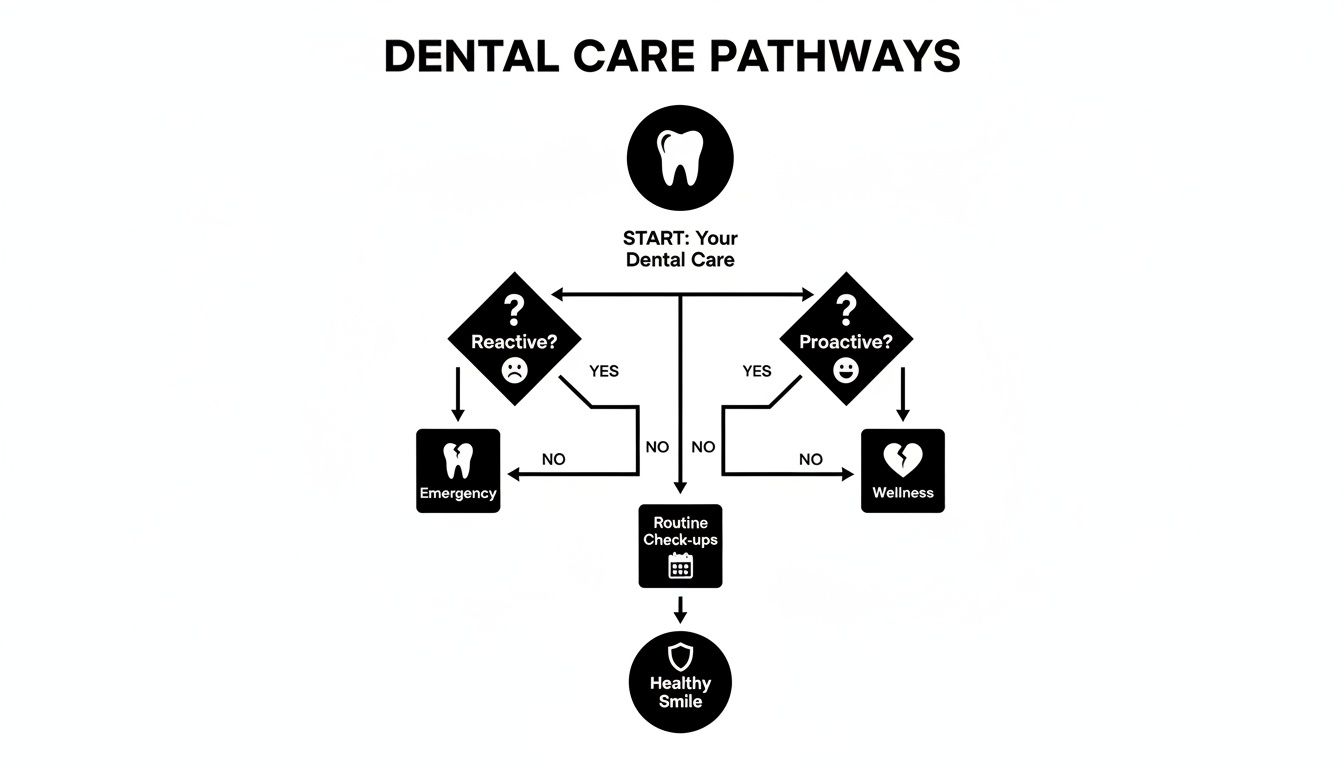
As the visual shows, a proactive approach is a direct route to wellness, while a reactive one is a detour that often ends in an emergency. This is the core principle of advanced preventive care: making informed decisions today to safeguard your health for all your tomorrows.
We’ve seen firsthand how this shift from a reactive to a proactive mindset completely changes a patient’s health trajectory. It’s a move away from the old drill-and-fill model toward a partnership focused on total-body wellness.
The Shift from Standard to Advanced Preventive Care
| Care Aspect | Standard (Reactive) Approach | Advanced (Proactive) Approach |
|---|---|---|
| Philosophy | "If it ain't broke, don't fix it." Care is sought only when there is pain or a noticeable problem. | "Prevent it before it breaks." Focus is on identifying and mitigating risks before they become issues. |
| Screenings | Basic visual exams and standard X-rays, primarily looking for existing decay or damage. | Comprehensive screenings, including oral cancer checks, periodontal mapping, and advanced imaging. |
| Systemic Links | Oral health is treated as separate from the rest of the body. | The mouth is seen as a window to overall health, connecting gum disease to risks like diabetes and heart disease. |
| Patient Role | The patient is a passive recipient of treatment for existing problems. | The patient is an active partner in creating a personalized wellness plan based on their unique risk factors. |
| Outcome | Frequent emergencies, higher long-term costs, and a cycle of repairs. | Fewer emergencies, lower lifetime costs, and improved overall health and well-being. |
This table really drives home the difference. It's about moving from a model of damage control to one of strategic health management, where you are firmly in the driver's seat.
Data backs this up. 83% of dental visits in 2023 were for preventive care (up from 78% in 2022). Meanwhile, unexpected dental visits dropped from 36% to 22%—a clear ROI for prevention.
Ultimately, patients who prioritize preventive care experience fewer dental emergencies, lower treatment costs, and more confidence in their long-term health—physically and mentally.
For residents of North Glendale, Arrowhead Ranch, or Stetson Valley, Beyond Dental Care offers a smarter, more proactive approach to preventive care—tailored for adults and seniors who want to protect both their health and their time.
How Your Oral Health Impacts Your Overall Wellness
Many of us grew up thinking of the mouth as its own little island, separate from the rest of the body. A place for brushing and flossing, sure, but not much else. That view is incredibly outdated. Your oral health isn't an isolated system at all—it’s actually a powerful window into your overall wellness and can directly influence your risk for other serious health conditions.
Think of your gums as a gatekeeper. When this gate is strong and healthy, it keeps harmful bacteria contained right where they belong. But when gum disease starts to develop, that gate becomes compromised, allowing inflammation and bacteria to spill directly into your bloodstream.
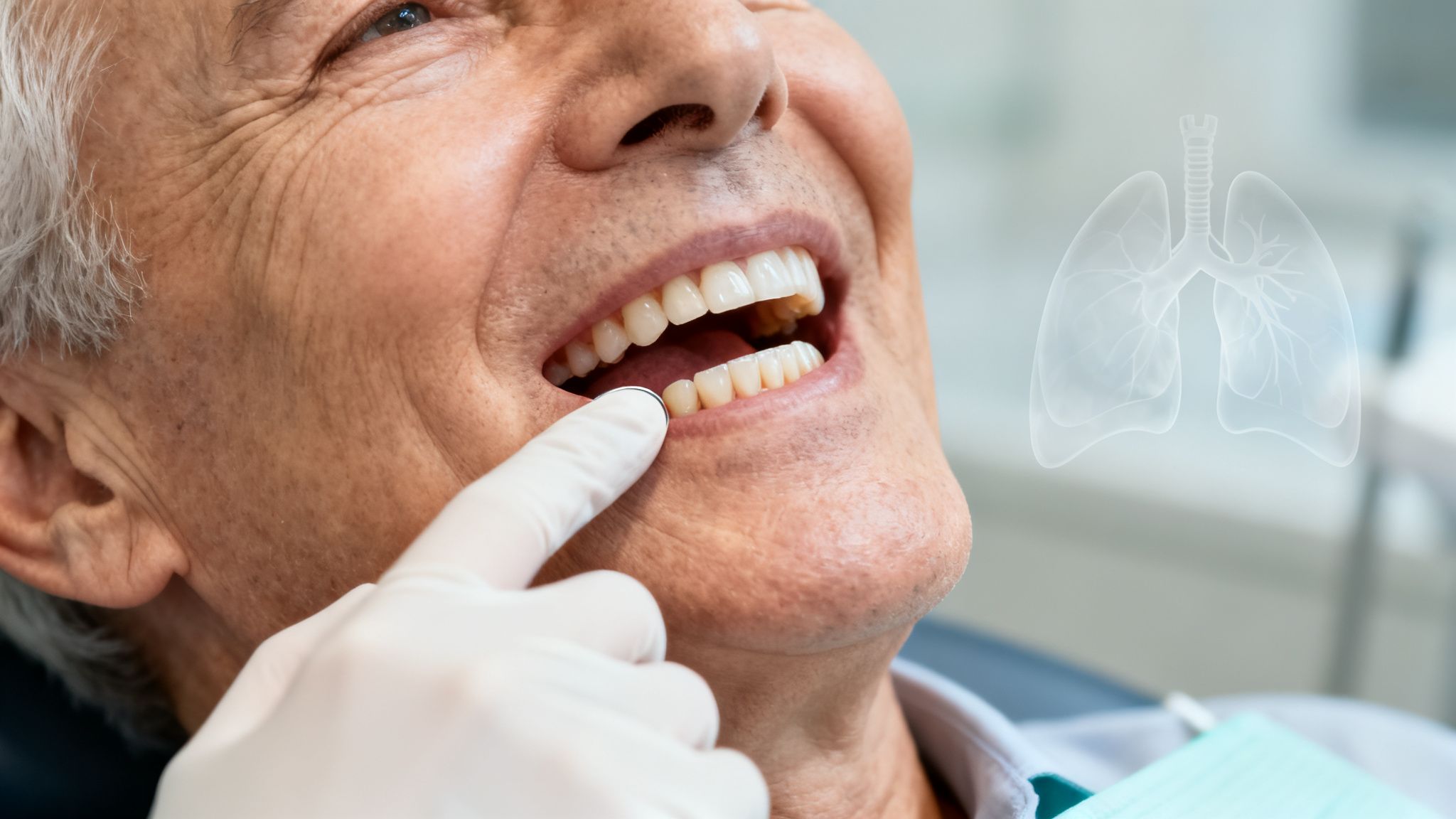
This isn’t some rare occurrence, either. Gum disease sneaks up on nearly half of adults aged 30 and older—that’s a staggering 46% in the U.S. alone. It gets even more serious for seniors, with severe cases affecting 23% of those over 65. The problem is global, with severe periodontitis now impacting over a billion people.
The Mouth-Body Connection Explained
Once those harmful bacteria from your gums enter your circulation, they can travel literally anywhere in your body, triggering inflammation far from the original source. This chronic, low-grade inflammation is a known contributor to several major systemic diseases.
It’s a bit like having a slow, hidden leak in your home’s plumbing. You might not notice it at first, but over time, that constant dampness can lead to mold, rot, and serious structural damage. In much the same way, chronic inflammation from your gums can quietly damage your body’s other systems.
A modern dental visit is more than just a routine cleaning; it's a vital health screening. We're not just looking at your teeth. We're looking for the early warning signs of systemic issues that often appear in the mouth first.
This is exactly why any advanced guide to preventive dental care for adults and seniors must emphasize the mouth-body connection. Your dentist is often the first line of defense in identifying risks for other health problems.
Key Health Risks Linked to Poor Oral Health
The scientific evidence linking what happens in your mouth to your overall wellness is strong, and it just keeps growing. A proactive approach to dental care isn't just about saving your teeth; it's about protecting your life.
Here are some of the most significant connections we see:
- Heart Disease: The same bacteria found in infected gums have been discovered in the plaque that clogs arteries. The chronic inflammation tied to gum disease can increase the risk of heart attack and stroke.
- Diabetes: The relationship here is a two-way street. Uncontrolled diabetes makes you more susceptible to gum disease, and severe gum disease can, in turn, make it harder to control your blood sugar.
- Respiratory Issues: Bacteria from your mouth can be inhaled into your lungs, which can lead to nasty infections like pneumonia. This is a particular concern for older adults or anyone with a compromised immune system.
- Cognitive Decline: New studies are even suggesting a potential link between the bacteria that cause gum disease and an increased risk for conditions like Alzheimer's disease and other forms of dementia.
By actively managing your oral health, you are taking a powerful step to reduce your risk factors for these serious conditions. This is the cornerstone of modern preventive dentistry—turning your dental visits into a pillar of your complete health strategy.
Beyond basic hygiene, understanding how specific micronutrients affect your oral structures is key. For a deeper dive, explore the essential Vitamin K2 benefits for bone, heart, and dental health to see how diet plays a critical role.
At Beyond Dental Care, we see this connection every single day. For our patients in North Glendale, Arrowhead Ranch, and Stetson Valley, we make this a central part of our care. We use advanced diagnostics not just to check for cavities, but to monitor your gum health as a direct reflection of your overall wellness, creating a personalized plan that protects both your smile and your future.
Advanced Home Care Techniques You Can Use Today
A solid at-home care routine is the absolute bedrock of preventive dental care, especially as you get older. Sure, brushing and flossing are non-negotiable, but taking your routine to the next level with the right tools and techniques can make a massive difference. This is all about moving beyond the basics to actively defend your smile between professional cleanings.
Think of it like this: a manual toothbrush is a decent broom, great for sweeping the big, easy-to-reach surfaces. But to get the gunk out of the corners and tight spots, you need better tools. The same logic applies to your mouth, where plaque loves to hide in places a simple brush just can’t get to.
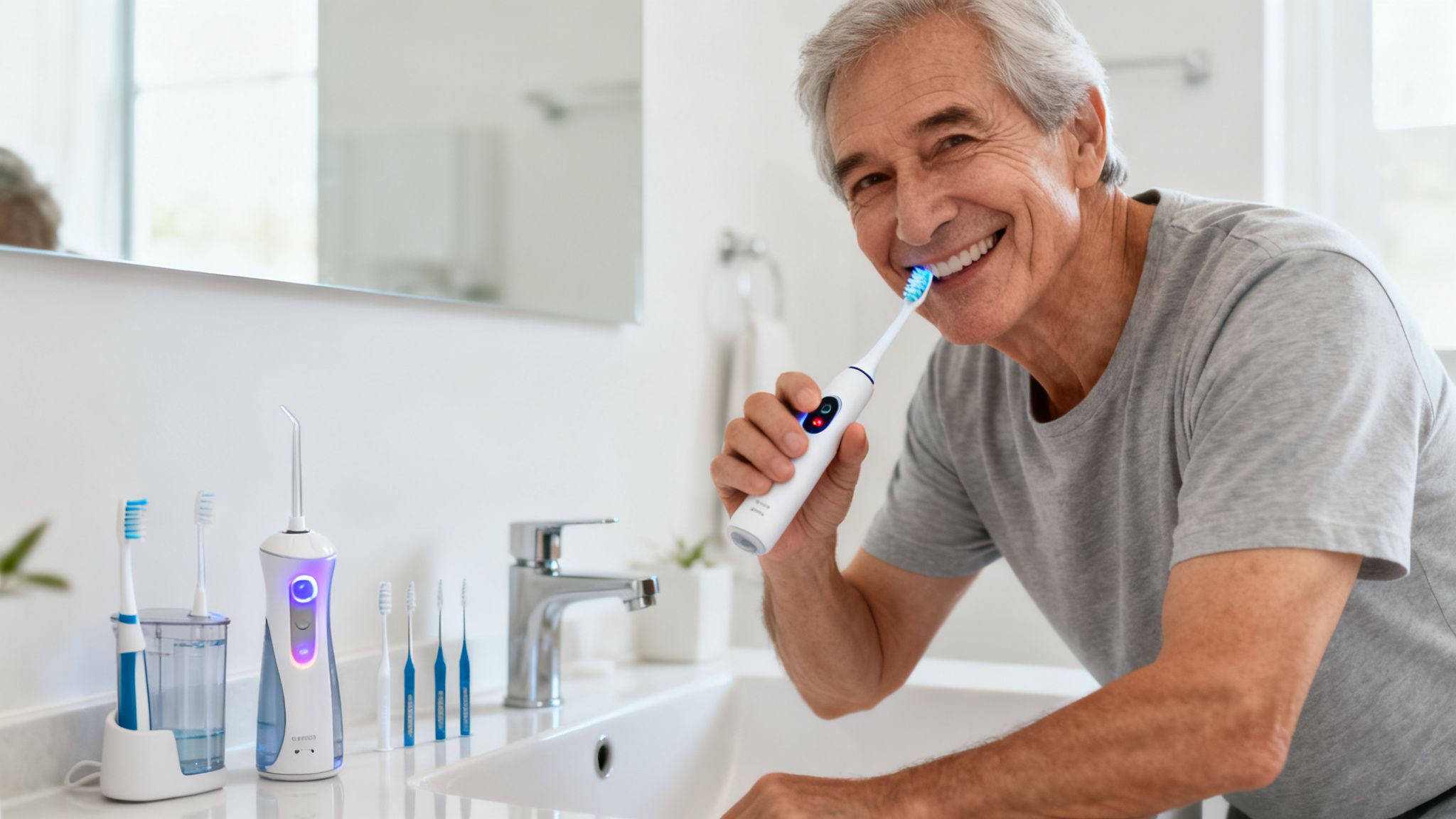
This is why upgrading your toolkit isn't just a nice idea—it's a game-changer. It's a proactive move that directly supports your long-term health, helping you sidestep common dental problems before they even get started.
Upgrading Your Oral Hygiene Toolkit
The right tools don't just clean better; they actively protect you from common issues like gum recession and sensitivity. Investing in a few key pieces of equipment can turn your daily routine from a chore into a powerful preventive strategy.
Here are the modern essentials for a truly effective at-home regimen:
- Electric Toothbrushes with Pressure Sensors: These are far more than a gimmick. A quality electric brush will alert you if you're pressing too hard—a primary cause of gum recession and enamel wear. Plus, their sonic or oscillating technology is proven to remove significantly more plaque than manual brushing.
- Water Flossers: If you have dental implants, bridges, or even tight contacts, a water flosser is a must-have. It uses a targeted stream of water to flush out plaque and food debris from around restorations and below the gumline, areas where string floss often falls short.
- Interdental Brushes: As we age, the spaces between our teeth can widen a bit. Interdental brushes, which look like tiny pipe cleaners, are designed to clean these larger gaps far more effectively than floss ever could.
By incorporating these tools, you're building a multi-layered defense against decay and gum disease.
Your Personalized At-Home Care Toolkit
Your mouth is unique, so your toolkit should be too. This table breaks down which tools and techniques are best suited for specific dental situations common among adults and seniors.
| Dental Condition | Recommended Tool | Technique/Tip |
|---|---|---|
| Gum Recession/Sensitivity | Electric Brush with Pressure Sensor | Use a soft head and let the brush do the work. Focus on a gentle, circular motion along the gumline. |
| Dental Implants or Bridges | Water Flosser | Use on a low to medium setting. Trace the gumline and pause at the spaces between teeth and around the base of the implant. |
| Widening Gaps Between Teeth | Interdental Brushes | Choose the correct size for each gap—it should fit snugly but not be forced. Gently move it in and out a few times. |
| Prone to Plaque Buildup | Both Electric Brush & Water Flosser | Use the electric brush for 2 minutes, twice daily. Follow up with the water flosser at night to clear out residual plaque. |
| Dry Mouth (Xerostomia) | Biotene or Xylitol Products | Use xylitol-containing mints or gum to stimulate saliva. An oral rinse for dry mouth can provide significant relief. |
Think of this as your starting point. The goal is to create a customized routine that tackles your specific challenges head-on, making every minute you spend on your oral health as effective as possible.
Addressing Specific Needs for Adults and Seniors
As we get older, our oral health landscape changes. A truly advanced home care plan has to adapt to meet these new challenges, ensuring your teeth and gums stay healthy for a lifetime.
And these aren't niche problems. Oral health issues are incredibly widespread, impacting over 3.5 billion people across the globe. Here in the U.S., a staggering 25% of adults have untreated cavities, which tells you just how much room for improvement there is in at-home preventive care.
Key Insight: Your at-home care routine shouldn't be static. It needs to evolve to meet the challenges of dry mouth, sensitive roots, or the specific maintenance required for dentures and implants.
Here are a few targeted strategies for common concerns:
- Managing Dry Mouth (Xerostomia): Many medications reduce saliva flow, which skyrockets your risk for cavities. Fight back by staying hydrated, chewing sugar-free gum to stimulate saliva, and using over-the-counter oral rinses or moisturizers made for dry mouth.
- Protecting Exposed Root Surfaces: When gums recede, they expose the softer root surfaces of your teeth, which are far more vulnerable to decay and sensitivity. Use a toothpaste designed for sensitive teeth and always, always brush gently with a soft-bristled brush.
- Cleaning Dentures and Implants: Dentures need to be removed and cleaned daily with a soft brush and non-abrasive denture cleaner to head off fungal infections. For implants, cleaning meticulously around the base with a water flosser or interdental brush is vital to prevent inflammation.
For specific challenges like grinding your teeth at night (bruxism), it's crucial to add targeted habits to your routine. You can learn more about proven strategies to stop teeth grinding at night. By personalizing your approach, you empower yourself to maintain fantastic oral health, no matter your age or dental history.
What a Modern Proactive Dental Visit Looks Like
The old-school dental visit—a quick scrape, a polish, and a brief "see you in six months"—is becoming a relic. A modern preventive appointment has evolved into something far more meaningful: a strategic health assessment. The entire focus has shifted from reacting to problems to proactively managing your long-term wellness.
Think of it less as a "cleaning" and more as a comprehensive review of your oral and systemic health. We now know that what happens in your mouth is a direct window into what's happening in the rest of your body. Instead of just hunting for cavities, we're gathering critical data to build a complete picture, making you an active partner in your own health journey.
Precision Diagnostics Beyond the Surface
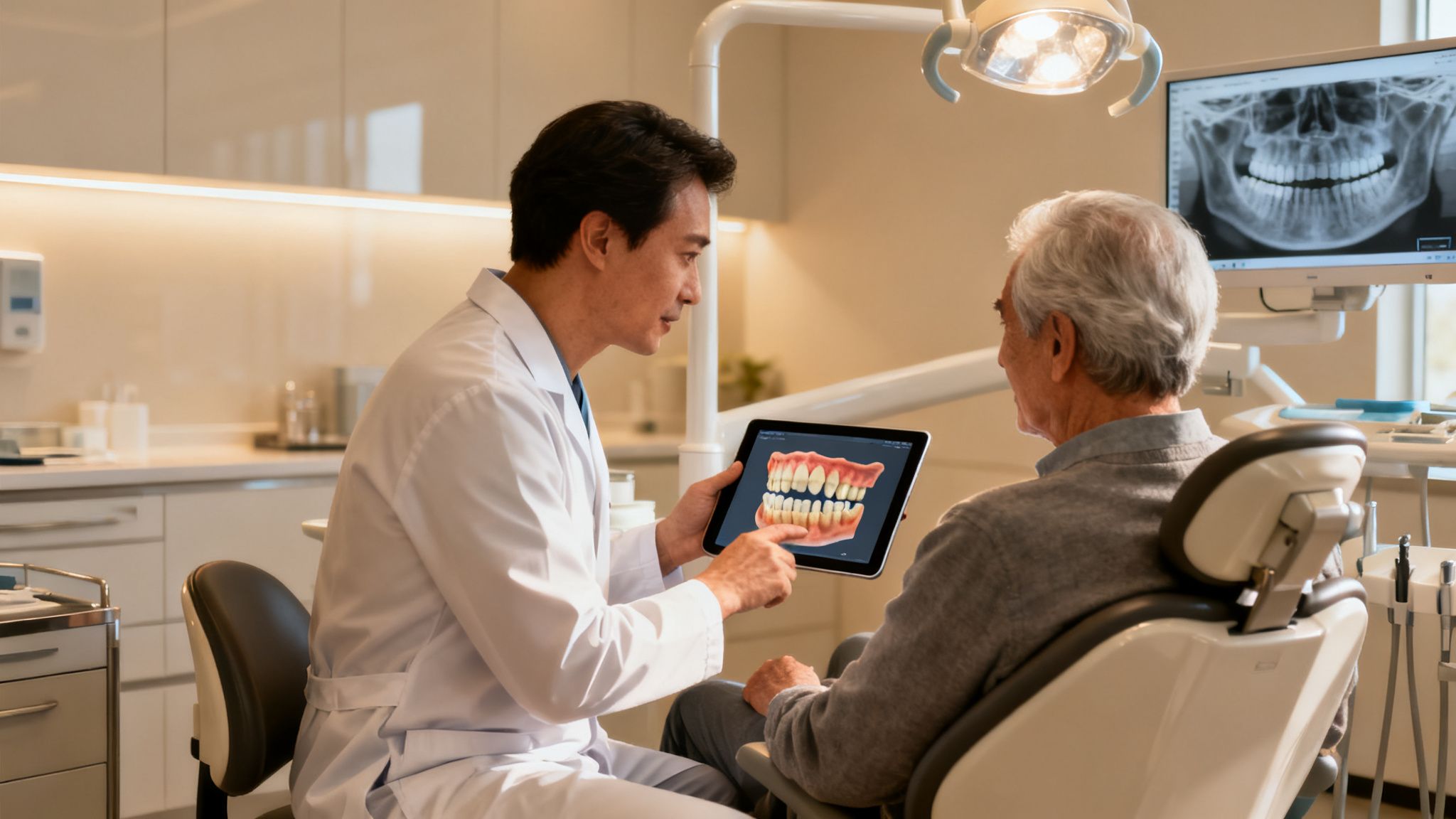
A proactive visit starts by looking much deeper than the naked eye can see. Using state-of-the-art diagnostic tools, we can spot potential trouble long before it causes pain or demands a complex fix. This is where technology becomes your most powerful ally in preventive care.
Here are the key diagnostic tools we rely on in a modern checkup:
- Advanced Digital Imaging: Low-radiation digital X-rays give us crystal-clear images of your teeth and jaw, letting us find decay between teeth or lurking beneath old fillings. For more complex situations, a 3D cone-beam computed tomography (CBCT) scan offers an incredibly detailed view of bone structure—vital for planning dental implants or uncovering hidden issues.
- Comprehensive Periodontal Charting: This isn't just a quick glance at your gums. We meticulously measure the small pockets between your teeth and gums. By tracking these measurements over time, we can catch the absolute earliest signs of gum disease and step in before real damage occurs.
- Thorough Oral Cancer Screenings: Every adult and senior should have a comprehensive oral cancer screening at each and every visit. We carefully examine your lips, tongue, cheeks, and throat for any abnormalities. Early detection is everything and dramatically improves outcomes.
These tools provide the hard data we need to move from guesswork to a precise, evidence-based strategy for your health. To see how these technologies work, you can learn more about our approach to digital dental imaging.
At Beyond Dental Care, prevention is aligned with modern priorities. This means leveraging early diagnosis with advanced imaging, understanding the critical link between gum health and heart health, and developing personalized treatment plans that reflect your unique age and risk factors.
Co-Creating Your Personalized Health Plan
The most important part of a modern preventive visit is what happens after we've gathered all the data. This is where we shift from being simple service providers to becoming your dedicated health partners. Your dentist should sit down with you, explain the findings in clear, simple terms, and work with you to build a long-term care plan.
This plan isn't a generic template. It’s a roadmap tailored specifically to you, taking into account:
- Your Age and Health History: The right plan for a healthy 45-year-old will look completely different from one for a 75-year-old with diabetes and dental implants.
- Your Personal Risk Factors: Is there a family history of gum disease? Are you taking medications that cause dry mouth? These factors are built directly into your plan.
- Your Lifestyle and Goals: We work to create a plan that fits into your life, not the other way around. The goal is to make maintaining your oral health both manageable and effective.
This collaborative process empowers you to take real ownership of your health. You'll leave your appointment not just with cleaner teeth, but with a clear understanding of where you stand today and a set of actionable steps to protect your health for the future. This is the true essence of an advanced guide to preventive dental care for adults and seniors—it's about partnership, planning, and long-term peace of mind.
The Proven Financial Benefits of Preventive Care
Investing in preventive dental care is easily one of the smartest financial moves you can make for your long-term health. Most dental offices will tell you to come in for routine cleanings and exams, but they often fail to connect the dots to your wallet. The real value isn’t just about keeping your smile healthy—it’s about sidestepping the massive costs and stress of dental emergencies down the road.
Think of proactive care as a powerful form of insurance. A small, predictable investment in regular checkups helps us catch minor issues like early decay or gum inflammation before they explode into painful and expensive problems. A tiny cavity we can fix with a simple filling today could easily become a root canal and crown tomorrow, a fix that costs thousands and eats up hours of your time.
Prevention as a Smart Investment
The numbers tell a compelling story. Recent data shows that 83% of dental visits in 2023 were for preventive services, a solid jump from 78% in 2022. This trend is fantastic because it shows more people are getting ahead of problems. The same report found that unexpected emergency visits dropped from 36% to 22%—a clear return on investment for anyone who prioritizes prevention.
Better yet, 91% of adults now agree that their dental checkups are just as critical as their annual physicals. This is a huge shift in mindset, showing a deeper understanding that your oral health is a key piece of your overall wellness.
Patients who prioritize preventive care experience fewer dental emergencies, lower treatment costs, and more confidence in their long-term health—physically and mentally.
This whole approach is about more than just saving money; it’s about preserving your peace of mind. Knowing your smile is healthy and well-maintained gets rid of the anxiety that comes with sudden toothaches and urgent appointments.
The Tangible Returns of Proactive Care
The benefits go far beyond just avoiding major procedures. A healthy smile directly impacts your mental well-being and confidence, which is an invaluable asset at any age. When you feel good about your smile, it naturally shows in your social interactions and professional life.
Patients who follow an advanced guide to preventive dental care for adults and seniors consistently report:
- Fewer Dental Emergencies: Less time spent dealing with unexpected pain and scrambling for last-minute appointments.
- Lower Overall Costs: Small, manageable investments in prevention save you from large, complex treatment bills later.
- Enhanced Confidence: A healthy, stable smile supports your mental and emotional wellness.
For our neighbors in North Glendale, Arrowhead Ranch, or Stetson Valley, Beyond Dental Care offers this smarter, more proactive path. We help you protect your health and your time with personalized preventive strategies. To explore how we make our services affordable, you might be interested in our guide on making premium dentistry accessible.
Finding Your Partner in Proactive Dental Health
Choosing a dentist is so much more than just finding a place to get your teeth cleaned. It's about finding a true partner in your long-term health. This entire guide is built on one core idea: that your oral health is directly and powerfully connected to your overall wellness. Moving beyond basic cleanings means embracing a proactive strategy that protects not just your smile, but your health, your time, and your confidence for years to come.
The right dental team acts as your co-pilot on this journey. They don't just sit back and wait to treat problems as they arise. Instead, they work with you to build a personalized plan that anticipates risks, uses modern technology for early detection, and truly respects your unique health history. This is a relationship founded on trust and the shared goal of achieving lasting wellness.
Key Pillars of a Modern Dental Partnership
A successful partnership with your dentist is built on a few non-negotiable principles. These are the cornerstones of a practice that is genuinely committed to managing your health proactively. When you find a provider who lives these values, you know you’re in the right place to protect your smile and your future.
Here’s what this modern approach really boils down to:
- Understanding the Mouth-Body Connection: It’s about recognizing that managing gum health is absolutely crucial for reducing risks tied to heart disease, diabetes, and other systemic conditions.
- Valuing Personalized Care Plans: This means moving away from the old one-size-fits-all model and toward a strategy that actually reflects your specific age, health status, and personal goals.
- Believing in the Proven ROI of Prevention: It's a shared acceptance that consistent, proactive care is a smart investment that saves you from costly emergencies down the road and preserves your peace of mind.
This shift in perspective is what transforms dentistry from a series of reactive fixes into a continuous, empowering wellness journey. It’s all about being proactive today to secure a healthier tomorrow.
Choosing a provider who shares this vision ensures you are not just a patient, but an active participant in your own care. For residents of North Glendale, Arrowhead Ranch, or Stetson Valley, Beyond Dental Care offers a smarter, more proactive approach to preventive care—tailored for adults and seniors who want to protect both their health and their time. Find out how we can help you build a lasting partnership for your dental health.
This proactive philosophy ensures that every visit is a meaningful step forward in your overall health plan. It’s time to find a partner committed to helping you achieve the confident, healthy future you deserve.
Common Questions About Advanced Preventive Care
An in-depth guide to preventive dental care for adults and seniors always brings up a few practical questions. After all, modern dentistry has moved miles beyond simple cleanings, and understanding this shift is the first step in protecting your long-term health. Here are clear, straightforward answers to some of the most common questions we hear.
How Often Should I Really Get a Dental Cleaning as a Senior?
While twice a year has been the standard recommendation for decades, it’s not a one-size-fits-all rule. For many adults and especially seniors—particularly those with a history of gum disease, dental implants, or systemic health issues like diabetes—we often recommend more frequent visits, usually every three or four months.
An advanced preventive plan is always personalized to your unique health profile. We take a close look at your specific risk factors, from medications that cause dry mouth to your current periodontal status. This allows us to create a schedule that gives you the best possible protection against costly future problems and supports your overall wellness.
Are Advanced 3D Scans Really Necessary for a Checkup?
Advanced imaging like a Cone Beam Computed Tomography (CBCT) scan is an incredible tool for proactive care, but it isn’t required for every single checkup. What it does is provide a highly detailed, three-dimensional view of your teeth, jawbone, and soft tissues that a standard X-ray simply can’t capture.
This level of detail is critical when we’re planning dental implants, accurately assessing bone loss from gum disease, or identifying hidden issues like cysts or impacted teeth before they turn into major emergencies. It’s a key part of an advanced diagnostic approach that puts a heavy emphasis on early and precise detection—saving you time, money, and discomfort down the road.
My Teeth Feel Fine. Why Should I Invest in Preventive Care Now?
This is an excellent and incredibly common question. The reality is that many serious dental issues—like early-stage gum disease, cavities between teeth, and even oral cancer—often develop without any pain or noticeable symptoms in their initial phases.
Waiting until something hurts usually means the problem has become more advanced, more complex, and far more expensive to treat.
Investing in preventive care is like getting regular maintenance for your car; it catches the small issues before they lead to a major breakdown on the side of the road. It's a proactive strategy to protect not just your wallet, but your overall health and peace of mind.
Ultimately, this approach is about staying ahead of problems. By partnering with your dental team, you can manage your health from a position of strength, ensuring your smile remains healthy and confident for years to come.
At Beyond Dental Care, we are your partners in proactive dental health, offering a smarter approach for adults and seniors in North Glendale, Arrowhead Ranch, and Stetson Valley. Schedule a consultation today to create a personalized care plan that protects your smile and your well-being. Visit us at https://beyonddentalcare.com.