
It's easy to think that brushing your teeth with a bit of muscle gets them cleaner, but the truth is, aggressive brushing actively harms them. Applying too much force is one of the leading—and most preventable—causes of gum problems. It can lead to gum recession from brushing too hard, a condition where your delicate gum tissue actually wears away and pulls back from your teeth.
The Real Damage of Brushing Too Hard
So many of us have fallen for the myth that more pressure equals a better clean. We scrub our teeth with the same intensity we’d use on a stubborn floor tile, convinced this is the best way to fight off cavities and stains.
Here’s the thing: your gums aren’t tiles. They're soft, sensitive tissues that create a vital, protective seal around the base of your teeth. When you consistently scrub them with too much force, you're literally abrading that tissue, causing it to slowly but surely retreat.
This isn't just a cosmetic issue. As your gums recede, they expose the root surfaces of your teeth. Unlike the crowns of your teeth, which are shielded by super-hard enamel, the roots are covered by a much softer substance called cementum. Once exposed, this surface is far more vulnerable to decay and can make your teeth painfully sensitive to hot, cold, or sweet foods and drinks.
Debunking the Forceful Brushing Myth
Breaking the habit of aggressive brushing can be tough, especially when it comes from a good place—the desire for excellent oral health. The key is understanding that plaque is soft and sticky, not hard and caked-on. It doesn't need to be scoured off; it just needs to be disrupted.
Gentle, deliberate motions with a soft-bristled brush are all you need to break up plaque colonies without damaging your gums or enamel in the process.
The goal of brushing isn’t to scrub away problems, but to gently polish a delicate surface. Think of it as buffing a precious gem, not scouring a dirty pan. A lighter touch is always the more effective path to long-term gum health.
To help you spot the signs of over-brushing, here's a quick rundown of what to look for. If you notice any of these, it might be time to ease up on the pressure.
Quick Signs You Are Brushing Too Hard
| Symptom or Sign | What It Looks Like or Feels Like |
|---|---|
| Frayed Toothbrush Bristles | The bristles on your brush look flattened or splayed out long before 3 months of use. |
| Bleeding Gums | You see pink or red in the sink after brushing, even if it's just a little bit. |
| Receding Gums | Your teeth appear longer than they used to because the gumline is pulling back. |
| Tooth Sensitivity | You feel a sharp twinge of pain when eating or drinking something hot, cold, or sweet. |
| Notched Teeth | You can see or feel small indentations or notches on your teeth right at the gumline. |
Noticing one or more of these signs is your cue to re-evaluate your technique. A simple adjustment can make a world of difference for your oral health.
How Common Is This Problem?
If you suspect you’re brushing too hard, you are far from alone. This isn't some rare issue; the effects of improper brushing are incredibly widespread and contribute to a massive global health concern.
In fact, research paints a startling picture. A 2023 meta-analysis revealed that nearly 85% of individuals worldwide show at least some degree of gum recession. You can read more about these findings from the comprehensive study on gum health.
That number really drives home how critical it is to get your brushing technique right before irreversible damage occurs. If you're worried about your own habits, our detailed guide on receding gums from brushing too hard is a great place to start.
Spotting the Early Warning Signs of Gum Recession
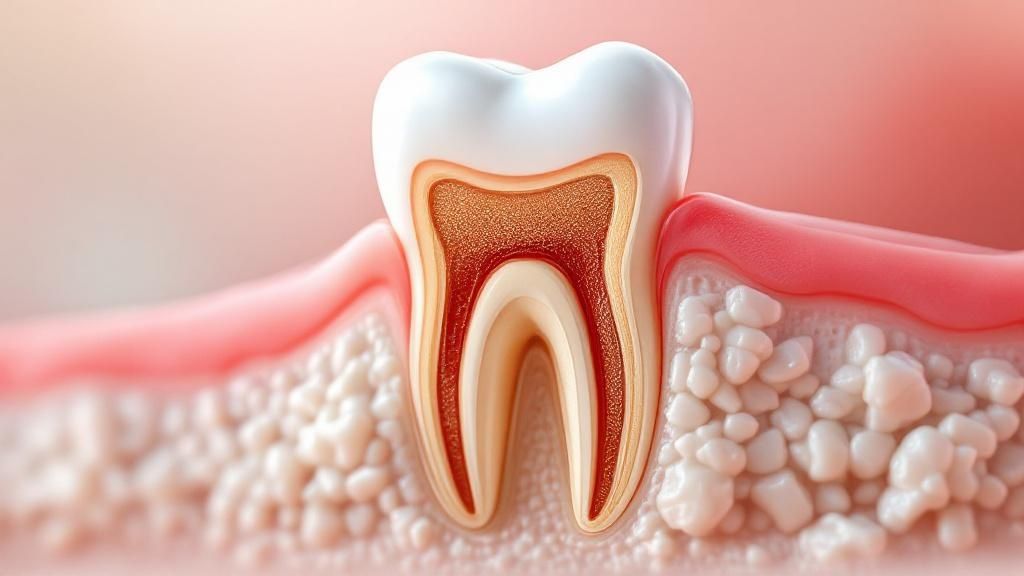
Here’s the thing about gum recession from brushing too hard—it doesn’t show up with a sudden, painful announcement. It’s more of a quiet retreat, happening so slowly you might not even realize it until the damage is already done. But your body does give you clues. You just need to know what you’re looking for.
The secret is to get familiar with what’s normal for your mouth. This means taking a few seconds to really look at your teeth and gums in the mirror instead of just mindlessly brushing. Being proactive is the single best way to catch problems early when they’re far simpler to fix.
One of the first things people notice is a subtle change in how their teeth look. Does one tooth suddenly seem longer than its neighbor? It’s not actually growing. What you're likely seeing is the gumline pulling back and exposing more of the tooth that used to be covered.
Performing a Visual Self-Check
Next time you're in front of a well-lit mirror, take a moment. Pull your lip back, smile wide, and get a good, close look at your gumline—that delicate area where the pink tissue meets the white of your teeth.
Healthy gums have a consistent, scalloped edge. If you notice any of these little changes, it could be your first sign of recession:
- A Visible Notch: Try running your fingernail gently along the gumline. Can you feel a tiny ledge or indentation right where the gum meets the tooth? That’s a classic tell-tale sign of wear and tear, often from an overzealous brushing habit.
- Changes in Gum Color: Healthy gums are a nice, uniform coral pink. If you spot patches that look red, puffy, or inflamed, it’s a sign of irritation that frequently goes hand-in-hand with recession.
- Differing Gum Levels: This one is easy to check. Compare the gumlines on matching teeth, like your two canines. If the gumline on one is sitting noticeably lower than on the other, you're probably looking at localized recession.
This quick self-check takes less than a minute but gives you an incredible amount of information about what’s going on in your mouth.
Listening to What Your Teeth Are Telling You
Beyond what you can see, your body has its own alarm system: sensation. One of the most common early warnings of gum recession is a new or suddenly worse sensitivity to temperatures.
When your gums recede, they uncover the root of your tooth. This part isn’t protected by tough enamel; it’s covered by a much softer layer called cementum. The root is full of tiny, microscopic tubes that lead straight to the tooth's nerve, making it incredibly sensitive to the outside world.
That’s why you might feel that sharp "zing" when you eat ice cream, sip hot coffee, or even have something sweet or acidic. It’s a direct message from your tooth's nerve, now that its protective gum blanket has been pulled away.
Think of it like raw, exposed skin—even a slight breeze can feel intense. This newfound sensitivity is your body’s way of waving a red flag, telling you the natural barrier around your teeth has been breached. Listening to these signals is absolutely crucial for stopping further damage in its tracks.
How To Brush Properly To Protect Your Gums
If you’ve had that sinking feeling that you’re brushing with too much force, the good news is you have complete control over fixing it. Shifting from an aggressive scrub to a gentle, effective technique is the single most powerful step you can take to stop gum recession from brushing too hard. It’s not about brushing less; it’s about brushing smarter.
The real goal here is just to disrupt soft plaque, not to scour your teeth clean. Think about how you’re holding your toothbrush. If you have a tight, white-knuckle grip, you’re definitely pressing too hard. A simple but incredibly effective trick is to hold your brush with just your fingertips, almost like you would a pen. This one change naturally lightens the pressure you apply.
Adopting A Dentist-Approved Brushing Method
Ask any dentist, and they’ll likely recommend a specific technique called the Modified Bass method. It might sound a bit technical, but it's a straightforward approach that focuses on cleaning the most critical area—right along the gumline, where plaque loves to accumulate.
Here’s how you can master it:
- Angle the Brush: Place your soft-bristled toothbrush at a 45-degree angle to your gums. You'll want the bristles pointing up toward the gumline for your top teeth and down for your bottom teeth.
- Use Gentle Vibrations: Instead of a wide, back-and-forth scrubbing motion, use very short, gentle, vibrating or circular motions right at the gumline. This is what dislodges plaque without grinding away at that delicate tissue.
- Sweep Away: After vibrating the brush over a few teeth, finish by sweeping or rolling the bristles away from the gumline, toward the chewing surface of the tooth.
This method ensures you’re cleaning thoroughly without causing what we call "mechanical trauma." This kind of trauma, from either forceful brushing or using hard-bristled toothbrushes, is a primary driver of gingival recession. Over time, improper technique can seriously accelerate the loss of gum tissue.
Choosing The Right Tools For The Job
Of course, your technique is only half the battle. Your tools are just as important. Using the wrong kind of toothbrush can completely undermine even the most careful brushing method.
A soft-bristled brush is non-negotiable. Medium and hard bristles are far too abrasive for your gum tissue and can contribute to both gum recession and wearing down your enamel. Always check the packaging to make sure you're buying "soft" or "extra-soft" bristles. And don't forget to replace your brush every three months—or sooner if the bristles look frayed and splayed out.
An electric toothbrush with a built-in pressure sensor can be a game-changer. These brushes often light up or change their vibration pattern to give you real-time feedback when you're pressing too hard. They actively retrain your habits with every single use.
This image really drives home how a small change in pressure can lead to significant damage over the years.
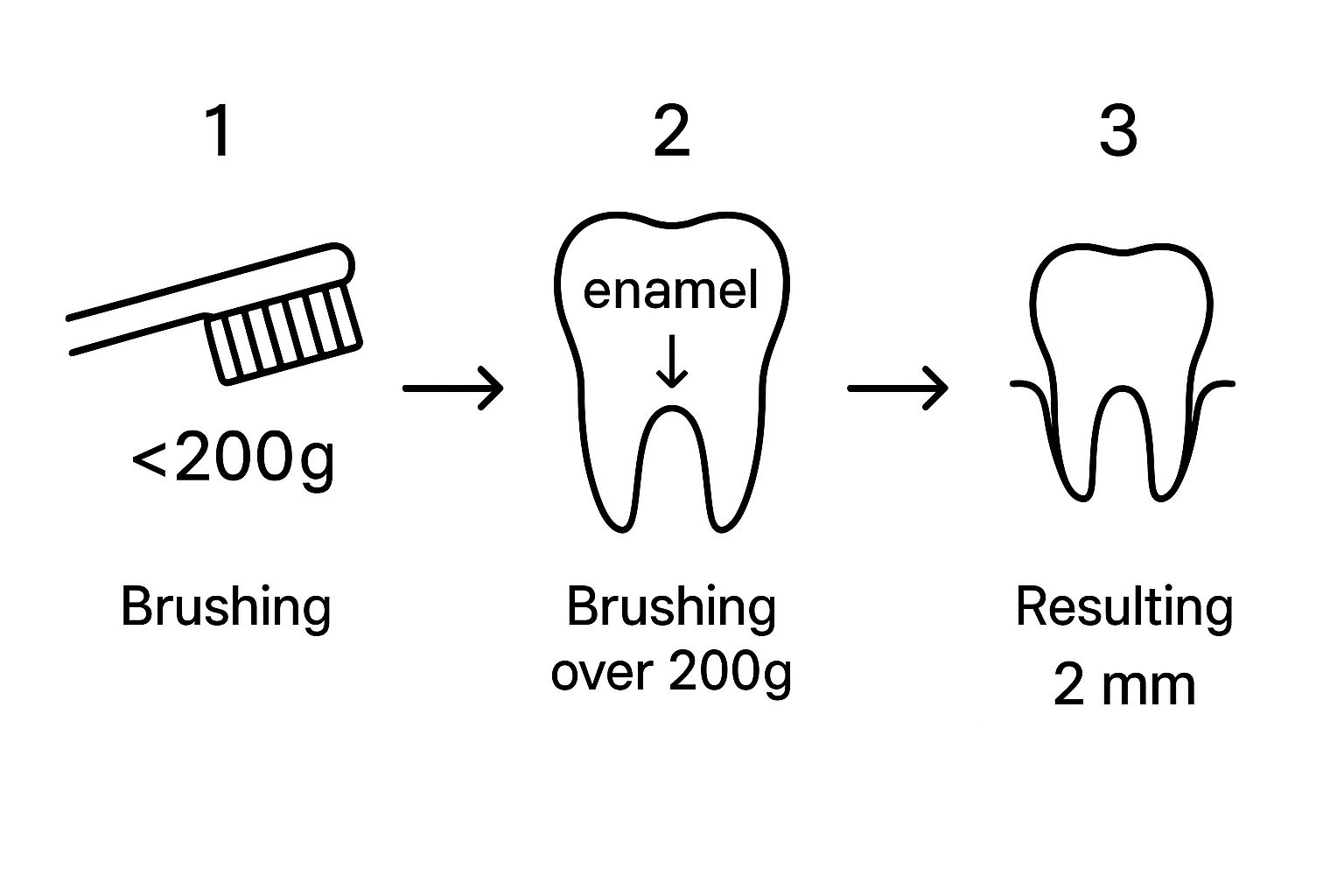
As you can see, applying pressure greater than 200 grams—which feels surprisingly light to most people—can start wearing away at both enamel and gum tissue.
I remember a patient of ours, a very diligent brusher in her 40s, who came to us with severe tooth sensitivity. It turned out her forceful technique had caused noticeable recession. By switching her to a soft brush and teaching her the proper method, her sensitivity disappeared and we were able to stop the recession from getting any worse. You can learn more about how brushing too hard affects your gums in a more detailed breakdown. Taking these simple steps now can truly protect your smile for years to come.
Other Lifestyle Factors That Impact Gum Health
While mastering your brushing technique is a huge step forward, it’s not the whole story. Preventing gum recession from brushing too hard often requires looking beyond just your toothbrush. Other daily habits, and even your genetics, can make your gums far more vulnerable to damage and recession.
Think of it this way: your gum health is like a building’s foundation. Aggressive brushing can certainly chip away at it, but other forces can cause cracks from within. A truly effective approach means looking at all the potential stressors on your gum tissue, not just the most obvious one.
The Unseen Pressure of Teeth Grinding
One of the biggest culprits we see, and one that often goes completely unnoticed, is bruxism. That's the clinical term for chronically clenching your jaw or grinding your teeth. A lot of people do this in their sleep without ever realizing it.
This constant, immense pressure puts a serious strain on your teeth and the delicate gum tissue surrounding them. The force can loosen teeth in their sockets and speed up gum detachment, creating the perfect storm when combined with an aggressive brushing style. If you often wake up with a sore jaw, dull headaches, or notice your teeth look worn down, it's a huge red flag that you might be grinding at night.
A custom-fitted night guard from your dentist can be one of the best lines of defense against bruxism. It acts as a protective cushion, absorbing the grinding force and giving your gums and jaw a much-needed break.
Other Contributing Habits and Risk Factors
Beyond grinding, a few other lifestyle elements can weaken your gums' natural defenses, making them much more likely to recede. Being aware of these lets you build a more resilient foundation for your oral health.
-
Smoking and Tobacco Use: This is one of the single most significant risk factors for gum disease, period. Tobacco use seriously impairs blood flow to the gums, which hampers their ability to heal and fight off infection, leading directly to tissue breakdown.
-
Genetic Predisposition: It's an unfortunate truth, but some people are simply born with thinner or more delicate gum tissue. This makes them genetically more prone to experiencing recession. If your parents have issues with gum recession, you’ll want to be extra vigilant.
-
Nutritional Deficiencies: Your gums are living tissues that need the right fuel to stay strong and healthy. To give them the support they need, check out our guide on foods that are good for your gums to make sure your diet is helping, not hurting.
By identifying and managing these additional risks, you're not just putting a band-aid on one problem. You're building a comprehensive defense strategy to protect your entire smile for years to come.
What to Do When Gum Recession Has Already Started

Spotting your gums pulling back from your teeth can be alarming, but it’s absolutely not a reason to panic. Think of it as a clear signal that it’s time to take action. The most important thing to grasp is that once gum recession from brushing too hard starts, the main goal shifts to stopping it in its tracks.
Thankfully, there are effective ways—both with your dentist's help and through your daily habits—to manage the situation and keep your smile healthy for years to come. Your first, most crucial step? A visit to your dentist. Nothing replaces a professional eye for figuring out how far the recession has gone and what's causing it.
Professional Dental Interventions
After a good look, your dentist will have a much clearer picture of what's going on and can recommend a treatment plan tailored to your specific needs. These procedures are all about tackling the root cause (no pun intended) and getting your gums back to a healthy state.
A common first step for mild to moderate recession is a professional deep cleaning, which we call scaling and root planing. This isn't your average cleaning. It's a much more thorough process where we remove tough plaque and tartar from below the gumline and smooth the tooth roots. This gives your gums a clean surface to reattach to, shrinking the pockets where harmful bacteria love to hide.
If the recession is more advanced and you've lost a significant amount of gum tissue, your dentist might bring up gum grafting. It sounds a bit intimidating, but it's a very successful procedure. A small piece of tissue, often from the roof of your mouth, is carefully attached to the receded area. This covers the exposed root, which helps a ton with sensitivity and protects the tooth from decay.
A gum graft is about much more than just looks. Covering those exposed tooth roots is a game-changer for protecting them from cavities and sensitivity, which ultimately reinforces the long-term health of the tooth itself.
To help you understand your options better, here’s a straightforward comparison of professional and at-home strategies.
Comparing Gum Recession Management Options
This table breaks down some common choices to help you see how different treatments work and who they're best for.
| Treatment Type | What It Addresses | Who It's For |
|---|---|---|
| Scaling & Root Planing | Plaque & tartar buildup below the gumline | Patients with early-stage gum disease and mild recession. |
| Gum Grafting | Significant loss of gum tissue and exposed roots | Individuals with advanced recession causing sensitivity or aesthetic concerns. |
| Desensitizing Toothpaste | Tooth sensitivity from exposed roots | Anyone experiencing discomfort from hot, cold, or sweet foods. |
| Antimicrobial Mouthwash | Bacteria and gum inflammation | People with signs of gingivitis or as a supportive measure post-treatment. |
Ultimately, a combination of professional care and diligent at-home habits gives you the best defense against further recession.
Supportive At-Home Care and Management
While your dentist's work is critical, your daily routine is what truly makes the difference in the long run. It's all about managing the recession and making sure it doesn't get worse.
- Desensitizing Toothpaste: If you're wincing every time you have ice cream, a toothpaste for sensitive teeth is a must. These contain compounds like potassium nitrate or stannous fluoride that work by blocking the tiny tubes in your teeth that lead to the nerve.
- Antimicrobial Mouthwash: Using a good therapeutic mouthwash can help keep bacteria in check and calm down inflammation. It’s particularly useful if your recession is tied to gingivitis, which is often reversible with the right care. In fact, learning how you can reverse gingivitis at home is a fantastic first step.
It’s fascinating to see how our brushing habits have changed over time. Data shows a link between the rise of aggressive brushing with hard-bristled brushes after WWII and an increase in gum recession. Even today, some studies suggest that up to 50% of people might be brushing in a way that could harm their gums. Your daily habits are your single best tool against further damage.
Common Questions About Brushing and Gum Recession
Even with the best game plan, you're bound to have questions as you start paying closer attention to your gum health. Let's dig into some of the most common things we hear about gum recession from brushing too hard, so you can feel confident and in control.
Can My Gums Grow Back After Receding?
This is usually the first question people ask, and it’s a big one. The honest answer is that once gum tissue is gone, it can't regenerate or grow back on its own. The main goal of changing how you brush is to stop the recession in its tracks and prevent any more tissue from being lost.
But that doesn't mean you're stuck. For existing recession that’s making your teeth sensitive or that you don't like the look of, procedures like a gum graft can work wonders. This is where a dentist carefully places tissue from another part of your mouth over the exposed roots, effectively rebuilding your gumline and protecting the tooth.
The most crucial first step is always to eliminate the cause of the damage. For many, that means finally breaking the habit of aggressive brushing. Without this change, any professional treatment is just a temporary fix.
Is An Electric Toothbrush Safer For My Gums?
It absolutely can be, but it’s all about the features. A manual brush is perfectly fine if you use the right technique, but modern electric toothbrushes have one huge advantage for heavy-handed brushers: a built-in pressure sensor.
This feature is a game-changer. The second you press too hard, the brush gives you instant feedback—it might flash a light, buzz differently, or even stop pulsing. If you know you have a tendency to scrub, investing in a model with a pressure sensor is one of the smartest things you can do for your gums.
How Do I Know What The Right Pressure Feels Like?
This is tricky because what feels "normal" to you might actually be way too forceful. The best way to check is to look at the bristles while you brush. They should only gently flex against your teeth and gums, never splay out, bend, or look flattened. The idea is to let the very tips of the bristles do the work.
Here’s a practical tip to try tonight:
- Hold your toothbrush with just your fingertips, like you'd hold a pen.
- Don't grip it in a clenched fist.
- This simple change in your grip naturally lightens your touch and makes it much harder to apply too much force.
Think of it as massaging your gums, not scrubbing them. That simple shift in mindset can make all the difference.
What Is The Most Important Habit Besides Gentle Brushing?
Without a doubt, daily flossing. Gum disease, a primary driver of recession, gets its start from plaque buildup in places your toothbrush can't reach—specifically, between your teeth and just under the gumline. This buildup is also a major factor in other problems; you can learn more about what causes bad breath in our related guide.
Flossing physically gets rid of that stubborn plaque, preventing the inflammation and infection that eat away at your gum tissue. When you combine gentle, careful brushing with daily flossing, you’re creating the strongest possible defense against gum recession.
At Beyond Dental Care, we believe in empowering our patients with the knowledge to protect their smiles for a lifetime. If you have concerns about your gum health or brushing habits, we invite you to schedule a consultation with us today by visiting https://beyonddentalcare.com.