
Let's cut right to it: Yes, brushing too hard is a leading cause of receding gums. It's an incredibly common problem we see, technically called toothbrush abrasion. This happens when forceful, repetitive scrubbing literally wears away your delicate gum tissue.
It’s a classic case of good intentions gone wrong. You're trying to keep your teeth sparkling clean, but the very act is causing unintended, and sometimes irreversible, damage.
Why Brushing Too Hard Causes Gum Recession
Many of us were taught that more pressure means a better clean, but that’s a dangerous myth. Your gums aren't a dirty pot that needs a good scouring; they're more like a delicate fabric. When you apply too much force, especially with a medium or hard-bristled toothbrush, you start a slow-motion process of erosion.
This aggressive action physically grinds down the gingival margin—that’s the thin edge of your gum tissue right where it meets the tooth. Over months and years, this constant trauma forces the gumline to pull back, exposing the sensitive root surfaces that were meant to stay protected.
The Real-World Impact of Aggressive Brushing
You probably won't notice the damage overnight. It's a gradual change, but the signs eventually become impossible to ignore. A common story I hear from patients is they look in the mirror one day and think their teeth suddenly look longer. This isn't an illusion; it happens because as the gums recede, more of the tooth is exposed.
Another telltale sign is new or worsening tooth sensitivity. The roots of your teeth don't have the same tough enamel as the crowns. Once they're exposed, they are much more vulnerable to hot, cold, or sweet foods and drinks, leading to those sharp, zinging pains. This isn’t just a minor annoyance—it’s a clear signal that your gums' protective barrier has been breached.
Have you ever wondered if you're one of the many people who brush too aggressively? It’s a habit that often flies under the radar until the damage is done.
Here’s a quick reference table to help you spot the common signs.
Signs You Might Be Brushing Too Hard
| Symptom | What It Looks or Feels Like | Why It Happens |
|---|---|---|
| Gum Soreness or Bleeding | Gums feel tender, look red, or bleed slightly after brushing. | The force is irritating and inflaming the delicate gum tissue. |
| Receding Gums | Your teeth appear longer than they used to. | The gum tissue has physically worn away, exposing more of the tooth root. |
| Tooth Sensitivity | A sharp, sudden pain when consuming hot, cold, sweet, or acidic foods/drinks. | The exposed tooth roots are less protected than the crowns and are sensitive to stimuli. |
| Notches at the Gumline | You can see or feel small indents or grooves where the tooth meets the gum. | This is toothbrush abrasion—the bristles have literally worn away tooth structure and gum. |
| Frayed Toothbrush Bristles | Your toothbrush looks flattened or worn out after just a few weeks of use. | You're applying so much pressure that the bristles are being destroyed prematurely. |
If any of these sound familiar, it’s a strong indication that it’s time to rethink your brushing technique. Catching it early can make all the difference.
Key Takeaway: Healthy gums should never hurt or bleed during your daily routine. If you experience soreness, see frayed bristles long before it's time to replace your brush, or notice visible notches at the gumline, you are almost certainly using too much force.
This issue is far more widespread than you might realize. Gingival recession affects a massive portion of the population. In fact, a 2023 meta-analysis revealed the global prevalence of gum recession to be around 78.16%. That means more than three-quarters of people have some degree of gum tissue loss, and aggressive brushing is a major, well-recognized contributor. To learn more about how we can help protect your family's smiles, you can find information on our comprehensive family dentistry solutions available through Beyond Dental Care.
Recognizing the link between receding gums and brushing too hard is the first critical step. It’s what empowers you to switch from a harmful habit to a protective one, preserving your smile for years to come.
Choosing the Right Tools for Gum Protection
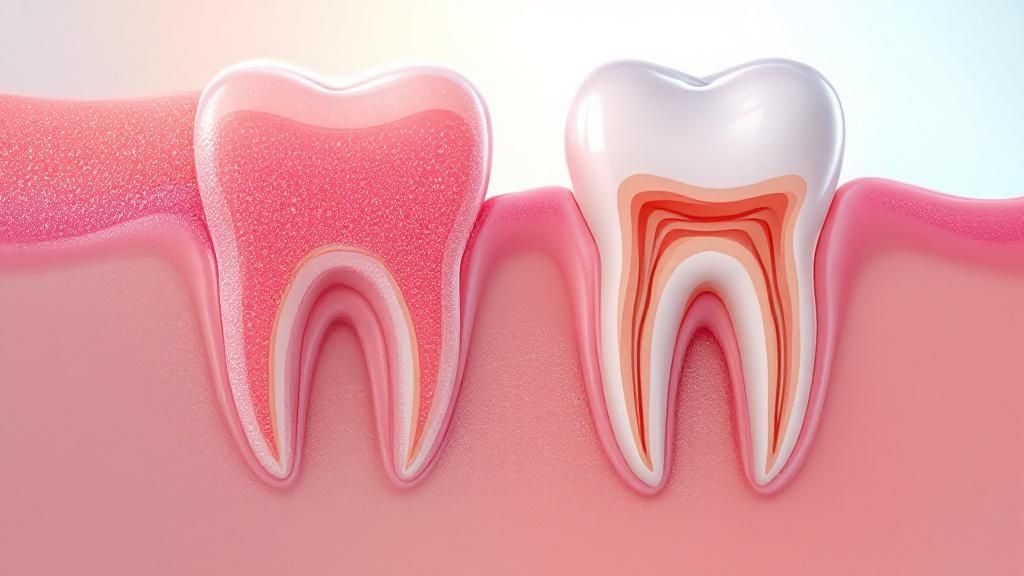
Now that you understand why aggressive brushing is so destructive, let's talk about the what. Having the right gear in your bathroom cabinet is your first and best line of defense against gum recession. This goes way beyond just grabbing any old toothbrush off the shelf; it’s about making smart, deliberate choices that actively protect your delicate gum tissue.
The biggest mistake I see people make is choosing a brush with medium or hard bristles. They think it scrubs better, but in reality, those bristles are far too harsh for the gumline. To really protect your gums, you need to be intentional with your tools and consider investing in appropriate dental care products.
Your goal is simple: find a brush that's tough on plaque but a total softy on your gums.
Selecting the Ideal Toothbrush
The absolute non-negotiable starting point is a soft-bristled toothbrush. Always look for packaging that explicitly says "soft" or even "extra-soft." But don't stop there—the bristle design is just as important.
- End-Rounded Bristles: Quality brushes feature bristles that are polished and rounded at the tips. Cheaper brushes often have sharp, jagged-cut bristles that can literally scrape and tear at your gum tissue, fast-tracking recession.
- Compact Head Size: A smaller brush head is much easier to navigate. It lets you get around the curves of your back molars and into tight spots without putting a ton of unnecessary pressure on your front teeth.
If you know you have a heavy hand—a super common problem when you're trying to unlearn the habit of receding gums from brushing too hard—an electric toothbrush could be your new best friend.
A modern electric toothbrush with a built-in pressure sensor is a game-changer. These devices will flash a light, vibrate, or even stop dead if you press too hard. It’s instant, real-time feedback that retrains you to use a lighter touch.
Choosing a Non-Abrasive Toothpaste
Your toothpaste plays an equally important role. Many whitening or tartar-control toothpastes are packed with abrasive agents. When you combine those with forceful brushing, it’s like using fine-grit sandpaper on your gums and any exposed tooth roots. Ouch.
The key is to check a toothpaste's Relative Dentin Abrasivity (RDA) value. It's not always printed on the box, but a quick online search for your favorite brand will usually turn it up. A lower RDA score means less wear and tear.
- Low Abrasivity: An RDA value below 70 is considered low and is perfect for sensitive teeth and preventing further damage.
- Medium Abrasivity: Values between 70-100 are moderately abrasive.
- High Abrasivity: Anything over 100 should be used with caution, and values over 150 can be downright harmful with daily use.
If you’re already dealing with sensitivity from exposed roots, look for a desensitizing toothpaste. Ingredients like stannous fluoride or potassium nitrate can offer some serious relief.
Choosing the right tools is a foundational part of any solid oral health strategy, much like how a great website uses the right tools to boost its visibility. For instance, you can learn more about search engine optimization from resources like https://rankmath.com/. By making these small, informed tweaks to your tools, you build an oral care routine that cleans effectively while safeguarding your smile against further recession.
Mastering a Gentle and Effective Brushing Technique
If there's one single change you can make to stop gum recession in its tracks, this is it: transforming your daily brushing from an aggressive scrub into a gentle polish. The goal isn't just to stop causing damage. It's to master a technique that actually cleans away plaque effectively while treating your gumline with the care it deserves.
So many of us learned to brush with a vigorous, back-and-forth sawing motion. Unfortunately, that's one of the main culprits behind receding gums from brushing too hard.
Instead, dentists almost universally recommend a method called the Modified Bass Technique. Think of it less like scrubbing a floor and more like polishing a delicate piece of jewelry. It strategically targets the tiny, critical space where your gums and teeth meet—the exact spot where plaque loves to hide and where aggressive brushing does the most harm.
Adopting the Right Angle and Motion
The entire foundation of this technique comes down to the angle. You'll want to hold your soft-bristled toothbrush at a 45-degree angle to your gums, with the bristles aimed gently toward the gumline. This specific angle is what allows the very tips of the bristles to slip just underneath the gum's edge, disrupting plaque that your old method would have missed completely.
Once you’ve got the angle down, the motion is key. Forget about those wide, horizontal scrubs. Instead, you’re going to use very short, gentle, back-and-forth wiggles or tiny circular motions. You aren't trying to cover multiple teeth at once. The focus is on cleaning just one or two teeth at a time before moving on to the next pair.
After a few gentle wiggles in place, you then "sweep" or "roll" the brush head away from the gumline, toward the chewing surface of the tooth.
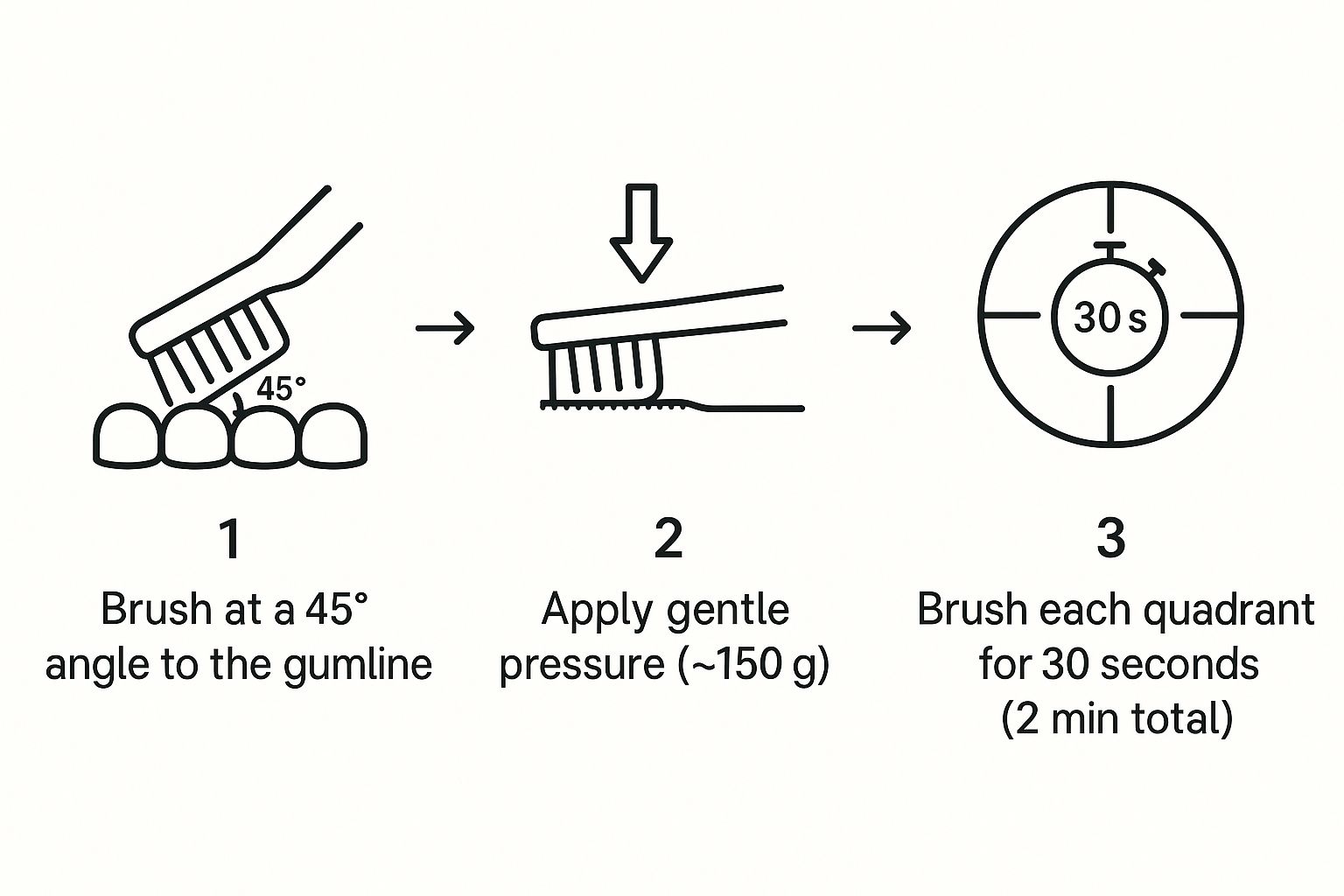
As you can see, effective brushing is a combination of the right angle, minimal pressure, and enough time—not brute force.
The Quadrant Method and Two-Minute Rule
To make sure every tooth gets the attention it deserves, try mentally dividing your mouth into four sections, or quadrants: top right, top left, bottom right, and bottom left. Dedicate at least 30 seconds to each one. This simple system is a foolproof way to hit the dentist-recommended two-minute brushing time and keeps you from only focusing on the easy-to-reach front teeth while neglecting the back.
Using a timer is one of the best habits you can build. It's incredibly easy to think you've brushed long enough when, in reality, it's only been 45 or 60 seconds. Many electric toothbrushes handle this for you, often buzzing every 30 seconds to let you know it's time to move to the next quadrant.
Expert Tip: What does "gentle" pressure really feel like? It’s just enough to feel the bristles against your gums. If the bristles on your brush are bending or splaying out, you’re pushing way too hard. A great rule of thumb is to use the same amount of pressure you would to write with a pencil.
This isn't just a local issue; it's a global health concern. Brushing technique and force play a massive role in gum recession worldwide, especially where people have access to oral hygiene products but not necessarily the education on how to use them properly. Too much force causes the delicate gum tissue to wear away and retract, exposing sensitive tooth roots.
Perfecting a skill, whether it's brushing your teeth or presenting information online, requires understanding how to be clear and effective. For those of you interested in how we apply similar principles of clarity using structured data, you can learn more about it on our guide at schema.press.
By mastering this gentle, methodical approach, you can take back control and effectively manage the problem of receding gums from brushing too hard, protecting your smile for a lifetime.
Investigating Other Causes of Gum Recession
While mastering your brushing technique is a huge step forward, it's sometimes not the only piece of the puzzle. If you’ve corrected the issue of receding gums from brushing too hard but your gums are still changing, it’s time to look at other potential factors. Your oral health is a complex system, and gum recession can have multiple triggers working together.
Figuring out these other causes is crucial. It prepares you to have a much more productive conversation with your dentist if gentle brushing alone isn't stopping the recession. This broader perspective ensures you’re tackling the problem from every angle for the best long-term results.
The Major Role of Gum Disease
The single biggest culprit behind gum recession, other than aggressive brushing, is periodontal (gum) disease. This is an infection of the very tissues that hold your teeth in place. It often starts quietly as gingivitis—think mild inflammation and some bleeding when you brush—but can escalate to periodontitis if it's not addressed.
With periodontitis, the gums start pulling away from the teeth, forming pockets that trap bacteria and become infected. As your body's immune system battles the bacteria, the infection can destroy the bone and connective tissue that support your teeth. This leads directly to gum recession and, in serious cases, tooth loss.
Severe gum disease is a widespread global health issue. It's estimated that serious periodontitis affects roughly 11.2% of the world's population, with the risk peaking around age 38. Aggressive brushing can worsen the inflammation and accelerate the detachment of gum tissue caused by this disease.
Other Contributing Factors to Consider
Beyond gum disease, several other factors can put you at a higher risk for gum recession. It's a good idea to think about these possibilities, especially if you have a family history of gum issues or other health conditions.
- Genetics: Unfortunately, some of us are just more susceptible to gum disease and recession. Studies have shown that up to 30% of the population might be genetically predisposed to gum problems, even if they have a great oral hygiene routine.
- Teeth Grinding (Bruxism): Clenching or grinding your teeth, particularly at night, places enormous force on your teeth. Over time, this constant pressure can wear down your gum tissue and cause it to recede.
- A Misaligned Bite: When your teeth don’t meet evenly, too much force can be concentrated on certain spots. This uneven pressure can lead to localized gum recession around the overworked teeth.
- Systemic Health Issues: Certain health conditions can directly impact your gums. For example, understanding the implications of bleeding gums for people with diabetes shows just how much systemic factors can influence oral health and contribute to gum problems.
If you think any of these factors might be in play, your next move should be talking to a professional. Getting an expert like Dr. Lazore to assess your unique situation is key. You can see what our patients say about our dedicated Glendale dental team to feel more confident about taking that step. Recognizing all the potential causes helps you shift from just reacting to damage to proactively protecting your entire smile.
Knowing When to See a Dentist About Your Gums
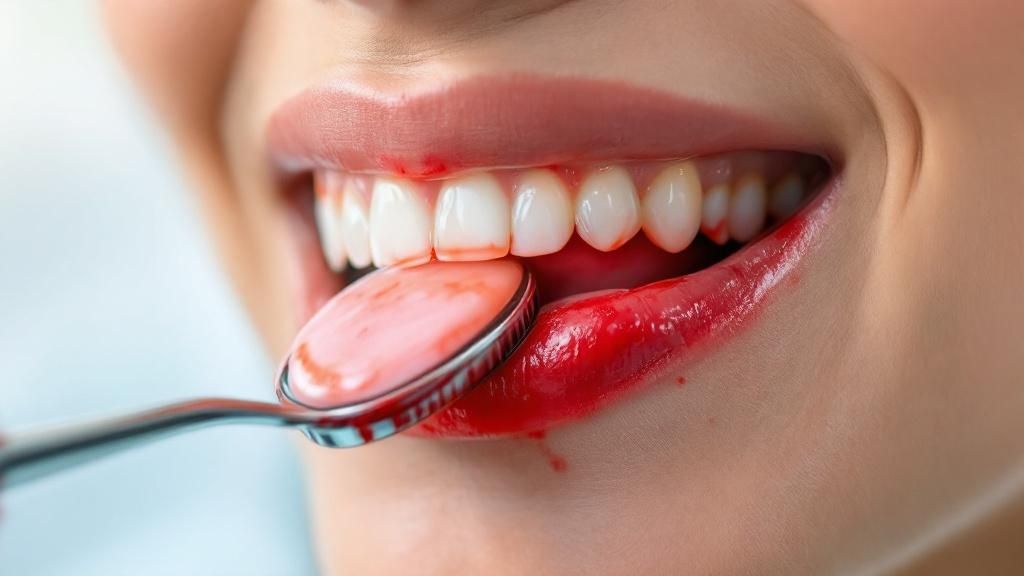
While the right brushing habits are a huge step forward, self-care can only take you so far. Knowing when it’s time to call in a professional is just as crucial for protecting your smile for the long haul. Even if you’ve corrected your aggressive brushing, some signs mean it's definitely time to book a dental appointment.
Think of these signals as red flags. Persistent issues are your body’s way of saying an underlying problem needs an expert eye. If you ignore them, you risk letting a minor concern snowball into something much more complex and expensive to fix down the road.
Clear Signals to Book a Visit
So, what should you be looking for? If you notice any of the following, it’s a clear sign you should see your dentist for an evaluation.
- Significant Tooth Sensitivity: If that sharp zing from hot or cold drinks doesn't get better after a few weeks of gentle brushing, it’s a strong hint that your tooth roots are still exposed and vulnerable.
- Visible Notches at the Gumline: Can you see or feel little indents or grooves where your teeth meet your gums? This condition, called abfraction, points to wear and tear that a dentist needs to assess.
- Persistent Bleeding: Let’s be clear: your gums shouldn't bleed when you're brushing gently and flossing correctly. If they do, it's a classic sign of gum inflammation (gingivitis) or a more advanced issue.
- Visibly Receding Gums: When you look in the mirror and your teeth appear longer than they used to, it’s not your imagination. It’s time to get the extent of the recession professionally measured and monitored.
When you come in for a visit, we do more than just a quick look. We use a special tool called a periodontal probe to take simple, painless measurements of the pocket depths around each tooth. This tells us exactly how much, if any, gum recession has occurred and helps us track it over time.
What to Expect at Your Dental Visit
A visit to talk about gum recession is straightforward and all about finding solutions. Your dentist will take a close look at the severity, chat with you about your daily habits, and check for any other potential causes.
Depending on your specific situation, they might recommend a few different paths forward. It could be as simple as a few adjustments to your routine or something more involved.
For instance, they might suggest a deep cleaning (also known as scaling and root planing) to clear away hardened plaque from below the gumline where your brush can't reach. In more advanced cases, a gum graft might be on the table. This is a procedure where a small piece of tissue is used to cover the exposed roots, protecting them from decay and dramatically reducing sensitivity.
A consultation with a skilled professional, like our own expert Dariene Lazore in Glendale, will clarify all your options and put your mind at ease. No matter what, the goal is always the same: stop the recession in its tracks and protect your long-term oral health.
Common Questions About Gum Recession and Brishing
Navigating the details of gum health can bring up a lot of questions. This is especially true when you're working hard to break a habit like aggressive brushing.
To help clear things up, we've gathered the questions we hear most often from patients dealing with this exact problem. Getting straightforward answers is key to feeling confident in your oral care routine and protecting your gums for the long haul.
Can Receding Gums Grow Back on Their Own?
This is usually the first question on everyone's mind, and unfortunately, the answer is no. Once gum tissue has been worn away, it doesn't have the natural ability to regenerate on its own. In that sense, the damage from toothbrush abrasion is permanent.
But that’s no reason to lose hope. By adopting the gentle brushing techniques we've covered, you can effectively stop the recession from getting any worse. Preventing more damage is a huge win for your long-term oral health and the main goal of our conservative approach.
How Soon Will I Notice a Difference After I Stop Brushing So Hard?
You can start to feel positive changes surprisingly quickly. Many of our patients report a big drop in gum sensitivity, soreness, and bleeding within just a few weeks of switching to a soft-bristled brush and a gentler technique.
While your gumline won't physically creep back up to its original spot, the decrease in irritation is a fantastic sign you’re on the right path. Your gums will look and feel healthier and more comfortable—a significant improvement that makes it much easier to stick with your new habits.
The most important thing here is that you're taking back control. By ending the cycle of receding gums from brushing too hard, you are preserving the healthy gum tissue and tooth structure you still have. That's vital for a healthy smile for years to come.
Can Flossing Also Cause My Gums to Recede?
This is another frequent concern. The answer is a lot like the brushing issue: it all boils down to your technique, not the act of flossing itself. Proper flossing is absolutely essential for healthy gums and does not cause recession. In fact, it's your best defense against the plaque buildup that leads to gum disease, a major cause of receding gums.
The trouble starts when flossing gets too aggressive. Here’s what to avoid:
- Snapping the floss: Don't ever snap the floss hard down onto your gums. This can easily cut or bruise the delicate tissue.
- Aggressive sawing: Avoid rough back-and-forth sawing motions right at the gumline.
Instead, gently guide the floss down between your teeth. Form it into a “C” shape against the side of one tooth, then slide it carefully just beneath the gumline. This approach cleans the area effectively without causing any trauma.
At Beyond Dental Care, our mission is to give you the knowledge and professional care you need to protect your smile for a lifetime. If you have more questions or are worried about your gum health, we invite you to schedule a consultation with our dedicated team in Glendale. Visit us at https://beyonddentalcare.com to learn more.