
Direct Answer: The trays work the same way. What changes is the plan around them: teens need coaching on wear time and discretion, while adults need fewer office visits and remote check-ins that fit a work schedule.
Parents in North Glendale and Stetson Hills ask me the same thing almost every week: is this the same treatment my daughter would get, or is the adult version different? Fair question. The trays look identical, so the assumption is the process is identical too.
It isn’t. The clinical mechanics are the same, but the plan built around them changes a lot depending on age. A 15-year-old and a 52-year-old are solving different problems, and the treatment path reflects that.
Here is what actually changes between teen and adult CandidPro clear aligner treatment, and what I look at in a consultation before recommending either one.
For teens, the whole plan hinges on wear time
Teens almost never come in worried about bone support or bite mechanics. They ask whether anyone will notice, and whether the trays will show up in school photos.
That concern is not vanity. It’s the single best predictor of whether the treatment works, because aligners only move teeth when they are actually in the mouth. A teen who feels self-conscious takes them out. A teen who feels normal wearing them leaves them in.
So with younger patients, most of my planning energy goes toward compliance:
- Setting a realistic 20 to 22 hours per day target and being honest that lunch, sports, and band practice all count against it
- Talking through tray changes on a schedule the family can actually keep
- Building in habit anchors, like keeping the case in a backpack pocket instead of a locker
- Coaching on brushing before trays go back in, since food trapped under a tray sits against enamel for hours
One parent wrote in a review that her teenage girls look forward to each visit, mostly because of our office dog. I bring that up because it matters more than it sounds like it should. A teen who does not dread the appointment is a teen who tells you the truth about wear time. And truthful reporting is what lets us catch a lagging tooth in week six instead of week sixteen.
The NIDCR guidance on daily oral hygiene is worth reading with a teen before treatment starts, because habits get tested once trays enter the picture.
For adults, the obstacle is almost always the calendar
Adults rarely hesitate because of how aligners look. They hesitate because they picture a year of midday appointments and decide the timing is wrong.
I hear it from patients in Norterra, Vistancia, and Arrowhead Ranch constantly. They can commit to the treatment. They cannot commit to leaving work every four weeks.
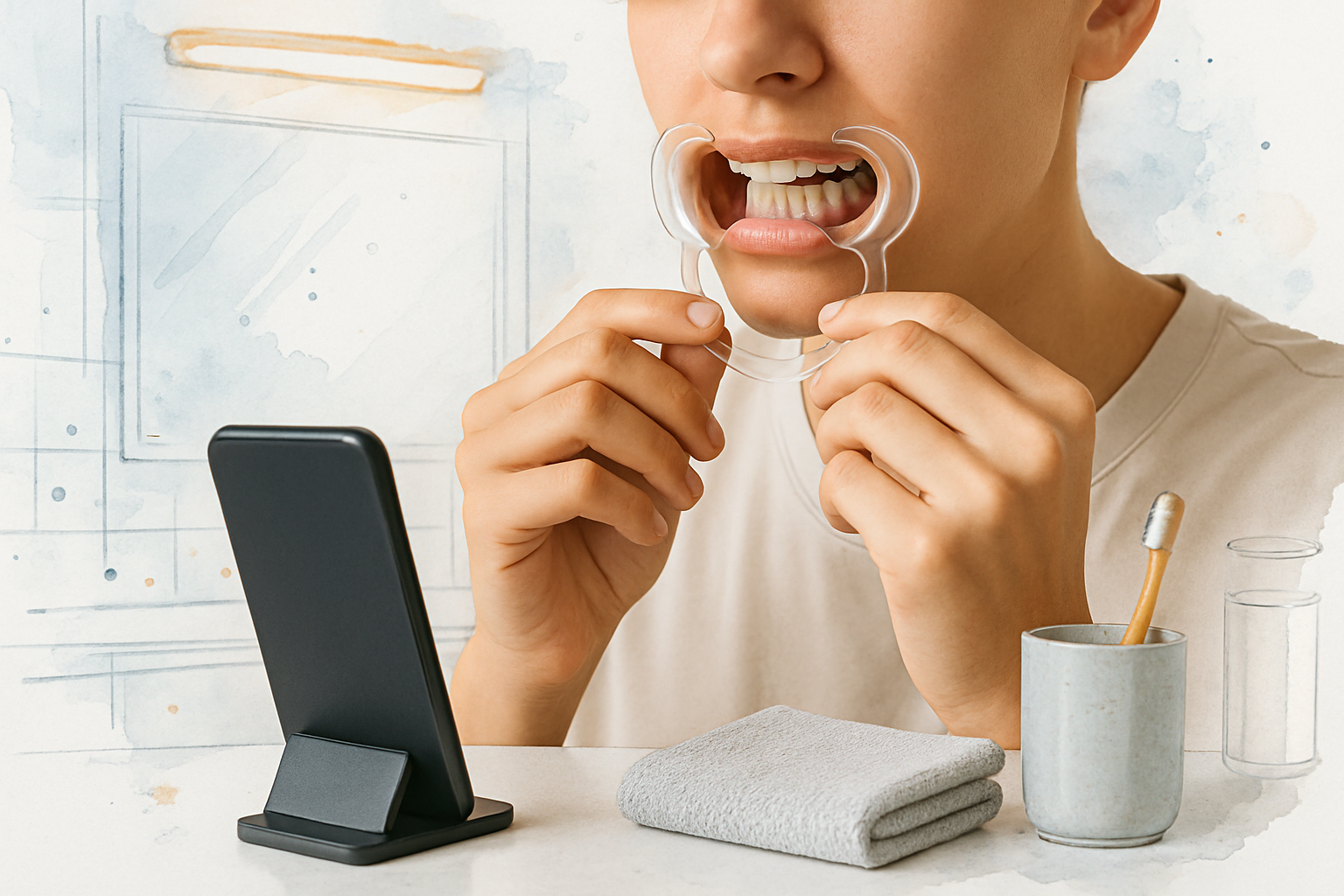
This is where CandidPro changes the math. Treatment includes the FDA-cleared ProMonitoring app, which lets you send progress scans from home instead of driving in for a visual check. Here is what that actually looks like week to week:
- You get a small scan kit, including a cheek retractor that clips onto your phone or sits in a stand
- Roughly once a week, you spend about two minutes capturing a set of photos of your teeth from several angles
- The scan uploads through the app and gets reviewed against your treatment plan
- If everything is tracking, you keep going and never leave the house
- If a tooth is lagging or a tray is not seating fully, we hear about it and bring you in before it becomes a bigger correction
So instead of an appointment every month, most adults come in only when there is a clinical reason. That is the part that flips the decision for people who told me for years that they’d “get to it eventually.” I broke down the scheduling side in more detail in CandidPro vs. Invisalign: What the Difference Means for Busy Adults.
Teen vs. Adult Aligner Treatment at a Glance
Same trays, different priorities. This is roughly how the two paths diverge in practice.
| What changes | Teens | Adults and Seniors |
|---|---|---|
| Top concern at consult | How visible the trays are socially | Whether treatment fits a work schedule |
| Biggest risk to results | Inconsistent wear time | Skipping scans and drifting off plan |
| Office visit rhythm | More check-ins early to build the habit | Fewer visits, more remote monitoring |
| Extra evaluation needed | Growth and erupting permanent teeth | Gum health, wear, and existing crowns or bridges |
| Common motivator | Confidence before photos or graduation | Fixing shifting that has crept in over decades |
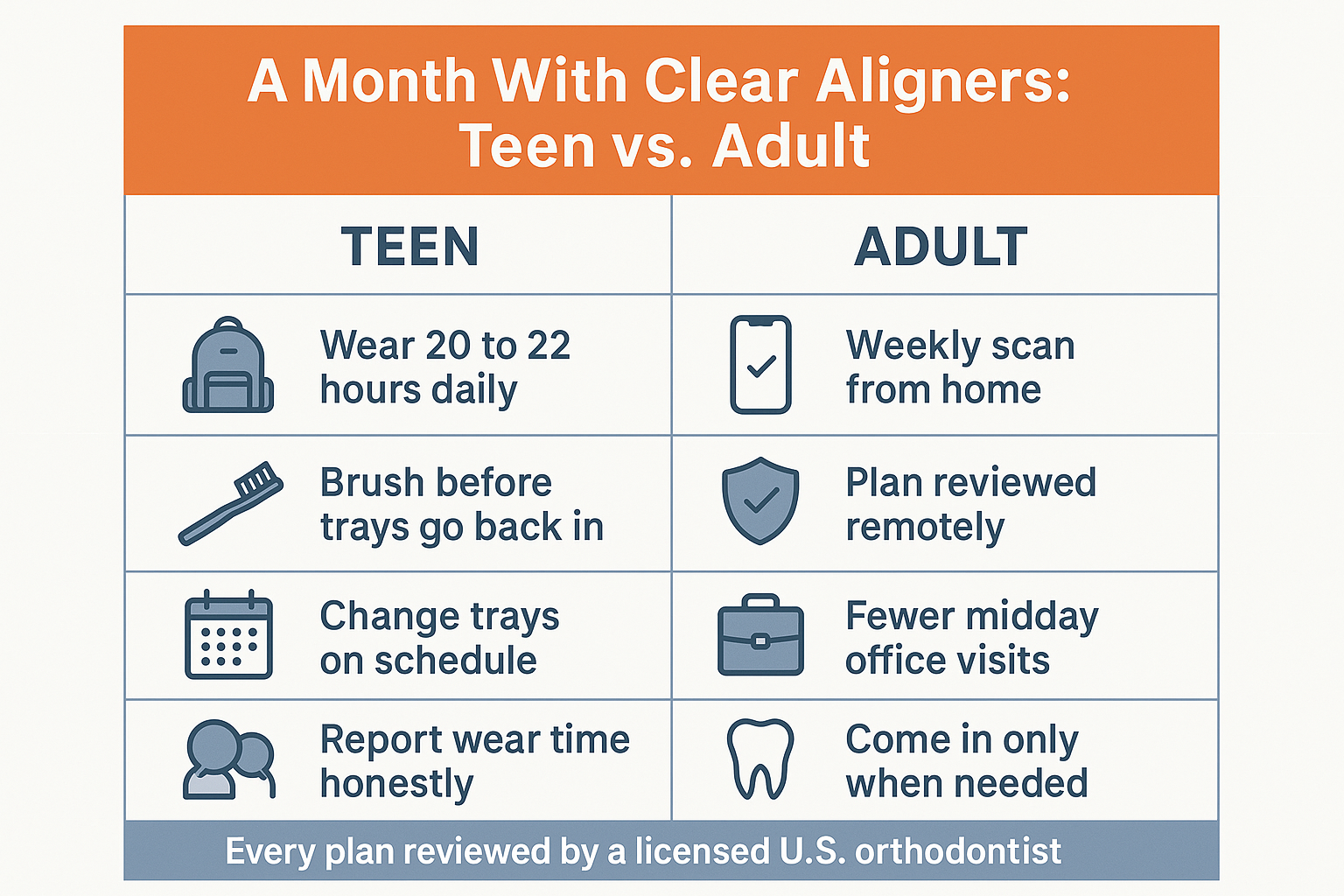
What a Month of Treatment Actually Looks Like
The day-to-day rhythm differs more than most people expect. This breaks down a typical four-week stretch for each group.
The “only for mild cases” myth, and how I check candidacy by age
This one costs people years. Somebody hears that aligners handle small gaps and stops there, so a case that could have been treated at 40 gets treated at 58 with more wear on the teeth.
CandidPro is built for mild, moderate, and more complex alignment issues. Seniors are a growing group of aligner patients here, not an exception. I wrote more about that in Is Clear Aligner Treatment a Real Option for Adults Over 60?.
What I actually evaluate at a consultation shifts with age:
- Teens: whether permanent teeth have erupted, how much growth is left, and whether the bite relationship is stable enough to plan around
- Adults: crowding and rotation severity, existing crowns and bridges, grinding wear, and whether old restorations need to be addressed in sequence
- Seniors: gum health first, always. Bone support, root length, and any history of periodontal disease determine whether we straighten now or treat the gums first
That last point is not a formality. Moving teeth through compromised bone is a real problem, so periodontal therapy sometimes comes before aligners rather than after.
One more thing worth knowing: every CandidPro plan is reviewed by a U.S.-based licensed orthodontist working alongside the treating dentist. That oversight structure sits much closer to traditional orthodontics than to the mail-order aligner products that have largely disappeared from the market over the past few years. If professional supervision was the reason you skipped aligners before, that gap has narrowed. Fewer Office Visits, Same Orthodontist Oversight walks through how that review process works.
Timing: why late summer is a natural window
Timing questions come up in almost every consult, and the honest answer depends on which chair you’re sitting in.
For teens, Glendale Union High School District classes start August 10, 2026, which makes late July through early August the practical planning window. Getting scans and the initial fitting done before the school year gets busy means the first few weeks of adjustment happen when the schedule is still loose.
For adults, the useful anchor is the other end of the year. Someone starting in August or September is usually seeing meaningful change by the time the holidays roll around, which is a real motivator when you’re eight weeks in and wondering if anything is happening.
Cost is the other timing factor. Aligner treatment pricing depends on case complexity, number of trays, and whether other work needs to happen first, so any number you see online is a rough starting point at best. Our in-office membership plan takes 20% off treatment for patients without dental insurance, and the front desk can walk through what your specific plan covers before you commit to anything.
Frequently Asked Questions About Clear Aligners for Teens and Adults
Will my teenager actually wear them?
That is the real question, and nobody can answer it in advance. What I can tell you is that compliance goes up when the teen chose the treatment instead of having it handed to them, and when the office visits don’t feel like a lecture. Wear time is the single biggest variable in teen aligner results. Bring your teen to the consult and let them ask their own questions.
How many office visits should an adult expect?
Fewer than traditional orthodontics, because the weekly ProMonitoring scans replace most routine check-ins. You’ll still come in for the start of treatment, for any attachment work, and whenever a scan shows something off track. The exact count depends on your case.
Can I get aligners if I already have crowns or a bridge?
Often yes, but it changes the plan. Crowns hold attachments differently than natural enamel, and a bridge spans teeth that have to move together. This is exactly the kind of thing Dr. Dariene Lazore, DMD, evaluates before a plan is written, and it’s one reason a dentist-supervised aligner path makes more sense than an off-the-shelf product for restored mouths.
Is there an age limit on the upper end?
No. Healthy gums and adequate bone support matter far more than the number on your chart. Plenty of patients start treatment in their 60s and 70s. If gum health needs attention first, we handle that before moving teeth.
Do aligners hurt?
Most people describe pressure rather than pain, strongest in the first day or two after switching to a new tray. It fades. If a tray feels sharp or is cutting into your cheek, that’s not normal and it’s worth a quick call rather than toughing it out.
Thinking through aligners for someone in your household?
Consultations for teens, adults, and seniors across North Glendale, Arrowhead Ranch, Stetson Valley, Norterra, and North Peoria are available during our extended weekday hours, Monday through Thursday until 7pm. If you want to know whether clear aligners fit the case in front of you, a conversation with Beyond Dental Care is the place to start. Call 623-267-8088 or visit beyonddentalcare.com when you’re ready.