
An implant crown is what you see at the very end of a dental implant procedure—the part that looks, feels, and acts just like a natural tooth. It’s the custom-made cap that attaches to the implant post, giving you back the ability to chew, speak, and flash a confident smile.
The Foundation of Your New Smile
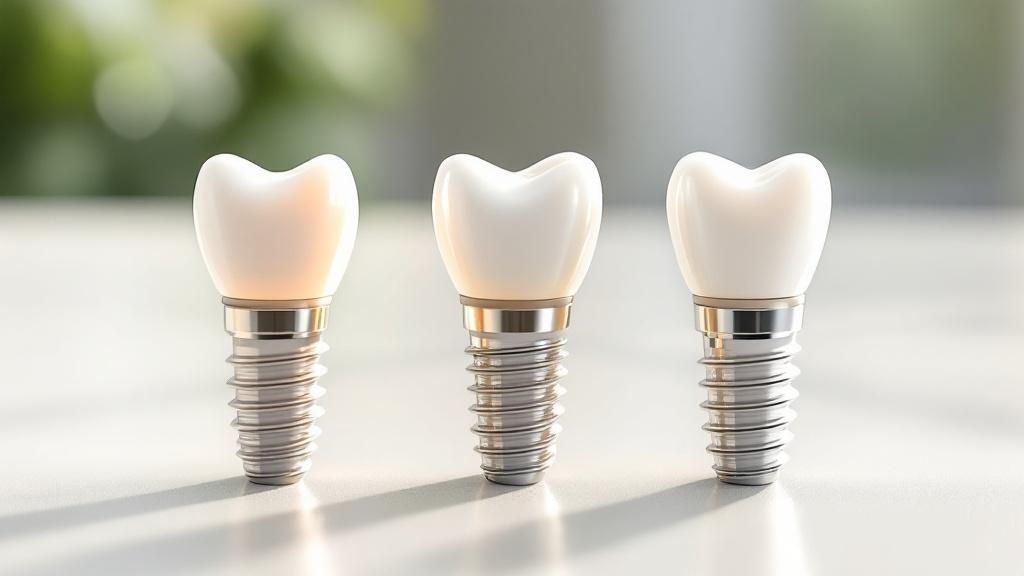
When you lose a tooth, you're not just losing the part you see. You're also losing the root hidden beneath the gums. A dental implant is a brilliant solution because it recreates the entire tooth from the ground up. Think of it as a three-part team working in perfect harmony to restore both function and aesthetics.
The implant crown is the "star of the show," the part everyone will see. It’s meticulously crafted to match the color, shape, and size of your other teeth, making it practically impossible to tell it apart from the real thing. This is the part you'll use to bite into a crisp apple or show off in a photo.
But a star needs a great support team, and the crown is no different. It can't do its job without a solid foundation.
The Team Behind Your Tooth
To really get what an implant crown does, it helps to understand the two other components it depends on. Each piece has a critical, specific job.
-
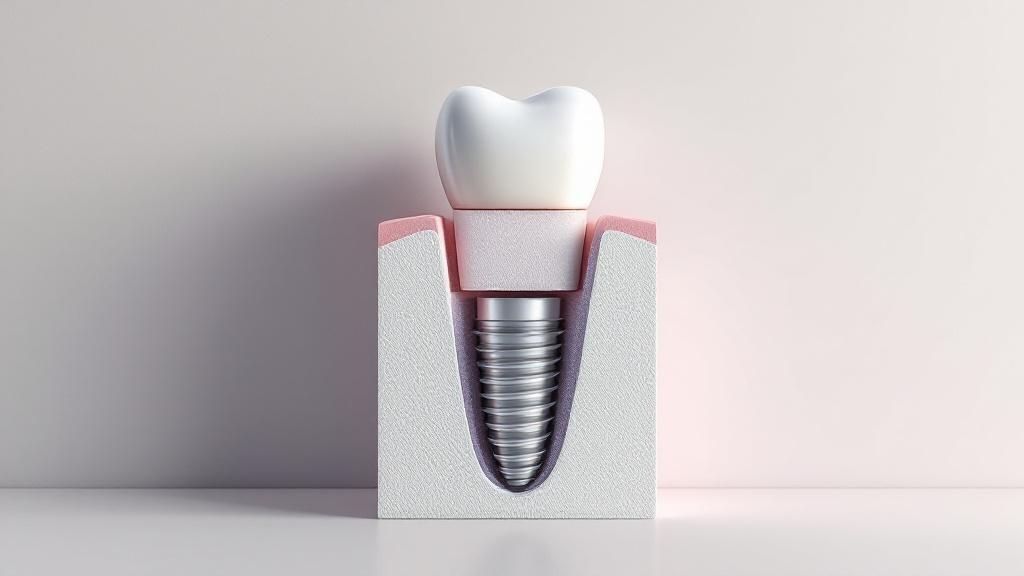
The Dental Implant: This is the anchor. It’s a small post made of biocompatible titanium that’s surgically placed into your jawbone to act like a new tooth root. Over a few months, it fuses directly with the bone—a process called osseointegration—creating an incredibly strong and stable base.
-
The Abutment: This is the connector. Once the implant is fully healed and locked into your jawbone, a small connector piece called an abutment is attached to it. The abutment sits right at the gum line and serves as the crucial link between the implant hidden in your bone and the final crown you see.
The crown, abutment, and implant work together to form a complete, self-sufficient tooth replacement. This system is special because it doesn't need to lean on neighboring teeth for support, which helps protect the health of your entire smile.
It's no surprise that the demand for these restorations is soaring. The global dental crown market was valued at USD 1.65 billion in 2022 and is projected to hit nearly USD 2.9 billion by 2030. This incredible growth shows just how effective crowns are for both protecting natural teeth and completing implant work. You can find more details on these trends in the dental crown market analysis from Data Bridge Market Research.
To make this even clearer, the table below breaks down these three parts using simple analogies.
The Three Core Parts of Your Implant Tooth
| Component | Simple Analogy | Primary Function |
|---|---|---|
| Dental Implant | A Wall Anchor | Provides a rock-solid foundation by fusing with the jawbone. |
| Abutment | A Connecting Bolt | Securely links the implant post below the gums to the crown above. |
| Implant Crown | A Lampshade | The visible, functional part that restores your tooth's appearance and chewing ability. |
Choosing the Right Implant Crown Material
Once your implant has fully healed and integrated with your jawbone, it's time for the final, most exciting step: choosing the material for your new tooth. This is a crucial decision that's all about balancing beauty with brawn. It’s not just about picking something that looks good—it's about selecting a material that can handle the daily demands of its specific job in your mouth.
Think of it this way: a front tooth that shows every time you smile has very different needs than a back molar that does all the heavy lifting when you chew. One requires exceptional, lifelike aesthetics, while the other demands serious strength. Getting familiar with the pros and cons of each option empowers you to make a confident choice with your dentist.
This is a choice more and more people are making. The global dental crowns and bridges market is projected to grow at a compound annual growth rate (CAGR) of 8.2% from 2025 to 2030. This boom is fueled by fantastic new materials like advanced ceramics and zirconia, which have dramatically improved the look and longevity of crowns for dental implants. You can see the full dental crown market forecast from Grand View Research for a deeper look at how technology is shaping modern dentistry.
All-Porcelain or All-Ceramic Crowns
When it comes to teeth in the "aesthetic zone"—those highly visible front teeth—all-porcelain or all-ceramic crowns are usually the go-to recommendation. Their biggest advantage is their amazing ability to mimic the natural translucency and color of real tooth enamel.
These materials let light pass through them in a way that metal-based crowns just can't, creating a restoration that blends in perfectly with your natural smile. If you want a truly lifelike result, this is an excellent choice.
But this beauty does come with a trade-off. While modern ceramics are quite strong, they aren't as tough as their metal or zirconia cousins. They can be more prone to chipping or cracking under the heavy bite forces of chewing, which makes them less suitable for your back molars.
Porcelain-Fused-to-Metal (PFM) Crowns
Porcelain-fused-to-metal (PFM) crowns are a classic hybrid that has been a reliable workhorse in dentistry for decades. They offer a great combination of incredible strength and pretty good aesthetics.
A PFM crown starts with a strong metal alloy base that is then completely covered with a layer of tooth-colored porcelain. This design gives it excellent durability, making it a solid choice for both front and back teeth.
The main downside is cosmetic. Because of the opaque metal underneath, PFM crowns can't achieve the natural translucency of all-ceramic options. Over time, if your gums recede slightly, a dark metal line can sometimes become visible right at the gum line—a key factor to consider for teeth that are always on display.
Key Insight: The decision often comes down to location. For a front tooth, the superior aesthetics of an all-ceramic crown may be the priority. For a back molar that endures heavy chewing forces, the sheer strength of zirconia or a PFM crown is usually the wiser, more durable choice.
Zirconia Crowns
Zirconia is a true powerhouse material and has quickly become one of the most popular choices for crowns for dental implants. It’s technically a type of ceramic, but it's so incredibly strong that it’s often called "ceramic steel." Zirconia gives you the best of both worlds: top-tier strength and excellent aesthetics.
This material is virtually indestructible and can easily handle the most intense chewing and grinding forces, making it the premier choice for back molars. It’s also highly biocompatible, which means it’s very gentle on the surrounding gum tissue.
While the earliest versions of zirconia could look a bit chalky or opaque, modern formulations have vastly improved their translucency. Today's layered zirconia crowns can rival the appearance of traditional porcelain, making them a fantastic all-around option for almost any tooth in your mouth.
To help you see how these options stack up, here’s a quick guide comparing the most common materials used for implant crowns.
Comparing Common Implant Crown Materials
Choosing the right material for your implant crown is a collaborative decision between you and your dentist, based on the tooth's location, your bite, and your aesthetic goals. This table breaks down the key differences to help you understand the trade-offs.
| Material | Aesthetics | Strength & Durability | Best Use Case |
|---|---|---|---|
| All-Porcelain | Excellent | Good | Ideal for front teeth where appearance is the highest priority. |
| PFM | Good | Very Good | A reliable, strong option for back teeth or budget-conscious restorations. |
| Zirconia | Very Good to Excellent | Excellent | The top choice for back molars; strong and aesthetic enough for any tooth. |
Ultimately, whether you prioritize the unmatched beauty of porcelain, the proven strength of PFM, or the all-in-one performance of zirconia, there's a perfect material to restore your smile's function and appearance.
The Journey to Getting Your Implant Crown
So, your dental implant has healed and fused with your jawbone. That’s fantastic news! Now comes the most exciting part: getting the permanent implant crown that turns that sturdy post into a beautiful, fully functional tooth.
Walking through the steps takes the mystery out of the final appointments and helps you feel ready for what’s ahead. Think of it like putting the finishing touches on a masterpiece. The foundation is solid, and now it’s time for the artistry that will complete your new smile. This process is all about precision and creating a seamless, durable result.
The demand for this level of care is huge. The global market for dental crowns and bridges is on track to hit USD 6.75 billion by 2032. This growth is especially strong in places like Europe, where high standards for oral health are the norm. If you're curious about the numbers, you can explore detailed market insights from Fortune Business Insights.
The First Step: Uncovering the Implant
Once the implant and bone have fully bonded—a process called osseointegration—your path to getting crowns for dental implants really begins. The first appointment is usually a quick, minor procedure to expose the top of the implant, which has been resting just beneath your gums.
Your dentist will make a tiny incision in the gum tissue to get to the implant. From there, a small cap called a healing abutment (or healing cuff) is placed on top. This little piece is a game-changer; it gently shapes your gums around the implant site, creating a perfectly natural contour for the final crown. You'll let this heal for a couple of weeks.
Taking Impressions for a Perfect Fit
With your gums perfectly sculpted, the next critical step is taking an impression. This impression is the blueprint the dental lab will use to craft your custom crown, so accuracy here is everything. A flawless fit depends on it.
There are a couple of ways we can do this:
- Traditional Impressions: This is the classic method using a soft, putty-like material in a tray that you bite down on. It creates a physical mold that gets sent off to the lab.
- Digital Impressions: The modern approach uses a small, handheld intraoral scanner. This cool piece of tech captures thousands of images to build an incredibly precise 3D model of your mouth right on a computer screen, which is then sent to the lab digitally.
This infographic breaks down the key stages of finalizing your crown, from placing the healing abutment to the final polish.
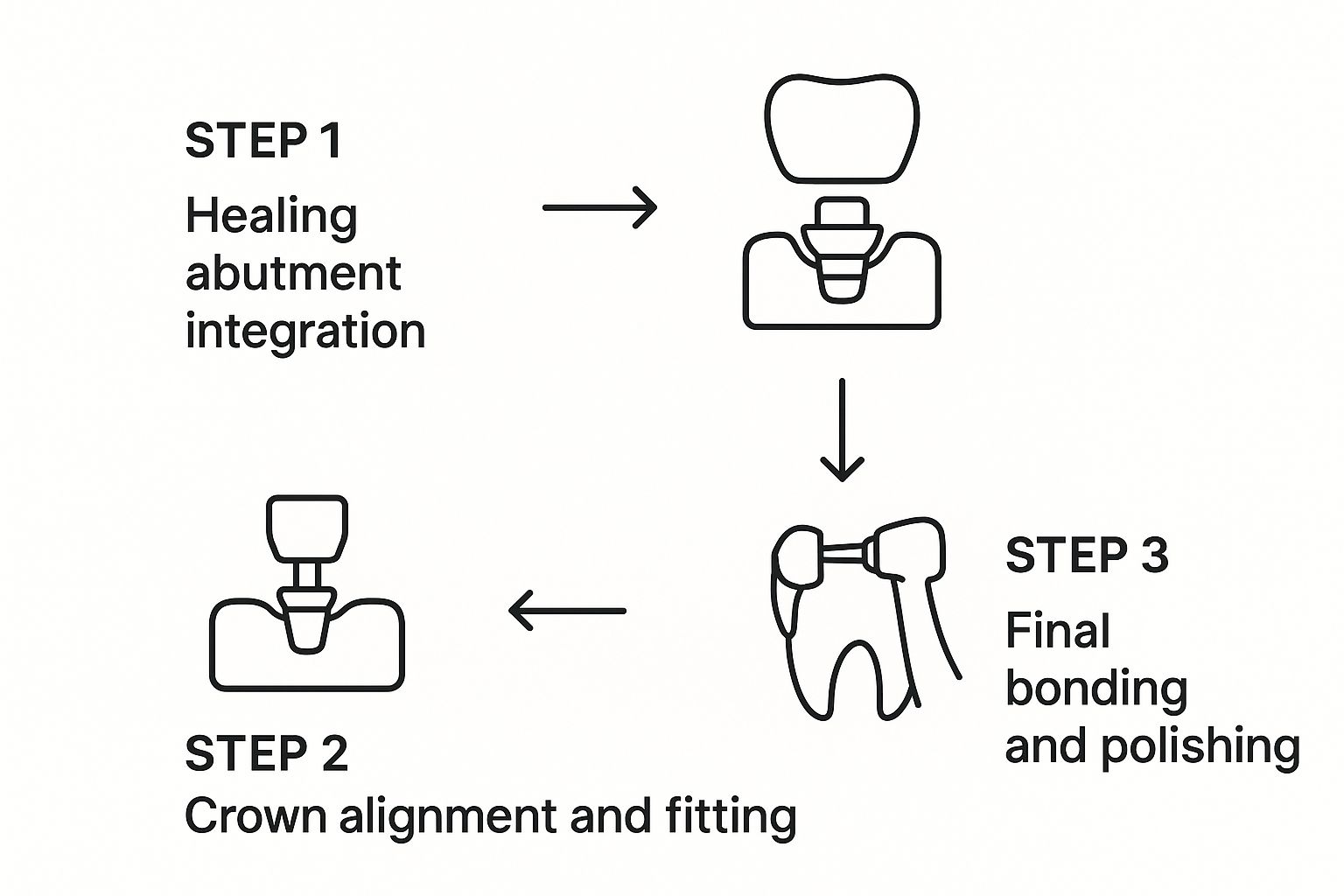
As you can see, each step builds on the last to make sure your new crown fits perfectly and looks completely natural.
Cement-Retained vs. Screw-Retained Crowns
Finally, your custom-made crown arrives from the lab, and it's time to attach it. First, your dentist places the final abutment onto the implant. Then, the crown is secured to that abutment. There are two common ways to do this, and each has its own set of pros and cons.
Cement-Retained Crowns
Just as it sounds, this crown is attached to the abutment with a powerful, permanent dental cement.
- Pros: It’s a straightforward process. Plus, since there's no screw hole, the top of the crown is completely solid, which can look more natural and aesthetically pleasing.
- Cons: If an issue ever pops up, getting the crown off without damaging it can be tricky. Sometimes, excess cement can also get trapped under the gum line, which might cause inflammation if not cleaned out perfectly.
Screw-Retained Crowns
This design has a tiny hole on the top or side of the crown. A screw goes through this hole to fasten the crown directly to the implant.
- Pros: The biggest advantage here is retrievability. If the crown ever needs to be repaired, cleaned, or checked, your dentist can simply unscrew it, do the work, and screw it right back on.
- Cons: The screw access hole has to be filled with a tooth-colored composite material. For some people, this might be a minor cosmetic drawback, especially on a biting surface.
Your dentist will recommend the best option for you based on where the implant is, the angle it was placed at, and other clinical factors. Both methods provide a secure, long-lasting tooth. The very last step is checking your bite and giving the crown a final polish, leaving you with a brand-new tooth that looks, feels, and functions just right.
Understanding the Costs of Implant Crowns

Let's talk about one of the first things on every patient's mind: the cost. When you get the final bill for a dental implant crown, it's easy to wonder what goes into that number. It’s important to know you're not just paying for a single object—you're investing in a comprehensive, highly skilled restorative service.
The final price tag covers the clinical expertise of your dentist, the advanced technology used to get perfect impressions and fittings, and the artistic talent of the lab technicians who meticulously craft your custom tooth. Every single step is crucial for getting a great result that lasts for years.
Ultimately, the cost of crowns for dental implants isn't a one-size-fits-all figure. The price can vary quite a bit, depending on a few key factors unique to your treatment plan.
Key Factors That Influence Cost
The total investment for your new tooth is shaped by a few primary variables. Getting a handle on these components helps you see exactly what goes into creating a durable, high-quality restoration that will serve you well for a long time.
-
Crown Material: As we've covered, the material you and your dentist select is a huge factor. A top-of-the-line Zirconia crown, known for its incredible strength and aesthetics, will naturally have a different price than a classic Porcelain-Fused-to-Metal (PFM) crown. This comes down to the cost of the raw materials and the complex fabrication process.
-
Case Complexity: A straightforward, single-tooth replacement is far less complex than a case that needs some extra work. For instance, you might need a custom-made abutment to handle an angled implant or additional adjustments to make sure your bite aligns perfectly. These special considerations will affect the final cost.
-
Geographic Location: It’s no secret that the cost of living—and running a dental practice—changes from one city to another. As a result, the pricing for dental services in a metropolitan area like Glendale might be different from what you'd find in a smaller town.
Important Takeaway: The cost of an implant crown directly reflects the quality of materials, the precision of the procedure, and the expertise of your dental team. Think of it as an investment in a permanent solution designed to restore your oral health and give you back your confidence for the long haul.
Navigating Insurance and Financing
Figuring out how to pay for your crown is just as important as the procedure itself. We know many patients are concerned about how their dental insurance and personal budget will come together.
Dental insurance plans can be all over the map when it comes to covering implant-related procedures. Some plans might cover a percentage of the crown's cost, often classifying it as a "major" restorative procedure. However, it's very rare for an insurance plan to cover the entire amount. Here at Beyond Dental Care, our team is well-versed in helping patients get the most out of their benefits by submitting pre-authorizations and handling claims for them.
For any remaining out-of-pocket expenses, financing options are a fantastic and practical solution. Programs like CareCredit or our own in-house payment plans can break down the total investment into manageable monthly payments. This makes it much easier to afford this top-tier tooth replacement solution without putting a strain on your budget. We firmly believe financial hurdles should never stand in the way of achieving a healthy, complete smile.
Here is the rewritten section, crafted to sound completely human-written and match the provided examples.
Caring for Your New Implant Crown
You've made a fantastic investment in your smile, and now it's time to protect it. Your new implant crown is a feat of modern dentistry, but its success over the years truly depends on the health of the gums and bone that hold it in place.
Think of it like a strong post set in concrete. The post itself is incredibly durable, but if the concrete foundation starts to crack or weaken, the post will eventually loosen. The same goes for your implant. While the beautiful porcelain or zirconia crown can't get a cavity, the living tissues supporting it are still vulnerable. The biggest threats to an implant are gum inflammation and bone loss, so proper care is everything.
Your Daily Cleaning Routine
Looking after crowns for dental implants isn't quite the same as caring for natural teeth. The area where the crown meets the gum line is a prime spot for food and plaque to get trapped, and it needs some special attention.
Of course, your normal brushing routine is still the first line of defense. Grab a soft-bristled toothbrush and some non-abrasive toothpaste, and gently clean all around your crown and the neighboring teeth twice a day. Make sure to focus on that gum line.
But brushing alone just can't get into the tight spaces around an implant. To keep it healthy for the long haul, you'll need to add a few specialized tools to your arsenal.
- Water Flossers: Many dentists consider a water flosser (like a Waterpik) the gold standard for implant care. It uses a pulsating stream of water to blast away debris and plaque from the base of the crown and under the gum line—places where regular floss just can't reach.
- Interdental Brushes: Also called proxy brushes, these tiny tools are perfect for cleaning the slightly wider spaces on either side of your implant crown. They do a fantastic job of removing plaque from the sides of the implant and the adjacent teeth.
- Implant-Specific Floss: Some floss is designed with a stiffened end, which makes it much easier to thread under the crown. This lets you clean the abutment and the underside of the crown that rests against your gums.
A consistent and thorough cleaning routine isn't just about keeping your crown looking good; it's about preventing peri-implantitis. This condition is like gum disease for implants and is the #1 cause of implant failure.
The Importance of Professional Care
Your home care is vital, but it’s only one part of the equation. Keeping up with your regular dental check-ups is absolutely non-negotiable for monitoring the health of your implant and crown.
During these visits, we’ll:
- Examine the Crown and Abutment: We’ll check for any little chips, signs of wear, or looseness to make sure the restoration is still strong and secure.
- Assess Gum Health: We carefully measure the gum pockets around the implant. This is how we catch the earliest signs of inflammation or infection before they cause real trouble.
- Take Periodic X-rays: An X-ray is the only way we can actually see the bone that’s holding your implant. It allows us to confirm that your bone level is stable and the implant is still perfectly integrated.
These appointments let us spot potential issues long before you'd ever notice them, protecting your investment for a lifetime.
Lifestyle Habits to Protect Your Crown
Finally, a few small tweaks to your daily habits can make a huge difference in how long your implant crown lasts. It’s mostly about being mindful of putting too much force on your new tooth.
Try to avoid chewing on extremely hard things like ice, jawbreakers, or popcorn kernels with your implant crown. And if you grind or clench your teeth at night (a condition called bruxism), let's talk about a custom nightguard. It’s a simple appliance that shields your crown—and your natural teeth—from incredible pressure while you sleep.
By combining diligent home care, professional check-ups, and smart habits, you can look forward to enjoying your beautiful, functional new smile for many, many years to come.
Of course. Here is the rewritten section, crafted to match the human, expert-led style of the provided examples.
Common Questions About Implant Crowns
It’s completely normal to have a few questions, even after you’ve learned all about the process. Deciding on a major dental treatment is a big deal, and you deserve to feel 100% confident before moving forward. We’ve put together this Q&A section to tackle the most common things we hear from patients considering crowns for dental implants.
Think of this as our final chat to clear up any lingering doubts. We’ll cover everything from how long your new tooth will last to what you can expect to feel during the appointment, giving you all the details you need for total peace of mind.
How Long Will My Implant Crown Last?
This is usually the first question on everyone's mind, and for good reason! An implant crown is a significant investment in your smile, and you want it to stand the test of time. The great news is that with proper care, your implant crown can last for 15 years or even longer—and many people keep them for a lifetime.
Of course, that lifespan isn't set in stone. It depends on a few key factors:
- Your Choice of Material: A powerhouse material like Zirconia on a back molar is built to withstand serious chewing forces and will likely outlast a porcelain crown in the same spot.
- Your Oral Hygiene Routine: This is the single biggest factor. Keeping the gums and bone around your implant healthy is absolutely crucial for its long-term success.
- Your Lifestyle Habits: Things like clenching or grinding your teeth (bruxism) put a lot of extra stress on the crown. Chewing on ice or other hard objects can also cause chips or fractures over time.
- Regular Dental Visits: Seeing your dentist for routine check-ups allows us to spot any tiny issues—like a loose screw or a small chip—before they turn into bigger problems.
Is Getting the Implant Crown Painful?
Not at all. The appointment to place your final crown is actually one of the easiest, most comfortable parts of the entire implant process. By this stage, the implant has fully healed and fused with your jawbone, so the area is no longer tender or sensitive from the initial surgery.
The steps for taking impressions and attaching the final crown are completely non-invasive. You won't need any freezing or local anesthetic. You might feel some light pressure as we check the fit and make sure your bite feels perfect, but there is absolutely no pain involved. Our team’s top priority is always making sure you’re comfortable and relaxed.
The most invasive part of the entire implant journey is the initial surgery. All subsequent steps, including placing the healing abutment and the final crown, are much simpler and completely comfortable for the patient.
Can I Whiten My Implant Crown?
This is another great question we hear all the time, especially from patients hoping to brighten their whole smile. The short answer is no, you cannot whiten a dental crown. The materials used to make crowns—whether it’s porcelain, zirconia, or a PFM—are non-porous. This means whitening gels, whether professional-grade or from the drugstore, simply won't have any effect on their color.
Because of this, if you're thinking about whitening your natural teeth, it's always best to do it before we make your new crown. That way, your dentist can perfectly match the shade of the crown to your newly brightened smile for a flawless, natural-looking result.
What Happens If My Crown Needs to Be Replaced?
While implant crowns are incredibly tough, life happens. After many years, they can sometimes chip, break, or simply wear down. The good news is that if this occurs, replacing just the crown itself is a simple and straightforward fix.
If you have a screw-retained crown, the process is especially easy. Your dentist can just unscrew the old crown, take a new impression, and have a lab fabricate a replacement. If your crown is held in with cement, it might need to be carefully cut and removed before a new one is placed. In either scenario, the implant and the abutment underneath are almost always perfectly fine and stay right where they are.
At Beyond Dental Care, we believe every patient deserves a smile they can show off with pride for a lifetime. If you have more questions about crowns for dental implants or you’re ready to see what’s possible for your smile, we invite you to schedule a consultation with our expert team. Visit us online at https://beyonddentalcare.com to get started.