
Direct Answer: Often, yes. Water fluoride is a low background level. Fluoride applied at the dentist is stronger and targeted, and the recommendation depends on your child’s cavity risk, not your zip code.
Parents in North Glendale and North Peoria have been asking me a version of the same question all year. Arizona lawmakers are debating water fluoridation, the FDA made news about fluoride drops, and now nobody is sure whether their 9 year old still needs anything at the dentist.
I understand the confusion. Two separate pieces of news landed within a few months of each other, and they get blended together in the retelling.
So here is the practical version. What the Arizona bill would actually change, why swallowed fluoride and fluoride applied to the tooth are two different things, and how we decide whether your specific child needs varnish, sealants, or both.
What Senate Bill 1019 Would Actually Change
Senate Bill 1019, sponsored by Sen. Janae Shamp, was filed for the 2026 session. It would bar cities and other political subdivisions from adding fluoride to public water systems.
It cleared the Senate Committee on Government in late January 2026. As of this writing it is a bill, not a law, and the status can change quickly. Anyone who wants the current standing can pull it up directly on azleg.gov rather than relying on a headline.
I am not here to argue the policy. What matters in my chair is what it would mean for a kid’s molars.
Glendale, Peoria, and Phoenix all currently add fluoride to municipal water, so this is a local question for households across Arrowhead Ranch, Norterra, and Vistancia. Water fluoride works as a low, steady background exposure. It bathes the teeth in a small amount of fluoride many times a day.
If that background level went away, nothing would happen overnight. Cavities are slow. But you would be removing one quiet layer of protection that most parents never had to think about, which makes the other layers matter more.
The FDA News Parents Keep Mixing Up With the Water Bill
On October 31, 2025, the FDA recommended that ingestible fluoride drops and tablets not be given to children under 3, or to older children at low or moderate risk of tooth decay. It sent warning letters to four companies marketing those products.
Here is the part that gets lost. That action was about fluoride you swallow. It did not touch fluoride toothpaste, fluoride mouth rinse, or the fluoride treatments applied in a dental office.
The American Dental Association’s statement on the FDA action confirms the scope of the restriction and notes that supplements remain appropriate for children over 3 who are at high risk of decay.
If you remember one thing from this article, make it this distinction:
- Systemic fluoride is swallowed. Drops, tablets, and drinking water fall here.
- Topical fluoride sits on the tooth surface. Toothpaste, rinses, and in-office varnish fall here.
- Federal health agencies have described fluoride’s main cavity-fighting benefit as topical for years, meaning it works by contact with enamel, not by being absorbed.
So a water bill and a supplement warning are both real news. Neither one says that the fluoride varnish your hygienist paints on at a cleaning stopped being useful.
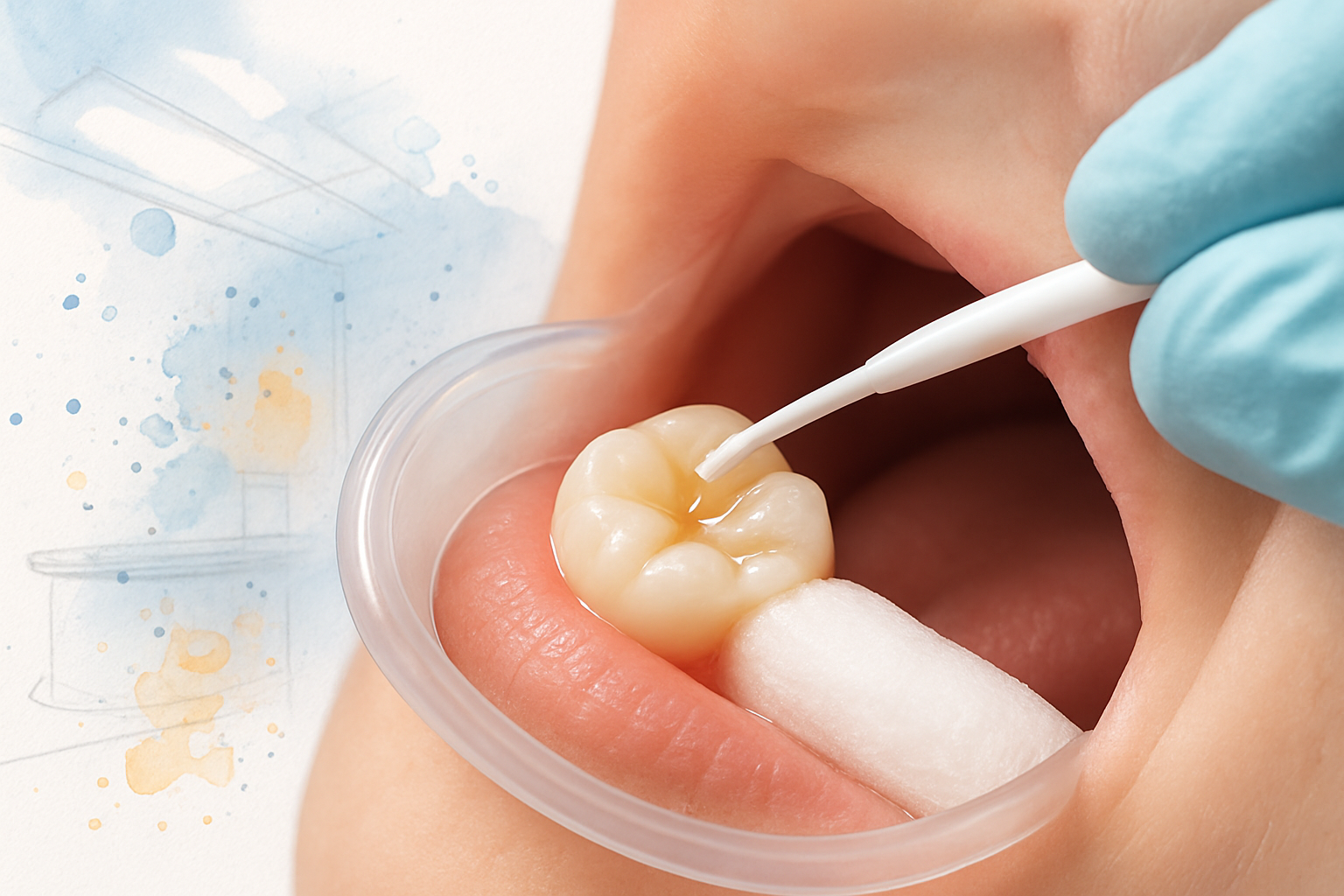
Cavity Risk Is Assessed Per Child, Not Per Zip Code
The blanket rule people want is “our water has fluoride, so we are covered.” That rule never really worked, and it works less now.
When I look at a child at a checkup, the water supply is one input among many. What actually shapes the recommendation:
- Cavity history. A child who has had one cavity is more likely to get another. Past decay is the strongest single predictor I have.
- Whether the permanent molars are sealed, and how deep the grooves run. Some kids have shallow, easy to clean chewing surfaces. Some have pits a bristle cannot reach.
- Orthodontic hardware. Brackets and bands trap plaque. Clear aligners come out for brushing, which changes the picture.
- Snacking and sports drinks. Not the total sugar so much as the frequency. A kid sipping an electrolyte drink through a two hour practice is re-acidifying all afternoon.
- Dry mouth from allergy medications. Extremely common across the Valley. Less saliva means less natural rinsing and less enamel repair.
Then there is the home water question most families never raise. A reverse osmosis system under the kitchen sink strips fluoride out of tap water. So does most bottled water. And a private well can run anywhere from near zero to naturally high.
Plenty of households in Stetson Valley and Vistancia have an RO unit installed and have no idea it changed anything. Bring that detail to the appointment. It genuinely moves the recommendation.
What I Weigh When Deciding on Fluoride for a Child
No single item on this list decides anything by itself. It is the combination that puts a child in a higher or lower risk category.
| Factor | Why It Matters | How It Can Change the Plan |
|---|---|---|
| Previous cavities | Strongest predictor of future decay | Pushes toward varnish at every visit |
| Deep molar grooves | Bristles cannot reach the base of the pit | Sealants become the priority, not varnish alone |
| Braces or aligners | Hardware traps plaque along brackets | More frequent fluoride and closer monitoring |
| Daily sports drinks or grazing | Repeated acid exposure through the day | Timing and habit coaching plus topical fluoride |
| Allergy medication use | Reduced saliva flow, common in the Valley | Higher risk category even with good brushing |
| Reverse osmosis or well water at home | Removes or varies the background fluoride level | Often shifts a child from low to moderate risk |
Varnish and Sealants Are Not the Same Thing
Parents often assume one of these replaces the other. They protect different parts of the tooth and are placed at different times.
What Each Appointment Actually Involves
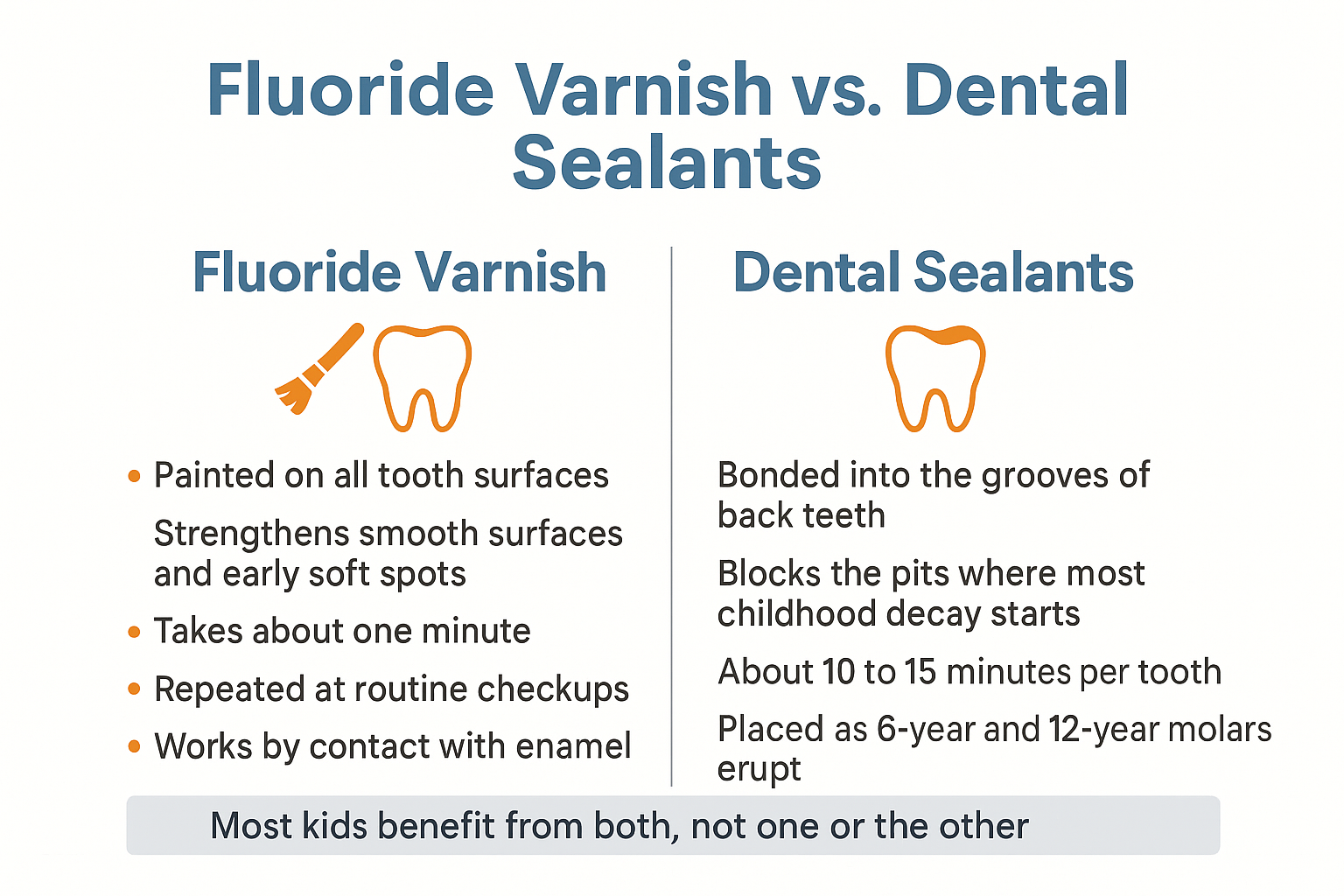
Fluoride varnish is the simple one. It gets painted on with a small brush after a cleaning, it takes about a minute, and the child eats soft food for a few hours afterward. It works on the smooth surfaces and on early soft spots that have started to demineralize but have not broken through yet.
A sealant is a different job. It is a thin coating bonded into the deep pits and grooves of the chewing surfaces on back teeth, which is where the large majority of childhood decay actually starts.
The timing is tied to the child’s mouth, not to a calendar. Sealants generally go on as the six year molars and then the twelve year molars come in, because that is when those chewing surfaces are freshly exposed and still clean.
The appointment itself is quick. The tooth is cleaned and dried, the coating is placed and cured, and the bite is checked. Most kids sit for it without numbing.
After that, we look at them at every routine visit. Sealants wear, chip, and occasionally need a touch up, so it is not a place and forget treatment. Your hygienist is checking them alongside the rest of what a thorough exam actually covers.
Fitting It Into a Real Family Schedule
Most of the calls I see on this come from one parent booking for two or three family members at once. That is the normal pattern here.
One mother called about a cavity forming between her son’s back teeth that had gotten worse since his last visit. That is exactly the situation sealants and varnish on the molars are meant to head off, and exactly why the timing on those first permanent molars matters.
If pulling kids out of class is the sticking point, the Deer Valley Unified fall break in early October is a natural window for a cleaning and sealant visit. Our weekday hours run to 7pm Monday through Thursday, which covers families who would rather come after practice than during the school day.
Three questions worth asking at your next appointment:
- What is my child’s cavity risk level right now, and what put them there?
- Do the molars need sealing yet, or are we still waiting on eruption?
- Does our home water source change your recommendation? Mention RO filters, bottled water, or a well.
If your child gets anxious about dental visits, that is worth raising in the same conversation. It changes how we pace the appointment, and comfort-focused care is a planning topic, not an afterthought. For families without dental coverage, it also helps to understand what shapes the cost of a cleaning and exam before you sit down.
Frequently Asked Questions About Fluoride Treatments for Kids
If Glendale water is fluoridated, is a fluoride treatment at the dentist redundant?
No. They work at very different strengths. Water fluoride is a low background level all day, while in-office varnish is a concentrated dose held against the enamel for a period of time. For a child with prior cavities or deep grooves, the second one is doing real work the first cannot.
Did the FDA ban fluoride for kids?
No. The October 2025 action was about swallowed fluoride supplements, specifically drops and tablets for children under 3 and for older kids at low or moderate decay risk. Toothpaste, rinses, and in-office fluoride treatments were not part of it.
We use a reverse osmosis filter at home. Should I mention that?
Yes, please do. RO systems remove fluoride, and so does most bottled water. It is one of the most useful details a parent can bring to an appointment, and it frequently shifts a child from low risk to moderate risk in my assessment.
How long do sealants last?
It varies quite a bit by the child and the tooth. Many hold up for several years, but they chip and wear, especially in kids who grind. We check them at every routine cleaning and repair them when needed rather than assuming they are still intact.
Will insurance cover fluoride varnish and sealants for my child?
Many plans cover both for children up to a certain age, but the age cutoff and the frequency limits differ by plan. Insurance questions are one of the most common reasons a family delays booking, so it is worth calling ahead and having coverage confirmed before the visit rather than sorting it out in the chair.
Bringing the Whole Household In at Once
Dr. Dariene Lazore, DMD, sees children, teens, adults, and seniors in one private practice in North Glendale, so a child’s sealants and a grandparent’s checkup can land on the same afternoon. Weekday hours run to 7pm Monday through Thursday, and the office comfort dog, Mr. Woodford, comes up in reviews from families with nervous kids more often than anything else. If you want your child’s cavity risk looked at before the next school break, the office can be reached at 623-267-8088 or at beyonddentalcare.com.