
When people ask, "how long is a dental implant procedure?" the answer has two parts. The surgery to place the implant post is often quick—just 1-2 hours for each implant. But the full journey to a strong, permanent new tooth is a process that happens over several months.
This timeline isn't about rushing. It's about giving your body the time it needs to build a solid foundation for a tooth that can last a lifetime.
Your Dental Implant Timeline At A Glance
Getting a dental implant is like a building project for your smile. The day you get the implant placed is just one step. The whole process is designed to rebuild your tooth from the jawbone up, making sure the final result is strong and secure.
Every person's timeline is different, but the journey usually follows a few key stages: planning, surgery, healing, and getting your new tooth. The most important part is a natural process called osseointegration, where the titanium implant post fuses with your jawbone. This is what makes an implant so strong.
This healing stage is the longest part of the process, usually taking 3 to 6 months. It’s the secret to making the implant work so well.
This visual shows the main stages you can expect, from surgery day to getting your final, beautiful crown.
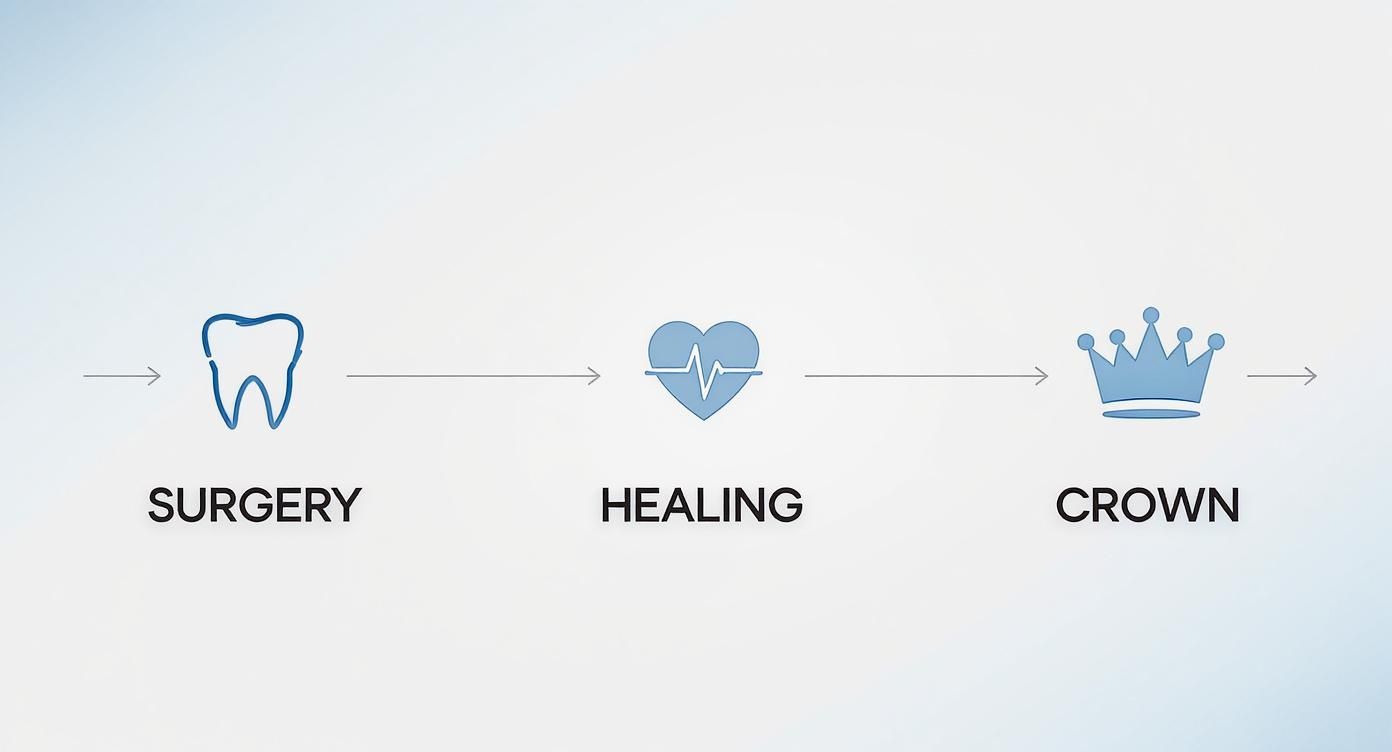
As you can see, that healing time is a vital part of your journey. To help you feel ready, we have a detailed guide on the dental implant surgery recovery timeline with pro tips for healing.
At Beyond Dental Care, we plan every step of your treatment with precision to make the process as smooth and comfortable as possible.
The Dental Implant Process From Start to Finish
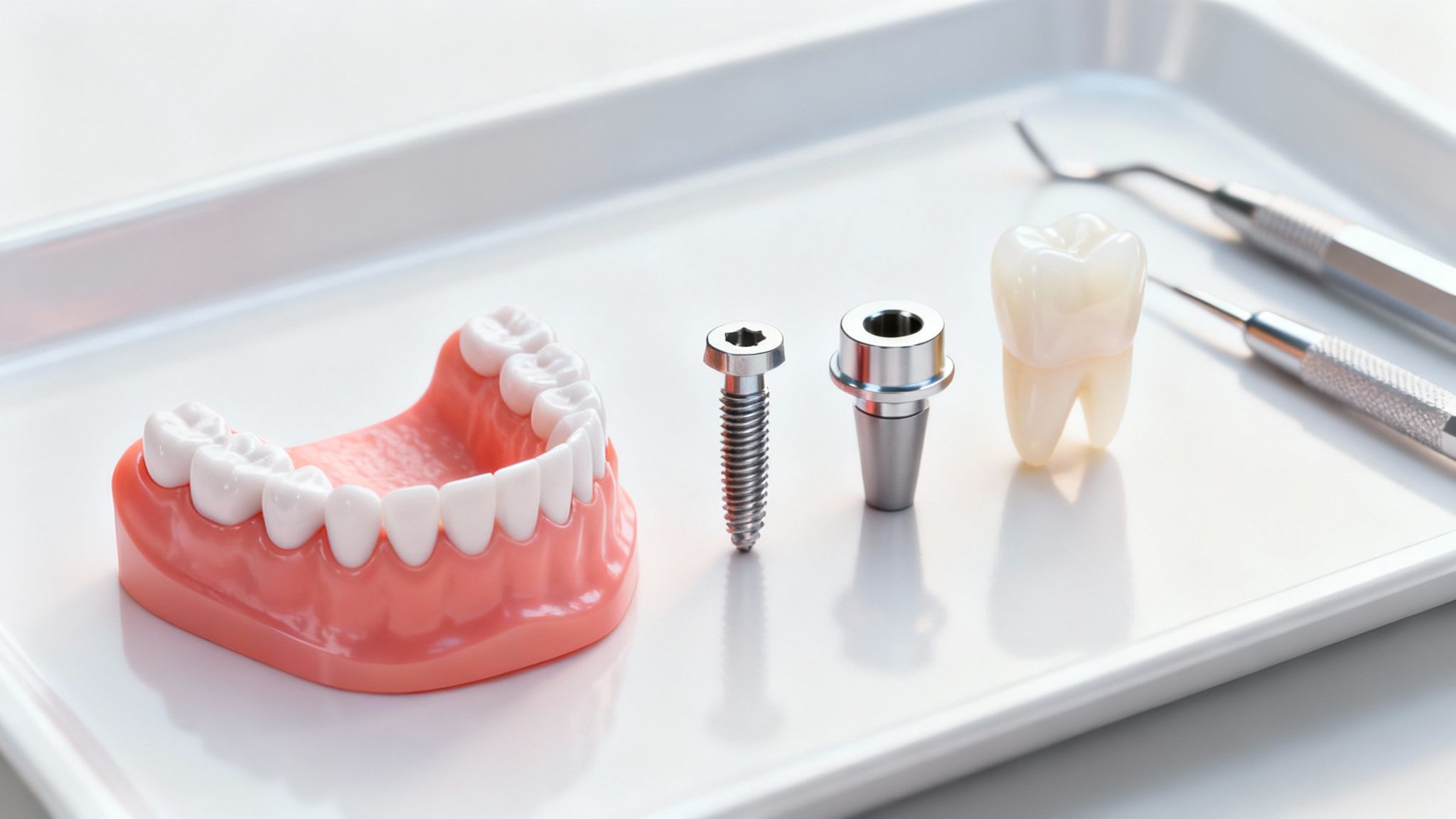
Knowing what to expect during your dental implant procedure can help you feel more confident. At Beyond Dental Care, we map out every step with you, so you feel informed and comfortable from your first visit to your final, new smile.
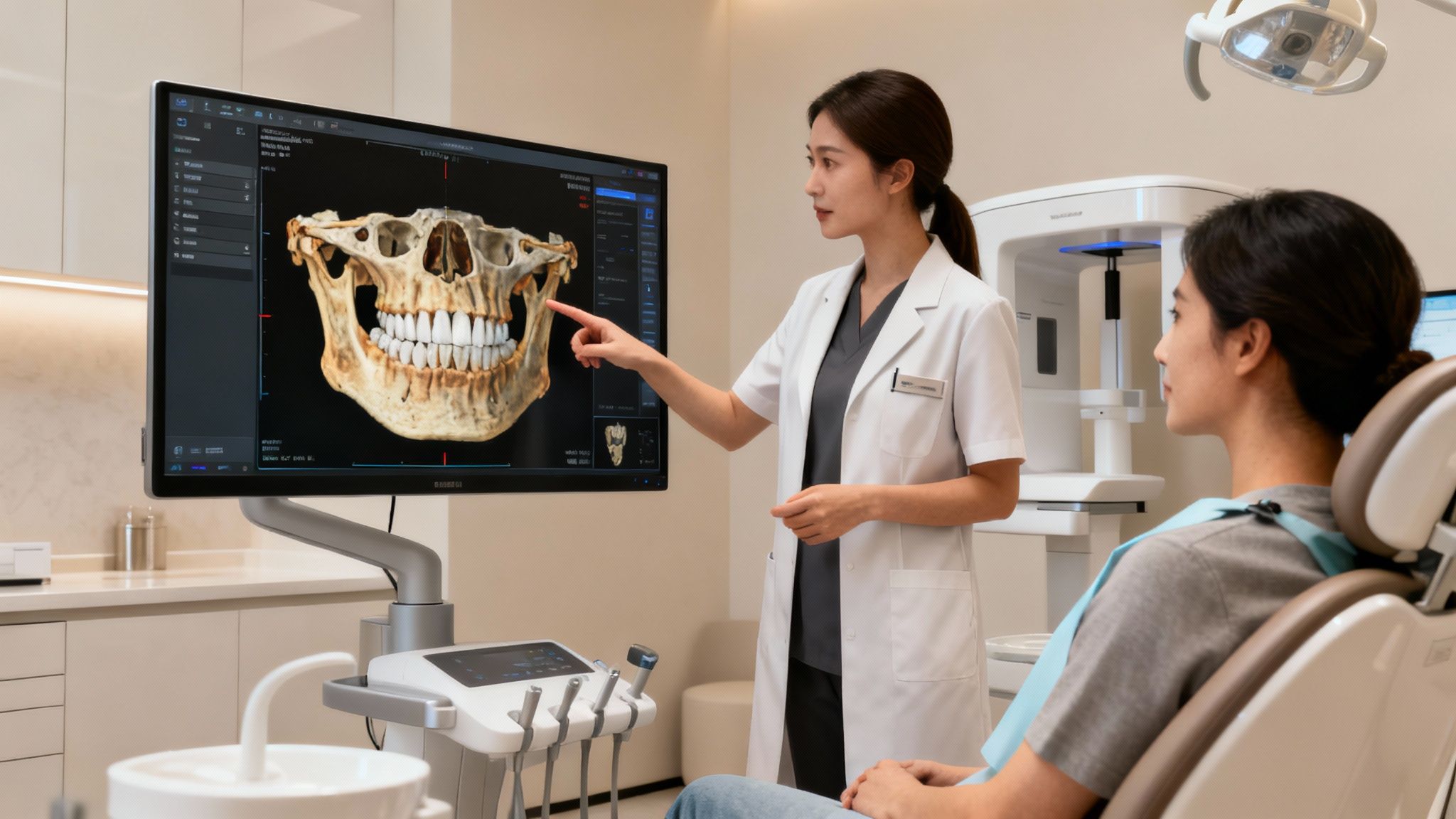
The journey is a series of carefully planned appointments designed for a successful, long-lasting result. It all starts with a detailed consultation where we use advanced 3D CBCT (Cone Beam Computed Tomography) scanners. This technology lets us create a perfect digital model of your jaw, allowing us to plan the implant's placement with amazing accuracy.
Stage 1: The Foundation and Implant Placement
Before the main event, some patients may need some prep work. This could mean removing a tooth or getting a bone graft if the jawbone isn't thick enough to hold an implant securely. These steps are all about creating the perfect foundation for a strong, permanent tooth.
For some people, a faster option like a same-day tooth extraction and implant procedure might be possible, which can shorten the overall timeline.
Placing the implant is a straightforward surgical procedure. We use local anesthesia to make sure you're completely comfortable and feel no pain. Then, we gently place the small titanium implant post into the jawbone, following the exact plan we created with our 3D imaging.
Stage 2: Healing and Your New Tooth
After the implant is in place, the most important phase begins: osseointegration. This is the amazing natural process where your jawbone grows around and bonds with the titanium implant, creating an incredibly strong connection.
This healing period usually takes about 3-6 months. It’s the key to your implant's long-term success.
We'll keep a close eye on your progress during the healing stage to make sure everything is going perfectly. Your patience here is what allows the implant to truly become a permanent part of your smile.
Once healing is complete, you’ll come back for the final steps. We’ll attach a small connector, called an abutment, to the top of the implant. This piece will hold your brand new tooth.
Finally, we take very precise impressions to create your permanent crown. There's a real art to designing crowns for dental implants so they perfectly match your natural teeth in color, shape, and size. Once your custom crown is ready, we secure it to the abutment, and your new smile is complete.
Your Healing and Recovery Timeline: What to Expect
The success of your dental implant doesn't end when you leave our office. In fact, the most important part is just starting. The recovery period is when your body does the incredible work of fusing with the implant, turning it into a solid foundation for your new tooth.
Knowing what to expect during this time helps reduce anxiety and ensures everything goes smoothly.
The First 48 Hours and The First Week
Right after your procedure, it’s important to rest and be gentle with the area. It’s completely normal to have some minor swelling, bruising, and discomfort for the first 24-48 hours. This can be managed with over-the-counter pain medicine and a cold pack on your cheek.
For the first week, stick to a soft-food diet to protect the healing site. Think smoothies, yogurt, and soups. Gently rinsing with warm salt water will help keep the area clean. For a more detailed guide, check out these 8 actionable dental implant recovery tips.
The Osseointegration Phase: 3-6 Months
Now for the main event: a process called osseointegration. Over the next 3-6 months, something amazing happens under your gums. Your jawbone will grow around and fuse with the titanium implant post, locking it into place.
You won't feel a thing, but this is the magic that makes dental implants so strong and reliable. This period of patience is rewarded with a tooth that is built to last. Studies show that over a 10-year period, dental implants have a success rate of around 95%, making them one of the most dependable tooth replacement options.
This healing timeline can sometimes be longer, especially if you needed a bone graft to build up your jawbone before the implant was placed. Following your aftercare instructions is even more critical when managing your dental bone graft recovery.
At Beyond Dental Care, we'll monitor your progress every step of the way. Our clinical experience allows us to give you a real recovery timeline, so you know exactly what to expect as you heal.
How We Use Technology to Perfect Your Procedure
Knowing exactly what to expect starts with a solid plan. At Beyond Dental Care, we map out every detail of your implant surgery before we even begin. Using advanced technology lets us be incredibly precise, which makes the whole process more efficient, shortens your time in the chair, and helps you recover faster.
Our entire approach starts by creating a perfect digital copy of your jaw. This isn't an old-school, flat X-ray; it’s a detailed, 3D view that gives us the full picture.
Precision Planning with 3D Imaging
To create this digital map, we use a Cone Beam Computed Tomography (CBCT) scanner. You can think of it as a GPS for your mouth. This powerful scan lets us see your bone structure, nerve paths, and sinuses with amazing clarity.
This step removes all the guesswork. We can plan the perfect spot for your implant on a computer first, choosing the exact angle and depth to ensure it is stable and safe. You can learn more about how we use digital dental imaging to improve results for our patients.
By planning your procedure digitally, we can spot potential problems and solve them before they ever happen. This careful preparation is a huge part of why modern implants have such high success rates—often exceeding 95%.
Computer-Guided Implant Surgery
That detailed digital plan then guides the surgery. Using our 3D model, we create a custom surgical guide that fits perfectly over your teeth. This guide has a small, precise opening that directs the implant into the exact location we mapped out.
This advanced technology offers real benefits for you:
- Greater Accuracy: The implant is placed with pinpoint precision, which is key for a perfect long-term fit.
- Shorter Surgery Time: With a clear guide, the procedure is often faster and less invasive.
- Faster Recovery: A more precise, quicker surgery almost always leads to less discomfort and a smoother healing period.
A Dental Implant Approach for Every Generation
A dental implant is a great way to replace a missing tooth, but the best plan often changes with your age and stage of life. The timeline and what you can expect will look a little different for each generation, as we adjust the treatment to fit your specific needs.
For teens, the most important word is patience. We must wait until the jaw has finished growing, which is usually in the late teens or early twenties. Placing an implant before the face is fully developed can cause problems later, so waiting ensures the implant will be stable for life.
Adults and Seniors
For busy adults juggling work and family, dental implants are a permanent, no-fuss solution. Unlike dentures or bridges that need special care, an implant works just like a natural tooth. You just brush and floss as usual, making it a simple and lasting investment in your smile.
For seniors, implants can be truly life-changing. A common concern is whether there is enough bone to support an implant, but modern techniques often allow us to prepare the jaw for success. We focus on how implants can secure loose dentures or replace failing teeth, which greatly improves comfort and the simple joy of eating your favorite foods. We cover the specific benefits for older patients in our detailed guide on dental implants for elderly patients.
No matter your age, our goal is the same: long-term success. The implant process is a journey, not a sprint, but the reward is a new tooth you can count on for years to come.
A major 20-year study that tracked over 1,600 implants found a mean survival rate of 92%, showing that with proper care, implants are a dependable solution for decades. You can dive into the details of this long-term implant research to see just how reliable they are.
A Few Common Dental Implant Questions
It’s completely normal to have questions when you’re thinking about a procedure like dental implants. At Beyond Dental Care, we find that giving you clear, simple answers is the best way to help you feel confident and ready for what’s ahead.
We’ve put together a few of the most common questions we hear from our patients to give you the information you need.
Is the Dental Implant Procedure Painful?
This is usually the first thing people ask, and the answer is a relief. Thanks to local anesthesia, the area will be completely numb, and you won’t feel any pain during the implant placement. Most of our patients tell us the experience was much more comfortable than they expected.
After the procedure, it’s normal to have some mild soreness and swelling for a few days, similar to what you’d feel after having a tooth pulled. This is easily managed with common over-the-counter pain relievers.
Will I Have a Gap in My Smile During Healing?
Absolutely not. We know how important it is to be able to smile confidently through the whole process. While your implant is healing safely under your gums, we’ll create a temporary tooth just for you.
This might be a:
- Temporary Crown: A cap that looks just like a real tooth.
- Dental Flipper: A lightweight, removable partial tooth.
- Essix Retainer: A clear tray that holds a fake tooth in place.
Each of these options is designed to keep your smile looking complete and natural while the important work of osseointegration happens.
We will never let you leave our office with a visible gap in your smile. Our precision planning includes a temporary solution that keeps you looking your best from day one.
How Do I Care For My Dental Implant?
One of the best things about dental implants is how easy they are to care for. You’ll look after your new implant the same way you do your natural teeth—no special tools or difficult routines needed.
That means sticking to a simple but effective daily routine:
- Brushing twice a day.
- Flossing daily, making sure to clean around the implant.
- Keeping up with your regular professional cleanings and check-ups.
With just a little regular care, your dental implant is designed to last a lifetime, making it a reliable and permanent part of your smile.
At Beyond Dental Care, we combine advanced technology with personalized guidance to make sure you know exactly what to expect at every stage. If you have more questions or you’re ready to talk about your options, schedule a consultation with us today.