
Getting ready for oral surgery is more than just showing up for your appointment. It’s about planning ahead. You'll need to follow your surgeon's instructions, find someone to drive you home, and make your home a comfy place to recover.
Good preparation is key to a smooth surgery and a quick, comfortable recovery. This means taking care of a few medical details, planning your meals after surgery, and getting your house ready before the big day.
Your Oral Surgery Journey Starts Here
Any kind of surgery can feel scary, but a little planning can make a big difference. Knowing what to do beforehand helps calm your nerves and leads to a better result. The main goal is to feel confident on your surgery day and go home to a stress-free space where you can just rest and heal.
Think of it as making a game plan for your surgery and recovery. By doing a few simple tasks in the weeks and days before, you take control of the situation. This guide will walk you through everything you need to know in simple, easy steps. We'll cover everything from talking to your surgeon to what you'll eat after the surgery.
What to Expect From This Guide
We’re going to cover all the important stuff so you don't miss anything. You’ll find helpful advice on:
- Medical Readiness: What you need to talk about with your surgeon and which health details are most important to share.
- Home Setup: How to make a cozy recovery spot with everything you need nearby.
- Diet Planning: A clear list of what foods to buy and what to avoid before and after your surgery.
- Day-Of Logistics: Simple steps to make the day of your surgery go as smoothly as possible.
Getting ready for oral surgery isn’t just about the surgery itself—it’s about creating the best environment for your body to heal. The effort you put in beforehand will help you recover faster and more comfortably.
Let's start with a quick look at the main steps. This table gives you an overview to help you get organized in the weeks before your appointment.
Quick Preparation Checklist At a Glance
Here’s a quick look at the main steps to get ready for your surgery.
| Preparation Stage | Key Goal | When to Start |
|---|---|---|
| Medical & Health Consultation | Tell your surgeon your full health history and ask questions. | 2-4 weeks before surgery |
| Home Recovery Setup | Get your home ready with supplies and a comfortable rest area. | 1 week before surgery |
| Logistics & Transportation | Arrange for a driver and time off from work or school. | 1-2 weeks before surgery |
| Diet & Meal Planning | Shop for soft foods and plan your post-op meals. | 3-5 days before surgery |
Having this timeline makes the whole process feel easier. Now, let's get into the details for each step.
Getting the Green Light: Your Medical and Health Prep

Let's talk about the most important part of getting ready for oral surgery: your medical prep. This is when you and your surgeon work as a team to make sure everything goes well. The main event here is your pre-surgery visit. It is very important that you give complete and honest information at this appointment.
Your surgeon needs to know all about your health to plan the safest surgery for you. This is about more than just your teeth—it’s about your whole body. Small details can have a big impact on your surgery and how you heal.
The Pre-Operative Consultation
Think of your pre-op appointment as a planning meeting where you are the most important person. This is your time with the surgical team to go over your medical history, discuss the surgery, and get your specific plan.
You'll be asked for your full medical history, and being honest is key for your safety. We're talking about long-term conditions like diabetes or high blood pressure, any past surgeries, and especially any problems you've had with anesthesia before.
You also need to bring a complete list of everything you take. And we mean everything.
- Prescription Drugs: List them all, including the dose and why you take them.
- Over-the-Counter Meds: This includes things you might not think about, like daily aspirin, allergy pills, or ibuprofen.
- Vitamins and Supplements: Don't forget these! "Natural" supplements like fish oil, vitamin E, or ginseng can thin your blood and affect healing, so they must be on the list.
- Allergies: Mention every allergy you know of, not just to medicines. For example, if you have a latex allergy, we need to know.
Questions to Ask Your Surgeon
The more you know, the calmer you'll feel. We always tell patients that there are no silly questions. It’s a great idea to write them down before your visit so you don’t forget anything.
Here are a few important questions to start your list:
- What kind of anesthesia will I have, and what are the common side effects?
- About how long will the surgery take?
- For this surgery, what are the biggest risks I should know about?
- What should I expect for pain and swelling afterward?
- Are there any specific signs after surgery that mean I should call you right away?
Knowing the difference between what's normal and what's a problem can be very comforting. It's especially helpful when you’re trying to decide when to seek emergency dental care.
A patient who knows what's going on is a patient with power. Your surgeon wants you to understand the process, so asking questions is a key part of how you prepare for oral surgery.
Following Crucial Pre-Surgery Rules
Your surgeon will give you a list of instructions for the days before your surgery. These aren’t just suggestions—they are strict rules for your safety. The two big ones usually involve not eating (fasting) and changing your medications.
If you’re having any kind of sedation or general anesthesia, the fasting rules are very important. We call this NPO (nothing by mouth). An empty stomach prevents a dangerous problem where stomach contents could get into your lungs. You’ll get a strict cut-off time for all food and even clear liquids.
You'll also likely be told to stop taking certain medicines or supplements for a while. Blood thinners, aspirin, and anti-inflammatory drugs can increase bleeding. Your surgeon will give you exact instructions on what to stop and when. Never make these changes on your own without talking to your surgeon and your regular doctor.
Why Quitting Smoking Is a Game-Changer
If you smoke or use tobacco, your surgeon will ask you to stop for at least a few weeks before your surgery and while you recover. We can't say this enough: smoking really hurts your body's ability to heal. It narrows your blood vessels, reduces blood flow, slows down recovery, and greatly increases your risk of infection.
Studies have shown again and again that smoking is a major cause of problems, from infections to implant failure. Giving your body a break from tobacco is one of the best things you can do for a good result and a much easier recovery.
Setting Up Your Home for a Smooth Recovery

After your surgery, your home is where you will heal. One of the best things you can do for yourself is to get it ready before you go to your appointment. When you get home tired and sore, the last thing you'll want to do is look for supplies or worry about chores.
A little planning ahead of time can turn your home into a calm, organized recovery space. This lets you focus on what really matters: resting and healing. Let’s go over how to create the perfect setup for a comfortable, stress-free recovery.
Create a Bedside Recovery Station
For the first day or two, you’re going to rest in bed a lot. Having everything you need close by is a big help. It stops you from having to get up and down, which can be uncomfortable.
Your main goal in the bedroom is to control swelling. Propping your head up with extra pillows is a simple but very effective trick. Keeping your head above your heart helps reduce swelling around the surgery area. You want to be in a comfy, tilted-back position—not flat on your back.
Set up a small table next to your bed with all your important items:
- Pain Medication: Have it ready with a glass of water so you can easily stay on top of the pain.
- Gauze and Tissues: You'll need fresh gauze for any minor bleeding, so keep a pile nearby.
- Phone and Charger: Make sure your phone is fully charged and the cord can easily reach you.
- Water Bottle: A bottle with a regular cap (but no straws!) will help you stay hydrated.
- Lip Balm: Your lips can get very dry after surgery. This will feel great.
Build Your Couch "Recovery Nest"
After the first 24-48 hours, you’ll probably want a change of scenery. Moving to the couch can make you feel a little less stuck in one room. Think of this as your daytime healing spot, or what we like to call a "recovery nest."
Make it as cozy as possible before you even leave for your appointment. Grab soft blankets and plenty of pillows to support your head and neck. It’s also a great idea to have your entertainment ready to go.
Get a few movies ready, download some new podcasts, or have a couple of books waiting. Your only job is to relax, so make it easy on yourself. You'll also want to keep those ice packs handy.
Pro Tip: Get your ice packs ready ahead of time. Put a few gel packs in the freezer, or make your own by filling plastic bags with crushed ice. Always wrap them in a thin towel before putting them on your cheek to protect your skin.
Stock Your Kitchen and Bathroom
A shopping trip before surgery is a must. You will not feel like going to the store afterward, so get everything you need a few days before.
Your kitchen should be filled with soft, easy-to-eat foods. Don't worry about cooking big meals. Just focus on simple, healthy options that don't need any chewing.
Soft Food Shopping List:
- Yogurt, pudding, and Jell-O
- Applesauce and fruit smoothies (remember, no straws!)
- Soups and broths
- Mashed potatoes
- Scrambled eggs
- Ice cream or sorbet
In the bathroom, make sure you have extra supplies out. Your surgeon will give you some gauze, but having your own is always a good idea. Also, double-check that you have any prescribed mouthwash or other items your surgeon suggested.
For a more detailed guide on care after surgery, you can learn more about the key steps for recovering from oral surgery in our related article.
Tidy Up for a Stress-Free Return
Coming home to a clean and tidy house can make you feel much better. It removes a lot of stress and lets you focus completely on getting well.
Before your surgery, do a few simple chores. Do a load of laundry so you have fresh sheets and comfy clothes waiting for you. Tidy up the living room and bedroom by clearing away any clutter. This also makes your home safer by getting rid of things you could trip on, which is important when you might be feeling a bit groggy.
To make your home as safe as possible, you might even want to look at an ultimate home safety checklist to check for any possible dangers. Coming home to a calm, organized space makes the start of your healing process much smoother.
Planning Your Diet Before and After Surgery
What you eat before and after your oral surgery plays a big part in a smooth recovery. Good food gives your body the energy it needs to heal. The right food texture protects the surgery spot. Let's go over a simple eating plan that will help you succeed.
The Day Before Your Surgery
Think of the day before your surgery as your last chance to drink plenty of water and have one last solid meal before you have to fast. Drinking lots of water all day is key. It helps with recovery and can make it easier to place an IV if you're getting sedation.
For your last meal, try to eat something balanced and easy on your stomach, like lean protein, some carbs, and veggies. Stay away from anything very greasy, heavy, or spicy that might upset your stomach. This meal is important because you will have to stop eating soon.
Fasting before anesthesia is a strict rule. An empty stomach prevents the dangerous risk of food or liquid going into your lungs. Your surgeon will give you an exact cut-off time for all food and drinks—follow it exactly.
Your First 48 Hours After Surgery
For the first 24 to 48 hours, your diet will be all liquids and very soft foods that you don't have to chew. The goal is to get nutrients without bothering the surgery area. Keep everything cool or warm, because hot foods can increase bleeding and swelling.
- Smoothies: A perfect way to get nutrients. Blend soft fruits like bananas and berries with yogurt or protein powder. But remember the most important rule: do not use a straw.
- Yogurt and Pudding: These are your best friends. They're gentle, cool, and easy to eat.
- Applesauce: It's a classic recovery food for a good reason.
- Broths and Creamy Soups: Just make sure they're completely smooth and served warm, never hot. Avoid any soups with chunks you'd have to chew.
Transitioning to Semi-Soft Foods
After the first couple of days, and if your surgeon says it's okay, you can start to add some semi-soft foods. These foods have a little more substance but are still very gentle on a sore mouth. Chewing will still be hard, so take it slow.
Here are some great ideas for this stage:
- Scrambled eggs
- Oatmeal or cream of wheat
- Mashed potatoes
- Cottage cheese
- Soft-cooked fish, like flaky cod
- Refried beans
- Avocado
Getting the plans right before surgery day can make all the difference. This visual guide quickly covers the key steps to make sure you're fully prepared.
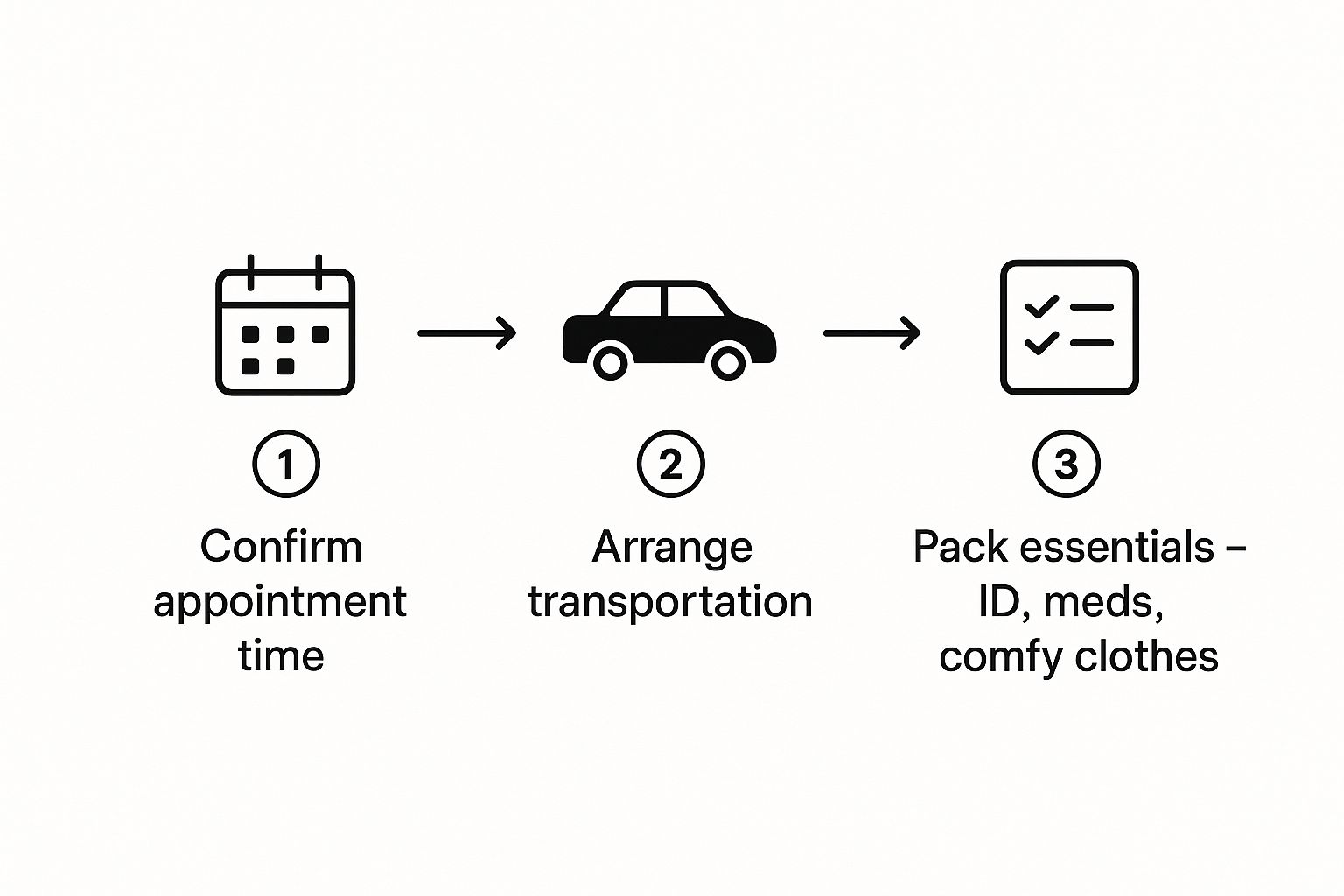
This simple chart breaks it down: confirm your appointment, arrange your ride home, and pack your essential items. Getting these three tasks done sets you up for a stress-free day.
Below is a sample meal plan to help you see what eating during that first week might look like.
Post-Surgery Food Guide Days 1-7
| Recovery Day | Breakfast Idea | Lunch Idea | Dinner Idea |
|---|---|---|---|
| Day 1 | Greek Yogurt | Warm Creamy Tomato Soup | Protein Shake (no straw) |
| Day 2 | Applesauce | Smoothie (with banana & spinach) | Smooth Chicken Broth |
| Day 3 | Scrambled Eggs (very soft) | Mashed Potatoes with Gravy | Cottage Cheese |
| Day 4 | Oatmeal | Refried Beans | Flaky Baked Cod (no skin) |
| Day 5 | Soft Banana | Macaroni and Cheese (well-cooked) | Mashed Sweet Potatoes |
| Day 6 | Cream of Wheat | Soft Tofu Scramble | Soft-Cooked Pasta with Butter |
| Day 7 | Avocado | Salmon (flaked) | Soft Meatloaf (no hard edges) |
This table is just a guide. The most important thing is to listen to your body and stick to foods that feel comfortable to eat without causing any pain.
Foods and Habits to Avoid During Recovery
What you don't eat is just as important as what you do. The wrong foods or habits can lead to pain, infection, and other problems that slow down your healing.
Here's what you need to stay away from:
- Crunchy or Hard Foods: Things like chips, nuts, popcorn, and hard candies can easily get stuck in the surgery spot.
- Spicy and Acidic Foods: These will bother the tender, healing tissues in your mouth and cause a lot of pain.
- Sticky or Chewy Foods: Caramel, gummy candies, and tough meats like steak make your jaw work too hard and can pull on your stitches.
- Alcohol and Tobacco: Both get in the way of healing. You should avoid them completely while you recover.
And the big one: you must avoid using straws. The sucking motion can pull out the important blood clot that forms in the tooth socket. That clot is like a natural bandage, protecting the bone and nerves. Losing it leads to a very painful condition. You can learn more from our guide on how to prevent dry socket. Following this one rule is one of the most important things you can do for a better recovery.
Getting Your Ducks in a Row for a Smooth Surgery Day

A calm, successful surgery day doesn't just happen. It starts with planning long before you come to our office. Taking care of the details ahead of time is one of the best ways to prepare for oral surgery. It gets rid of last-minute stress and lets you focus on your comfort and health.
The most important piece of the puzzle is your ride home. If you're getting any kind of sedation—and most of our patients do—you cannot drive yourself home. It’s a strict safety rule that a responsible adult must be there to take you.
Securing Your Ride and Post-Op Wingman
This isn't just about getting a ride; it's about having a real support person. Your friend or family member won't just be your driver. The plan should be for them to stay with you for at least a few hours after you get home. The effects of anesthesia don't disappear right away. You'll likely feel sleepy, maybe a little dizzy, and not quite yourself.
Having someone there to help you get settled on the couch, pick up your prescriptions, or just get you a glass of water is a huge comfort. You can learn more about the different types of dental sedation and their effects in our guide. This shows why having that helper after surgery is so important.
When you ask someone for this favor, give them all the info they need:
- The exact address of our office.
- Your appointment time and about when you'll be ready to be picked up.
- Our office phone number in case they have questions.
- Clear instructions on your prescriptions and any after-care notes you’ve been given.
What to Wear and What to Bring
Comfort is most important on surgery day. Your outfit should be comfortable. Wear loose clothes that are easy to get in and out of. A zip-up hoodie or a button-front shirt is a great choice, since you won't have to pull anything over your head when you're feeling groggy.
Also, try to wear short sleeves. This small detail makes it much easier for our team to place an IV if needed or to take your blood pressure. For simplicity, just leave jewelry, watches, and contact lenses at home.
Your bag for the office should be light. You only need the basics:
- Identification: Your driver's license or another photo ID.
- Insurance Information: Both your dental and medical insurance cards.
- Form of Payment: To pay any co-pays or balances.
- A List of Medications: You've probably already talked about this with us, but having a written list is always a smart backup.
Planning these small details might seem like a little thing, but they can make you feel much less stressed. Knowing you have your ride, your paperwork, and your comfy clothes ready lets you walk in with confidence.
Planning for Time Off and Other Duties
Recovery takes time. You have to give your body the time it needs to heal, and that means resting. Make sure you've arranged for time off from work or school ahead of time. We can give you a good guess of how many days you'll likely need. It’s always better to schedule an extra day and not need it than to feel like you have to go back before you're ready.
Don't forget about your duties at home. If you have kids or pets, you'll need to arrange for their care, too. You won't be able to chase a toddler or walk a dog for the first day or two. Let your partner, a friend, or another family member handle those things so you can rest without worry.
Besides planning, dealing with anxiety before surgery is a big part of getting ready. Looking at strategies for reducing stress through quality sleep can make a world of difference in how relaxed you feel. Getting these details sorted out early means you can focus on staying calm and getting ready for a successful surgery.
Your Oral Surgery Prep Questions Answered
It's normal for questions to pop up as your surgery date gets closer. Getting clear answers is one of the best ways to calm your nerves and feel confident on surgery day. We’ve put together some of the most common questions we hear from patients, with simple answers you need.
Think of this as your final checklist. Knowing what to expect is a huge part of preparing for oral surgery and helps make sure there are no surprises on the big day.
How Soon Should I Stop Eating and Drinking Before My Surgery?
This is probably the most important safety rule you'll get, so pay close attention! Your surgeon will almost always ask you to stop eating all solid foods at least eight hours before your appointment. Following this rule is critical for your safety.
You might be allowed to have clear liquids—like water or plain apple juice—up to two or three hours before you arrive, but you must get the exact cut-off time from your surgeon. This fasting period, which we call being "NPO" (a medical term for "nothing by mouth"), prevents a very dangerous problem where food or liquid could get into your lungs while you're under anesthesia. Always follow your surgeon's instructions exactly.
What Should I Do if I Get Sick Right Before My Surgery Date?
If you wake up with a sore throat, a fever, a bad cough, or feel sick in the days before your surgery, call your surgeon's office right away. Don't wait and hope it goes away.
Being sick can create risks with anesthesia and can slow down your body's ability to heal. Your surgeon will look at the situation and decide if it's safer to reschedule. It's always better to call and let the experts make the final decision.
Your pre-surgery instructions aren't just suggestions; they are made for your safety and a smooth recovery. If you are ever unsure about a rule or what to do, the best thing to do is always call your surgeon's office for answers.
Can I Take My Regular Morning Medications on Surgery Day?
This is a big one, and you should have a clear answer long before your surgery day. You and your surgeon should have gone over every single medicine and supplement you take during your pre-op visit.
Some medicines, like those for high blood pressure, are often okay to take with just a tiny sip of water that morning. But others, especially blood thinners or certain diabetes medicines, might need to be stopped days before. Never make this decision on your own. If you have any doubt, call the office to confirm exactly what you should and shouldn't take.
The need for surgery is huge, which can make scheduling hard. One study estimated that 321.5 million surgeries were needed worldwide in just one year for different diseases. This shows just how many people are in the same situation as you. That’s why it’s so important for patients to follow instructions perfectly—it helps avoid delays or rescheduling. You can read more about the global need for surgical care and its implications.
What Happens to the Stitches in My Mouth?
After your surgery is done, your surgeon will likely use stitches, also called sutures, to help close the area and start the healing process. The good news is that most stitches used in oral surgery today are dissolvable. They just break down and disappear on their own within a week or two, so you don't have to do anything.
Sometimes, non-dissolvable stitches are needed. If that's the case, you'll be scheduled for a quick follow-up appointment, usually about 7 to 10 days later, to have them taken out. We cover the different kinds of sutures in dentistry and how they work in another article if you're curious. Your surgeon will tell you exactly which kind you have and what to expect.
At Beyond Dental Care, we truly believe that a well-prepared patient is a successful patient. If you have any more questions about your upcoming oral surgery, please don't hesitate to reach out to our team. We are here to provide clear, compassionate guidance every step of the way. Visit us at https://beyonddentalcare.com to learn more about our patient-centered approach to dental health.