
Welcome, health-conscious residents of Stetson Valley and North Peoria. Many of us think cavities are just a part of life, something a dentist has to fill. But what if you could make your teeth stronger and stop decay before it starts? At Beyond Dental Care, Dr. Lazore believes in prevention. He focuses on holistic habits that support your oral health for the long run. This guide offers powerful, natural strategies to prevent cavities backed by experts.
Each method is supported by real research and includes Dr. Lazore’s insights to help you get a healthy, strong smile. We’ll explore dentist-approved habits like oil pulling, using xylitol, and eating the right foods to build strong teeth from the inside. Instead of just reacting to dental problems, you can learn how to build a defense against decay. Let's look at simple, effective steps you can take today for a future free of cavities.
1. Oil Pulling: An Ancient Detox for Your Modern Mouth
Oil pulling is an old practice from Ayurvedic medicine that is now popular as a natural way to prevent cavities. It involves swishing a tablespoon of oil in your mouth for about 10 to 20 minutes, pulling it between your teeth. This simple act helps remove harmful bacteria and toxins before they can cause damage.
The oil acts like a cleanser. As you swish, the fats in the oil attach to bacteria in your mouth. When you spit the oil out, you spit the bacteria out with it. This works well against Streptococcus mutans, the main bacteria that causes plaque and tooth decay.
How to Practice Oil Pulling
This method is best done first thing in the morning before you eat, drink, or brush your teeth. It’s a key part of proactive oral care, which aligns with our philosophy at Beyond Dental Care to stop problems before they start. Dr. Lazore notes, "Oil pulling is a great way to reduce the bacterial load in your mouth before it has a chance to cause harm throughout the day."
- Choose Your Oil: Use one tablespoon of organic, cold-pressed oil. Coconut, sesame, and sunflower oils are good choices.
- Swish Gently: Swish the oil around your mouth for 10-20 minutes. If your jaw gets tired, you're swishing too hard. Start with 5 minutes and work your way up.
- Spit Responsibly: Spit the oil into a trash can, not the sink, because it can clog your pipes.
- Rinse and Brush: Rinse your mouth with warm salt water and then brush your teeth as you normally would.
The Evidence Behind the Practice
Clinical research supports what people have known for centuries. For example, a 30-day study showed that daily oil pulling with coconut oil greatly reduced plaque and signs of gingivitis. The type of oil you use also makes a difference in how well it fights cavity-causing bacteria.
The bar chart below shows how different oils compare in reducing Streptococcus mutans bacteria.
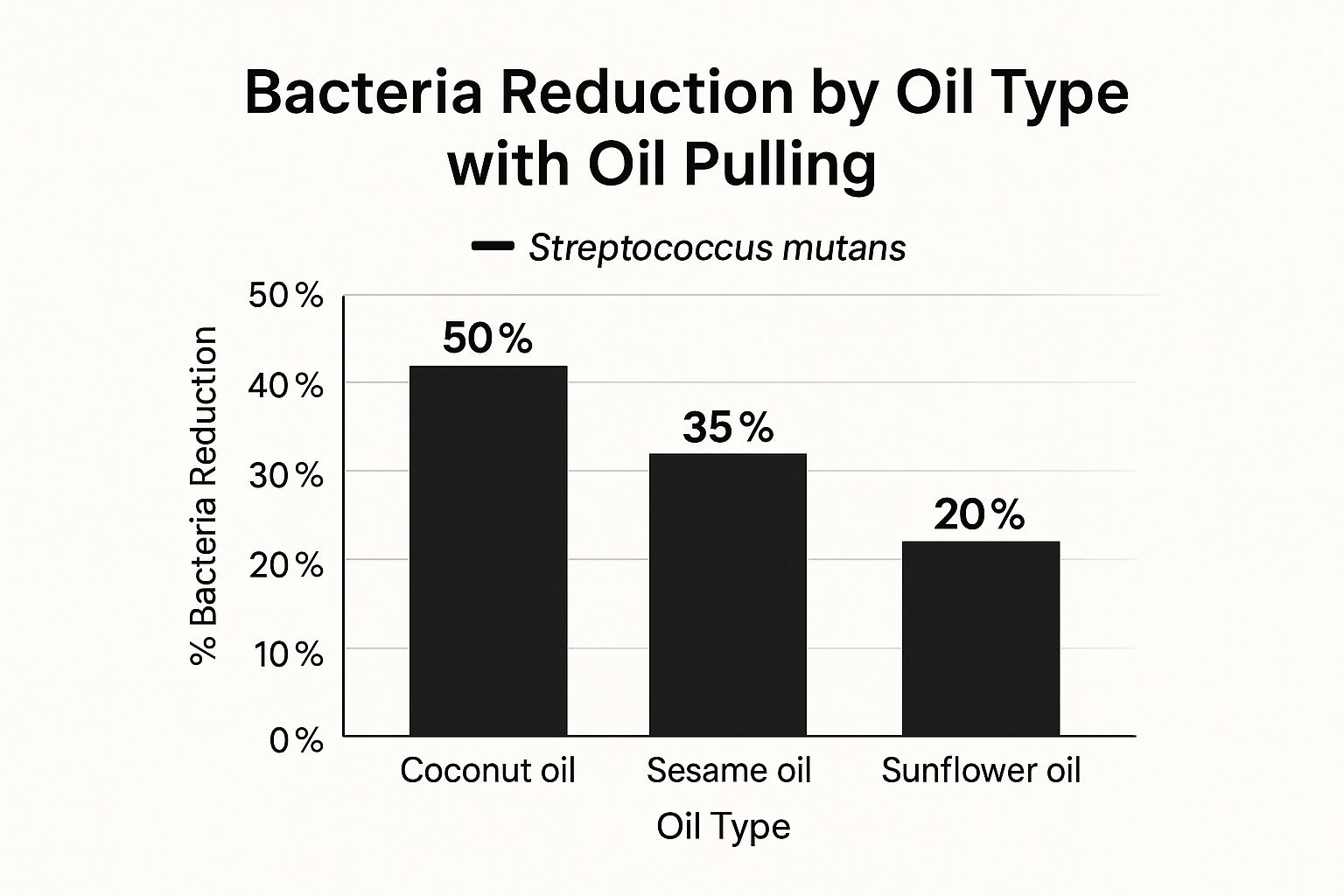
As the data shows, coconut oil reduces harmful bacteria the most, making it a great choice for this natural oral health strategy.
2. Xylitol Usage: The Sweet Way to Fight Cavities
Xylitol is a natural sweetener that looks and tastes like sugar but is good for your teeth. It is found in fruits and vegetables and is often made from birch bark. Xylitol is a powerful tool to prevent cavities because it fights the bacteria that cause tooth decay.
Unlike regular sugar, the bad bacteria Streptococcus mutans cannot use xylitol for energy. When these bacteria eat xylitol, they can't make acid and can't stick to your teeth as well. This helps prevent plaque and helps rebuild tooth enamel, making teeth stronger.

How to Use Xylitol Effectively
Adding xylitol to your daily routine is a simple, proactive step for better oral health. It fits perfectly with our prevention-first philosophy at Beyond Dental Care. "I often recommend xylitol gum to my patients in Stetson Valley," says Dr. Lazore. "It's an easy habit that makes a big difference in neutralizing acids after a meal."
- Aim for the Right Amount: Use 6 to 10 grams of xylitol each day. It works best if you take it in small amounts throughout the day.
- Timing is Key: Use xylitol products right after meals or snacks. This helps fight plaque acids when your teeth are most at risk.
- Check the Label: Choose gums, mints, or toothpastes where xylitol is the first ingredient. This means there is enough of it to be effective.
- Start Slowly: If you are new to xylitol, start with a small amount and slowly use more. This helps your digestive system get used to it.
The Evidence Behind Xylitol
The benefits of xylitol are backed by years of research. Famous studies in Finland showed that children who chewed xylitol gum had up to 85% fewer cavities. These studies are a big reason why xylitol is a dentist-approved tool for oral care.
By stopping harmful bacteria, xylitol not only prevents cavities but also supports a healthier mouth. This is a key part of our holistic oral hygiene tips. It's a sweet and simple strategy for anyone in North Peoria or Stetson Valley who wants to keep a healthy smile.
3. Green Tea Consumption: A Powerful Oral Health Brew
Drinking green tea is more than just a relaxing habit; it's a powerful, expert-backed way to prevent cavities. This drink is full of natural compounds called catechins. These antioxidants, especially one called EGCG, fight the harmful bacteria that cause tooth decay.
Catechins in green tea make it harder for Streptococcus mutans to stick to your teeth, so plaque has a tough time forming. This creates a less acidic environment in your mouth, which protects your enamel. This fits with our proactive approach at Beyond Dental Care, where we focus on simple, daily habits for long-term oral health.

How to Incorporate Green Tea
Adding green tea to your day is easy. For our patients in health-conscious areas like Stetson Valley and North Peoria, this small change can have big benefits for your mouth and overall health.
- Aim for Consistency: Drink two to three cups of high-quality green tea every day for the best results.
- Keep it Pure: Don't add sugar or honey, which feed bad bacteria. Let the tea's natural benefits work for you.
- Rinse Afterward: To avoid stains, just rinse your mouth with water after you finish your tea.
- Choose Wisely: The quality of the tea matters. Look for good brands to get more of the helpful catechins. To learn more about the benefits of different teas, check out this guide: Green Tea vs Black Tea: A Complete Guide.
The Evidence Behind the Practice
Scientific research confirms the oral health benefits of green tea. Studies have shown that rinsing with green tea can stop plaque bacteria from growing. Research on older adults in Japan found that those who drank green tea daily were much less likely to lose teeth.
Dr. Lazore adds, "Green tea contains natural fluoride and antioxidants that support gum health. It’s a simple, enjoyable habit that strengthens your mouth's natural defenses against decay." This proven habit is an easy way to protect your teeth.
4. Proper Nutrition and Sugar Reduction
What you eat is the foundation of your oral health. A good diet can make your teeth stronger and keep the bacteria in your mouth balanced. Eating well and cutting back on sugar is a great natural way to prevent cavities. It strengthens teeth from the inside and starves the harmful bacteria that cause decay.
This works in two ways. First, eating foods rich in vitamins A, D, K2, calcium, and phosphorus helps rebuild your teeth, making them stronger against acid. Second, by avoiding processed sugars and refined carbs, you cut off the main food source for Streptococcus mutans. Pioneer Dr. Weston A. Price found that cultures with nutrient-rich diets had almost no tooth decay.
How to Eat for a Cavity-Free Mouth
Eating a tooth-friendly diet is a proactive step that goes along with daily brushing and flossing. At Beyond Dental Care, we stress this because it helps prevent dental issues before they start. "What you eat is just as important as how you brush," explains Dr. Lazore. "I guide my patients to see food as a tool to build a healthier smile from within."
- Eliminate Processed Sugars: Cut back on sugary drinks, candy, pastries, and refined carbs like white bread.
- Focus on Nutrient-Dense Foods: Eat foods like grass-fed dairy for calcium and K2, wild-caught fish for vitamin D, and leafy greens.
- Consume Healthy Fats: Healthy fats help your body absorb vitamins A, D, and K2, which are vital for strong teeth.
- Incorporate Fermented Foods: Foods like sauerkraut and kimchi add good bacteria to your mouth, which helps push out the bad microbes.
The Evidence Behind a Tooth-Friendly Diet
The link between diet and dental health is well-known. Dr. Price's studies showed that people on traditional, unprocessed diets had excellent dental health with very few cavities. This historical evidence proves a key point we believe in: your diet is a powerful tool for preventing cavities. By nourishing your body and limiting sugar, you create an environment where your teeth can be strong and healthy.
5. Vitamin D Optimization: Strengthening Teeth from Within
Vitamin D, the "sunshine vitamin," is key for strong, cavity-resistant teeth. It helps your body absorb and use calcium, the main mineral that builds tooth enamel. When you have enough vitamin D, your body can repair tiny weak spots on your teeth before they turn into cavities.
If you don't have enough vitamin D, your teeth can become weak and more likely to decay. At Beyond Dental Care, we believe that your oral health is connected to your overall health. "For our patients here in North Peoria, getting enough Vitamin D is crucial," Dr. Lazore advises. "It directly impacts how well your body can build and maintain strong enamel."
How to Optimize Your Vitamin D Levels
Getting enough vitamin D can be done through sunlight, diet, and supplements. This is especially important for those in Stetson Valley who might avoid the sun during hot months.
- Get Your Levels Tested: Ask your doctor for a vitamin D blood test to see where you stand.
- Seek Sensible Sun: Try to get 10-20 minutes of midday sun on your arms and legs a few times a week without sunscreen, if possible.
- Supplement Wisely: Think about taking a D3 supplement. It works best with vitamin K2, which helps calcium go to your teeth and bones instead of your arteries.
- Eat Vitamin-Rich Foods: Eat foods like cod liver oil, fatty fish (like salmon), and fortified foods.
The Evidence Behind the Practice
Research has shown a strong link between vitamin D and fewer cavities. Studies have found that children with enough vitamin D had up to 50% fewer cavities than those who didn't. Dr. Weston A. Price also saw that cultures with diets rich in vitamin D had very low rates of tooth decay. This evidence confirms that getting enough vitamin D is one of the most effective natural strategies to prevent cavities.
6. Probiotics for Oral Health
Most people know probiotics are good for your gut, but they are also great for your mouth. Oral probiotics add good bacteria to your mouth to help create a balanced environment, which is important for preventing cavities. These "good" bacteria compete with harmful ones like Streptococcus mutans, making it harder for them to grow.
The idea is simple: you are adding allies to your mouth. These good bacteria don't just crowd out the bad ones; they also help reduce plaque and inflammation. This proactive approach helps keep your teeth and gums naturally protected, which fits our philosophy at Beyond Dental Care.
How to Use Oral Probiotics
Using oral probiotics is an easy addition to your daily routine. It's a key natural strategy to prevent cavities, especially if you want to support your oral health from the inside.
- Choose the Right Strains: Look for products with proven strains like Streptococcus salivarius K12 and Lactobacillus reuteri.
- Use Oral-Specific Products: Choose probiotics made for the mouth, like chewable tablets or lozenges. This helps the bacteria grow where they're needed.
- Time It Right: Take the probiotic after brushing and flossing, right before bed, so the bacteria can work overnight.
- Avoid Antimicrobial Mouthwashes: Strong mouthwashes can kill both good and bad bacteria, making your probiotic less effective.
The Evidence Behind the Practice
Research increasingly shows that oral probiotics are good for dental health. Studies have found that strains like S. salivarius K12 can reduce bad breath. "We're seeing great results with patients who add oral probiotics to their routine," says Dr. Lazore. "It's about creating a balanced ecosystem in the mouth." To help your oral microbiome, you can also use probiotic supplements with prebiotics. A balanced mouth is the foundation of a healthy smile and strong gums. Learn more about maintaining healthy gums from a trusted dentist in Glendale, AZ.
7. Remineralizing Toothpaste and Natural Oral Care
Remineralizing toothpastes are a powerful, natural way to prevent cavities. They work with your body's own healing process. Instead of just cleaning your teeth, these toothpastes deliver minerals that your teeth can absorb to repair and strengthen enamel. This can even reverse the earliest signs of tooth decay.
The key is to give your teeth the right building blocks. These toothpastes often contain ingredients like hydroxyapatite (the main mineral in your teeth), calcium, and phosphorus. These help rebuild your enamel and protect it from acid attacks without using harsh chemicals.
How to Practice Natural Oral Care
Using this approach is simple and focuses on nourishing your teeth. It’s a key part of proactive oral care, which is what we believe in at Beyond Dental Care. Dr. Lazore recommends it because "it gives your teeth the exact materials they need to stay strong and resist decay naturally."
- Choose the Right Toothpaste: Look for nano-hydroxyapatite (n-Ha) as the active ingredient. This has been a top choice in Japan for years.
- Check for Beneficial Additives: Pick products with other helpful ingredients like xylitol or calcium phosphate.
- Brush with Proper Technique: Use a soft-bristled brush and gentle circles to make sure the toothpaste covers all your teeth.
- Consider DIY Options: If you like, you can make your own tooth powder with ingredients like bentonite clay and calcium carbonate.
The Evidence Behind the Practice
The effectiveness of remineralizing ingredients is well-supported by science. Clinical studies show that toothpastes with nano-hydroxyapatite are as effective as fluoride, and sometimes more effective, at repairing enamel and preventing cavities. This is because hydroxyapatite bonds directly with your natural enamel to fill in weak spots. This approach is great for health-conscious families looking for safe and effective dental solutions.
7 Natural Cavity Prevention Strategies Compared
| Method | Implementation Complexity 🔄 | Resource Requirements ⚡ | Expected Outcomes 📊 | Ideal Use Cases 💡 | Key Advantages ⭐ |
|---|---|---|---|---|---|
| Oil Pulling | Moderate; daily 10-20 min swishing | Natural oils (coconut, sesame, sunflower) | 10-50% reduction in harmful oral bacteria | Natural oral cleansing, gum health | Chemical-free, reduces bacteria, freshens breath |
| Xylitol Usage | Low; incorporate into diet/products | Xylitol-containing gums, mints, toothpaste | Up to 75% cavity-causing bacteria reduction | Cavity prevention, sweetener alternative | Strong scientific support, pleasant taste, safe for diabetics |
| Green Tea Consumption | Low; drink 2-3 cups daily | Green tea leaves or bags | 20-30% reduction in cavity bacteria | General oral & overall health support | Antibacterial, antioxidant, natural fluoride source |
| Proper Nutrition & Sugar Reduction | High; requires dietary changes | Nutrient-dense foods, vitamin-rich diet | Long-term cavity prevention and remineralization | Foundational oral health improvement | Addresses root causes, systemic health benefits |
| Vitamin D Optimization | Moderate; testing and supplementation | Sun exposure, supplements, diet | Decreased cavity risk via enamel strengthening | Supporting tooth mineralization | Strong evidence, immune support, multiple intake methods |
| Probiotics for Oral Health | Moderate; consistent product use | Oral probiotics (lozenges, powders) | Emerging evidence for cavity/gum health benefits | Microbiome balance, gum inflammation | Natural bacterial balance, reduces bad breath |
| Remineralizing Toothpaste & Natural Oral Care | Low to moderate; regular brushing | Natural toothpaste with minerals | Supports enamel repair and early cavity reversal | Chemical-free oral care | Builds tooth minerals, avoids harsh chemicals, fluoride alternative |
Partner with Beyond Dental Care for a Naturally Healthy Smile
Taking care of your oral health might seem complicated, but you have the power to protect your smile. A cavity-free life isn't about one magic solution. It's about building consistent, mindful habits that work together to create a healthy mouth. By using these natural strategies to prevent cavities backed by experts, you are taking a proactive, holistic approach to your dental wellness.
From oil pulling to oral probiotics, each strategy supports your mouth's natural balance. Eating well and reducing sugar give your teeth the building blocks they need to be strong. Vitamin D helps your body use those nutrients. Simple actions like using xylitol, drinking green tea, and using remineralizing toothpaste all help fight the bacteria that cause decay.
Your Path to Proactive Prevention
Using these methods is about more than just avoiding fillings; it's about taking control of your health. The most important things to remember are:
- Consistency is Key: A single cup of green tea won't stop a cavity. Lasting protection comes from making these habits part of your daily life.
- Synergy Matters: These strategies work best together. A healthy diet helps rebuild teeth, while probiotics maintain the balance that good nutrition creates.
- Prevention is a Partnership: Natural habits are your first defense, but they work best with professional guidance. An expert can make sure you are on the right track.
Dr. Lazore and our team at Beyond Dental Care believe in this proactive philosophy. We serve health-conscious families in communities like North Peoria and Stetson Valley who want a preventive, whole-body approach to dentistry. Our goal is to empower you with knowledge and support your efforts with personalized care. Lasting oral health is a team effort between your daily habits and our expert guidance.
Ready to elevate your oral health with a dental partner who aligns with your proactive, natural approach? Schedule a consultation at Beyond Dental Care today to discover how our patient-focused, concierge-style dentistry can help you achieve and maintain a beautiful, cavity-free smile. Visit us online at Beyond Dental Care to get started.