
So, you’ve had dental work done and now you have stitches in your mouth. One of the first questions most people ask is, “How long will these things be in here?”
Generally, most dissolvable stitches will be gone within one to two weeks. But that’s just a general idea. The exact timing depends on the type of surgery you had and the specific material your dentist used to stitch you up. Knowing a little more about the process can help you understand what to expect during your recovery.
Your Guide to Dissolvable Stitches Healing Time
It’s normal to be curious about your healing process after dental surgery, especially those stitches. The biggest factor in how long they last is the procedure itself. A simple tooth removal, for example, needs different support than a complex dental implant, so the stitches will be different, too.
Your dentist carefully picks the right stitch material to make sure your gums heal properly. Think of it like a tailor choosing the perfect thread for a specific fabric—it has to be just right for the job.
The image below gives you a great visual of how different types of stitches break down over time.
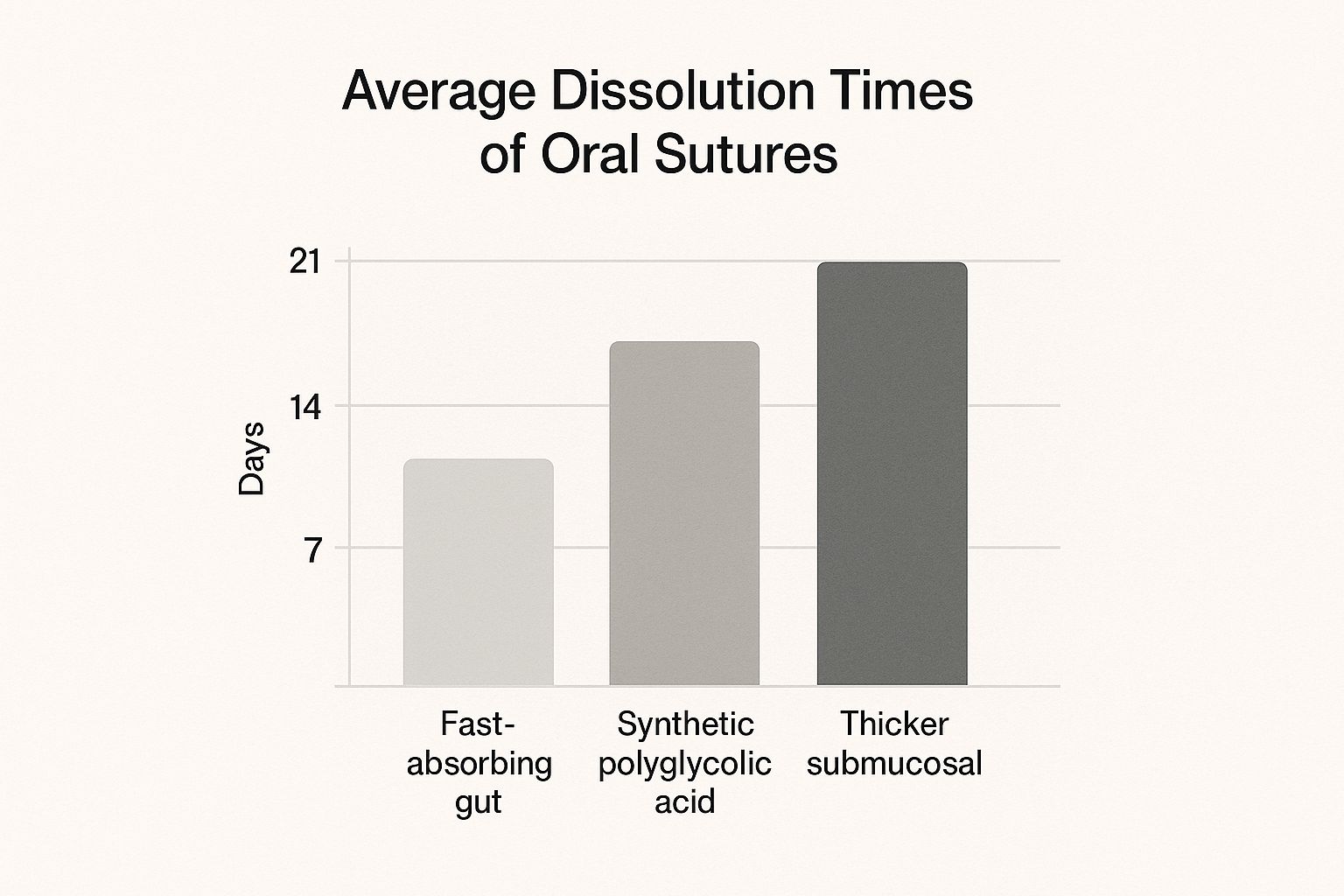
As you can see, some materials are designed to dissolve in as little as a week. Others are built to provide support for three weeks or even longer.
To give you a clearer idea, here’s a breakdown of what you can typically expect for some of the most common dental procedures.
Typical Timelines for Dissolvable Stitches After Dental Surgery
This table shows the average time it takes for dissolvable stitches to disappear after common dental procedures.
| Dental Procedure | Common Stitch Material | Average Dissolution Time |
|---|---|---|
| Simple Tooth Extraction | Chromic Gut | 7-10 Days |
| Wisdom Tooth Removal | Polyglycolic Acid (PGA) | 14-21 Days |
| Dental Implant Surgery | Poliglecaprone 25 | 10-14 Days |
| Gum Grafting | Polyglactin 910 | 14-28 Days |
Remember, these are just averages. Your own healing timeline might be a little different, and that’s okay.
So, How Do Dissolvable Stitches Actually Work?
Have you ever wondered how stitches can just disappear on their own? It’s not magic, but it is clever science. Dissolvable stitches, also called sutures, are temporary supports designed for oral surgery. They hold your tissue together just long enough for it to heal, then they break down and go away.
Your body does most of the work. The natural moisture and enzymes in your mouth slowly break down the stitch material, causing it to dissolve over time. This means you get to skip that follow-up visit for stitch removal—a nice bonus after getting a wisdom tooth out or having dental implants placed.
The Science Behind the Stitches
Here at Beyond Dental Care, Dr. Lazore carefully chooses the suture material for each specific procedure. These materials can be natural (like “gut” sutures, which are made from purified animal protein) or synthetic (man-made). The goal is always the same: to match the stitch to the job. For example, we often use:
- Plain and Chromic Gut: These are natural materials that break down relatively quickly, making them great for simple procedures where the tissue heals fast.
- Polyglactin (Vicryl): This is a synthetic material that provides support for a bit longer, which is useful for more complex surgeries like gum grafts.
- Poliglecaprone (Monocryl): Another synthetic option, it’s strong but flexible and is often used for closing soft tissue.
The lifespan of dissolvable stitches in the mouth can vary quite a bit, from as little as one week to several months. It all depends on the suture’s material and the type of surgery you had. The unique environment inside your mouth—moist, full of enzymes, and constantly moving—helps speed up this breakdown process.
This careful selection is key to a smooth recovery. As Dr. Lazore explains, “Choosing the right suture is crucial. We match the material’s dissolving rate to the tissue’s healing rate. For a gum graft, we need longer support than for a simple extraction, so the stitch material will be different.”
Basically, the stitches work with your body’s natural healing abilities to make sure the wound stays closed while it mends. To learn more, you can explore the different types of sutures used in dentistry in our detailed guide.
Factors That Change How Fast Stitches Dissolve
Ever wondered why your stitches are taking a different amount of time to disappear than a friend’s did? It’s a common question. The truth is, the timeline for dissolvable stitches isn’t the same for everyone. It really comes down to a few key factors, from the materials used to your own body’s healing process.
The biggest variable is the suture material itself. Think of it like this: dentists have a whole toolbox of different stitches. Some are designed to break down quickly, which is perfect for minor procedures. Others are made from tougher synthetic materials that offer support for a longer time. This is exactly what you need for a more complex surgery like a molar removal or implant.
We select the right stitch for the job, making sure the wound is supported for just the right amount of time it needs to heal.
How Your Body and Habits Play a Role
Beyond the type of stitch, your body’s own healing process has a huge say in the matter. Your personal healing rate is a major influence. If you’re generally healthy, your body is a more efficient healing machine, which can speed up the whole process.
But other personal factors can also change the timeline:
- Where the Stitches Are: A stitch on your tongue or cheek will move a lot more when you talk and eat. This constant friction can cause it to break down much faster than a stitch in a less active spot.
- Your Oral Hygiene: Keeping the surgery area clean is vital for good healing. At the same time, brushing too hard right over the area can disrupt the stitches and slow things down. Gentle care is the key.
- What You Eat: Sticking to a soft-food diet does two things. It prevents you from accidentally snagging or pulling a stitch, and it lets your body focus its energy on healing instead of heavy-duty digestion.
In the end, how you care for your mouth after a procedure directly impacts how long those stitches stick around.
What to Expect: Healing Times for Common Dental Work
Knowing what’s normal during your recovery can take a lot of the worry out of the healing process. Every surgery is different, and the type of stitches your dentist uses—and how long they last—is chosen specifically for your needs.
Let’s break down what you can typically expect for a few common procedures.
Simple Tooth Extractions
After a simple tooth removal, your dissolvable stitches will usually last for about 7 to 14 days. Their main job is to hold the gum tissue in place while healing begins.
“For most simple extractions, we expect stitches to start dissolving within the first week,” says Dr. Lazore. “Feeling little pieces come loose is a normal sign that the healing is well underway.” If you feel a little scratchiness from the threads, that’s also completely normal.
More Involved Surgeries
For bigger jobs like wisdom tooth removal or implants, your body needs a bit more time and support. The stitches used here are designed to last longer to make sure everything heals up just right.
- Wisdom Tooth Removal: Because these removals are often more complex, Dr. Lazore notes that “stitches might last between 14 to 21 days to properly support the deeper tissues as they heal.”
- Dental Implants: Stitches are critical for protecting the site where an implant is placed. While the full recovery from dental implant surgery is a longer process, those initial stitches typically dissolve within 10 to 14 days.
- Gum Grafts: This is delicate work, and the stitches hold the new tissue securely. “For gum grafts, we need stitches to last about 7 to 14 days before they fully dissolve,” advises Dr. Lazore. “The enzymes in your saliva actually help this process along.” You can read more about gum graft healing at periohealth.com.
As Dr. Lazore from Beyond Dental Care puts it, “We choose specific suture types based on the procedure. A faster-dissolving stitch is great for a simple extraction, but a gum graft or implant needs a material that provides support for a longer duration to ensure optimal healing.”
Having a rough idea of these timelines can help you feel more in control of your recovery. The most important thing is to follow your dentist’s aftercare instructions—that’s your ticket to a smooth healing journey.
Post-Surgery Aftercare for Adults and Seniors
Proper aftercare is your best path to a fast, comfortable recovery. Taking a few simple steps is the best way to protect your dissolvable stitches and help the area heal cleanly. The goal is to be gentle and keep things clean.
For the first week, your oral hygiene routine needs a small change. You’ll still want to use a soft-bristle toothbrush on your other teeth, but treat the surgery area—and the stitches themselves—as a no-go zone. Brushing too hard nearby could pull a stitch loose or irritate the wound, which can set your healing back.

Tips for Senior Patients
Older adults often have a few extra things to keep in mind while healing. For example, managing dry mouth is very important. Saliva is your body’s natural rinse cycle, washing away bacteria and keeping tissues healthy. A lack of saliva can make recovery more difficult.
Dr. Lazore at Beyond Dental Care always tells her senior patients to stay well-hydrated and may suggest saliva substitutes if dry mouth is a problem. It’s also smart to make sure your dental aftercare plan doesn’t conflict with any other medications you’re taking or health conditions you’re managing.
Here are a few more tips for adults and seniors:
- Embrace soft foods: This is the perfect time for yogurt, smoothies, lukewarm soups, and mashed potatoes.
- Avoid troublemakers: Stay away from anything crunchy, sharp (like chips), or spicy that could poke or irritate the stitches.
- Rinse gently: After the first 24 hours, you can start using a warm salt water rinse a few times a day. Don’t swish hard; a gentle tilt of the head is all you need.
- Say no to straws: The sucking motion can pull out the blood clot that’s needed for healing. This can lead to a painful condition called dry socket.
Following these simple rules will help your mouth heal just as it should. For a more in-depth look at the healing timeline, check out our complete guide on recovering from oral surgery.
When It’s Time to Call Your Dentist About Stitches
Your body is amazing at healing, but sometimes it needs a little help. The key to a smooth recovery is knowing the difference between what’s normal and what’s a warning sign. The bottom line: trust your gut. If something feels wrong, it’s always better to get it checked out.
Most dissolvable stitches do their job and are gone within 7 to 14 days. As a general rule, if your stitches are still there after two weeks, or if you’re feeling more pain and swelling instead of less, it’s time to call your dentist. They can take a quick look and make sure everything is healing correctly.
Warning Signs to Watch For
In the days after your surgery, pay close attention to the area. A few specific signs can tell you it’s time to pick up the phone.
Here’s a simple checklist of what to look out for:
- A Stitch Comes Out Too Early: If you lose a stitch within the first 48 hours, the wound might not have had enough time to start closing.
- The Stitches Won’t Go Away: Still have fully intact stitches after three weeks? They might need a little help from your dentist to be removed.
- Pain or Swelling Gets Worse: You should feel a little better each day. If your pain or swelling suddenly gets worse after the first few days, that’s not a good sign.
- Signs of an Infection: Look for pus around the stitches, a bad taste or smell that won’t go away, or a fever.
- Bleeding That Won’t Stop: A little oozing is normal, but if you have bleeding that continues even after applying gentle pressure, that’s a problem.
If any of these things are happening, don’t wait and hope it gets better. Getting in touch with your dentist quickly is important. Our guide on finding urgent dental care can point you in the right direction if you need help fast.
Your Top Questions About Dissolvable Stitches Answered
It’s completely normal to have questions as you heal. Let’s walk through some of the most common things patients ask about their dissolvable stitches.
Is It Normal to Feel Little Pieces of the Stitches in My Mouth?
Yes, absolutely. As the stitches begin to break down, you might feel little thread-like bits or a slightly gritty texture on your tongue. Think of it as a good sign—it means the healing process is on track and the stitches are dissolving as they should. A gentle rinse with warm salt water can help wash these pieces away, but don’t pull on them. Let them come out on their own.
What if I Accidentally Swallow a Piece of a Stitch?
Don’t worry! The materials used for these stitches are designed to be safe for your body. If you happen to swallow a small piece, it’s completely harmless and will simply pass through your system without any problems.
Can I Brush My Teeth with These Stitches in Place?
Yes, and you definitely should. Keeping your mouth clean is one of the best ways to prevent infection. Just be extra careful for the first week. Use a soft-bristled toothbrush on your other teeth and be very gentle near the surgery site. Avoid brushing the wound or the stitches directly. This careful cleaning is key to avoiding issues like the painful condition known as dry socket. We have more tips in our guide on how to prevent dry socket.
At Beyond Dental Care, Dr. Lazore and our team are here to make sure your recovery is as smooth and comfortable as possible. If anything about your healing process feels off or you just have a question, please don’t hesitate to schedule a follow-up with us at https://beyonddentalcare.com.