
Going through dental implant surgery is a big step toward a healthier smile. The good news is that most people feel much better in just a few days. The healing process happens in stages. It starts with staying comfortable right after surgery and ends with the implant becoming a permanent part of your jawbone. Knowing what to expect makes the whole experience easier and less stressful.
Your Dental Implant Recovery Timeline: What to Expect
Getting a dental implant is an investment in your smile, but the journey doesn’t end when you leave the dentist's office. A great result depends on understanding the recovery timeline. Think of it as a journey with different stages, each with its own goals and what you can realistically expect.
Your body starts healing as soon as the surgery is over. At first, your main job is to stay comfortable and protect the area. Then, over the next few weeks and months, a cool process called osseointegration happens. This is where the implant post actually joins with your jawbone, creating a super strong base for your new tooth. If you want to learn more about the surgery itself, you can read about getting dental implants.
Key Milestones in Your Healing Journey
The first part of recovery is often quicker than people think. In fact, a study found that most people heal a lot within just 4 days after surgery. Swelling and discomfort are most noticeable in the first few days, but these usually fade fast.
This timeline gives you a good idea of the key phases of your dental implant recovery.
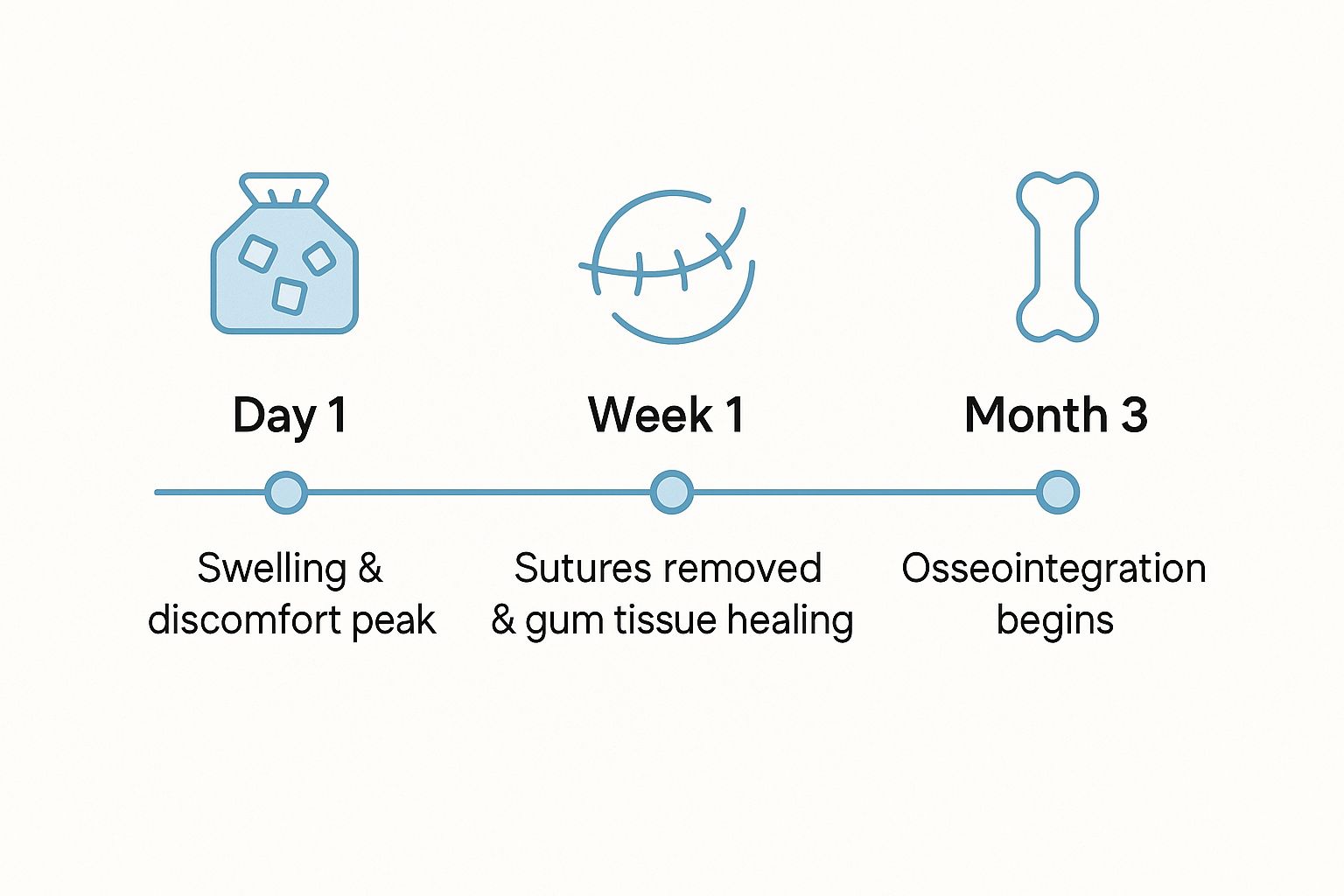
As you can see, the toughest part of recovery is short. You'll pass major healing milestones in the first week. The important work of the bone joining the implant will be well underway by the third month.
The most important thing to remember is this: while it takes months for the implant to fully join the bone, you'll likely feel back to normal much sooner. The first week is about managing your symptoms. The next few months are about letting your body do its quiet, amazing work under the surface.
What to Expect Week by Week
We can break your journey down into a few key stages:
- The First 24-48 Hours: This is when you'll have the most swelling and some mild discomfort. Your only jobs are to rest, use ice packs, and eat soft foods. This is a realistic milestone to focus on getting through.
- The First Week: Swelling will start to go down. If you have stitches that don't dissolve, your dentist might remove them around this time. Your gums are busy healing around the implant.
- Weeks 2-4: You can slowly start eating more of your usual foods. By now, any real discomfort should be gone, and you can get back to most of your normal routine.
- Months 2-6: This is the quiet but very important osseointegration phase. You won't feel anything, but your jawbone is growing around and bonding with the implant. This is what makes it all work.
To give you a clearer picture, here’s a quick breakdown of what to expect and when.
Dental Implant Healing Phases at a Glance
This table shows the usual stages of recovery. It helps you understand what to expect during each phase and what you should be doing.
| Healing Phase | Typical Duration | What to Expect | Key Actions |
|---|---|---|---|
| Immediate Post-Op | 24-48 Hours | Swelling is at its peak, mild discomfort, some bleeding. | Rest, apply ice packs, take pain medicine as directed, eat soft foods. |
| Initial Healing | 3-7 Days | Swelling goes down, you might see some bruising, gums start to heal. | Keep the area clean, stick to a soft diet, go to your follow-up appointment. |
| Soft Tissue Healing | 2-4 Weeks | Little to no discomfort, gums heal around the implant. | Slowly add normal foods back in, return to most of your activities. |
| Osseointegration | 2-6 Months | No symptoms; the implant is joining with your jawbone. | Keep up great oral hygiene, don't put heavy pressure on the implant. |
Knowing these phases helps you see your progress and feel confident that everything is healing the right way.
For more ideas on how to have a smooth recovery, you can also look at these top strategies for quick healing after surgery, which have great advice for many types of procedures.
Navigating the First 48 Hours with Comfort
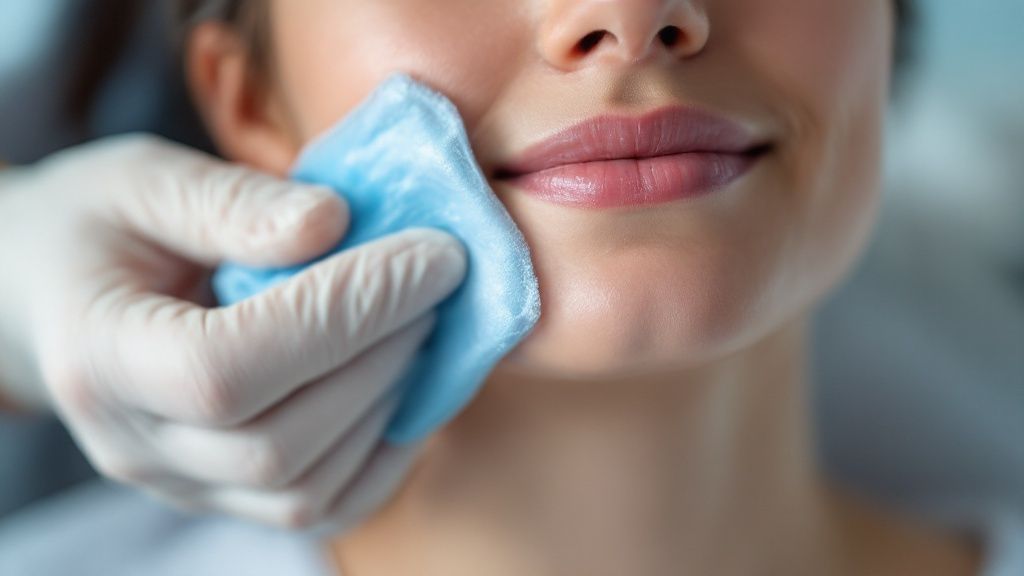
The first two days after your dental implant surgery are the most important for a good recovery. Your body is just starting to heal, and your only job is to rest and stay comfortable. Think of this time as building a strong foundation for a successful implant that will last for years.
The main goal is to put as little stress on the surgery area as possible. This means taking a break from your normal routine, no heavy activity, and being very gentle with your mouth. At Beyond Dental Care, our post-op plans focus on comfort. A few simple, comfort-focused tips can make this first phase much easier.
Managing Swelling and Discomfort
It's completely normal to have swelling and some discomfort during these first 48 hours. The best tool to fight swelling is a cold compress. Get an ice pack, wrap it in a towel, and place it on the outside of your cheek near the surgery area for 20 minutes on, then 20 minutes off. Doing this over and over helps reduce both swelling and pain.
For any discomfort, it's very important to follow the medication schedule your dentist gave you. Staying on top of the pain is much better than trying to catch up once it gets bad. For anyone who needs help staying on schedule, services that offer medication reminders can be a big help.
Protecting the Surgical Site
Protecting the new implant is your top priority. Don't touch the area with your tongue or fingers. I know it's hard to resist, but it’s important. You also need to be careful with the stitches that hold your gums together. If you're curious, you can learn about the different types of sutures used in dentistry and how they help you heal.
Your diet will also play a big part in protecting the site. For now, it’s all about soft, cool foods that don't need any chewing.
- Yogurt and Smoothies: These are perfect. They're easy to eat and won't bother the surgery site. Just remember to use a spoon, not a straw. The sucking motion can remove the important blood clot that helps you heal.
- Applesauce and Pudding: Both are gentle choices that will give you some energy without making your jaw work.
- Cool Soups: If you have soup, make sure it’s lukewarm or cool. Heat can make swelling and bleeding worse.
The most important rule for these first two days is to be gentle with yourself. Your body needs a lot of energy to heal, so make rest your job and avoid anything that could mess up the delicate healing work that’s happening.
By following these simple tips, you’re creating the best environment for your body to heal well and quickly.
Oral Hygiene and Diet for the First Two Weeks
Once you get past the first 48 hours, your focus will change a little. You'll move from just managing symptoms to actively helping the implant site heal. These first two weeks are very important for your gums to recover and for your body to start accepting the implant.
Your diet and how you clean your mouth are the two most powerful tools you have right now. Getting this part right helps prevent infection and makes sure the implant isn't bothered. It’s all about being gentle but consistent.
Keeping Your Mouth Clean Without Disruption
Keeping your mouth clean is a must, but you can't brush aggressively. The surgery site is very delicate. For the first few days, you need to avoid touching it with a toothbrush at all. Your best friend will be gentle rinsing.
About 24 hours after your surgery, you can start rinsing with warm salt water. Just mix one teaspoon of salt into a glass of warm water. Use it 3-4 times a day, especially after you eat. Swish very gently. The goal is just to clean the area, not to create any pressure that could harm the healing clot or stitches.
A key pro tip we always give our patients is to let the saltwater just fall out of your mouth into the sink. Don't spit. This simple change avoids creating suction or pressure that can cause problems at the surgical site.
As you move through the first week, you can start using an extra-soft toothbrush to carefully clean the teeth around the surgery area. Just be sure to stay far away from the implant itself until your dentist says it's okay. Later on, learning https://beyonddentalcare.com/how-to-clean-dental-implants/ will be very important for the life of your new tooth.
Transitioning Your Diet from Liquids to Soft Foods
What you eat plays a huge role in your recovery. For the first week, you need to stick with foods that need little to no chewing. This is the best way to keep from accidentally biting down on the surgery site or bothering your healing gums.
Here are a few patient-favorite ideas that are both healthy and safe:
- Protein-Rich Options: Scrambled eggs, Greek yogurt, and protein shakes are great. Protein is very important for repairing tissues.
- Nutrient-Dense Soups: Think blended vegetable soups (served lukewarm, not hot) to get your vitamins without any chewing.
- Soft Fruits and Vegetables: Mashed potatoes, avocado, bananas, and applesauce are all easy on your mouth and full of good things.
Once you get to the second week, you can slowly start adding more substantial soft foods. Things like pasta, soft-cooked fish, or oatmeal are usually fine. The rule is simple: if you have to really chew it, it’s too soon. Listen to your body and avoid anything hard, crunchy, sticky, or spicy that could slow down your healing.
Understanding Osseointegration: The Real Healing Happens Under the Surface
You might feel back to normal in just a couple of weeks, but the most important part of your dental implant recovery is happening quietly, deep inside your jawbone. This amazing process is called osseointegration, and it’s the secret that makes dental implants so strong and successful.
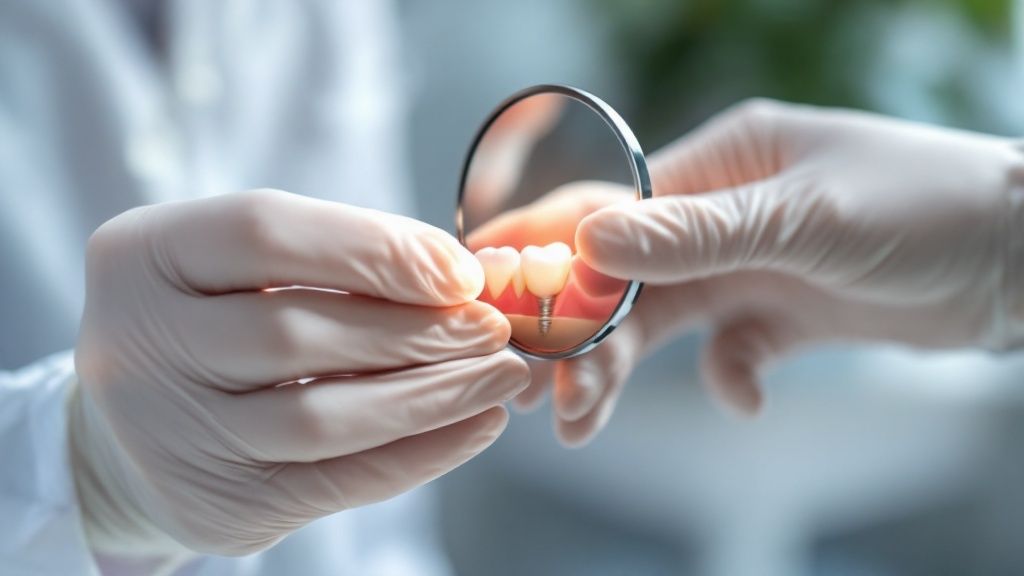
So, what is it? Simply put, osseointegration is when your jawbone grows directly onto the titanium implant. Titanium is a special material that your body accepts as its own. Instead of seeing it as a foreign object, your bone cells grow onto and around the implant, locking it in place.
This process basically creates a new, man-made tooth root that's just as strong as a natural one, if not stronger.
How Long Does It Take for the Bone to Fuse?
This joining process is a marathon, not a sprint. It usually takes 3 to 6 months for your jawbone to fully connect with the implant. You won't feel a thing while this is happening, but your body is working hard to build a solid foundation for your new tooth.
Knowing this timeline helps you understand why your dentist gives you long-term instructions. Every piece of advice—from what you eat to how you exercise—is meant to protect the implant while this important bond forms. Following that advice is the best way to make sure your implant becomes a permanent part of your smile.
While your gums heal in about 7 to 10 days, the bone can take 8 weeks or more to completely remodel. It's a journey, but with good care, implant success rates are very high, often over 90-95%.
What Can Affect Your Healing?
Everyone’s body heals at its own speed. A few key things can either speed up or slow down the osseointegration process. Your health and lifestyle choices play a huge role here.
- Your Overall Health: Conditions like uncontrolled diabetes can slow down your body's healing. This is why it’s so important for your dentist to have your complete medical history.
- Good Nutrition: Your body can't build new bone without the right materials. A healthy diet with plenty of calcium and vitamin D gives it the fuel it needs to support and speed up the process.
- Lifestyle Habits: Smoking is one of the biggest problems for successful implant healing. It reduces blood flow to your gums and bone, which makes it much harder for your body to heal itself.
Your actions during these important months really matter. By following your post-op instructions and living a healthy lifestyle, you become an active partner in the success of your implant.
For some patients, the journey might be a bit longer. If you needed a bone graft to build up your jawbone before the implant, your body needs extra time to heal that area first. This is a common and important step to make sure there's enough strong bone to support your implant for a lifetime. You can learn more about what to expect by reading our guide on dental bone graft recovery.
How Personalized Care and Modern Tech Speed Up Recovery
There's no such thing as a "standard" dental implant recovery. Just like every patient is unique, your healing journey will be your own. This is why a one-size-fits-all instruction sheet doesn't work. A personalized care plan is designed around you—your health, your surgery, and your life—to make sure your recovery is as smooth and fast as possible.
Instead of just giving you a generic list, we create a post-op plan built for you. At Beyond Dental Care, a personalized care plan is how we help speed up your recovery. We look at your medical history, how complex your surgery was, and even your daily routine. This personal attention means we can offer comfort-focused solutions that work for your real life.
Creating Your Custom Recovery Blueprint
A good recovery plan is a roadmap built on understanding who you are. Your dental team will think about several key factors to support your healing from day one.
Here’s what goes into that personalized approach:
- Your Health History: If you have a condition like diabetes, your healing timeline might be adjusted. Your post-op care will include specific tips to help your body heal.
- The Scope of Your Surgery: A single implant is very different from a full set of new teeth or a surgery that needs a bone graft. Your plan will have tailored advice on diet, activity, and cleaning.
- Your Lifestyle: If you have a physically demanding job, your recovery will look different than someone who works at a desk. We'll give you realistic timelines for getting back to your normal activities safely.
The goal of a personalized plan is to take the guesswork out of recovery. You get clear, simple steps that are right for your situation. This gives you the confidence you need to heal well.
How Technology Enhances Healing Outcomes
Modern dental technology helps make recovery smoother, and it starts long before your surgery. Advanced imaging is a perfect example of how tech helps reduce trauma from the start.
By using tools like a 3D cone-beam computed tomography (CBCT) scanner, your dentist gets a very detailed, 3D view of your jawbone and nerves. This allows for careful planning of exactly where the implant will go. You can learn more about how digital dental imaging gives us this amazing accuracy.
When we can place an implant with that much precision, there's much less disturbance to the nearby tissues. This almost always means less swelling and discomfort for the patient after surgery.
Some clinics are also using tech-enhanced healing monitoring to check on you remotely. Through simple check-ins from your phone, your dentist can keep an eye on the surgery site without you having to come into the office. This technology means they can spot any potential issues early, keeping your recovery on the right track for a smoother, faster outcome.
You’ve made it through the first part of recovery—congratulations! Now, the focus changes from short-term healing to long-term care. Think of this next phase as protecting your investment for life. A successful surgery is just the first step. Simple, consistent habits are what will keep your new smile healthy and strong for years.
First, your oral hygiene has to be excellent. This is not optional. You’ll need to brush twice a day with a soft-bristled brush and clean around the implant just like your dentist showed you. Sticking to your regular check-ups is also key for long-term success.
Knowing the Difference: Good Signs vs. Red Flags
Being able to tell the difference between normal healing and a potential problem is very important.
Here’s what you want to see as you heal:
- Your gums should look pink and firm, not red or puffy.
- You shouldn't feel any pain or discomfort when you chew or touch the area.
- The implant itself should feel completely solid and stable—no wiggling at all.
On the other hand, if you notice swelling that won't go down, a bad taste that won't go away, or even the slightest feeling of looseness around your implant, don't wait. These are red flags. Call your dentist right away. Catching a small issue early is the best way to keep it from becoming a bigger problem.
Your Top Implant Recovery Questions, Answered
Getting dental implant surgery is a big deal, and it's normal to have questions about what comes next. Knowing what to expect during your recovery can make the whole process feel less scary.
Let's go over some of the most common questions we hear from our patients.
How Long Will the Pain Last?
You can expect some discomfort, especially in the first 2-3 days after your surgery. This is when the area will be the most tender. Most of the time, you can manage this with over-the-counter pain medicine like ibuprofen, or whatever your dentist prescribed.
For most people, any major discomfort goes away within 3 to 5 days. If you still have severe pain after day three, or if it seems to be getting worse, that's when you should call us. It's always better to get it checked out.
When Can I Get Back to My Normal Routine?
This really depends on what your "normal" is. If you have a desk job or something that isn't physically hard, you could be back at work in a day or two.
However, if your job involves heavy lifting or a lot of physical activity, you should plan for at least 3-4 days of rest.
A key piece of advice we always give is to avoid any intense exercise for at least a full week. Getting your heart rate up increases blood flow, which can lead to more bleeding and swelling at the surgery site. Taking it easy that first week really helps you heal faster.
What Are the Red Flags I Should Watch For?
Problems are rare, but being informed is the best way to have a smooth recovery. Knowing the signs of a potential issue is important.
You should call your dental office right away if you notice any of these things:
- Bleeding that won't stop even with some light pressure from gauze.
- Pain that gets worse after the third day, instead of better.
- Pus around the implant site or a constant bad taste in your mouth.
- A fever, as this can be a sign of an infection.
Is It Normal for the Implant to Feel a Little Loose?
This is a great question, and the answer is a firm no. The implant post itself, the part in your jawbone, should feel completely solid. It should never feel loose.
What you might feel is the small healing cap that sits on top of the implant. Sometimes, that little piece can feel slightly mobile. But if you feel that the actual implant in the bone is moving, that's not normal. Call your dentist right away so they can take a look.
At Beyond Dental Care, we believe a great recovery is built on clear communication and guidance that’s made just for you. If you have more questions about the recovery process or you're ready to restore your smile, we're here to help. Schedule your consultation by visiting us at https://beyonddentalcare.com.