
That sharp crack or the sudden feeling of a missing piece of your tooth is enough to send anyone into a panic. But what you do in those first few moments is incredibly important. Staying as calm as you can and taking the right first aid steps can make a huge difference, not just for managing pain but for giving your dentist the best possible chance to save your tooth.
Your Immediate Action Plan for a Broken Tooth
Think of yourself as the first responder for your own mouth. The goal here is to stabilize the situation, prevent any further damage or infection, and keep things safe until you can get professional care. The first thing you should always do is gently rinse your mouth with warm salt water. This helps clean the area so you can see what you're dealing with.
Swift action is key. Beyond rinsing, you'll want to apply gentle pressure with gauze if there's any bleeding and, if you can find it, save that broken piece. These initial steps are backed by dental professionals and can significantly impact the outcome of your treatment. For those interested, you can explore more about initial dental care statistics to see why these actions are so critical.
Secure Any Broken Fragments
If you can find the piece (or pieces) of the tooth, handle them carefully. The last thing you want to do is cause more damage.
Gently rinse the fragment with water only—do not scrub it or use any soap. The tiny cells on the surface are fragile, and preserving them is crucial. To keep the piece viable, you need to keep it moist.
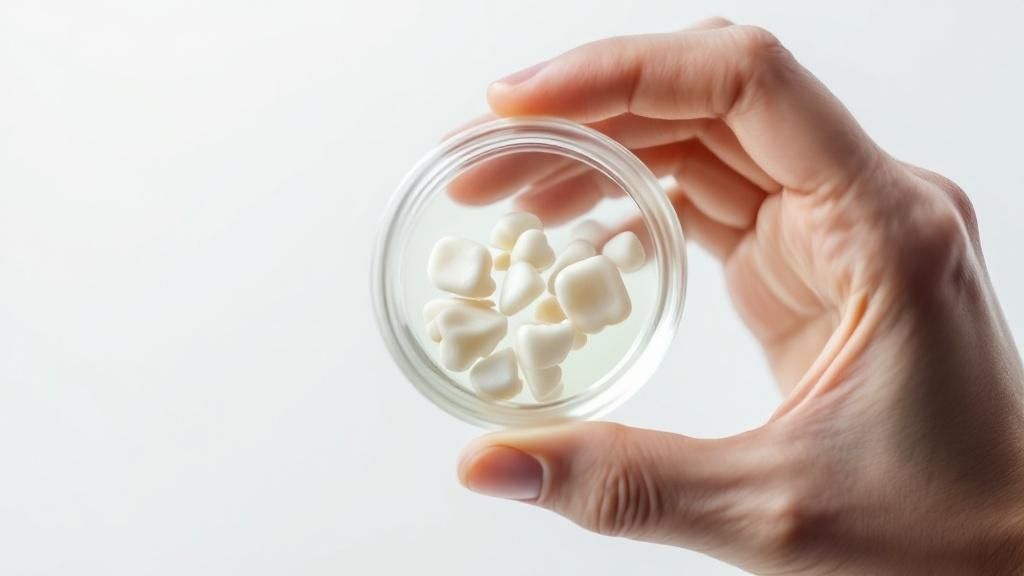
Store it in a small, clean container filled with one of these:
- Milk
- Your own saliva
- A sterile saline solution
This simple step might just allow your dentist to reattach the original fragment with dental bonding, which is often the most natural and least invasive way to repair the damage.
Manage Bleeding and Swelling
It’s pretty common to see some bleeding, especially if the break is sharp or involves the gumline. Grab a clean piece of sterile gauze, fold it up, and apply firm but gentle pressure directly onto the bleeding area. You’ll want to hold it there for about 10-15 minutes or until the bleeding subsides.
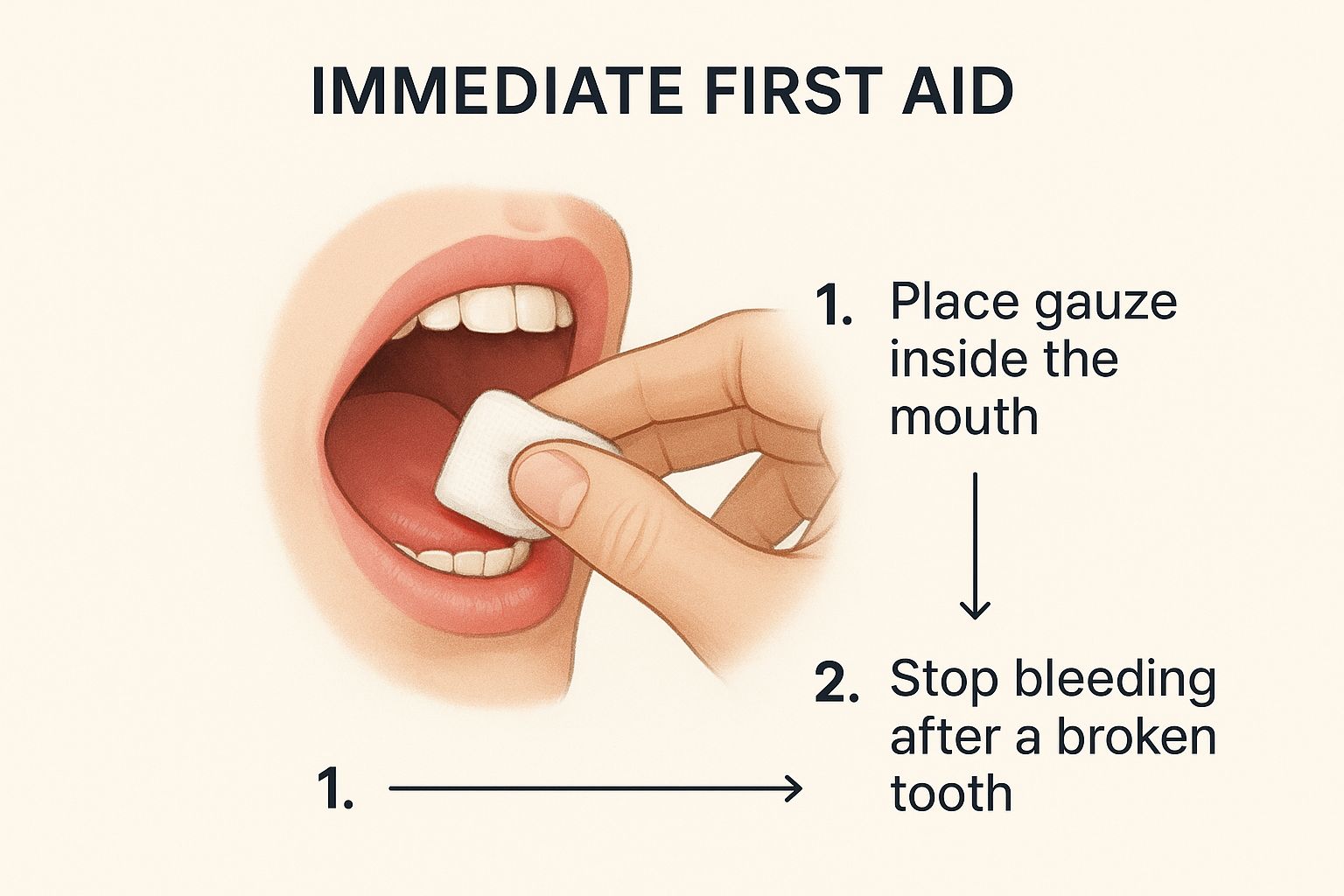
This image shows the right way to apply pressure—directly on the source of the bleeding to help it clot effectively.
To tackle the inevitable swelling and help numb the pain, a cold compress is your best friend. Wrap an ice pack or a bag of frozen peas in a thin towel and hold it against the outside of your cheek or lip over the injured area. Do this in 20-minute intervals—20 minutes on, 20 minutes off—to avoid harming the skin tissue.
To help you remember these critical first steps in a stressful moment, here is a quick-reference checklist.
Broken Tooth First Aid Checklist
This table summarizes the immediate actions to take right after breaking a tooth. Following these steps can help minimize pain and prevent complications before you see a dentist.
| Action | Why It's Critical |
|---|---|
| Rinse Gently | Cleans the area of debris and blood, allowing you to assess the damage. |
| Save Broken Pieces | Keeps the fragment viable so the dentist might be able to reattach it. |
| Apply Gauze Pressure | Controls bleeding and helps a blood clot to form, which is the first step in healing. |
| Use a Cold Compress | Reduces swelling, constricts blood vessels to slow bleeding, and helps numb the pain. |
Keep this checklist in mind. These simple, immediate actions can protect your tooth and make the path to a full recovery much smoother.
How to Figure Out How Badly Your Tooth Is Broken
That initial crunch, the sick feeling in your stomach, and the immediate question: “How bad is it?” It’s a moment nobody wants to experience. Taking a second to assess the damage is your first and most important step. It helps you stay calm and gives you the exact information your dentist needs to hear.
Not every broken tooth is a five-alarm fire, and knowing what you're dealing with can make all the difference. Think of your tooth like an onion with a few key layers. On the outside, you have the hard, white enamel. Just below that is the dentin, a softer, yellowish layer full of tiny tubes that lead to the nerve. At the core is the pulp—the lifeblood of the tooth, containing all the nerves and blood vessels.
The seriousness of the break really just comes down to which of these layers has been exposed.
Minor Chip or Major Fracture? Here’s How to Tell
A minor fracture, often called a chip, might only break through the enamel. You'll probably feel a rough or sharp edge with your tongue, but there’s usually no pain. Maybe you bit down on an olive pit or a stray popcorn kernel and felt a tiny piece of a molar flake off. If there’s no sensitivity afterward, it’s likely a cosmetic issue. It definitely needs to be looked at, but it's not typically a drop-everything-and-run emergency.
On the other hand, a more serious fracture is one that reaches the dentin. This is where the pain and sensitivity kick in. You might feel a sharp zing when you sip a cold drink or a dull, persistent ache when you bite down. If you can get a good look at it, the broken spot might even look a little yellow—that’s the dentin showing through.
Key Takeaway: Pain is your best guide. If a broken tooth doesn't hurt, it's likely just the outer enamel. But if you're feeling sensitivity to hot, cold, or pressure, the break is deeper and needs more urgent attention.
A severe break is one that exposes the pulp. This is a true dental emergency, and you'll know it. The pain is often intense, throbbing, and doesn't let up. You might even see a tiny pink or red spot at the center of the break—that’s the nerve. Even biting into something soft could send a wave of excruciating pain. Ignoring a break this severe can quickly lead to a nasty infection, or what's known as an abscess.
Being able to describe what you see and feel is critical. It helps our team at Beyond Dental Care understand the urgency of your situation over the phone so we can get you the right help, right away.
Knowing When to Seek Emergency Dental Care
When you’re dealing with a broken tooth, the first question that pops into your head is usually, "How serious is this, really?" It’s the difference between a 'call the dentist in the morning' inconvenience and a 'find an emergency dentist now' crisis. The answer almost always comes down to your symptoms.
Let’s be clear: a tiny, painless chip on the edge of a molar is annoying, but it probably doesn’t require a middle-of-the-night visit. However, some signs are undeniable red flags. If you're experiencing any of these, don't wait to make the call.
Red Flags That Demand an Emergency Visit
Severe, throbbing pain is your body's alarm bell. It’s screaming that something is seriously wrong. If the pain is constant and over-the-counter medication isn't touching it, that's a strong sign the tooth's nerve is exposed or, worse, infected.
Another critical sign is visible nerve exposure. Take a look at the break. Do you see a tiny pink or reddish dot in the middle? That's the pulp—the living tissue of your tooth. This is a true dental emergency that needs immediate attention to prevent a nasty infection and give us the best chance to save the tooth.
Also, if a large piece of your tooth has broken off and the remaining part feels loose, unstable, or dangerously sharp, it's time for an emergency visit. A sharp fragment can easily cut your tongue or cheek, turning one problem into two.
Crucial Insight: An emergency visit is all about getting you out of pain and stabilizing the damage. The goal is to manage the immediate crisis with things like temporary fillings and pain control. Think of it as urgent first aid for your tooth, which sets the stage for a more permanent fix later.
Acting fast is everything. An emergency dentist will focus on immediate relief, but you'll need to follow up. The complete repair, like a crown or root canal, comes next. According to the CDC, prompt care for dental emergencies is key to preventing bigger problems down the road.
Managing Pain and Protecting Your Mouth at Home
While you're waiting for your dental appointment, your two biggest priorities are managing the pain and protecting your mouth from further injury. A broken tooth often leaves a sharp, jagged edge that can easily cut your tongue, cheek, or gums, which just turns one problem into another.
The good news is there’s a simple, effective fix. You can cover that sharp edge to create a temporary, smooth surface. A small piece of dental wax, which you can find at most pharmacies, works perfectly. In a pinch, even a piece of sugar-free gum can do the trick. Just soften it up and gently press it over the broken area to form a protective shield.
Choosing Safe Pain Relief
For the ache itself, over-the-counter pain relievers can be a lifesaver. Anti-inflammatory options like ibuprofen are often a great choice because they do double duty—they relieve pain and help reduce the swelling around the damaged tooth, which is frequently a major source of the discomfort. As always, stick to the dosage instructions on the package unless your dentist or doctor has told you otherwise.
A warm saltwater rinse is another fantastic at-home remedy. Just dissolve half a teaspoon of salt into a glass of warm water and swish it gently around your mouth. This helps clean the area and soothes the irritated gum tissue.
Expert Tip: Steer clear of applying pain-relief gels or aspirin directly onto the gums near the broken tooth. It might seem like a good idea, but this can actually cause a chemical burn on the sensitive gum tissue, leading to more pain and complications.
It’s no surprise that at-home dental solutions are becoming more common. In fact, the dental emergency kit market was valued at about USD 1.31 billion in 2024, which shows just how useful these kits are for handling issues like a broken tooth before you can get to a professional. You can review market growth insights from Precedence Research to see how these products are helping people manage dental crises.
Finally, think about what you’re eating. Stick to soft foods that won’t put pressure on the fragile tooth. Think yogurt, scrambled eggs, or soup. You'll want to avoid anything hard, crunchy, or sticky, as these foods can easily cause more damage or a fresh wave of pain.
Understanding Your Professional Repair Options

Once you've made it to the dental chair, you can finally take a breath. The next steps are in the hands of a professional who will assess the damage and map out the best way to get your tooth back in shape. Knowing what these treatments involve ahead of time can make the whole process feel less intimidating and give you more confidence in the care you're receiving.
The right fix for a broken tooth really depends on two things: where it is and how bad the break is. A tiny chip on a front tooth is a world away from a molar that has cracked down the middle and is causing serious pain. Your dentist's first job is to figure out which layers of the tooth—the enamel, the dentin, or the pulp inside—have been compromised.
For Minor Chips and Cracks
If you're dealing with a small, cosmetic chip, the fix is often surprisingly quick and simple. The go-to procedure for this is usually dental bonding. Using a tooth-colored composite resin, your dentist essentially sculpts the material directly onto your tooth to restore its original shape. It’s a bit like a skilled artist patching a tiny imperfection, and it's typically painless and done in a single visit.
Another great option, especially for front teeth, is a veneer. This is a super-thin, custom-made shell, usually made of porcelain, that gets bonded right to the front of the tooth. Veneers are a fantastic choice when the goal is a picture-perfect finish, as they cover the chip while creating a flawless, uniform look.
When the Break Is More Serious
For a bigger fracture that has truly weakened the tooth, a dental crown is almost always the best bet. A crown, which you might know as a "cap," fits over the entire remaining part of the tooth. It acts like a helmet, protecting it from any more damage and restoring its strength and function. It’s all about holding everything together so you can chew normally again.
Key Insight: The main purpose of a crown is to save your natural tooth. By encasing the damaged tooth, a crown stops a crack from spreading and lets you use the tooth again, often for many, many years.
Now, if the break is so deep that it has exposed or infected the tooth's nerve (the pulp), you'll likely need a root canal before the crown can be placed. This procedure involves carefully cleaning out the infected pulp from inside the tooth, which gets rid of the infection and the pain.
Getting good emergency care and following up with your dentist quickly is the key to preventing bigger problems down the road. The treatment your dentist recommends will be tailored specifically to your situation—minor chips might just need a little smoothing or bonding, while more severe breaks often require crowns or root canals. In the worst-case scenarios, an extraction might be the only path forward. You can learn more about how getting treatment in time affects the outcome with these insights on dental care statistics.
Preventing Future Tooth Fractures
Once you’ve dealt with the immediate stress of a broken tooth, the last thing you want is a repeat performance. The good news is, you’re now in the driver's seat. Preventing another fracture is all about being proactive and turning a few mindful habits into your new normal. It really starts with simple, conscious choices you make every single day.
Think about your diet, for instance. Biting down on something unexpectedly hard is one of the most common ways teeth break. We’re not just talking about the obvious culprits like hard candy, ice cubes, or un-popped popcorn kernels. Even healthy foods like nuts or an olive with a surprise pit can do serious damage if you’re not careful. This doesn’t mean you have to give them up, but chewing more cautiously can dramatically lower your risk.
Protect Your Teeth During High-Risk Activities
Protecting your smile goes beyond just what you eat—it’s also about what you do. If you or your kids are active in contact sports like football, hockey, or even basketball, a custom-fitted mouthguard is an absolute must. While you can grab one off the shelf at a store, a mouthguard made by your dentist is in a different league. It’s molded perfectly to your bite, which means it absorbs shock and protects your teeth far more effectively.
Another big risk factor is something you might not even know you’re doing: bruxism, or grinding your teeth in your sleep. This constant, immense pressure wears down your enamel over time, making your teeth brittle and much more likely to crack. Waking up with a sore jaw or a dull headache is a major red flag. If that sounds familiar, a custom night guard is your best line of defense.
Expert Advice: A night guard creates a protective barrier between your upper and lower teeth. While it doesn't stop the grinding habit itself, it absorbs the incredible force, preventing the wear-and-tear that leads to fractures, jaw pain, and other serious dental issues.
The Role of Regular Dental Checkups
Finally, the most powerful preventive tool you have is consistency. Don’t skip your regular dental checkups at a practice like Beyond Dental Care. These visits are about so much more than just a cleaning. They give us a chance to spot tiny problems—like an old, failing filling or nearly invisible stress fractures—before they turn into a full-blown emergency.
It's far easier (and less stressful) for us to reinforce a weakened tooth with a new filling or a crown than it is to fix a sudden, painful break. Think of these routine visits as your best long-term strategy for keeping your smile strong, healthy, and whole.
Still Have Questions About Your Broken Tooth?
It’s completely normal to have more questions swirling around, even after you know the basics. A broken tooth is a stressful situation, and a little extra clarity can go a long way in giving you peace of mind. Here are some straightforward answers to the most common concerns we hear from our patients.
Can a Broken Tooth Heal on Its Own?
I get this question a lot, and the answer, unfortunately, is a firm no. Unlike a bone that can mend itself, tooth enamel and the underlying dentin don't have the ability to regenerate. Once a tooth is cracked or chipped, it stays that way.
This is exactly why getting professional dental care is non-negotiable. Without treatment, the tooth remains weak and exposed, making it a prime target for more severe breaks and decay. Hoping it will just get better on its own is never a safe bet.
Key Takeaway: A broken tooth cannot heal itself. It requires professional dental treatment to restore its structure, prevent infection, and ensure its long-term health. Ignoring it will only lead to more significant problems down the line.
What Happens If I Ignore a Broken Tooth?
Putting off treatment for a broken tooth is a serious gamble. What might start as a small, painless chip can quickly become a gateway for bacteria. It might not seem like a big deal at first, but that tiny crack can deepen over time.
Eventually, it can reach the sensitive inner pulp of the tooth, leading to a throbbing, painful infection or abscess. This transforms a simple problem into a major dental emergency, often requiring more complex and costly procedures like a root canal or even having the tooth pulled.
How Much Will It Cost to Fix My Broken Tooth?
The cost of fixing a broken tooth can vary quite a bit, as it really depends on how bad the damage is. For a minor chip, a simple fix like dental bonding is often a quick and relatively affordable solution.
On the other hand, a more severe fracture that has compromised the tooth's nerve will likely need a root canal and a custom-made crown. This is a more significant investment, but it's crucial for saving the tooth and protecting your overall oral health. Your dentist will give you a clear cost estimate after they've had a chance to examine the tooth. Many offices also offer financing options to help make the treatment more manageable.
At Beyond Dental Care, we know just how urgent and nerve-wracking a dental emergency can feel. Our priority is to get you out of pain quickly and provide clear, effective solutions for your specific situation. If you're dealing with a broken tooth, don't wait for it to get worse. Contact us today to schedule an appointment and let our expert team restore your smile with compassionate, high-quality care.