
When the first jolt of tooth pain hits, it’s hard to know what to do. Is this something that can wait, or do you need to find an emergency dentist right now? The line can feel blurry, but a true dental emergency usually involves unmistakable symptoms like severe, unrelenting pain, facial swelling, or a knocked-out tooth. These are the situations that require urgent care to avoid serious, long-term complications. Less critical issues, like a minor chip, can typically wait for a regular appointment.
Recognizing a True Dental Emergency

It’s completely normal to feel a wave of panic when a dental crisis strikes, but learning to tell the difference between a real emergency and a minor problem is key. Knowing the red flags ensures you get the right care at the right time, preventing a bad situation from getting much worse. A true emergency often comes with symptoms you simply can't ignore—and that could endanger your overall health if left untreated.
Severe and Unrelenting Pain
One of the most obvious signs of trouble is a toothache that’s so severe it laughs at over-the-counter painkillers. We’re not talking about a dull ache here. This is a throbbing, persistent pain that keeps you up at night and makes it impossible to focus on anything else. This level of pain is your body’s alarm bell, often pointing to a deep-seated problem like a dental abscess or an advanced infection that demands immediate professional help.
Visible Swelling or Abscess
Another crystal-clear signal of a dental emergency is any noticeable swelling in your face, jaw, or gums. You might also spot a small, pimple-like bump on your gum line—a classic sign of an abscess.
An abscess is a pocket of pus from a bacterial infection and is absolutely a serious medical issue. If you see swelling, especially if it’s accompanied by a fever or you’re having trouble swallowing, it’s time to find an emergency dentist immediately.
Physical Trauma and Injury
Of course, not all emergencies come from infections. A direct blow to your mouth can instantly create an urgent problem. These situations are clear-cut emergencies:
- A Knocked-Out Tooth: If an adult tooth gets completely dislodged, the clock is ticking. Getting to a dentist within the hour gives you the best shot at successfully re-implanting it.
- A Badly Cracked or Broken Tooth: A serious fracture that exposes the tooth’s inner pulp isn’t just excruciatingly painful; it also leaves the nerve wide open to infection.
- Uncontrolled Bleeding: If you have bleeding from your mouth that won’t stop after applying steady pressure for 10-15 minutes, you need professional help right away.
Dental Crisis Triage: When to Seek Immediate Care
It can be tough to make a clear-headed decision when you're in pain. Use this quick guide to assess your symptoms and figure out if you need an emergency dentist right now or if you can wait for regular office hours.
| Symptom | Level of Urgency | Your First Response |
|---|---|---|
| Knocked-Out Adult Tooth | EMERGENCY | Call dentist immediately. Handle tooth by the crown, rinse gently, and try to reinsert it or store it in milk. |
| Severe, Throbbing Pain | EMERGENCY | Call dentist for an urgent appointment. Rinse with warm salt water. Avoid placing aspirin on the tooth. |
| Facial Swelling or Abscess | EMERGENCY | Call dentist right away. If you have a fever or trouble breathing, go to the ER. |
| Uncontrolled Bleeding | EMERGENCY | Apply firm pressure with gauze for 15 minutes. If it doesn’t stop, see a dentist or go to the ER. |
| Badly Cracked/Broken Tooth | URGENT | Call dentist for an appointment. Rinse with warm water and apply a cold compress to your cheek. |
| Lost Filling or Crown | URGENT | Call for an appointment soon. You can use dental cement or sugar-free gum to temporarily cover the tooth. |
| Minor Chip or Crack | NON-URGENT | Schedule a regular appointment. Be careful chewing on that side to avoid further damage. |
| Dull, Lingering Toothache | NON-URGENT | Schedule a regular appointment. Floss to remove any trapped food and take an over-the-counter pain reliever. |
This table is a starting point, but always trust your gut. If something feels seriously wrong, it's always better to be safe and call a professional.
The need for emergency dental services is a global health concern. Oral diseases impact over 3.5 billion people worldwide, and many of these problems can quickly escalate into urgent situations. In the U.S. alone, dental issues resulted in an average of 59.4 emergency department visits per 10,000 people between 2020 and 2022. You can learn more about the prevalence and impact of dental health issues and see why getting prompt care is so critical.
First Aid That Can Save Your Tooth
Let's be honest—when a dental injury happens, panic is usually the first reaction. But what you do in the first 30 minutes can genuinely mean the difference between saving and losing a tooth. Forget generic advice; this is a real-world playbook for handling those critical moments before you can get to an emergency dentist.
For a Knocked-Out Tooth
If an adult tooth gets completely knocked out, the clock starts ticking immediately. Your main goal is to protect the tiny, delicate ligament cells on the tooth's root. Those cells are everything when it comes to successful re-implantation.
First, find the tooth. When you pick it up, handle it only by the crown—that's the white, chewing part. Never, ever touch the root. Touching it can crush the very cells your dentist needs to reattach the tooth.
If it's dirty, give it a quick, gentle rinse with milk or a saline solution. And I mean quick—no more than 10 seconds. Don't use tap water, soap, or try to scrub it clean.
The absolute best place for that tooth is right back in its socket. If you can, gently guide it back into place and hold it there by biting down on a clean piece of gauze or a tea bag.
If you can't get it back in the socket, keeping the tooth moist is the next best thing. I’ve seen patients save a tooth by immediately popping it into a small container of milk. A product like Save-A-Tooth is also fantastic. In a pinch, even tucking it inside your cheek works, but milk is far better. The most important part? Get to an emergency dentist, now.
Managing Cracks, Chips, and Pain
For a bad crack or a significant chip, the first thing to do is rinse your mouth with warm salt water. This simple step cleans the area and can help soothe the initial shock and irritation.
To manage pain and swelling, grab a cold compress or an ice pack. Apply it to the outside of your cheek, not directly on the tooth itself. This will help numb the area and bring down any swelling.
Is there a sharp edge cutting your tongue or cheek? You can cover it temporarily. A small piece of sugar-free gum or some over-the-counter dental wax will create a soft buffer to prevent more irritation while you wait for your appointment.
This flow chart gives you a clear visual of what to do when a dental crisis hits.
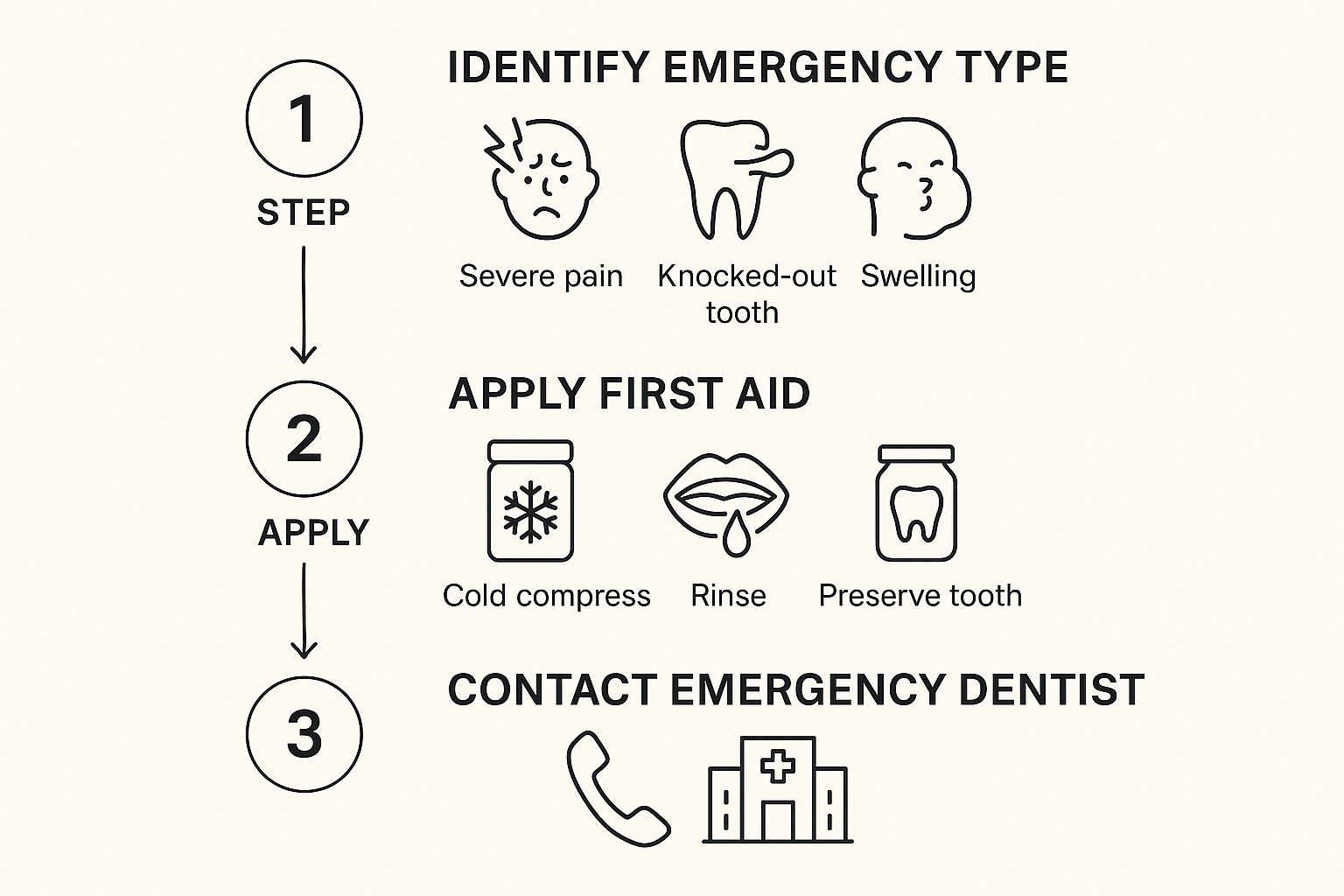
Think of first aid as the critical bridge that gets you from the moment of injury to professional help, giving your tooth the best possible chance.
What You Must Avoid
Knowing what not to do is just as important as knowing what to do. A lot of old home remedies can do more harm than good.
- Avoid Aspirin on Gums: Please, never place an aspirin or any other painkiller directly on your gums or the tooth. It won't help the pain any faster and can cause a nasty chemical burn on your soft tissue.
- Do Not Use Alcohol: Rinsing with whiskey is an old wive's tale that simply doesn't work. All it will do is irritate the damaged tissue even more.
- Ignore "Toughing It Out": Pain is your body's alarm system. Ignoring it, especially if it's severe, just gives an infection time to get worse. This can lead to much bigger problems and more complex, expensive treatments later on.
The actions you take immediately after an injury set the stage for a successful outcome. By following these steps, you’re giving your dentist the best possible opportunity to save your tooth and protect your health.
How to Find a Reputable Emergency Dentist Fast

When you’re in the middle of a dental crisis, the last thing you have is time. The intense pain or panic from a tooth injury demands immediate help, not a long, stressful search. Having a solid plan of attack is what separates you from the noise and connects you with a professional who can bring relief—fast.
Your first move? Get specific with your search. Forget generic terms. You need to use action-oriented phrases that cut straight to the chase, like "emergency dentist near me open now" or "24-hour dental care Glendale." This simple tweak immediately weeds out closed offices and points you toward clinics ready to handle urgent cases. Once you've got a short list, it's time for some quick, focused vetting.
Vetting Potential Clinics on the Fly
Start by jumping on the clinic’s website. You’re looking for a dedicated page or a prominent section about their emergency services. A clinic that highlights this has specific protocols in place for situations just like yours. Make a mental note of their emergency hours and contact number.
Next, give their recent patient reviews a quick scan, but do it with a purpose. You’re not interested in comments about routine cleanings right now. Zero in on reviews that mention urgent care. Stories about how the clinic handled a knocked-out tooth or a middle-of-the-night abscess are pure gold. They tell you exactly what you need to know about their real-world performance under pressure.
When you call, be direct and prepared. Time is critical, and a short, focused conversation will tell you everything you need to know. Have a list of non-negotiable questions ready to go.
Being prepared like this helps you stay in control of the situation and gather information efficiently, even when you're battling pain or anxiety.
Critical Questions to Ask on the Phone
Before you even think about grabbing your keys, a quick phone call can save you a completely wasted and painful trip. Your one and only goal is to confirm they can and will help you right now.
Your Quick-Call Checklist:
- "Are you currently accepting new emergency patients?" You’d be surprised how many clinics get overwhelmed and have to turn people away.
- "Can you handle my specific issue?" Be direct. Say, "I have a knocked-out tooth" or "I'm in severe pain from what I think is an abscess." Make sure they have the tools and expertise you need.
- "What are your payment options for an emergency visit?" This is no time for financial surprises. Ask about insurance, payment plans, or any financing they offer.
- "What's the estimated wait time for an emergency patient right now?" This helps you manage your expectations and your pain.
Some modern clinics are using new tech to speed things up; it's becoming more common to find offices using AI to streamline dental appointments for much faster service. It’s also important to remember that access to care isn't the same for everyone. Data shows that from 2020 to 2022, Medicaid was the most common payment source for ER visits related to dental problems in the U.S., highlighting the barriers many people face in getting private dental care. This kind of focused approach is your best bet for finding a reputable emergency dentist without losing precious time.
Navigating the Costs of an Emergency Visit
When you're in the middle of a dental crisis, the last thing you should worry about is a massive, unexpected bill. The pain and stress are bad enough without adding a layer of financial anxiety. So, let’s pull back the curtain on the costs and get you prepared. Facing this part head-on gives you the power to make clear-headed decisions.
If you have dental insurance, your first move—even if you're on the way to the clinic—should be to call your provider. Don't just assume what's covered. You need to ask them to explain your benefits for "emergency dental services," as this is often a totally different category than routine care. Find out your exact copay and what your deductible is for urgent treatment.
What If You Don't Have Insurance?
No insurance? Don’t panic. You still have great options. Most dental practices get that emergencies are unplanned and have systems ready to help you manage the financial side.
More and more clinics are offering in-house membership plans. These can be a fantastic alternative to traditional insurance, giving you big discounts on services for a flat annual fee.
Third-party financing is also a very common solution. Services like CareCredit work like a credit card designed just for healthcare costs. They often have interest-free promotional periods, letting you pay off your treatment over several months without extra charges. It's so important to have a plan, and you can learn more about the financial impact of medical emergencies without insurance to see why.
My Pro Tip: Always, always talk to the clinic’s front desk or office manager about payment options before treatment starts. A simple, direct question like, "I'm concerned about the cost; what payment plans do you offer?" opens the door to a productive conversation. They want to help you.
Being upfront empowers both you and the dental team to figure out a solution that won’t add to your stress.
The cost of not getting care is huge. Unplanned dental emergencies lead to about 34 million lost school hours in the U.S. every single year. And with a jaw-dropping 76.5 million U.S. adults without any dental coverage, finding flexible payment solutions is more critical than ever. You can read the full findings on dental care economics from the CDC for more context.
Your health comes first. The payment part can almost always be worked out.
What to Expect During Your Emergency Appointment

Walking into an unfamiliar dental office, especially when you’re in serious pain, can be incredibly nerve-wracking. Knowing what’s about to happen can make all the difference, helping ease some of that anxiety and putting you back in control. So, let’s pull back the curtain on a typical emergency dental visit.
The moment you arrive, the team’s absolute first priority is to get you comfortable and out of pain. Your appointment will be laser-focused; this isn't the time for a routine cleaning or a full cosmetic workup. It’s all about addressing the immediate crisis.
The Initial Assessment and Diagnosis
Your visit will kick off with a focused examination of the problem area. The dentist will ask specific questions about your pain—when it started, what it feels like, and what led to it. This is your chance to share every detail, no matter how small it seems.
Next up, an X-ray is almost always needed. A digital X-ray gives the dentist a clear view of everything happening beneath the surface, whether it's a deep crack, a hidden infection at the root, or damage to the jawbone. This step is critical. It removes the guesswork and ensures your treatment is precise and effective.
It's also reassuring to know that your dentist and their team are ready for anything. Many top-tier emergency dental offices ensure their staff have comprehensive training, including specialized BLS and CPR training for dental practices. This level of preparedness adds another layer of safety and professionalism to your care.
Immediate Treatment to Stabilize Your Condition
Once the issue is diagnosed, the dentist will walk you through the findings and recommend an immediate treatment to get things under control. The main goal here is stabilization and pain relief, not a final, permanent fix. Think of it as expert crisis management for your tooth.
Some common emergency treatments you might receive include:
- Draining an Abscess: If you have a painful, swollen abscess, the dentist will drain it to relieve the intense pressure and clean the area, providing immediate relief.
- Placing a Temporary Filling: For a lost filling or a broken tooth, a temporary sedative filling can be placed to shield the exposed tooth from further damage and sensitivity.
- Starting a Root Canal: If a tooth nerve is infected, the dentist may perform the first stage of a root canal by removing the infected pulp to stop the throbbing pain.
From personal experience, it’s crucial to understand that emergency treatment is often just the first step. You're getting a temporary fix designed to get you out of immediate danger and pain. A permanent solution requires more time and precision.
Scheduling Your Follow-Up Care
Before you leave, the team will help you schedule a follow-up appointment. Please don't skip this step—it’s an essential part of your recovery. During this next visit, the dentist will complete the treatment with a permanent solution, like placing a final crown, finishing the root canal, or fully restoring a fractured tooth.
One of the biggest mistakes people make is leaving without booking that appointment. It can lead to the problem coming back, often worse than before. Getting that next visit on the calendar ensures your tooth is fully restored and protected for the long haul.
Common Questions About Emergency Dentistry
When a dental crisis hits, your mind can race with questions. The uncertainty on top of the pain can feel overwhelming. Having clear, straightforward answers ready can give you the confidence to navigate the situation effectively.
Let's tackle some of the most frequent concerns people have when they find themselves needing an emergency dentist.
One of the biggest questions is always about cost. While we touched on financing options earlier, it's natural to wonder what a typical emergency visit might set you back. The truth is, it varies widely based on your location and what kind of treatment you need.
A simple emergency exam and an X-ray, for example, might be a couple of hundred dollars. On the other hand, starting a root canal to stop that deep, throbbing pain will be significantly more. Always ask for a cost estimate before any work begins. A reputable dental office will be transparent about their pricing and help you understand exactly what treatment is needed and what the associated fees are.
What If I Can’t Reach a Dentist Immediately?
It’s a terrifying scenario: you're in severe pain in the middle of the night, and you can't get ahold of a dentist. What do you do? First, try to manage your symptoms as best you can with the first-aid tips we discussed. A cold compress on the outside of your cheek and rinsing with warm salt water can offer some temporary relief.
If the situation involves severe swelling that’s making it hard to breathe, uncontrolled bleeding, or a serious facial injury, your next stop needs to be the hospital emergency room. They are equipped to manage the immediate, life-threatening aspects of your condition.
It's crucial to understand, however, that most hospital ERs are not set up for definitive dental care. They don’t have dentists on staff and can't perform procedures like fillings, root canals, or extractions. They can provide antibiotics and pain relief to get you stable, but you will still need to see an emergency dentist as soon as possible for the actual dental work.
Is It Better to Go to the ER or a Dentist?
For a purely dental problem—even a severe one like a knocked-out tooth or an abscess—an emergency dentist is always the better choice. Dental offices have the specialized tools, diagnostic equipment (like dental X-rays), and the specific expertise to treat the root cause of the problem right then and there.
Going to the ER for a toothache often means a long wait, a prescription for painkillers or antibiotics, and a bill, only to be told to see a dentist anyway. You end up paying for two visits. According to the American Dental Association, dental issues are responsible for over 2 million ER visits each year in the United States, often because patients just don't know where else to turn.
Choosing a dentist directly saves you time, money, and gets you the specialized care you desperately need, faster.
Reserve the ER for situations where your overall health is at immediate risk, such as:
- Jaw fractures or dislocations.
- Severe cuts or lacerations to the face and mouth.
- An abscess with swelling so severe it’s obstructing your airway.
For everything else, from an agonizing toothache to a broken front tooth, your best and most direct path to relief is an emergency dentist.
At Beyond Dental Care, we understand that dental emergencies are stressful and painful. Our compassionate team is here to provide the urgent, expert care you need in a calm and comfortable environment. If you're facing a dental crisis in Glendale, Arrowhead Ranch, or the surrounding communities, don't wait. Contact us immediately for prompt and effective treatment. Find your relief with us today.