
Direct Answer: Whether you’re a dental implant candidate depends on what advanced 3D imaging reveals about your bone density, bone volume, sinus position, and nerve location — not on a visual exam alone.
A lot of people in the Arrowhead Ranch and Stetson Hills areas come in having already decided they want dental implants. They’ve done their research, they’ve talked to friends who have them, and they’re ready to move forward. And then they hear the words: “We need to take a look at your bone first.”
That part — the imaging — is where the real answer lives. Not in the consultation conversation, and not in a glance at your smile. The decision about whether someone is a strong implant candidate comes down almost entirely to what a 3D scan shows about the jaw underneath the missing tooth.
This article is about that process. What the scan is actually looking for, what it means if the results are complicated, and what the realistic timeline looks like from that first image to a finished, permanent tooth. If you’re weighing your options in North Glendale or the broader Northwest Phoenix area, this is the information that actually matters.
What the Implant Actually Is — and Why the Bone Is Everything
One of the most common misunderstandings I hear from patients is that the implant is the tooth they see in someone else’s mouth. It’s not. The implant is the titanium post — a small, screw-shaped root that gets placed into the jawbone. The visible crown comes later, after the implant has had time to fuse with the bone in a process called osseointegration.
That distinction matters because the entire success of the restoration depends on what happens underground, not at the surface. If the bone isn’t dense enough or doesn’t have enough volume to hold the post securely, the crown on top will never feel or function like a natural tooth.
And here’s the part that catches a lot of people off guard: when a tooth goes missing, the jawbone beneath it begins to shrink. The bone needs the stimulation of a tooth root to maintain its density and shape. Without that stimulation, it gradually resorbs — sometimes within months of the loss. This is why timing matters, and it’s also why implants are the only tooth replacement option that actually preserves the bone rather than just filling the visible gap.
For patients in Vistancia or Cibola Vista who’ve been living with a missing tooth for several years, this bone loss is often the first real question the imaging has to answer. Implants or dentures after 65: how seniors can compare the two goes deeper into why this matters specifically for older patients weighing their long-term options.
What 3D Imaging Is Actually Evaluating Before a Yes Is Given
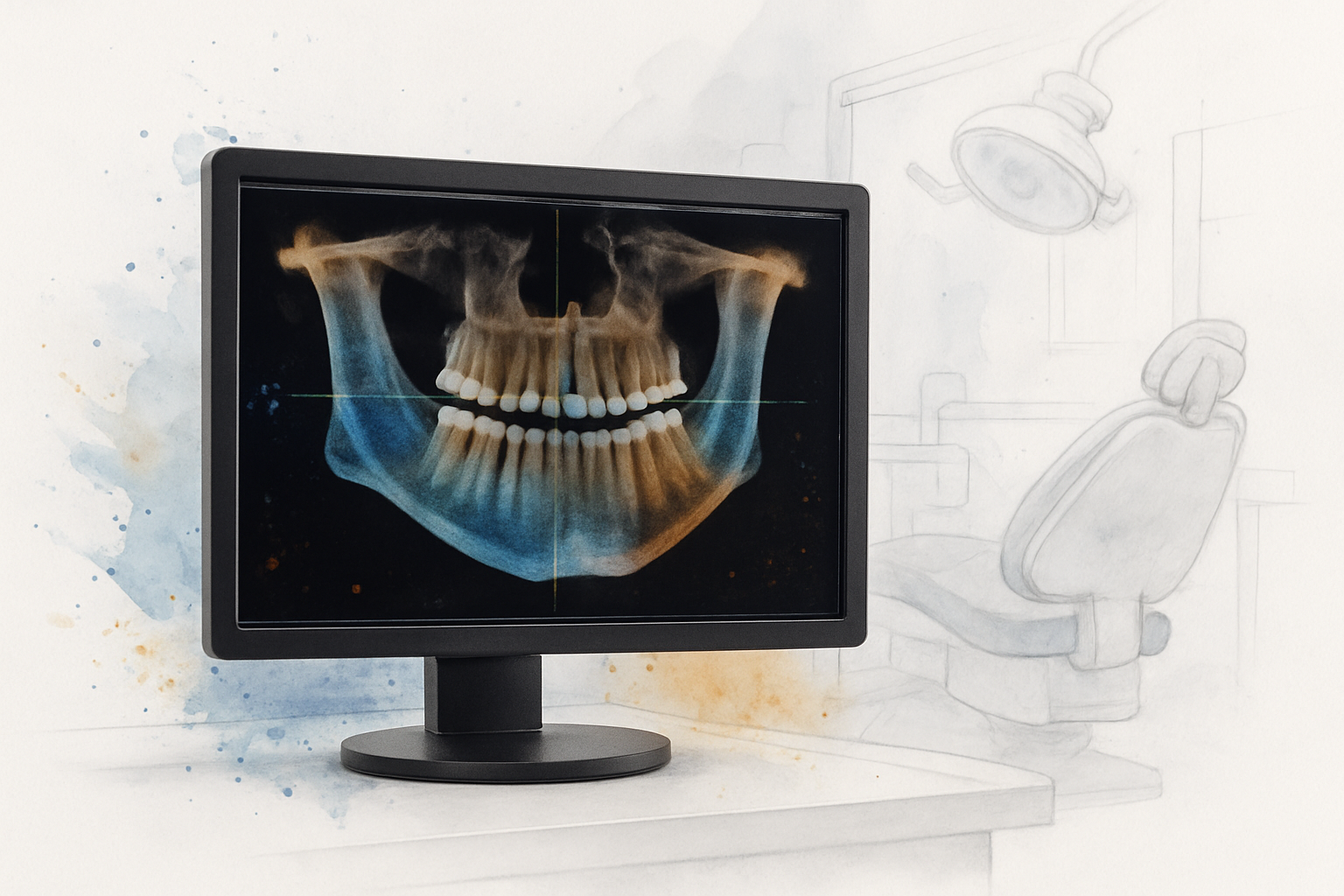
A standard dental X-ray gives us a two-dimensional snapshot. It’s useful for a lot of things, but it doesn’t give us the full picture we need before placing an implant. That’s why cone beam CT (CBCT) imaging — a type of 3D scan — is the standard of care for implant planning at a practice that takes the outcome seriously.
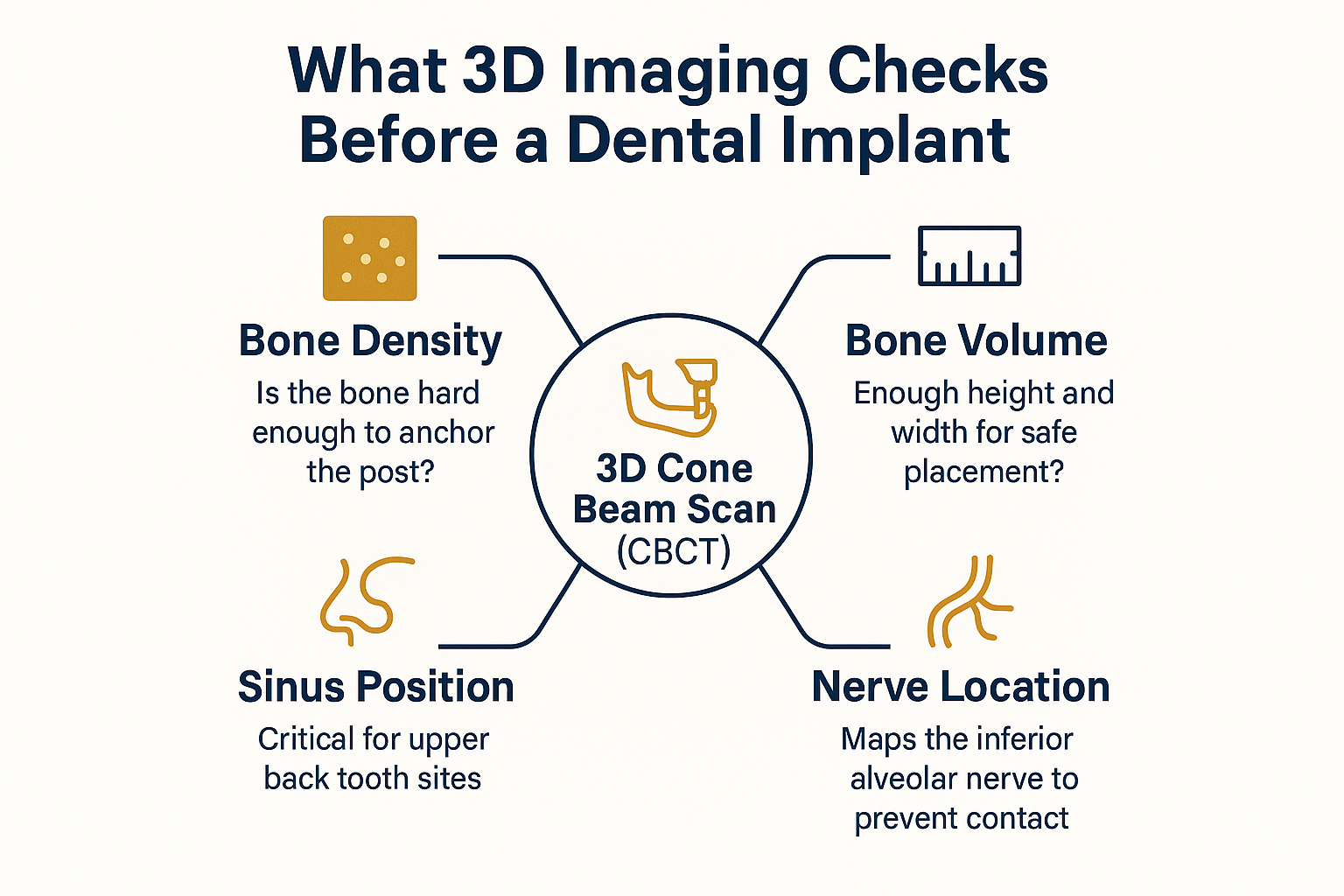
Here’s what that scan is specifically looking at:
- Bone density — Is the bone hard enough to hold the implant post under chewing pressure?
- Bone volume — Is there enough bone in height and width to place the implant without it being too close to the surface?
- Sinus position — For upper back teeth, the sinuses sit just above the jaw. If they’ve dropped into the space where a tooth used to be, placement gets more complex.
- Nerve location — The inferior alveolar nerve runs through the lower jaw. Precise mapping ensures the implant placement doesn’t come anywhere close to it.
This is precision planning, not precaution theater. A 2025 systematic review covering 158,824 implants found an overall survival rate of 97.79% — but those outcomes reflect implants that were carefully selected and planned, not placed without thorough evaluation. The imaging is what separates a predictable long-term result from an avoidable complication.
If the scan reveals low bone density or significant bone loss, the conversation shifts to whether a bone graft is needed first — and how that affects the overall timeline. That’s not a disqualifier; it’s a detour that still leads to the same destination for many patients.
The Four Things Imaging Evaluates Before an Implant Is Placed
Before a dental implant can move forward, a 3D scan examines four critical factors in the jaw. Here’s what each one means for your candidacy.
The Realistic Timeline From Scan to Final Crown
This is where a lot of patients feel surprised — and sometimes frustrated — when they learn how long the process takes. I’d rather you know the real timeline upfront than be caught off guard after the first appointment.
The reason implants take months from start to finish is osseointegration. After the titanium post is placed in the jaw, the bone has to grow around and fuse with it before the crown can be attached. Rushing that process doesn’t work — the bone heals on its own schedule.
Here’s what a typical implant timeline looks like for a straightforward case:
- Consultation and 3D imaging — Evaluation of bone, anatomy, and candidacy
- Implant placement surgery — The post is placed into the jaw under local anesthesia
- Osseointegration period — Bone fusion takes roughly 3 to 6 months, depending on the individual
- Abutment placement — A small connector is attached to the post once fusion is confirmed
- Final crown delivery — The permanent, custom crown is placed and adjusted for bite
If a bone graft is needed first, add several months before the implant placement itself can happen. For a deeper look at what drives the timeline, how long do dental implants really take from start to finish? breaks it down in more detail.
The patience required is real. But patients who’ve been through it consistently describe the result the same way: it feels like a natural tooth. That’s what the months of healing are building toward.
Implant Timeline at a Glance
This table shows the typical phases of a dental implant, what happens in each phase, and a general timeframe. Individual cases vary — especially when bone grafting is involved.
| Phase | What Happens | Typical Timeframe |
|---|---|---|
| Consultation & Imaging | 3D CBCT scan, bone evaluation, candidacy determination | 1 appointment |
| Bone Graft (if needed) | Graft material placed to build bone volume before implant | 3–6 months healing |
| Implant Placement | Titanium post surgically placed in the jawbone | 1 appointment + healing begins |
| Osseointegration | Bone fuses with the titanium post | 3–6 months |
| Abutment Placement | Connector attached to the post after fusion confirmed | 1 appointment |
| Final Crown | Permanent custom crown placed and adjusted | 1–2 appointments |
Who Tends to Be a Strong Candidate — and Who May Need More Evaluation
After imaging, most adults and seniors in the Norterra and North Peoria areas who are missing one or more teeth fall into a fairly clear picture. Strong candidates generally share a few things in common:
- Adequate bone density and volume at the implant site
- No uncontrolled systemic conditions that affect healing (like poorly managed diabetes)
- Non-smokers, or patients willing to stop smoking around the time of surgery
- Healthy gum tissue without active periodontal disease
Patients who don’t initially check every box aren’t automatically ruled out. Bone grafting can address volume loss. Periodontal disease can be treated before implant planning begins — and when was the last time you had a periodontal evaluation? is worth reading if you’re not sure where you stand on that front.
For seniors specifically, the bone preservation benefit of implants carries extra weight. A fixed implant-supported restoration doesn’t just replace the tooth — it actively maintains the jawbone structure underneath, which affects facial shape, bite function, and the long-term stability of neighboring teeth. Dental implants after 65: what the process actually involves addresses the specific considerations that come up most often for older patients.
Frequently Asked Questions About Dental Implant Candidacy
Can I get an implant if I’ve had the missing tooth for several years?
Possibly, yes — but the longer a tooth has been missing, the more likely it is that bone loss has occurred beneath it. That’s why imaging is the first step, not the last. Some patients need a bone graft to rebuild enough volume for a successful implant, which adds time to the process but doesn’t necessarily take it off the table.
Does it hurt to have the implant placed?
Most patients are surprised by how manageable the placement procedure is. It’s done under local anesthesia, and discomfort afterward is typically described as similar to a tooth extraction — manageable with over-the-counter pain relief for most people. The healing phase is longer than the procedure itself.
How much do dental implants cost in the Glendale / Northwest Phoenix area?
Costs vary based on how many implants are needed, whether a bone graft is required, and what type of restoration goes on top. In the greater Phoenix metro area, a single implant — including the post, abutment, and crown — generally runs somewhere in a range that reflects the complexity of the individual case. The best way to get an accurate number is to go through the consultation and imaging process, after which the practice can give you a clear breakdown tied to your specific situation.
Is the implant the same thing as the crown I’ll see when I smile?
No — and this is one of the most common points of confusion. The implant is the titanium root placed in the jawbone. The crown is the visible tooth that attaches on top after the implant has fused with the bone. They’re two separate components, and the crown comes weeks to months after the implant itself is placed.
What if the imaging shows I don’t have enough bone?
That’s a conversation worth having rather than a dead end. Many patients who don’t initially have adequate bone volume are candidates for a bone graft, which rebuilds the foundation before the implant is placed. It extends the timeline, but it makes a predictable, long-lasting outcome possible for people who would otherwise be turned away.
Can I use my HSA or FSA to pay for dental implants?
In most cases, yes. Dental implants are generally considered a qualified medical expense for HSA and FSA purposes. It’s worth confirming with your plan administrator, but many patients in the Arrowhead Ranch and Stetson Valley areas use these accounts to cover implant costs. Can you use HSA for dental? covers what you need to know.
Ready to Find Out If You’re a Candidate?
If you’re missing a tooth — or have been putting off this question for longer than you’d like to admit — the imaging consultation is the right first step. Beyond Dental Care serves patients throughout North Glendale, Arrowhead Ranch, Stetson Hills, Norterra, and the broader Northwest Phoenix area, with evening and Saturday appointments available for busy schedules. Call 623-267-8088 or visit beyonddentalcare.com to get started.