
Direct Answer: A first visit back after a gap follows a clear structure: digital X-rays, a periodontal evaluation, a professional cleaning, and a plain-language explanation of anything found.
A lot of adults in the North Glendale and Arrowhead Ranch area have not been to a dentist in a year, two years, or longer. And the reason is rarely that they stopped caring about their teeth. More often, it is embarrassment, a quiet worry that someone in scrubs is going to make them feel bad about the gap.
That concern is real, and it is worth naming directly. One patient who came in after a long absence wrote that she was relieved “no one judged me for not having been to the dentist for a while.” Another said the team “took the fear away.” This is one of the most consistent things people say after coming back, and it is also what holds people back from making the call in the first place.
If you have been putting off scheduling because you are not sure what to expect, or because you are worried about what might be found, this article walks through exactly how that first appointment works, what the exam is actually looking for, and how to think about timing if you have dental benefits sitting unused.
What Actually Happens at a Return Visit After a Gap
The appointment follows a predictable structure, and knowing it in advance takes a lot of the anxiety out of it.
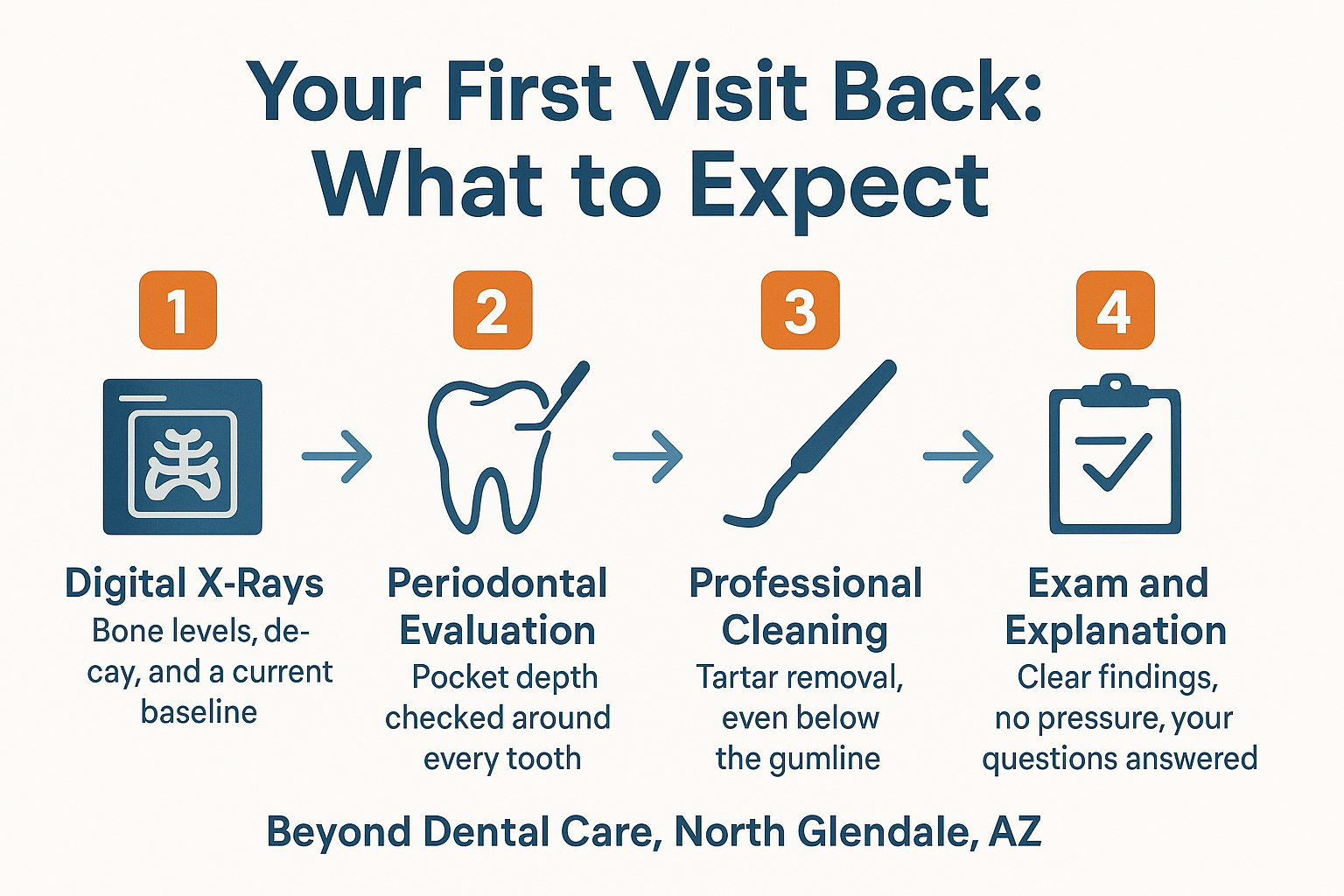
First, digital X-rays give the dentist a current picture of what is happening below the gumline, bone levels, the roots of each tooth, any decay that has developed where it cannot be seen with the naked eye. For patients who have not had imaging in several years, this baseline matters a lot. It is not about cataloging problems; it is about having accurate information before anything else happens.
Next comes a periodontal evaluation. The hygienist checks the depth of the pockets around each tooth using a small probe. This is how early gum disease gets identified. Periodontal disease is the leading cause of adult tooth loss in the U.S., and it is particularly deceptive because it often causes no pain at all until it has already progressed. According to the Centers for Disease Control and Prevention, nearly half of adults over 30 have some form of periodontal disease, most of them without knowing it.
After the evaluation, the professional cleaning removes the tartar buildup that brushing and flossing at home simply cannot reach. Even patients who are diligent about their home routine accumulate buildup over time, and the longer the gap, the more there is to address.
The exam and explanation come last. Dr. Dariene Lazore reviews the full picture and walks through whatever was found, in plain language, without pressure. Patients consistently mention how clearly findings are explained. What happens at a comprehensive dental exam is something worth understanding before you go in, so nothing comes as a surprise.
The Fear That a Long Gap Means a Long Treatment List
This is one of the most common worries people carry into a return visit, and it deserves an honest answer.
Some patients come back after several years away and have only minor buildup to address. Others have early cavities or beginning-stage gum changes that are genuinely manageable when caught now. What is consistent is this: problems found early are almost always simpler and less involved to treat than the same problems found a year or two later.
The exam exists to find out what is actually going on, not to generate a list of procedures the patient did not ask for. Patients in Stetson Valley and Norterra who have switched to Beyond Dental Care after frustrating experiences at corporate dental offices often describe feeling like previous recommendations were handed to them without explanation. The difference at a private practice is that findings get explained, options get discussed, and the patient decides what happens next.
If you have ever left a dental office feeling like you were handed a bill of goods rather than a care plan, reading about what a preventive dental visit actually catches before it gets expensive might reframe how you think about going back.
A First Visit Back: What Happens and When
This infographic shows the four-step sequence of a return-visit appointment, so patients know exactly what to expect before they walk in.
Why Late Summer and Fall Is a Smart Time to Come Back
There is a practical reason this time of year prompts a lot of adults in Hillcrest Ranch and Vistancia to finally schedule that overdue visit.
For patients with employer PPO dental coverage, the annual maximum typically resets on January 1. That means any preventive benefits that go unused between now and December 31 simply disappear, they do not roll over. Most plans cover preventive visits like cleanings and exams at 100%, which means the cost of coming back is often nothing out of pocket. Waiting until January to schedule means starting a new benefit year with the same backlog.
The second-half-of-the-year window is also when work schedules stabilize for many households in the Northwest Phoenix area after summer travel and school transitions. Beyond Dental Care offers evening appointments Monday through Thursday until 7 p.m. and Saturday availability by request, specifically to fit schedules that cannot accommodate a midday weekday appointment.
For patients who have been putting this off because of logistics rather than anxiety, that combination of available hours and expiring benefits is a real reason to act before the end of the year.
Preventive Dental Benefits: What Most PPO Plans Cover
Coverage details vary by plan, but most employer PPO dental plans follow a similar structure for preventive care. This table reflects general market norms, your specific plan may differ, so confirm with your carrier or the practice.
| Service | Typical PPO Coverage | Frequency Allowed |
|---|---|---|
| Dental exam | 100% | 1-2 times per year |
| Professional cleaning | 100% | 2 times per year |
| Digital X-rays (bitewings) | 100% | 1 time per year |
| Full-mouth X-rays (FMX) | 100% (varies) | Every 3-5 years |
| Periodontal evaluation | 80-100% (varies) | As needed, per plan |
What Helps a Return Visit Go Smoothly
A few simple things make the first appointment back easier for everyone involved.
- Know your last dental provider, if you can name them, the practice can request records or X-rays, which sometimes avoids a duplicate set of films.
- Bring your insurance card or have your member ID ready, even if you are not certain the practice is in-network. Insurance verification is typically one of the first things the front desk handles.
- Write down any symptoms you have noticed, sensitivity to hot or cold, a tooth that feels different than it used to, gum tenderness in a specific spot. These details help the hygienist and dentist focus their evaluation.
- Mention your anxiety. Patients who let the team know upfront consistently report a better experience. The practice has a comfort dog named Mr. Woodford on site, and the team is experienced with patients who have had difficult past experiences at other offices.
If sensitivity or pain has been on your radar, it is also worth knowing what those signs can sometimes indicate. Reading about periodontal evaluation timing can help you understand what the hygienist is checking for and why it matters.
Frequently Asked Questions About Coming Back to the Dentist
Will the dentist lecture me for not coming in sooner?
No. Patients who come back after long gaps consistently say this was their biggest fear going in, and the thing they were most relieved about afterward. The appointment is about finding out where your teeth are today and making a plan from there, not about how long it has been.
How long will the appointment take if I haven’t been in a few years?
A first visit back after a significant gap typically runs 90 minutes to two hours when it includes X-rays, a periodontal evaluation, a cleaning, and an exam. That is longer than a routine maintenance visit, but it gives the team the time to do things properly rather than rushing through.
What if they find cavities or gum problems, does that all have to be treated that day?
No. The first appointment is diagnostic and preventive. If anything beyond that is recommended, the findings get explained, a plan gets discussed, and you decide what comes next. Nothing happens without your understanding and agreement.
I have dental insurance but I’m not sure if the practice is in-network. Should I still call?
Yes. Even if the practice is out of network with your plan, your benefits may still apply, out-of-network coverage is common with PPO plans. The front desk can verify your benefits before your appointment. Several callers have found that they were covered even when they were not sure going in.
What if I don’t have dental insurance?
Many patients at the practice pay out of pocket. The front desk can walk you through what a new-patient visit involves cost-wise and what options are available. The best step is to call directly so you have a clear picture before committing to anything.
Is there anything specific I should mention if I’m anxious about dental visits?
Tell the team when you book. Dental anxiety is common, and knowing ahead of time helps the team set the right pace. Mr. Woodford, the practice’s comfort dog, is also on site, several patients with significant dental anxiety have specifically mentioned how much that helped. There is also a longer read on what comfort-focused care actually looks like if you want to know more before calling.
Ready to Get Back on Track?
Beyond Dental Care sees patients from across North Glendale, Arrowhead Ranch, Stetson Hills, and the surrounding Upper West Side Phoenix area. If you have been putting off a return visit, the team at the practice is ready to help you get a clear picture of where things stand, no judgment, no pressure. Call 623-267-8088 or visit beyonddentalcare.com to schedule your first visit back.