
Periodontal disease treatment is what your dentist does to fight gum infection. The goal is to stop the disease from getting worse and make the tissues that hold your teeth in place healthy again. Think of it as a special plan to save your smile from the ground up.
Understanding Periodontal Disease Treatment
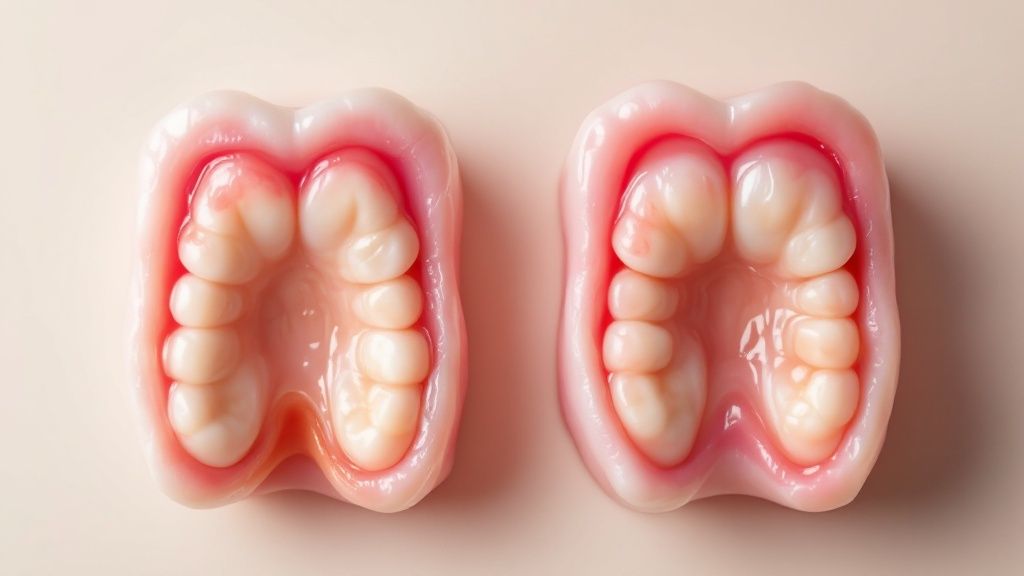
Let's use an example. Imagine your gums are the soil that holds a plant—your tooth. When bad bacteria build up, they act like weeds that slowly poison this soil.
If you don't do anything, these "weeds" will damage the roots and the foundation. This will cause the plant to get loose and eventually fall out. Periodontal disease treatment is the process of carefully "weeding" this garden to save your teeth before it's too late.
The main goal is to get your mouth healthy again. This means removing the infection and creating a place where your gums can heal and attach to your teeth properly.
The Main Goals of Gum Disease Treatment
Here's a quick look at what your dentist wants to do with periodontal treatment.
| Treatment Goal | What It Means for You |
|---|---|
| Stop the Infection | Removing bad bacteria from under your gums to stop the disease. |
| Reduce Gum Pockets | Helping gums attach tightly to the teeth again, so bacteria can't hide in the spaces. |
| Prevent Bone Loss | Protecting the jawbone that holds your teeth from more damage. |
| Restore Oral Health | Creating a healthy, strong foundation for your teeth for the future. |
| Empower the Patient | Teaching you how to take care of your teeth at home to keep them healthy. |
Every step is meant to get the infection under control and keep it that way.
What Does Treatment Actually Involve?
The steps we take depend on how bad the infection is. For many people, treatment starts with non-surgical methods. These work very well in the early stages of gum disease.
But if the disease is more advanced, you might need other procedures to fix the damage. The process is a step-by-step way to manage and sometimes even reverse the effects of gum disease. It includes everything from deep cleanings, called scaling and root planing, to surgery like flap surgery or bone grafts that help rebuild what was lost.
The main purpose of any periodontal treatment is to clean out the pockets around your teeth and stop any more damage to the bone. It's all about stopping the disease from getting worse.
In the end, success means controlling the infection and keeping your mouth healthy for years. Good periodontal therapy is a partnership between you and your dental team. You can learn more in our detailed guide on what periodontal therapy is. This will walk you through every option so you know what to expect.
How Gum Disease Gets Worse Over Time
To understand why treating periodontal disease is so important, it helps to know how a small problem can turn into a serious one. Gum disease doesn't just appear overnight. It moves through stages, like a small crack in a wall that gets bigger if you ignore it.
It all starts with gingivitis. This is the earliest stage of gum disease, and it's the only one you can reverse. You might notice your gums are a little red or puffy, or maybe they bleed when you brush and floss. Think of this as a warning light in your car—it tells you something needs attention before it becomes a big problem.
If that warning is ignored, the infection can get worse. This is where the real damage starts.
From Gingivitis to Periodontitis
When gingivitis isn't treated, it turns into periodontitis. The infection spreads below the gum line, and the gums start to pull away from the teeth. This creates small spaces called periodontal pockets.
These pockets are the perfect hiding spot for bad bacteria, where your toothbrush and floss can't reach. As the bacteria grow, they release poisons that destroy not just your gum tissue, but also the bone that holds your teeth in place. You can learn more about the things that lead to this by reading about the causes of gum disease.
The most important thing to remember is that once gum disease becomes periodontitis, the damage can't be reversed on its own. You need professional treatment to stop the disease and manage it for the long term.
The Escalating Stages of Damage
Periodontitis itself has several stages, and each one is more serious. It usually goes from early, to moderate, and then to advanced periodontitis.
- Early Periodontitis: The pockets between your gums and teeth get deeper. You might start to lose a little bit of bone.
- Moderate Periodontitis: As the pockets get deeper, more of the bone that supports your teeth is lost. Your teeth might start to feel a little loose.
- Advanced Periodontitis: This is the most serious stage. A lot of bone and tissue is lost. Teeth can become very loose, move around, and may need to be removed to protect your overall oral health.
The image below shows a dental professional doing a deep cleaning, which is a key step in stopping this process.
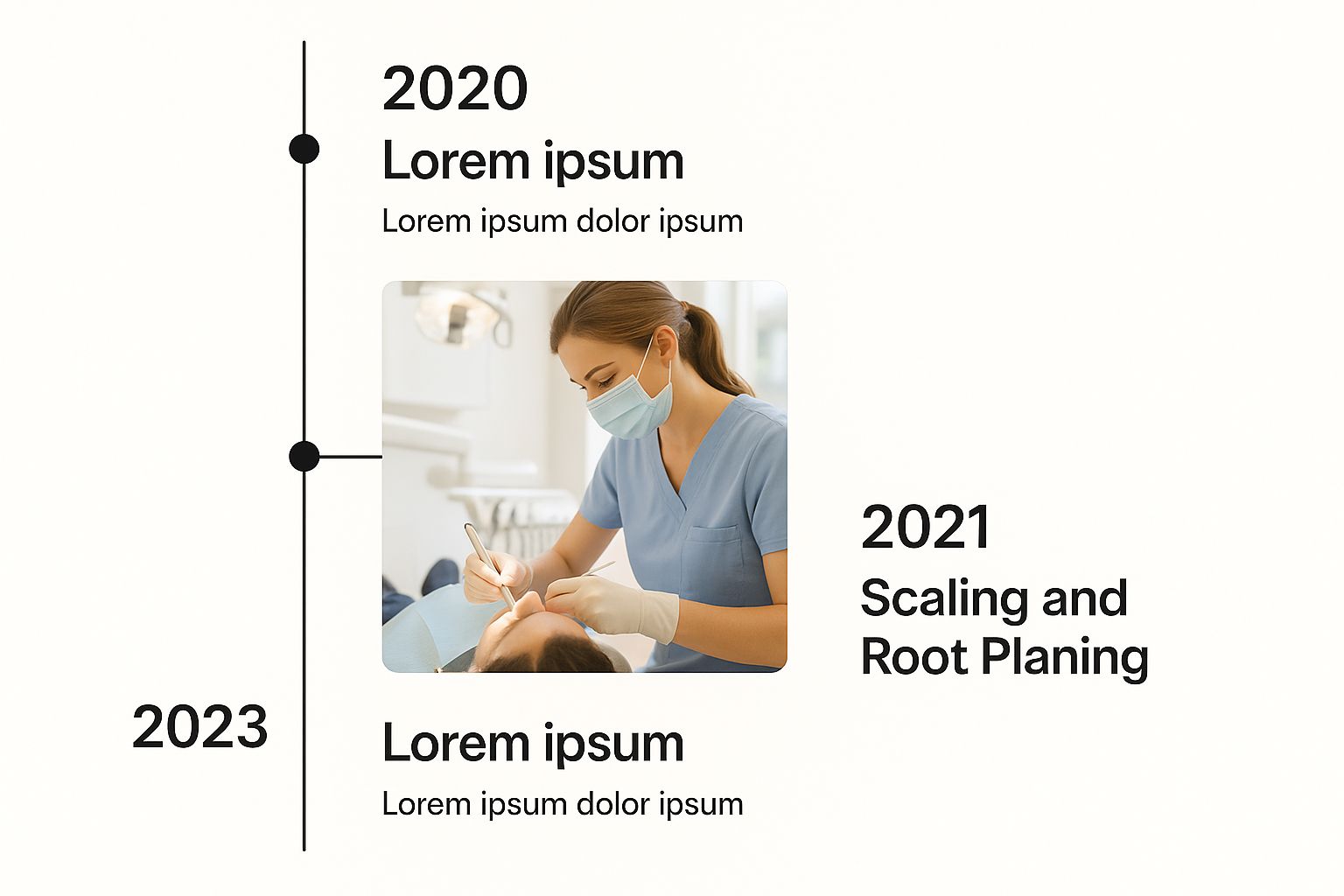
This shows the careful work it takes to get below the gum line and remove the bacteria causing the disease. This is a huge problem. Around the world, there were over 1 billion cases of severe periodontal disease in 2019. Understanding these stages makes it clear why catching and treating gum disease early is so important.
Your First Line of Defense With Non-Surgical Treatment

When we catch gum disease early, we almost always use a non-surgical treatment first. This is our best way to stop the infection before it can cause serious, long-term damage. The most important part of this approach is a procedure called scaling and root planing.
You can think of it as a deep cleaning that goes far beyond a normal dental visit. It's a special effort to get right to the source of the problem. If your gums were a garden, this process is like carefully pulling out all the weeds and then fixing the soil so your plants can grow strong again.
Scaling The Deep Cleaning Process
The first part, scaling, is the careful removal of all plaque and hard tartar from above and below your gumline. This is where bad bacteria have built a home. A normal cleaning only cleans the parts of your teeth you can see. Scaling goes deeper into the periodontal pockets that have formed around your teeth.
Your dental professional will use special tools to gently scrape away this buildup from your teeth and roots. The whole point is to get rid of the infection, which gives your gums a chance to heal.
Scaling and root planing is often called a "deep cleaning" because it cleans areas a regular cleaning can't reach. It is one of the best ways to treat early-stage periodontitis and stop it from getting worse.
This procedure is very important for giving your oral health a fresh start. Once we remove the bacteria, the swelling in your gums can finally start to go down.
Root Planing Smoothing The Surface
After scaling is done, we move on to root planing. This part of the process is all about smoothing out any rough spots on the roots of your teeth. Why is this important? Because these rough spots act like magnets for bacteria, making it easy for them to stick and start the infection all over again.
By making the surface smooth and clean, root planing does two very important things:
- It makes it harder for new bacteria to attach to the roots.
- It helps your gums attach more firmly to your teeth as they heal.
This reattachment is key. It makes the periodontal pockets smaller, which helps protect you from future problems. After the roots are smooth, your body's own healing process can take over and work much better.
Additional Non-Surgical Methods
Sometimes, we might add other non-surgical tools to scaling and root planing to get the best results. For example, we might place antibiotics directly into the periodontal pockets right after cleaning them. This puts medicine right where the infection is to kill any bacteria that might be left.
Using these methods together gives your mouth a clean slate and creates the best environment for healing. Knowing the details of your treatment is important. You can learn more about what affects the gum disease treatment cost in our helpful guide. Non-surgical treatment is a strong first step to getting your oral health back under control.
When Advanced Surgical Treatment Is Necessary
Sometimes, a deep cleaning isn't enough. When the infection has gone deep below the gumline and created pockets that are too deep for normal tools to reach, surgery might be the next step. The word "surgery" might sound scary, but these procedures are common and very precise. They are designed to give your gums the best possible chance to fully heal.
Think of it this way: if a deep cleaning is like power-washing the outside of a house, surgery is like calling in a special team to fix the foundation. It lets your dentist get right to the problem, clean it out completely, and fix the damage.
Reaching the Infection With Flap Surgery
One of the most common procedures is called flap surgery, or pocket reduction surgery. It’s not as scary as it sounds. Your periodontist makes tiny cuts in your gums, which lets them gently lift back a small "flap" of tissue.
This simple step gives them a clear view of the tooth roots and the bone below. With everything visible, your specialist can finally remove all the hard tartar and sick tissue that were hiding. Once the area is clean, the gum tissue is put back in place so it fits more tightly around the tooth.
This does two key things:
- It gets rid of the bad bacteria that were causing the infection.
- It makes the periodontal pockets smaller, making it harder for bacteria to hide there in the future.
Rebuilding a Strong Foundation With Grafts
Advanced periodontal disease doesn't just infect the gums; it also destroys the things that hold your teeth in place, like gum tissue and bone. When this happens, your dentist may suggest a graft to rebuild what was lost.
The real goal of advanced surgery isn't just to clean—it's to rebuild and restore. These procedures are designed to undo the damage and create a healthier, stronger environment for your teeth.
There are two main types of grafts your periodontist might use:
- Bone Grafts: When the disease has damaged the bone that supports your teeth, a bone graft can help fix it. This means placing a special material—which can come from your own body, a donor, or be man-made—into the areas where bone was lost. This material acts as a frame, helping your body grow new, healthy bone over time.
- Gum Grafts: Gum recession, where gums pull away from the teeth, is another common problem. This can leave tooth roots exposed, which can cause pain and put you at a higher risk for cavities. A soft tissue graft (or gum graft) is the solution. A small piece of tissue, often from the roof of your mouth, is carefully sewn into place over the exposed root. This covers it up and makes your gum line look better.
Knowing all your options is a big part of feeling comfortable. For patients who are nervous about these treatments, learning about dental sedation options can give them peace of mind and help make the experience smooth and comfortable.
To give you a clearer picture, let's compare the two main approaches.
Comparing Non-Surgical and Surgical Treatments
This table shows the main differences between the first, non-surgical treatment and the more advanced surgical treatments we've talked about.
| Feature | Non-Surgical Treatment (e.g., Scaling) | Surgical Treatment (e.g., Flap Surgery) |
|---|---|---|
| Primary Goal | Remove plaque and tartar from above and just below the gum line. | Get direct access to clean deep pockets and remove sick tissue. |
| Invasiveness | Not very invasive; no cuts are needed. | More invasive; involves cuts to lift and move gum tissue. |
| Anesthesia | Local numbing medicine is usually enough. | Local numbing medicine and often sedation options are used. |
| Best For | Early to moderate gum disease (gingivitis, periodontitis). | Moderate to advanced periodontitis with deep pockets and bone loss. |
| Recovery Time | Short; some gum tenderness for a few days. | Longer recovery; may need stitches and a special diet for a week or more. |
| Outcome | Stops the disease from getting worse and helps gums heal. | Rebuilds lost tissue/bone and makes pockets much smaller. |
While non-surgical treatments are always the first choice, surgical options are powerful tools for restoring health when the disease is more serious.
The field of periodontal therapy is always changing. In fact, the global market for these treatments was valued at about $724 million in 2025 and is expected to grow. New technologies are making these surgical procedures better and more comfortable than ever. In the end, finding the right surgical plan depends on your own situation. That's why understanding how periodontal therapy is essential for your long-term health is so important.
How to Maintain Healthy Gums After Treatment
Finishing your periodontal treatment is a huge step for your oral health, but it's not the end of the road. Think of it this way: your treatment was like a professional deep-clean of your whole house. Now, you need a good plan to keep it clean. This ongoing care is the key to stopping gum disease from coming back.
After treatment, your mouth is much healthier, but it's also more at risk. The bacteria that caused the problem are still around, and they'll try to come back if you let them. Your dentist's main goal is to help you protect the work you just had done.
To do this, they’ll put you on a new cleaning schedule called periodontal maintenance. These appointments are not your usual cleanings.
Periodontal maintenance is more than just a cleaning; it's a plan to defend your gums. These visits are more detailed and happen more often—usually every three to four months—to keep bacteria from getting a hold below the gumline again.
This regular schedule is very important. It lets your dental team watch your gums closely and catch any new problems before they become serious again.
Your Role in Long-Term Success
Your dental team is your partner, but your daily habits are what really make the difference in the long run. You are the first line of defense. A great at-home routine is what stops bacteria from growing day after day, keeping your gums healthy between your maintenance visits.
Here are the things you must do every single day:
- Brush Properly: Use a soft-bristled toothbrush and fluoride toothpaste. Angle the brush 45 degrees toward your gumline and use gentle, circular motions. The goal is to clean, not scrub. Make sure you brush for a full two minutes, twice a day.
- Floss Effectively: Flossing is very important. It’s the only way to clean the tight spaces between your teeth and just under the gumline where a toothbrush can't reach. Curve the floss around each tooth in a "C" shape and slide it gently up and down.
- Consider Extra Tools: Your dentist might suggest other tools. An antiseptic mouthwash can help reduce bacteria, and a water flosser is great for washing out food from deeper pockets.
Simple Habits for Lasting Health
Besides the basics, a few small changes to your lifestyle can make a big difference. Staying hydrated helps your body make saliva, which is your mouth's natural cleaning liquid. It also helps to eat a balanced diet that's low in sugar, which is food for bad bacteria.
If your gum disease was caught early, it’s also helpful to learn how you can reverse gingivitis at home with very good care. When you have professional maintenance and a good at-home routine, you’re building a strong defense system. This partnership between you and your dental team is the key to keeping your gums healthy for life.
Common Questions About Periodontal Treatment
It’s normal to have questions before any dental work. When you're facing treatment for gum disease, you want to know what to expect—from how it feels to what it means for your smile's future. We understand.
Let's go through some of the most common questions we hear from patients. Getting clear, simple answers can help you feel more confident and ready for this important step.
Does Periodontal Disease Treatment Hurt?
This is usually the first question people ask, and it's a good one. Your comfort is our top priority. Before we start any procedure, we use a local anesthetic to numb the area completely. This means you shouldn't feel any pain during a deep cleaning or surgery.
After the numbing wears off, it's normal to feel a little sore or sensitive for a few days while your gums heal. Think of it like a sore muscle after a workout. The discomfort is usually mild and can be managed with over-the-counter pain relievers like ibuprofen. We'll send you home with clear instructions to keep you as comfortable as possible.
Can Periodontal Disease Be Cured Completely?
This is a great question. Periodontal disease is best thought of as a long-term condition, like diabetes. It can't be "cured" like a cold, but it can be managed and controlled for life. We often can't reverse major damage like bone loss, but treatment is very good at stopping the disease from getting worse.
The goal is to manage the infection so well that it no longer harms your teeth or your overall health. With regular professional maintenance and great care at home, you can keep your mouth healthy for the rest of your life.
Think of it as putting the disease into remission. This approach stops the infection from flaring up again, which helps you keep your natural teeth for many years.
How Much Does Periodontal Treatment Cost?
The cost of periodontal treatment can be very different for each person. The final price depends on a few key things: how bad your gum disease is, what procedures you need, and what your dental insurance covers.
Usually, non-surgical treatments like scaling and root planing cost less than more advanced surgeries, like bone or gum grafts. The best way to get a clear idea of the cost is to schedule a visit. We’ll create a detailed treatment plan that explains each step and its cost. Many dental offices also offer payment plans to make treatment more affordable.
What Happens If I Don't Get Treatment?
Ignoring periodontal disease is not a good idea if you want to keep your teeth. If you don't treat it, the infection will only get worse. The bad bacteria will keep destroying the gum tissue and the bone that supports your teeth. Over time, this leads to bad gum recession, loose teeth, and finally, tooth loss.
But the problems don't stop there. A lot of research shows a strong link between untreated gum disease and other serious health problems, like heart disease, stroke, and diabetes. Getting treatment as early as you can is the single best thing you can do to protect both your smile and your overall health.
At Beyond Dental Care, we want our patients to have the information they need to make good decisions about their health. If you have more questions or you're ready to take the next step, schedule your consultation with us today. Visit us at https://beyonddentalcare.com to get started.