
Direct Answer: Getting a crown usually takes two visits. The first shapes the tooth, takes a scan or impression, and places a temporary. The second, about two to three weeks later, cements the permanent crown.
Most people never think about crowns until a dentist says the word out loud. Then the questions start: How many visits is this? What happens to my tooth in the meantime? And why can’t we just do a filling?
I hear those questions almost every week from patients across North Glendale, Arrowhead Ranch, and Stetson Valley. A few have written in mid-treatment asking something even more practical: what order makes the most sense with insurance before they schedule anything.
So this is the whole sequence, start to finish, in plain terms. What happens at each appointment, why the gap between visits exists, what drives the cost, and what taking care of a crown actually looks like a year later.
Why a Crown Instead of a Filling?
This is the part that confuses people most, and it deserves a straight answer. The choice between a filling and a crown is a structural decision, not a preference.
A filling replaces missing tooth structure. It works well when there is still plenty of healthy tooth left to hold it and to absorb the force of chewing.
Once roughly half the tooth or more is decay, fracture, or old restoration, a filling no longer has enough support. Bite force lands on the weak walls instead of solid tooth, and the tooth splits over time. A crown wraps the whole tooth and takes that force off the walls.
A tooth typically needs a crown when:
- More than about half the visible tooth is decay, fracture, or an old restoration
- A cusp is already broken or cracked
- The tooth has had a root canal and is now hollow and more brittle
- A very large old silver filling has expanded and stressed the walls around it
- A previous filling keeps failing in the same spot
That last group is common in adults who had a lot of dental work done decades ago. If that is you, what actually happens as silver fillings age is worth reading, because the crack usually starts long before it hurts. Decay progresses the same quiet way, which is why the National Institute of Dental and Craniofacial Research points to routine exams for catching it early.
A good crown conversation should include photos of the actual tooth, a clear reason for the recommendation, and the option of waiting explained honestly. If nobody shows you the tooth, ask to see it.
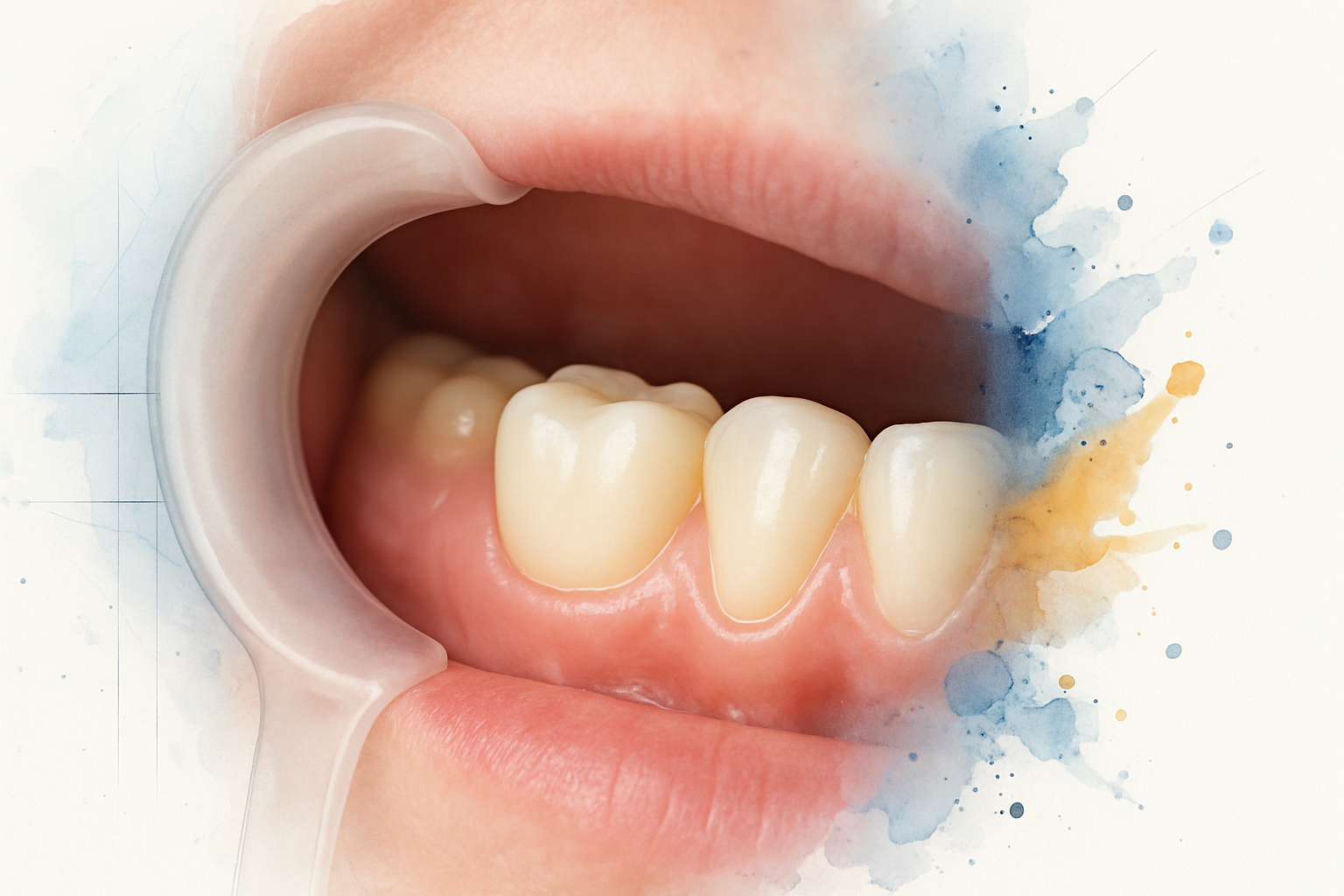
Appointment One: Shaping the Tooth and Placing the Temporary
The first visit usually runs a little over an hour. Nothing about it should feel rushed or mysterious.
Here is the actual sequence:
- Numbing. Local anesthetic on the tooth and surrounding gum. Sedation is available for patients who get anxious in the chair.
- Removing the damage. All decay, cracked enamel, and old filling material comes out. Sometimes the tooth looks worse than the X-ray suggested, and that is normal.
- Building the tooth back if needed. If a large amount of structure is gone, a core buildup goes in first so the crown has something solid to sit on.
- Shaping. The tooth gets reduced and smoothed on all sides so the crown fits over it at the right thickness.
- Digital scan or impression. This captures the prepared tooth, the neighboring teeth, and how your bite comes together.
- Shade matching. For front teeth especially, we match color in natural light so the crown does not stand out.
- Temporary crown. A provisional crown gets cemented with soft temporary cement so it can be removed easily later.
Then the case goes out to a dental lab. That handoff is why there is a second visit.
The Two to Three Weeks in Between
Most crowns come back from the lab in two to three weeks. Knowing that upfront removes a lot of the anxiety, because patients are not caught off guard by the wait.
The temporary is not built to last for years. It is built to protect the tooth, hold the space, and let you eat normally in the meantime.
A few habits protect it:
- Skip sticky foods on that side, especially caramel, taffy, and chewy granola bars
- Floss by pulling the floss out sideways instead of snapping it up, which can lift the temporary off
- Expect some cold sensitivity, which usually settles within a few days
- Chew on the other side for anything hard like ice or nuts
If the temporary comes off, it is not an emergency in the painful sense, but it does need attention within a day or two so the tooth does not shift or get sensitive. Our weekday hours run to 7pm Monday through Thursday, which is genuinely useful for patients driving in from Norterra, Vistancia, or North Peoria after work.
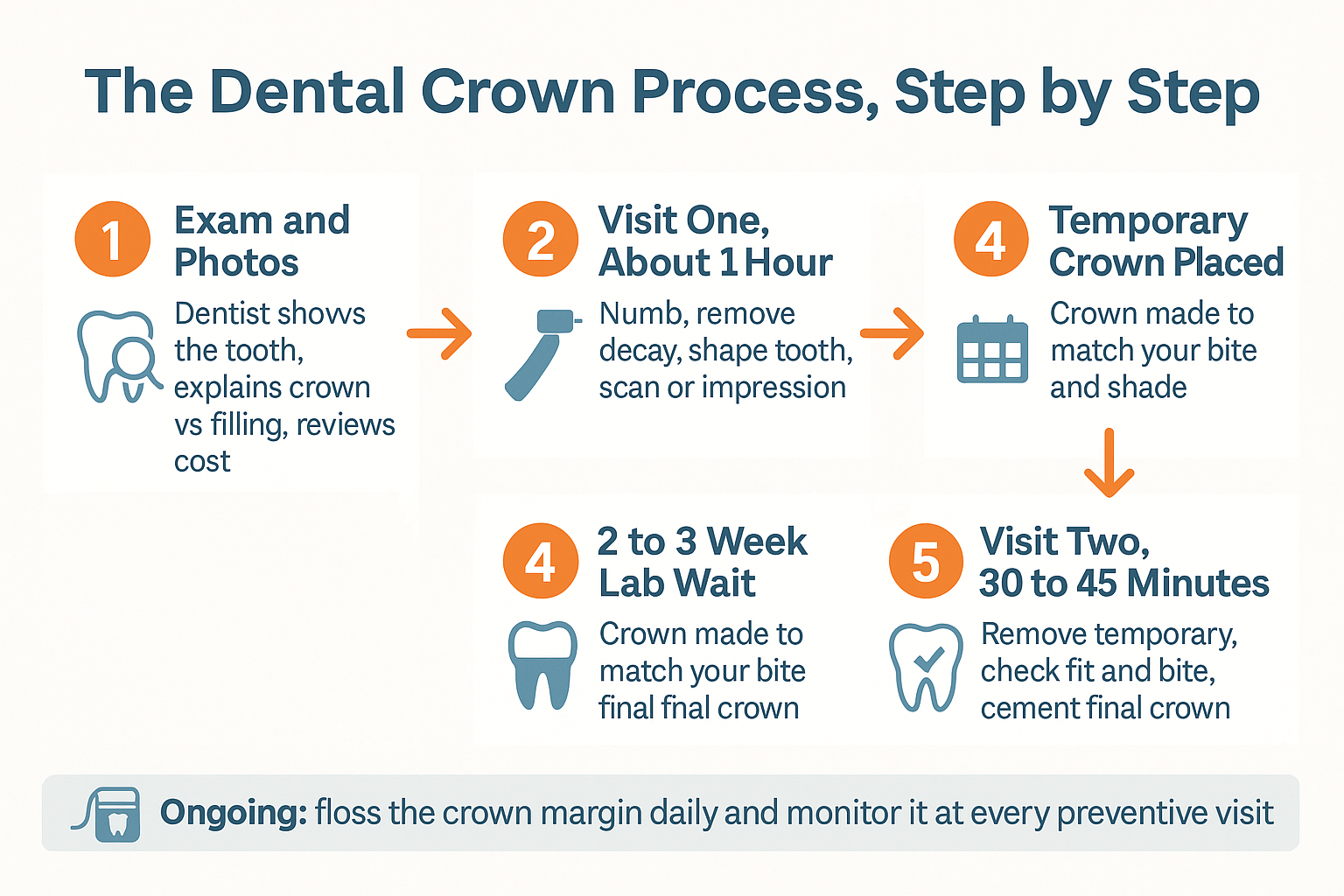
The Crown Process at a Glance
Here is the full timeline in one view, from the first exam through the follow-up visits that keep the crown healthy.
Appointment Two: Fit, Bite, and Cementing
The second visit is shorter and much easier than the first. Usually 30 to 45 minutes.
What happens:
- The temporary comes off and the tooth gets cleaned
- The new crown is tried in and checked for fit at the gumline
- Color and shape get reviewed with you before anything is permanent
- Your bite is tested with thin marking paper and adjusted until it feels even
- The crown is cemented and the edges are polished smooth
Speak up during the bite check. A crown that sits even a hair too high will feel off for weeks and can make the tooth sore, and it takes about two minutes to adjust in the chair versus a separate visit later.
Some patients need a small adjustment a few days after, once the numbness is gone and they have chewed real food on it. That is routine, not a sign anything went wrong.
What Drives the Cost of a Crown
Crown pricing varies a lot between practices and between teeth, so I would rather explain what moves the number than quote one. Costs in the Northwest Phoenix area can range widely depending on these factors, and an exact figure should always come from an exam.
| Factor | Why It Changes the Cost | What to Ask |
|---|---|---|
| Crown material | Porcelain, zirconia, and metal-based crowns are priced differently and suit different teeth | Which material do you recommend for this specific tooth and why? |
| Whether a buildup is needed | A heavily damaged tooth needs a core buildup before the crown, billed separately | Will this tooth need a buildup first? |
| Front tooth vs back tooth | Front teeth take more time on shade and shape matching | Is extra shade work involved here? |
| Root canal involvement | A crown after a root canal means two procedures and two fees | Is the nerve healthy, or is a root canal likely? |
| Insurance plan design | Coverage percentage, annual maximum, and waiting periods all shift your out-of-pocket amount | Can you send a pretreatment estimate to my plan first? |
Planning the Order Around Your Insurance
This is the part patients ask about more than the clinical steps. Several have written in asking which treatment to do first so their coverage stretches further.
A few things worth knowing:
- Pretreatment estimates exist for a reason. Your plan can review the proposed crown in advance and tell you what it will pay. Ask for one before scheduling if the number matters to your decision.
- Most plans have an annual maximum. Once it is used up, everything else that year is out of pocket, which is why splitting a crown across two benefit years sometimes makes sense.
- Benefits usually reset in January. If you need multiple crowns, the timing of that reset can change your total cost significantly. More on that in what the January benefits reset means for planned treatment.
- HSA and FSA funds often apply. Crowns are typically eligible, and this guide to using an HSA for dental care covers the details.
One caution on delaying. Waiting is a legitimate option and should be discussed with the risks laid out honestly, but a cracked tooth does not hold still. If it fractures below the gumline, the crown option can disappear entirely and you are looking at an extraction and an implant instead.
Crowns Are Not Maintenance-Free
The crown itself will not decay. But it sits on a natural tooth, and that seam at the gumline is where problems start.
That margin collects plaque exactly like a natural tooth does. Decay under the edge of a crown is one of the more common reasons a crown has to be redone years later.
So the daily routine matters:
- Floss around the crown every day, all the way to the gumline
- Watch for bleeding or tenderness at that spot, which is an early signal
- Keep your cleanings on schedule so the margin gets checked and X-rayed over time
At every preventive visit we look specifically at crown margins, not just at teeth without restorations. That habit is a big part of what a preventive visit catches before it gets expensive.
One more thing people learn too late: crowns do not respond to whitening. If a front crown is in your future and you want a brighter smile, whiten first and match the crown to the new shade, which is covered in more depth in whitening with existing crowns or fillings.
Frequently Asked Questions About the Dental Crown Process
Does getting a crown hurt?
The appointment itself should not hurt. The tooth is fully numb, and most patients say the first visit feels like getting a filling done, just longer. Some mild soreness in the gum for a day or two afterward is normal, and sedation is available for patients who find dental work stressful regardless of pain.
Why can’t I just get the crown in one visit?
Because the crown is built by a dental lab to match your specific bite, shade, and gum contour. That process takes two to three weeks, and the temporary crown covers the tooth in the meantime.
What do I do if my temporary crown falls off?
Keep the temporary if you can find it, avoid chewing on that side, and call the office. It should be re-cemented within a day or two so the tooth does not become sensitive or the space does not shift. Our weekday hours run to 7pm Monday through Thursday, and same-day appointments are available when a tooth is actively painful.
How long does a crown last?
It depends more on the tooth and your habits than on the crown. Many crowns last well over a decade. Grinding, a heavy bite, and skipped cleanings shorten that, and decay at the gumline margin is usually what ends a crown’s life rather than the crown itself breaking.
Will my insurance cover a crown?
Most dental plans cover crowns at some percentage, but the details vary a lot by plan, and annual maximums and waiting periods come into play. Ask for a pretreatment estimate before scheduling so you know your actual out-of-pocket number instead of guessing. For patients without insurance, our in-office membership plan provides 20% off treatment.
My crown feels high when I bite. Is that normal?
It is common in the first few days, and it is fixable. Call and come in for a bite adjustment. Do not wait it out, because chewing on a high crown can make the tooth and the surrounding ligament sore.
Have Questions About a Crown Your Dentist Recommended?
If a tooth has been flagged for a crown and you want to understand the reasoning, the sequence, and the numbers before committing to anything, that conversation is a normal part of an exam here. Beyond Dental Care sees patients from across North Glendale, Arrowhead Ranch, Stetson Valley, and the Upper West Side Phoenix area, with weekday appointments to 7pm. You can reach the office at 623-267-8088 or find more at beyonddentalcare.com.