
Direct Answer: Age rarely disqualifies someone from dental implants. Bone volume does. Once a tooth is lost, the jawbone in that spot slowly shrinks, so waiting usually makes implant treatment more involved, not easier.
Almost every implant conversation I have with adults in their 60s and 70s opens the same way. They ask whether they are too old for this. Then I pull up their imaging, and the conversation shifts to something they were not expecting: the bone.
That matters a lot around here. Communities like Vistancia, Arrowhead Lakes, and Cibola Vista skew older than the Phoenix metro average, and I meet plenty of patients who lost a tooth years ago and simply lived around the gap.
Cost is usually why they waited. Reporting on Arizona adults suggests roughly half point to out-of-pocket cost as a reason they put off dental care. But delay has its own price, and it gets paid in bone.
Why Bone Volume Decides Implant Candidacy for Aging Adults
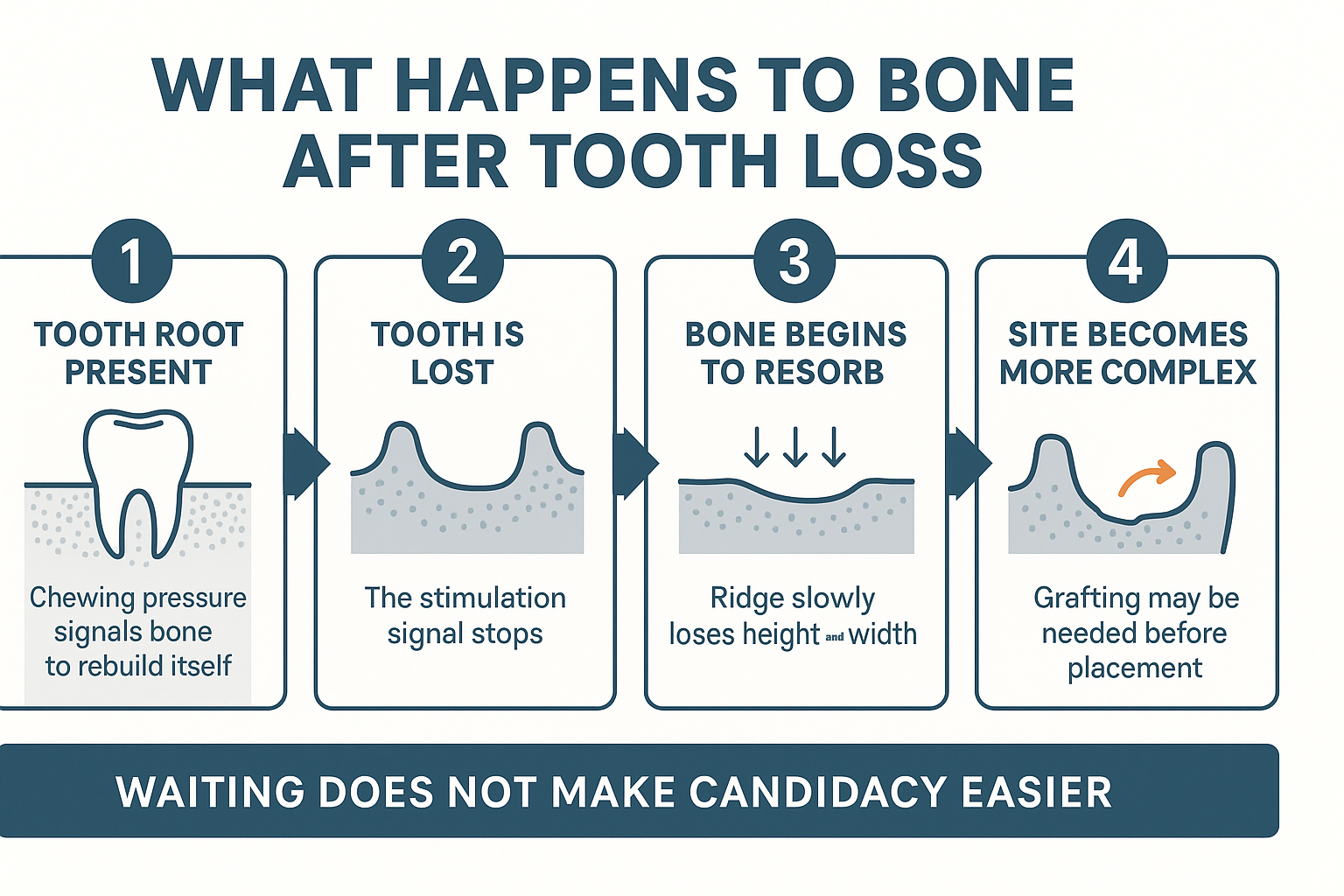
A natural tooth root does more than hold the tooth. Every time you chew, that root pushes into the jawbone, and the bone reads that pressure as a signal to keep rebuilding itself.
Take the root away and the signal stops. The bone in that spot begins to resorb, which is the clinical way of saying it slowly shrinks and thins out. The process is quiet, and it does not stop on its own.
So the person who lost a molar five years ago often has meaningfully less bone to work with than they had in the first year after the extraction. Same person, same jaw, different starting point.
An implant is anchored in bone, so the plan depends on three measurements:
- Height of bone from the ridge down to nerves or up to the sinus floor
- Width of the ridge, since a thin ridge cannot wrap around an implant securely
- Density, or how solid that bone actually is
None of those can be judged by looking in a mouth or by how the gum feels. That is exactly why I never quote an implant plan off a visual exam. If you want more depth on how loss progresses, this piece on bone loss and dental implants for seniors covers it well.
Does Age Itself Disqualify You? Almost Never
I place implants for patients well into their 70s, and age on its own is rarely the deciding factor. Bone and health are.
What I actually evaluate:
- Systemic health, including how well conditions like diabetes are controlled
- Bone density and quality at the specific site, not a general assumption about age
- Gum health, because an implant sitting in inflamed tissue is a long-term problem
- Medications that affect bone metabolism, which some patients take for osteoporosis
The word people fixate on is “uncontrolled.” Uncontrolled diabetes raises real concerns about healing. A managed condition, with steady numbers and a physician involved, usually does not remove someone from consideration at all.
Same with bone medications. They prompt a conversation and sometimes a coordination call with your physician. They are not an automatic no.
I would rather a patient hear that from a dentist than guess at it from a search result. One patient told me she had assumed for three years that her medication ruled her out. It did not. If you are weighing the bigger picture, dental implants after 65 walks through what the process actually looks like.
What Happens to Bone After a Tooth Is Lost
This is the sequence I sketch out on paper for patients almost every week, because it explains why timing changes the treatment plan.
Bone Grafting: The Word That Catches People Off Guard
This is the part of an implant consultation that surprises patients most, so I bring it up early.
When there is not enough bone to hold an implant securely, a graft adds material to the site to rebuild it. The body then works over a period of months to replace and integrate that material into your own bone. Once the site is solid, the implant goes in.
Here is the framing I want you to walk in with: grafting is a routine part of implant dentistry, not a complication and not a sign something went wrong. It is a normal answer to a normal amount of bone loss.
What it does do is add time and cost to the overall process. A site that needs rebuilding stretches the timeline out and adds a surgical step, which is why two patients with the same missing tooth can get very different plans and very different numbers.
I will not throw a dollar figure at you in an article. Fees depend on the site, the amount of bone involved, the materials used, and what your plan covers, so an exact number only comes from an exam with imaging. If you want to understand the variables, what really drives the price of a dental implant breaks them down honestly.
The practical takeaway is simple. Delaying to control cost often moves you from a straightforward placement toward a plan that includes grafting.
How Timing Tends to Change the Implant Plan
These are general patterns, not promises about any individual case. Healing, health history, and location in the jaw all shift the picture.
| Time Since Tooth Was Lost | What Is Often Happening in the Bone | How the Plan Can Change |
|---|---|---|
| First few months | Socket is still healing and filling in; ridge width is usually near its original state | Often the most direct path to placement |
| 1 to 2 years | Noticeable narrowing of the ridge can be present, especially in the front | Placement may still be straightforward; imaging decides |
| 3 to 5 years | Continued loss of height and width at the site is common | Grafting becomes a more likely part of the plan |
| 5 to 10 years or more | Ridge may be significantly reduced; nearby teeth may have drifted | Often a staged plan with site rebuilding before placement |
Why I Start With Imaging, Not Opinions
A patient’s sense of their own bone is almost always off in one direction or the other. Some assume they are fine because nothing hurts. Others assume they are hopeless because a dentist mentioned bone loss a decade ago.
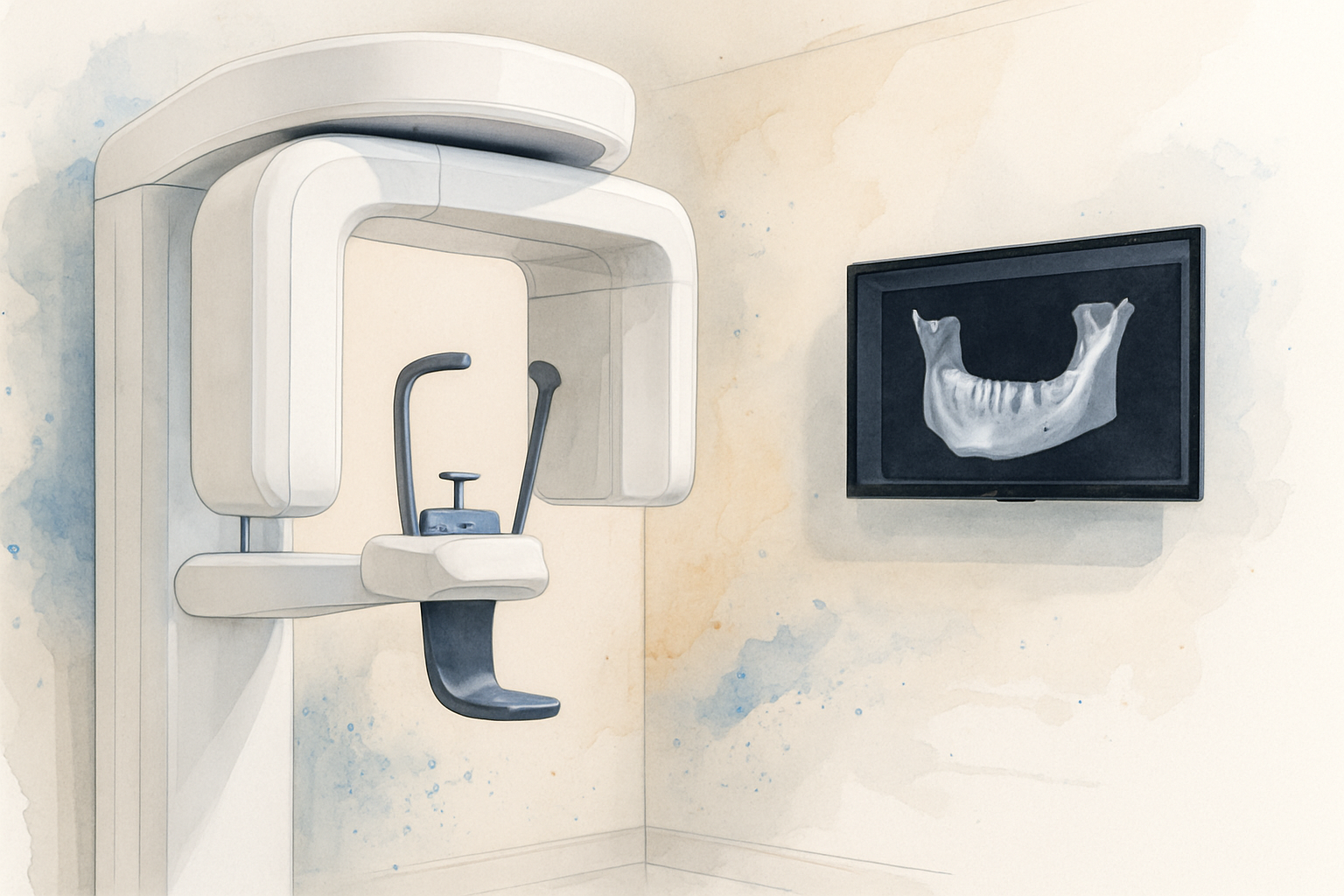
Three-dimensional imaging settles it. A cone beam CT scan or similar imaging gives an accurate picture of bone height, width, and density at the exact site, plus where the nerve and sinus sit relative to where an implant would go.
That scan does three jobs at once:
- Tells us whether you are a candidate today, with your current anatomy
- Guides the surgical plan, including implant size and angle
- Shows you the realistic path, whether that means direct placement, grafting first, or a different option entirely
Sometimes the honest answer is that another restorative route fits better, and I will say so. Patients comparing paths often find implants or dentures after 65 useful before they come in.
Tooth loss is common in older adults, and the National Institute of Dental and Craniofacial Research tracks just how common. What is not common is getting a clear, unhurried explanation of your own scan. That is the part patients keep telling me they were missing. As one review put it, they want “honest conversation about needs” instead of a pitch.
Frequently Asked Questions About Bone Health and Dental Implants
I lost a tooth more than ten years ago. Is it too late for an implant?
Usually not. Long-standing gaps more often mean a staged plan with grafting before placement, rather than a flat no. Imaging is the only way to know what your ridge actually looks like now.
Will I definitely need a bone graft?
No. Plenty of patients have enough bone for direct placement, especially when the tooth was lost recently. Grafting becomes more likely the longer a site has gone unreplaced, and it is a routine step, not a setback.
I take medication for osteoporosis. Does that rule me out?
It is a factor I evaluate, not an automatic disqualification. Some medications affect how bone remodels and heals, so I want to know the drug, the dose, and how long you have been on it. Sometimes that means a conversation with your physician before we plan anything.
How much of this does dental insurance cover?
It varies a lot by plan, and insurance questions are the single most common thing callers ask us about before booking. Many plans treat implants and grafting differently from crowns, and annual maximums come into play. Our office reviews the specifics with you in writing before treatment starts, and some patients also look at using HSA funds for dental care.
Does bone loss show up on a regular dental X-ray?
A standard X-ray can hint at it, but it is a flat image. It cannot reliably show ridge width or density, which is why implant planning uses three-dimensional imaging instead.
Want a Clear Read on Your Own Bone and Candidacy?
If you have been sitting on a missing tooth somewhere between Stetson Valley, Norterra, and North Peoria, the useful next step is an exam with imaging so you know what your anatomy allows today. Beyond Dental Care sees teens, adults, and seniors across North Glendale and the Upper West Side Phoenix area, with evening and Saturday availability for people whose weeks are already full. You can reach the office at 623-267-8088 or read more at beyonddentalcare.com.